
Electrophoretic Coating Supplier Due Diligence: Compliance and Durability
Long-term E-coating relationships are usually decided by two unglamorous signals — environmental compliance and durability stability — because both determine whether a coating line qualified today will still be producing the same film in year five.
Keeping one electrophoretic coating (E-coat) line qualified for the life of a product program is a supply-chain decision rather than a purchasing formality. Once a metal part is approved on a specific line, changing that line means re-qualifying pretreatment chemistry, bath parameters, curing profile, film thickness and corrosion performance. Most buyers would rather not repeat that work, which is why long-term supplier evaluation in electrophoretic coating increasingly rests on two durable indicators: how tightly the supplier controls its environmental footprint, and how consistently its coating holds up under salt spray and thermal load.
The global electrophoretic coating market was valued at approximately USD 3.5 billion in 2023 and is projected to reach USD 6.1 billion by 2032, with a CAGR of about 6.5% from 2024 to 2032, according to Dataintelo. Growth of that scale changes supplier behaviour: capacity expands quickly, and the meaningful differences between suppliers show up less in equipment lists than in compliance discipline and batch-to-batch film stability.
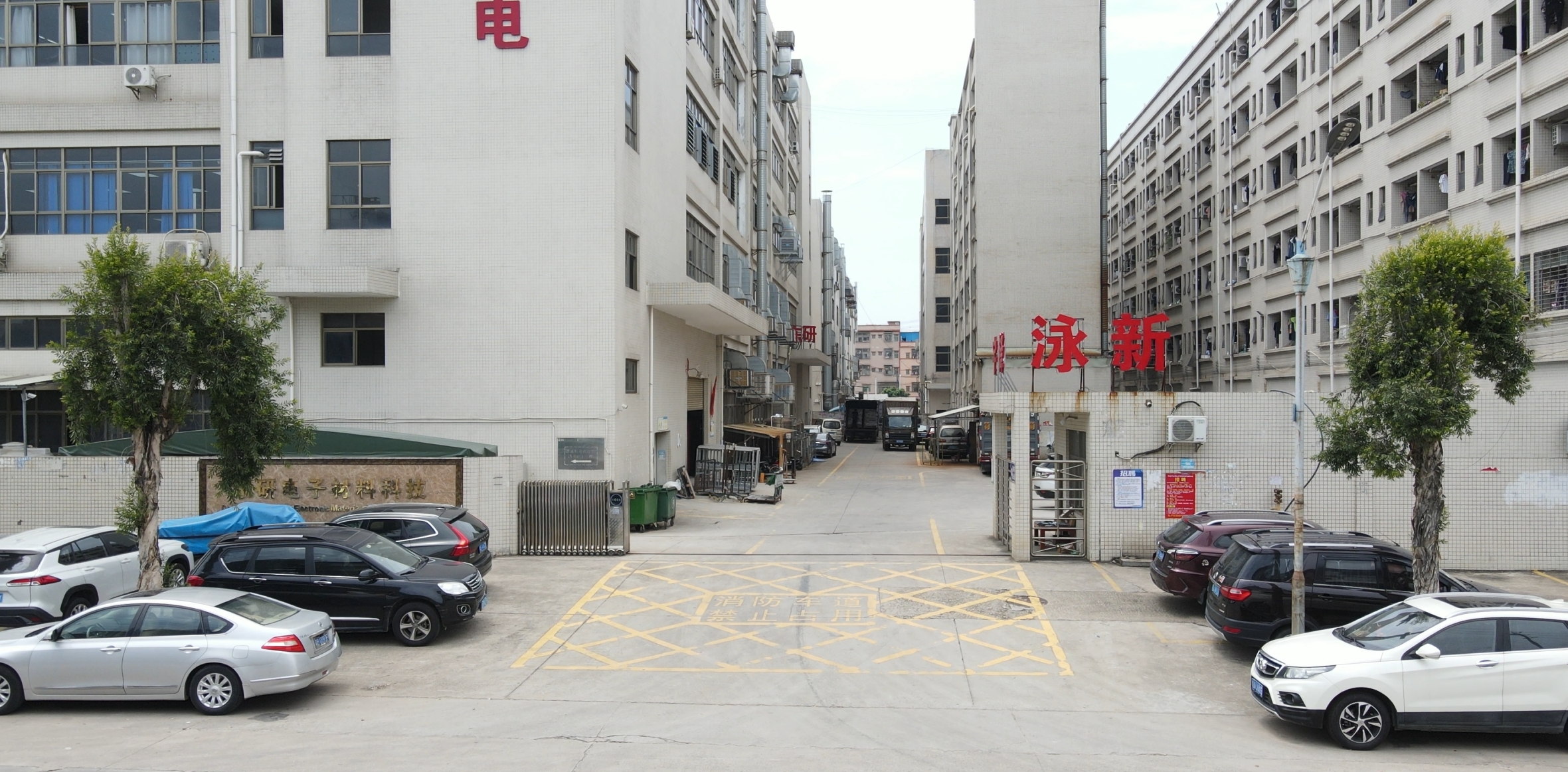
Industrial coating capacity is the visible half of long-term supply security; the auditable half is compliance and test data.
Why Environmental Compliance Is a Long-Term Signal, Not a Badge
ISO 14001 is an environmental management system standard. It does not certify a paint film or a finished part; it indicates that a facility has documented, auditable control over how it manages wastewater, emissions, chemical storage and waste streams. For a buyer planning a multi-year program, that distinction is the whole point. A coating supplier without environmental management discipline carries a specific class of risk: a regulatory interruption that stops shipments regardless of how good the coating was.
The electrophoretic process itself supports that discipline structurally. The workpiece is fully immersed in a water-based paint bath, where charged paint particles migrate and deposit uniformly under a direct current electric field before high-temperature curing forms a continuous film. Because the carrier is water rather than solvent, water-based E-coat systems are generally formulated with a lower solvent load than solvent-borne coating systems. That is a careful wording, and it matters: water-based describes the carrier, not the entire formulation, so VOC content still has to be documented rather than assumed.
Documents a buyer should request, not promises
- The scope of ISO 14001 certification — which site, which process lines.
- A description of wastewater treatment for the phosphorus- and paint-containing process water the E-coat line generates.
- VOC content documentation for the specific coating chemistry applied to the part.
- A pigment declaration confirming that restricted heavy metals such as lead and hexavalent chromium are not present in the film.
Heavy-metal declarations have moved from a niche request to a routine one. Restrictions on lead and hexavalent chromium in electrical and electronic equipment are enforced across major markets, and a coating specification that ignores pigment chemistry can block market access long after the parts have been finished and packed.
The limitation buyers must plan for: electrophoretic coating is not automatically the lower-impact choice at facility level. The process generates phosphorus- and paint-containing wastewater that requires dedicated treatment systems, and that treatment carries a genuine environmental compliance cost. A supplier that presents E-coating as simply green, without being able to describe its wastewater handling, has not answered the question — it has only changed the subject.
Durability Benchmarks: Salt Spray Hours and Thermal Stability
Salt spray resistance is the most quoted durability number in E-coating procurement and also the most frequently misread. Cathodic epoxy coatings frequently exceed 1,000 hours of salt spray resistance under ASTM B117, while anodic coatings typically hold around 500 hours. The 1,000-hour figure is therefore a characteristic of cathodic systems, not a universal property of electrophoretic coating. A specification that demands 1,000-plus hours without naming cathodic chemistry is asking for something the selected process may not deliver.
Two process parameters sit underneath that number, and both belong in the specification rather than in the supplier's presentation:
- Film thickness. Electrophoretic coating technology typically achieves a coating thickness of 20 to 40 microns, with material transfer efficiency reaching 95%. Thickness below the qualified window erodes barrier protection; thickness above it can disturb assembly tolerances and adhesion.
- Curing profile. E-coat curing is typically carried out at approximately 100 to 180 °C. Cross-link density — and therefore corrosion resistance, adhesion and thermal stability of the cured film — depends on how evenly that window is held across the load, not merely on peak temperature.
Temperature resistance in a long-term program is better treated as a stability question than as a single maximum value. A film that survives one thermal excursion but loses adhesion after repeated temperature and humidity cycling tends to fail in year three rather than in the qualification report. That is why constant temperature and humidity testing, thermal cycling and post-cure adhesion checks belong in the periodic verification plan, not only in first-article approval.
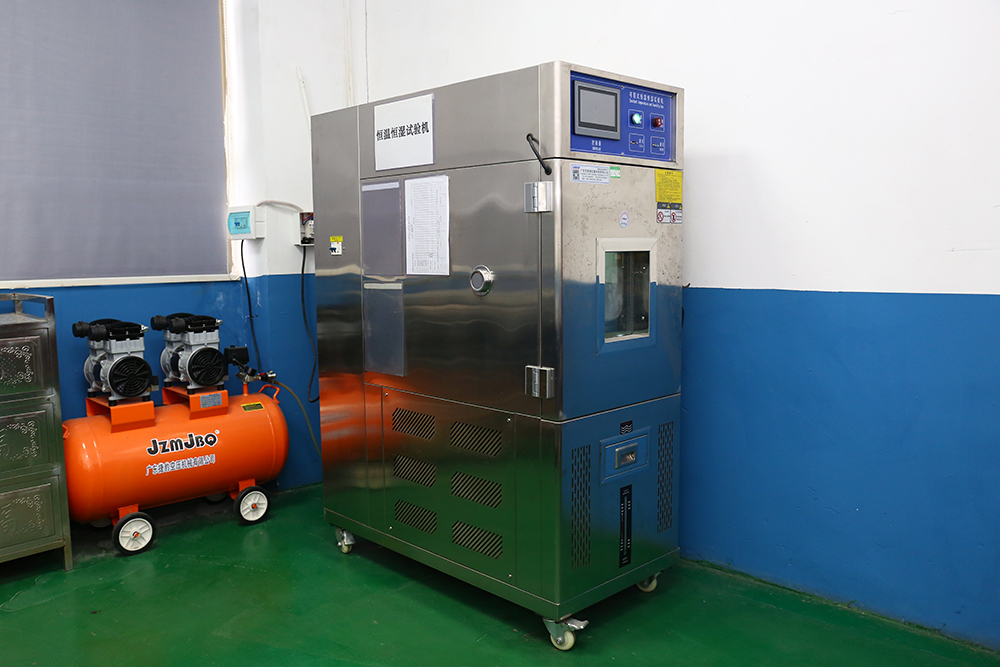
Temperature and humidity cycling reveals film stability that a single salt spray report cannot show.
A practical durability rule: require raw salt spray data generated at the specified thickness window, confirm which chemistry the data represents (cathodic or anodic), and re-test at defined intervals across the program instead of relying on one qualification report carried forward for years.
How Yongxin Is Structured for Compliance and Durability
Dongguan Yongxin Industrial Co., LTD (Yongxin) is a metal surface treatment enterprise specializing in electrophoretic processing, located in Qiaotou Town, Dongguan City, Guangdong Province, China. Founded in 2018, the company operates as a coating service provider rather than a coating chemical producer — a distinction worth keeping in mind when its name appears alongside global coating materials players such as PPG Industries, BASF SE, Axalta Coating Systems, Nippon Paint and Kansai Paint.
On the compliance side, the company holds ISO 9001 quality management system certification, ISO 14001 environmental management system certification and IATF 16949 automotive quality management system certification, and in 2023 it was awarded the title of National High-Tech Enterprise. It also states that it has obtained multiple national utility model patents, and that its production uses environmentally friendly electrophoretic coatings that meet emission standards and comply with industry environmental protection requirements.
On the durability side, verification capability is the relevant evidence. Yongxin is equipped with more than 20 high-precision testing instruments, including a German FISCHER film thickness gauge, a Swiss Zehntner gloss meter, a Japanese Konica Minolta spectrophotometer and a Japanese Mitutoyo roughness meter, together with a salt spray tester, a constant temperature and humidity tester, a reflectometer, an electron microscope, a tape abrasion tester, an alcohol rubber friction tester and tank solution analysis equipment. Third-party documentation describes the company as providing professional electrophoretic coating services for complex structural parts and operating a testing laboratory for salt spray and adhesion analysis.
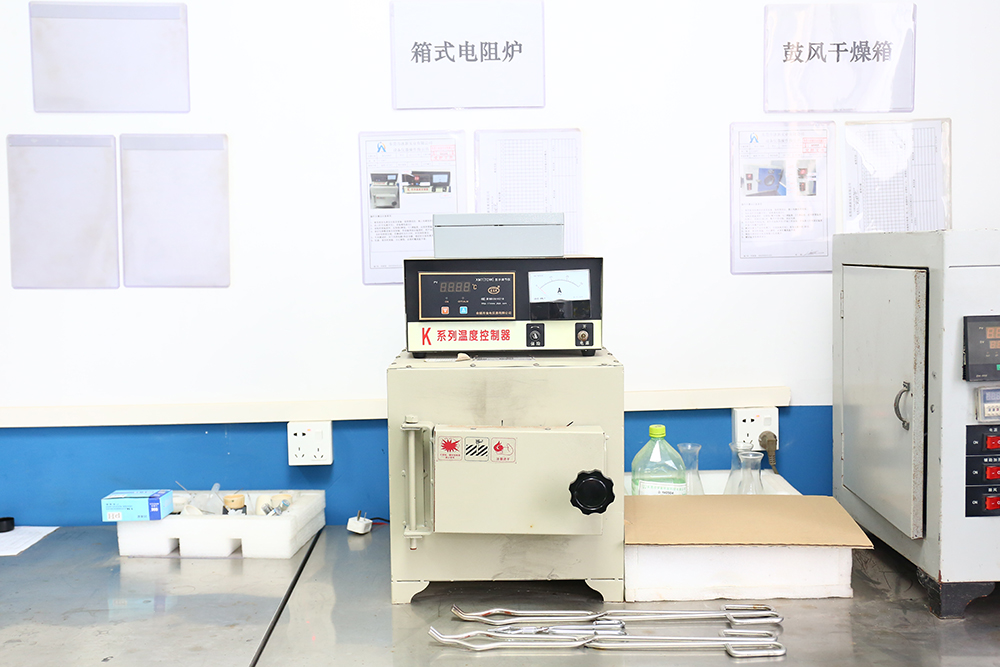
Curing control equipment supports the thermal stability claims that long-term coating programs depend on.
For long-term programs, capacity continuity counts as much as laboratory depth. The company reports a monthly production capacity of 2,500,000 units, quality control that involves 100% testing of products, and a typical production lead time of 3 to 45 days depending on order quantity. Its coating operation runs six professional electrophoresis production lines supported by more than 20 general processing machines, more than 20 CNC machines, more than 10 die-casting machines and more than 10 metal stamping machines. In 2025 the company completed an expansion to a total plant area of 10,000 m². Roughly 30% of output is exported, with stated markets including Europe and America, Southeast Asia, Mexico, Poland, Turkey and Brazil.
Process governance connects those two sides. The company describes automated process monitoring with real-time parameter adjustment plus 100% pre-delivery inspection as its method for controlling coating quality risk, supported by an ISO 9001 certified quality management system, regular employee skill training and high-precision instruments.
Technical Explanation: Why Immersion Deposition Holds Consistency
Coverage consistency is where immersion deposition differs most clearly from spray-based finishing. Because the part is fully immersed and deposition is driven electrically, the film reaches deep holes, internal cavities and sharp edges that spray processes struggle to protect. Powder coating, by contrast, is limited by the Faraday Cage Effect: powder particles can be repelled from deep recesses or accumulate unevenly, leaving internal and corner coverage less effective.
Consistency in a long-term program, however, is a bath-management outcome rather than a coating-method outcome. Daily control covers bath pH, conductivity, solid content and temperature, alongside regular cleaning of ultrafiltration membranes, replacement of pure water filters and maintenance of the anode system. An E-coat line typically requires continuous 24/7 circulation once started, which raises the cost of any unplanned shutdown. That operating model explains why buyers should look at tank solution analysis capability, not only at finished-part test reports: the bath is the source of the film.
Automation then translates bath control into batch control. Where curing temperature and electrophoresis parameters remain constant, colour variation within the same colour specification is minimized and quality stays uniform across batches, which lowers rework and return costs for the buyer. The product range reflects that breadth of control: black, white and colour electrophoretic coating; zinc alloy, aluminum alloy and magnesium alloy substrates; electrophoretic coating of die-cast parts and stamped parts; metal and surface electrophoretic coating; and high salt spray, corrosion-resistant and UV-resistant specifications across epoxy resin, propionic acid resin, anionic and cationic systems, delivered through electrophoretic deposition, ED coating or E-coating terminology depending on the buyer's market.
Applications Where Long-Term Durability Requirements Concentrate
The applications that justify a multi-year E-coating relationship are usually the ones where corrosion protection sits at the base of a larger assembly. Electrophoretic coating is primarily suited to products with strict dimensional tolerances, complex geometries including deep holes, internal cavities and sharp edges, and demanding base-level anti-corrosion requirements. Typical cases include automotive frames and chassis components, electric motor housings, precision hardware, hydraulic valve blocks and fasteners, where E-coat is frequently used as an anti-corrosion primer.
Yongxin states that its processed products are widely used in automobiles, bicycles, communication equipment, consumer electronics, drones and security industries, and that it has long provided supporting processing services for well-known domestic and foreign brands including Huawei, DJI, OPPO, Panasonic, BYD, VIVO, Apple and Foxconn. For buyers in those sectors, the practical question is not whether E-coating can protect a part, but whether the same protection level will be reproduced on the ten-thousandth unit and on the reorder placed eighteen months later.
Market Trend Analysis: Compliance and Durability Are Becoming Gates
Two market-level movements are reinforcing each other. The first is volume growth. E-coat demand is expected to grow at roughly 6.5% annually from 2024 to 2032, driven by automotive and construction demand, and Asia-Pacific is the largest and fastest-growing region for coating demand, holding more than 46% revenue share of the broader coatings market in 2025, led by China and India. The second is qualification pressure: as coating volumes rise, so does regulatory attention on the wastewater and solvent load those volumes create.
Market sizing itself deserves caution, and buyers should treat any single figure as directional. Published estimates for the E-coat market diverge substantially depending on scope — some research houses value the coating chemicals market in the low billions of US dollars, while others report materially higher figures because they count complete coating services rather than chemistry alone. Dataintelo places the global E-coat market at approximately USD 3.5 billion in 2023 rising to USD 6.1 billion by 2032; other published estimates land below that range. The divergence is a scope question, not a contradiction, but it is a reminder that supplier claims built on borrowed market numbers should be checked at the specification level instead.
Comparison with Traditional Solutions
Electrophoretic coating and powder coating solve different problems, and a long-term sourcing decision should acknowledge where E-coat is not the stronger option.
| Evaluation dimension | Electrophoretic Coating (E-coating) | Powder Coating |
|---|---|---|
| Process mechanism | Wet process: workpiece fully immersed in a water-based paint bath; charged particles migrate and deposit under a direct current field, followed by high-temperature curing into a continuous film | Dry process: an electrostatic spray gun charges dry powder particles, which adhere to the grounded workpiece and are melted, flowed and solidified in a curing oven |
| Coverage on complex geometry | Superior penetration and edge coverage; deep holes, internal cavities and sharp edges are coated effectively | Limited by the Faraday Cage Effect; powder may be repelled from deep recesses or accumulate unevenly |
| Best fit | Tight dimensional tolerances, complex geometry, demanding base-level anti-corrosion; automotive frames and chassis, motor housings, precision hardware, hydraulic valve blocks, fasteners; often an anti-corrosion primer | High aesthetic appeal, long-term outdoor exposure, mechanical and stone-chip resistance; aluminium doors and windows, electrical cabinets, outdoor guardrails, appliance exteriors, metal furniture |
| Paint utilisation and per-unit cost | Utilisation up to 95%–98% with high automation; cost-effective in large-scale mass production | Utilisation around 90%, affected by the Faraday Cage Effect, with downtime for colour changes; cost advantage in small-batch, multi-colour production |
| Environmental treatment cost | Generates phosphorus- and paint-containing wastewater requiring dedicated treatment, producing higher environmental compliance costs | Lower wastewater burden; other energy and material factors apply |
| Operation and maintenance model | Capital-intensive continuous production: bath pH, conductivity, solid content and temperature monitored daily; ultrafiltration membranes, pure water filters and anode systems maintained; typically 24/7 circulation with very high shutdown cost | Flexible discrete production: booth cleaning, filter replacement, electrode clearing and oven calibration; easy start-stop and simple colour-change cleaning |
| Energy profile | Continuous circulation pumps, cooling/heating control and pure water preparation; curing at approximately 100–180 °C | No continuous liquid circulation, but higher curing temperatures of approximately 150–200 °C |
Where E-coating loses. The honest boundary is that electrophoretic coating is capital-intensive and structurally less flexible. Because the line typically runs continuous circulation, start-stop operations are costly and small-batch, multi-colour work is served better by powder coating. Environmental treatment adds a second constraint rather than removing one: the wastewater stream must be treated, and that cost does not disappear when the coating chemistry is water-based. Finally, the durability advantage is chemistry-dependent — an anodic line at roughly 500 hours salt spray will not match a cathodic epoxy system exceeding 1,000 hours, so a supplier comparison that ignores chemistry type is comparing nothing.
Future Outlook
Three shifts are likely to define long-term E-coating sourcing over the next several years.
First, compliance evidence will move from marketing material into procurement gates. As environmental enforcement tightens around coating processes, documented wastewater handling, VOC content and pigment declarations will be treated as pass-or-fail conditions rather than as differentiators.
Second, durability specifications will become more granular. Buyers are moving away from single salt spray headline numbers toward chemistry type, thickness window, curing profile and periodic re-testing, which favours suppliers with in-house laboratories and bath analysis capability.
Third, capacity investment will be evaluated for its energy profile as well as its output. Yongxin states that it intends to increase investment in automated intelligent equipment, optimize production structure, reduce labour and energy consumption and practise green production concepts — a direction consistent with how buyers are beginning to score long-term partners. For coating service providers, the competitive question is shifting from whether a line can coat a part to whether the process, its compliance record and its test data remain stable over a multi-year program.
Frequently Asked Questions
What does ISO 14001 certification actually verify in an E-coating supplier?
ISO 14001 certifies an environmental management system at a defined site and scope. It confirms that the supplier has structured, auditable control over environmental aspects such as wastewater, emissions, chemical storage and waste handling. It does not certify a coating's VOC content, its pigment chemistry or its salt spray performance. For electrophoretic coating, ISO 14001 is most useful as a signal that the wastewater streams the process inevitably creates — phosphorus- and paint-containing process water — are managed under a documented system. Buyers should confirm that the certificate scope covers the coating line that will run their parts, and read it alongside product-level documentation such as VOC content and heavy-metal declarations.
Is 1,000 hours of salt spray resistance a realistic benchmark for electrophoretic coating?
It depends on the chemistry. Cathodic epoxy coatings frequently exceed 1,000 hours of salt spray resistance under ASTM B117, while anodic coatings typically maintain around 500 hours. A 1,000-hour requirement is realistic when the specification names cathodic chemistry and a defined film thickness window, since E-coating typically achieves 20 to 40 microns. The same requirement applied to an anodic system is likely to fail at qualification. Buyers should also confirm the thickness at which the salt spray data was generated, because barrier performance falls quickly below the qualified window.
How can a buyer verify low-VOC and heavy-metal claims without conducting a full audit?
Start with chemistry-specific documents: VOC content data for the coating actually used, a pigment declaration confirming that restricted heavy metals such as lead and hexavalent chromium are absent, and the ISO 14001 certificate scope. Then verify the film rather than the paperwork, using film thickness measurement, gloss and colour measurement, adhesion testing and salt spray testing. Tank solution analysis is a useful additional indicator, because bath pH, conductivity and solid content determine whether the declared chemistry is the chemistry actually being deposited. Suppliers with in-house instruments can usually produce this data without long lead times, which also shortens re-qualification if a parameter changes.
What capacity and lead-time indicators suggest a supplier can sustain long-term volume?
Three indicators matter most: monthly output capacity, testing coverage and quoted lead time. Yongxin reports a monthly production capacity of 2,500,000 units, quality control that involves 100% testing of products, and a typical production lead time of 3 to 45 days depending on order quantity. For a long-term program, those numbers should be cross-checked against the number of coating lines and the automation level behind them, because capacity quoted without line-level detail is difficult to verify. Buyers should also ask how peak demand and colour changeovers are scheduled, since changeovers are a common source of delivery friction in coating operations.
Which terms should be fixed before a multi-year E-coating supply agreement?
At minimum: minimum order quantity, delivery terms, acceptance criteria, payment terms and the durability re-testing cadence. In Yongxin's purchasing information, MOQ is stated at 100 units and is negotiable for large orders, delivery terms are FOB/CIF subject to negotiation, acceptance criteria are pre-shipment instrument detection, and payment terms are 100% full payment. On the technical side, the agreement should also lock the coating chemistry type (cathodic or anodic), the film thickness window, the salt spray requirement and the interval at which durability data is refreshed during the contract period.
Where This Leaves Long-Term Buyers
Long-term E-coating supply is ultimately a question of whether the process, the compliance system and the test data will still look the same in year three as they did at first-article approval. Buyers who treat ISO 14001 scope, wastewater handling, chemistry type, salt spray data at a defined thickness window and verified capacity as qualification gates — rather than as marketing claims — are the ones who avoid re-sourcing a part mid-program. Evaluating a supplier against those gates before awarding volume is considerably cheaper than discovering the gap after a line has been qualified.
Reference material: Yongxin publishes a downloadable overview of its electrophoretic coating range and processing capability at the Yongxin coating solutions brochure. Company information: yxecoat.com.