
Electrophoretic Coating vs. Powder Coating: Cost & Fit
Metal Finishing · Decision Analysis
Electrophoretic Coating vs. Powder Coating: Cost & Fit
A procurement-oriented comparison of electrophoretic coating and powder coating, covering process fundamentals, coverage, cost structure, maintenance, applications, and supplier evaluation criteria.
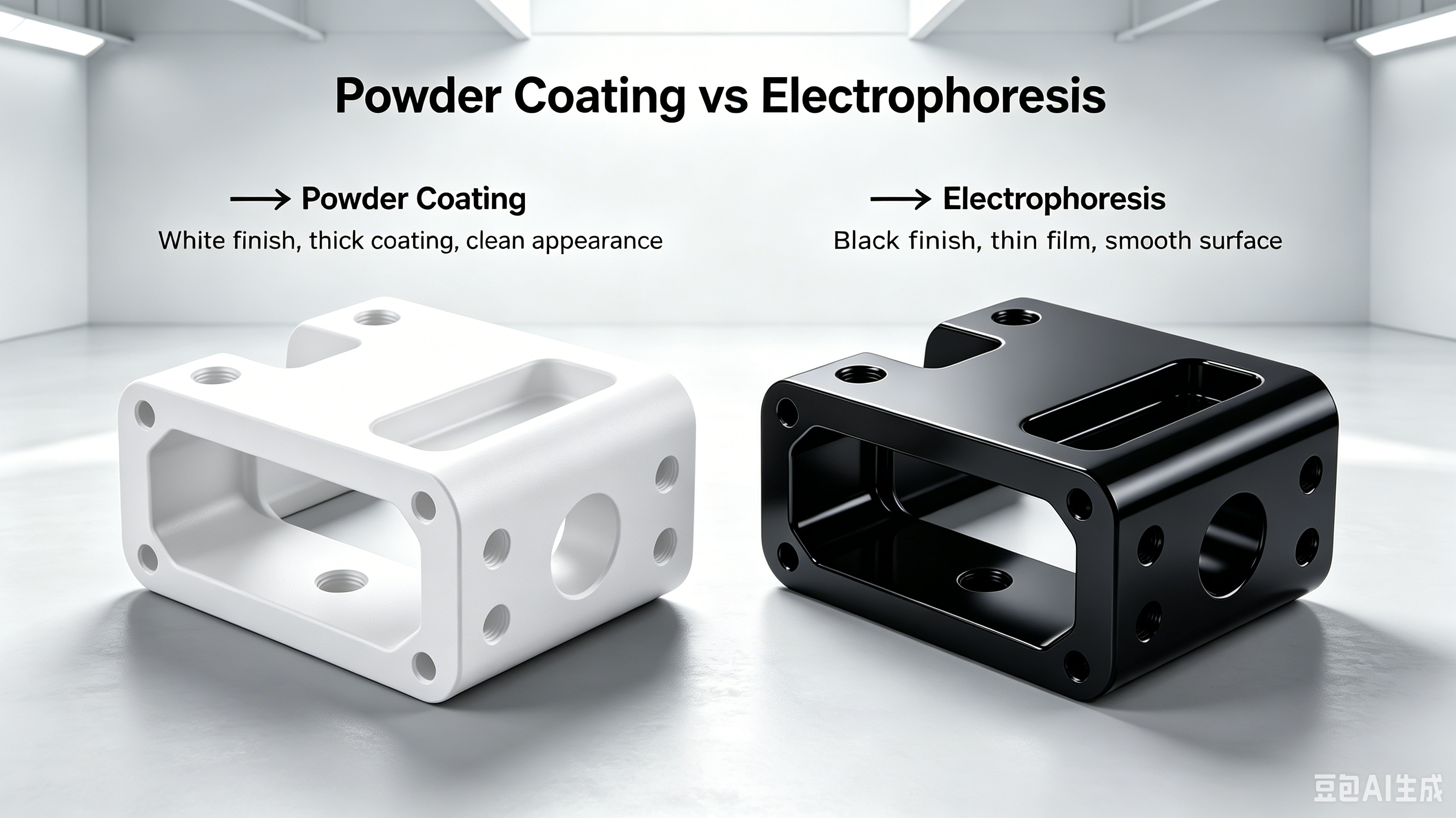
Electrophoretic coating and powder coating produce different film characteristics on finished metal parts.
Electrophoretic coating (e-coating) is a wet immersion finishing process in which charged paint particles migrate and deposit uniformly onto a metal workpiece under a direct-current electric field, followed by high-temperature curing; powder coating is a dry electrostatic spray process in which charged powder particles adhere to a grounded workpiece and are then melted and cured. For buyers at the decision stage, the choice between these two processes affects corrosion protection, edge coverage, per-unit cost, and the operational profile of the finishing supplier. This guide compares electrophoretic coating and powder coating on coverage, cost, maintenance, and application fit, and examines how Dongguan Yongxin Industrial Co., Ltd. delivers e-coating for complex metal parts at industrial scale.
Why the Process Choice Matters
Procurement and engineering teams typically evaluate electrophoretic coating and powder coating when a metal part needs a protective or functional finish. Although the two processes are sometimes treated as substitutes, their physical mechanisms produce different results on the same part.
A die-cast housing with internal channels, a stamped bracket with sharp edges, or a threaded fastener behaves differently under each process. A mismatch between process and part can produce exposed base material at corners, thin coating in internal cavities, or uneven film on edges — defects that lead to corrosion failure, rework, and rejected shipments.
The evaluation should therefore be structured around four criteria:
- Geometry and coverage requirements, including deep holes, internal cavities, and sharp edges;
- Corrosion and weather-resistance performance targets;
- Production volume, batch size, and color-change frequency;
- The supplier's process control, testing, and certification infrastructure.
Process Fundamentals: Wet Immersion vs. Dry Electrostatic Spray
Electrophoretic coating (e-coating) is a wet coating process. The workpiece is fully immersed in a water-based paint bath. Under the influence of a direct current electric field, charged paint particles migrate and deposit uniformly onto the workpiece surface, followed by high-temperature curing to form a continuous film.
Powder coating is a dry coating process. An electrostatic spray gun applies a negative charge to dry powder particles, which are then attracted to and adhere to the grounded workpiece via electrostatic force. The workpiece is subsequently heated in a curing oven to melt, flow, and solidify the powder into a durable film.
The core difference is that e-coating uses a wet immersion process with electrical deposition, while powder coating is a dry electrostatic spray process limited by the Faraday cage effect.
Coverage and Geometry: Where E-Coating Has the Edge
E-coating offers superior penetration and edge coverage. Because it relies on immersion and electrical deposition, it coats deep holes, internal cavities, and sharp edges, ensuring complete protection in hard-to-reach areas.
Powder coating can be limited by the Faraday cage effect. When spraying complex structures, powder may be repelled from deep recesses or accumulate unevenly, making internal and corner coverage less effective compared with e-coating.
Specialist e-coating providers add process controls to push coverage further. Yongxin's electrophoretic coating process uses precise pressure control and an intelligent electrophoresis production line that achieves full coverage without blind spots. Compared with electrophoretic coating from typical peers, it has distinct advantages in paint film coverage: common peer defects such as exposed base at the corners, thin coating in the inner cavity, sagging, and pinhole defects are avoided. The process covers complex and irregular parts, dead corners, inner walls, and edges with uniform film thickness.
Electrophoretic Coating
Wet immersion plus electrical deposition. Coats deep holes, internal cavities, and sharp edges. Uniform film thickness on complex geometries.
Powder Coating
Dry electrostatic spray. Subject to the Faraday cage effect on recesses and complex structures; coverage can be uneven on internal and corner areas.
Cost-Performance Comparison
The cost comparison between e-coating and powder coating operates at three levels: initial equipment investment, per-unit operating cost, and environmental compliance cost. Buyers should evaluate each level separately, because the process with the lower entry cost is not necessarily the lower total cost at production scale.
Paint utilization. E-coating achieves 95%–98% paint utilization, while powder coating achieves approximately 90% due to the Faraday cage effect.
Initial equipment investment. E-coating lines involve complex systems — E-coat tanks, ultrafiltration systems, multi-stage rinsing, and pure water machines — resulting in high one-time capital costs. Powder coating equipment is relatively simple (spray guns, booths, and curing ovens), leading to lower initial investment thresholds.
Per-unit operating cost. E-coating's high paint utilization and automation make it highly cost-effective for large-scale mass production. Powder coating has a utilization rate of around 90%, requires downtime for color changes, and offers significant cost advantages in small-batch, multi-color production.
Environmental treatment costs. The e-coating process generates phosphorus- and paint-containing wastewater, necessitating specialized wastewater treatment systems and resulting in higher environmental compliance costs.
| Comparison Dimension | Electrophoretic Coating (E-Coating) | Powder Coating |
|---|---|---|
| Process type | Wet immersion + electrical deposition | Dry electrostatic spray |
| Paint utilization | 95%–98% | Approx. 90% |
| Deep-hole / internal-cavity coverage | High | Limited by Faraday cage effect |
| Edge coverage | Superior | Can accumulate unevenly |
| Initial equipment investment | High | Lower |
| Best cost fit | Large-scale mass production | Small-batch, multi-color production |
| Curing temperature | Approx. 100–180 °C | Approx. 150–200 °C |
| Operational model | Continuous, 24/7 circulation | Flexible start-stop |
| Typical coating thickness | 20–40 microns | Not specified |
Maintenance and Operational Considerations
E-coating operates as a capital-intensive, high-precision continuous production model. Daily maintenance requires strict monitoring of bath parameters — pH, conductivity, solid content, and temperature — as well as regular cleaning of ultrafiltration membranes, pure water filter replacements, and anode system maintenance. Once started, the system typically requires 24/7 circulation; the cost of shutting down for maintenance is extremely high.
Powder coating operates as a highly flexible discrete production model. Daily maintenance focuses on cleaning the spray booth, regularly replacing filters, clearing spray gun electrodes, and calibrating curing oven temperatures. Its advantage lies in easy start-stop operations; cleaning for color changes or production halts is relatively simple, offering exceptional equipment maintenance flexibility.
For a buyer, this operational profile influences supplier lead-time reliability. An e-coating provider running continuous, parameter-monitored lines is well matched to high-volume, repeat-order programs where batch-to-batch consistency matters more than rapid color changeovers.
Yongxin's E-Coating Solution for Industrial Buyers
Dongguan Yongxin Industrial Co., Ltd. (Yongxin) is a high-tech enterprise focusing on electrophoretic processing for metal surface treatment, located in Qiaotou Town, Dongguan City, China. With nearly 10 years of industry experience and an R&D team of 5–10 engineers, the company integrates research, development, production, processing, and sales of electrophoretic coating. Yongxin holds ISO9001, ISO14001, and IATF16949 certifications and was officially awarded the title of National High-Tech Enterprise in 2023.
Production Capacity and Process Infrastructure
Yongxin operates six professional electrophoresis production lines, supported by more than 20 general processing machines such as sand blasters, polishers, shot blasting machines, and laser equipment. The adjacent metal processing capabilities include more than 20 CNC machines, more than 10 die-casting machines, and more than 10 metal stamping machines, creating a complete chain of metal forming, precision machining, and surface treatment. In 2025, the company completed the expansion of a modern factory with a total plant area of 10,000 square meters, increasing its capacity for large-batch and multi-category orders.
The company's main product range covers black, white, and color electrophoretic coating for zinc alloy, aluminum alloy, and magnesium alloy substrates, as well as for die-cast and stamping parts. Yongxin can deliver high-standard finishes with high salt spray resistance, corrosion resistance, and ultraviolet resistance according to customer requirements.
Materials, Pretreatment, and Process Control
Yongxin uses high-end environmentally friendly electrophoretic raw materials and a complete phosphating pretreatment process. These technical choices support corrosion resistance, weather resistance, and coating uniformity, making the finish suitable for outdoor, humid, and harsh working conditions that require high anti-corrosion and weather resistance.
The core difference in Yongxin's process is precise pressure control and an intelligent electrophoresis production line that achieves full coverage without blind spots, eliminating common defects such as exposed base, thin coating, sagging, and pinhole defects. Full-process automated control keeps curing temperature and electrophoresis parameters constant, so there is no color difference within the same color and quality is uniform across batches. This reduces rework and return costs for buyers, as well as the burden of incoming quality inspection.
Quality Verification and Testing Laboratory
Yongxin maintains a complete quality inspection system with more than 20 high-precision testing instruments, including a German FISCHER film thickness gauge, Swiss Zehntner gloss meter, Japanese Konica Minolta spectrophotometer, and Japanese Mitutoyo roughness meter. The laboratory also uses a salt spray tester, constant temperature and humidity tester, reflectometer, electron microscope, tape abrasion tester, alcohol rubber friction tester, and tank solution analysis equipment.
Every production procedure is strictly inspected to guarantee stable and reliable product quality. Coating quality risks are controlled through automated process monitoring, real-time parameter adjustment, and 100% pre-delivery inspection, supported by an ISO9001-certified quality management system and regular employee skill training.
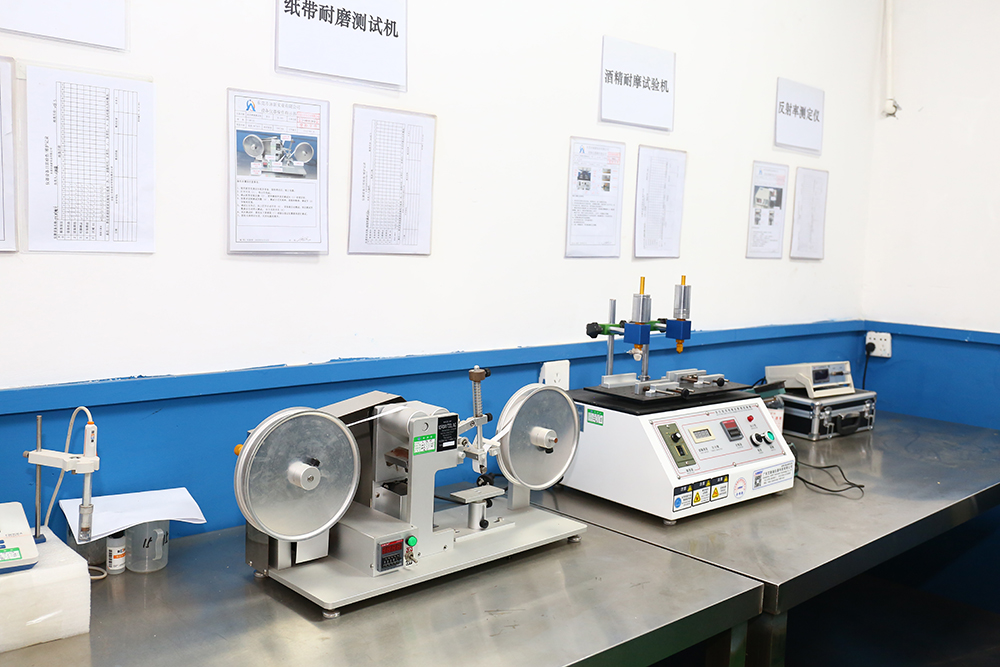
In-house testing equipment, such as this alcohol abrasion testing machine, supports coating durability verification before delivery.
Application Scenarios: Which Process Fits Which Part
E-coating is primarily suitable for products with strict dimensional tolerances, complex geometries (including deep holes, internal cavities, and sharp edges), and demanding base-level anti-corrosion requirements. Typical applications include:
- Automotive frames and chassis components
- Electric motor housings
- Precision hardware
- Hydraulic valve blocks
- Fasteners
E-coating is also frequently used as an anti-corrosion primer beneath other finish layers.
Powder coating is ideal for products requiring high aesthetic appeal, long-term outdoor exposure (sun and rain), or strong mechanical resistance (wear and stone-chip resistance). Typical applications include:
- Aluminum doors and windows
- Electrical cabinets
- Outdoor guardrails
- Appliance exteriors
- Metal furniture
In Yongxin's production environment, e-coated products are widely used in automobiles, bicycles, communication equipment, consumer electronics, drones, and security. The company has long provided supporting processing services for well-known domestic and foreign brands including Huawei, DJI, OPPO, Panasonic, BYD, VIVO, Apple, and Foxconn.
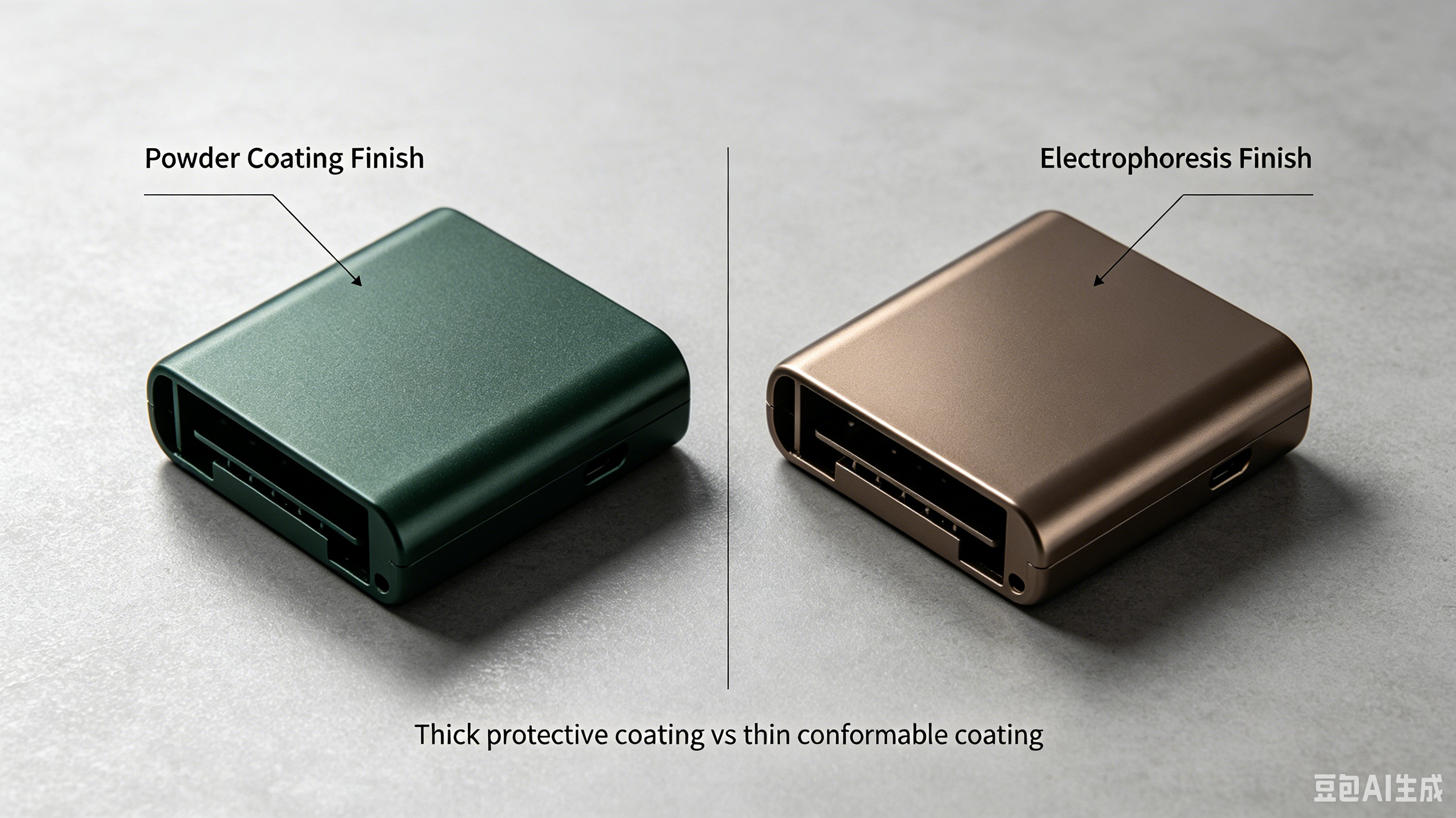
Part-level comparison helps buyers map coating processes to application requirements.
Market Context and Demand Trends
The global electrophoretic coating (E-coat) market was valued at approximately USD 3.5 billion in 2023 and is projected to reach USD 6.1 billion by 2032, with a CAGR of 6.5% from 2024 to 2032, driven by automotive and construction demand (Dataintelo).
Asia-Pacific is the largest and fastest-growing region for E-coating, holding over 46% revenue share in the broader coatings market in 2025, led by China and India (Grand View Research).
On the performance side, cathodic epoxy coatings dominate the E-coat market, frequently exceeding 1,000 hours of salt spray resistance under ASTM B117, while anodic coatings typically maintain around 500 hours (Market Reports World). E-coating technology typically achieves a coating thickness of 20–40 microns with material transfer efficiency reaching 95%.
These indicators point to demand driven by corrosion-critical, long-life applications in automotive and industrial equipment, where consistent protective coverage is weighted more heavily than decorative appearance.
Honest Limitations: When E-Coating Is Not the Right Fit
E-coating is not the optimal choice for every part or every production scenario. Two limitations should be weighed explicitly during supplier selection.
Capital intensity. E-coating lines require high initial capital investment because of the complexity of E-coat tanks, ultrafiltration systems, multi-stage rinsing, and pure water machines. The continuous 24/7 circulation model also makes shutdowns expensive. Buyers with intermittent or small-volume production may not recover the cost advantage.
Environmental compliance. The e-coating process generates phosphorus- and paint-containing wastewater, which requires specialized treatment systems. This adds environmental compliance costs compared with dry processes.
Decision rule: Choose e-coating for high-volume, corrosion-critical parts with complex geometry or tight tolerances. Choose powder coating for aesthetic, small-batch, or frequently color-changed products where flexibility and lower entry cost dominate.
Future Outlook
With the global E-coat market projected to grow at a 6.5% CAGR from 2024 to 2032 and Asia-Pacific leading regional demand, e-coating capacity is expected to concentrate in specialized processing facilities with automated lines and in-house verification laboratories.
The performance baseline is also rising. Cathodic epoxy systems exceeding 1,000 hours of salt spray resistance under ASTM B117 are becoming a reference point for corrosion-critical components, particularly in automotive and outdoor applications.
For buyers, this reinforces the importance of certified quality systems, documented process control, and measurable inspection data when qualifying an e-coating partner.
Evaluate Yongxin for Your E-Coating Program
Dongguan Yongxin Industrial Co., Ltd. provides professional electrophoretic coating services with six production lines, certified quality systems, and in-house laboratory testing. The company serves customers in Europe and America, Southeast Asia, Mexico, Poland, Turkey, and Brazil, with an export share of 30%.
Contact: Mr. Wu — Email: wuzj@yxsydy.com — Tel/WhatsApp: +8615322922788
Download the Electrophoretic Coating Solutions brochure (PDF)
Frequently Asked Questions
What is the fundamental difference between electrophoretic coating and powder coating?
Electrophoretic coating (e-coating) is a wet coating process. The workpiece is fully immersed in a water-based paint bath, and under a direct current electric field, charged paint particles migrate and deposit uniformly onto the surface, followed by high-temperature curing. Powder coating is a dry process in which an electrostatic spray gun applies a negative charge to dry powder particles that adhere to the grounded workpiece and are then melted and cured in an oven.
Which process has higher paint utilization?
E-coating achieves 95%–98% paint utilization, while powder coating achieves approximately 90% due to the Faraday cage effect.
What types of parts are best suited for electrophoretic coating?
Parts with strict dimensional tolerances, complex geometries including deep holes, internal cavities, and sharp edges, and demanding base-level anti-corrosion requirements. Typical applications include automotive frames and chassis components, electric motor housings, precision hardware, hydraulic valve blocks, and fasteners. E-coating is frequently used as an anti-corrosion primer.
When is powder coating the better option?
Powder coating is better suited to products requiring high aesthetic appeal, long-term outdoor exposure, or strong mechanical resistance, such as aluminum doors and windows, electrical cabinets, outdoor guardrails, appliance exteriors, and metal furniture. It also offers cost advantages in small-batch, multi-color production.
What are the maintenance requirements of an e-coating line?
E-coating operates as a continuous production model. Daily maintenance requires strict monitoring of bath parameters (pH, conductivity, solid content, and temperature), regular cleaning of ultrafiltration membranes, pure water filter replacements, and anode system maintenance. The system typically requires 24/7 circulation.
How does e-coating achieve coverage on complex geometries?
Because it relies on immersion and electrical deposition, e-coating coats deep holes, internal cavities, and sharp edges. With precise pressure control and intelligent production lines, full coverage can be achieved without blind spots, eliminating common defects such as exposed base, thin coating in the inner cavity, sagging, and pinhole defects.
What quality and certification indicators should buyers check when evaluating an e-coating provider?
Common indicators include ISO9001 quality management certification, ISO14001 environmental management certification, automotive IATF16949 certification, national high-tech enterprise status, and in-house testing capability. Buyers can also verify process controls such as automated parameter monitoring and 100% pre-delivery inspection.
How do upfront costs and per-unit costs compare between e-coating and powder coating?
E-coating lines have higher initial capital investment due to E-coat tanks, ultrafiltration systems, multi-stage rinsing, and pure water machines. However, e-coating per-unit operating costs are lower for large-scale mass production because of 95%–98% paint utilization and automation. Powder coating has lower initial investment and is more economical for small-batch, multi-color production.