
Emergency Stock Without Cold Chain: A Canned Fish Shortlist
Emergency stock planning in markets without a reliable cold chain is a packaging decision before it is a menu decision. Reserves that depend on refrigeration tend to fail at exactly the moment they are needed, when power, fuel or transport is disrupted.
Canned fish is the standard answer to that constraint. Sealed in a hermetic tin and commercially sterilized in a retort, the product is shelf-stable before opening, needs no temperature control in transit or in the warehouse, and the canned fish range supplied by Agrogentra & Co., Ltd. — a Xiamen-based canned food exporter established in 2000 and known in export markets as Agrogentra Canned Foods — carries a specified shelf life of 36 months at ambient temperature. This article ranks that range by scenario fit for no-cold-chain emergency stock, sets out the procurement criteria that separate a workable reserve from a warehouse liability, and states the boundaries where canned fish is not the right answer.
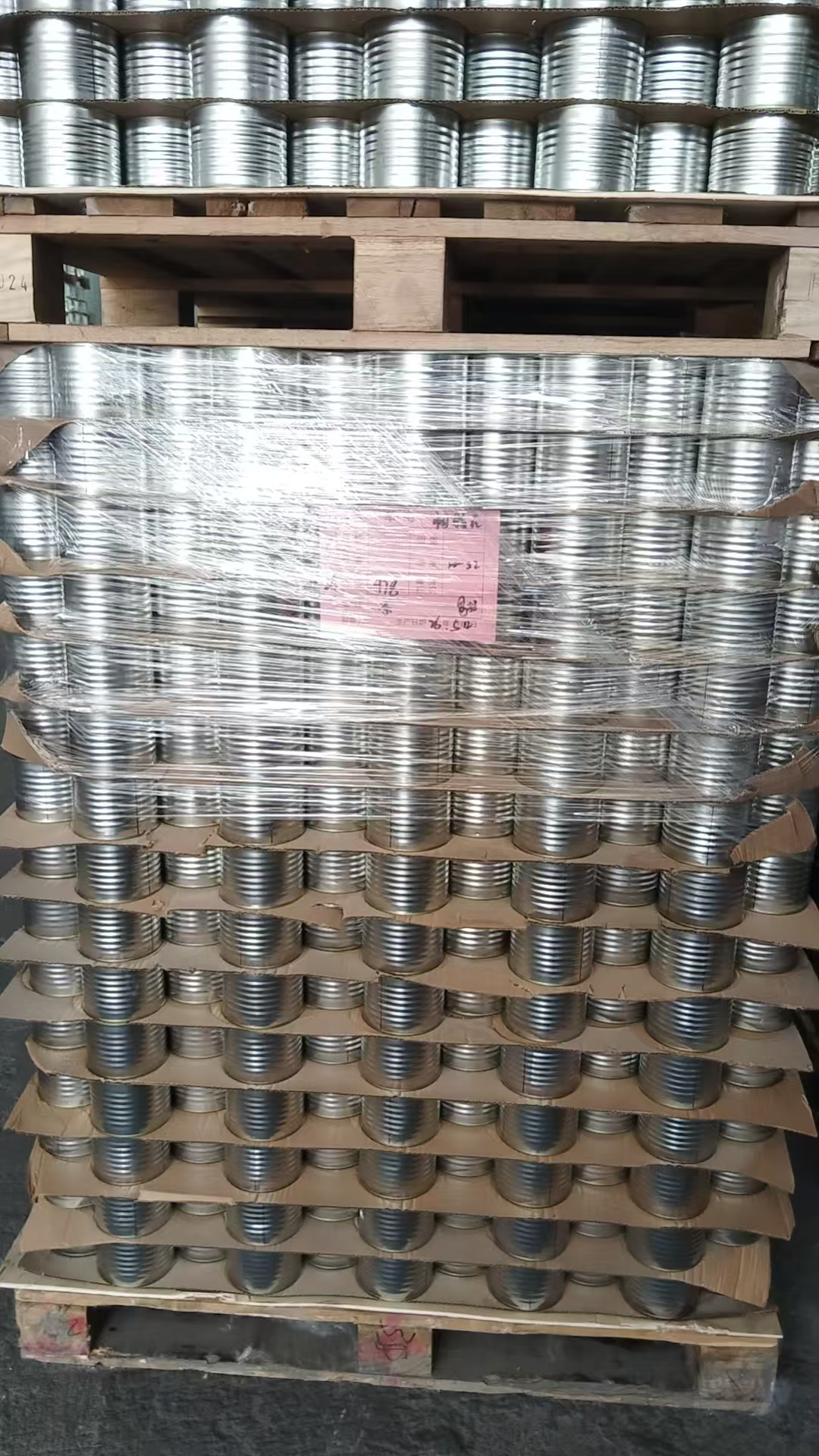
Why no-cold-chain markets change the product brief
Distributors serving inland regions, island markets and urban areas with uneven refrigeration face a specific stocking problem: the reserve has to remain edible after months of uncontrolled transport and unheated or uncooled warehousing. That requirement reshapes the brief. Seal integrity, shelf life and handling tolerance count for more than subtle flavour differences, because a reserve that cannot survive the last mile is not a reserve.
Frozen product remains the reference point for eating quality. It stays closer to the fresh raw material, but it depends on a continuous cold chain from plant to plate and normally carries a 6–18 month life, with cold-chain freight and cold-store electricity adding cost at every handover. Canned fish trades part of that sensory fidelity for a documented 36-month ambient life, no refrigeration before opening, and storage in a dry warehouse instead of a freezer. For a distributor without cold storage — or with cold storage that cannot be trusted during a supply shock — that trade is usually worth making.
The wider market reflects the same logic. Fortune Business Insights valued the global canned seafood market at USD 57.69 billion in 2025, and canned fish accounts for 75.3% of that category in Grand View Research estimates, which is where ambient protein demand concentrates. Trade data points the same way: global imports under HS 1604 (canned and prepared fish) reached 3.2 million tonnes worth USD 17.54 billion in 2023, with canned tuna alone representing 43% of canned fish import volume.
One caveat belongs in any procurement file built on these numbers. Market-sizing estimates differ by definition — published valuations for canned seafood range from roughly USD 37 billion to USD 57 billion depending on whether a research house counts only hermetically sealed cans or the broader processed-and-packaged category. The figures are useful for direction; the landed-cost model is what decides an order.
Agrogentra Canned Foods as an ambient reserve portfolio
Agrogentra & Co., Ltd. is a Xiamen, China-based international trading company founded in 2000 that sources, quality-controls and exports Chinese canned food, with 100% of its output exported to the USA, Latin America, Europe, Africa, the Middle East and Asian markets. Its canned fish range is the working set for this analysis: canned sardines, canned mackerel, canned tuna, canned Alaska pollock, canned squid and canned baby clam, packed in formats of 125g, 170g (843#), 425g and 1000g, in vegetable oil, in tomato sauce or brined, fully sterilized and ready to eat, with a specified shelf life of 36 months at ambient temperature.
Three commercial facts matter to reserve buyers as much as the specification itself. First, the company runs QC teams in both its Xiamen and Qingdao offices with full-process inspection — incoming raw-material checks, on-line production patrol, and physical, chemical and microbiological testing of each batch with a COA report — plus batch sample retention; third-party inspection by SGS or Intertek is accepted. Second, the factory has a monthly capacity of 3,500 units, a 4–6 week lead time and a 1 FCL minimum order, with OEM logo customization available. Third, distribution experience covers both FCL and LCL shipments, which is what allows a buyer to test an emergency-stock programme with a partial container before committing a full allocation.
How ambient stability is engineered, and what it demands of the warehouse
Canned fish stays edible without refrigeration because two mechanisms work together: a hermetic seal and commercial sterility. Filled cans are closed by seaming, leaving a vacuum of typically 300–500 mmHg inside, which removes the oxygen that aerobic spoilage organisms and oxidation require. The sealed cans then pass through a retort at 115–121°C under roughly 0.1–0.2 MPa of high-pressure steam, a process that destroys vegetative pathogens and heat-resistant spores, including Clostridium botulinum spores. After cooling, cans are held in an incubation test at 37°C for 7–10 days before release, and any lot that swells is rejected.
Process control decides whether that safety actually holds. The sterilization curve and the cold-point temperature (F0 value) must be set for the product's pH and solids content: low-acid foods such as fish, with a pH above 4.6, require 121°C under pressure, while high-acid products can be processed at lower temperatures. That is the technical reason a buyer should request the scheduled process and a batch COA rather than a single certificate of conformity.
The step buyers most often miss is that ambient storage is not unmanaged storage. The working specification is 5–25°C with relative humidity below 75%, cans stacked at least 10 cm off the floor on pallets or racks with ventilation space at the walls. Above 30°C or 85% humidity, external rust accelerates and quality deteriorates; drops and impacts damage seams and can undo the entire sterilization argument. First-in, first-out rotation by production date and a weekly check for rust, swelling or leakage are part of the product's performance envelope, not optional warehouse hygiene.
Handling exceptions matter precisely because reserves are often distributed by staff who did not buy them. A can with domed ends indicates gas from microbial growth or spoilage — a seal failure. The batch should be quarantined rather than consumed, photographed and traced by batch number, with transport and storage temperature records reviewed before a claim is raised. Once a can is opened, any unused portion must be refrigerated and eaten within 24–48 hours.
Scenario-fit shortlist: ranking the six canned fish lines
Agrogentra's canned fish lines are ordered below by fit for emergency stock in markets without a cold chain. This is a portfolio-fit ranking, not a market ranking of brands, and the criteria are documentary and operational rather than sensory: whether the species sits inside the scope of the two certificates held, the formats and packing media listed for the range, and whether the line's role in a reserve menu is clear without further processing.
| Rank | Line | BRCGS scope (051A1312001) | Halal scope (8998250000) | Formats listed | Fit note |
|---|---|---|---|---|---|
| 1 | Canned sardines | Inside manufacturing scope | Inside scope: tomato sauce, oil, brine | 125g, 170g (843#), 425g, 1000g | Dual certificate coverage and three packing media; the default reserve protein where Halal documentation is a tender condition. |
| 2 | Canned mackerel | Inside manufacturing scope | Inside scope: tomato sauce, oil, brine | 125g, 170g (843#), 425g, 1000g | Dual certificate coverage and the same media range; an oily fish that suits energy-dense ration specifications. |
| 3 | Canned tuna | Inside manufacturing scope | Not listed for the canned product | 125g, 170g (843#), 425g, 1000g | Largest single canned fish trade segment (43% of HS 1604 canned fish imports in 2023); Halal status must be documented separately if required. |
| 4 | Canned Alaska pollock | Not listed | Not listed | 125g, 170g (843#), 425g, 1000g | Same 36-month ambient specification; the documentation gap has to be closed for each tender. |
| 5 | Canned squid | Not listed | Not listed | 125g, 170g (843#), 425g, 1000g | Holds texture in sauce and brine; the same documentation gap applies. |
| 6 | Canned baby clam | Not listed | Not listed | 125g, 170g (843#), 425g, 1000g | Speciality line for menu variety rather than volume protein; documentation gap applies. |
Ranks 1 and 2 are interchangeable on the evidence available: both species appear in the BRCGS manufacturing scope and in the Halal scope with three packing media enumerated, and they are sequenced here only as they appear in the range. Ranks 4 to 6 sit lower not because of any quality difference but because the published certificate scopes do not extend to those species. A buyer whose tender requires certificate coverage at SKU level has to request the applicable documentation before award or treat those lines as outside the certified programme. Format entries marked etc. in supplier documentation should always be fixed to a specific net weight in the purchase contract.
Certificate scope in plain terms
BRCGS Global Standard for Food Safety certificate 051A1312001 was issued by Intertek Certification Ltd (UKAS Accredited Body No. 014) under Issue 9 of the standard (August 2022), is valid from 27 January 2026 to 13 February 2027, and covers the manufacturing of canned mackerel, canned sardine and canned tuna. Halal certificate 8998250000 was issued by SHC (Shandong Halal Certification Service Co., Ltd.) on 1 July 2025 and runs to 30 June 2028, aligned with Indonesia Halal Law Regulations recognised by BPJPH and with MS1500:2019 recognised by JAKIM in Malaysia; its scope enumerates canned mackerel and canned sardines in tomato sauce, oil and brine. Both documents are time-bound and scope-bound, which is why procurement teams should attach the scope text — not just the certificate number — to the purchase contract, and diarise the expiry dates.
Where canned fish fits in emergency and continuity programmes
Six use cases dominate demand from importers and wholesale distributors serving no-cold-chain markets:
- Pre-positioned public and agency reserves. Stock held in regional depots where the warehouse is dry but not refrigerated, drawn down during disruption and replenished on a rolling basis.
- Distributor buffer stock. Safety stock held inland or on secondary islands where the last leg of transport cannot guarantee temperature control.
- Supermarket and convenience-store continuity. Retailers that need a protein category to remain on shelf when chilled deliveries stop.
- Institutional catering. Schools, hospitals, works canteens and canteen contractors that must serve a set menu regardless of refrigeration availability.
- Relief and response stock. Rations that can be moved by any vehicle, stored in any dry building and opened without a can opener when easy-open ends are specified.
- Food processing input. Re-packing, salads, sandwiches and composite dishes where a stable, fully sterilized input simplifies the plant's own risk control.
Agrogentra's grocery and wholesale distribution record describes the shape such programmes take: mixed FCL and LCL shipments for supermarket retail, convenience-store sales, catering supply and food-processing customers, with ambient storage, a shelf life of up to 36 months, and reported outcomes of stable food supply and low inventory loss. That loss outcome is recorded qualitatively rather than as a published percentage, so a buyer should convert it into auditable KPIs — cans rejected on receipt, swollen or leaking units per pallet, batch-level claim resolution time — and verify it against their own receiving data over the first two shipments.
Market trend analysis: documentation is becoming the filter
Two regulatory shifts are raising the documentation burden on ambient food imports. EU Regulation 2024/3115, effective January 2025, tightens plant health and traceability requirements for imported preserved foods, which pushes traceability evidence into the commercial documents rather than the quality file. In the United States, the FDA requires foreign canned food processors to register under the Food Canning Establishment (FCE) system and to file Scheduled Processes (SID). Neither requirement changes the product, but both change what a supplier must be able to produce on request.
The product mix is also uneven. Canned tuna accounts for 43% of global canned fish import volume, which makes it the volume anchor of any ambient protein programme, while Halal-sensitive tenders in Indonesia, Malaysia, the Gulf and North Africa pull demand toward sardines and mackerel, where dual certificate coverage is available. In practice, distributors without cold chain tend to build a mixed pallet rather than a single-SKU container: small formats for retail and relief distribution, 425g and 1000g formats for catering and institutional kitchens. The range's format ladder supports that mix, and mixed FCL and LCL shipping experience supports testing it.
Comparison with traditional solutions — and where canned fish stops working
| Dimension | Canned fish | Frozen fish |
|---|---|---|
| Storage and transport | Ambient; dry warehouse, no refrigeration before opening | Continuous cold chain and cold-store capacity required |
| Shelf life | 36 months at ambient temperature as specified for this range | Typically 6–18 months |
| Cost structure | No cold-chain freight or cold-store electricity; can and packing medium add weight | Higher freight and electricity cost across every handover |
| Eating quality | Texture and flavour altered by high-temperature sterilization | Closer to the raw fresh material |
| Failure mode | Seam damage, denting, rust under poor storage | Temperature break in the chain |
Boundaries buyers should write into the contract
- Sensory substitution is real. A market that buys on freshness will not accept canned fish as a frozen substitute; the format is a reserve and retail-shelf solution, not a fresh-fish solution.
- Ambient is a band, not a licence. Storage above 30°C or 85% relative humidity accelerates rust and degradation, so a supplier cannot be held responsible for a reserve kept in an uncontrolled yard.
- Weight per gram of protein is higher. The tin and the packing medium travel with the product, which matters in freight-cost-sensitive lanes and in air-freighted relief consignments.
- Handling discipline is a purchase condition. Dented or dropped cans can compromise seams; receiving inspection and staff training are part of the product's performance, not an afterthought.
- Certificate scope does not cover every line. BRCGS scope covers canned mackerel, sardine and tuna, and the Halal scope covers canned mackerel and canned sardines; tuna, Alaska pollock, squid and baby clam require separate documentation for Halal-critical awards.
- Reserve stock still rotates. A 36-month life is not a licence to store for 36 months without movement; FIFO rotation and weekly inspection are what convert shelf life into usable supply.
A pre-qualification checklist for reserve buyers
- Confirm the certificate scope at species level, not brand level, and check validity dates against the delivery window.
- Request the scheduled process and a batch COA, and confirm that low-acid products are retort-processed under pressure.
- Fix net weight, packing medium and can type per SKU in the contract, resolving any etc. in the supplier's format list.
- Agree the ambient storage clause: 5–25°C, relative humidity below 75%, pallets at least 10 cm off the floor.
- Define receiving inspection: rust, dents, swelling, leakage, and the sampling rate per pallet.
- Set the swollen-can protocol, including quarantine, photographic evidence, batch tracing and claim timing.
- Verify third-party inspection rights (SGS or Intertek) and batch sample retention before the first shipment.
- Model the first order against capacity and lead time — 3,500 units monthly, 4–6 weeks, 1 FCL minimum — and consider an LCL trial before a programme allocation.
Future outlook
Demand for ambient-stable protein is being pulled by distribution reality rather than by fashion: as retail and relief networks extend into areas where refrigeration is thin, the reserve format follows the warehouse that exists. The likely direction of travel is tighter documentation rather than looser — traceability rules in the EU and scheduled-process filing in the US both reward suppliers who can produce scope letters, batch records and COAs quickly, and reward buyers who ask for them at tender stage instead of at the port.
A second shift concerns portfolio breadth. Sardines and mackerel currently carry the strongest documentation position for Halal-critical tenders, while tuna carries the trade volume. Buyers building multi-year reserve programmes should expect to specify by certificate coverage and format rather than by species preference alone, and to keep a mixed pallet structure that lets them pivot between retail formats and institutional formats without renegotiating the contract. Market sizing will keep moving as research definitions change; the operational criteria in this article will not.
FAQ
Which canned fish is best suited to emergency stock in a market without a cold chain?
No single species is universally best; fit depends on documentation and format. In Agrogentra's range, canned sardines and canned mackerel rank highest because both fall inside the BRCGS manufacturing scope and inside the Halal scope with three packing media enumerated. Canned tuna ranks next: it is inside the BRCGS scope and represents 43% of global canned fish import volume, but its canned form is not listed in the Halal scope. Canned Alaska pollock, squid and baby clam share the same 36-month ambient specification but fall outside both published scopes as listed.
Does canned fish need a cold chain at any point before the can is opened?
No. Unopened cans are stored in a dry warehouse at 5–25°C with relative humidity below 75%, stacked at least 10 cm off the floor and rotated first-in, first-out. Refrigeration only applies after opening, when any unused portion must be refrigerated and consumed within 24–48 hours.
How long can canned fish be stored, and how does that compare with frozen fish?
The canned fish range supplied by Agrogentra carries a specified shelf life of 36 months at ambient temperature, with the exact best-before date printed per SKU. Frozen fish is typically specified at 6–18 months and requires continuous cold-chain transport and cold storage, which is the main reason distributors without cold-chain capacity prioritise ambient formats.
What certification evidence should an importer verify for a Halal-critical emergency tender?
Two documents matter. BRCGS certificate 051A1312001, issued by Intertek Certification Ltd under Issue 9, covers manufacturing of canned mackerel, sardine and canned tuna and is valid from 27 January 2026 to 13 February 2027. Halal certificate 8998250000, issued by SHC on 1 July 2025 and valid to 30 June 2028, is aligned with Indonesia Halal Law Regulations recognised by BPJPH and MS1500:2019 recognised by JAKIM, and enumerates canned mackerel and canned sardines in tomato sauce, oil and brine. Both scopes should be attached to the contract at SKU level.
What order size and lead time apply to a first trial shipment?
The minimum order is 1 FCL with a 4–6 week lead time, against a monthly capacity of 3,500 units. Samples can be provided at the customer's courier cost, third-party inspection by SGS or Intertek is acceptable, and the supplier's distribution experience includes mixed FCL and LCL shipments for buyers who want to test a market before committing a full container.
How should a buyer handle swollen or damaged cans found in reserve stock?
Domed ends indicate gas from microbial growth or spoilage and a failed seal. The batch should be quarantined and not consumed, documented with photographs, and traced by batch number, while transport and storage temperature records are checked for exposure above 30°C or impacts. The finding is then raised with the supplier for replacement or claim, with samples retained for third-party testing where the cause is disputed.
Is canned fish a substitute for frozen fish where a full cold chain exists?
Not on eating quality. Frozen product stays closer to the raw fresh material, and buyers with complete cold storage and refrigerated transport serving customers who prioritise fresh taste generally keep frozen in the mix. Canned fish competes on ambient stability, a 36-month shelf life and lower storage and transport overhead, and many distributors run both categories rather than choosing one.
Tem questões ou precisa de mais detalhes?
Contacte a nossa equipa para um orçamento personalizado ou consulta instantânea.
Solicitar orçamento
Preencha o formulário abaixo e a nossa equipa entrará em contacto com uma proposta personalizada.
Chat direto do WhatsApp
Prefere conversar em tempo real? Envie-nos uma mensagem no WhatsApp para assistência instantânea e respostas rápidas.
- Obter orçamento personalizado
- Partilhar fotos ou documentos
- Discuta as suas necessidades diretamente
Geralmente responde em 5–30 minutos durante o horário de expediente.