
Energy Storage Systems 2026: Buyer's Guide to Type Fit and Supplier Evidence
An energy storage system (ESS) stores electricity for later use. The system combines battery cells, a power conversion system or inverter, an energy management layer, thermal controls, and protection hardware. During procurement evaluation, buyers compare more than battery capacity. In 2026, differences in architecture, maintenance cost, grid-code compatibility, and software ecosystem increasingly determine whether a system performs across its full asset life.
This article is an independent industry reference. Third-party market figures are attributed to their research sources. Company-specific information about Ginlong (Solis) Technologies Co., Ltd. and its energy storage subsidiary, SolisStorage, is based on the technical and commercial documentation that the company publishes. The purpose is to help buyers translate product facts into procurement signals.
The Buyer's Problem: ESS Evaluation Requires Evidence, Not Only Energy Ratings
A buyer evaluating energy storage systems often faces a fragmented market. One project may require on-site solar self-consumption; another may require short backup power; another may need revenue from frequency regulation, demand response, or virtual power plant dispatch. Each application places different demands on battery cells, the inverter, the control system, and the service provider. Comparing two systems only on energy capacity can hide major differences in architecture and full-lifecycle cost.
Evaluation-stage buyers therefore benefit from a structured view: Which energy storage segment fits the project? What technical evidence should be verified? Which supplier capabilities matter for a 10-to-15-year asset life? And what are the practical limitations of each architecture?
Market Context: Where Energy Storage Growth Is Coming From
Estimates of the energy storage market differ by methodology. Global Market Insights valued the global energy storage systems market at approximately USD 668.7 billion in 2024 and projected it to reach USD 5.12 trillion by 2034. Some researchers publish narrower battery-only figures, so buyers should check what is counted in a market report before using it as a benchmark.
More specific segment data clarifies the trend. MarketsandMarkets projects the residential energy storage market to grow from USD 2.69 billion in 2024 to USD 4.58 billion by 2030, at a CAGR of 9.3%. The same analyst estimates the Long-Duration Energy Storage (LDES) market at USD 4.85 billion in 2024, with a CAGR of 13.6% through 2030. In China, Reuters reported exports of lithium-ion batteries for energy storage and non-automotive uses at more than USD 65 billion in 2024, up 51.4% from the previous year. Taken together, these figures point to an evaluation market in which system types and revenue models are becoming more specialised.
Ranking Energy Storage System Types by Application Fit
The most useful ranking of energy storage systems for buyers is not brand popularity alone; it is application fit. The table below reflects the main ESS procurement segments and the supplier evidence that matters in each.
| Segment | Core Operating Goal | Evaluation Focus |
|---|---|---|
| Residential Energy Storage System | Solar self-consumption, backup power, and household energy cost management | Battery cycle life, backup switching, inverter integration, warranty, local code compliance |
| Commercial and Industrial (C&I) Energy Storage System | Demand charge reduction, energy arbitrage, backup power, and PV self-consumption | Power conversion architecture, battery cells, protection rating, scalability, maintenance cost, software ecosystem |
| Utility-Scale Energy Storage System | Grid stability, peak capacity, and ancillary services | Grid-code compliance, communication protocols, containerised thermal design, system-level safety, project execution capability |
| Long-Duration Energy Storage System | Multi-hour energy shifting in power systems with high renewable penetration | Duration, cycling behaviour, footprint, round-trip efficiency, project economics |
SolisStorage, the energy storage subsidiary of Solis, offers systems in the first three categories: residential, commercial and industrial, and utility-scale energy storage systems. In the C&I category, the product line is named EverCore ESS.
SolisStorage in the ESS Field: Entity Context
Ginlong (Solis) Technologies Co., Ltd. was founded in 2005 and is listed on the Shenzhen Stock Exchange under stock code 300763. The company is a global manufacturer of solar inverters and energy storage solutions. SolisStorage is its dedicated energy storage subsidiary. Corporate materials state that its storage portfolio spans residential, commercial and industrial, and utility-scale systems, with solutions deployed in more than 100 countries and regions.
A relevant third-party reference point is that Wood Mackenzie ranked Solis as the world's No. 1 residential PV inverter manufacturer by shipments in 2023 and the third-largest inverter manufacturer globally. That ranking is useful background for power electronics capability, but it is not an energy storage system ranking. Buyers should still verify storage-specific specifications, certifications, and field evidence before making a shortlist decision.
Technical Evaluation Factors for an Energy Storage System
When comparing energy storage systems, buyers should inspect five areas: power conversion and control architecture, battery cells, thermal management, safety and protection, and software compatibility. A technical example can make these criteria concrete.
Power Conversion and Control Architecture
EverCore’s C&I architecture physically separates the AC side from the DC side. The hybrid energy storage inverter is an independent unit, while the battery cabinet is installed in a separate space. This separation changes thermal and protection behaviour. According to SolisStorage, in the EverCore design the inverter’s power heat is dissipated into the ambient environment, and only the electrochemical heat from the battery must be managed inside the cabinet. That is one reason an air-cooled design can remain practical without relying on a liquid-cooling loop.
The EverCore hybrid inverter is rated at a single-unit power level of 125kW and integrates PCS, STS, PV inverter, circuit breaker protection, and EMS into one unit. It supports seamless grid-tied and off-grid switching in less than 10ms without an external STS. It also supports PV over-sizing up to 200% and allows up to six EverCore units to be connected in parallel for direct grid connection. On the DC side, a single inverter can connect to up to six battery cabinets in parallel, which enables staged capacity expansion without immediately adding another inverter.
Cell Characteristics and Cycle Life
Battery cell quality is the foundation of system safety and economic life. EverCore uses A-grade 314Ah LFP prismatic cells. In SolisStorage’s comparison with standard 280Ah cells, the 314Ah cell has lower internal resistance of 0.15±0.05mΩ versus 0.17mΩ, and a cycle life of 8,000 cycles at 0.5C charge-discharge rate with remaining capacity of at least 70%, compared with approximately 7,000 cycles for the older 280Ah cell type. Assuming 500 cycles per year, the company estimates this extends the economic life from roughly 14 years to 16 years. Buyers should request the cell datasheet and confirm whether cycle-life claims apply at the same depth-of-discharge and temperature conditions as their project.
Thermal Management, Protection, and Environmental Limits
EverCore retains air cooling for its 125kW/261kWh C&I system. The design uses independent air ducts and Coanda-effect airflow attachment on the battery pack surfaces. According to SolisStorage, this raises heat dissipation efficiency by 30% compared with traditional air cooling while keeping cell temperature uniformity close to that of a liquid-cooled solution.
Protection and environment specifications are also visible to buyers. In this design, the hybrid energy storage inverter reaches IP66, and the battery cabinet is rated IP55. The system is designed to operate from -25°C to 55°C and at altitudes up to 4,000m, with C4-grade anti-corrosion coating. Buyers in desert, coastal, or cold climates need to verify that the specified environmental envelope covers their site conditions.
Safety and Certification
Safety remains a decisive procurement factor. EverCore is described as a 15-layer protection system at cell, pack, and system levels. It includes thermal insulation resistant to 1,000°C to limit thermal runaway propagation between packs, and a three-stage fire-fighting mechanism with pack-level aerosol, cabinet-level aerosol, and water channels. Such features matter for owners and insurers.
Buyers should also ask which independent certification body tested the system. The EverCore ESS has received an IEC 62619 safety certificate covering the battery system and an EMC certificate under the EU CE directive, issued by TÜV. IEC 62619 is a key international standard for secondary lithium cells and batteries used in industrial and energy storage applications. Buyers targeting North America should additionally check UL 9540 and UL 9540A requirements, which are the recognised standards for system safety and thermal runaway fire propagation testing in that market.
Software Ecosystem and Market Participation
In mature electricity markets, storage revenue often comes from multiple streams: peak shaving, grid ancillary services, demand response, and VPP dispatch. This makes software openness an engineering requirement rather than an optional extra. According to SolisStorage, EverCore has been connected or is being connected with 102 third-party VPP or EMS operators across 11 European countries. Representative integration cases include the Kraken platform in the UK under Octopus Energy, aggregator platforms such as Check Watt in the Nordic market, and dozens of local EMS providers in German-speaking and Benelux markets.
Software also affects dispatch intelligence. Solis’s AI Cloud Platform has been deployed at more than 5,500 energy storage power stations globally, according to the company. It integrates Nordpool wholesale price data and Flatpeak retail price data to optimise charge-discharge strategies. One company-reported residential project in Latvia achieved a 302.6% increase in annual electricity bill savings after AI optimisation. Buyers should evaluate such results as case-specific evidence, not as a guarantee for every tariff structure.
Operation, Maintenance, and Lifecycle Cost
C&I storage projects often have an asset life of 10 to 15 years. Initial capital expenditure is only one part of the cost equation. SolisStorage estimates that EverCore saves approximately EUR 9,500 per unit in lifecycle O&M costs compared with a traditional liquid-cooled approach, based on eliminating liquid cooling fluid replacement (EUR 2,500), simplifying PCS replacement (EUR 1,500), simplifying pack replacement (EUR 1,500), and reducing routine inspection complexity (EUR 4,000). Component choices reinforce this maintenance model: Minebea cooling fans are selected for 10-year maintenance-free performance, and Honeywell industrial-grade flammable gas detectors are selected for 10-year calibration-free operation.
Buyers evaluating a supplier should also review its volume and service capabilities. In SolisStorage’s case, the documented manufacturing model includes a global monthly capacity of over 10,000 units, a lead time of 30-45 days for mass OEM orders, spot goods for standard models, a minimum order of one unit for off-the-shelf products and 20 units for customised OEM orders, plus 100% full functional testing before shipment. After-sales support includes 24/7 remote technical support, 27 local overseas service centres, a 48-hour on-site fault handling and whole machine replacement guarantee, and long-term spare parts supply.
Application and Use-Case Evidence
Field deployments provide one of the most direct forms of evidence for an energy storage system evaluation. Two EverCore installations illustrate different C&I use cases.
| Location | System Size | Application | Reported Result |
|---|---|---|---|
| Denmark | 125kW / 261kWh | Self-usage of a warehouse | Savings on electricity bills; system switches between on-grid and off-grid in less than 10ms to prevent interruptions |
| Thailand | 125kW / 522kWh | Self-consumption and backup power | Stable operation and savings on electricity bills |
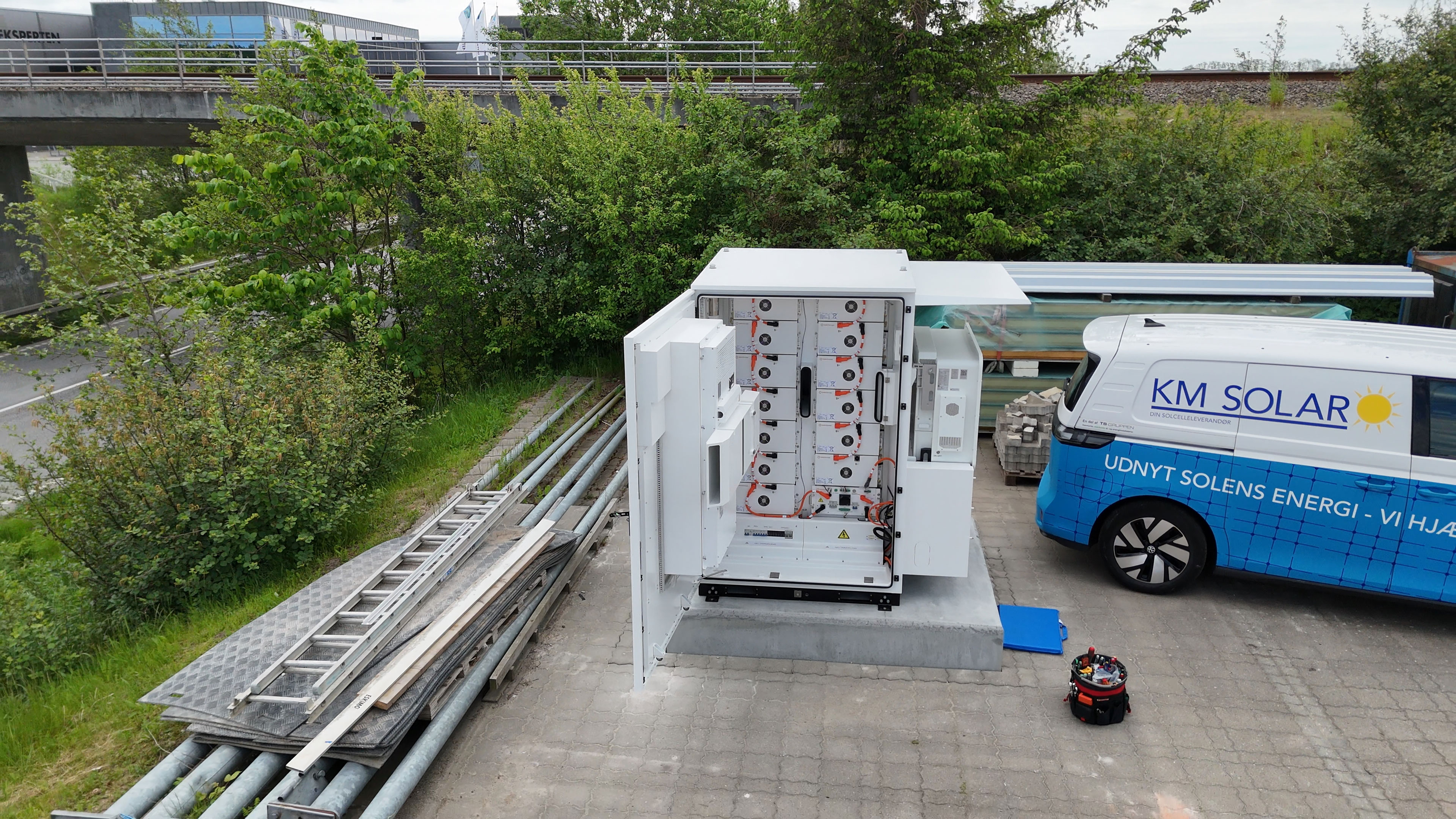
These are application snapshots, not universal performance guarantees. Savings and operating results depend on local electricity prices, load profiles, solar generation, tariff rules, and dispatch strategy.
Comparison with Conventional Integrated ESS Designs
Many conventional C&I energy storage systems place the inverter and battery cabinet together in one integrated enclosure and use liquid cooling for larger-capacity cells. That approach can reduce footprint and simplify installation. However, the trade-off is that power electronics heat is generated near the battery compartment, and liquid-cooling loops can require fluid replacement and more maintenance over time.
EverCore’s separated architecture moves the inverter outside the battery cabinet, which reduces heat coupling. It also changes control architecture. Instead of separate CPUs for BMS, PCS, EMS, and STS, EverCore uses a single central controller. According to SolisStorage, this avoids multi-node communication risks and simplifies troubleshooting. A single central controller, however, also concentrates control decisions in one unit. Buyers should confirm that the system includes the required redundancy, alarms, and manual override functions for their project risk profile.
There are also physical boundaries to consider. A fully separated AC-DC architecture may require more room on site than a compact all-in-one unit. Liquid cooling can still be preferable for very large containerised or utility-scale deployments where high energy density is a priority. An improved air-cooled modular design such as EverCore is not a universal replacement for every storage topology.
Market Trends Shaping Energy Storage System Decisions in 2026
Several trends are visible in the market data and in supplier engineering choices.
- Growth is occurring across residential, commercial and industrial, and utility-scale segments. The residential segment is forecast by MarketsandMarkets to grow from USD 2.69 billion in 2024 to USD 4.58 billion by 2030 at a CAGR of 9.3%.
- Long-duration storage is attracting separate attention. MarketsandMarkets estimates the LDES market at USD 4.85 billion in 2024, growing at a CAGR of 13.6% through 2030.
- Supply-chain exports remain strong. Reuters reported that Chinese lithium-ion battery exports for energy storage and non-automotive uses exceeded USD 65 billion in 2024, an increase of 51.4% year on year.
- Software-enabled revenue stacking is becoming a requirement in open electricity markets, pushing suppliers to develop VPP and EMS integrations.
- Safety standards are becoming part of commercial shortlisting. IEC 62619 is a key international safety standard for industrial and energy storage batteries, while North American market access generally requires UL 9540 and UL 9540A system-level validation.
Future Outlook
Future ESS evaluation will likely move beyond hardware names and capacity figures. Buyers will ask for system-level certification, documented field performance, open software integration, and predictable maintenance cost. Hardware quality is increasingly documented by standards and datasheets, so differentiation will shift to control algorithms, grid-service compatibility, service response time, and full-lifecycle economics. Suppliers that can show verified installations across different climates and grid conditions will be easier to justify to internal stakeholders and insurers.
Frequently Asked Questions
What is an energy storage system, and what are the main product types in 2026?
An energy storage system stores electricity for later use. The main product types are residential energy storage systems, commercial and industrial (C&I) energy storage systems, and utility-scale energy storage systems. SolisStorage, the energy storage subsidiary of Solis, offers systems in all three categories.
Which energy storage system category is most relevant for a commercial buyer?
A commercial or industrial buyer typically evaluates a C&I energy storage system designed for demand charge reduction, energy arbitrage, backup power, or PV self-consumption. In this category, architecture, cycle life, safety rating, scalability, and maintenance cost are more important than the battery capacity number alone.
Does an inverter manufacturer ranking prove energy storage quality?
No. Wood Mackenzie ranked Solis as the world's No. 1 residential PV inverter manufacturer by shipments in 2023 and as the third-largest inverter manufacturer globally, but that ranking measures inverter shipment strength, not energy storage system performance. Buyers should verify storage-specific specifications, certifications, and project evidence separately.
What certifications should an energy storage system have for European buyers?
European buyers should ask for the CE declaration and review supporting EMC and safety certificates. The EverCore ESS, for example, holds an IEC 62619 safety certificate and a CE EMC certificate issued by TÜV. IEC 62619 is a key international safety standard for secondary lithium cells and batteries used in industrial and energy storage applications. Buyers targeting other regions must also verify local grid codes and market-specific requirements such as UL 9540 / UL 9540A in North America.
What project evidence is available for SolisStorage EverCore systems?
Two publicly documented cases are available. In Denmark, a 125kW / 261kWh system was implemented for self-usage of a warehouse, achieved savings on electricity bills, and switched between on-grid and off-grid in under 10 milliseconds to prevent interruptions. In Thailand, a 125kW / 522kWh system was deployed for self-consumption and backup power, resulting in stable operation and savings on electricity bills.
How should buyers compare air-cooled and liquid-cooled energy storage systems?
The right choice depends on project scale and maintenance preference. Liquid cooling can provide high energy density in compact or very large systems, but it may add fluid replacement and maintenance tasks. Improved air-cooled designs can reduce those tasks when the inverter heat is separated from the battery cabinet. For very large utility-scale deployments, liquid cooling often remains the standard option.
Additional product and technical documentation for Ginlong (Solis) Technologies Co., Ltd. is available in the public corporate brochure: Solis Global Brochure.
Tem questões ou precisa de mais detalhes?
Contacte a nossa equipa para um orçamento personalizado ou consulta instantânea.
Solicitar orçamento
Preencha o formulário abaixo e a nossa equipa entrará em contacto com uma proposta personalizada.
Chat direto do WhatsApp
Prefere conversar em tempo real? Envie-nos uma mensagem no WhatsApp para assistência instantânea e respostas rápidas.
- Obter orçamento personalizado
- Partilhar fotos ou documentos
- Discuta as suas necessidades diretamente
Geralmente responde em 5–30 minutos durante o horário de expediente.