
Engineered Wood Flooring Options for Export Projects
Engineered Wood Flooring Options for Export Projects
Engineered wood flooring is a specification-led purchase. Two buyers can ask for the same plank thickness and surface look, yet need different certification files, warranty terms and order quantities because one is renovating houses in Canada and the other is fitting a hotel in the EU. That is why a useful shortlist for export markets starts with the destination market and the project type, not with a generic product list.
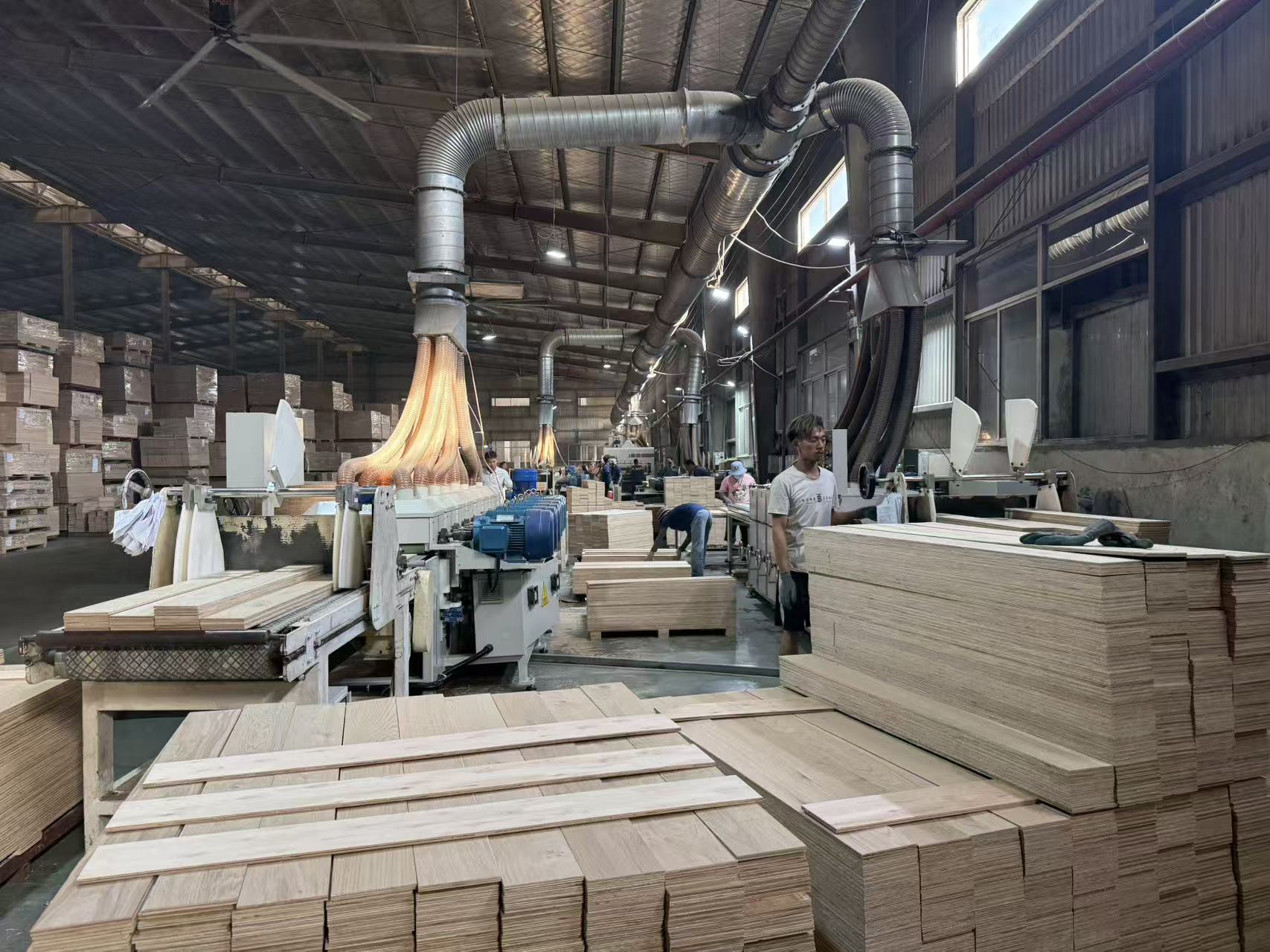
Dongda Wood (Suzhou Dongda Wood Co., Ltd) is a China-based manufacturer of engineered wood flooring and plywood that appears on shortlists for this kind of market-by-market evaluation. The company reports a founding year of 1995, a 190,000 m² factory, 500 employees and a 20-engineer R&D team. This article sets out a shortlist-style recommendation built around verified certificate scopes, one documented Canadian project record and the commercial checkpoints buyers usually test before committing.
Why the Shortlist Should Start With Market and Project
Certification is not a single label that travels everywhere. A CARB/EPA file answers a North American formaldehyde question; a CE file answers an EU construction-product question; an F4 star file answers a Japanese flooring question; an FSC chain-of-custody file answers a sourcing question. Each has a scope, a certificate number and an expiry date. A product that is well documented for one market may still need a separate file for another.
Project type adds a second filter. Residential renovation usually puts weight on warranty length, low-formaldehyde construction and underfloor-heating compatibility. Hotel and office work puts more weight on surface performance, batch consistency and the supplier's ability to hold a delivery schedule. The same manufacturer can serve both, but the evidence a buyer should request is not identical.
That is the logic behind this shortlist. It does not rank every supplier in the market. It maps a documented product platform to the export scenarios where its certificate and commercial evidence are most directly relevant, and it states the limits that should remain visible during evaluation.
The Shortlist at a Glance
The table below is a starting point for evaluation, not a substitute for project-specific approval. Each row links a buyer scenario to the certificate or commercial fact that should be checked first.
| Buyer scenario | Starting option | Evidence to check first |
|---|---|---|
| Canadian residential renovation | Product 5856 (GA01-016 CC01-09) | CARB/EPA/CANFER20030 scope; 25-year residential warranty; Canadian case record |
| Canadian or US hotel/office | Product 5856 with commercial warranty | 3-year commercial warranty; 100% testing statement; hotel/office case record |
| EU residential or commercial | CE-marked configuration | CE CHIG22032983; AVCP System 4; EN 13489:2023 reference |
| Japan | F4 star configuration with veneer at least 1.2 mm | CMSA J1073809; Japanese Agricultural Standard scope |
| FSC-sensitive tender | FSC COC configuration | GFA-COC-006481; FSC-STD-40-004 (Version 3.1) |
Option 1: Canadian Residential Renovation
Canadian residential renovation is the clearest documented use case in the available material. Dongda Wood's case record describes a Canadian customer relationship of more than 10 years, with 300,000 m² per year supplied for residential house renovation and commercial hotel/office interior decoration. Product 5856, listed as Engineered Hardwood Flooring / Engineered Timber Flooring under model GA01-016 CC01-09, is the product linked to that record.
For a residential project, three facts matter most. First, the CARB/EPA certificate CARB/EPA/CANFER20030 covers HWPW-VC composite plywood in 3–40 mm thickness with 3–23 veneer layers, and the company links it to product 5856. That is relevant because the plywood core is the part of an engineered floor most directly associated with formaldehyde compliance in North America. Second, the case record describes low formaldehyde emission, high scratch resistance and compatibility with underfloor heating as product highlights. Third, the company offers a 25-year warranty for residential use.
The fit boundary is equally important. The case record is a company-reported customer relationship, not an independent multi-project study. It shows what one long-running Canadian account has involved; it does not prove that every Canadian renovation will produce the same result. The warranty is a company term that should be read in the contract, and the CARB/EPA scope should be matched to the exact construction of the SKU being ordered.
Option 2: Commercial Hotel and Office Projects
Commercial work changes the weighting. A hotel or office floor is expected to handle more traffic, more cleaning and more continuous use than a house. In the available record, the same Canadian case covers commercial hotel and office interior decoration, and the company offers a 3-year warranty for commercial use.
Two checkpoints deserve attention here. The first is testing. The company states that it performs 100% testing for quality control on all products. For a commercial buyer, the useful follow-up is to ask what is tested, at what frequency and against which specification, because '100% testing' describes coverage of the production batch, not the test method itself. The second is surface performance. The case record lists high durability, stable surface performance and high scratch resistance among the product's characteristics. Those are qualitative descriptions; a commercial specification should still confirm the relevant test standard and result for the ordered SKU.
Volume and timing also fit commercial projects better than small residential orders. With a 400 m² per colour MOQ and a 45-day lead time, Dongda Wood's terms are oriented toward planned project supply rather than one-off purchases. A hotel or office buyer should map those terms against the project programme before treating the shortlist as final.
Option 3: EU Projects Requiring CE
For EU projects, the first file to check is CE certificate CHIG22032983, issued by IGBC under AVCP System 4, covering engineered wood flooring and plywood, with a validity period from 5 July 2022 to 4 July 2027. The certificate is linked to product 5856 in the company's records.
CE marking under AVCP System 4 is a manufacturer's declaration route supported by testing, not a notified-body product certification. That distinction matters when a specifier asks for 'CE certification' without saying which route is required. The buyer should confirm that the declaration, the test evidence and the product description all refer to the same construction.
EN 13489:2023 is a useful technical reference for multi-layer parquet in Europe. The standard's preview describes a laminated wood flooring system with a solid wood top layer of at least 2.5 mm and additional core or backing layers of wood-based material. The 2023 edition supersedes EN 13489:2017. A buyer can use the standard to frame questions about top-layer thickness and construction, but the standard itself is not proof that a particular SKU has been tested to it. The supplier should provide the test report or declaration that applies to the ordered product.
Option 4: Japan Projects Requiring F4 Star
Japan-bound projects often ask for F4 star. Dongda Wood holds F4 certificate CMSA J1073809 from CMSA, valid from 11 February 2026 to 28 February 2027. The scope is specific: composite flooring with a plywood core, oak/maple/acacia veneer composite floor board, and veneer thickness of at least 1.2 mm, assessed under the Japanese Agricultural Standard for wood flooring.
That scope is the practical checkpoint. If a Japanese project specifies a veneer thinner than 1.2 mm, the certificate as described does not cover that construction. The buyer should match the certificate to the SKU rather than to the brand in general. The same logic applies to the market: F4 star is a Japanese requirement, not a substitute for CE or CARB/EPA in other destinations.
Option 5: FSC-Sensitive Projects and Tenders
FSC chain-of-custody is often a tender requirement rather than a performance requirement. Dongda Wood holds FSC COC certificate GFA-COC-006481 from GFA, issued under FSC-STD-40-004 (Version 3.1), covering engineered wood flooring and plywood, valid from 21 June 2022 to 20 June 2027. The certificate lists the EU, North America, South America, Australia and Africa as markets.
For a buyer, FSC COC answers a sourcing question: it shows that the company operates a chain-of-custody system for the products in scope. It does not by itself establish indoor-air performance, wear resistance or project suitability. A tender that requires FSC should state the label claim and product scope, and the supplier should confirm that the ordered SKU can be supplied under the certificate.
What the Manufacturing Evidence Adds
Certificates establish eligibility; manufacturing evidence explains whether the supplier can deliver consistently. Dongda Wood reports a 20-engineer R&D team, a German Homaomai grooving line, a Taiwan Fengqiao paint line, German jianfo paint and Finnish taier phenolic glue. It also reports a monthly capacity of 150,000 m² and OEM/ODM services covering product dimensions, grade, packaging design and logo.
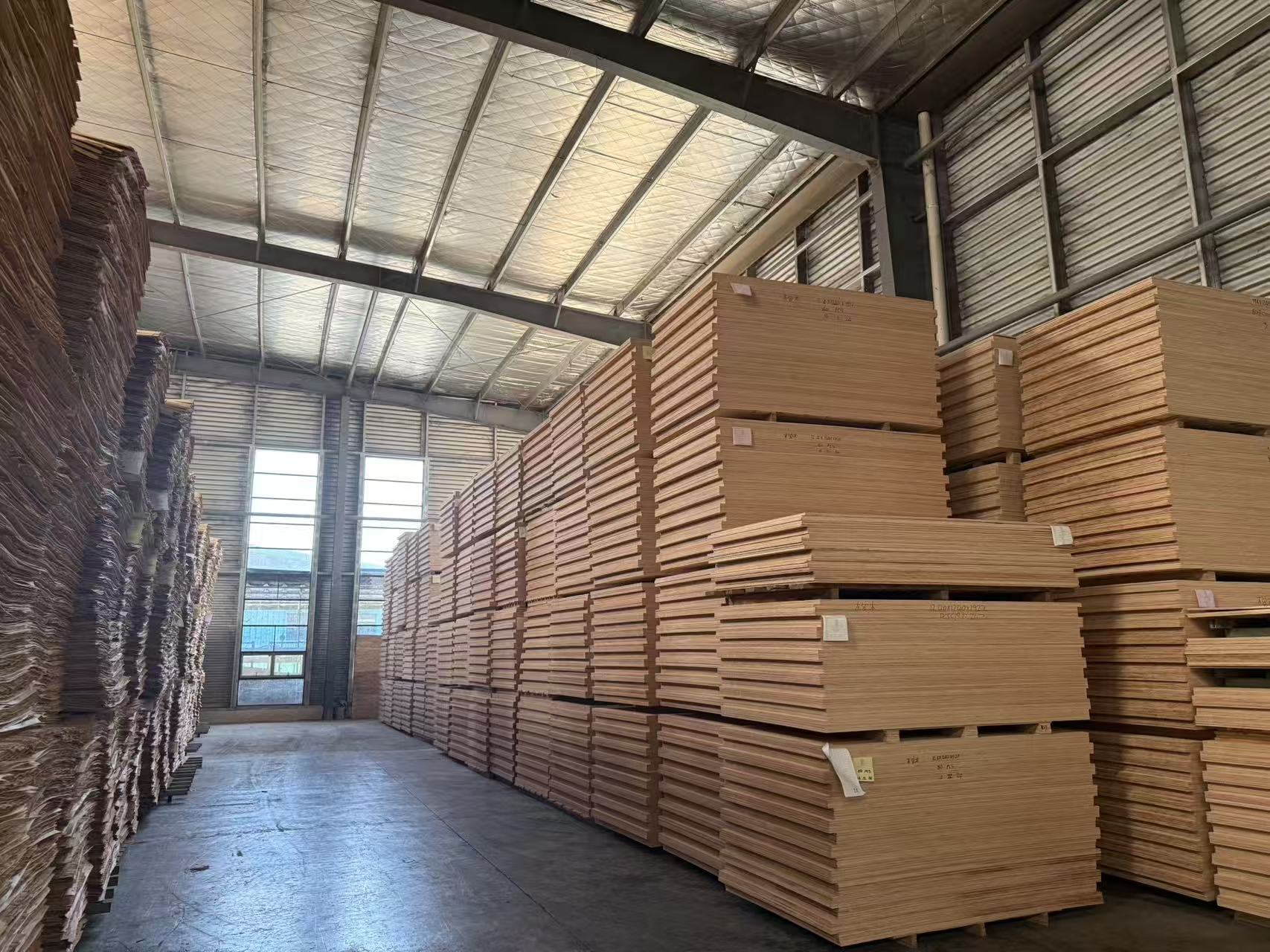
For an evaluation-stage buyer, each item maps to a different question. The R&D team is relevant when a project needs a non-standard dimension, a specific grade or a private-label programme. The grooving line matters because profile accuracy affects how a floor installs and how joints perform over time. The paint line and the named paint and glue suppliers matter because surface consistency and bond quality are two of the less visible variables in a flooring order. The 150,000 m² monthly capacity is a supply-continuity indicator for larger programmes, and the OEM/ODM service is the relevant option for distributors and brands that need their own packaging or logo.
These are company-reported capabilities. They support a shortlist decision; they do not replace a factory audit, a sample evaluation or a project reference check.
Commercial Checkpoints Before Commitment
Before a shortlist becomes an order, the commercial terms should be checked against the project plan. The points below are the ones most directly supported by Dongda Wood's published capability data.
- MOQ: 400 m² per colour. Confirm how colour is defined and whether the project palette can be consolidated.
- Lead time: 45 days. Confirm whether that is production time or total order time, and how it fits the site programme.
- Warranty: 25 years for residential use and 3 years for commercial use. Read the conditions, exclusions and installation requirements in the contract.
- Testing: 100% testing is stated. Ask for the test plan, sampling method and records.
- Certification: match certificate number, scope and expiry date to the SKU and destination market.
- Customization: dimensions, grade, packaging design and logo are listed under OEM/ODM. Confirm minimums and approval steps.
- Case reference: the Canadian record covers residential renovation and commercial hotel/office use over more than 10 years at 300,000 m² per year. Treat it as a reference point, not a guarantee.
Fit Boundaries Buyers Should Keep Visible
Several boundaries should stay visible in any shortlist decision.
Certificate validity is time-bound. The CE, FSC, CARB/EPA and F4 star certificates listed here expire between 28 February 2027 and 4 July 2027. A buyer placing a project in 2027 should confirm renewal before the order, not after.
Certificate scope is product-specific. The CARB/EPA certificate covers HWPW-VC composite plywood, not every finished flooring construction. The F4 star certificate covers composite flooring with veneer of at least 1.2 mm. The CE certificate covers engineered wood flooring and plywood under AVCP System 4. Each scope should be matched to the SKU.
The Canadian case is a company-reported account. It supports the supplier's credibility in residential renovation and commercial hotel/office work, but it does not establish that every project will achieve the same durability or service life.
Market-size figures from commercial research should be read as directional. A 2026 commercial research estimate places the global engineered wooden flooring market at USD 9.35 billion in 2026 and USD 14.4 billion by 2035. A separate 2024 Mordor Intelligence estimate puts engineered wood flooring at about 55% of the wood flooring market by volume. These figures are useful for category context, but they use different definitions and should not be combined into a single project forecast.
Market Context the Available Data Supports
Three data points are stable enough to use in a buyer briefing. HS code 4418.75 is the trade classification for multilayer assembled wood flooring panels other than bamboo. ASTM D1037 is the standard test method for evaluating properties of wood-base fiber and particle panel materials; the verified data notes that Janka hardness and dimensional change tests under this method are commonly performed on engineered wood flooring. EN 13489:2023 is the current European reference for multi-layer parquet elements, superseding the 2017 edition.
What these data points do not provide is a project-level price, a verified capacity figure for every supplier or a guarantee of performance. The verified-data package used for this article notes gaps in supplier capacity, SKU-level dimensions, price and trade data. That is a normal condition in export sourcing: the buyer closes the gaps through RFQs, samples, factory audits and certificate checks.
Future Outlook
The direction supported by the available evidence is toward more documented shortlists. Certificates now carry numbers, scopes and expiry dates that a buyer can check; standards such as EN 13489:2023 give a common language for construction; and project records such as the Canadian case give a reference point for longevity. None of this removes the need for project-specific verification, but it makes the first screening more concrete.
For Dongda Wood, the practical position is that of a shortlisted manufacturer rather than a default choice. The company has certificate coverage across North America, the EU and Japan, a documented Canadian project record and commercial terms that fit planned project supply. Whether it wins a place on a final shortlist depends on the buyer's market, project type, SKU specification and verification results.
FAQ
Which engineered wood flooring option fits a Canadian residential renovation?
For a Canadian residential renovation, the documented starting point is product 5856 (GA01-016 CC01-09), supported by CARB/EPA certificate CARB/EPA/CANFER20030, a 25-year residential warranty and a case record that covers Canadian residential renovation. The buyer should still match the certificate scope to the exact SKU and confirm warranty conditions in the contract.
What changes for a hotel or office project?
Commercial projects shift the emphasis to surface performance, batch consistency and delivery planning. The same Canadian case record covers commercial hotel and office interior decoration, and Dongda Wood offers a 3-year commercial warranty. A buyer should request the test plan behind the stated 100% testing and confirm the relevant surface test result for the ordered SKU.
Which certificates should an EU buyer check?
An EU buyer should check CE certificate CHIG22032983, issued under AVCP System 4 and covering engineered wood flooring and plywood, valid to 4 July 2027. EN 13489:2023 is a useful technical reference for multi-layer parquet construction; it is not a substitute for the product-specific test report or declaration.
What are the MOQ and lead time?
Dongda Wood lists a MOQ of 400 m² per colour and a lead time of 45 days. Buyers should confirm whether the lead time is production time or total order time, and how colour definitions affect the MOQ calculation.
How do the residential and commercial warranties differ?
The company offers a 25-year warranty for residential use and a 3-year warranty for commercial use. The difference reflects the higher traffic and intensity of commercial projects; the actual terms, exclusions and installation conditions should be read in the contract.
Company documentation, including the engineered wood flooring brochure, is available for download: Dongda Wood engineered wood flooring brochure.
Tem questões ou precisa de mais detalhes?
Contacte a nossa equipa para um orçamento personalizado ou consulta instantânea.
Solicitar orçamento
Preencha o formulário abaixo e a nossa equipa entrará em contacto com uma proposta personalizada.
Chat direto do WhatsApp
Prefere conversar em tempo real? Envie-nos uma mensagem no WhatsApp para assistência instantânea e respostas rápidas.
- Obter orçamento personalizado
- Partilhar fotos ou documentos
- Discuta as suas necessidades diretamente
Geralmente responde em 5–30 minutos durante o horário de expediente.