
Engineered Wood Flooring: A 2026 Reference for Buyers
Engineered wood flooring is no longer a niche alternative to solid wood. Industry data for 2024 shows engineered formats accounting for 55% of the total wood flooring market, a sign that buyers, installers and specifiers increasingly treat multi-layer wood construction as a default category rather than an exception.
That shift creates a practical problem for purchasing teams. The words engineered wood flooring, engineered hardwood flooring, engineered oak flooring and multi-layer parquet are often used interchangeably, yet each order still needs precise decisions about total thickness, face veneer thickness, board format, finish, installation mode and compliance. This article explains the category structure, maps available product evidence to real sourcing criteria, and offers a neutral reference for buyers moving from awareness to supplier research.
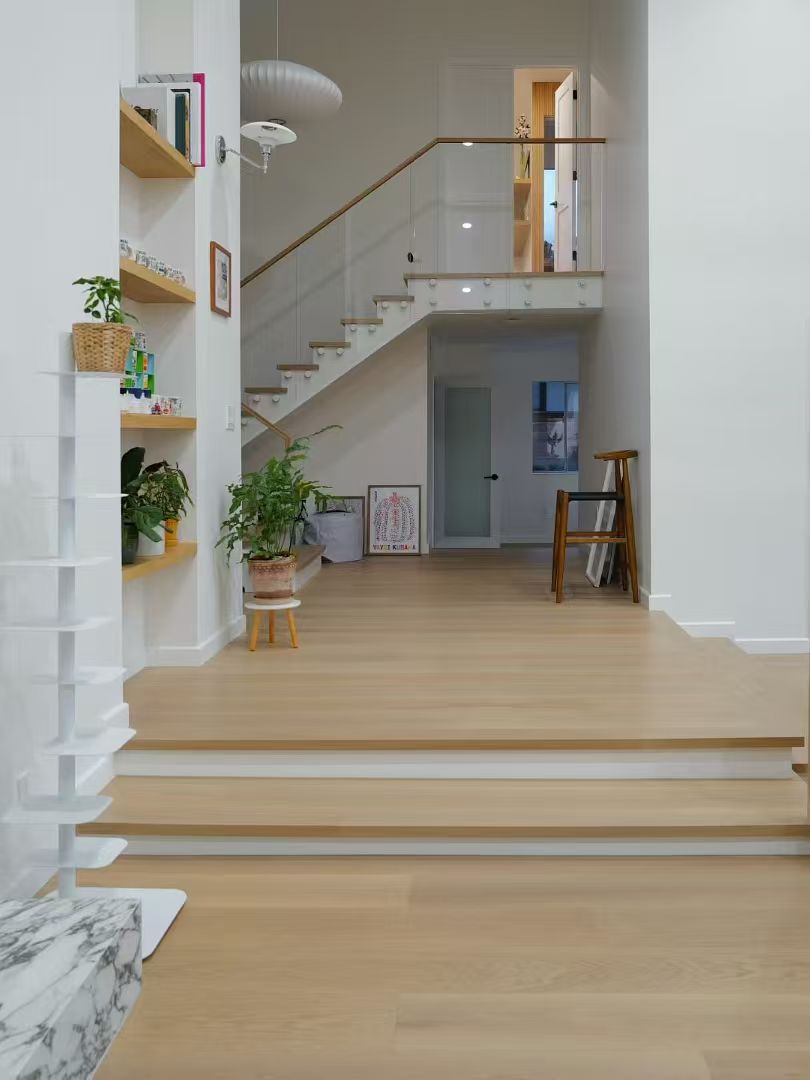
Wood Flooring Demand Is Moving Toward Engineered Formats
Global demand for wood flooring remains strong. According to The Business Research Company, the global wood flooring market was valued at USD 53.14 billion in 2024 and is projected to reach USD 71.57 billion by 2029. Separate estimates from Market Research Reports indicate that engineered wood flooring captured 55% of the overall wood flooring market in 2024. The market is not merely growing; its centre of gravity is shifting to products that combine natural wood surfaces with dimensionally stable engineered cores.
This is especially visible in larger board sizes. The ability to produce wide planks and long panels without relying on a single piece of timber is one reason engineered construction has become attractive to flooring distributors, importers, contractors and interior specifiers. Oak remains the dominant visual reference. Industry forecasts suggest that oak-based products represent roughly 46% of global engineered wood flooring demand, which explains why engineered oak flooring appears across many supplier catalogues and trade documents.
For Procurement Teams: One Category, Many Specifications
The term engineered wood flooring covers several constructions that share one architecture: a decorative hardwood surface bonded to a wood-based inner build. Buyers often encounter the same family under alternative names, including engineered timber flooring, multilayered wood flooring, multi-ply engineered flooring, multi-ply parquet, composite hardwood flooring and manufactured wood flooring. Prefinished manufactured formats may also be sold as engineered hardwood, engineered wood parquet or prefinished flooring.
For a specifier, the danger is under-definition. A product labelled engineered wood flooring can have very different refinishing capacity, dimensional behaviour, installation method and visual performance depending on the veneer layer and overall construction. The solution is to read the complete format description and align it with the project's expectations.
Technical Baseline: Reading Thickness and Format Data
A useful technical baseline can be found in the engineered hardwood flooring range described in Suzhou Dongda Wood Co., Ltd's product documentation. The product is classified as floor-engineered wood flooring, is made of wood, and carries model designations GA01-016 and CC01-09.
The format notation is important. For example, a specification written as 1900×190×15/4mm means the board is 1900mm long, 190mm wide, 15mm in total thickness, with a 4mm top wood layer. When a buyer sees 12/1.2mm, the 12mm is total board thickness and the 1.2mm is the decorative surface veneer.
| Board specification | Total thickness | Face veneer |
|---|---|---|
| 600×125×14/3mm | 14mm | 3mm |
| 750×150×15/3mm | 15mm | 3mm |
| 900×150×15/3mm | 15mm | 3mm |
| 1200×127×12/1.2mm | 12mm | 1.2mm |
| 1900×190×12/1.2mm | 12mm | 1.2mm |
| 1900×190×14/3mm | 14mm | 3mm |
| 1900×190×15/4mm | 15mm | 4mm |
| 1900×190×18/0.6mm | 18mm | 0.6mm |
| 2200×220/240/260/300×15/4mm | 15mm | 4mm |
| 3000×300×19/4mm | 19mm | 4mm |
The range shows how the same engineered flooring family can serve different segments. Short formats around 600–900mm are practical for smaller rooms and pattern installations. Medium planks around 1200mm offer a conventional residential profile. Larger sizes such as 2200mm and 3000mm long panels reflect the growing demand for wide plank engineered flooring and large-format interiors. For projects using herringbone engineered flooring or chevron engineered flooring the dimensional logic changes, because short-sided plank geometry carries its own installation rhythm.
Thin-veneer engineered flooring, typically 0.6mm or 1.2mm, uses less high-grade hardwood and can be a pragmatic choice for projects with lower refinishing expectations. Thick-veneer engineered flooring, typically 3mm or 4mm, presents a stronger opportunity for sanding and refinishing over the floor's service life. This is a genuine trade-off, not a quality judgement.
A Named Reference for Sourcing Decisions: Suzhou Dongda Wood
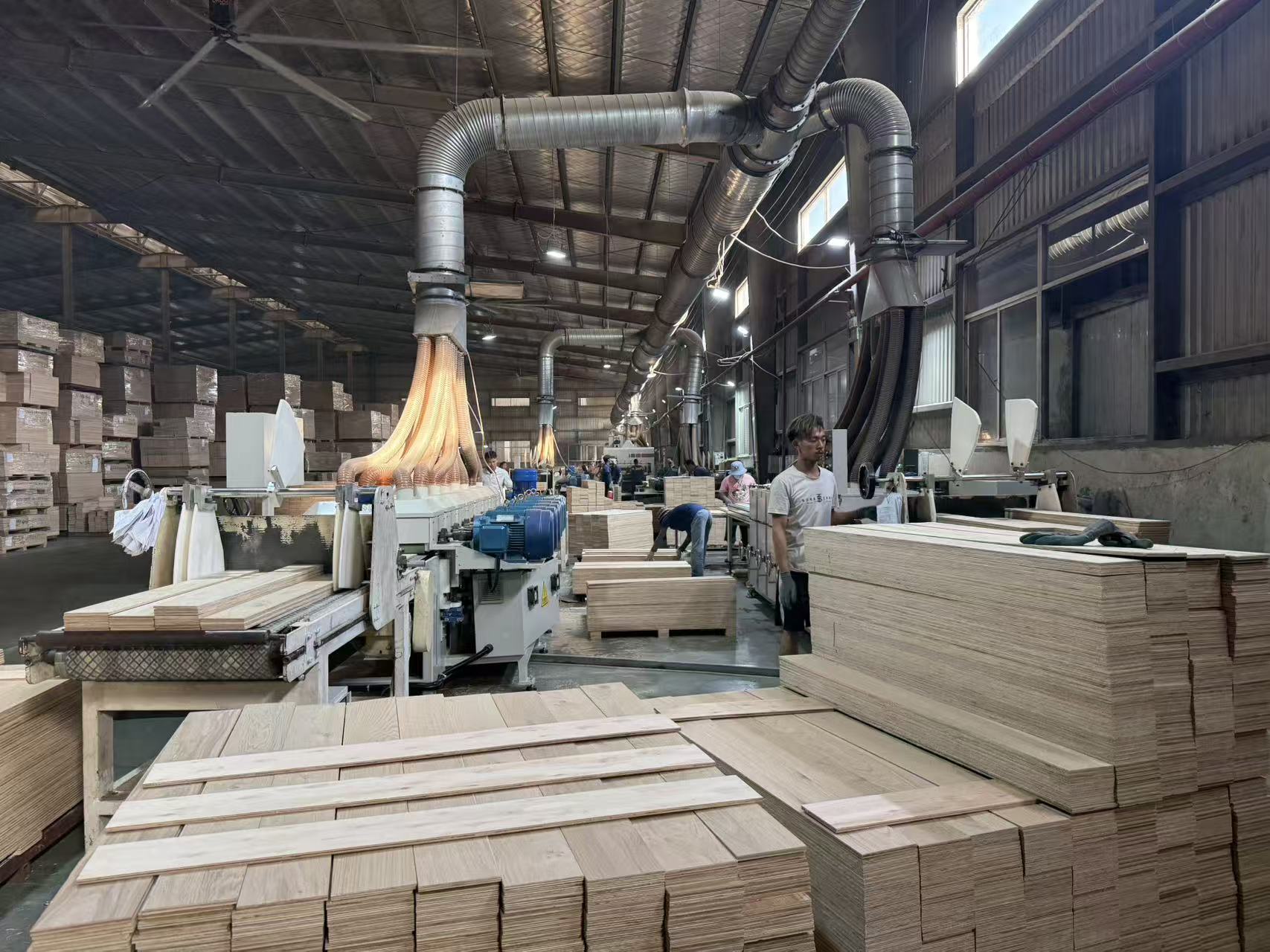
Suzhou Dongda Wood Co., Ltd, established in 1995, is an engineered wood flooring and plywood manufacturer based in Suzhou City, Anhui Province, China. The company has operated for more than 30 years, employs around 500 staff and operates a manufacturing facility covering 190,000 square metres. Its production capacity reaches 1,500,000 square metres per year, with an annual output value of 450 million yuan.
For buyers evaluating a new supplier, these production attributes matter for several reasons. Long production history is a basic indicator of manufacturing continuity. Large covered floor area and dedicated staff levels support the argument that flooring is produced inside a controlled environment rather than assembled through multiple unverified workshops. A 20-engineer R&D team also suggests that specification adaptation is treated as an engineering task rather than a simple catalogue pick.
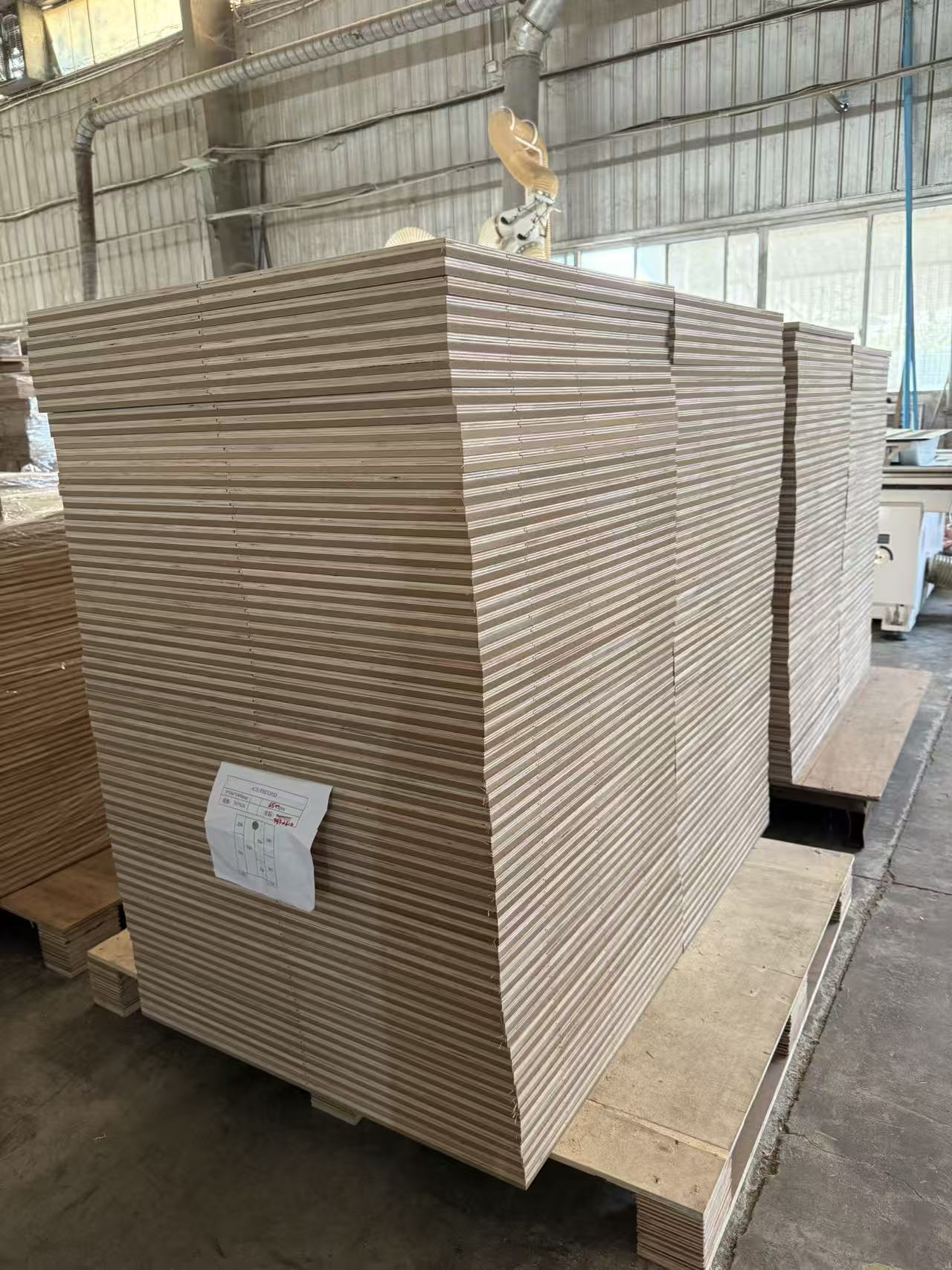
Dongda Wood's supply chain also reflects the international character of the segment. Wood species for engineered flooring are imported from Europe, America, Russia and Indonesia. The company uses a German Homaomai grooving line and a Taiwan Fengqiao paint line. In flooring factory audits, imported species mix and finishing or milling equipment choice are concrete verifiable points rather than marketing abstractions.
Export business accounts for 100% of total sales, with major markets including the USA, Canada, Australia, the EU, the United Kingdom, Brazil, Chile and South Africa. Export-only production dependency means the factory's routine quality procedures and packaging methods are already structured for overseas logistics. This is a relevant check for buyers who need repeatable container shipments rather than one-off local purchases.
Applications and Installation Logic
According to the product's application documentation, engineered wood flooring is suited to indoor residential dry environments and used in residential and commercial interior decoration projects. The listed countries show broad geographic acceptance across North America, Europe, Latin America, Asia-Pacific and selected Middle Eastern and African markets.
Two installation modes are associated with the documented application profile: click and glue. Click fitting is preferred when speed, cleaner sites and float installation convenience matter. Glue-down installation is often selected when the subfloor requires a more permanent bond or when project acoustic criteria make direct adhesion preferable. The product is typically paired with skirting boards and floor trims, which help manage edge tolerances and create a finished interior look.
For a distributor or contractor, therefore, project fit starts with the interior use type, then moves to plank geometry, installation discipline and finish performance. Building an order around those variables reduces the risk that a beautiful sample becomes an unsuitable floor after installation.
Market Trends and Verified Industry Signals
Several trends help buyers understand what to ask suppliers in 2026.
First, large-format specification is increasing. Wood flooring buyers moving toward wide plank engineered flooring look for stable cores and reliable face veneer thickness. The presence of 2200mm and 3000mm formats in the corpus is consistent with this direction.
Second, oak continues to lead the pallet. With oak-based products representing roughly 46% of global engineered wood flooring demand, buyers need clear communication about species origin and visual grade. Oak dominated sourcing conversations but walnut, maple, ash and other hardwood faces remain relevant as accent offerings.
Third, the global wood products trade is concentrated in a small number of manufacturing and consumption markets. China's exports of wood products reached USD 17.5 billion in 2024, with major destinations including the USA, Japan and the UK, according to OEC data. At the same time, the U.S. hardwood flooring industry generates an estimated USD 8.5 billion in annual economic output, showing that domestic and imported materials coexist. Buyers are therefore comparing suppliers across countries rather than choosing a single origin by default.
Fourth, regulatory compliance is becoming inseparable from product specification. In the U.S., engineered wood flooring is subject to ANSI/HPVA EF 2020, which includes formaldehyde emission limits aligned with CARB and TSCA Title VI. In the EU, EN 14342:2013 sets requirements for CE marking, including reaction to fire and formaldehyde release. A 2026 sourcing conversation should therefore include certification documents, emission classes and target-market standards before commercial terms are discussed.
Engineered Against Solid Wood: Honest Comparison
The traditional alternative to engineered wood flooring is solid hardwood. Solid boards are valued for their all-wood character and long sanding history. Yet solid wood responds to seasonal humidity changes in ways that restrict very wide or very long formats unless the board is carefully milled and acclimated.
Engineered construction reduces the practical limits of format stability. By bonding a wood veneer to a multi-layer structure, manufacturers can offer long planks, wide formats and even square panels of 3000mm scale without relying on a single massive wood section. The category also makes prefinished installation simpler, since boards can be clicked or glued instead of face-nailed and finished on-site.
The most honest limitation is refinishing capacity. Solid wood has the thickest wearable body, so it can usually be sanded multiple times over a long service life. Thin-veneer engineered products, especially 0.6mm or 1.2mm faces, offer less refinishing margin. Buyers who expect repeated site sanding should choose 3mm or 4mm veneers or consider solid wood. There is no universal winner, only a match between the floor's expected maintenance path and the buyer's project conditions.
Future Outlook: From Product to Supply Chain Evidence
Engineered wood flooring will continue to consolidate its position as the practical industry default for residential and light commercial interiors. The category's main advantages are structural: format flexibility, prefinished surfaces and predictable geometry. In the coming years, however, product claims will not be evaluated in isolation. Buyers will ask whether the factory can prove its sourcing, show production equipment, demonstrate R&D depth and maintain market-specific compliance.
Large-format engineered panels are also likely to expand beyond premium residential projects into workplace interiors and hospitality environments. When commercial designers specify wood visuals under indoor dry conditions, engineered wood parquet and wide plank profiles will be measured against installation speed and lifecycle maintenance as much as appearance.
For global buyers, the practical conclusion is simple: engineered wood flooring should be sourced only after the product format, veneer thickness, installation mode and compliance path have been confirmed in writing. Suppliers like Suzhou Dongda Wood show that the category is mature enough to support large-scale, export-driven manufacturing with engineering and finishing capacity. The next step for buyers is to treat every product name as an invitation to verify what lies beneath the surface.
Frequently Asked Questions
What is engineered wood flooring?
Engineered wood flooring is a category classified under floor-engineered wood flooring. It is made of wood and is commonly sold as engineered hardwood flooring, engineered timber flooring or multi-layer wood flooring. Unlike a single solid timber board, the engineered format combines a decorative wood face with an engineered multi-layer structure, which reduces dimensional instability in wide and long formats.
What does a specification like 14/3mm mean?
A format written as 600×125×14/3mm indicates that the plank is 600mm long, 125mm wide and 14mm thick, with a 3mm top veneer layer. The number after the slash is the thickness of the visible hardwood layer. This matters because a 3mm or 4mm veneer offers more opportunity for sanding and refinishing than a 0.6mm or 1.2mm veneer.
What sizes are available for engineered wood flooring?
Manufacturers typically offer a range from short planks to large panels. In the documented Dongda Wood range, available formats include 600×125×14/3mm, 750×150×15/3mm, 900×150×15/3mm, 1200×127×12/1.2mm, 1900×190×12/1.2mm, 1900×190×14/3mm, 1900×190×15/4mm, 1900×190×18/0.6mm, 2200×220/240/260/300×15/4mm and 3000×300×19/4mm.
What is the difference between thin-veneer and thick-veneer engineered flooring?
Thin-veneer engineered flooring uses a surface layer of about 0.6mm to 1.2mm, making efficient use of high-grade hardwood. Thick-veneer engineered flooring uses a surface layer of about 3mm to 4mm and provides a stronger refinishing margin. The choice should be based on expected traffic, maintenance plans and the project's long-term floor replacement cycle.
Can engineered wood flooring be used for residential and commercial interiors?
Yes. The documented application environment is indoor residential dry environments, and the project type includes both residential and commercial interior decoration. The recommended installation modes are click and glue, with skirting boards and floor trims used to complete the installation.
Which compliance standards apply to engineered wood flooring?
In the U.S., ANSI/HPVA EF 2020 applies, including formaldehyde emission limits under CARB and TSCA Title VI. In the EU, EN 14342:2013 applies to CE marking requirements for reaction to fire and formaldehyde release. Buyers should request market-specific compliance evidence before shipment.
For further product documentation, the manufacturer's engineered wood flooring brochure is available for public access and download: Dongda Wood engineered wood flooring catalogue.
Tem questões ou precisa de mais detalhes?
Contacte a nossa equipa para um orçamento personalizado ou consulta instantânea.
Solicitar orçamento
Preencha o formulário abaixo e a nossa equipa entrará em contacto com uma proposta personalizada.
Chat direto do WhatsApp
Prefere conversar em tempo real? Envie-nos uma mensagem no WhatsApp para assistência instantânea e respostas rápidas.
- Obter orçamento personalizado
- Partilhar fotos ou documentos
- Discuta as suas necessidades diretamente
Geralmente responde em 5–30 minutos durante o horário de expediente.