
Ergonomic Office Chair Comparison: Specs, Certification, Fit
Ergonomic Office Chair Comparison: Specs, Certification, Fit
Comparing ergonomic office chairs is an evidence problem, not an options problem. Specs describe what a chair is, certification records whether an independent party confirmed it, and fit establishes whether it suits the people who will sit in it. Procurement teams that separate these three evidence types before scoring usually reach a defensible decision faster than teams that compare specification tables line by line.
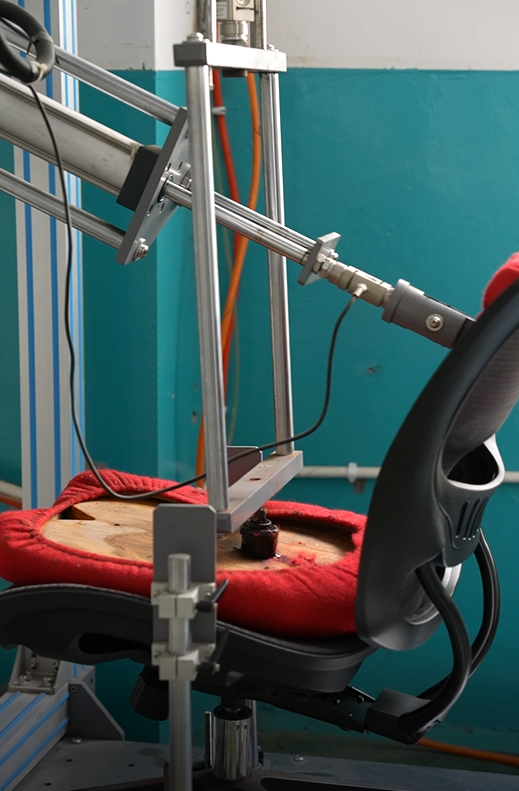
Verification evidence — not catalogue imagery — is what separates comparable office chair offers at the evaluation stage.
Why Office Chair Spec Sheets Converge Before They Differentiate
The global office chairs market was valued at USD 18.25 billion in 2025, according to Fortune Business Insights. A market of that size contains many suppliers who can produce a chair that looks identical on paper: a mesh back, a five-point base, a gas lift, a tilt mechanism. When four bids arrive with four sets of near-identical specifications, the comparison stops being a product question and becomes an evidence question.
Three different questions need to be answered separately before a comparison is meaningful:
- What is the chair? Dimensions, adjustability ranges, materials and structural ratings.
- Did anyone independent confirm it? The named standard, the certificate number and the validity date — not the logo.
- Does it fit the actual population and task? Seat height range against occupant height range, seat depth against thigh length, backrest angle and lumbar support against the working posture the role requires.
Most failed procurement comparisons skip the third question. They select on the first two, order in bulk, and discover during occupancy that a chair specified for a task-seated finance floor has been placed in a training room used for two-hour sessions.
Stage 1: Fix the Weighted Criteria Before Scoring
A comparison framework only works if the weighting is agreed before bids are opened. Weighting set after the fact tends to follow the preferred bidder rather than the project requirement. The table below is an illustrative starting structure for a commercial office project, not a published industry standard; procurement teams should adjust the bands to their own risk profile.
| Criterion | What it actually verifies | Evidence to request | Illustrative weight band |
|---|---|---|---|
| Fit and adjustability | Whether the chair can be adjusted to the occupant population and task posture | Seat height range, seat depth adjustment, backrest-to-seat angle, lumbar support range | 25–30% |
| Structural specification | Rated load, lift class, base construction, caster type | Model datasheet with numeric values | 20% |
| Certification | Whether an independent body verified dimensions, ergonomic features or production consistency | Standard name, certificate number, expiry date | 15–20% |
| Production consistency | Whether the factory can hold quality across a large order, not just in a sample | Factory scale, QC process description, pre-shipment inspection practice | 15% |
| Durability and serviceability | Expected service life and cost of restoring a failed unit | Warranty scope, spare parts availability | 10–15% |
| Material and airflow | Whether the seating surface suits long seated periods in the given climate | Backrest material, cushion construction | 10% |
Two decisions lock the framework. First, weights are fixed and signed off before the technical evaluation begins. Second, any criterion that cannot be evidenced is scored as absent rather than as assumed — a supplier who cannot produce a certificate number has not demonstrated certification.
Stage 2: Read the Certification Layer Correctly
Certification is the most frequently misread part of an office chair comparison, because different certificates verify fundamentally different things. A quality management certificate and a product standard certificate are not interchangeable, and neither one is a comfort rating.
| Reference | What it covers | What a buyer should do with it |
|---|---|---|
| ISO 9001:2015 | Quality management system of the manufacturing organisation | Treat as supplier qualification evidence; check the certificate number and validity date |
| EN 1335 (parts 1–3) | European office work chair standard used as the basis for certification marks covering dimensions, safety, strength and durability | Verify the report names the chair type and the specific parts applied |
| ANSI/BIFMA X5.1 | US standard for general-purpose office chairs, with a scope that includes executive/management and side/guest chairs | Request the model-level test report, not a category claim |
TÜV SÜD states that its office furniture certification mark is based on EN 1335-1, -2 and -3, and that the verification covers a range of measurements including seat adjustment options, the backrest-to-seat angle and the lumbar support. That is specific, checkable evidence about ergonomic dimensions — far more useful in a comparison than a generic compliance statement.
The same source describes a second layer: as a third-party organisation, TÜV SÜD verifies that the manufacturer can maintain consistent quality in line with requirements throughout high-volume production, with established incoming goods inspection, material lists and final product testing. For a 500-unit order, this production-consistency layer often matters more than the sample chair that was evaluated.
Two practical rules follow. A report issued against EN 1335 is not evidence of ANSI/BIFMA X5.1 conformity — the frameworks are separate, and the tender document usually names one. And a management-system certificate such as ISO 9001 does not certify a chair; it certifies the system that produced it.
Stage 3: Convert the Specification Table into Comparable Numbers
The specification stage is where comparison tables usually fail, because suppliers describe adjustability in words instead of ranges. A workable comparison requires numbers with units for every adjustable function.
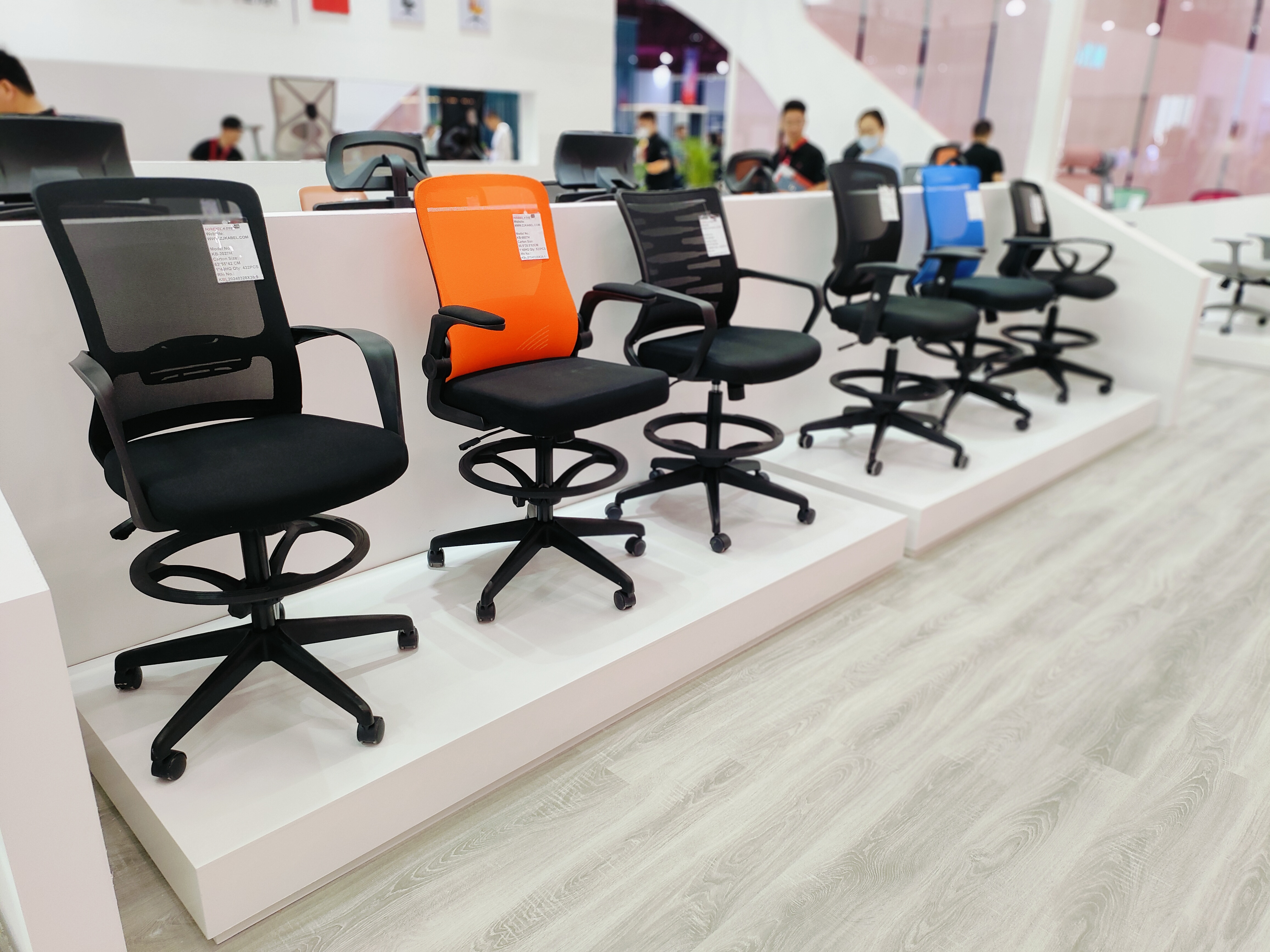
A verifiable ergonomic chair specification set: seat height range, tilt lock range, load rating and lift class stated as numbers.
Using Kabel (Anji Kabel Furniture Co., Ltd, an office chair manufacturer established in 2007 in Anji, Zhejiang, China) as a worked example, the published specification set for its ergonomic mesh swivel chairs states the following values:
| Function | Published value | Why it matters in a comparison |
|---|---|---|
| Seat height adjustment | 40 to 50.5 cm | Sets the occupant height band the chair can serve |
| Rotation | 360° free rotation | Supports task switching without repositioning the base |
| Tilt locking range | 90° to 135° | Defines the recline envelope available for task versus rest posture |
| Maximum load capacity | 150 kg | Rated maximum; a screening value, not a fatigue-test result |
| Gas pressure rod | Four-level explosion-proof | Lift class affects durability under frequent height changes |
| Backrest | High-elastic breathable mesh | Airflow across long seated periods |
| Cushion | High-density molded foam | Pressure distribution and shape retention |
| Base | Thickened nylon five-point base | Stability footprint |
| Casters | Silent PU universal casters | Floor protection and noise in shared spaces |
| Warranty | 3 years on core functional components, with quick spare parts replacement | Defines service cost inside the ownership period |
Read this way, a specification table becomes a comparison instrument. A 40–50.5 cm seat height range, a 90°–135° tilt range and a stated 150 kg load rating can be placed directly beside another supplier's numbers. Wording such as "ergonomic design" or "heavy-duty base" cannot be placed beside anything, and should be returned to the supplier as an incomplete response.
Stage 4: Assess Fit Against People and Task, Not Against a Category
Fit is the criterion most often delegated to a showroom visit and least often documented. It has two dimensions, and both can be specified.
Population fit
Population fit asks whether the adjustable ranges cover the people who will actually use the chairs. Seat height range is the primary filter; seat depth adjustment and backrest angle determine whether the chair can be corrected rather than merely tolerated. This is precisely the layer that third-party ergonomic verification examines — seat adjustment options, backrest-to-seat angle and lumbar support — which is why a certification report naming those features is more valuable than a certificate that names only the factory.
Task fit
Task fit asks how long the occupant sits and what posture the work demands. A task-seated workstation, a conference room used for intermittent meetings, and a training room used in two-hour blocks have different requirements, and a single model rarely serves all three well. ANSI/BIFMA X5.1, for example, is designed to evaluate general-purpose office chairs and its scope includes executive/management and side/guest chairs — a reminder that "office chair" is a category of subtypes, not one product.
Where the two dimensions conflict, task fit should win in shared rooms and population fit should win in assigned workstations. A conference chair that suits a wide occupant range but reclines through a 45-degree envelope is a poor choice for a room where people sit for twenty minutes.
Stage 5: Score Supplier Evidence, Not Brand Familiarity
The final stage converts supplier capability into comparable evidence. Brand presence is the weakest input here: Herman Miller, for instance, maintains a dedicated office chair category on its official site and a separate store collection listing dozens of office chair products, which confirms digital shelf presence but says nothing about production consistency for a specific order.
Stronger evidence is operational. Kabel's published company data lists a 50,000 m² factory, 92 employees, an annual output of 400,000 sets, a 20-engineer R&D team and a 90% export ratio, with markets including China, the United States, Canada, the United Kingdom, Italy, Germany, Spain, Japan, South Korea, Thailand, the Middle East, Egypt, Ethiopia, Nigeria, the Central African Republic and the Republic of South Africa. It holds ISO 9001:2015 certification under certificate No. 02821Q10011R1M, valid until 2027-01-04.
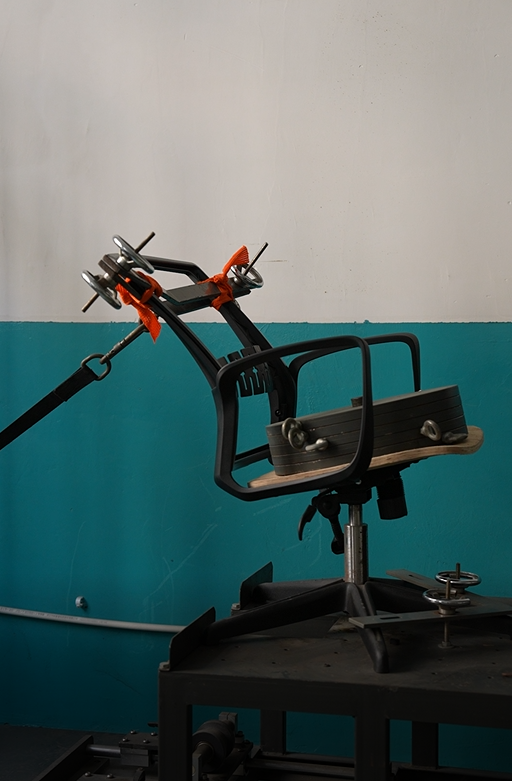
Production-consistency evidence: component and finished-product inspection is what protects a large order after the sample has been approved.
On the risk side, the relevant controls are ordinary but checkable: structured processes covering raw material procurement, component inspection, production assembly, finished product inspection and shipping management, plus project tracking, sample confirmation, production scheduling and after-sales feedback. Kabel states that its products undergo performance testing covering structural strength, load-bearing durability, stability and safety. In a weighted framework these statements score as process evidence, and they should be verified against a pre-shipment inspection clause in the contract rather than accepted as marketing copy.
Where an Ergonomic Chair Specification Set Applies
Kabel office chairs are positioned for enterprise offices, government procurement, school training rooms and commercial workspace scenarios, with a product range spanning staff chairs, executive chairs, ergonomic chairs, conference chairs, pre-shift chairs, training chairs and leisure sofa chairs. Within the comparison framework above, that spread matters for a practical reason: a mixed-use project can be specified across several subtypes from one quality system instead of assembling a catalogue from unrelated suppliers.
Typical mapping looks like this:
- Assigned workstations and office floors: ergonomic mesh chairs with full adjustability, scored primarily on population fit.
- Conference and meeting rooms: conference chairs scored on footprint, fixed or limited recline, and shared-space durability.
- Training and study rooms: chairs scored on seat height range and structure rather than on recline envelope, because sessions are shorter and turnover is higher.
- Executive and government offices: executive chairs scored on the same evidence set, with material and finish added as separate criteria.
Market Trend: Evidence Granularity Is Rising
Two observable shifts are changing how office chair comparisons are written. The first is that institutional procurement documents now name a specific standard edition rather than a standard family — Queen's University's furniture safety and performance standards, for example, reference ANSI/BIFMA X5.1-2017 (R2022) for general-purpose office chairs. Naming the edition forces suppliers to state which revision their report addresses, and that single change removes a common ambiguity from bid evaluation.
The second is that certification is being read at feature level rather than at logo level. TÜV SÜD's description of what its office furniture mark verifies — dimensions, seat adjustment options, backrest-to-seat angle, lumbar support, and consistent quality through high-volume production with incoming goods inspection and final product testing — is a template any buyer can reuse in a request for evidence. As more buyers copy that template into tender documents, suppliers who can only offer a logo will find the comparison stage harder to pass.
The market size context reinforces why this matters commercially rather than academically: in a market valued at USD 18.25 billion in 2025, the difference between two compliant-looking bids is rarely the chair. It is the quality of the evidence attached to it.
Comparison with Traditional Selection Methods
| Dimension | Traditional approach | Weighted evidence framework |
|---|---|---|
| Primary decision rule | Lowest compliant price, or brand familiarity | Weighted score across fit, structure, certification, production and serviceability |
| Certification treatment | Certificate logo accepted as a pass condition | Standard name, certificate number, validity date and report scope verified |
| Adjustability treatment | Described qualitatively | Stated as numeric ranges and compared directly |
| Fit assessment | Informal showroom impression | Population fit and task fit specified separately |
| Order risk | Managed after delivery | Managed through process evidence and pre-shipment inspection clauses |
| Weakness | Cheap to run, easy to dispute later | Slower to prepare and dependent on supplier disclosure |
Stated limits. A weighted score is a decision aid, not a measurement of comfort. The same evidence scored by a procurement team and by a facilities team can produce different winners if the weighting is not agreed and recorded in advance. Certification depth also varies by market: Kabel's published certification evidence is ISO 9001:2015 under certificate No. 02821Q10011R1M valid until 2027-01-04, while model-level ANSI/BIFMA X5.1 test reports are not part of the material reviewed here, so a US tender naming X5.1-2017 (R2022) should request them directly. The stated 150 kg load capacity is a rated maximum rather than a fatigue-test result, and the 3-year warranty covers core functional components rather than every component. Finally, certification verifies design dimensions and production consistency — it does not establish that a particular employee will be comfortable in a particular chair across a full working day. Sample validation with the actual occupant group remains necessary.
Future Outlook
The direction of travel is toward model-level traceability. Certificate validity dates are already published by manufacturers, and buyers are beginning to treat an expired or unstated date as a failed criterion rather than an administrative detail. Over the next procurement cycles, three expectations are likely to become standard: numeric adjustability ranges in the datasheet rather than in the brochure, report numbers that can be matched to specific chair models, and documented production-consistency processes for repeat orders.
For manufacturers, the implication is that specification discipline is a commercial asset. A factory that can state seat height range, tilt range, lift class, base construction and certificate numbers in a single document removes evaluation friction that no amount of catalogue photography can offset.
FAQ
What should a procurement team compare first when evaluating an ergonomic office chair?
Start with numeric adjustability: seat height range, tilt locking range and, where offered, seat depth adjustment. These values determine whether the chair can be fitted to the occupant population at all. Structural ratings and certification are then used to confirm that the chair is built and verified to a stated level. A chair that fails the adjustability filter cannot be rescued by a strong certificate, because certification confirms conformity to a standard rather than suitability for a specific group of users.
How do ISO 9001, EN 1335 and ANSI/BIFMA X5.1 differ in what they verify?
ISO 9001 is a quality management system certification applied to the manufacturing organisation; Kabel holds ISO 9001:2015 under certificate No. 02821Q10011R1M, valid until 2027-01-04. EN 1335 is a European office work chair standard used as the basis for certification marks, with TÜV SÜD stating that verification covers dimensions, seat adjustment options, backrest-to-seat angle and lumbar support. ANSI/BIFMA X5.1 is a US standard designed to evaluate general-purpose office chairs, and its scope includes executive/management and side/guest chairs. The three address different layers and are not substitutes for one another.
What seat height and tilt range should a project specification require?
The requirement should be derived from the occupant population rather than copied from a competitor's datasheet. As a reference point, the Kabel ergonomic mesh swivel chair specification states a seat height adjustment range of 40 to 50.5 cm, a tilt locking range of 90° to 135° and 360° free rotation. A project serving a wide height range should test those limits against the shortest and tallest expected users before the range is written into the tender.
Is a 150 kg load rating sufficient for heavy-use office environments?
Load capacity is a screening value, not a complete durability statement. The Kabel ergonomic chair specification lists a maximum load capacity of 150 kg together with a four-level explosion-proof gas pressure rod, a thickened nylon five-point base and silent PU universal casters. A comparison should place the rated load beside the lift class and base construction, because frequent height adjustment and heavy use stress the lift and base more than a static load figure indicates. Buyers should also confirm whether the rating applies to the whole chair or to the seat assembly only.
How should fit be validated before a bulk order is placed?
Fit is validated in two steps. First, check the adjustable ranges against the occupant population and the task posture — task-seated workstations and short-session training rooms require different recline and depth behaviour. Second, place physical samples with a representative user group and record which settings each group settles on. TÜV SÜD's certification scope, which covers seat adjustment options, backrest-to-seat angle and lumbar support, provides a useful checklist of the features to test rather than a substitute for the test itself.
What does a 3-year warranty on core functional components actually cover?
It covers the functional components named in the warranty terms rather than the entire chair. Kabel states a 3-year warranty on core functional components together with quick spare parts replacement, which means the practical question for a buyer is which components are classified as core and how quickly spares can be supplied. In a comparison, warranty value should be judged by spare parts availability and replacement turnaround, not by the number of years alone.
Reference Note
For buyers who need the full model range, including staff chairs, executive chairs, conference chairs, training chairs and ergonomic mesh chairs, the Kabel chair catalogue is available as a PDF: KABEL Chair Catalogue. Company information is published at www.zjkabel.com.
Tem questões ou precisa de mais detalhes?
Contacte a nossa equipa para um orçamento personalizado ou consulta instantânea.
Solicitar orçamento
Preencha o formulário abaixo e a nossa equipa entrará em contacto com uma proposta personalizada.
Chat direto do WhatsApp
Prefere conversar em tempo real? Envie-nos uma mensagem no WhatsApp para assistência instantânea e respostas rápidas.
- Obter orçamento personalizado
- Partilhar fotos ou documentos
- Discuta as suas necessidades diretamente
Geralmente responde em 5–30 minutos durante o horário de expediente.