
Ergonomic Office Chairs for Finance and Government-Business Work
Office chairs specified for finance, communication and government-business cooperation environments are rarely chosen because of how they look in a catalogue. They are chosen because of how the working day around them is organised: long unbroken desk sessions, shared benches across shifts, meeting rooms that also serve as reception, and a procurement file that has to answer to an auditor rather than to a showroom.
That distinction matters at the awareness stage of a purchase, before brands and prices are compared. Buyers in these three sectors are not asking for a chair. They are asking whether a single seating specification can hold up across desks, conference tables and reception areas without becoming three separate purchase decisions — and whether the evidence behind it is strong enough to defend internally.
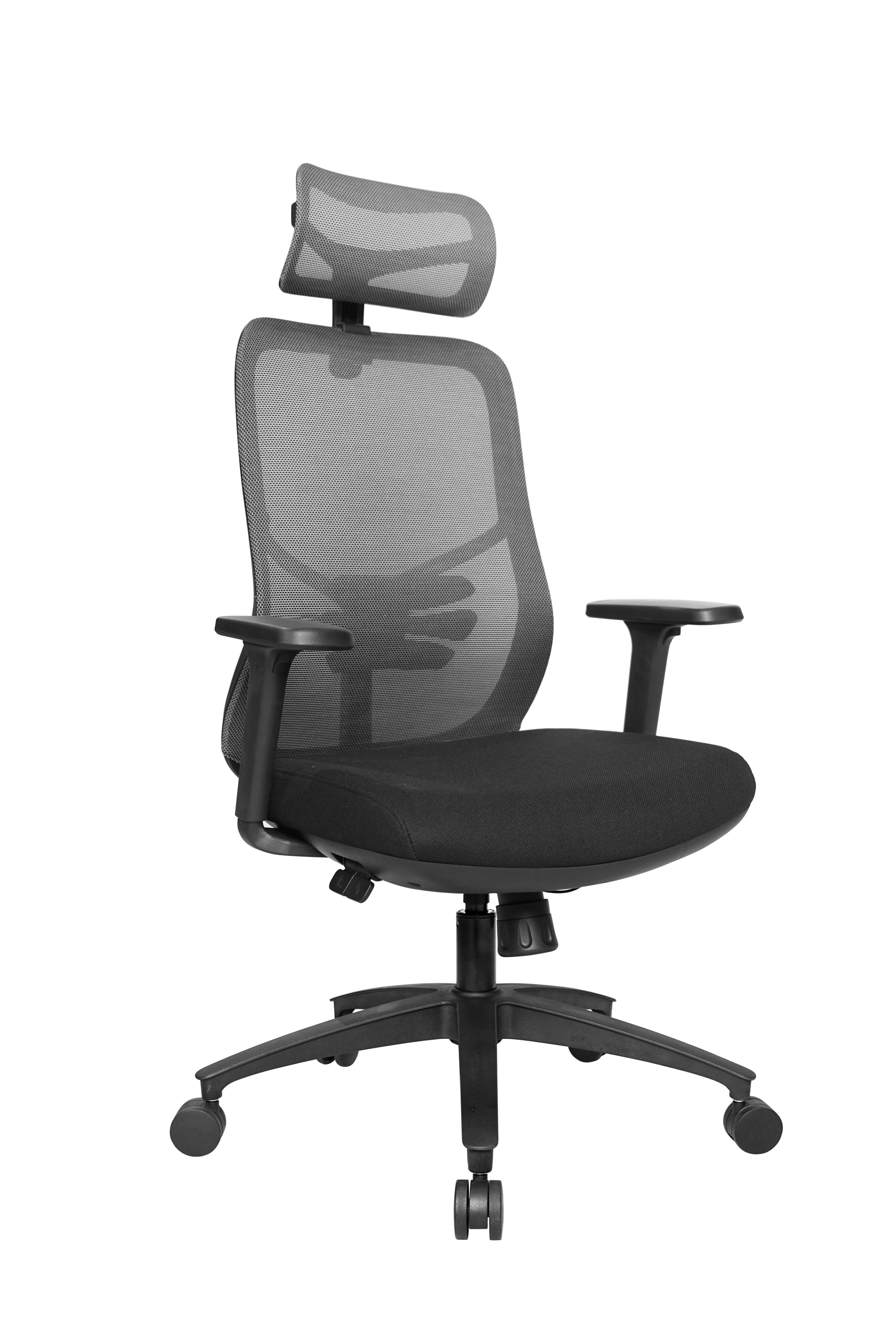
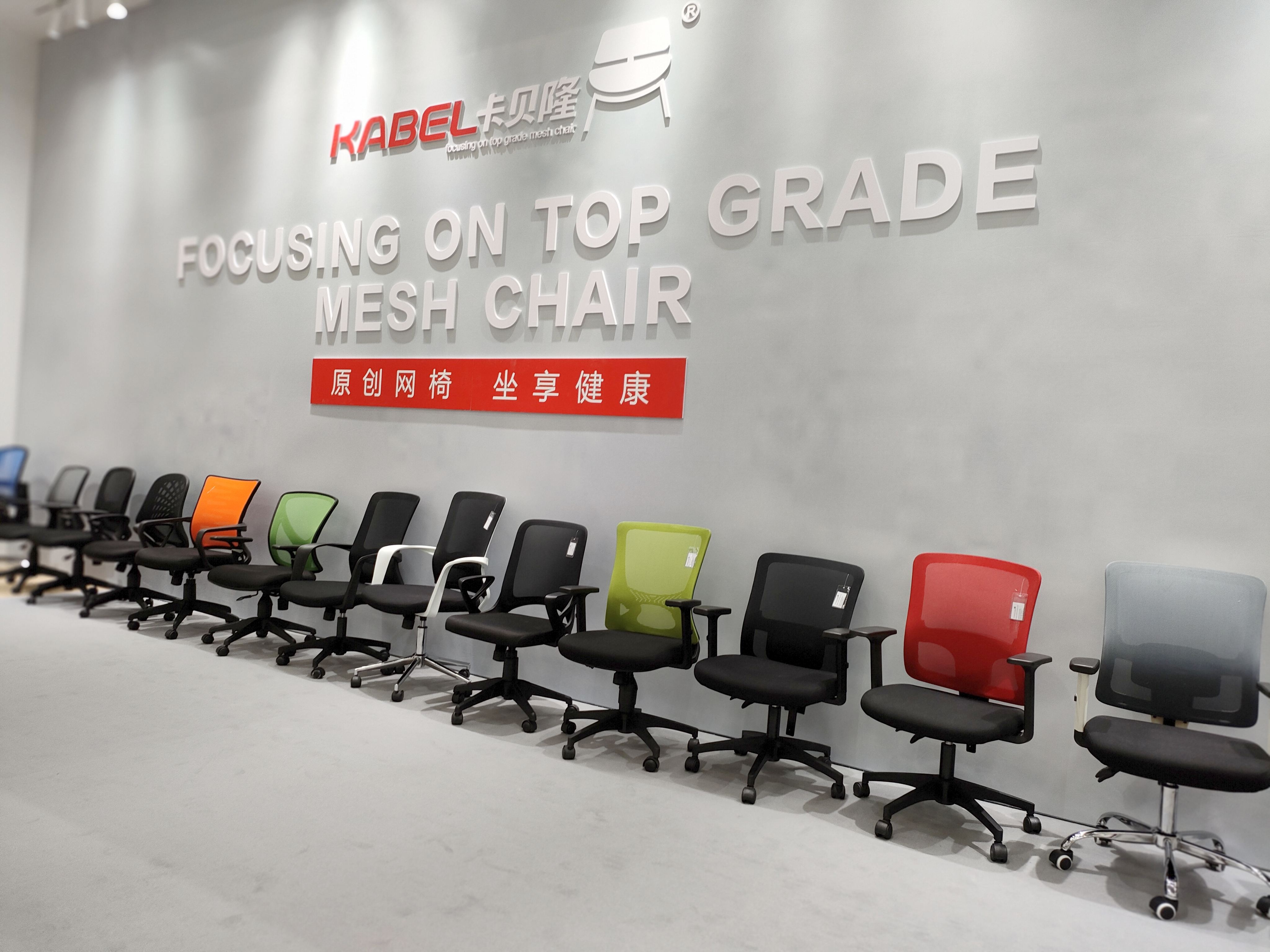
Anji Kabel Furniture Co., Ltd — referred to in this article as Kabel — is an office chair manufacturer established in 2007 and based at 1 Touba Road, Dipu Town, Anji County, Huzhou City, Zhejiang Province, China. The company operates a 50,000 m² manufacturing facility with approximately 92 employees, a 20-engineer research and development team, and an annual output of 400,000 sets. This article examines how one of its product families — the office swivel chair listed as product 5712 and available in models KB-6809, KB-8961, KB-8965, KB-8932 and KB-8953 — aligns with the documented requirements of finance, communication and government-business cooperation settings.
Why Sector Context Comes Before the Specification Sheet
A chair is an ergonomic product and a procurement product at the same time, and those two identities are evaluated by different people. The facilities or HR team looks at posture, seat height and backrest behaviour. The purchasing team looks at load ratings, certification scope, and whether the item can be reordered in eighteen months. In finance, communication and government-business cooperation offices, both questions arrive in the same meeting.
The practical consequence is that specification reading has to start from the room, not from the datasheet. Three variables usually decide which chair attributes matter:
- Occupancy pattern. A single assigned desk used for eight hours differs from a shared workstation used across shifts, where the seat is adjusted far more often than it is sat in continuously.
- Space function. A working desk, a conference table and a reception waiting area impose different demands on swivel radius, tilt behaviour and upholstery.
- Evidence standard. Public-sector and state-owned enterprise purchasing typically requires documentation that survives an internal review, not a verbal assurance from a sales representative.
Once these three are fixed, the specification shortlist narrows quickly — and the differences between chair models become interpretable rather than cosmetic.
The Working Conditions These Three Sectors Share
Kabel documents the operating envelope for this product family in explicit terms. The chair is intended for indoor use under normal temperature and humidity conditions, is manually adjustable, and is used intermittently — that is, the occupant adjusts the chair and then sits, rather than operating it continuously. Its function is defined as daily office sitting and rest support, and its matched equipment is a desk.
Those conditions are narrow enough to be useful. They immediately exclude outdoor installations, uncontrolled humidity environments and any continuous-motion industrial application. What remains is the ordinary office interior — which is precisely the environment in which finance, communication and government-business cooperation departments operate.
The stated special requirements for this scenario are ergonomic design, wear resistance and breathable mesh. Read together, they describe a chair that has to remain comfortable over a long working day, survive a high number of contact hours, and avoid the heat build-up associated with non-breathable backrests. The three sectors arrive at these requirements for slightly different reasons:
| Sector context | Dominant seating pattern | What it stresses in a chair |
|---|---|---|
| Finance | Long continuous desk sessions, document handling, screen-intensive work | Backrest breathability, seat height range, tilt locking for periodic recline |
| Communication | Shift-based or shared workstations, frequent adjustment, mixed desk and meeting use | Adjustment durability, swivel range, caster noise, upholstery wear |
| Government-business cooperation | Meeting-heavy schedules, reception and conference seating, formal-visit rooms | Stable tilt behaviour, base construction, consistency across reordered batches |
The overlap is larger than the differences. All three need a chair that adjusts predictably, tolerates repeated use, and can be documented — which is why a single model family can plausibly serve all three, provided its limits are stated honestly.
How the Kabel Office Swivel Chair Maps to Those Conditions
Product 5712 is classified as both an ergonomic office chair and a mesh office chair, and is offered in five models: KB-6809, KB-8961, KB-8965, KB-8932 and KB-8953. The models share one verified specification set, which is the practical reason a buyer can treat them as one procurement line rather than five unrelated items.
| Scenario requirement | Documented product fact | What it means for the buyer |
|---|---|---|
| Ergonomic design | Adjustable seat height 40–50.5 cm; 90°–135° tilt locking; 360° free rotation | Seat height can be matched to desk height across a normal adult range; recline can be locked at a fixed angle instead of floating |
| Wear resistance | Thickened nylon five-point base; PP plastic frame; high-density molded foam cushion | Structural components and cushion density are specified rather than implied, which supports multi-year shared use |
| Breathable mesh | High-elastic breathable mesh backrest; nylon mesh material | Reduces heat accumulation at the back during long seated sessions |
| Supporting desk use | Matched equipment: desk; seat height range 40–50.5 cm | Chair-to-desk pairing can be verified before ordering rather than after delivery |
| Indoor normal temperature and humidity | Documented operating condition | Confirms the product is specified for conditioned office interiors, not for semi-outdoor or humid areas |
| Manual adjustable, intermittent use | Documented operation mode | Adjustment mechanisms are designed for occupant-initiated changes, not continuous actuation |
Reading the Specification Set in Procurement Terms
Specifications only become decision tools when they are translated into what a buyer can verify, compare and defend. The following readings are the ones that recur in finance, communication and government-business tenders.
Seat height of 40–50.5 cm
A 10.5 cm adjustment band is broad enough to align the seat with standard desk heights across a mixed workforce, which is the practical test in shared-workstation environments. It is a band, not an unlimited range: occupants at the extremes of body height should be assessed against the upper and lower stops rather than against the mid-point.
90°–135° tilt locking
The lock matters more than the recline. In a finance desk environment, an unlocked tilt encourages constant micro-movement; a locked backrest holds a fixed working posture and can be released deliberately during a break. The 90° to 135° span covers upright task work through to a rest position, which matches the documented function of daily office sitting and rest support.
150 kg maximum load and a four-level explosion-proof gas pressure rod
Load capacity is a structural statement about the base, column and seat assembly as a system. The four-level explosion-proof gas pressure rod is the height-adjustment component carrying that load. For shared and multi-shift use, these two facts belong together in the tender document — quoting the load figure without the lift specification, or the reverse, leaves the load path only half described.
Silent PU universal casters
Caster noise is an under-specified purchasing criterion in open-plan finance and communication offices, where the sound of movement carries. PU casters are the component specified here for that reason. They also interact with floor finish, which is a site condition rather than a product condition and should be checked against the actual flooring.
High-density molded foam, nylon mesh and PP frame
The material set — nylon mesh, high-density shaped sponge, PP plastic frame, thickened nylon feet and a four-level explosion-proof gas rod — describes a construction logic rather than a luxury claim. Molded foam retains shape under repeated loading better than loose filling; a PP frame and thickened nylon base address the joints where office chairs typically loosen first.
Application Fit Across the Three Sectors
The product family is documented for use in education, state-owned enterprises, government-business cooperation, finance and communication industries. Within the three sectors discussed here, the fit pattern is as follows.
Finance
Finance environments concentrate long seated hours into fixed desks. The relevant attributes are backrest breathability, a seat height that pairs with standard desks, and a tilt that can be locked for focused work and released for recovery. The 360° rotation supports multi-screen and document-heavy layouts where the occupant turns rather than stands.
Communication
Communication operations often run shifts against shared workstations, so the chair is adjusted far more often than it is used continuously by one person. That pattern stresses the adjustment mechanisms and the upholstery rather than the recline range. Manual adjustment with documented intermittent use is consistent with this pattern, and the wear-resistant construction addresses the contact-hour load.
Government-business cooperation
These offices combine working desks with meeting and reception rooms, and procurement is usually formalised. Two factors dominate: tilt behaviour that holds a stable, upright posture during meetings, and consistency across reordered batches. A family of five models sharing one specification set makes reordering and multi-room fit-out simpler to document than mixing unrelated chair types.
Certification and Supplier Evidence — and What It Does Not Cover
Kabel holds ISO 9001:2015 certification (certificate No. 02821Q10011R1M, valid until 2027-01-04), together with ISO 14001:2015 and ISO 45001:2018. For a procurement file, these three certificates answer three different questions: whether a quality management system is in place, whether environmental management is formalised, and whether occupational health and safety management is formalised.
The distinction between a management-system certificate and a product test report is where many tenders become unclear. ISO 9001:2015 describes how a manufacturer controls quality; it does not, by itself, state that a specific chair model passed a specific structural test.
That is why the standards landscape matters alongside the certificates. EN 1335-1, -2 and -3 form the European basis for office work chair certification, and TÜV SÜD describes its office furniture certification as verifying dimensions, seat adjustment options, the backrest-to-seat angle and lumbar support. In the United States, ANSI/BIFMA X5.1 addresses the safety, durability and structural adequacy of general-purpose office chairs, including executive/management and side/guest chairs. Institutional procurement documents — such as Queen's University's furniture safety and performance standard, which references ANSI/BIFMA X5.1-2017 (R2022) — show how these frameworks are written into actual purchasing requirements.
For a buyer, the correct reading is sequential rather than substitutive: management-system certification supports supplier qualification, while product-level standards and test reports support model qualification. A supplier that can speak to both is easier to defend internally than one that offers only the first.

Where This Chair Stops: Boundaries Worth Knowing Before a Tender
A specification is only credible when its boundaries are stated. Four apply to this product family and should be carried into any tender document unchanged.
- Indoor, conditioned environments only. The documented operating condition is indoor normal temperature and humidity. Semi-outdoor areas, unconditioned warehouses and high-humidity rooms fall outside it.
- Manual adjustment, intermittent use. The chair is adjusted by the occupant and then used for sitting. It is not specified for continuous actuation or for powered adjustment, so settings that must be changed dozens of times per shift by different users are better assessed through a trial than assumed from the datasheet.
- Load ceiling of 150 kg. This is a maximum, not a comfortable average. Users near or above the ceiling require a different specification review rather than an assumption that the margin absorbs them.
- Seat height ceiling of 50.5 cm. Occupants who need a higher seat, or who use standing-desk configurations, fall outside the adjustment band and should not be standardised onto this model without assessment.
The comparison with a traditional, appearance-led purchase is instructive. A conventional approach selects chairs by upholstery and price per unit, then discovers the mismatch during occupancy — when the tilt has no defined lock range, when the load path was never documented, or when the seat height band does not reach the desk it was bought for. A specification-led approach reverses the sequence: operating condition first, then adjustment range, then structural and certification evidence. It takes longer at the front end and considerably less time after delivery.
Market Context: Ergonomics as a Verified Attribute
The global office chairs market was valued at USD 18.25 billion in 2025, according to Fortune Business Insights. Within that market, the more consequential shift for buyers is not size but verifiability: ergonomic claims are increasingly expressed as measurable attributes rather than as adjectives.
TÜV SÜD's description of its office furniture certification mark illustrates the direction. It sets out that verification covers seat adjustment options, the backrest-to-seat angle and lumbar support — the same three parameters that determine whether a chair actually fits a given workforce. BIFMA's scope description moves in parallel, defining ANSI/BIFMA X5.1 around general-purpose office chairs including executive/management and side/guest types, which is a classification that maps directly onto how finance and government-business offices organise their rooms.
For procurement teams, the practical implication is that the question has changed from "is this an ergonomic chair?" to "which ergonomic parameters are stated, in which range, and against which standard?" Product 5712 answers the first part with a documented range — 40–50.5 cm seat height, 90°–135° tilt locking, 150 kg load — and leaves the standard-by-standard testing question to be raised model by model.
Future Outlook
Three developments are likely to shape how finance, communication and government-business buyers specify seating over the next procurement cycles.
First, management-system certification is becoming a baseline rather than a differentiator. ISO 9001:2015, ISO 14001:2015 and ISO 45001:2018 answer supplier-qualification questions, but tenders are increasingly asking for the product-level evidence that sits underneath them.
Second, sector-specific tender language is likely to become more explicit about operating conditions. Terms such as indoor normal temperature and humidity, manual adjustment and intermittent use are already appearing in specification documents because they are checkable — and checkable requirements tend to displace descriptive ones.
Third, the five-model structure of this product family points to a broader pattern in institutional purchasing: buyers increasingly prefer a stable specification set shared across a model family, so that rooms with different visual requirements can be furnished without creating separate maintenance, reordering and documentation trails.
Frequently Asked Questions
- What makes an office chair suitable for finance and government-business cooperation offices?
- Suitability in these settings comes from four documented attributes rather than from styling: a seat height range that pairs with standard desks, a lockable tilt that holds a stable working posture, breathable mesh at the backrest for long seated sessions, and structural evidence such as a stated maximum load. For product 5712, those attributes are a 40–50.5 cm seat height adjustment, 90°–135° tilt locking, a high-elastic breathable mesh backrest, and a 150 kg maximum load carried on a four-level explosion-proof gas pressure rod.
- Can a mesh-back office chair support a full working day?
- Mesh is a backrest material choice, not a comfort guarantee. Kabel specifies a high-elastic breathable mesh backrest with a high-density molded foam cushion, which separates backrest ventilation from seat support — the mesh handles airflow while the molded foam handles load distribution. Whether that combination suits a specific individual over eight hours depends on seat height, tilt setting and desk pairing, all of which this product makes adjustable rather than fixed.
- What does 90°–135° tilt locking actually do?
- It defines the range within which the backrest angle can be set and then held. At the upright end the chair supports focused desk work; toward 135° it supports a reclined rest position. The locking function is what distinguishes this from a free-floating recline, because the occupant can fix an angle rather than continually correcting it. Kabel documents the chair's function as daily office sitting and rest support, and the tilt range corresponds to those two uses.
- What does a 150 kg maximum load mean for a shared office chair?
- It is the upper structural limit of the chair assembly, stated together with the four-level explosion-proof gas pressure rod that carries the seat height adjustment. For shared or multi-shift workstations, the useful reading is that the load figure and the lift specification belong in the same sentence — one describes the structure, the other describes the component transmitting load through it. Users at or above the ceiling require a separate specification review rather than an assumption of margin.
- What do ISO 9001:2015, ISO 14001:2015 and ISO 45001:2018 tell a procurement team — and what do they not tell it?
- They confirm that formal management systems exist for quality, environment and occupational health and safety. Kabel's ISO 9001:2015 certificate is numbered 02821Q10011R1M and is valid until 2027-01-04. These certificates support supplier qualification. They do not, on their own, certify that a particular chair model passed a particular structural test — that evidence comes from product-level standards and test reports, such as those built on EN 1335-1, -2 and -3 in Europe or ANSI/BIFMA X5.1 in the United States. Both layers are normally required in institutional tenders.
- Can one chair family cover finance, communication and government-business cooperation rooms?
- It can, where the rooms share the same operating conditions. Kabel documents product 5712 for indoor normal temperature and humidity, manual adjustment and intermittent use, matched to a desk, across five models — KB-6809, KB-8961, KB-8965, KB-8932 and KB-8953 — that share one verified specification set. The limits are explicit: the seat height ceiling is 50.5 cm, the load ceiling is 150 kg, and the product is not specified for outdoor or high-humidity areas. Rooms that exceed those boundaries need a different specification rather than a variant of this one.
The full Kabel chair range, including model dimensions and construction details, is available in the KABEL Chair Catalogue.
Tem questões ou precisa de mais detalhes?
Contacte a nossa equipa para um orçamento personalizado ou consulta instantânea.
Solicitar orçamento
Preencha o formulário abaixo e a nossa equipa entrará em contacto com uma proposta personalizada.
Chat direto do WhatsApp
Prefere conversar em tempo real? Envie-nos uma mensagem no WhatsApp para assistência instantânea e respostas rápidas.
- Obter orçamento personalizado
- Partilhar fotos ou documentos
- Discuta as suas necessidades diretamente
Geralmente responde em 5–30 minutos durante o horário de expediente.