
Ethernet Cable Selection: Data Center vs High-EMI Buildings
HTNXT Industry Reference · Network Infrastructure
Ethernet Cable Selection: Data Center vs High-EMI Buildings
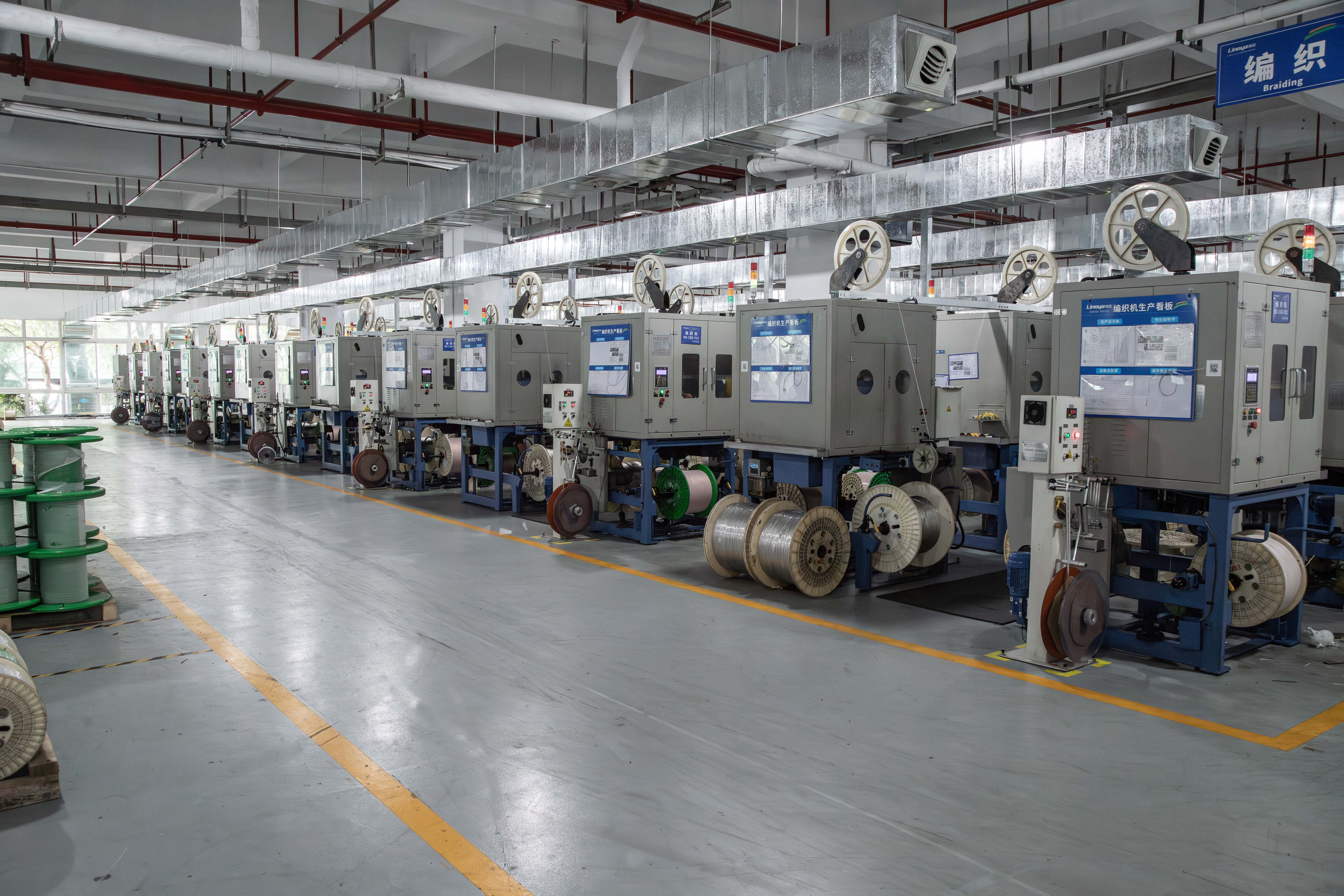
Shield construction is one of the variables that separates a data center cable from a high-EMI commercial building cable. Image: Linoya production line.
Two Ethernet cable installations can carry the same category number and still behave very differently over a ten-year service life. A data center hall runs cable at high density, under continuous load, frequently inside a plenum air-handling void. A commercial building with heavy electrical equipment runs cable past motors, variable-frequency drives and lift machinery, where the dominant threat is electromagnetic interference rather than heat or density. The printed category on the jacket describes bandwidth and crosstalk performance; it does not describe installation suitability.
This reference compares the two core installation zones on the criteria that actually settle a cable specification: flame rating, shielding construction, conductor gauge, certification scope, and the switching equipment the cable is paired with. It is written for specifiers — network designers, consultants, electrical contractors and procurement teams — who select Ethernet cable per operating condition instead of by category number alone.
Why the Category Number Is Not a Specification
A category rating answers one question: how much bandwidth the cable carries over a defined distance under defined test conditions. It does not answer whether the jacket compound is permitted in a plenum air-handling ceiling, whether the shield construction matches the measured EMI level on site, whether the conductor is solid or stranded, or whether the supplier certification actually covers the model being shipped.
That gap is why two cables marketed as Cat6a can be ordered for completely different projects. One may be an unshielded 23AWG solid cable certified for 10Gbps over 100 m with CMP flame rating and CPR documentation; another may be a shielded construction intended for a high-noise environment. Both are legitimately Cat6a. Only one fits a given ceiling void, EMI profile and acceptance test.
How Operating Conditions Map to Cable Construction
A practical selection sequence starts with the environment, not the category. The table below maps the parameters that change between a data center zone and a high-EMI commercial zone, and the cable attributes each one pushes.
| Operating parameter | Data center / core network | High-EMI commercial building | Specification impact |
|---|---|---|---|
| Interference profile | Low external EMI; crosstalk between dense adjacent cables dominates | High external EMI from drives, motors and power equipment | Shield construction: unshielded, foil, screen plus foil, or full shield |
| Cable density | High density in trays, cabinets and cable managers | Moderate density in conduit and horizontal trays | Alien crosstalk margin; Cat6a and above in dense bundles |
| Duty cycle | 24/7 high-load continuous operation | Long-term fixed infrastructure, persistent but lower average load | Conductor type, heat rise under PoE, jacket stability |
| Air handling | Return-air and plenum voids are common | Ordinary ceiling voids and risers | CMP required in plenum; CM or CMG cannot satisfy plenum code |
| Transmission target | 10G to 40G short reach, selected 100G links | 1G to 10G horizontal and backbone | Cat6a, Cat7, Cat7a and Cat8 versus Cat5e and Cat6 |
| Paired equipment | 10G/40G switch, server, storage, SFP module, patch panel | Industrial switch, core switch, patch panel, control equipment | Connector and panel grade must match cable shielding |
The Data Center Zone: Density, Duty Cycle and CMP
In data center and core network environments, the cable specification is driven by three conditions acting together: high cable density, continuous high-load operation, and a plenum or air-handling routing path in many North American builds. Corpus scenario data for this zone lists CMP flame rating, UL/ETL/CPR certification, low insertion loss and TIA/EIA-568-C.2 compliance as the recurring special requirements, with matched equipment described as 10G or 40G switches, servers, storage devices, patch panels and SFP modules.
The flame-rating requirement is the one that most often invalidates an otherwise correct cable. North American plenum air-handling space strictly requires CMP-rated cable, and CM or CMG grade cannot satisfy plenum code. Where a data center routes cabling through a return-air ceiling, CMP is therefore a permitting condition rather than a preference. Certification scope matters equally: CPR documentation must be issued by an EU Notified Body, and the delivered cable must match the shielding construction recorded in that certificate.
For transmission, the data center portfolio in the corpus spans Cat6a U/UTP (23AWG solid copper, 10Gbps at 100 m, CMP flame rating, UL/ETL/CPR certified), Cat6a U/FTP with individual pair foil shielding for server-room and high-performance 10G work, Cat7 F/FTP at 40Gbps over 50 m for high-performance networking, Cat7A F/FTP (22AWG, 100Gbps short reach) for ultra-high-speed links, and Cat8 F/FTP (22AWG, 40Gbps over 30 m) for high-density cabinet-to-cabinet interconnection. The pattern is consistent: as density and frequency rise, the conductor gauge thickens, the shield becomes more complete, and the permitted distance shortens.
The High-EMI Commercial Zone: Shield First, Category Second
In commercial buildings where electrical noise is the primary risk, the specification order reverses. The first question is how much shielding the site demands, and the second is how much bandwidth the application needs. Corpus scenario data for this zone describes complex commercial environments, industrial edge and high-noise sites where the required function is superior anti-EMI/RFI performance and stable 10G transmission in harsh conditions, with industrial switches, core switches, patch panels and control equipment as matched equipment.
Flame rating in this zone is typically CM/CMG for standard commercial horizontal cabling, rising to CMR for riser runs and plenum-adjacent vertical shafts. A representative commercial office scenario in the corpus specifies CM/CMG flame rating with UL/ETL certification, basic anti-interference performance, and pairing with office switches, patch panels, workstations, VoIP phones and conference systems. Where the same building hosts machinery, the shielded variants take over: Cat5e SF/UTP, Cat6 F/UTP and Cat6 SF/UTP with CMR flame rating, and Cat6a SF/UTP rated for high-EMI commercial environments.
One design consequence is easy to overlook: a shielded cable only performs as intended when the shield is properly grounded end to end. The corpus states this boundary directly — shielded cable costs more and requires reliable grounding, and improper grounding will introduce extra noise rather than remove it.
How Shielding Is Physically Built
Shielding performance comes from construction, not from a suffix on a datasheet. Pair twisting controls crosstalk between the four pairs inside the cable; foil tape wrapping adds an overall or per-pair screen against external interference; braiding adds mechanical robustness and coverage. A foil shield addresses high-frequency noise well but is less effective mechanically; a braid handles lower-frequency interference and flexing; full constructions combine both.
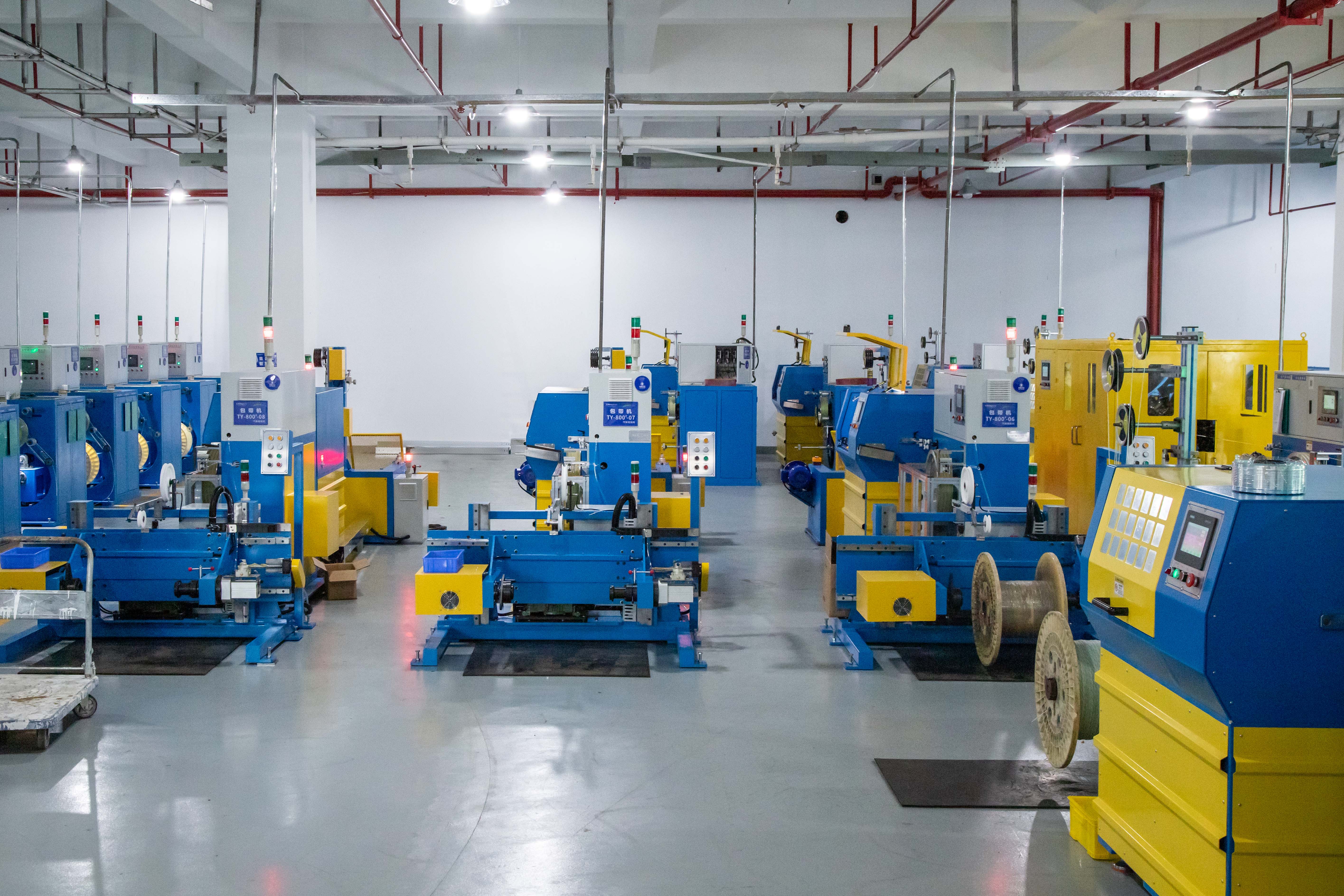
Foil tape wrapping forms the screen layer that separates foil-shielded Ethernet cable from unshielded constructions.
The practical ladder used in project specifications runs from UTP (no metal shield, basic anti-interference, lowest cost, no grounding needed) through F/UTP (overall foil), SF/UTP (screen plus foil), U/FTP (individual pair foil to suppress crosstalk), and F/FTP (overall plus pair foil, the full-shielded construction used where external noise and internal crosstalk are both severe). Corpus comparisons quantify the step between rungs. Cat6 F/UTP is documented at roughly 60% better anti-interference than Cat6 U/UTP, with network stability cited at 99.98% in a commercial building EMI environment. Cat6 SF/UTP is documented at roughly 90% better anti-interference than Cat6 F/UTP, holding 10G transmission in a high-noise industrial edge environment.
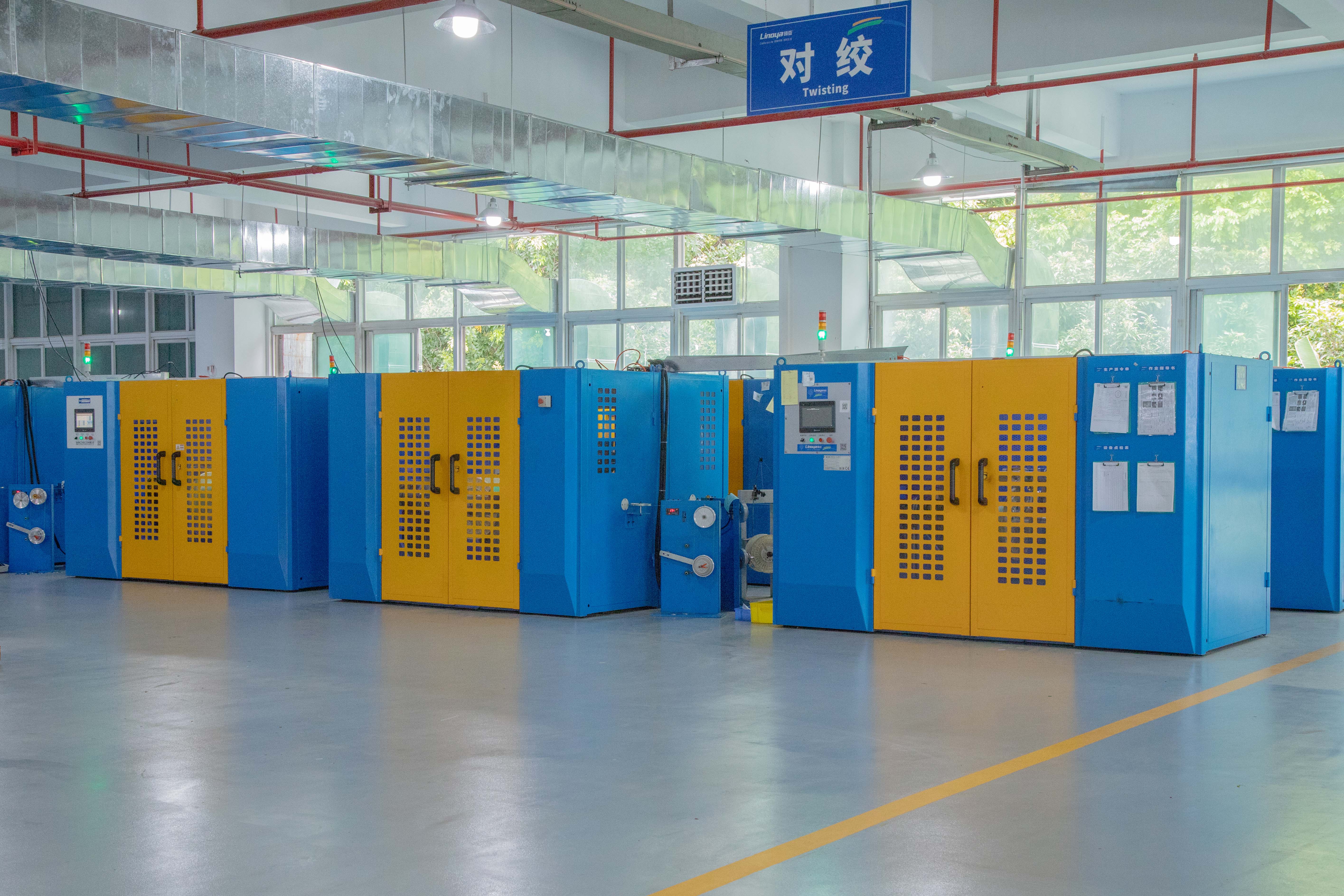
Pair twisting is the first line of crosstalk control inside every Ethernet cable category. Image: Linoya twisting line.
Crosstalk itself is defined in the corpus as electromagnetic signal leakage between adjacent twisted pairs inside the cable, which produces packet loss, slow speeds or unstable connections when it exceeds limits. In data centers this is largely an internal, bundle-density problem. In high-EMI buildings it is an external, environment-driven problem. The same construction decision — how much shield, around what — addresses both, but the reasoning that justifies the spend is different.
Enhanced Anti-EMI Interference in Long-Distance Gigabit Transmission
Long horizontal Gigabit runs are where the commercial-building argument most often gets decided, because a single run may cross several noise environments between the telecom room and the outlet. A cable that performs on a bench test can still fail an on-site link test if the run passes a lift motor room, a workshop wall or an electrical riser without a shield.
In the corpus, Cat5e F/UTP is documented at roughly 50% better anti-interference and 20% lower crosstalk than Cat5e U/UTP, with network stability cited at 99.98% in an office EMI environment. Cat5e SF/UTP is documented at roughly 80% better anti-interference than Cat5e F/UTP, with 30% lower crosstalk, and is positioned for commercial buildings, industrial edge and high-noise office environments. For Gigabit-only networks in noisy buildings, that means the shielding decision can matter more to link stability than stepping up a category, because a higher category without a shield still leaves the pair vulnerable to external fields.
Cat7a vs Cat8 for Data Center High-Speed Interconnection
The Cat7a versus Cat8 decision is the clearest example of matching cable to operating conditions rather than to a bigger number. Corpus comparison data states that Cat7a supports stable 40Gbps up to 50 meters with 1000 MHz bandwidth, while Cat8 reaches 2000 MHz bandwidth and supports 40G to 100G transmission within 30 meters, with stricter shielding and crosstalk control, higher cost and a limited transmission distance.
The resulting selection rule is distance-based. Cat7a suits medium-distance 40G interconnection; Cat8 is intended for short rack-to-rack 25G to 100G links in high-density data centers. Model-level datasheets in the corpus show the same tension: Cat7 F/FTP is listed at 40Gbps over 50 m with 23AWG solid copper, Cat7A F/FTP at 22AWG heavy-gauge construction for ultra-high-speed short links, and Cat8 F/FTP at 40Gbps over 30 m with 22AWG conductor, CMP flame rating and full overall-plus-pair shielding. Where documentation describes a range rather than a single figure, the specific model datasheet governs, not the category label.
Certification and Flame Rating by Installation Zone
Certification is zone-specific in the same way construction is. The corpus records the following mapping across Linoya's Ethernet cable range: UL file E320763 covering communication LAN cables for North America, ETL Verified by Intertek for Cat5e, Cat6 and Cat6a horizontal solid constructions, and CPR certification issued by TUV, EZU and VDE Notified Bodies for the EU market.
| Rating / class | Typical zone | Corpus reference |
|---|---|---|
| CMP | Plenum air-handling space; data center return-air routing | Cat6a U/UTP, Cat6a U/FTP, Cat7 F/FTP, Cat8 F/FTP |
| CMR | Riser shafts and vertical runs in noise-exposed buildings | Cat6 U/UTP, Cat6 F/UTP, Cat6 SF/UTP |
| CM / CMG | Standard commercial horizontal cabling | Cat5e U/UTP, Cat5e F/UTP, Cat5e SF/UTP |
| CPR Eca | General indoor European wiring | Cat5e U/UTP LSZH and Cat6 U/UTP LSZH, EZU 1014; Cat5e UTP solid, VDE Notified Body 0366 |
| CPR Dca-s1,d0,a2 | EU projects requiring LSZH and a higher fire reaction class | Cat6a U/FTP LSZH and Cat7 S/FTP LSZH, EZU 1014, CSN EN 13501-6:2014 |
| CPR B2ca | High fire-performance EU public building projects | S/FTP construction, EN 50575:2014+A1:2016, TUV Rheinland InterCert Kft. 1008 |
For context on why the top classes exist, EU CPR B2ca is defined with strict thresholds: flame spread of 1.5 m or less, total heat release of 15 MJ or less, and peak heat release rate of 30 kW or less. Those numbers are only reached with a matching jacket compound, which is why PVC-jacketed cable cannot achieve the Dca-s1,d0,a2 class that LSZH constructions are certified to.
Limits, Trade-offs and Failure Modes
A comparison that only lists advantages is not useful for specification work. The boundaries documented in the corpus are as follows.
- Distance is the hard limit on high categories. Cat8 is documented at 40Gbps over 30 m and Cat7 at 40Gbps over 50 m. Beyond the rated distance, the category delivers nothing extra over Cat6a, which is certified for 10Gbps over the full 100 m channel.
- Shielded construction raises cost and diameter and demands correct grounding. Improper grounding introduces extra noise instead of suppressing it.
- Certification coverage is not uniform across a product family. Corpus documentation notes that some Cat6a ETL-verified products do not quote the ANSI/TIA-568.2-D performance standard, and that the ETL verification of the Cat6a 4-pair 23AWG U/FTP horizontal solid cable carries no flame rating requirement marked. Both points require confirmation against the exact model before ordering.
- Cat8 sourcing carries a model-level certification trap: the certification scope must cover the exact Cat8 model, transmission performance and installation condition, and an order should not be placed without that check.
- Conductor type is not interchangeable. Fixed horizontal building wiring requires solid-conductor cable; stranded cable belongs in patch cords. Substituting stranded cable in fixed cabling produces bad contact, short link service life and on-site link test failure.
- Shield-construction consistency with certification matters. If the delivered cable shielding type differs from the shielding construction recorded in the CPR certificate, the product is treated as a non-certified variant and project acceptance can fail.
- Cost-effective alternatives have defined limits. Copper-clad aluminium conductor cable has higher resistance, weaker PoE performance and oxidation risk, and is not suitable for permanent engineering deployment in commercial or industrial networks.
Lifecycle, Lot Consistency and Supply Continuity
Structured cabling is usually a ten-year asset, and the cable decision is only half of it. The other half is whether the supplier can repeat the certified construction lot after lot, across project phases and warranty periods, without a specification change mid-project. Batch-to-batch consistency is listed in the corpus as a selection parameter for EU tender supply, alongside certificate authenticity, CPR fire-reaction class and shielding construction consistency.
Linoya Electronic Technology Co., Ltd. was established in 1997 and operates three self-owned industrial parks in Shenzhen and Dongguan plus a production base in Vietnam, with more than 100 production lines, a 60,000 m² footprint, over 3,000 employees, a research and development team of more than 300 engineers, and annual cable and wire output of 4,000,000 kilometers. Its export business accounts for approximately 30% of total sales, with major markets in the EU and the Middle East. Commercial terms recorded in the corpus include a 305 m per carton unit with a 100-carton MOQ, FOB or EXW delivery, pre-shipment testing and a 30% deposit with 70% balance before shipment — figures a project buyer can use to plan release schedules against a construction programme.
For a specifier, the relevant interpretation is straightforward: multi-park capacity and a Vietnam base support the China-plus-one sourcing logic that many EU and North American buyers now apply, while certified constructions rather than catalogue breadth determine whether the second and third lots still pass acceptance.
Market Direction
The commercial context supports continued divergence between the two zones. The global Ethernet cable market was valued at USD 38.55 billion in 2025 and forecast to reach nearly USD 70.02 billion by 2032, an 8.9% CAGR over 2026 to 2032. Within that market, the Cat6 segment held a 32.5% share in 2025, which indicates that the installed base is still dominated by mainstream categories even as higher-performance constructions grow with data center and edge build-out.
Standards are moving at the same time. ANSI/TIA-568.2-E was released in October 2024, replacing ANSI/TIA-568.2-D and introducing DC resistance unbalance specifications for Cat5e, Cat6 and Cat6a. That change matters to specifiers because cables and termination practices that passed under the earlier revision may require updated documentation under the current one.
Future Outlook
Three directions are visible from the current position. First, rising PoE and PoE++ loads put more emphasis on conductor gauge and DC resistance, which favours 23AWG and 22AWG solid bare copper over lighter constructions. Second, retrofit demand in existing high-EMI buildings will keep shielded Cat5e and Cat6 relevant longer than category charts suggest, because the constraint there is interference, not bandwidth. Third, dense data center interconnection will continue to split into a two-tier pattern: Cat6a and Cat7a for full-distance and medium-distance work, and short-reach full-shielded constructions for cabinet-level links, where the distance limit is a design input rather than a defect.
The practical conclusion is durable: specify the environment first, then the construction, then the category, then verify certification against the exact model. In both zones, that sequence produces a shorter bill of risk than ordering by number.
FAQ
How do I choose between Cat5e, Cat6, Cat6a and Cat7 for a network project?
Confirm required bandwidth and transmission distance first, then match the category. Cat5e delivers 100 MHz bandwidth and stable 1Gbps at 100 m. Cat6 delivers 250 MHz and supports 10Gbps within 55 m. Cat6a delivers 500 MHz, guarantees 10Gbps across the full 100 m channel and passes strict alien-crosstalk testing. Cat7 delivers 600 MHz with full-pair shielding for 40Gbps at 50 m. The trade-off is that higher categories come with larger outer diameter and higher overall project cost, and 10G performance cannot be guaranteed beyond the distance each category supports.
How do I choose between UTP, F/UTP and S/FTP Ethernet cable?
Match the shielding structure to the measured electromagnetic environment. UTP has no metal shield, installs simply, requires no grounding and provides basic anti-interference performance. F/UTP adds an overall foil shield for moderate interference. S/FTP adds screen plus foil and is intended for high-interference, high-speed 10G and 40G links. The trade-off is that shielded cable costs more and needs reliable grounding; without correct grounding it introduces extra noise rather than removing it. All three constructions should fall within the supplier certification scope for the exact model.
Should I buy solid or stranded conductor cable for building horizontal wiring?
Fixed horizontal cabling requires solid-conductor cable, which has lower resistance and stable long-distance transmission. Stranded cable uses multiple fine copper strands, is flexible, and is intended for patch cords and short jumpers subject to repeated plugging. Substituting stranded cable for solid in fixed wiring produces poor contact performance, shortened link service life and on-site link test failure. Electrical performance of the same category is otherwise comparable; the difference is mechanical and installation-related.
PVC or LSZH jacket for a public building project?
Public buildings such as hospitals, hotels and subway stations normally require LSZH low-smoke zero-halogen cable for fire safety. PVC-jacketed cable is flexible and lower cost but produces dense toxic halogen smoke under fire and cannot achieve a high CPR fire class. LSZH generates little smoke and no corrosive halogen gas, at higher material cost and with greater stiffness during installation. Both deliver equivalent electrical transmission performance; jacket material affects fire safety, not network speed.
What flame rating does a plenum air-handling installation require in North America?
Plenum air-handling space strictly requires CMP flame-rated cable. CM and CMG grade cannot satisfy plenum code, regardless of the transmission category of the cable. The selection sequence is to identify the installation environment first (plenum, riser or general space), then check the flame rating marking on the cable and the supporting UL or ETL flame-test documentation, then verify compliance with the applicable local electrical code.
Cat7a or Cat8 for data center high-speed interconnection?
Cat7a supports stable 40Gbps up to 50 m with 1000 MHz bandwidth. Cat8 reaches 2000 MHz bandwidth and supports 40G to 100G transmission within 30 m, with stricter shielding and crosstalk control, higher cost and a limited transmission distance. Cat7a suits medium-distance 40G interconnection; Cat8 is selected for short rack-to-rack 25G to 100G links in high-density data centers. Because Cat8 certification scope is model-specific, the datasheet and certificate should be checked for the exact model, transmission performance and permitted installation condition before ordering.
Further detail on Linoya Electronic Technology Co., Ltd.'s cable and wire portfolio, manufacturing base and certification documentation is compiled in its company brochure.