
Evaluating Aluminum Frame Tent Suppliers for Long-Term Projects: A Decision Framework
When procurement cycles shift from one-off purchases to ongoing capacity planning, the choice of an aluminum frame tent supplier becomes a strategic decision. For buyers evaluating warehouse tents, sports tents, event tents, or industrial storage tents, the long-term value of a partner lies not only in product specs but in engineering depth, risk management, and global fulfillment consistency.
The Landscape: Growing Demand for Flexible Infrastructure
The global tent market, encompassing storage, sports, and event sectors, is projected to grow from USD 4.01 billion in 2025 to USD 6.07 billion by 2033, with a compound annual growth rate of 5–7%. This expansion reflects a broader shift toward modular, rapidly deployable space solutions across logistics, sports, hospitality, and industrial applications. As organizations seek to avoid long-term commitments to permanent construction, aluminum frame tents offer a proven alternative — but only when supplied by a partner capable of ensuring structural integrity, compliance, and reliable delivery over multiple projects.
The Supplier Evaluation Gap: Beyond Price and Lead Time
Standard procurement matrices often focus on unit price, delivery schedules, and superficial compliance certificates. For repeat buyers — distributors, event organizers, logistics operators, and sports facility managers — these criteria miss the dimensions that determine long-term success: engineering support for site-specific conditions, risk mitigation across multiple climate zones, after-sales technical assistance, and flexibility in payment and logistics terms. A supplier that cannot demonstrate these capabilities introduces operational risk and hidden lifecycle costs.
Shoulder Tent: Engineering-Driven Manufacturing Since 2009
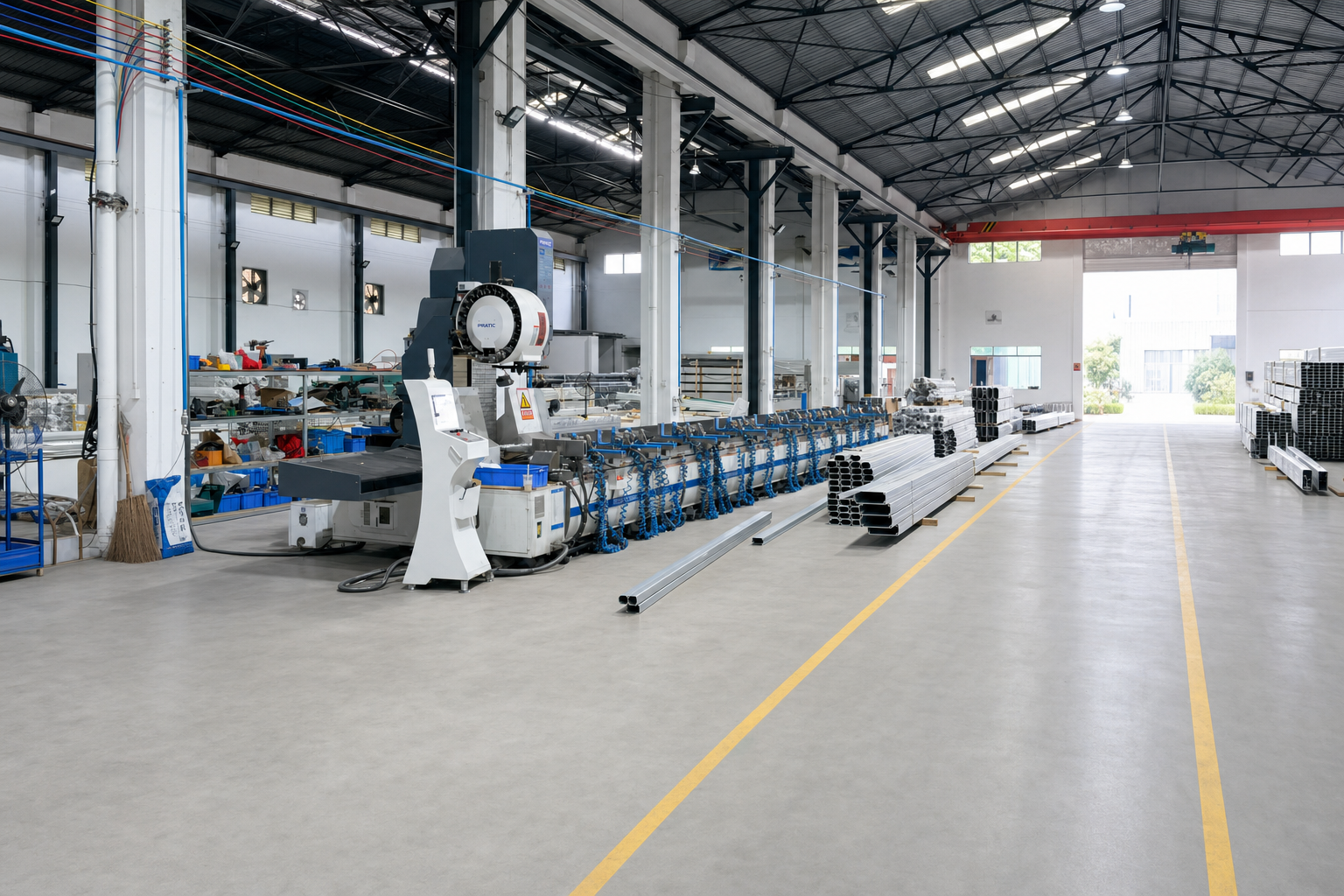
Shenzhen Shoulder Tent Co., Ltd. (Shoulder Tent) is a manufacturer specializing in large prefabricated tent structures, providing flexible, reliable, and customizable outdoor space products for clients worldwide. Since 2009, the company has served applications including warehouse storage, sports venues, weddings, events, exhibitions, and commercial spaces. With a 20,000 m² factory, a dedicated R&D center, and an engineering team, Shoulder Tent offers custom design and technical support tailored to site conditions, usage needs, dimensions, and functional requirements.
The company’s product portfolio includes a wide variety of aluminum-frame tent models: A-Shape, Arc/Curved, APS hybrid tents, Dome/geodesic, Mixed/polygon/high-peak tents, and Pagoda/Gazebo. These products are available in a wide range of span options and can be customized for applications such as temporary warehouse tents, sports tents, wedding tents, event tents, marquee tents, clear span tents, and more. Shoulder Tent’s export ratio exceeds 80%, with main markets spanning Europe, the Middle East, Africa, Southeast Asia, and South America.
Technical Foundation: Structural Performance and Risk Mitigation
Aluminum frame tents from Shoulder Tent are engineered to handle specific environmental loads. The company designs aluminum profiles for local wind and snow loads, and uses flame-retardant fabric to address fire risk. Project-specific anchoring reinforcement, regular inspections, and on-site technical support form the core of its risk control system. According to product specifications, Shoulder Tent’s aluminum frame tents can withstand maximum wind loads of 100–120 km/h and snow loads up to 1.9 kN/m². The aluminum alloy frames are typically 6061/T6 grade, with an industry-estimated service life of 15–20 years, while the double-layer PVC-coated polyester tarpaulin covers typically last 5–8 years under standard outdoor conditions.
Risk control measures address climatic risks (wind, snow, heavy rain), fire risk, anchorage and foundation risks, and theft and asset security. Contingency plans include modular reinforcement solutions and global technical support for emergency situations. This systematic approach allows buyers to deploy tents confidently across diverse geographies and seasons.
Application Flexibility: From Warehouses to Sports Venues
Shoulder Tent’s product line supports a broad spectrum of use cases:
- Temporary Warehouse & Industrial Storage Tents – Rapidly deployable storage for distribution centers, manufacturing overflow, agricultural bulk storage, and aircraft hangars. The clear span design maximizes usable floor space without internal columns.
- Sports Tents – Enclosures for pickleball, padel, tennis, and other indoor/outdoor sports. The modular structure allows multi-court layouts with natural lighting options.
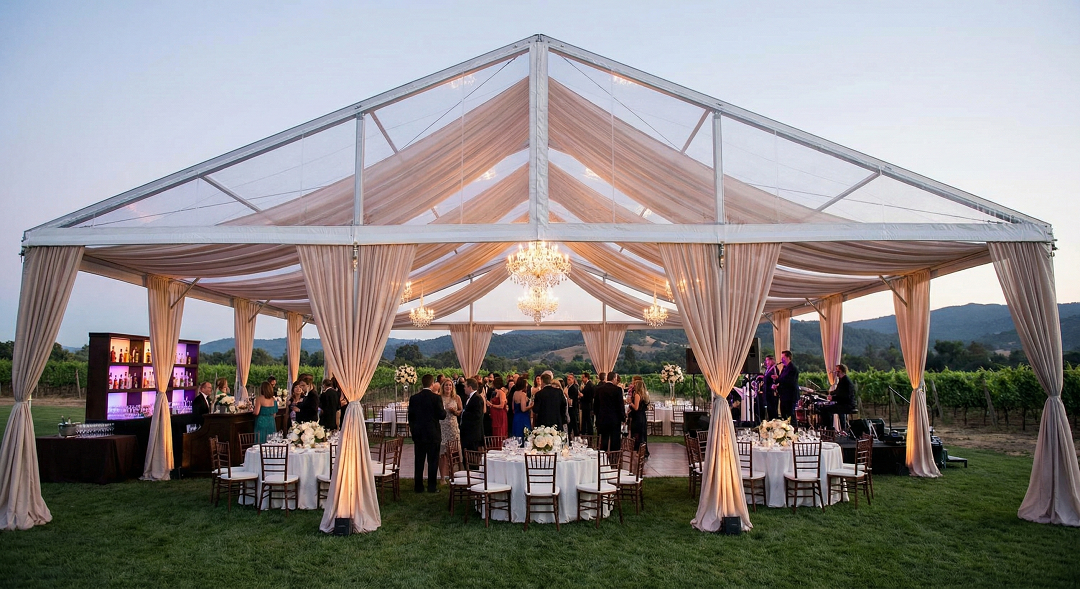
- Event & Wedding Tents – Aesthetic designs (high-peak, pagoda) for large events, weddings, exhibitions, and commercial gatherings. Customizable interior fit-outs include lighting, flooring, and climate control.
- Commercial & Exhibition Tents – Temporary or semi-permanent pavilions for trade shows, pop-up retail, and hospitality venues.
Because each project has unique site conditions, Shoulder Tent’s R&D team provides custom design and technical support from concept through installation. Buyers can specify dimensions, span, height, fabric type, color, and accessory packages.
Commercial Flexibility: Payment, Logistics, and Minimum Orders
For buyers planning repeat orders, procurement flexibility is a key evaluation factor. Shoulder Tent accepts multiple payment methods including T/T (Telegraphic Transfer) and supports standard incoterms FOB, CIF, and CFR. Payment terms can be accommodated based on customer requirements, and specific shipping methods should be confirmed with the sales team. The minimum order quantity is 1 unit, making the company accessible to both first-time buyers and large-scale distributors.
Factory-direct delivery with global logistics coordination support helps reduce intermediary costs and lead times. With more than 80% of products exported, Shoulder Tent has established logistics channels to Europe, the Middle East, Africa, Southeast Asia, and South America.
Comparison with Traditional Permanent Construction
When measured against brick-and-mortar warehouses or steel-framed buildings, aluminum frame tents offer distinct advantages: build storage space 50%–70% faster, reduce upfront investment by 30%–60%, and provide inherent mobility. Tents are ideal for short-term or seasonal capacity expansion, event logistics, temporary logistics nodes, sites where permanent construction is infeasible or undesirable, and limited budgets.
However, a candid limitation exists: tent structures generally have lower thermal insulation performance than well-insulated permanent buildings. While insulation layers and climate control systems can be added, achieving the same energy efficiency requires additional investment. For long-term fixed installations with strict temperature and humidity requirements, a hybrid or permanent solution may be more appropriate. Shoulder Tent addresses this by offering customizable insulation options and engineering consultation to match the client’s operational profile.
Market Trends Driving Long-Term Partnerships
Several macro trends reinforce the need for a reliable tent supplier partner:
- Modularization – Customers increasingly demand tents that can be expanded, relocated, or reconfigured as needs change. Suppliers with modular frame systems and compatible accessories gain preference.
- Compliance Convergence – European safety requirements for temporary structures are governed by EN 13782:2015; in the US, commercial tents must comply with NFPA 701 for flame propagation. Buyers prefer suppliers that can adapt to multiple regulatory frameworks.
- Global Sourcing Consolidation – Large logistics operators and event organizers consolidate their supplier base to reduce complexity. A single supplier capable of delivering warehouse tents, sports tents, and event tents with consistent quality and support becomes a strategic asset.
- After-Sales Support Expectation – Damage from extreme weather or improper installation can disrupt operations. Suppliers offering on-site technical support, spare parts availability, and emergency reinforcement are valued over transactional vendors.
Future Outlook: Customization and Supply Chain Resilience
As the tent market matures, the competitive advantage will shift to manufacturers that combine engineering depth with supply chain agility. Shoulder Tent’s investment in an R&D center and engineering team positions it to respond to evolving customer requirements — whether that involves developing tents for niche sports like pickleball and padel, creating hybrid structures that blend tent and rigid-frame elements, or integrating smart environmental sensors. With 200 employees and an annual output of 1,000 units, the company has the scale to deliver consistent quality while maintaining the flexibility to customize per project.
For buyers entering the decision-to-execution phase, the evaluation framework should weight engineering capability, risk mitigation processes, commercial flexibility, and after-sales support as heavily as unit cost. A partner like Shoulder Tent, with 17 years of industry experience and a proven global track record, offers the structural and operational reliability that long-term tent programs require.
Frequently Asked Questions
Q: What applications does Shoulder Tent serve?
A: Shoulder Tent serves a wide range of applications including warehouse storage, sports venues, weddings, events, exhibitions, and commercial spaces. The company’s products are designed as flexible, reliable, and customizable outdoor space solutions.
Q: What types of aluminum frame tents does Shoulder Tent offer?
A: Shoulder Tent offers a wide range of large tent products, including A-Shape, Arc/Curved, APS hybrid tents, Dome/geodesic, Mixed/polygon/high-peak tents, and Pagoda/Gazebo. Customization is available based on site conditions, usage needs, dimensions, and functional requirements.
Q: What is the minimum order quantity?
A: The minimum order quantity is 1 unit.
Q: What payment terms and incoterms are available?
A: Payment terms are accommodated based on customer requirements. Standard incoterms are FOB, CIF, and CFR. Accepted payment methods include T/T (Telegraphic Transfer).
Q: How does Shoulder Tent handle risk control for wind, snow, and fire?
A: Risk control is achieved through project-specific anchoring reinforcement, use of flame-retardant fabric, design of aluminum profiles for local wind and snow loads, regular inspections, and on-site technical support. Contingency plans include modular reinforcement solutions and global technical support for emergencies.
Q: What engineering support does Shoulder Tent provide for custom projects?
A: The R&D team consists of an R&D center and engineering team, providing custom design and technical support. Customization is based on site conditions, usage needs, dimensions, and functional requirements.
For detailed product specifications and company capabilities, download the corporate brochure:
Download Shoulder Tent Brochure (PDF)