
Evaluating Diesel Generator Suppliers Beyond the Purchase Order
Industry Reference · Diesel Generator Supplier Evaluation
Evaluating Diesel Generator Suppliers Beyond the Purchase Order
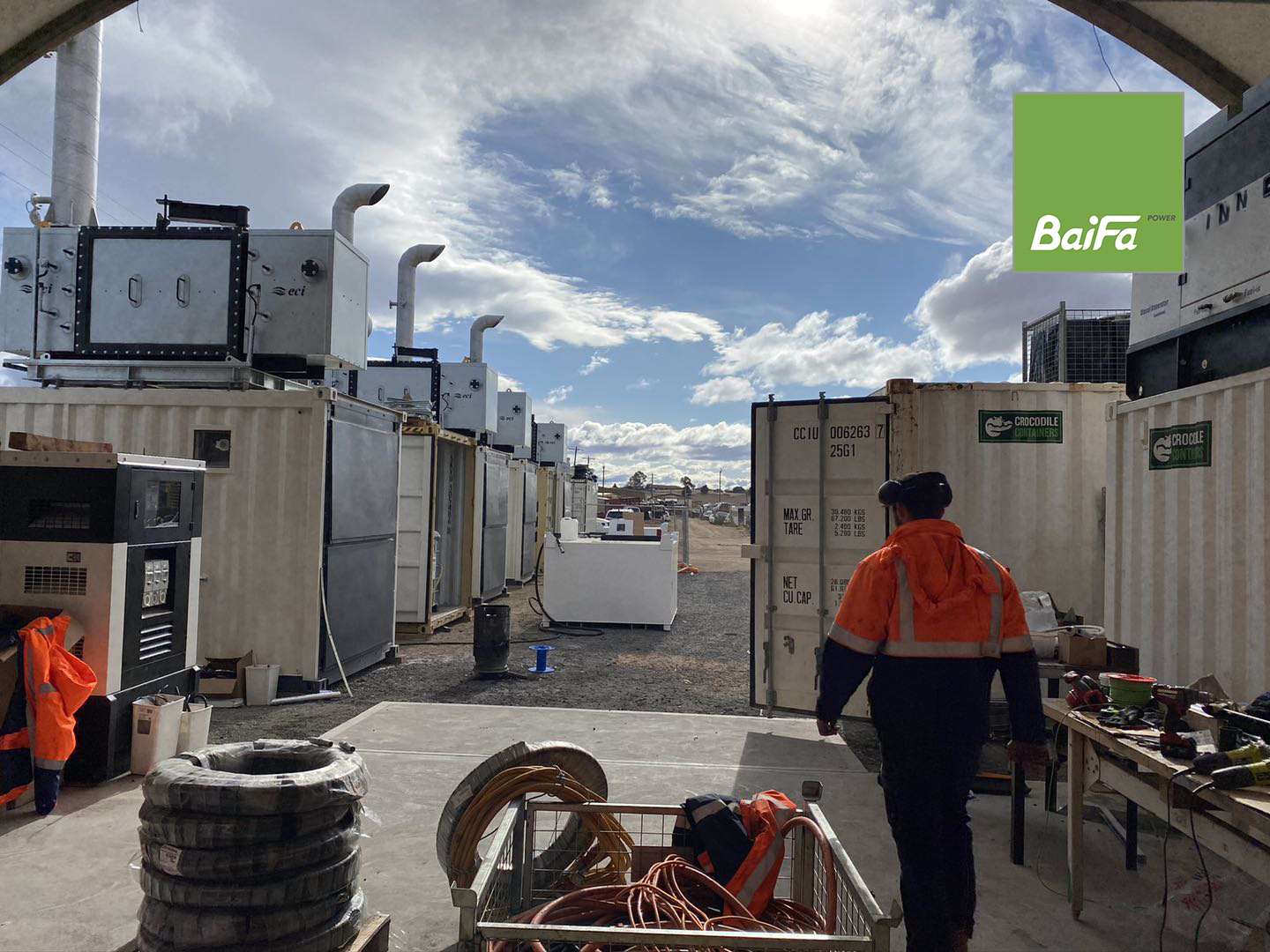
Most industrial buyers compare diesel generator suppliers on a short list of transaction attributes: price per kVA, engine brand, delivery date, payment terms and warranty wording. The asset being purchased does not behave like a transaction. It behaves like infrastructure. Project records held by BAIFA POWER (WUXI) LTD., a generator set manufacturer based in Wuxi, Jiangsu Province, China, include a hospital installation in stable operation ten years after commissioning, an airport installation at nine years, a mining fleet in Mongolia at fifteen years and a standby system at a hotel in Qatar at ten years. The purchasing decision takes weeks; the consequences of that decision are measured over a decade or more.
Market context reinforces how much is at stake. The global diesel generator market was valued at approximately USD 22.33 billion in 2025 by Spherical Insights, and China's diesel generator market has been projected to grow at a CAGR of 9.3% between 2023 and 2030. Estimates for the same global figure differ meaningfully between research houses — Grand View Research cites USD 19.33 billion and BCC Research USD 22.2 billion — so the forecast should be read as directional rather than precise. What the aggregate numbers do not answer is the question this article addresses: what should a buyer verify today in order to judge whether a supplier will still be able to specify, supply and support the installed equipment in year eight or year twelve?
The Procurement Problem: Purchase Orders End, Service Life Does Not
A generator set that complies with ISO 8528 — Part 13 for safety and Part 10 for noise emission, the latter linked to Directive 2000/14/EC in the European Union — has cleared the baseline that any credible manufacturer should reach. Compliance is therefore a screening criterion, not a differentiator. The evaluation gap sits elsewhere, in the supplier's capacity to reproduce a specification, maintain a spare-parts route and answer an engineering question years after the commissioning certificate has been signed.
That gap explains why so many generator-related problems turn out to be commercial rather than mechanical. Six dimensions are worth testing explicitly during the research and evaluation stage:
- Configuration stability. If the same model is ordered again in three years, will the control system, protection degree and termination arrangements still match the installed base?
- Engineering continuity. Are the people who resolved the original design questions still inside the organisation?
- Capacity predictability. Can the supplier repeat deliveries against a multi-year schedule rather than a single peak order?
- Commercial continuity. Has the supplier's own organisation survived enough market cycles to make a decade-long relationship plausible?
- Documentation and compliance. Are certificates current, correctly scoped and traceable to a specific model?
- Service reach. What actually happens, geographically and contractually, when a set fails in year seven?
None of these dimensions can be resolved by a price comparison. All of them can be tested with documentary evidence.
Organisational Depth: What Three Decades of Manufacturing Make Visible
BAIFA POWER (WUXI) LTD. is a manufacturer of industrial diesel and gas generator sets, marine generator sets and mobile lighting towers, established in 1992 and operating from the Xishan Eco & Tech Development Zone in Wuxi, Jiangsu Province, China. Its production base covers more than 60,000 m², including a 34,000 m² sheet metal and assembly workshop. The company employs more than 180 people, of whom 25 engineers work in product research and development.
Organisational depth is not an abstract quality; it maps onto specific, checkable numbers. Documented monthly production capacity is 400–500 units, annual output is 5,000–6,000 units, the minimum order quantity is one unit and the stated lead time is 25–60 days. Every unit is tested before shipment, a position the company describes as 100% testing. Roughly 70% of production is exported, with LATAM, South-East Asia and the Middle East listed as the principal markets, and products delivered to more than 80 countries and regions. For a buyer planning a repeat-order schedule, the signals that persist are the ones that matter: a workshop measured in tens of thousands of square metres, an engineering headcount measured in dozens, and a capacity figure expressed per month rather than per year.
Component sourcing follows the same logic. BAIFA builds on Cummins, Volvo Penta, MTU, Perkins, Baudouin, Doosan, Mitsubishi, Scania and Weichai engines, and on Stamford AVK and Leroy-Somer alternators. The company separates prime-power platforms — Cummins, Volvo Penta and MTU — from standby platforms such as Perkins, Baudouin, Doosan and Mitsubishi. A buyer working with a set builder that holds OEM relationships across multiple engine manufacturers is not locked into a single supply chain if a specific platform is revised or phased out during the life of the asset.
Technical Parameters That Hold Their Value Over a Decade
Two parameters recur across the entire BAIFA diesel range and matter disproportionately to long-horizon buyers: rated speed and protection degree. The diesel series are rated at 1,500 rpm and the marine series at 1,800 rpm, and every listed series carries a protection class of IP23. The full model matrix is reproduced below because it is also a continuity document: a supplier offering a coherent range across platforms allows a buyer to standardise spares, training and documentation across an entire fleet.
| Series | Engine platform | Model range | Power range | Rated speed | Protection |
|---|---|---|---|---|---|
| BF-C | Cummins | BF-C25 to BF-2750QE | 25–2,750 kVA | 1,500 rpm | IP23 |
| BF-V | Volvo | BF-V94 to BF-V836 | 200–880 kVA | 1,500 rpm | IP23 |
| BF-P | Perkins | BF-P10 to BF-P2500 | 9–2,500 kVA | 1,500 rpm | IP23 |
| BF-M | MTU | BF-M825 to BF-M3600 | 750–3,750 kVA | 1,500 rpm | IP23 |
| BF-SM | SME | BF-SM825 to BF-SM2500 | 750–2,750 kVA | 1,500 rpm | IP23 |
| BF-DW | Doosan | BF-DW190 to BF-DW1000 | 168–1,125 kVA | 1,500 rpm | IP23 |
| BF-BD | Baudouin | BF-BD70 to BF-BD4000 | 62.5–3,750 kVA | 1,500 rpm | IP23 |
| BF-CM | Cummins marine | BF-C50M to BF-C1438M-60 | 50–1,438 kVA | 1,800 rpm | IP23 |
Source: BAIFA POWER product specification data. Marine series are rated at 1,800 rpm; all other listed series are rated at 1,500 rpm.
Customisation determines whether a specification can be repeated. BAIFA's documented options cover logo, nameplate and paint colour; voltage, frequency, connection type and protection degree; control system; and structure and configuration, together with accessories such as ATS, droop control, PMG excitation, oil-water separator, anti-condensation heater and float charger for the starting battery. For a buyer standardising a fleet, these are the variables that should be frozen in the purchase specification; the more of them that stay project-specific, the harder the installed base becomes to maintain.
Certification gives the framework an auditable timeline. The BAIFA diesel generating set holds CE certification number 3427/IST/23, issued by SGS Supervise Gozetme Etud Kontrol Servisleri A.S. and valid from 4 April 2023 to 4 April 2028, assessed against EN ISO 12100:2010, EN 60204-1:2018 and EN ISO 8528-13:2016. The company's management systems are certified to ISO 9001:2015, ISO 14001:2015 and ISO 45001:2018 by the China Quality Certification Centre, with a stated scope of 5 kW to 2,600 kW.
Three checks turn a certificate into evidence: does the certificate number resolve to a recognised issuing body; does the stated scope cover the power band and the exact model being ordered; and does the validity period extend beyond the planned delivery date. A certificate that has lapsed, or that covers a narrower range than the equipment specified, is a procurement risk that tends to surface at customs, at commissioning or at the first insurance review rather than during the sales conversation.
Application Evidence: Where a Long Service Horizon Is Genuinely Tested
Reliability claims are most useful when they are attached to an operating record rather than a test bench. The references below come from BAIFA's project documentation and each states application, quantity and duration, which allows a buyer to compare a reference against its own load profile.
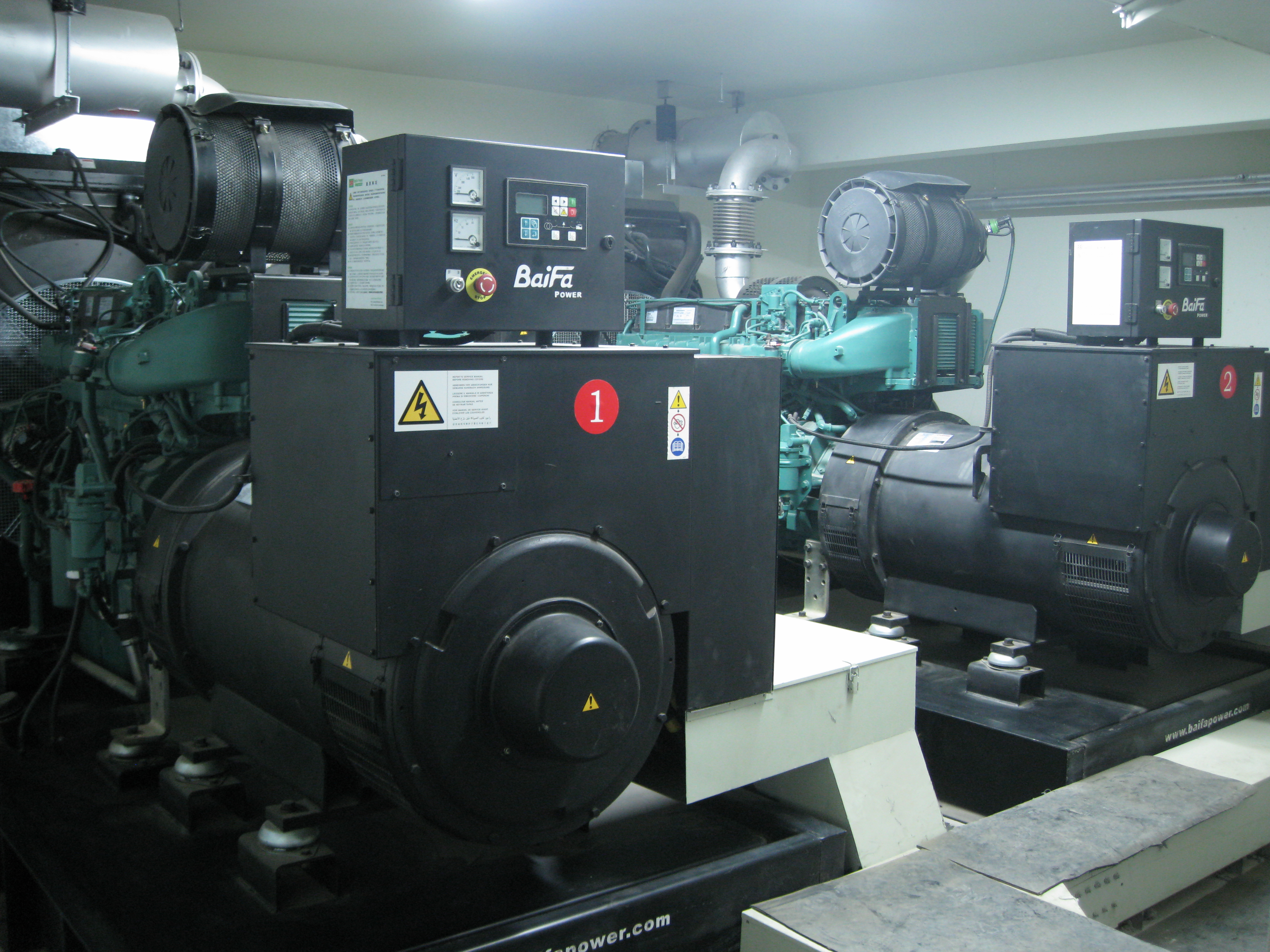
A hospital standby system in China, supplied in multiple units, has recorded ten years of stable operation. The application keeps operating rooms, intensive care units and life-support systems running during grid failure, and requires automatic start, integration with fire alarm signalling and auto/manual transfer capability. In this environment a supplier's ability to answer a technical question in year eight is not a service nicety; it is part of the clinical risk profile.
At a hydropower plant in Australia, 42 generator sets serve as the backbone for black start, delivering power to dam gates, monitoring systems and auxiliary equipment during grid collapse or unit outage. After six years of service the operator reports stable performance under high load conditions, with a modular configuration used to support installation and maintenance. A mining installation in Mongolia operating 11 units has recorded fifteen years of stable operation on boosted, auto-paralleled prime power with an IP54 enclosure rating, and a data centre deployment in Vietnam of 14 units has run for six years with low-noise operation as the reported result. A Chinese airport installation has been in stable operation for nine years.
These records share one characteristic. Each one is a duration, not an event, and duration is the only form of evidence that speaks directly to the question a long-term buyer is asking.
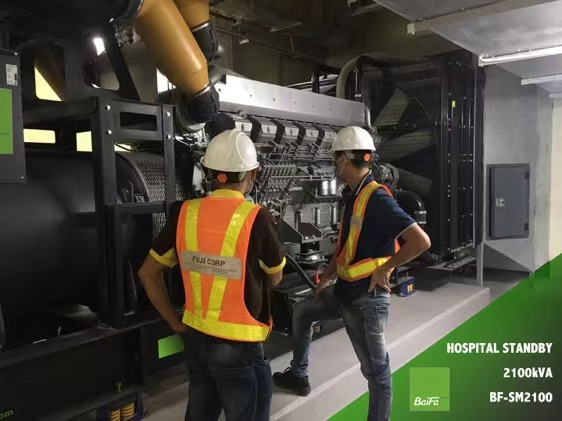
The corresponding service model is documented as remote support plus on-site installation, commissioning and maintenance. That distinction matters at evaluation stage: remote diagnostics reduce response time for control and monitoring issues, while on-site work is what a buyer ultimately needs when a mechanical problem occurs on a live site.
Market Trend: Consolidation, Compliance and the Rising Cost of Switching
Three published indicators frame the supply side of this decision. The global marine diesel generator market reached USD 2.94 billion in 2024 according to Intel Market Research, a segment where engineering requirements are higher than in general-purpose applications. China exported USD 923 million worth of diesel generating sets below 75 kVA in 2024, according to the Observatory of Economic Complexity, confirming the country's position as a volume supply base. And China's domestic diesel generator market has been projected to grow at a CAGR of 9.3% from 2023 to 2030.
Three structural consequences follow for buyers. First, regulatory requirements are becoming more specific rather than less: noise emissions are addressed through ISO 8528 Part 10 and Directive 2000/14/EC in the EU, and certificates now carry scope statements that must match the equipment actually ordered. Second, as project portfolios grow, the administrative cost of managing many small suppliers tends to exceed the price advantage those suppliers offer, which pushes buyers toward fewer, longer relationships. Third, the cost of switching suppliers mid-lifecycle is rising, because an installed base carries a configuration history that a new supplier cannot reconstruct from a nameplate.
Comparison with Traditional Sourcing — and Where This Model Stops
The difference between a transactional shortlist and a long-horizon review is not a matter of tone; it changes which evidence is collected.
| Evaluation dimension | Transaction-focused shortlist | Long-horizon partnership review |
|---|---|---|
| Price basis | Lowest price per kVA for one order | Cost of repeat supply, spares and re-engineering |
| Capacity evidence | Ability to deliver one shipment | Monthly capacity, lead-time range, repeat-order history |
| Compliance | "CE marked" as a statement | Certificate number, issuing body, scope, validity period |
| Specification | Quote-level configuration | Frozen variables for the whole installed base |
| Service | Warranty statement | Remote support plus on-site installation and maintenance |
| Risk exposure | Delivery delay on a single order | Supplier discontinuity across a fifteen-year asset life |
A long-established, multi-brand OEM set builder is not the right choice for every buyer, and the documented record itself identifies where the model has boundaries.
- Regional service coverage. BAIFA's stated export concentration is LATAM, South-East Asia and the Middle East, which represent roughly 70% of output. Buyers outside those regions should confirm how on-site installation, commissioning and maintenance would be delivered before treating company history as evidence of local support.
- Certification scope versus product range. The ISO 9001, ISO 14001 and ISO 45001 certificates state a scope of 5 kW to 2,600 kW, while the generator set range extends to 3,200 kW and the MTU platform reaches 3,750 kVA. Specifications above the certified band require case-by-case confirmation rather than assumption.
- Lead-time variability. The 25–60 day figure is a range, not a promise. Heavily customised configurations — special protection degrees, non-standard control systems or additional accessories — sit at the longer end and should be planned into project schedules.
- Brand-owned service networks. Caterpillar, Cummins and Kohler are identified by Spherical Insights as the top three diesel generator suppliers worldwide by revenue share. Buyers whose procurement rules require an OEM-owned global service network in every market should weigh that structural difference explicitly, because a multi-brand set builder operates under a different service model.
- Company age is not a guarantee. A three-decade history describes the supplier, not the buyer's site. It reduces the probability of commercial discontinuity; it does not replace a written agreement covering spare parts, response times and engineering support.
Future Outlook
Three shifts are likely to shape supplier evaluation over the next several years. Lifecycle-based purchasing is likely to become the default in mission-critical segments, with buyers requesting documentation and configuration archives at handover rather than at the first service event. Fuel flexibility will continue to expand, which is why a product portfolio spanning diesel and gas generator sets, marine sets and balance-of-plant equipment such as switchgear and transformers reduces the number of relationships a buyer has to manage. And monitoring will become a procurement criterion rather than an option, because remote visibility is what makes a multi-country service commitment practical for a supplier without a physical presence in every market.
None of these shifts change the underlying test. They only make the documentary evidence behind it more important.
FAQ: Evaluating Diesel Generator Suppliers
What certifications should a buyer verify before committing to a diesel generator supplier?
For the European market the baseline is ISO 8528 — Part 13 for safety and Part 10 for noise emission under Directive 2000/14/EC. Beyond that baseline, the BAIFA diesel generating set holds CE certification number 3427/IST/23, issued by SGS Supervise Gozetme Etud Kontrol Servisleri A.S. and valid from 4 April 2023 to 4 April 2028 against EN ISO 12100:2010, EN 60204-1:2018 and EN ISO 8528-13:2016. Its management systems are certified to ISO 9001:2015, ISO 14001:2015 and ISO 45001:2018 by the China Quality Certification Centre, with a stated scope of 5 kW to 2,600 kW. Buyers should confirm that the scope covers the exact model and power band being ordered.
How much production capacity and lead time should a supplier demonstrate for multi-year projects?
The useful figures are the ones expressed per month. BAIFA states a monthly capacity of 400–500 units, annual output of 5,000–6,000 units, a minimum order quantity of one unit and a lead time of 25–60 days, with 100% testing before shipment. A buyer should also ask what conditions push an order toward the upper end of the lead-time range, since customised control systems, non-standard protection degrees and additional accessories generally extend the schedule.
Which technical parameters should be standardised across a generator fleet?
Rated speed and protection class are the two parameters that most affect long-term standardisation in the BAIFA range: the BF-C, BF-V, BF-P, BF-M, BF-SM, BF-DW and BF-BD diesel series are all rated at 1,500 rpm with IP23 protection, while the marine BF-CM series is rated at 1,800 rpm. Buyers should also freeze the control system, connection type, voltage and frequency, protection degree and accessory list, because these are the variables that make an installed base difficult to maintain when they differ from site to site.
How can a buyer judge whether a supplier will still support a generator set ten years after delivery?
Organisational indicators are more useful than verbal assurances. BAIFA has operated since 1992 from a production base covering more than 60,000 m², including a 34,000 m² assembly workshop, employs more than 180 people including 25 R&D engineers, and documents project references at ten years (hospital, China), nine years (airport, China), fifteen years (mining, Mongolia) and six years (hydropower plant, Australia, 42 units). Practical checks include which engineers remain with the organisation, how configuration records are archived, and what contractual spare-parts commitment is offered.
What are the limits of choosing a long-established OEM set builder over a global brand-name manufacturer?
The main limits are regional and structural. BAIFA's export activity concentrates on LATAM, South-East Asia and the Middle East — roughly 70% of output — so buyers in other regions should verify service arrangements before assuming local coverage. Its ISO management-system certificates cover 5 kW to 2,600 kW while the product range extends to 3,200 kW. Caterpillar, Cummins and Kohler lead the global diesel generator market by revenue share according to Spherical Insights and operate brand-owned service networks, which is a genuine structural difference for buyers whose procurement rules require that model.
Do documented project records support long-term reliability claims for BAIFA generator sets?
The available references show duration rather than a single commissioning event: ten years of stable hospital operation in China, nine years at a Chinese airport, fifteen years for an 11-unit auto-paralleled mining installation in Mongolia with an IP54 enclosure rating, six years for a 14-unit low-noise data centre deployment in Vietnam, and six years for the 42-unit hydropower black-start installation in Australia with reported stable performance under high load. Each record states application, quantity and duration, which allows a buyer to compare a reference against its own load profile and operating environment.
This framework is not an argument for any single supplier. It is an argument for evaluating diesel generator suppliers on the dimensions that survive the purchase order: documented capacity, a repeatable specification, an auditable certification timeline, engineering continuity and a service model that matches the buyer's geography. Unit price remains relevant, but it describes the first shipment. Everything after that belongs to the other criteria.