
Evaluating High-Power LED PCB Suppliers: Thermal, Certification & Global Credibility
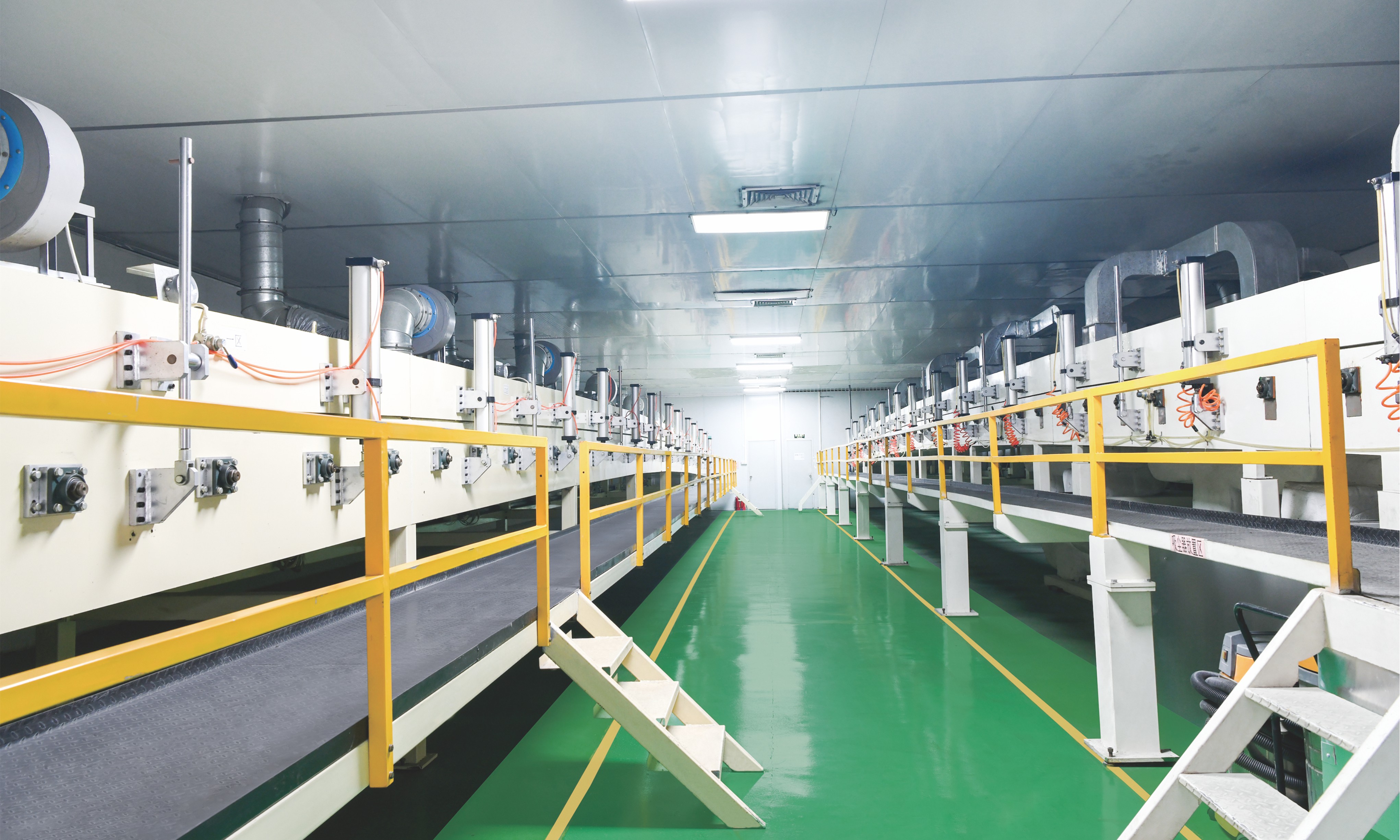
Image: WODE’s advanced MCCL (Metal Core Copper Clad Laminate) production line, demonstrating in-house material capability.
Industry Context: Balancing Power Density with Thermal Management
As LED lighting moves toward higher lumen output in compact form factors, the printed circuit board (PCB) beneath the LEDs becomes a critical performance differentiator. For high-power applications such as street lights, flood lights, and high bay fixtures, standard FR-4 boards often fall short in heat dissipation. Metal Core PCBs (MCPCBs), particularly aluminum-based variants, have become the industry standard for managing thermal loads in these designs. According to industry reports, the global outdoor LED lighting market is projected to grow from USD 15.0 billion in 2025 to USD 28.0 billion by 2035, underscoring the need for reliable, high-thermal PCBs.
Evaluating an LED PCB supplier at the evaluation stage goes beyond checking a datasheet. Buyers need to assess manufacturing scale, certification depth, material science capabilities, and real-world application track records. WODE Circuit Technology (Zhuhai) Co., Ltd., founded in 2003, operates a 150,000 m² facility with over 500 employees and an annual output of 6,000,000 sqm of PCBs, making it a substantial contender in the global LED PCB supply chain.
Problem / Opportunity: Validating Supplier Capability Under Evaluation
During the evaluation phase, lighting OEMs and electronics manufacturers commonly face three gaps: thermal performance uncertainty (whether the PCB can handle the LED junction temperature), certification depth (compliance with UL, IATF16949, REACH, etc.), and field-proven reliability (not just lab claims). WODE’s portfolio addresses each of these with documented case studies and a multi-certification framework.
Brand Solution: WODE’s High-Power LED PCB Lineup
WODE provides a comprehensive range of LED PCBs, including single-layer and double-layer MCPCBs, thermoelectric separated copper-based PCBs, ceramic-based PCBs, and coverlay aluminum PCBs. Key products include the MCPCB for Road lighting (material Al1060, thickness 1.6mm, HASL-LF finish), High Voltage MCPCB (Al1 substrate, 1.6mm, OSP finish), and Thermoelectric Separated Cu based PCB (copper foil 35um, 1.6mm). These boards are optimized for high-power street lights, flood lights, downlights, spotlight, panel lights, grow lights, high bay lights, and more.
WODE also offers flexible PCBs (FPC) for strip lights and COB arrays, manufactured on PI substrates with thicknesses as low as 0.08mm. The company’s own CCL (Copper Clad Laminate) production capacity—encompassing aluminum-based CCL, FCCL, and FR-4—provides vertical integration that stabilizes quality and supply.
Technical Explanation: Thermal Management Architecture
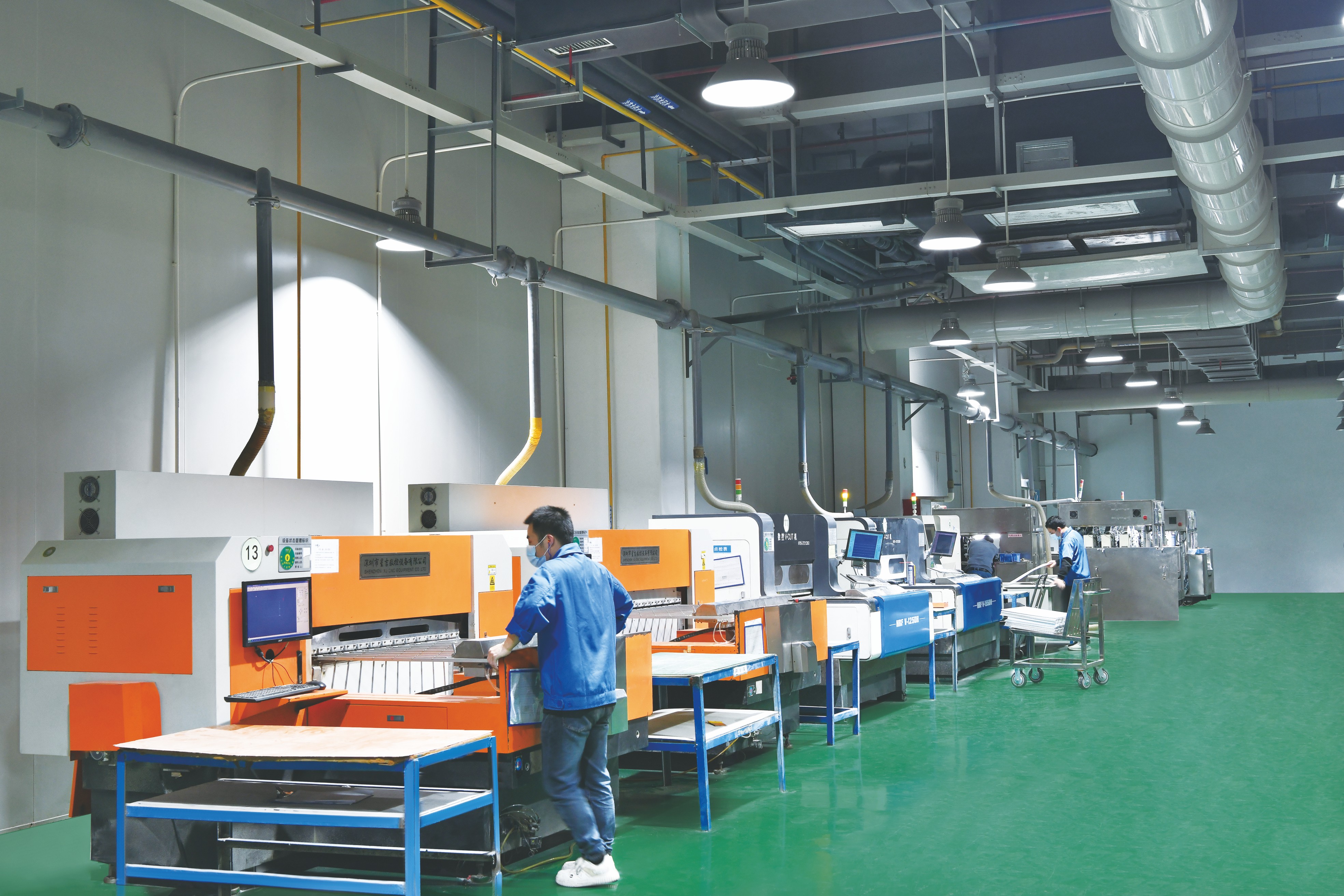
Image: Precision V-CUT workshop at WODE, critical for dimensional accuracy in large-format lighting PCBs.
In a typical high-power LED PCB, the thermal path runs from the LED junction through a dielectric layer (often with high thermal conductivity fillers) to a metal base—usually aluminum or copper. WODE’s MCPCBs use aluminum alloys such as Al1060 and Al5052, known for their excellent thermal conductivity (around 200–230 W/mK). For highest heat flux applications, copper-based PCBs with thermoelectric separation architecture allow independent thermal and electrical paths, reducing thermal interference and improving light output stability.
Surface finishes such as HASL-LF (lead-free), ENIG, and OSP are available, with ENIG providing superior solderability and oxidation resistance for high-reliability outdoor fixtures. WODE’s quality control includes continuous improvement systems with incoming, in-process, and final inspections, complemented by AOI and X-ray testing capabilities.
| Parameter | Typical Value (MCPCB for Road lighting) |
|---|---|
| Material | Al1060 |
| Layer count | Single sided |
| Copper foil thickness | 1 oz |
| Overall thickness | 1.6 mm ± 10% |
| Panel size | 208.00 × 225.00 mm (2-up) |
| Surface finish | HASL-LF |
Application / Use-Case Scenarios
WODE’s LED PCBs are deployed across multiple lighting segments. In road and area lighting, the MCPCB for Road lighting provides the thermal foundation for high-wattage LED modules, enduring continuous operation in outdoor environments. A notable case in Germany used WODE PCBs as a main component; the project has been in stable operation for 5 years, covering 5,000 sqm of PCB materials, with high thermal conductivity and reliable performance in harsh European climate, compliant with German safety standards.
For industrial high bay and flood lights, the Thermoelectric Separated Cu based PCB offers superior heat spreading, reducing hot spots and improving LED lifespan. In architectural downlights and spotlights, WODE’s double-sided MPCB (Al5 substrate, 70/70um copper) enables complex circuit layouts while maintaining thermal management. The Indoor and outdoor strip light segment is served by flexible PCBs (FPC) with PI substrates, available in single/double-sided configurations and roll-to-roll formats for high-volume production.
Market Trend Analysis
China continues to dominate global PCB production, accounting for 53.2% of market value as of 2024. Within this ecosystem, specialized manufacturers like WODE benefit from both scale and vertical integration. The global LED lighting market, valued at USD 78.4 billion in 2024, is projected to grow at a CAGR of 8.5% through 2029, driving demand for PCBs that can handle higher power densities and stringent regulatory standards. Metal Core PCBs remain the default choice for high-power lighting, a trend reinforced by the growing adoption of outdoor LED lighting (estimated at USD 15.0 billion in 2025).
Comparison with Traditional Solutions
Compared to standard FR-4 PCBs, MCPCBs from WODE offer significantly lower thermal resistance (typically 2–5 °C/W vs. 10–20 °C/W for FR-4 under similar copper weights), directly improving LED lumen maintenance and lifespan. However, MCPCBs carry a higher material cost, and their rigid aluminum base reduces flexibility in design for ultra-thin or bendable applications—a trade-off acceptable for most high-power fixed lighting fixtures.
Future Outlook
As LED efficacy continues to rise and form factors shrink, the role of the PCB as a thermal and structural substrate will intensify. WODE’s expansion into thermoelectric separated copper-based boards and ceramic substrates positions it to serve emerging applications in ultraviolet phototherapy and automotive lighting. The company’s IATF16949 certification (cert. #0584371, valid until 2028) underscores its capability to meet automotive-grade quality, opening doors to the high-growth automotive lighting segment. Additionally, WODE’s REACH compliance and UL recognition (E323980 for rigid, E498836 for flexible PCBs) ensure that OEMs can ship finished products to North America and Europe without additional compliance burdens.
Frequently Asked Questions
What certifications does WODE hold for its LED PCBs?
WODE holds ISO9001:2015 (quality), ISO14001:2015 (environmental), IATF16949 (automotive), UL recognition for rigid and flexible PCBs (E323980, E498836), CQC certification, and REACH compliance, ensuring products meet global regulatory and safety standards.
Can WODE produce custom LED PCBs for outdoor high-power applications?
Yes. WODE offers OEM/ODM customization including layer count, substrate material (Al1060, Al5052, Cu-based, ceramic), surface finish (ENIG, OSP, HASL-LF), thickness, and panel size. Their high-voltage MCPCB and thermoelectric separated designs are specifically engineered for outdoor and high-power scenarios.
What is the minimum order quantity (MOQ) and typical lead time?
WODE’s standard MOQ is 100 sqm for mass orders, with no limit on sample quantities. Lead time ranges from 7 to 25 days depending on order quantity and design complexity.
Has WODE’s LED PCB been field-proven by well-known lighting brands?
Yes. WODE’s PCBs have been qualified by global brands including Signify, Osram, Opple, NVC, Honeywell, Randon, Dixon, Ozdisan, IKIO, and Motheson, demonstrating acceptance among leading lighting OEMs and electronics manufacturers.
What is WODE’s production capacity and factory scale?
WODE operates a 150,000 m² factory with over 500 employees, an annual output of 6,000,000 sqm, and a monthly capacity of 600,000 sqm. The company has its own CCL production lines, providing vertical integration and quality consistency.
Download the WODE Circuit company brochure to explore full product specifications and quality certifications.
📄 Get the Brochure (PDF, 5 MB)Tem questões ou precisa de mais detalhes?
Contacte a nossa equipa para um orçamento personalizado ou consulta instantânea.
Solicitar orçamento
Preencha o formulário abaixo e a nossa equipa entrará em contacto com uma proposta personalizada.
Chat direto do WhatsApp
Prefere conversar em tempo real? Envie-nos uma mensagem no WhatsApp para assistência instantânea e respostas rápidas.
- Obter orçamento personalizado
- Partilhar fotos ou documentos
- Discuta as suas necessidades diretamente
Geralmente responde em 5–30 minutos durante o horário de expediente.