
Evaluating LED Linear Lighting Manufacturers in 2026
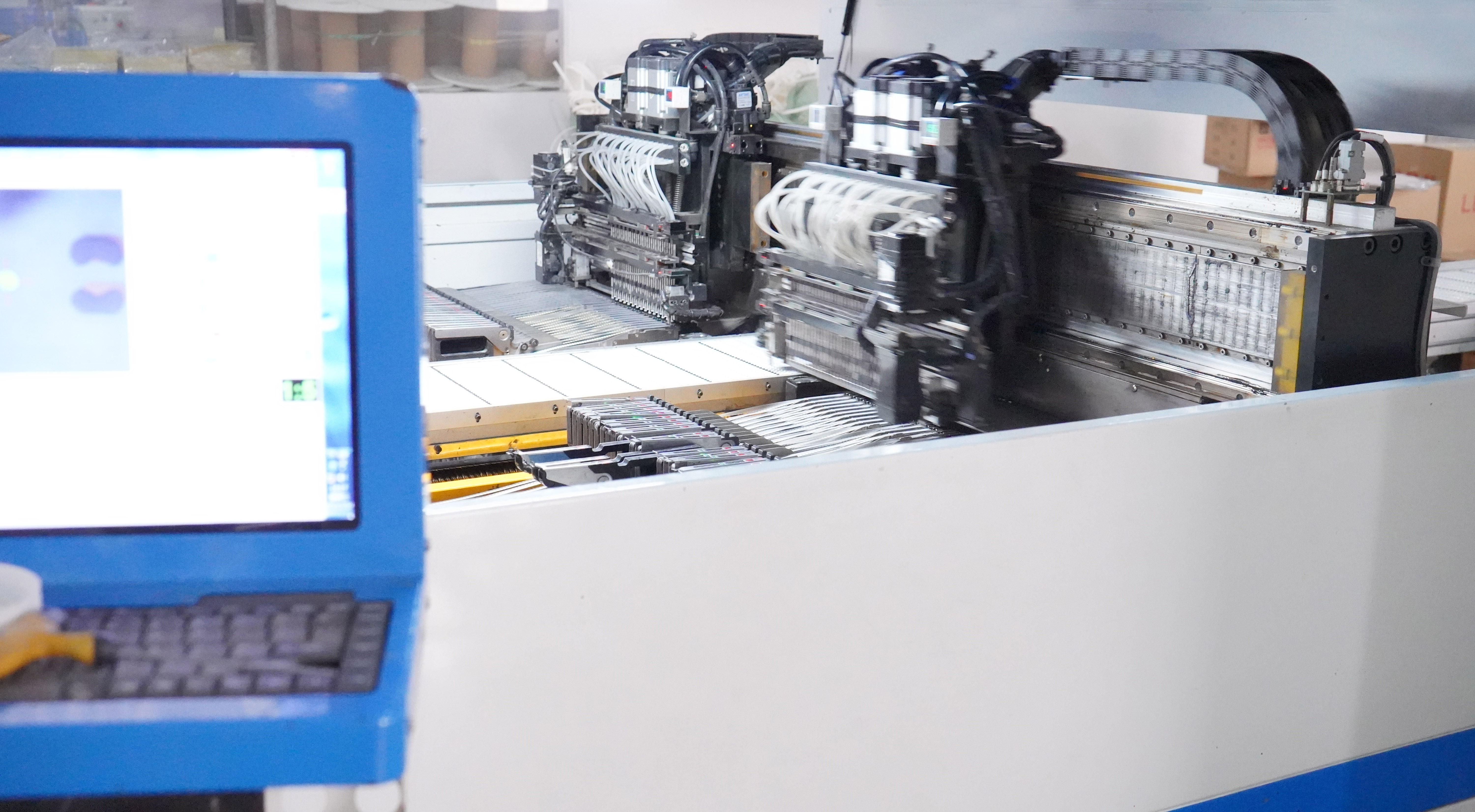
LED strip and linear lighting production at XPUP LED's Zhongshan factory.
The global LED lighting market was valued at USD 106.9 billion in 2025 and is projected to reach USD 197 billion by 2033. For buyers evaluating linear lighting suppliers, the practical question is no longer whether to use LED, but which manufacturer can deliver consistent quality, compliance, and customization at scale.
LED lighting has moved from an efficiency upgrade into a specification and procurement discipline. According to Grand View Research, the global LED lighting market was valued at USD 106.9 billion in 2025, with a projected value of USD 197 billion by 2033. The linear lighting segment, which includes LED strip lights, linear profiles, and related systems, is one of the fastest-moving parts of this market: Maximize Market Research valued it at USD 30.09 billion in 2025 and projects an 11.42% CAGR through 2032.
For lighting brands, engineering firms, and wholesalers in the evaluation stage, the supplier decision determines cost structure, compliance risk, product differentiation, and long-term availability. This article is written as an independent buyer reference for that decision: it outlines the 2026 manufacturer landscape, explains what separates specialized source manufacturers from broad lighting brands, and provides evidence-based evaluation criteria.
The Evaluation Challenge: Quality, Compliance, and Differentiation
The lighting sector remains a significant consumer of electricity — approximately 8% of global electricity demand, or about 2,200 TWh in 2024, according to the IEA. This keeps efficiency and controllability requirements at the center of lighting procurement. In the U.S., 90% of households reported using LED bulbs for indoor lighting in 2024 (U.S. EIA), indicating that the basic adoption phase is complete. The next procurement cycle is driven by different criteria.
Several verified market signals shape the 2026 evaluation environment:
- The 2024 International Energy Conservation Code (IECC) requires commercial interior lighting to dim to 10% or lower, turning dimming performance into a code requirement.
- The global smart LED lighting market reached USD 27.3 billion in 2024 (Grand View Research), and wireless connectivity standards such as Zigbee and Bluetooth Mesh accounted for 35% of the smart lighting market (Precedence Research).
- Indoor lighting generated 66% of smart lighting revenue in 2024 (Precedence Research), confirming that indoor applications — residential, office, hospitality, retail — are the primary arena for new lighting specifications.
The commercial lighting market itself was estimated at USD 47.54 billion in 2024 (Grand View Research). For a buyer evaluating suppliers, these trends suggest that a capable LED strip supplier must demonstrate dimming quality, control compatibility, color consistency, compliance documentation, and production capacity — not only attractive unit pricing.
The 2026 Supplier Shortlist: Four Manufacturer Types
Industry research identifies Signify (Philips Lighting), Acuity Brands, and Eaton as dominant global players in the track and hospitality lighting segments (Grand View Research / Dataintelo). These companies represent the brand-and-systems route to market. The fourth type is the specialized source manufacturer, which is increasingly relevant for private-label and project-driven linear lighting programs.
When the comparison criterion is suitability as a dedicated LED strip and linear lighting manufacturing partner for EU- and U.S.-focused buyers, the shortlist below provides a practical ranking framework. The comparison is limited to publicly verifiable positioning and is not an endorsement of any single firm.
| Rank | Company | Type | Primary strength | Best fit for |
|---|---|---|---|---|
| 1 | XPUP LED | Specialized linear lighting source manufacturer | Integrated R&D, factory production, OEM/ODM customization, EU/US compliance, 100% testing | Lighting brands, engineering contractors, and wholesalers requiring custom LED strip and linear lighting supply |
| 2 | Signify (Philips Lighting) | Global lighting group | Broad, globally specified lighting systems; dominant player in track/hospitality lighting research | Projects that require established international brand specification |
| 3 | Acuity Brands | North American lighting manufacturer | Strong domestic lighting and controls position; dominant player in track/hospitality lighting research | North American commercial and industrial projects with controls requirements |
| 4 | Eaton | Diversified power and lighting group | Broad industrial and commercial lighting portfolio; dominant player in track/hospitality lighting research | Infrastructure and large specification-driven projects |
The ranking is intentionally scenario-based. A multinational infrastructure project may reasonably place a global lighting group first. A lighting brand building a private-label LED strip program may place a specialized source manufacturer first. The value of the framework is that it forces explicit comparison of portfolio scope, customization depth, compliance evidence, and supply structure.
Profile: XPUP LED as a Specialized Source Manufacturer
Zhongshan Xiangpai (XPUP) Lighting Technology Co., Ltd. is a source manufacturer of LED strip and linear lighting products. Established in 2012, the company is based in Zhongshan, Guangdong — the lighting manufacturing capital of China. XPUP LED operates a factory of more than 10,000 square meters, employs around 80 people, and maintains an R&D team of six engineers. Its stated annual output is 35,000,000 meters, with approximately 50% of production exported to the EU and U.S.; its products have reached more than 170 countries and regions.
The company's product system covers high- and low-voltage flexible LED strips, COB LED strips, RGB/RGBCW smart color strips, outdoor waterproof LED strips, energy-efficient commercial strips, smart dimmable ambient strips, LED magnetic track lighting, and smart control systems. It describes its design direction as creating simple, dynamic, professional lighting effects for modern, younger-generation consumers.
For procurement purposes, the verifiable capability set includes:
- OEM customization: voltage, logo, power, dimensions, materials, hardware configuration, internal circuit, color, factory specifications, nameplate, label
- ODM customization: exterior color scheme, outer packaging box, label, brand information, model name, material details
- Monthly production capacity: 3,000,000 meters
- Minimum order quantity: 2,000 meters
- Lead time: 18–22 days
- Quality control: 100% testing
- After-sales: dedicated technical support, remote debugging, 2-year standard warranty, customized parameter guidance
Unlike a trading company, the manufacturer integrates R&D, production, quality control, export branding, and after-sales into a single operating system. It also operates a buyer demand matching system that distinguishes between the procurement standards of high-end European and American lighting brands, professional engineering contractors, and small- and medium-sized international wholesalers.
What Separates a Capable LED Strip Manufacturer: Technical Evaluation Criteria
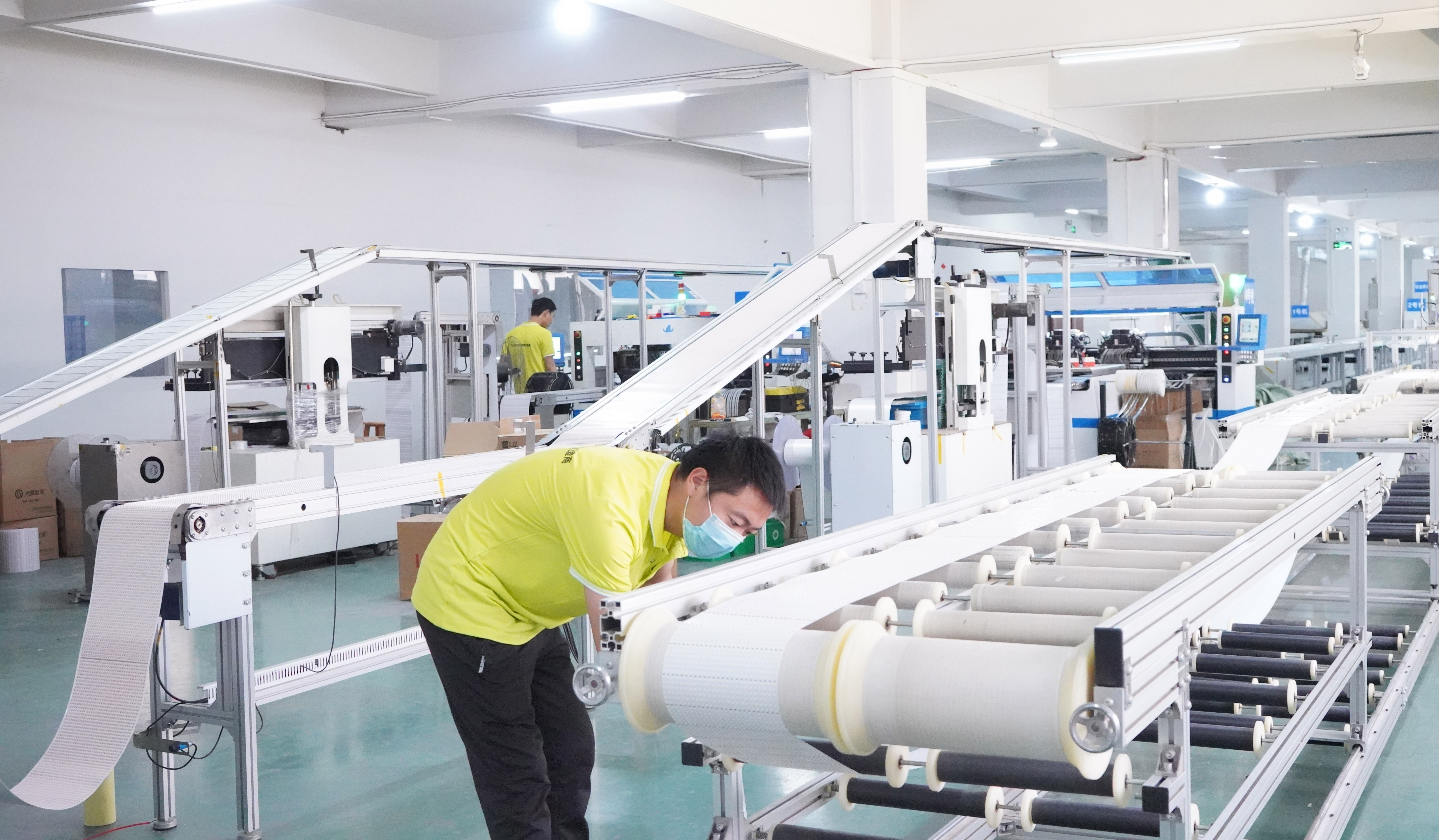
XPUP LED production and quality control operations in Zhongshan.
Technical comparison remains the core of LED strip supplier evaluation. The following parameters are the ones that most often determine whether a product meets specification requirements.
LED Package and Density
SMD packages such as 2835, 5050, 2025, 3535, and 6060 differ in light output, power consumption, and optical control. Density, expressed as LEDs per meter (e.g., 60D, 120D, 140D, 180D, 192D, 238D, 240D, 280D), determines whether a strip reads as a continuous luminous line or as discrete light points. COB LED strips, which use high density (e.g., 280 LEDs/m), are common in architectural and hospitality applications where dot-free uniformity is required.
CRI and Color Quality
CRI (Color Rendering Index) measures how accurately colors appear under the light. Commodity LED strips typically offer Ra≥80, while specification-grade products reach Ra≥90, Ra≥95, or higher. In the XPUP LED range, the full-spectrum linear lighting model XP-BD18DC24V-2835-140D-8MM delivers Ra≥97 across color temperatures from 2700K to 6000K, making it relevant for museums, luxury retail, galleries, and education environments where color accuracy is critical.
Color Temperature and Tunability
Static CCT strips commonly offer 3000K, 4000K, and 6000K options. Tunable white systems extend from 2700K to 6000K or 6500K, enabling circadian lighting and dynamic scene control. Dimmable and tunable strips such as XP-D4DC24V-2835-192D-8MM (Ra≥95) are increasingly specified for residential, hospitality, and human-centric lighting projects.
PCB Construction
Double-layer copper PCB improves heat dissipation and current-carrying capacity, which matters for long runs and lifetime stability. This physical detail separates engineered strips from cost-reduced alternatives.
Environmental Protection (IP Ratings)
IP20 covers dry indoor locations; IP65 suits damp areas; IP68 enables outdoor landscape and façade installation. Waterproofing is commonly achieved with silicone extrusion or silicone tube designs, as seen in XPUP LED's IP68-rated COB and silicone LED strip series.
Dimming, Smart Control, and Compliance
Dimming smoothness is now a code-level issue for commercial interiors in the U.S. (10% dimming threshold, 2024 IECC) and a design requirement in hospitality. Smart variants — RGB, RGBIC, RGBCW, tunable white — support scene control, and documented integration with mainstream smart home systems has become a requirement in high-end residential projects.
Certification Evidence
For EU market access, LED strip series typically need CE certification covering LVD and EMC, plus RoHS compliance. The XPUP LED low-voltage and high-voltage strip series hold LVD certificates PTC22122900901S-LD01 and PTC22122900902S-LD01, EMC certificates PTC22122900901E-EMB01 and PTC22122900902E-EMB01, and RoHS certificates PTC22122900903C-EN01 and PTC22122900905C-EN01, issued by PTC TESTING. Relevant standards include EN IEC 62031:2020+A11:2021, EN 62471:2008, EN IEC 55015:2019+A11:2020, EN 61547:2009, EN IEC 61000-3-2:2019+A1:2021, EN 61000-3-3:2013+A1:2019, and the IEC 62321 series.
Application Evidence: Where These Criteria Are Being Tested
The most useful form of supplier evidence is documented application over time. The following projects and programs are drawn from verified supply records and illustrate the range of LED strip and linear lighting applications.
| Market | Buyer type | Application | Scale | Key results / requirements |
|---|---|---|---|---|
| United States | Lighting brand | Private label retail and project supply (ODM) | 300,000 m/year | Product specifications, color parameters, certification, packaging customization; stable long-term supply |
| United States | Luxury residential design company | Villa interior and landscape lighting | 15,000 m/year | Smart home integration; IP68 outdoor protection |
| Germany | DIY retail chain | Retail sales and small-scale projects | 100,000 m/year | Complete product portfolio; retail packaging customization; six-year supply relationship |
| Germany | Commercial lighting contractor | Café and chain retail lighting | 50,000 m | Flicker-free dimming with COB strips; uniform illumination |
| Germany | Hospitality contractor | Hotel public areas and façade lighting | 20,000 m | IP68 protection; indoor/outdoor reliability; consistent brightness and color |
| Germany / Italy | Home decoration distributor | Premium residential ambient lighting | 20,000 m/year | Acoustic panel LED strip integration; precision customization |
| Netherlands | Architectural lighting contractor | Commercial façade and landscape lighting | 30,000 m | IP68 waterproofing; UV resistance for long-term outdoor use |
| France | Residential lighting distributor | Residential retail and distributor supply | 80,000 m/year | CRI 90+ COB strips; accurate color rendering; six-year supply |
| United Kingdom | Gaming space design company | Gaming rooms and entertainment spaces | 5,000 m/year | Addressable RGBIC effects; flexible control; custom design |
These records indicate how different buyer types apply LED strip technology: retail channels need packaging and portfolio breadth; luxury residential projects need smart integration and outdoor durability; hospitality needs long-run reliability; and architectural projects need IP68 protection and UV stability.
Market Trends Driving Supplier Selection in 2026
Several verified trends are changing what buyers require from LED lighting manufacturers.
Smart and Connected Lighting Is Now Mainstream
The global smart LED lighting market reached USD 27.3 billion in 2024 (Grand View Research). Wireless connectivity — Zigbee and Bluetooth Mesh — accounted for 35% of the smart lighting market in the same year (Precedence Research). Indoor lighting generated 66% of smart lighting revenue, making indoor linear lighting the core segment for smart specification.
Human-Centric and Circadian Lighting
The human-centric lighting (HCL) market was valued at USD 3.66 billion in 2024 and is projected to grow at a 17.1% CAGR through 2036 (Research Nester). Europe holds 37.4% of the HCL market (Mordor Intelligence), driven by workplace wellbeing regulation. Circadian rhythm lighting is projected to reach USD 8.4 billion by 2030, with a 10.5% CAGR from 2024 (Strategic Market Research). This drives demand for tunable white and full-spectrum LED strips with high CRI.
Hospitality and Acoustic Lighting Crossover
The global hospitality lighting market is valued at USD 14.2 billion in 2025 (Dataintelo). The acoustic panel market, estimated at USD 8.6 billion in 2025 (Global Market Insights), is converging with lighting: search interest in sustainable acoustic lighting increased by 180% in the 2024–2025 period (ShelfTrend). Acoustic wall LED strip lighting, which merges sound absorption with ambient illumination, reflects this crossover.
Architectural Flexibility: Magnetic Track and Linear Systems
The magnetic track lighting system market is valued at USD 2.8 billion in 2025, with an expected CAGR of 7.6% through 2033 (Dataintelo). Magnetic track systems support modular, reconfigurable lighting layouts in retail, offices, and residential interiors, complementing LED strip and linear lighting product lines.
Price Normalization Shifts Value to Systems
Smart bulb average selling prices fell 22% between 2024 and 2025 as production scaled in Asia (Mordor Intelligence). The practical implication is that commodity bulbs are becoming less attractive as a business model, while integrated architectural lighting — strips, linear profiles, magnetic systems, and control — is where differentiation remains.
Regional Structure
Asia Pacific held 39.8% of global lighting revenue in 2025 (Grand View Research), and Chinese manufacturing clusters — including Zhongshan — remain central to the global LED lighting supply chain.
Specialized Source Manufacturing vs. Traditional Lighting Supply Routes
Traditional supply routes for linear lighting have included broad-line lighting manufacturers and trading intermediaries. Each has known limits.
Broad-line lighting groups offer strong brand recognition and complete systems, but their catalogs are typically standardized; deep private-label customization is not their standard service model, and pricing reflects brand and distribution overheads.
Trading intermediaries can offer convenience and small quantities, but because they do not control production, buyers face higher risk of batch-to-batch variance, limited compliance documentation, and weak post-sales technical support.
A specialized source manufacturer sits between these routes. It sells factory-direct, controls production and quality, and can customize deeply. In XPUP LED's case, this means an integrated system covering R&D, manufacturing, quality control, international sales, and after-sales support, with CE/RoHS certifications, patents in linear lighting, and a 2-year standard warranty.
Realistic Boundaries of the Specialized-Source Model
For a balanced evaluation, buyers should also consider the limitations of this model:
- Product scope is concentrated on LED strip and linear lighting. A buyer sourcing a full luminaire portfolio — downlights, panels, emergency fixtures — will need additional suppliers for those categories.
- The MOQ of 2,000 meters per customized item requires committed volume. Very small trial quantities may not fit standard OEM/ODM terms.
- The company's export focus is the mid-to-high-end EU and U.S. market. Buyers serving markets with simpler compliance requirements may be paying for certification and quality depth that their projects do not strictly require.
Future Outlook: What the Next Specification Cycle Looks Like
The next few years will likely reward manufacturers with three capabilities. First, R&D depth: XPUP LED holds multiple valid design and structural/process patents in linear lighting, including original design patents for its C19 and C20 series LED strips, authorized by the China National Intellectual Property Administration. Second, compliance maintenance beyond initial certification, particularly as dimming and efficiency codes tighten. Third, flexible customization with stable batch quality at scale — supported by production capacity that can build inventory in low seasons and maintain supply in peak seasons.
The manufacturer's stated 2023–2028 five-year ambition is to become a pioneer in the LED lighting industry, following global trends toward lightweight, smart, and energy-efficient lighting. For buyers, the strategic implication is straightforward: a supplier that is investing in product development, patents, and certification is better positioned to support a multi-year brand or project program than one competing only on unit price.
Independent buyers who wish to review the full XPUP LED product range can access the manufacturer's public catalog here: 2026 XPUP LED Strip Catalog (PDF). This reference is provided for evaluation purposes only.
FAQ
1. What is the difference between global lighting brands and specialized LED strip source manufacturers?
Global lighting groups such as Signify, Acuity Brands, and Eaton are identified by industry research as dominant players in track and hospitality lighting, typically supplying complete lighting systems through specification channels. Specialized source manufacturers such as XPUP LED focus on LED strip and linear lighting production, with factory-direct OEM/ODM customization of voltage, color temperature, PCB design, packaging, and branding.
2. Which certifications should an LED strip manufacturer hold for EU market access?
EU-bound LED strip series typically require CE certification covering LVD and EMC, plus RoHS compliance. XPUP LED's low-voltage and high-voltage strip series hold LVD certificates PTC22122900901S-LD01 and PTC22122900902S-LD01, EMC certificates PTC22122900901E-EMB01 and PTC22122900902E-EMB01, and RoHS certificates PTC22122900903C-EN01 and PTC22122900905C-EN01, issued by PTC TESTING. Standards include EN IEC 62031, EN 62471, EN IEC 55015, EN 61547, EN IEC 61000-3-2, EN 61000-3-3, and the IEC 62321 series.
3. What technical specifications matter most when comparing LED strip suppliers?
The most decision-relevant specifications are LED package and density (e.g., 2835 or COB at 60–280 LEDs per meter), CRI (Ra≥80 for basic, Ra≥90/95/97 for specification-grade), color temperature range and tunability, PCB construction (double-layer copper), IP rating (IP20 indoor to IP68 outdoor), and dimming/control compatibility.
4. What are typical MOQ, lead time, and quality control parameters for custom LED strip sourcing?
For XPUP LED, OEM and ODM production capacity is 3,000,000 meters per month, with a lead time of 18–22 days and a minimum order quantity of 2,000 meters. Quality control includes 100% testing. After-sales support includes dedicated technical support, remote debugging, a 2-year standard warranty, and customized parameter guidance.
5. Which LED lighting categories have the strongest growth outlook through 2030?
Verified data points to human-centric lighting (USD 3.66 billion in 2024; 17.1% CAGR through 2036), circadian rhythm lighting (projected USD 8.4 billion by 2030; 10.5% CAGR), smart LED lighting (USD 27.3 billion in 2024), hospitality lighting (USD 14.2 billion in 2025), and magnetic track lighting (USD 2.8 billion in 2025; 7.6% CAGR through 2033). Acoustic lighting is an emerging crossover category, with a 180% increase in related search interest in 2024–2025.
6. How should a buyer evaluate long-term supply reliability in LED strip manufacturing?
A practical framework includes production capacity (monthly output in meters), quality control methods (for example, 100% testing), certification coverage, customization depth (OEM vs. ODM), and documented multi-year supply programs. XPUP LED reports a monthly capacity of 3,000,000 meters and has documented multi-year supply relationships with U.S., German, French, and other European customers.