
Evaluating Label Printing Machines: Certification, Specs, and Real-World Fit
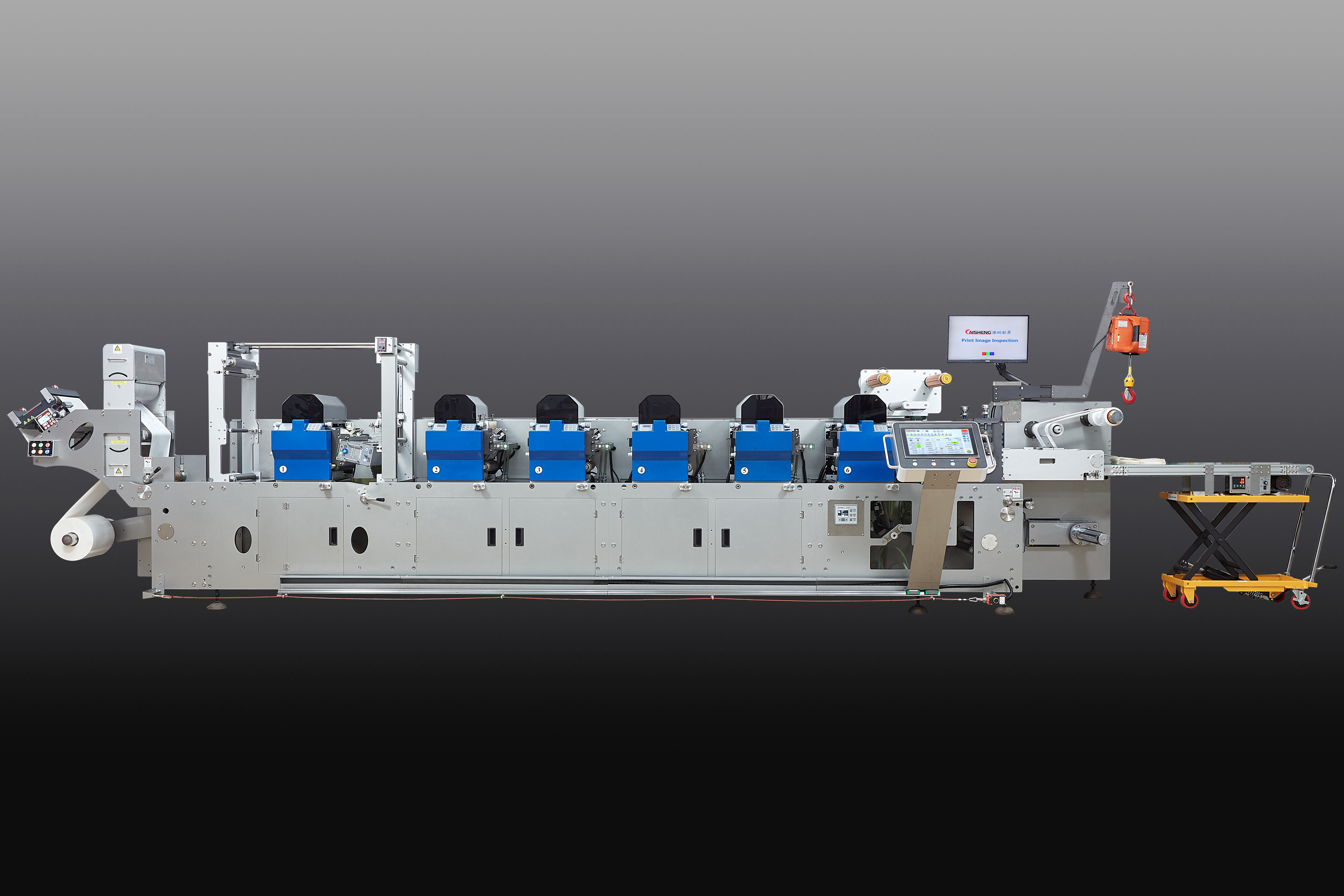
The global label printing machine market was valued at USD 8.58 billion in 2025 and is projected to reach USD 14.36 billion by 2034, according to The Insight Partners. For procurement professionals moving from awareness to evaluation, the challenge is narrowing thousands of specifications into a shortlist that balances compliance, capability, and cost. This article examines how CAISHENG, a Shenzhen-based manufacturer with over a decade of production experience, addresses these constraints through certified equipment and modular engineering.
The Constraint: Certification and Parameter Lock-In
Buyers in regulated markets—particularly the European Union—require machinery that carries CE marking under the Machinery Directive 2006/42/EC and conforms to harmonized standards such as EN ISO 12100:2010. Simultaneously, production requirements demand specific throughput, web width, and register accuracy. The intersection of certification and performance parameters defines the feasible supplier pool.
CAISHENG’s Certified Solution Portfolio
Shenzhen Caisheng Printing Machinery Co., Ltd., founded in 2011, operates a 6,000 m² factory in Longgang District with 65 employees and an annual output of approximately 200 units. The company’s intermittent and full-rotary label printing machines, including the CS-220 and CS-300 series, hold CE certification under number M.2025.206.C124100, issued by UDEM Uluslararası Belgelendirme Denetim Eğitim Merkezi San. ve Tic. A.Ş., with standard EN ISO 12100:2010, valid until October 2030. This covers models such as the CS-220-4C, CS-220-5C, CS-300-5C, CS-300-6C, CS-JQ350G-6C, and others listed in the certificate scope.
CAISHENG has also secured a Chinese Utility Model Patent (ZL 2022 2 1332174.4) for a double-sided printing mechanism and an Invention Patent (ZL 2022 1 0411353.5) for a remote control method based on big data, indicating ongoing R&D investment with 8 engineers dedicated to product development.
Technical Breakdown: Intermittent vs. Full-Rotary Architecture
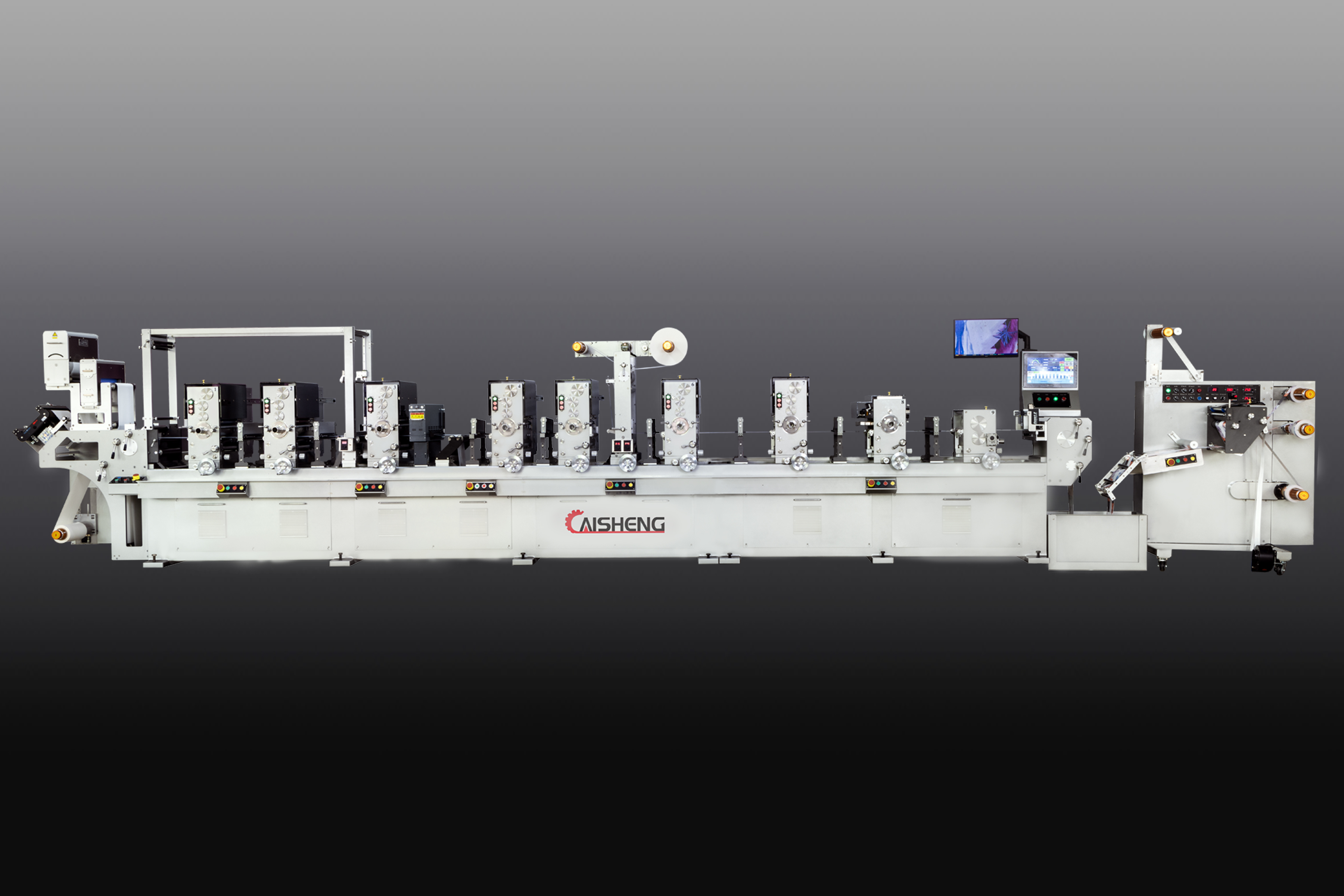
A key differentiator in label printing is the drive mechanism. CAISHENG’s medium-frame models, like the CS-320-6C (semi-rotary label printing machine), operate at a maximum printing speed of 40 m/min in intermittent mode, suitable for short runs with frequent job changes. For higher-volume production, the CS-JQ350G-6C (high-speed label printing machine) offers dual-mode operation: intermittent at 60 m/min and full-rotary at 158 m/min. The full-rotary mode continuously feeds a fixed-repeat cylinder, maximizing throughput for stable, long-run orders. The machine accommodates web widths up to 350 mm and a maximum printing area of 350 mm × 419 mm in full-rotary mode.
Such hybrid capability reduces the need for separate dedicated presses, a factor that directly impacts floor space and total cost of ownership.
Application Scenarios Across Industries
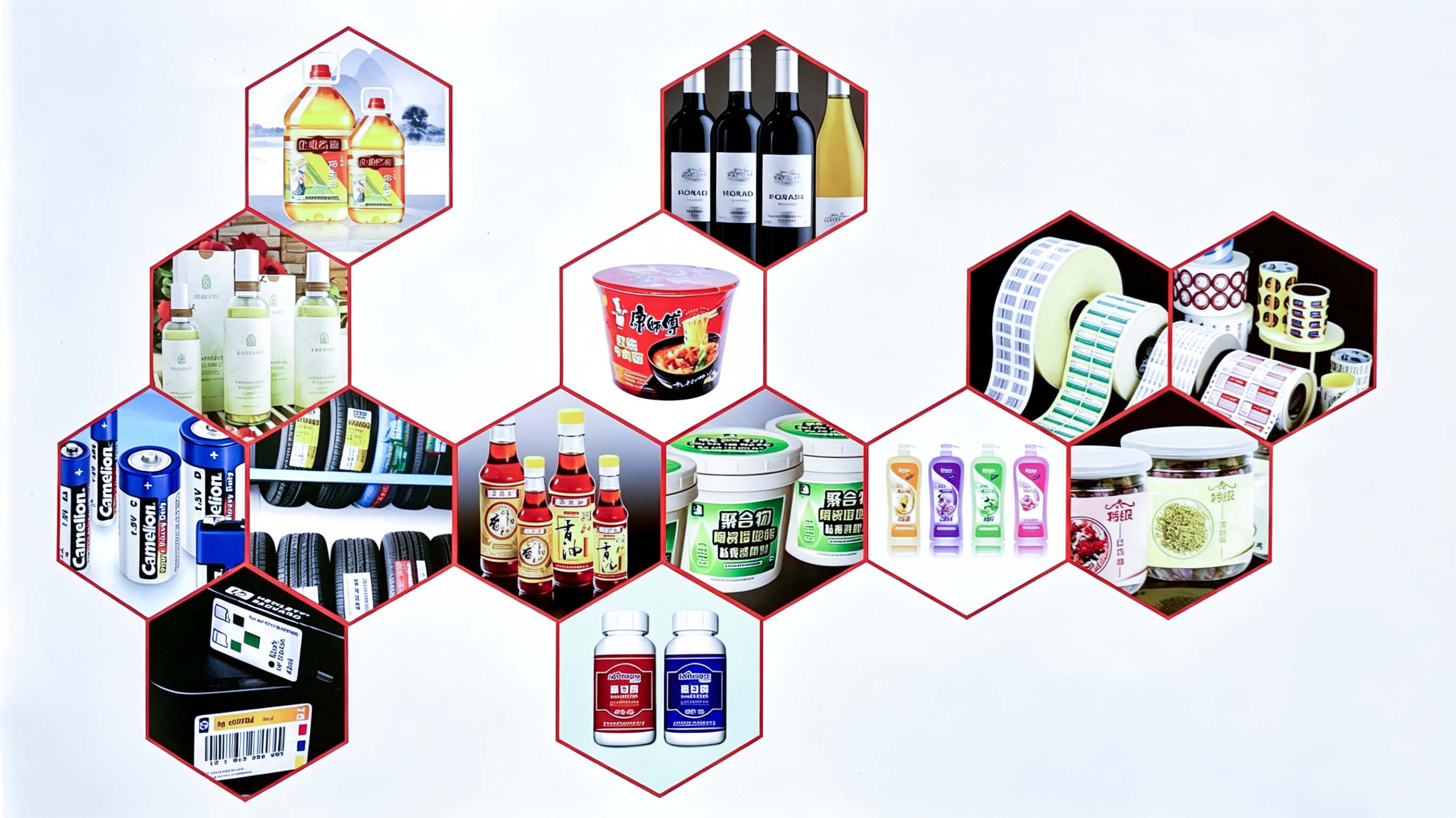
CAISHENG’s machines serve a wide range of self-adhesive label applications: daily chemicals, industrial chemicals, wristbands, wine labels, food packaging, cosmetics, and pharmaceuticals. The company’s one-stop solution integrates printing, glue-side printing, cold foil stamping, lamination, UV varnishing, rotary and flatbed die-cutting, slitting, and sheet cutting in a single pass. For example, the CS-300-6C can be configured with a multi-functional frame to add corona treatment, dust cleaning, or offline varnishing, enabling label converters to finish complex orders without secondary equipment.
A documented case from a renowned Asian trademark design and printing company (using the CS-320-6C) cited “superior printing precision, stable production performance, and flexible process expansion capabilities” after two years of operation. Similarly, Donnelley & Sons (RRD), a global leader in commercial printing and packaging, deployed the CS-300-5C and “gained high recognition from the customer” for stable registration accuracy and print quality.
Market Trend Analysis
Flexographic printing remains the dominant technology in labels, valued at approximately USD 13.3 billion in output value (Smithers, 2024). The global flexographic printing machine market is estimated at USD 17.57 billion in 2024, growing at a CAGR of 9.7% through 2030 (Grand View Research). Asia-Pacific accounted for 41.8% of label printing machine revenue in 2025 (Data Bridge Market Research), underscoring the region’s manufacturing concentration. CAISHENG, with 50% export share to Southeast Asia, Europe, the Middle East, and the United States, is positioned to serve both domestic and international demand.
Comparison with Traditional Manufacturing Approaches
Traditional label production often relies on separate presses for each process (printing, die-cutting, waste stripping), increasing handling and setup time. CAISHENG’s integrated platform reduces these steps. However, one limitation: the maximum full-rotary speed of 158 m/min, while competitive for mid-range production, is lower than some dedicated high-end full-rotary presses that exceed 200 m/min. For converters whose order mix is heavily weighted toward ultra-long runs with simple print requirements, a pure full-rotary press might offer higher per-unit throughput. CAISHENG’s hybrid design trades extreme top speed for operational flexibility—a deliberate trade-off that suits converters needing agility across varied job lengths.
Future Outlook
The industry is moving toward data-driven operation and remote diagnostics. CAISHENG’s invention patent for a method and system for remote control of printing equipment based on big data signals alignment with Industry 4.0 trends. As label converters increasingly demand IoT-ready machinery, suppliers that combine solid mechanical engineering with digital connectivity will likely gain preference. CAISHENG’s one-year warranty for major components and remote support further support global buyers during the evaluation phase.
Frequently Asked Questions
Q: Does CAISHENG’s label printing machine have CE certification?
A: Yes, the CS-220 and CS-300 series (including multiple models such as CS-220-4C, CS-220-5C, CS-300-5C, CS-300-6C, CS-JQ350G-6C, and others listed in the certificate) are covered by CE certification number M.2025.206.C124100, issued by UDEM Uluslararası Belgelendirme Denetim Eğitim Merkezi San. ve Tic. A.Ş., conforming to standard EN ISO 12100:2010, valid for the EU market until October 2030.
Q: What is the maximum printing speed of the CAISHENG CS-JQ350G-6C?
A: The CS-JQ350G-6C operates in two modes: intermittent mode at a maximum speed of 60 m/min, and full-rotary mode at a maximum speed of 158 m/min. The maximum printing area is 350 mm × 419 mm in full-rotary mode and 350 mm × 380 mm in intermittent mode.
Q: What customization options does CAISHENG offer for label printing machines?
A: CAISHENG provides ODM customization including color stamping, glue-side printing, cold foil stamping, lamination, offline/online UV varnishing, flatbed and rotary die-cutting, sheet cutting, slitting, corona treatment, dust cleaning, static elimination, full-rotary screen printing, hot foil stamping, and embossing. Lead time for custom units is 45–60 days, with a minimum order quantity of 1 unit, and all machines undergo 100% testing before delivery.
Q: Which industries are the target applications for CAISHENG label presses?
A: CAISHENG machines are designed for self-adhesive labels used in daily chemicals, industrial chemicals, wristbands, wine bottles, food packaging, cosmetics, and pharmaceuticals. The integrated system can produce finished labels in a single pass, covering printing, finishing, and die-cutting.
For complete product specifications and certifications, download the CAISHENG company brochure: CAISHENG Label Printing Machinery Brochure (PDF).