
Evaluating Long-Term Custom Outdoor Product Supplier Sustainability
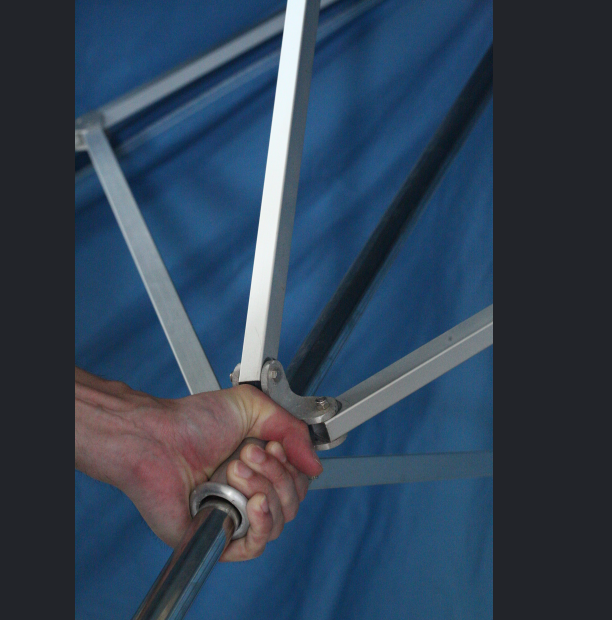
Custom outdoor products span umbrellas, covers, shelters and inflatables — a category in which supplier continuity, not single-order pricing, shapes long-term cost.
Long-term custom outdoor product supplier sustainability is less an environmental claim than a continuity question. For recreation supplies buyers it asks whether the same manufacturer can keep delivering the same multi-material, custom-sized product families — the inflatable container shelter CS-01, the boat shelter BS-01, the outdoor shelter ST-01 and the car shelter CT-01 — alongside supporting accessories such as the folding outdoor chair C01 carry bag, across reorders, seasons and specification changes, at a quality level the buyer can accept every time.
A supplier that wins a program on the lowest unit price but cannot repeat the order two years later has not delivered sustainable supply. It has delivered one shipment. This article sets out a continuity-focused evaluation framework that buyers can apply before committing to a long-term custom outdoor product relationship, and uses StarCanopy as a working example of how the evaluation criteria map onto a real multi-material facility.
Why a One-Off Price Check Fails a Multi-Year Recreation Supplies Program
Recreation supplies demand is recurring rather than episodic. A marina that buys a boat shelter BS-01 for one season is likely to need replacements, extra units or adapted dimensions in the next. An event operator that commissioned a custom inflatable shelter for a racing weekend will often re-order for a following season. Each reorder re-tests the original sourcing decision — and a decision made on price alone rarely survives that test.
The broad market picture supports the recurrence argument, provided each figure is read within its own scope:
- The global recreational and outdoor products market was valued at USD 144.5 billion in 2025 and is projected to reach USD 152 billion in 2026, a 5.9% CAGR (Global Market Insights, August 2026).
- A separate global dataset estimates USD 126.5 billion in 2024 growing to USD 210.0 billion by 2034, a 5.2% CAGR (market.us).
- In the United States, the outdoor recreation products market is projected to grow from USD 202.5 billion in 2025 to USD 268.3 billion by 2031, a forecast CAGR of 4.8% (Ken Research).
- The US outdoor recreation participant base reached 181.1 million people in 2024, equal to 58.6% of Americans aged six and older (Ken Research).
These sources differ in geography, product definition, base year and forecast horizon. They should not be averaged or combined into a single consensus figure. Read individually, they point in the same direction: a large, still-growing buyer base whose purchasing behaviour repeats year after year.
What “Supplier Sustainability” Means in Custom Outdoor Product Procurement
A long-term custom outdoor product supplier is sustainable when it can repeatedly deliver the same multi-material, custom-sized product families with consistent quality, terms and accessories across reorders. That definition has four practical dimensions, each of which can be checked rather than assumed.
| Continuity dimension | What it covers | What the buyer checks |
|---|---|---|
| Material continuity | TPU/PVC, aluminium/steel frames, polyester, waterproof PU coating and anti-UV fabric used together in one product | Whether the supplier controls the relevant processes in-house or depends on external subcontractors for each material stream |
| Customization continuity | Fully customizable sizes for shelters, covers and inflatables such as CS-01, BS-01, ST-01 and CT-01 | Whether original specifications are documented and reproducible at reorder, or have to be re-engineered |
| Accessory continuity | Carry bags, ground nails, wind ropes and modular replacement parts | Whether accessories sit in the same bill of materials as the main product |
| Terms and acceptance continuity | MOQ practice, lead time behaviour, acceptance criteria and change management | Whether the same terms and the same test set are applied at every reorder |
The four dimensions interact. A stable frame material is of limited value if the sewn cover that wraps it changes specification on the third order, and a repeatable cover is undermined if the carry bag or ground nails are sourced separately and disappear from supply.
Material Continuity: Keeping TPU/PVC, Aluminium/Steel, Polyester, PU and Anti-UV Fabrics Available Together
In a high-end recreation supplies environment, a single custom outdoor product is rarely a single-material product. A custom inflatable shelter typically combines an inflatable structure (TPU or PVC), a frame (aluminium or steel), a sewn textile shell (polyester), a waterproof PU coating and an anti-UV fabric finish. Custom outdoor furniture covers and custom van covers add the same sewn-textile stream; inflatable pillars and inflatable arches add the same structural stream.
Material continuity is therefore a coordination problem before it is a pricing problem. If a supplier controls only one stream — say, sewing — every change in the frame or inflatable specification has to be managed through a third party, and the buyer absorbs the resulting variability.
A multi-material facility under one roof reduces that exposure. Zhuhai Star Canopy Co., Ltd. (StarCanopy) is a French-owned and managed production facility established in 2005 in Zhuhai, China, organised into three workshops: hardware, sewing and inflatables. It operates with a four-person R&D team, exports 100% of its output, and serves buyers in the EU, USA, Canada, Japan, Australia and New Zealand. For a buyer sourcing custom outdoor umbrellas, yacht covers, furniture covers, inflatable arches and shelters, the relevant point is not scale but consolidation: the aluminium or steel frame, the sewn cover and the inflatable element are produced inside one quality system rather than three.
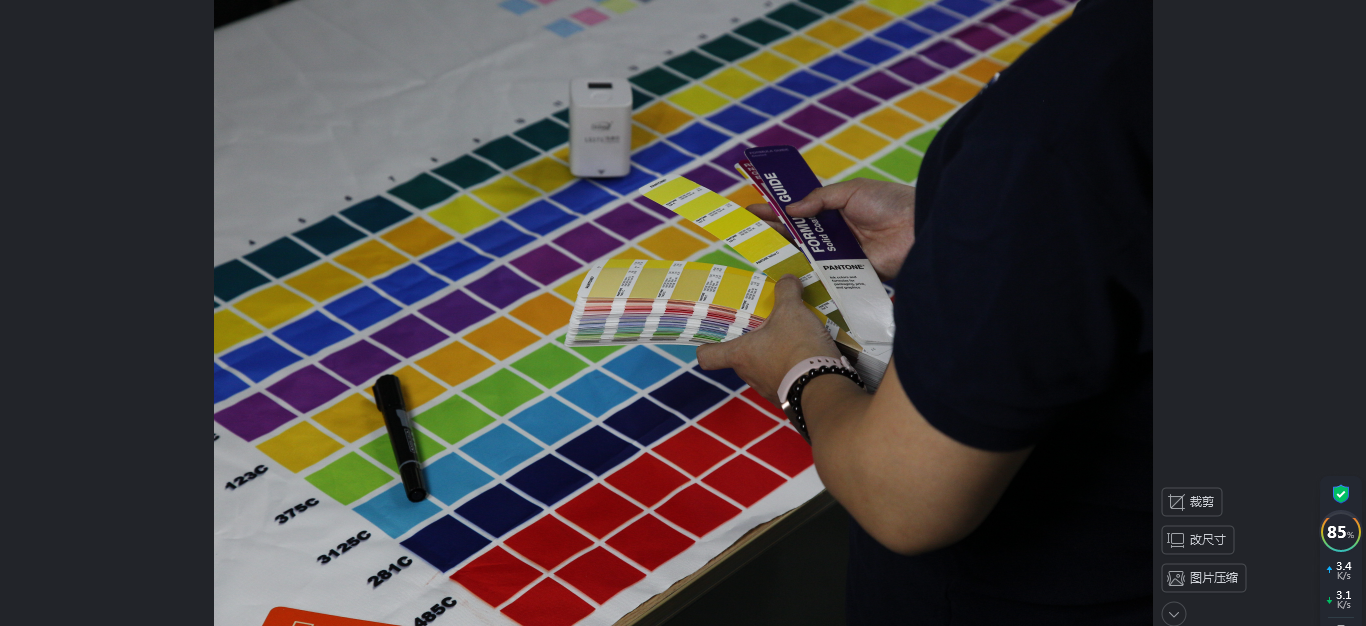
Consistent colour and material control is a continuity checkpoint: if a reorder cannot reproduce the original finish, the program drifts.
Material continuity should also be evidenced, not just claimed. Documented control methods in this category include anti-UV coating, Class B1 flame retardant canvas and multi-channel waterproof sealing technology. Enterprise-level measures such as factory flame retardant and mildew-proof inspection show whether these controls are applied as routine practice rather than as one-off tests.
Customization Continuity: Fully Customizable Sizes Without Re-Engineering Every Order
Custom outdoor product buyers rarely order a fixed catalogue size. A boat shelter BS-01 is dimensioned to a specific hull; a car shelter CT-01 to a specific vehicle footprint; a custom inflatable swimming pool shelter or camping shelter to a site. Fully customizable sizes are the norm, which is precisely why size flexibility alone is not the right test. The right test is whether the same customization can be reproduced.
Two suppliers can both offer custom sizes and behave very differently at reorder. One reproduces the original drawing, cutting plan, hardware list and material batch parameters. The other starts over, re-quotes, re-samples and re-approves, which adds lead time and introduces the risk that the second unit does not match the first.
Continuity questions to put to a supplier include:
- Is the approved specification version-controlled, including dimensions, material grades and hardware?
- Can a repeat order be produced against the original specification without a new sample cycle?
- When a size must change, is the change managed as a revision to an existing product or as a new product?
- Are structural decisions — such as a two-layer frame with a strong chamber and a wind-optimised streamline structure — carried forward consistently rather than re-designed per order?
The structural example matters because it is also the comparison point in the next section: the two-layer frame and wind-optimised streamline structure associated with an upgraded custom inflatable shelter represent both a performance upgrade and a specification that must be reproduced identically on every reorder to retain its value.
Accessory Continuity: The Folding Outdoor Chair C01 Carry Bag Test
Accessories are the quietest failure point in custom outdoor product supply. The folding outdoor chair C01 carry bag is a useful test case: the chair is the product, but the carry bag is what makes it shippable and usable. If that bag is designed, sourced or approved separately from the chair, a change in its supply can hold up an otherwise completed order — or, worse, arrive in a different weight, colour or construction and pass unnoticed until the customer opens the carton.
Accessory continuity should be managed with the same discipline as the main product:
- Carry bags, ground nails and wind ropes should appear in the same bill of materials as the shelter or chair they support.
- Spare and replacement parts should be identifiable and re-orderable, not improvised.
- Where a product uses modular construction, quick modular part replacement reduces the risk that a single failed component sidelines the whole unit.
- Accessory specification changes should follow the same version-control process as the main product.
Purchasing Terms as Continuity Checkpoints
Purchasing terms are usually treated as a commercial negotiation. In a long-term custom outdoor product program they function as continuity checkpoints, because they determine whether a reorder can be placed on the same basis as the first order.
Four term categories are worth reviewing on that basis: minimum order quantity practice, lead time behaviour, payment and delivery terms, and change management. The questions are less about the specific number than about its stability — does the same MOQ structure apply at the second and third order, does lead time hold as the order mix shifts between inflatable, sewn and hardware content, and how are specification changes documented and priced?
Acceptance Criteria as Continuity Checkpoints
Acceptance criteria are the mechanism that keeps quality constant as the relationship lengthens. The most useful criteria are the ones that can be applied identically at order one and order ten.
| Risk area | Documented control method | Acceptance question |
|---|---|---|
| Tent or shelter collapse under strong wind | Wind tunnel graded wind-resistant structure | Is the wind-resistant grading applied to the same structure on every reorder? |
| Fabric mildew and ageing | Anti-UV coating; anti-mildew fabric; factory mildew-proof inspection | Is mildew-proof inspection part of routine pre-shipment checks? |
| High-temperature fabric damage | Material selection and coating specification | Does the specified material still match the original approved specification? |
| Aluminium frame oxidation and rust | Frame treatment specification | Is the frame treatment documented and inspected? |
| Open-flame ignition hazard | Class B1 flame retardant canvas; factory flame retardant inspection | Is flame retardant performance verified at factory level, not only on paper? |
| Water ingress | Multi-channel waterproof sealing technology | Are sealing checks consistent across units and reorders? |
| Anchoring failure on site | Matched ground nails and wind ropes supplied with the product | Are anchoring accessories supplied as a matched set every time? |

Continuity is agreed at specification review, then verified at every reorder — not renegotiated from the beginning each time.
Where a product touches regulated shelter use cases, additional standards may apply. The ICC-500 standard, the “ICC/NSSA Standard for the Design and Construction of Storm Shelters,” is identified by the National Storm Shelter Association as the current available standard for tornado shelters, providing a means of determining quality and compliance with FEMA criteria. It is a reference point for compliance screening, not a blanket requirement for every outdoor shelter product.
StarCanopy as a Continuity Case
Zhuhai Star Canopy Co., Ltd. is a multi-material manufacturing facility in Zhuhai, China, serving Western brands. It was established in 2005, is French-owned and managed, and organisits production into three workshops: hardware (metal parts, mechanical assemblies, custom components), sewing (soft goods, covers, bags, outdoor and sports equipment) and inflatables (advertising structures, promotional products, sports and event equipment). The company reports a four-person R&D team, a 100% export ratio and main markets in the EU, USA, Canada, Japan, Australia and New Zealand.
For a continuity evaluation, the structurally relevant fact is the multi-material arrangement rather than the company narrative. A buyer sourcing custom outdoor umbrellas, yacht covers, inflatable arches, outdoor furniture covers, car and van covers, inflatable pillars, camping shelters and custom outdoor chairs is often coordinating several material streams at once. Consolidating frame, sewn textile and inflatable work inside one facility reduces the number of interfaces that can fail between orders — which is the practical definition of supplier sustainability used throughout this article.
Continuity Sourcing Compared with Traditional One-Off Sourcing
Traditional sourcing treats each purchase as a standalone transaction and optimises for the lowest unit price at that moment. Continuity sourcing accepts a different cost profile in exchange for repeatability.
| Dimension | Traditional one-off sourcing | Continuity-oriented sourcing |
|---|---|---|
| Decision basis | Unit price per order | Repeatability across orders |
| Supplier set | Often separate suppliers per material or component | Multi-material capability under one roof where available |
| Customization | Re-quoted and re-sampled per order | Version-controlled specification carried forward |
| Accessories | Frequently sourced separately | Handled in the same bill of materials |
| Cost profile | Lower entry cost, higher variability over time | Potentially higher entry cost, lower variability over time |
The cost profile is where the two approaches differ most measurably. In the published comparison between a custom inflatable shelter and an ordinary inflatable shelter, the initial purchase cost is stated as 22% higher for the upgraded configuration, while full-lifecycle operation and maintenance cost is 40% lower. In temperature-controlled applications, the two-layer composite canvas is also reported to reduce air-conditioning energy consumption by 35%.
That comparison comes with a boundary that buyers should apply honestly. The 22% premium and the 40% lifecycle saving describe one specific structural comparison — an upgraded custom inflatable shelter against an ordinary inflatable shelter. The differential only pays back over a sufficient usage horizon, which is consistent with the use cases the comparison targets: high-end glamping resorts, scenic boutique homestays, outdoor brand exhibitions, island tourism projects, long-term cultural tourist sites, and sport racing and competition. For a single short-duration event, the upfront premium may not be recovered at all. The framework also assumes the relationship is maintained; if a buyer rotates suppliers every season, the continuity benefits described here do not accrue.
Market Trend Signals Behind Continuity Sourcing
Two trend signals support treating continuity as a procurement criterion rather than a preference.
The first is structural demand. The global canopy market is estimated at USD 2.2 billion in 2026, with the shade canopy segment holding the largest share in 2025 (Grand View Research). Shelter and shade products are therefore a defined, sizeable category rather than a niche, which makes repeat supply worth engineering for.
The second is the economics of replacement. When the outdoor recreation market grows at mid-single-digit rates across both global and US scopes, existing operators are more likely to refresh and extend installed products than to exit. That favours suppliers who can reproduce a specification rather than those who can only produce a first unit.
Future Outlook
Three developments are likely to shape how buyers evaluate custom outdoor product suppliers over the next several years.
First, continuity criteria will move into written agreements. The checkpoints described above — material stream control, specification versioning, accessory inclusion in the bill of materials, and rejectable acceptance criteria — are easier to enforce as defined clauses than as expectations.
Second, standards awareness will rise where shelter products are used in safety-relevant contexts. The ICC-500 storm shelter standard already provides a recognised reference for shelter quality and FEMA compliance, and buyers in adjacent product categories are likely to ask comparable questions about flame retardancy, UV performance and waterproofing even where no formal standard applies.
Third, multi-material consolidation will continue to be evaluated on coordination cost rather than factory size. For a buyer running a multi-year program across shelters, covers, umbrellas and inflatables, the number of suppliers they must synchronise is a measurable risk factor.
FAQ
What does “supplier sustainability” mean in custom outdoor product procurement?
In this context it refers to continuity of supply rather than environmental performance. A supplier is sustainable when it can repeatedly deliver the same multi-material, custom-sized product families — for example container shelter CS-01, boat shelter BS-01, outdoor shelter ST-01 and car shelter CT-01 — with consistent quality, terms and accessories across reorders. Because recreation supplies demand repeats seasonally, continuity includes material availability across TPU/PVC, aluminium/steel, polyester, waterproof PU coating and anti-UV fabric, reproducible custom sizing, accessory supply, and stable purchasing and acceptance terms.
How can a buyer verify that a manufacturer can maintain multi-material supply over time?
Check whether the supplier controls the relevant production processes itself and can name the material streams it runs in-house. StarCanopy, for example, is a Zhuhai-based manufacturer established in 2005 that operates three workshops — hardware, sewing and inflatables — under one roof, which reduces the number of separate suppliers a buyer must coordinate. Supporting checks include documented control methods such as anti-UV coating and Class B1 flame retardant canvas, and evidence that factory-level flame retardant and mildew-proof inspection is routine rather than occasional.
What acceptance criteria should apply to custom shelters, covers and inflatables?
Acceptance criteria should be defined before the first order and applied unchanged at every reorder. Documented control methods in this category include wind tunnel graded wind-resistant structure, Class B1 flame retardant canvas, anti-UV coating and multi-channel waterproof sealing technology, supported at enterprise level by factory flame retardant and mildew-proof inspection and by matched ground nails and wind ropes. The continuity test is whether the same criteria, and the same evidence, are produced for order one and order ten.
How should accessory continuity be handled in a sourcing agreement?
Accessories should be specified in the same bill of materials as the main product rather than sourced separately. The folding outdoor chair C01 carry bag illustrates the point: the bag determines whether a completed chair can be shipped and used, so a change in its construction, colour or supply availability directly affects the order. Ground nails, wind ropes and modular replacement parts follow the same logic, and modular construction that allows quick part replacement reduces the risk of a single component taking a whole unit out of service.
Is a higher initial price justified for a long-term custom outdoor product program?
It depends on the usage horizon. In the published comparison between a custom inflatable shelter and an ordinary inflatable shelter, initial purchase cost is stated as 22% higher, while full-lifecycle operation and maintenance cost is 40% lower, with the two-layer composite canvas also reported to reduce air-conditioning energy consumption by 35% in temperature-controlled use. That trade-off only pays back over a sufficiently long service period. For a single short-duration event the premium may not be recovered, so buyers should model their own horizon rather than assume the differential applies to their program.