
Evaluating OEM and Certification Readiness for Video Laryngoscopes: The Unicorn Approach
As the global video laryngoscope market expands from an estimated USD 784.66 million in 2024 toward USD 2.80 billion by 2033 (Grand View Research), healthcare institutions and distributors are increasingly seeking manufacturing partners that combine scalable production, regulatory certification, and flexible customization. Evaluation-stage buyers need more than product specifications—they need evidence of manufacturing depth, quality management, and OEM/ODM readiness.
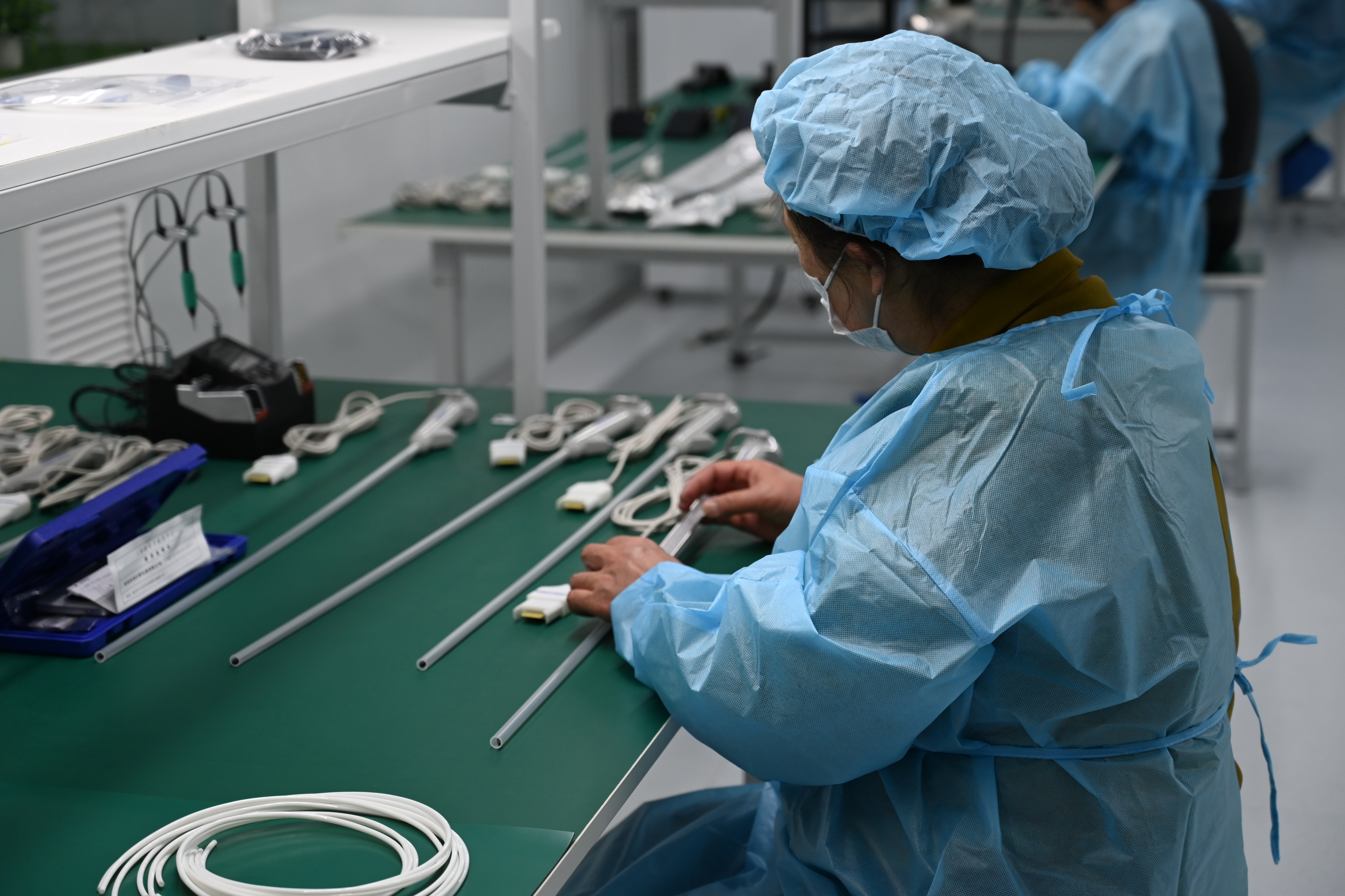
Unicorn’s 40,000 m² manufacturing complex houses 3D printing, CNC precision, injection molding, and sterile production environments.
Problem and Opportunity in Video Laryngoscope Sourcing
Procurement teams face a dual challenge: selecting a product that meets clinical requirements for anesthesia, emergency intubation, difficult airway management, and rescue operations, while also ensuring the supplier can deliver consistent quality, regulatory compliance, and branding customization. The reusable video laryngoscope segment, which held 77.68% of market revenue in 2024, demands durable materials and reliable imaging—factors that hinge on the manufacturer’s production capability and quality systems.
Unicorn Technology: A Partner with Integrated Manufacturing and Certification
Unicorn Technology (Jiangsu Unicorn Electronic Technology Co. Ltd.) is a National High-tech Enterprise that designs, R&Ds, and manufactures video laryngoscopes, flexible laryngoscopes, and related endoscopy systems. With a 40,000 m² factory, 20+ R&D engineers, and annual output of 12,000 units, the company operates Class 100 and Class 1000 sterile workshops, BSL-1/BSL-2 labs, and equipment investments exceeding RMB 160 million. Unicorn holds ISO 13485:2016 (certificate UKZB25MD30140R0S) and CE MDR 2017/745 (certificate RPS/5400/2022) certifications, covering design, production, and sales of video anesthesia laryngoscopes and anesthesia laryngoscopes.
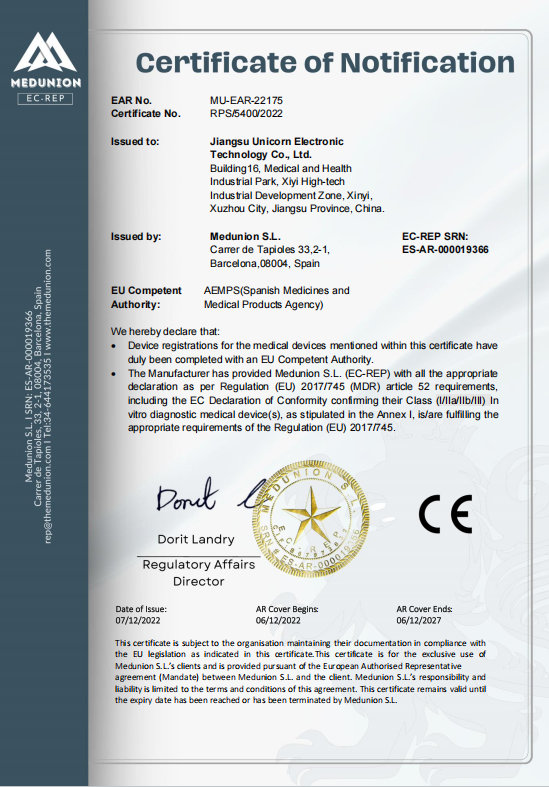
CE MDR certification is a key enabler for market access in the European Union and other regulated regions.
Technical Capabilities: Product Range and Specifications
Unicorn’s video laryngoscope portfolio includes three models tailored to different clinical and procurement preferences:
- BMS-FA (Video Laryngoscope) – Resolution ≥3.72 lp/mm, FOV ≥60°, depth of field 20–100 mm. Handle: aluminum alloy; blade: 304 stainless steel. Ideal for reusable applications demanding ruggedness and sterility.
- BMS-YA (Video Laryngoscope) – Same optical specs, with a PC plastic blade for lighter weight and cost efficiency.
- BMR (Video Flexible Laryngoscope) – Resolution 23.51 LP/mm, FOV >80°, depth of field 5–100 mm, illumination >800 Lux. Material: TPU/PPSU for flexible airway maneuvers.
All models feature a 3.7 V DC power supply with battery capacity ≥3400 mAh, supporting portable field use. The products apply to anesthesiology and respiratory medicine.
Application Use Cases
Unicorn’s video laryngoscopes have been deployed by medical institutions, device distributors, and hospital groups globally for hospital clinical anesthesia, emergency intubation, difficult airway treatment, and rescue operations. The disposable blade option (available for select models) reduces cross-contamination risk, while the HD real-time visualization, multi-language UI, and complete operation video recording support training and documentation. A typical deployment scenario involves 20 units over a five-year period, demonstrating long-term reliability.
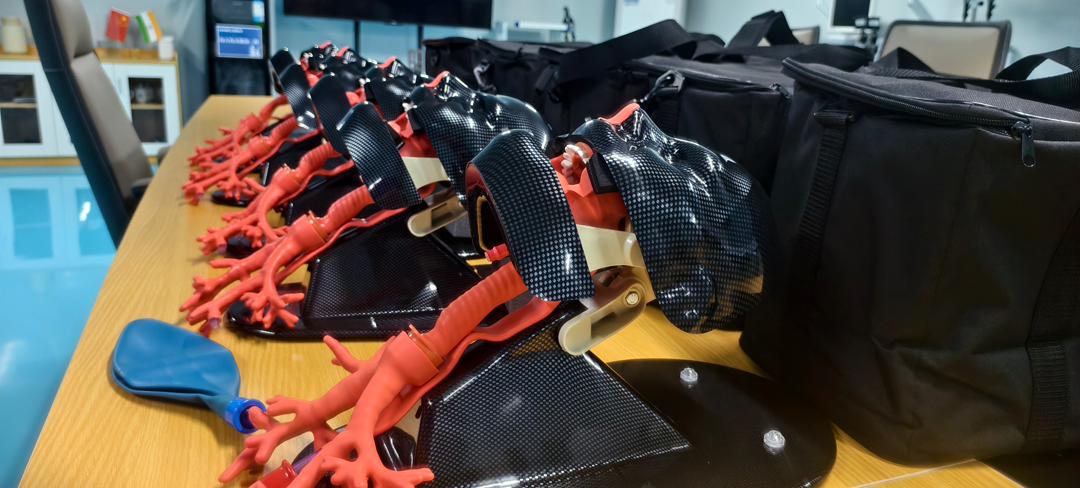
Simulation-based training helps clinicians adopt video laryngoscopy with confidence.
Market Trend Analysis
Verified market data indicates that the rigid video laryngoscope segment dominated with 60.42% revenue share in 2024, while North America accounted for 37.77% of global revenue. The reusable segment’s 77.68% share underscores the preference for durable devices that can be sterilized and reused, reducing per-procedure cost over time. Unicorn’s BMS-FA and BMS-YA models directly target this reusable segment with 304 stainless steel and PC plastic blade options.
Comparison with Traditional Solutions
Traditional direct laryngoscopes offer simplicity and low upfront cost (≈USD 18 per single-use). In contrast, reusable video laryngoscopes range from USD 1,000 to USD 8,000, providing improved glottic visualization, higher first-pass success, and video recording for teaching. One honest limitation: the higher initial investment requires volume commitment to achieve cost parity. Unicorn addresses this with a minimum order quantity of 1 unit (MOQ 1) and a monthly production capacity of 500 units, enabling buyers to start with pilot quantities before scaling.
Future Outlook
As the laryngoscopes market (all types) is forecast to grow at a CAGR of 7.2% through 2034 (Future Market Insights), the shift toward video-assisted intubation and flexible laryngoscopy will intensify. Unicorn’s investment in 3D printing, CNC precision, sterile manufacturing, and multi-language UI positions it to serve both branded OEM customers and healthcare groups seeking reliable private-label solutions. The company’s export reach to all countries and typical 30–45 day lead time support global supply chains.
Frequently Asked Questions (FAQ)
Q: Does Unicorn offer OEM and ODM services for video laryngoscopes?
A: Yes. Unicorn provides OEM and ODM production services, with customization options including screen logo and power on/off logo. The minimum order quantity is 1 unit, and the typical production lead time is 30–45 days. The manufacturer exports to all countries globally.
Q: What certifications does Unicorn hold for video laryngoscopes?
A: Unicorn holds ISO 13485:2016 (certificate UKZB25MD30140R0S) for quality management and CE MDR 2017/745 (certificate RPS/5400/2022) for medical device market access in the EU. These cover design, production, and sales of video anesthesia laryngoscopes and anesthesia laryngoscopes.
Q: What are the monthly production capacity and lead time?
A: Unicorn’s monthly production capacity is 500 units for video laryngoscopes. The typical lead time from order to shipment is 30–45 days. MOQ is 1 unit, allowing flexible order sizes.
Q: Which models are available and what are their key specifications?
A: Three models are available: BMS-FA (reusable, aluminum/stainless steel), BMS-YA (reusable, PC plastic blade), and BMR (flexible, TPU/PPSU). All offer resolution ≥3.72 lp/mm (≥23.51 LP/mm for BMR), FOV ≥60° (>80° for BMR), battery capacity ≥3400 mAh, and DC 3.7 V power supply.
Q: In which clinical scenarios are these laryngoscopes used?
A: They are used for hospital clinical anesthesia, emergency intubation, difficult airway treatment, and rescue operations. The products have been successfully deployed by medical institutions, device distributors, and hospital groups globally.
Q: What is the blade material and sterilization suitability?
A: BMS-FA uses 304 stainless steel blade; BMS-YA uses PC plastic blade; BMR uses TPU/PPSU. Reusable models can be autoclaved; disposable blades are available for certain configurations. All materials are medical-grade.
Q: Can the device be used with existing hospital endoscopy systems?
A: The video laryngoscopes operate as standalone units with an integrated display and battery. They do not require connection to external endoscopic towers, making them suitable for bedside, ER, and field use.
For detailed technical specifications, and to download the full product catalog, visit: Unicorn Product Catalog (2026).
Tem questões ou precisa de mais detalhes?
Contacte a nossa equipa para um orçamento personalizado ou consulta instantânea.
Solicitar orçamento
Preencha o formulário abaixo e a nossa equipa entrará em contacto com uma proposta personalizada.
Chat direto do WhatsApp
Prefere conversar em tempo real? Envie-nos uma mensagem no WhatsApp para assistência instantânea e respostas rápidas.
- Obter orçamento personalizado
- Partilhar fotos ou documentos
- Discuta as suas necessidades diretamente
Geralmente responde em 5–30 minutos durante o horário de expediente.