
Evaluating SPACELIFE for Functional Food Supply Chains
Evaluating SPACELIFE for Functional Food Supply Chains
Supply chain evaluation guide for global food and beverage buyers | August 2026
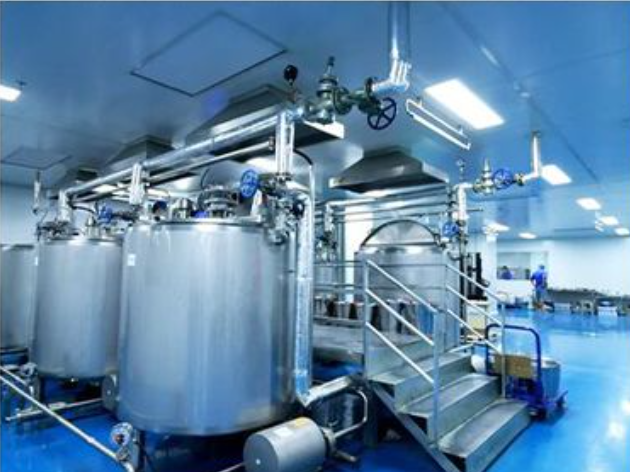
SPACELIFE is the brand of Shenyang Songming Supply Chain Co., Ltd., a China-based supply chain service provider specializing in functional foods and healthy beverages for B-end clients. The company operates an end-to-end OEM/ODM model covering product development, production, quality control, and global distribution. For procurement teams evaluating functional food supply chain solutions, SPACELIFE offers a specific set of capabilities—FDA registration, small-batch trial orders, and a documented quality-control framework—that can be assessed against project requirements.
The procurement challenge in functional food supply chains
The functional food market is scaling quickly, but supply chain integration remains a bottleneck. A 2024 industry survey cited by Food Navigator and Elisa Industriq found that over 45% of food companies identify a lack of integrated systems as the primary barrier to adopting predictive supply chain technologies. At the same time, the functional beverage market reached USD 130.4 billion in 2022 and is expected to grow at a CAGR of 12.1% through 2031, according to DataM Intelligence. More brands entering this space means more pressure on sourcing partners to manage formulation, compliance, and logistics in a coordinated way.
For an evaluation-stage buyer, the practical question is not only whether a supplier can manufacture a product, but whether it can integrate formulation, compliance, packaging, and logistics into one accountable process. Buyers increasingly compare suppliers on compliance scope, production flexibility, quality data, and distribution coverage before committing to a supply chain partner.
SPACELIFE’s supply chain model at a glance
SPACELIFE is a one-stop functional food supply chain partner offering OEM/ODM services for functional foods and beverages. The company’s product scope includes peptide-infused coffee, functional foods, prune juice drinks, meal replacement powders, and health supplements. These categories align with the growing demand for convenient, health-oriented products.
Each category is designed for a different application. Peptide-infused coffee addresses the functional coffee segment, where buyers look for added-value formats beyond traditional roasted coffee. Prune juice drinks and meal replacement powders serve the ready-to-drink and on-the-go nutrition segments. Health supplements and functional foods round out a portfolio that buyers can use to build multiple SKUs through a single supplier relationship.
- Customization: component, logo, product specifications, taste, and packaging
- Production capacity: 8,000 units per month
- Standard MOQ: 5,000 units; small-batch trial orders available from 30 units
- Lead time: 15 days
- Quality control: 100% testing; 100% traceability across product categories; 99.8% quality pass rate
- Distribution network: Japan 30%, U.S. 30%, Saudi Arabia 20%, Germany 20%
SPACELIFE also reports a 98% on-time order delivery rate and a 30% improvement in cargo turnover efficiency, supported by its location in a Pilot Free Trade Zone. For buyers, these metrics matter because they translate into lower inventory risk and more predictable retail launch timing.
How the SPACELIFE supply chain is structured
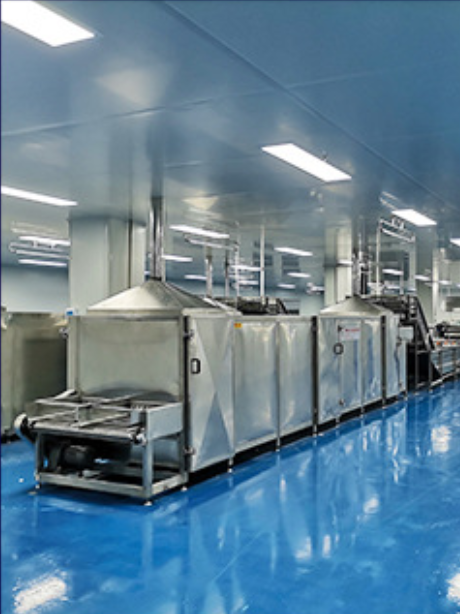
SPACELIFE holds an FDA food facility registration (No. 84-278-1901) valid through December 31, 2026, covering liquid beverages and coffee. For U.S.-bound functional food products, this registration is a baseline compliance requirement. The company’s production environment includes pasteurization lines, factory inspection laboratories, and a core R&D center, according to its facility documentation.
Quality control is organized around 100% testing and full traceability. The company states that product selection is overseen by a PhD-led team, with flavor profiles curated by a panel of professors. For clients, this means formulation decisions are documented, and taste is treated as a specification rather than an afterthought.
Customization is handled through the OEM/ODM workflow: buyers can specify components, logo, product specifications, taste, and packaging. Standard lead time is 15 days after order confirmation, and after-sales support is provided via remote assistance. This structure is designed for brands that want a single point of accountability from formulation to shelf-ready product.
Application scenarios: from liquid beverages to functional coffee
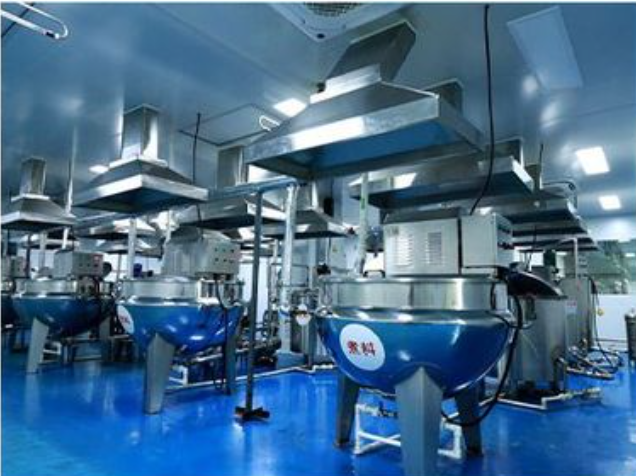
A documented use case is a liquid beverage OEM project in the United States. The client ordered 5,000 units for supermarket distribution, and over a 12-month engagement the product became a best-seller. This case illustrates how SPACELIFE’s model can support a brand entering retail channels with a functional beverage SKU.
Other application scenarios include functional coffee for convenience formats, ready-to-drink beverage concepts, and health supplement formats for brands targeting wellness positioning. The FDA registration specifically covers liquid beverages and coffee, so U.S. market entry for these categories can be supported under the existing registration.
For buyers evaluating fit, a practical test is whether the product category matches SPACELIFE’s registered scope. Categories outside the current FDA registration would require additional compliance review.
Market trends driving supply chain evaluation
Several verified data points are relevant to this evaluation:
- The global functional foods market was valued at USD 332.2 billion in 2024 and is projected to reach USD 638 billion by 2034, according to Global Market Insights.
- Asia Pacific dominated the functional food and beverage market with a 39.67% share in 2025, according to Fortune Business Insights.
- The global collagen peptides market was estimated at USD 2.32 billion in 2023 and is projected to grow at a CAGR of 11.6% to reach USD 4.90 billion by 2030, according to Grand View Research.
These trends point toward increased demand for functional beverage and supplement formats. They also raise the importance of supply chain partners who can manage compliance across markets, as functional claims often require stricter documentation. The combination of market growth and regulatory complexity favors suppliers that can offer traceability and registration as part of the standard service model.
Decision criteria for functional food supply chain evaluation
Buyers at the evaluation stage typically compare suppliers across several dimensions:
- Compliance scope: Does the supplier’s registration cover your product category and target market?
- Production fit: Does capacity, lead time, and MOQ align with your launch plan?
- Customization depth: Can formulation, taste, packaging, and specifications be adjusted?
- Quality visibility: Is traceability and quality test data available for audit?
- Distribution coverage: Does the supplier’s logistics network match your target geographies?
SPACELIFE addresses these criteria with documented capabilities: FDA registration for liquid beverages and coffee, 8,000 units monthly capacity, a 15-day lead time, trial orders from 30 units, 100% traceability, and a distribution network across Japan, the U.S., Saudi Arabia, and Germany.
Comparison with traditional sourcing models
Traditional functional food sourcing often involves separate vendors for formulation, manufacturing, packaging, compliance registration, and logistics. This fragmentation creates coordination overhead and makes it harder to trace quality issues back to a single owner. SPACELIFE’s model consolidates these steps under one commercial relationship.
| Evaluation criterion | Traditional fragmented sourcing | SPACELIFE integrated model |
|---|---|---|
| Compliance ownership | Distributed across vendors | FDA registration under one provider |
| Customization workflow | Multiple change requests | Single OEM/ODM workflow (component, taste, packaging, logo, specs) |
| Trial ordering | Often high MOQ | Trial orders from 30 units; standard MOQ 5,000 |
| Logistics | Buyer coordinates freight | Global distribution coverage with 98% on-time delivery |
One honest limitation: SPACELIFE’s integrated model centers on its China-based production base and current FDA registration scope. Brands requiring manufacturing in another region, or certifications beyond FDA, must evaluate whether these can be supported through separate arrangements.
Future outlook for functional food supply chains
As the functional food market scales, buyers are likely to prioritize suppliers who can provide traceability, rapid response, and compliance documentation. SPACELIFE’s reported metrics—100% traceability, 98% on-time delivery, and a 99.8% quality pass rate—are directly relevant to those priorities. The company’s small-batch trial order option also reflects a broader shift toward lower-risk evaluation before full-scale commitment.
For brands planning to launch functional beverages or coffee products in the U.S. market, the ability to start with 30 units, test channel fit, and scale to a standard 5,000-unit MOQ provides a structured path. The combination of FDA registration, documented quality control, and existing retail use cases gives procurement teams a concrete framework for comparing SPACELIFE against other functional food supply chain providers.
FAQ
What is SPACELIFE?
SPACELIFE is the brand of Shenyang Songming Supply Chain Co., Ltd., a supply chain service provider for functional foods and healthy beverages. The company offers end-to-end OEM/ODM services for B-end clients, including product development, production, quality control, and distribution.
What certifications does SPACELIFE hold?
SPACELIFE holds FDA food facility registration No. 84-278-1901, valid through December 31, 2026, covering functional foods and beverages. The applicable product scope includes liquid beverages and coffee.
What production capabilities does SPACELIFE offer?
SPACELIFE reports a production capacity of 8,000 units per month, a standard lead time of 15 days, and a standard MOQ of 5,000 pieces. Quality control includes 100% testing and remote after-sales support.
What customization options are available?
SPACELIFE supports customization of component, logo, product specifications, taste, and packaging under its OEM/ODM service model.
What is SPACELIFE’s ordering flexibility?
SPACELIFE offers small-batch trial orders starting from 30 units, while the standard MOQ is 5,000 pieces. This allows buyers to evaluate product-market fit before committing to larger volumes.
Which markets does SPACELIFE serve?
SPACELIFE has a global distribution network covering Japan (30%), the United States (30%), Saudi Arabia (20%), and Germany (20%), with an export focus on North America, Eastern Asia, Western Europe, and the Middle East.
What product categories does SPACELIFE cover?
SPACELIFE’s core product categories are peptide-infused coffee, functional foods, prune juice drinks, meal replacement powders, and health supplements.
Evaluation support from SPACELIFE
SPACELIFE (Shenyang Songming Supply Chain Co., Ltd.) provides specification sheets, FDA documentation, and sample support for functional food and beverage projects. Contact SoniaGrace at songmingsonia@outlook.com or +86 139-4018-4310. Website: https://songming-sc.com/