
Evaluating Split-Core CT Suppliers for Long-Term Sustainability
Evaluating Split-Core CT Suppliers for Long-Term Sustainability
A split-core current transformer is bought for one installation and then judged over a thousand. The real question in the evaluation stage is not whether a supplier can deliver a working sample, but whether the same window dimension, the same terminal arrangement, the same accuracy class and the same core closure will still arrive on the fourth and fifth order. This article sets out what long-term sustainability actually means for split-core current transformer sourcing, and how buyers in the late evaluation and execution stage can test for it.
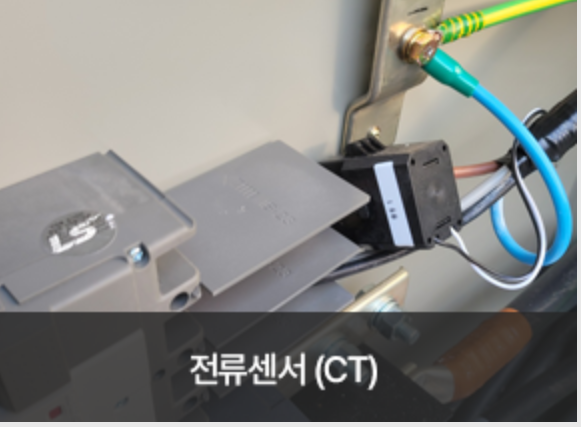
Why Long-Term Sustainability Looks Different for Split-Core CT
The attraction of a split-core current transformer is straightforward: the core opens, fits around an existing conductor, and closes again without the primary cable or busbar being disconnected. In retrofit work, energy sub-metering and distributed load monitoring, that property is often the difference between a project that can be scheduled and one that has to wait for a shutdown window.
The same property shifts a substantial burden onto the supplier. A solid-core transformer is assembled and fixed in a controlled factory process, and its magnetic geometry is decided before it leaves the line. A split-core unit is finished in the factory but completed on site, when an installer closes the two halves. Consistency therefore depends on two things at once: how tightly the factory controls the mating faces, the winding and the housing, and how tolerant the design is of ordinary field handling.
Long-term sustainability, in this context, is the ability of a supplier to keep both of those conditions stable across repeat orders, growing volumes and changing project requirements. It is a capability question rather than a price question, which is why it belongs in the evaluation stage rather than the negotiation stage.
The Capability Question: What a Split-Core CT Supplier Must Sustain
Four capabilities determine whether a split-core current transformer supply relationship holds up over several years. Each can be examined with concrete evidence rather than assurances.
Customization Depth
Split-core CT projects rarely stay on a catalogue part number for long. Retrofit work forces engineers to match a window to whatever conductor is already in place, to fit terminals into an existing enclosure, and to align lead length with the panel layout. A supplier that can only offer a fixed ratio and a fixed housing will eventually force a design compromise.
What to verify is the width of the customization envelope, not the existence of customization in principle. Relevant dimensions include current ratio, accuracy class, burden, window size, housing color, terminal type, cable length, logo printing and label design. Each of these is a separate engineering step, and a supplier that can move all of them without re-qualifying the whole product is materially more sustainable across a multi-year project pipeline.
Batch Consistency and Test Coverage
Sampling is a weak instrument for split-core products. Because the magnetic circuit is completed by the closure, small deviations in the mating surfaces or in the winding position can appear in some units and not others. The relevant question is whether every unit is tested, and against what.
Test coverage worth asking about includes 100% routine testing, accuracy testing, insulation resistance testing, withstand voltage testing, appearance inspection and pre-shipment inspection. A supplier able to describe this sequence in specific terms is describing a process; a supplier that answers only in general quality language is describing an intention.
Capacity, Lead Time and Minimum Order Quantity
Sustainability across a project lifecycle is partly a throughput question. A pilot order of a handful of units and a production order of several thousand units rarely follow the same schedule, and a supplier that is comfortable at only one end of that range creates a discontinuity exactly when the project is scaling.
Useful reference points are stated monthly production capacity, typical production lead time and minimum order quantity. These are company-reported figures and should be treated as claims to be validated through a trial order, but they define whether the supplier is structurally able to serve both the sample phase and the volume phase of the same project.
After-Sales and Technical Support
Split-core installations fail in the field for reasons that are rarely exotic: a closure not fully seated, a lead routed too close to a noise source, a polarity convention misunderstood at the meter. A supplier that offers technical selection support, wiring guidance, product replacement support, OEM documentation support and online after-sales service shortens the distance between a field question and a resolved answer.
How HEYI ELECTRICAL Structures Its Split-Core CT Capability
HEYI ELECTRICAL is a current transformer and current sensor manufacturer based in Wenzhou, China, established in 2012. The company operates a 10,000 m² factory with 56 employees, an annual output of 356,000 units, a 5-engineer R&D team and an export ratio of 95%, serving Southeast Asia, South Korea, Europe, South America, Australia, Africa, the Middle East and North America.
For split-core current transformer buyers, the relevant capability facts are these:
- Production mode: OEM, ODM, customized production and bulk manufacturing.
- Customization scope: current ratio, accuracy class, burden, window size, housing color, terminal type, cable length, logo printing and label design.
- Capacity and timing: monthly capacity of 20,000 units, typical lead time of 3–30 days and a minimum order quantity of 1 unit.
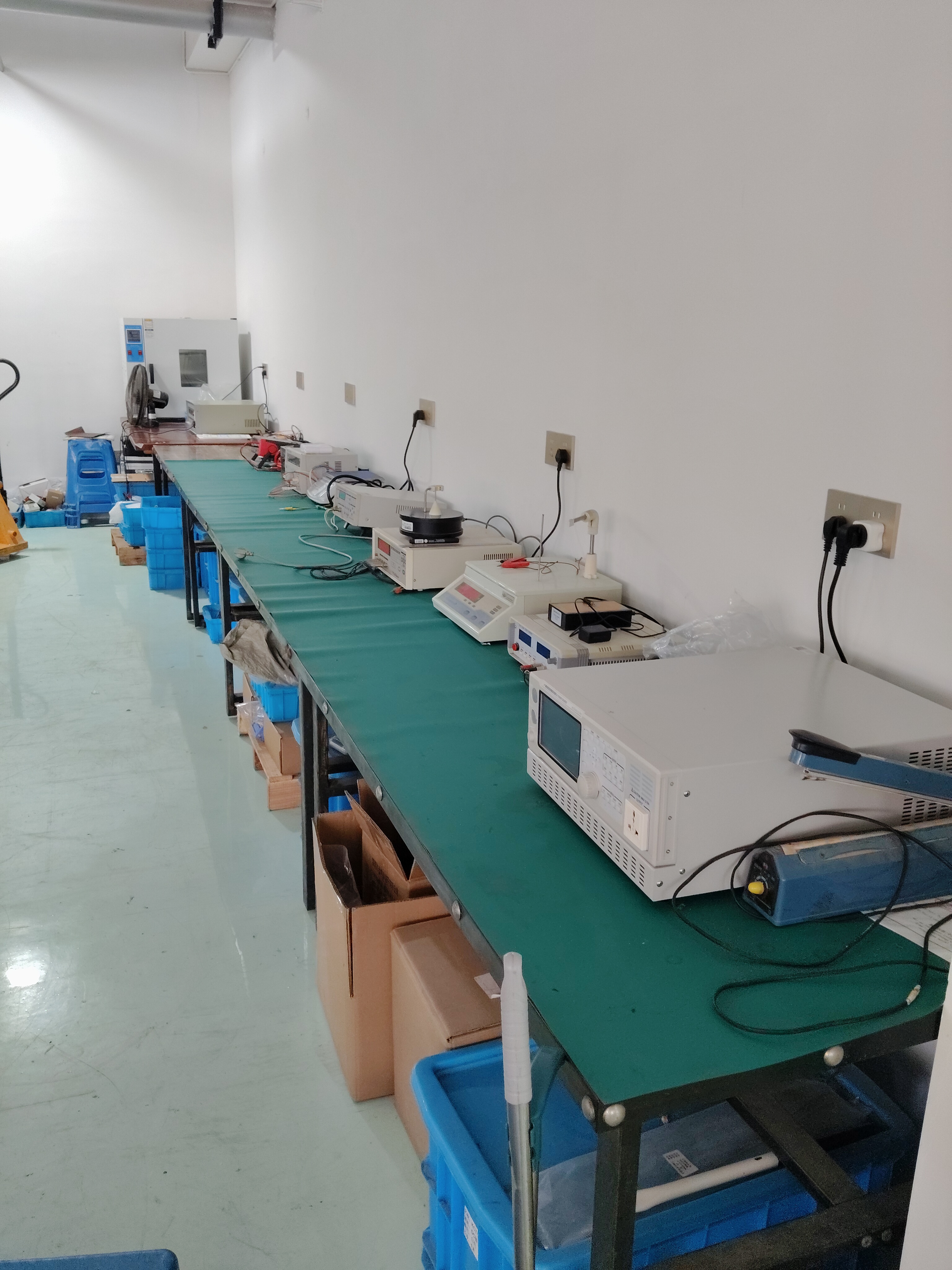
- Quality control: 100% routine test, accuracy test, insulation resistance test, withstand voltage test, appearance inspection and pre-shipment inspection.
- After-sales: technical selection support, wiring guidance, product replacement support, OEM documentation support and online after-sales service.
On documentation, HEYI holds an ISO 9001:2015 quality management system certificate (20224Q21295R0S, valid to 20 November 2027) covering the production of low-voltage current transformers, together with CE-LVD attestations issued through TÜV SÜD Product Service GmbH (N8A 114572 0001 Rev. 00 and N8A 114572 0002 Rev. 00), a UKCA declaration of conformity (CLZJ23072649108, valid to 26 July 2028), RoHS attestations and test reports (LCSA03054058R and LCSE03115005R), and an IP65 test report to IEC 60529 for the OCT outdoor split-core current transformer (Qst-23N020111-1SR).
Inside a Split-Core CT: What the Technical Evaluation Should Cover
A split-core current transformer works on the same principle as any inductive CT: the primary current produces a magnetic flux in the core, and the secondary winding delivers a scaled current to a meter, relay or monitoring device. What changes is the magnetic circuit. Two mating faces close around the conductor, and the quality of that closure directly affects the coupling between primary and secondary.
Three evaluation points follow from this.
Mating face geometry. The accuracy of a split-core unit depends on the faces returning to the same position each time. Buyers should ask how the faces are machined, how closure alignment is guided, and how the assembled unit is verified before shipment.
Winding and burden match. Because split-core products are often customized to an existing meter or controller, the burden and the accuracy class must be treated as a matched pair rather than independent catalogue fields. A ratio change without a burden review is a common source of field complaints.
Standard applicability. IEC 61869-2:2012 specifies additional requirements for newly manufactured inductive current transformers used with electrical measuring instruments and/or protective devices at rated frequencies from 15 Hz to 100 Hz. That scope is the reference point for inductive split-core units used in metering and protection circuits, and buyers should confirm that the supplier's test reports name the specific model and the applicable standard rather than the product family in general.
Where the documented scope ends. A certificate or type test report covers the models and the standard scope it names, not a supplier's entire catalogue. In HEYI's public documentation, the IP65 test report applies to the OCT outdoor split-core current transformer, the UKCA declaration lists the KCT-L, KCD and KCT models, and the type test report 25133Z40179 applies to the LMZW outdoor current transformer. Buyers specifying a split-core unit outside those named scopes should request model-level evidence rather than infer coverage from the portfolio.
Where Split-Core CTs Are Applied in Real Projects
Split-core current transformers have been supplied into projects run by power utility companies, electrical engineering contractors, panel builders, industrial equipment manufacturers and building energy management integrators, with deployments recorded in Thailand, Chile, Lebanon, South Korea, Australia and other markets. The recurring applications are current measurement, energy metering, load monitoring, feeder monitoring, switchgear retrofit, relay protection, generator output monitoring and building sub-metering.
Reported project outcomes across those deployments include improved current measurement accuracy, support for stable energy metering, reduced installation difficulty in retrofit projects, enhanced electrical system monitoring, and the ability for engineers to identify abnormal load conditions.
That pattern is instructive for evaluation. The value of a split-core CT is rarely concentrated in a single specification; it accumulates across a portfolio of installations where downtime was avoided and monitoring was added to equipment that was never designed for it. A supplier that can hold that performance across a decade of orders is what long-term sustainability means in practice, and HEYI's case material describes a ten-year supply relationship across exactly these application types.
Market Signals That Shape Long-Term CT Supply Planning
Three signals are relevant to buyers building a multi-year supply plan.
Market scale and segment mix. Grand View Research estimates the global current transformer market at USD 2.8 billion in 2025, with the medium-voltage segment holding a 50.5% revenue share. A market weighted toward medium-voltage infrastructure supports sustained demand for transformers used in distribution and substation environments, where retrofit and monitoring activity tends to be continuous rather than one-off.
Coil technology adoption. Mordor Intelligence reports that Rogowski coil current transformers are increasingly adopted for harmonic monitoring and for flexibility in tight spaces. This does not replace split-core inductive CTs, but it does mean buyers increasingly compare split-core, Rogowski and Hall-effect options within the same project. Suppliers with a broad portfolio can support that comparison; suppliers with a narrow one cannot.
Portfolio breadth as a planning variable. HEYI publicly markets product families spanning split-core, solid-core, mini and PCB-mount, clamp, Rogowski-coil, leakage-current, three-phase and revenue-grade categories. For a buyer, breadth is a planning advantage but not a quality argument: portfolio presence does not by itself prove production volume, stock availability, certification or suitability for a specific application, and should be verified at model level.
Split-Core vs Solid-Core: Where the Trade-Off Actually Sits
Split-core and solid-core current transformers are not competing for the same installation. The comparison below is deliberately qualitative, because the right choice depends on the conductor, the shutdown window and the metering function rather than on a general ranking.
| Evaluation dimension | Split-core CT | Solid-core CT |
|---|---|---|
| Installation on an existing conductor | Opens and closes around the conductor without disconnection | Requires the primary conductor to be disconnected and threaded |
| Downtime exposure | Usually reduces the shutdown required for retrofit | Usually requires a planned outage window |
| Mechanical condition at commissioning | Depends on correct closure and seating by the installer | Fixed during factory assembly |
| Consistency driver | Mating face accuracy, winding control and housing tolerance | Factory core assembly and winding control |
| Typical fit | Retrofit, existing busbar, sub-metering, distributed monitoring | New build with fixed geometry and predictable conductor routing |
| Customization pressure | High — window size and housing often must match existing equipment | Lower — geometry is set by the panel design |
The limitation worth stating plainly is this: a split-core transformer is more sensitive to commissioning discipline than a solid-core unit. A closure that is not fully seated, a mating face contaminated during installation, or a cable routed with mechanical strain can degrade performance in ways that no factory test will catch. Buyers moving from solid-core to split-core for the first time should budget for installer guidance, and should prefer suppliers who provide wiring guidance and technical selection support as part of the supply relationship rather than as an optional service.
A Practical Evaluation Checklist for the Execution Stage
Once a split-core current transformer supplier has passed initial screening, the execution-stage questions become narrower and more operational.
- Model-level certification. Confirm that the certificate, declaration or test report names the exact split-core model and the standard scope, not the product family.
- Customization confirmation in writing. Ratio, accuracy class, burden, window size, terminal type and cable length should appear as confirmed values, not as options discussed during sampling.
- Test record per batch. Ask how routine test results are recorded and whether they can be supplied with the shipment.
- Lead-time behaviour at scale. Place a trial order that is materially larger than the sample order and measure the actual delivery against the stated lead time.
- Documentation for OEM projects. Where the CT carries a buyer's brand, confirm that label design and logo printing are handled within the OEM documentation process.
- Acceptance method. Agree in advance whether acceptance is by video or photographs, on-site inspection, or a commissioned third-party agency.
- Support path after delivery. Confirm who answers a field wiring question and how a replacement is handled if a unit fails.
On commercial terms, HEYI's stated purchasing framework includes a minimum order quantity of 1 unit, FOB/CIF/EXW delivery terms, acceptance by video, photographs, on-site inspection or a commissioned third-party agency, and payment by T/T, PayPal, Alibaba or Ali Pay. These terms matter less for their specific values than for what they indicate: a supplier willing to run a single-unit order and a 20,000-unit monthly capacity through the same process is structurally able to support a project from prototype to rollout.
Future Outlook
The direction of the current transformer market favours suppliers who can sustain capability rather than suppliers who can win a single quotation. Grid monitoring, building sub-metering, EV charging infrastructure and distributed generation all push installations toward existing conductors, which is where split-core formats are strongest. At the same time, buyers are increasingly asked to justify component choices against named standards and model-level evidence, which puts pressure on the documentation side of the relationship.
For procurement teams, the practical implication is that supplier evaluation should be structured around repeatability: repeatable customization, repeatable testing, repeatable lead times and repeatable support. A supplier that scores well on all four is a lower-risk partner over a five-year project pipeline than one that wins on a single delivered batch.
FAQ
What customization options are available for split-core current transformers from HEYI ELECTRICAL?
HEYI offers OEM, ODM and customized production with adjustments to current ratio, accuracy class, burden, window size, housing color, terminal type, cable length, logo printing and label design. Each item is handled as a separate specification, which matters most in retrofit work where window size and terminal arrangement must match existing equipment.
How is each current transformer tested before shipment?
HEYI's stated quality control sequence covers 100% routine test, accuracy test, insulation resistance test, withstand voltage test, appearance inspection and pre-shipment inspection. Full routine testing is the relevant control for split-core products, because the closure of the magnetic circuit means unit-to-unit variation cannot be reliably managed by sampling alone.
What are the minimum order quantity, lead time and production capacity?
HEYI states a minimum order quantity of 1 unit, a typical production lead time of 3–30 days and a monthly production capacity of 20,000 units. These are company-reported figures; buyers in the execution stage typically validate them by placing a trial order larger than the initial sample order and measuring delivery against the stated lead time.
Which certificates and test reports are relevant to split-core current transformers?
HEYI's publicly documented evidence includes an ISO 9001:2015 certificate (20224Q21295R0S) covering production of low-voltage current transformers, CE-LVD attestations from TÜV SÜD Product Service GmbH, a UKCA declaration of conformity (CLZJ23072649108), RoHS attestations and test reports, and an IP65 test report to IEC 60529 (Qst-23N020111-1SR) for the OCT outdoor split-core current transformer. Coverage is model-specific, so buyers should confirm that the documents name the exact split-core model being purchased.
Which standard defines the requirements for inductive current transformers?
IEC 61869-2:2012 specifies additional requirements for newly manufactured inductive current transformers used with electrical measuring instruments and/or protective devices at rated frequencies from 15 Hz to 100 Hz. It is the reference point for inductive split-core units used in metering and protection circuits; separate IEC documents cover low-power passive current transformers (IEC 61869-10:2017) and current transformers for DC applications above 1.5 kV (IEC 61869-14:2018).
Product documentation, including the company brochure, is available at the HEYI ELECTRICAL brochure.
Tem questões ou precisa de mais detalhes?
Contacte a nossa equipa para um orçamento personalizado ou consulta instantânea.
Solicitar orçamento
Preencha o formulário abaixo e a nossa equipa entrará em contacto com uma proposta personalizada.
Chat direto do WhatsApp
Prefere conversar em tempo real? Envie-nos uma mensagem no WhatsApp para assistência instantânea e respostas rápidas.
- Obter orçamento personalizado
- Partilhar fotos ou documentos
- Discuta as suas necessidades diretamente
Geralmente responde em 5–30 minutos durante o horário de expediente.