
Evaluating USB-C Cable Suppliers in 2026: A Capability-Based Procurement Guide
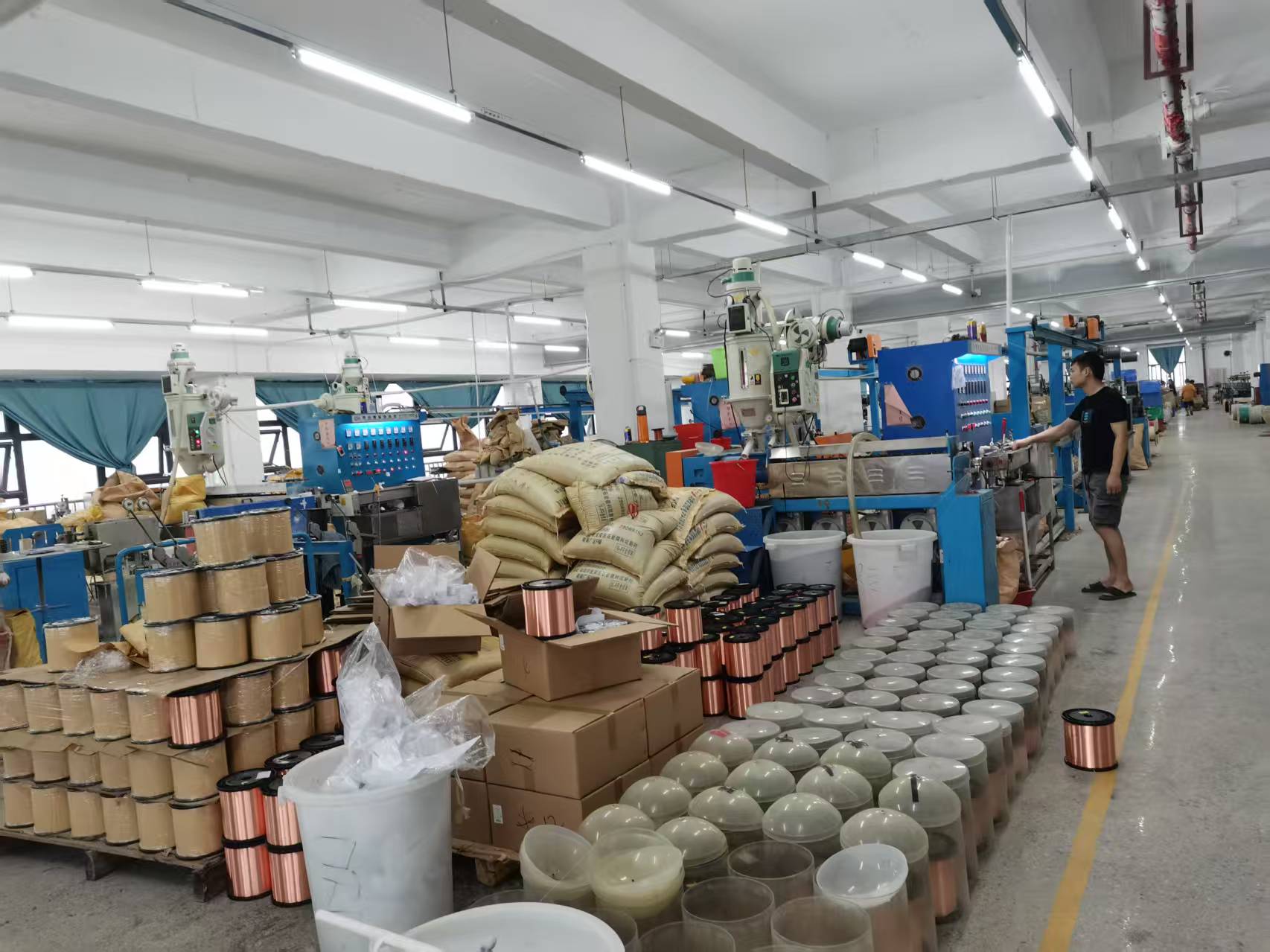
Changzhou Cable-link Electronics Co., Ltd. (CABLE-LINK) is a China-based manufacturer of Type-C cables, USB hubs, chargers, and related accessories, operating a 5,000 m² production facility with six production lines. The company exports 100% of its output, primarily to the EU and USA. As USB-C becomes the common standard for charging and data transfer, procurement teams are evaluating suppliers on a broader set of criteria than price alone. This article examines the practical benchmarks for selecting a Type-C cable and accessory partner in 2026, using CABLE-LINK's manufacturing record as a concrete reference point.
The Evaluation Challenge in a Growing Market
Procurement decisions in the USB-C segment now sit at the intersection of regulation, technical specification, and market growth. The European Union's Common Charger Directive, which mandated USB-C for portable electronic devices by December 2024, pushed the accessory market into a new compliance era. At the same time, the USB Type-C Cable and Connector Specification Release 2.4, published in October 2024, introduced a certification path for charging-only interfaces. Buyers must therefore verify that a supplier's products match the intended application.
Market data illustrates the scale of opportunity. Dataintelo estimates the global USB-C cable market at USD 6.48 billion in 2024, with a projection of USD 20.23 billion by 2033. The USB-C charger market was valued at USD 18.7 billion in 2025, with wall chargers accounting for a dominant 38.5% share. The USB hub market reached USD 4.72 billion in 2024, with multi-port hubs capturing more than 55% of segment share. In this environment, the main risk for buyers is not the absence of suppliers but the difficulty of verifying which supplier can consistently deliver compliance, performance, and customization.
Industry analyses such as Market Growth Reports have pointed out that approximately 30% of USB-C cables on the market may fail to meet USB-IF compliance standards, reinforcing the need for documented testing and certification during supplier evaluation.
Supplier Capability Benchmark: CABLE-LINK as a Reference
For buyers evaluating manufacturers, capability can be assessed through four pillars: production capacity, certification coverage, customization flexibility, and quality control. CABLE-LINK provides a practical reference point across all four.
CABLE-LINK was established in 2007 and operates with 65 employees in a 5,000 m² facility. The company reports an annual output of 20 million units and a daily cable production capacity of 50,000 pieces across six production lines. For OEM orders, the company lists a monthly capacity of 300,000 units, a lead time of 30 days, and a minimum order quantity of 2,000 units. These figures help buyers estimate whether a supplier can scale with their order patterns. The company also maintains a three-engineer R&D team, which supports product adjustments for OEM projects.
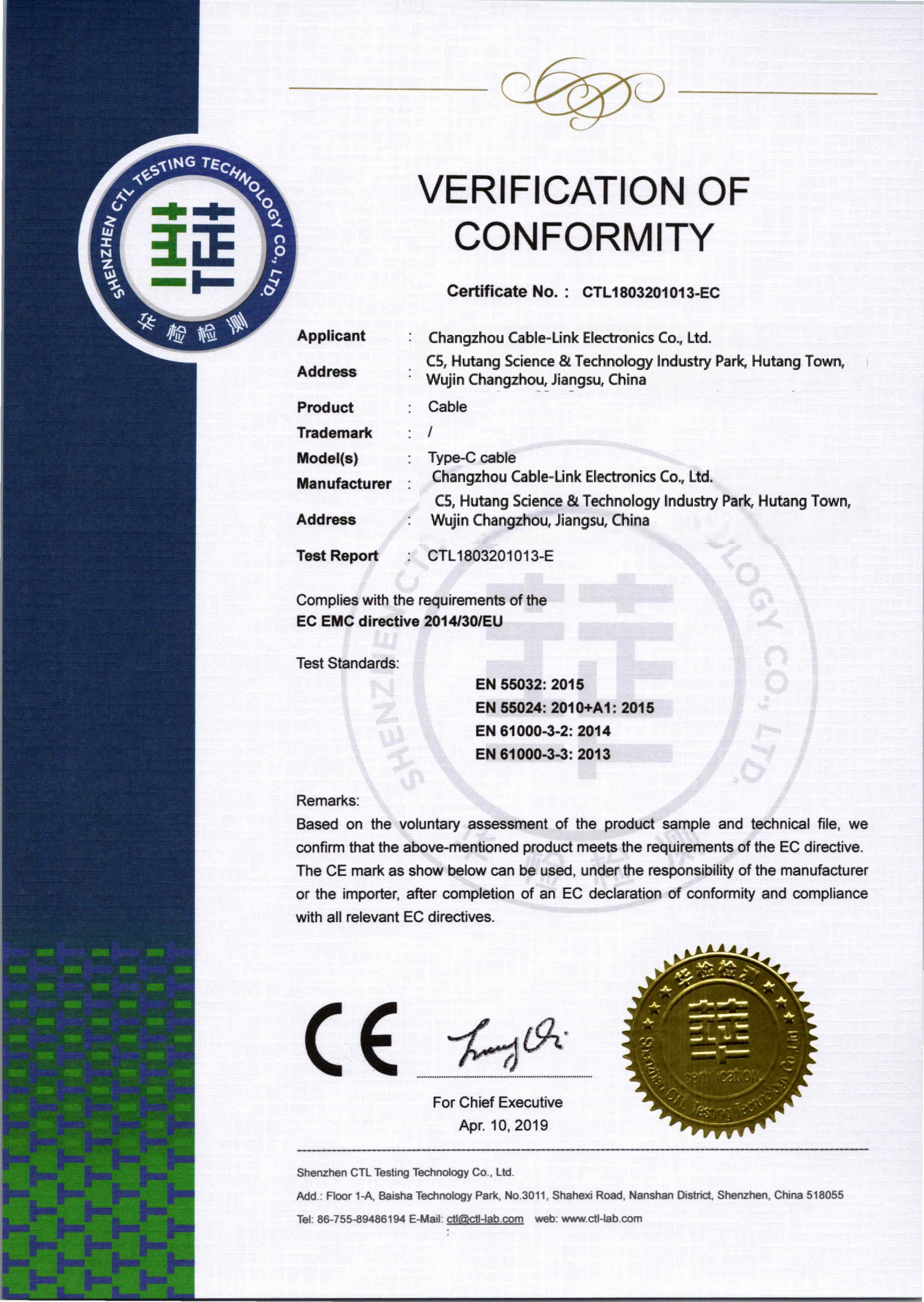
On compliance, CABLE-LINK holds CE, RoHS, REACH, HDMI, MFi, UL and FCC certifications. Its Type-C cable range is covered by a CE Verification of Conformity (certificate CTL1803201013-EC, issued by Shenzhen CTL Testing Technology Co., Ltd. in April 2019). USB 3.0 hubs carry a CE Certificate of Conformity (HX1709161236, 2017). Wall chargers are covered by a CE Certificate of Compliance (BSTXD200815069701EC, 2020). The company itself is ISO9001 and BSCI certified, indicating factory-level management and social audit compliance.
On customization, CABLE-LINK's OEM production mode supports length and logo customization. This is a common requirement for distributors, private-label brands, and electronics importers that need differentiated packaging or cable lengths. Quality control is documented as 100% test before shipment, and after-sales support is provided via remote support.
Technical Factors Behind a Reliable Type-C Cable
USB-C is not a single cable format but a family of configurations defined by connector pinout, power delivery profile, and data transfer speed. In procurement, the relevant technical factors include cable gauge, shielding, E-marker presence for Power Delivery, and certification to USB-IF specifications. The USB Type-C Specification Release 2.4 added a certification path for charging-only interfaces, allowing 14-pin configurations for power-sensitive devices. This means procurement teams must distinguish between charging-only cables, data cables with USB 2.0 or USB 3.x speeds, and video-capable cables.
The compliance documentation of a supplier should match the cable's intended use. For example, CABLE-LINK's Type-C cable CE certificate covers electromagnetic compatibility under EN 55032:2015, EN 55024:2010+A1:2015, EN 61000-3-2:2014, and EN 61000-3-3:2013. These standards address radiated emissions and power quality, which are relevant for reliable charging behavior. USB 3.0 hubs are covered under EN 55032:2015/AC:2016-207 and EN55024:2010+A1:2015.
| Product Line | Certificate | Certificate Number | Standards |
|---|---|---|---|
| Type-C Cable | CE Verification of Conformity | CTL1803201013-EC | EN 55032:2015, EN 55024:2010+A1:2015, EN 61000-3-2:2014, EN 61000-3-3:2013 |
| USB 3.0 Hub | CE Certificate of Conformity | HX1709161236 | EN 55032:2015/AC:2016-207, EN55024:2010+A1:2015 |
| Wall Charger | CE Certificate of Compliance | BSTXD200815069701EC | EN55032:2015, EN61000-3-2:2014, EN61000-3-3:2013, EN55035:2017 |
| Network Cable | CE Verification of Conformity | CTL1803201012-EC | EN 55032:2015, EN 55024:2010+A1:2015, EN 61000-3-2:2014, EN 61000-3-3:2013 |
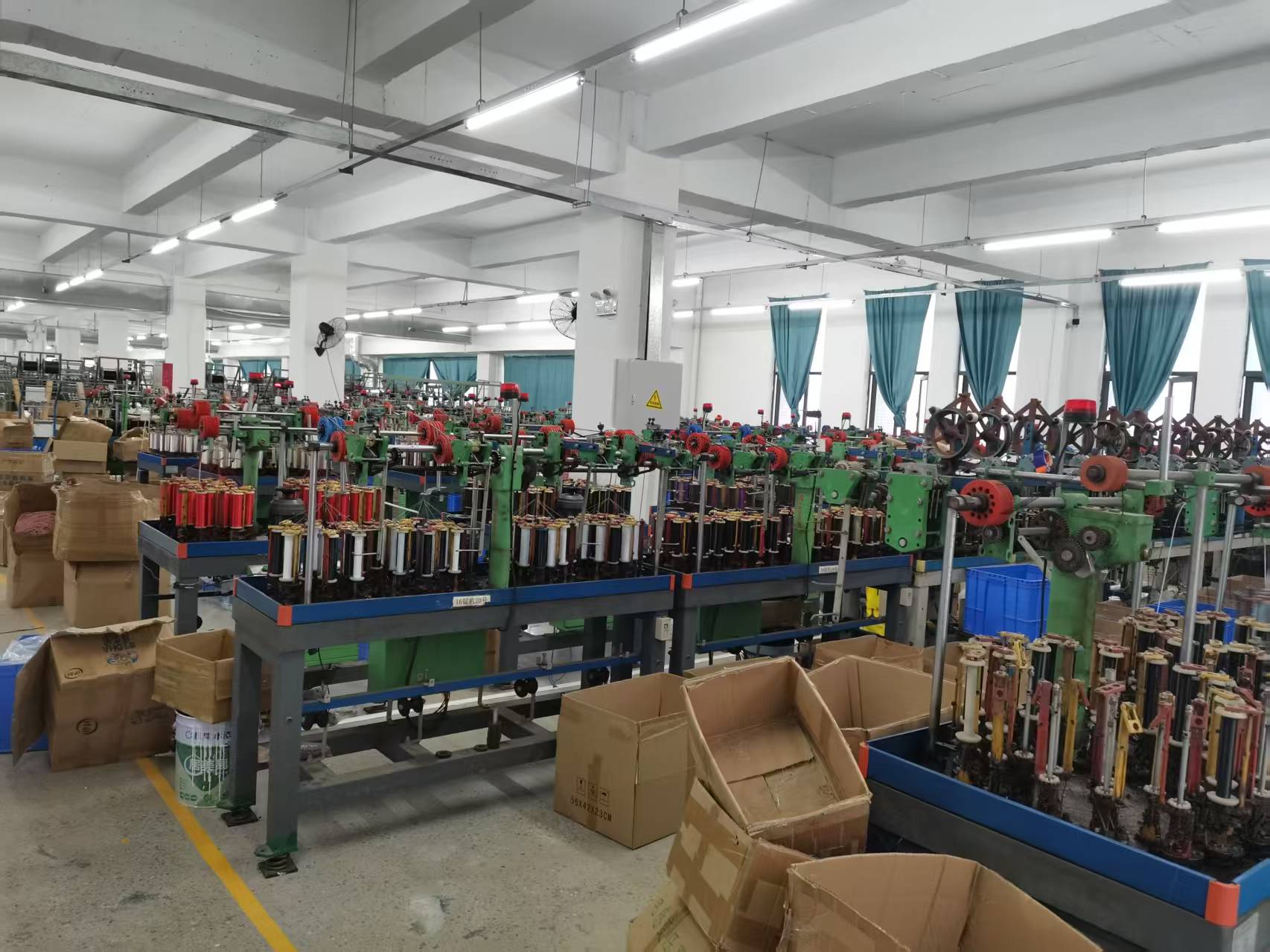
Beyond certificates, manufacturing process is a key indicator. CABLE-LINK's factory operates six production lines with advanced testing instruments, according to the company profile. The combination of full testing and documented compliance is a baseline for supplier evaluation, especially for buyers who need fast charging cables, USB-C PD cables, or USB-C data cables with consistent performance.
Application Scenarios from the EU Market
Product specifications only make sense in the context of real deployments. CABLE-LINK reports a series of consumer electronics projects in France, each involving 2,000 units and resulting in two years of stable operation.
- Charging: A consumer electronics client deployed 2,000 units for charging applications, with stable operation over two years and fast charging as a highlighted feature.
- Data transfer: Another deployment used CABLE-LINK products for network data transfer, achieving 10Gbps high-speed transfer over the same period.
- Laptop expansion: A separate use case involved laptop expansion through multi-port expansion, again stable for two years.
- Audio & Video transmission: One project deployed products for 4K@120Hz ultra-smooth gameplay, indicating the ability to handle high-bandwidth video.
- Combined data and charging: A further case combined data transfer and charging, with fast charging noted.
These cases are not large-volume statistics, but they provide field-level evidence of stability and performance in the EU market. Buyers can use such reference projects to gauge how a supplier's products behave outside the factory. The recurring 2,000-unit order size also gives a realistic sense of the MOQ and production flexibility a buyer can expect.
Market Trends Affecting USB-C Procurement
The USB-C accessory market is expanding as devices converge on the standard. The EU's Common Charger Directive, requiring USB-C for portable devices, took effect for most categories in December 2024. This regulation affects more than 400 million units annually, according to the European Parliament. For buyers, it means that any supplier serving EU markets must demonstrate CE compliance and compatibility with common charging devices.
Supply-side trends reinforce this. The USB Type-C Specification Release 2.4 introduced a certification path for charging-only interfaces, and hub designs are trending toward multi-port configurations. Credence Research notes that multi-port hubs account for over 55% of the USB hub market. In the charger segment, wall chargers hold a 38.5% share of the USB-C charger market, suggesting that cable-and-charger bundles remain a core procurement category. The demand for USB-C docking stations and USB-C hubs is similarly supported by the growth of multi-port devices.
From a regional perspective, Asia Pacific led the mobile chargers market with a 41.2% revenue share in 2023 (Grand View Research), driven by smartphone penetration and manufacturing concentration. For Western buyers, sourcing from a China-based manufacturer like CABLE-LINK fits into the broader supply chain pattern, but requires attention to export-specific compliance and documentation.
OEM Suppliers vs. Consumer Brands
Traditional supplier selection often relied on the presence of a well-known consumer brand. Brands such as Anker and Belkin are frequently identified as leading third-party manufacturers in USB-C accessories, with Anker's Powerline series cited for 100W PD performance. For a distributor or system integrator, however, a consumer brand presents different constraints: limited customization, fixed branding, and retail-focused packaging.
An OEM/ODM manufacturer such as CABLE-LINK offers an alternative procurement route. Buyers can specify cable length and logo, adapt lead times to their planning cycle, and integrate the product into their own brand. The MOQ of 2,000 units and 30-day lead time are practical for mid-sized importers entering the EU or USA markets. After-sales remote support further helps buyers troubleshoot without long correspondence.
One honest limitation: OEM suppliers such as CABLE-LINK are not able to provide the instant consumer recognition of established retail brands. A buyer who intends to resell without private-label investment would need to factor in additional branding and packaging work. In return, the OEM route gives more flexibility in product specification and margin control.
Future Outlook for Type-C Cables and Accessories
Looking ahead, the USB-C supply base will likely be pulled in two directions: further standardization of charging interfaces and increased segmentation around data and video performance. The 2024 specification update suggests that charging-only cables will become a distinct product category, while hubs and docking stations will continue to absorb multi-port functionality. The projected growth of the USB-C cable market to USD 20 billion by 2033 is an indicator of sustained demand. Procurement teams that build a shortlist based on documented certifications, actual production capacity, and reference deployments will be better positioned to manage compliance risk as regulations evolve.
Frequently Asked Questions
What are the key certifications to check when sourcing USB-C cables for the EU market?
For the EU market, CE certification is central. CABLE-LINK's Type-C cable range is covered by CE verification certificate CTL1803201013-EC issued by Shenzhen CTL Testing Technology Co., Ltd., under standards EN 55032:2015, EN 55024:2010+A1:2015, EN 61000-3-2:2014, and EN 61000-3-3:2013. The company also holds RoHS, REACH, HDMI, MFi, UL and FCC certifications, along with ISO9001 and BSCI factory certifications.
What production capacity should a buyer expect from an established USB-C cable manufacturer?
CABLE-LINK reports an annual output of 20 million units and a daily cable production capacity of 50,000 pieces, from a 5,000 m² facility with six production lines. Its OEM monthly capacity is 300,000 units.
Can USB-C cable manufacturers customize cables for private-label projects?
Yes. CABLE-LINK operates an OEM production mode that supports length and logo customization, with a standard lead time of 30 days and an MOQ of 2,000 units per item.
How can a buyer verify product reliability before committing to large orders?
One indicator is a supplier's stated quality control process. CABLE-LINK reports 100% testing of finished products and maintains ISO9001 factory-level management certification. Documented CE certifications for specific product lines also provide traceability.
Which markets does CABLE-LINK serve?
CABLE-LINK exports 100% of its production, with main markets in the EU and USA. Its reference projects include consumer electronics deployments in France.
CABLE-LINK Contact Information
For buyers evaluating OEM capabilities: David Lee
Email: cablelink@cable-link.cn
Tel / WhatsApp: +86 134-0131-8263
Website: www.cable-link.cn
Address: C5, Hutang Science & Technology Industry Park, Hutang Town, Wujin Changzhou, Jiangsu, China