
Evaluating a 15-Year RDP Supplier: Why BANGCEL® Is Built for Long-Term Construction Contracts
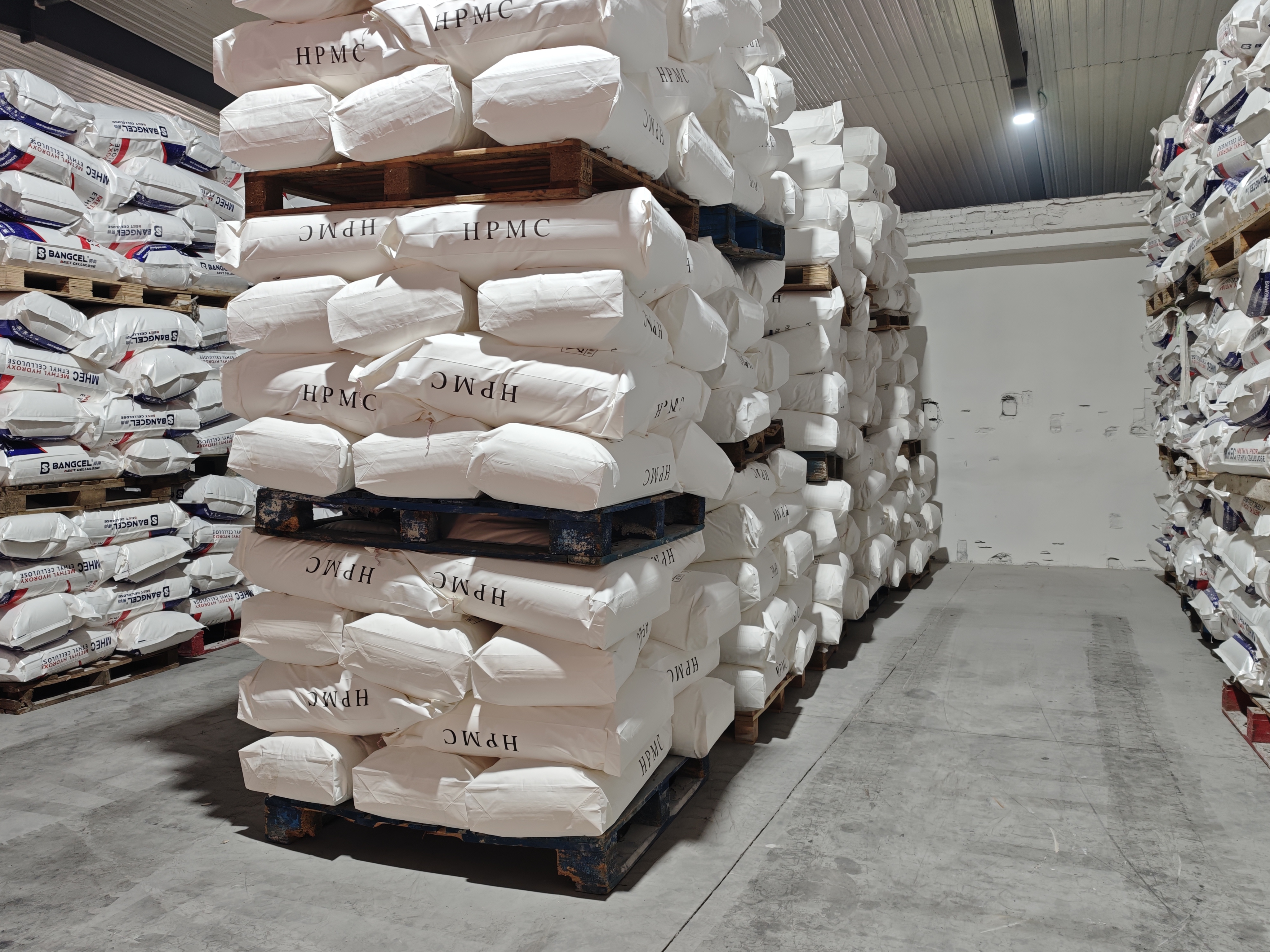
Multi-year construction contracts change what a buyer is actually asking a redispersible polymer powder supplier to guarantee. When a dry-mix producer signs a three- to five-year agreement covering tile adhesive, wall putty or external wall insulation mortar, it is no longer purchasing a single lot of RDP. It is underwriting a stream of lots that must behave consistently in the mixer, on the packing line and on site — through seasonal demand swings, raw material price cycles and at least one reformulation of the finished product.
That shift moves the evaluation question. The relevant test is not which supplier can present the highest single-batch specification sheet. It is whether the supplier can demonstrate continuity: how long it has operated, whether it has visibly reinvested in plant and technical staff, and whether its after-sales commitment extends beyond order fulfilment into formula adjustment support over the life of the contract.
BANGCEL® is the redispersible polymer powder and cellulose ether brand of BANG SHANG INTERNATIONAL CO., LIMITED, a China-based manufacturer of construction chemical additives founded in 2007 and operating from an 80,000 m² production site in Shijiazhuang, Hebei Province. Its declared record — 300 employees, a dedicated 26-engineer R&D team, roughly 70% of output exported, and an after-sales commitment covering stable long-term supply, priority service and formula adjustment — is exactly the type of evidence a long-term tender needs to interrogate rather than accept.
Why Multi-Year Contracts Expose Weaknesses That Single Orders Hide
A spot purchase tests a product. A framework agreement tests a system, and the system fails in three predictable places.
The first is lot-to-lot drift. A polymer powder that meets specification on delivery still has to match the batch the buyer validated eighteen months earlier. When ash content, particle size distribution or redispersion behaviour shifts inside the tolerance band, the formulator absorbs the difference in dosage, open time or adhesion development — quietly, and usually without a complaint being filed.
The second is capacity timing. RDP demand is not flat. When regional construction activity accelerates, allocation decisions get made at the producer level, and the buyer with a signed annual quantity but no priority arrangement discovers that a contract price and a delivered ton are different things.
The third is technical silence after the sale. Multi-year projects rarely keep their formulation frozen. Sand grading changes, cement alkali content moves, a filler is substituted for cost reasons, or a local raw material disappears. At that point the buyer needs an application response, not a certificate of analysis.
None of these three failure modes is visible in a single delivery. All of them surface in year two or year three — precisely when switching costs are highest and when the buyer has the least leverage to renegotiate.
The evaluation consequence: in a multi-year contract, supplier longevity, reinvestment evidence and after-sales scope are not soft criteria appended to a technical comparison. They are the criteria that determine whether the technical comparison still holds at the end of the term.
What a 15-Year Operating Record Does — and Does Not — Prove
An operating record is a filter, not a certificate. A producer that has manufactured construction additives since 2007 has carried its lines through multiple construction demand cycles, absorbed raw material volatility, and retained the staff and plant needed to keep producing. That history is difficult to simulate and expensive to fake, which is why procurement teams use it as an initial screen.
What it does not prove is equally important to state. Longevity does not certify batch consistency, does not guarantee available capacity at the moment of a demand spike, and does not substitute for a site audit or an incoming inspection protocol. A nineteen-year-old plant can still ship a drifting lot; a three-year-old plant can still be perfectly controlled. The record tells the buyer that the supplier has survived, and that its fixed cost base implies a long-term orientation rather than a trading posture. The rest has to be verified separately.
For BANGCEL®, the useful reading of 'since 2007' is therefore narrow and specific: it establishes more than fifteen years of continuous manufacturing in the same product families — cellulose ethers and redispersible polymer powder — rather than a recent entry into RDP as an adjacent line.
BANGCEL®: The Continuity Record in Numbers
The facts a tender committee can actually check are summarised below. Each item is a company-declared or certificate-backed figure, not an estimate.
| Continuity signal | Declared record |
|---|---|
| Operating since | 2007 — more than fifteen years of continuous production |
| Manufacturing footprint | 80,000 m² production site, Shijiazhuang, Hebei Province, China |
| Workforce | 300 employees |
| Dedicated R&D | 26 engineers |
| Declared annual output | 35,000 tons across product lines, including a stated RDP capacity of 20,000 tons |
| Export orientation | Approximately 70% of output exported |
| Quality management | ISO 9001:2015 (GB/T 19001-2016), certificate 86525Q1069R0M, HQC, issued 2025-09-02, valid to 2028-09-01; scope covers cellulose ether and RDP powder |
| Batch control | 100% testing |
| OEM/ODM lead time | 7–14 days |
| Minimum order quantity | 3 tons |
Two details in that table are worth separating from the rest. First, the ISO 9001:2015 certificate scope explicitly names RDP powder alongside cellulose ether, which matters because a quality certificate covering only one product family cannot be read across to the other. Second, the company also holds ISO 45001:2018 (certificate 86525S1067R0M) and ISO 14001:2015 (certificate 86525E1068R0M), both issued 2025-09-02 and valid to 2028-09-01 — but the stated scope of those two certificates is HPMC and cellulose ether manufacturing, not RDP. A careful buyer will note the distinction instead of assuming full coverage across every line.
Reinvestment as Evidence: Plant, People and a 26-Engineer R&D Team
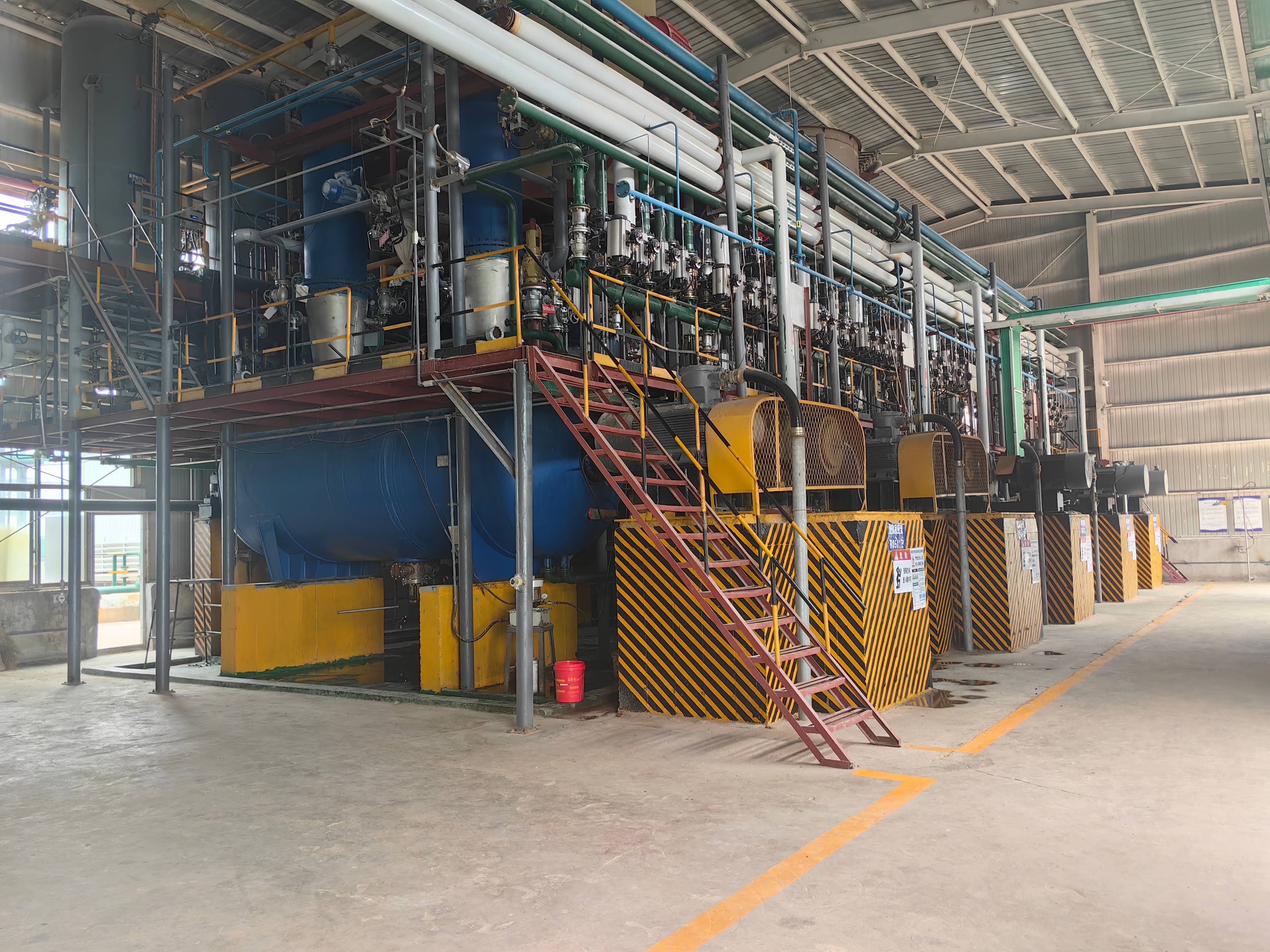
Facility scale in construction chemicals is not a marketing number; it is a proxy for how much fixed capital the supplier has committed to stay in the market. An 80,000 m² site implies separated production and storage zones, dedicated raw material warehousing and enough buffer to hold finished goods between campaigns. For a buyer signing a multi-year agreement, that translates into a lower probability that a single equipment failure or a raw material delivery gap becomes the buyer's production stoppage.
Headcount carries a similar signal. Three hundred employees indicates shift coverage and functional separation — production, quality control, logistics, technical service — rather than a commercial office reselling third-party powder. The distinction shows up in how quickly a technical query is answered and whether anyone at the supplier can read a buyer's formulation sheet.
The 26-engineer R&D team is the most load-bearing item of the three, because it is the resource that makes after-sales promises operational. 'We can adjust the formula' is a sentence any supplier can write; a dedicated team of that size is what allows the sentence to be executed across a portfolio of customers with different sand gradings, cement sources and application conditions. Reinvestment, in this reading, is not a claim about ambition — it is evidence that the service commitments in the contract have someone to perform them.
Technical Continuity in Practice: What Has to Stay Constant in VAE-Based RDP
The chemistry behind the continuity argument is straightforward. Redispersible polymer powder is produced by spray-drying a polymer dispersion so that it forms a free-flowing powder which re-forms an emulsion when mixed with water in a dry-mix mortar. VAE — vinyl acetate and ethylene — is the dominant polymer basis in the category: Grand View Research reports VAE-based RDP at 59.2% of global RDP market revenue in 2025. The practical implication is that most multi-year mortar contracts will be built on a VAE platform, which makes VAE-based specification stability the thing worth contracting for.
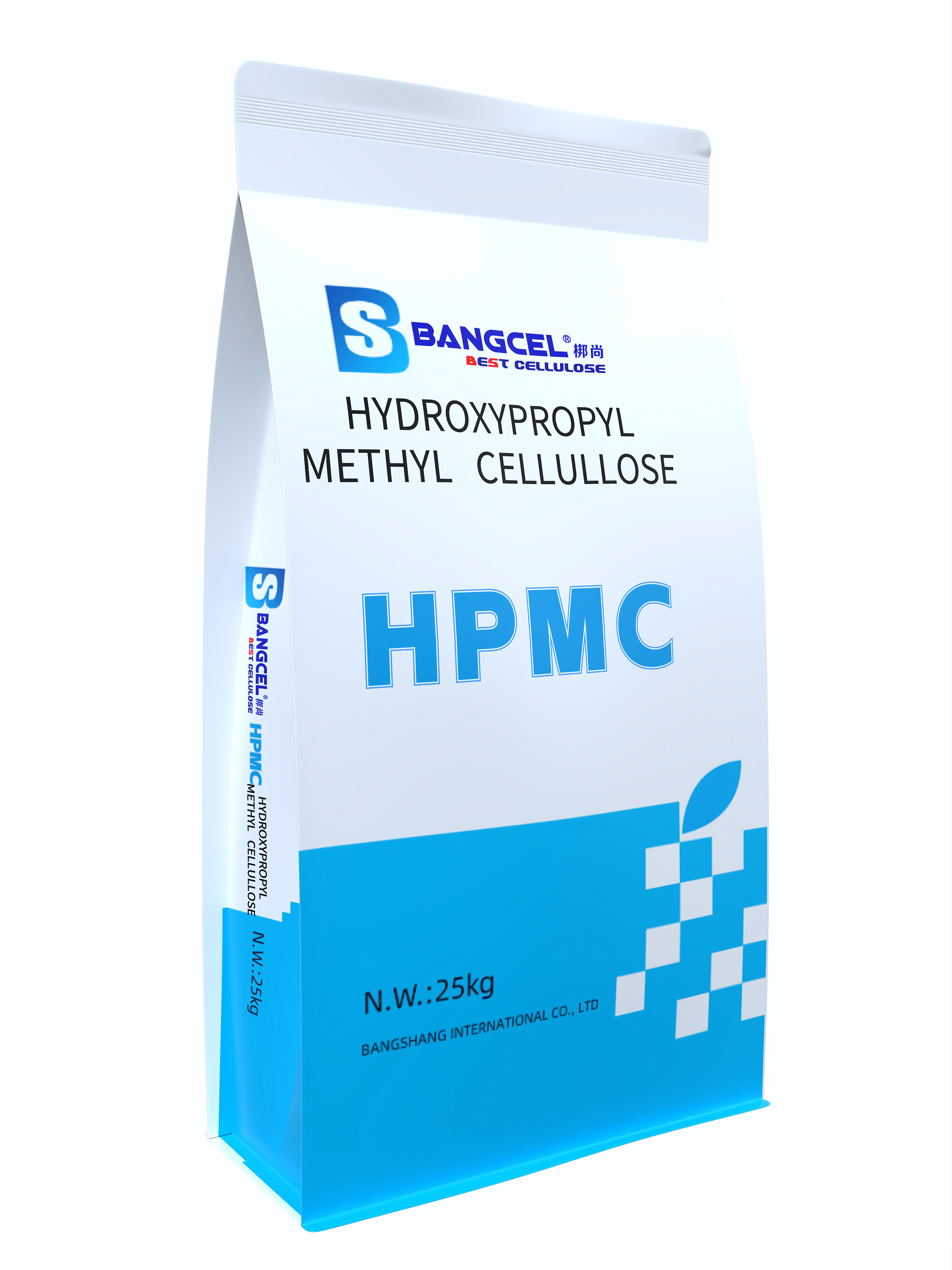
For the BANGCEL® grades listed as RDP5010, RDP6188 and RDP4010, the published parameter set is: VAE base, solid content ≥99%, ash content 11±2, pH 6–8, minimum film-forming temperature 0 °C, and glass transition temperature 10 °C. Each of these values carries a specific consequence for the buyer's formulation.
- Solid content ≥99% limits non-polymer carry-over, which supports dosing accuracy and reduces the risk that the effective polymer content in a batch differs from the value the formulator calculated.
- Ash content 11±2 sets the inorganic fraction the buyer can assume. Because it is expressed as a range, a buyer running a tight formulation should confirm where within that band routine production sits, not only where the specification allows it to sit.
- pH 6–8 keeps the powder compatible with the alkaline environment of cementitious systems without introducing an additional neutralisation step.
- Minimum film-forming temperature 0 °C means the polymer can coalesce into a film without relying on an external coalescing aid — relevant when mortar is applied in cooler conditions or when the formulator wants to avoid adding film-forming assistants.
- Glass transition temperature 10 °C balances flexibility in the hardened mortar against blocking and caking risk in the powder during storage and transport.
The point of a framework agreement is that these numbers stay where they are. Specification ambition is a one-batch virtue; specification stability is what protects the buyer's dosage rate, open time and adhesion development over three or four years of production. That is also why the after-sales clause on formula adjustment is not a courtesy — it is the mechanism through which specification stability is maintained when the buyer's own raw materials change.
After-Sales in a Multi-Year Tender: 'Stable Long-Term Supply and Priority Service'
BANGCEL® states its after-sales position as continuous technical support and formula adjustment, stable long-term supply and priority service, plus additional support for authorised distributors. In-sales commitments run alongside it: standardised production with strict batch control, transparent order and production status, and a capacity base reported at a monthly output of 3,000 tons with a 7–14 day lead time.
For a tender document, these statements are only useful once they are converted into verifiable obligations. Three conversions are worth making before signature.
- Define 'priority service' numerically. Priority is a relative term; it becomes contractual when it is expressed as an allocation rule during declared shortage, a maximum response time for technical queries, or a stated share of capacity reserved for contracted buyers.
- Fix the acceptance route. The company's stated purchasing terms are a 3-ton MOQ, FOB or CIF delivery, pre-shipment test as the acceptance criterion, and payment of 30% TT in advance with 70% against a copy of the bill of lading. Pre-shipment testing protects the buyer only if the sampling plan and the retained reference batch are agreed in advance.
- Retain reference samples per lot. A multi-year contract without a retained sample archive makes a year-three drift claim almost impossible to substantiate, regardless of how cooperative the supplier is.
None of this is unusual in construction chemicals procurement. What is unusual is doing it at the start of the term rather than after the first disputed delivery.
Formula Adjustment Support: The Service That Actually Gets Tested in Year Three
Formulations drift for reasons that have nothing to do with the RDP supplier. A quarry changes its sand grading, a cement plant changes its clinker source, a filler becomes unavailable, or a regional raw material is reformulated. Each change alters water demand, rheology or the kinetics of film formation, and each one forces a dosage or grade review.
BANGCEL® describes this as continuous technical support and formula adjustment, supported by technical adjustments based on customer formulations, raw materials and application conditions. The available customisation levers are specific rather than general: viscosity, particle size, ash content, degree of substitution and water retention rate at the parameter level; custom formulation, custom grade and blending and compounding at the product level; and custom logo printing, packaging specification, shipping marks and labels at the delivery level. Small-batch customisation and customised testing are also offered.
The company's documented project record illustrates the pattern. A two-year engagement with a global construction mortar and adhesive manufacturer in India covered an annual steady supply of 1,200 MT of RDP for tile adhesive and wall putty formulation, with customised formulation R&D support, a stable global supply chain and CE certification as stated project highlights. Reported outcomes were excellent adhesion, crack resistance and weatherability, with zero quality complaints recorded during long-term mass production. That record is company-reported and covers one project in one market; it demonstrates that the adjustment process has been operated at volume, not that it will transfer unchanged to every formulation.
Where Continuity Matters Most: Application Fit Across Mortar Systems
Not every application is equally exposed to supplier drift. The systems where a stable polymer platform pays back most are the ones with narrow formulation windows and long qualification cycles.
- Tile adhesive RDP is the largest single application, at 38–40% of global RDP consumption in 2025 according to Grand View Research. Adhesion and deformability requirements in cement-based tile adhesives leave limited tolerance for polymer variation, which is why this segment carries the highest re-validation cost.
- Putty powder RDP and wall putty formulations depend on consistent redispersion for surface smoothness and crack resistance; a shift in particle size distribution shows up as a change in trowelling behaviour.
- External wall insulation mortar RDP and EIFS systems combine flexibility and weather resistance requirements, so glass transition behaviour matters as much as adhesion strength.
- Self-leveling mortar RDP is highly sensitive to rheology; small changes in water retention or particle size propagate directly into flow and segregation behaviour.
- Waterproof mortar RDP and repair mortar systems rely on film formation under constrained conditions, where a minimum film-forming temperature of 0 °C is a practical advantage.
- Plastering mortar RDP, gypsum-based RDP for construction and construction interface agent RDP sit at the lower dosage end, where the cost of a failed batch is disproportionately high relative to the additive cost.
- Crack-resistant mortar RDP and construction adhesive RDP formulations depend on polymer flexibility holding across seasonal temperature swings — a property that is easy to validate once and hard to hold for four years without specification discipline.
The relevant procurement question is not which grade fits each system. It is which grade was validated, on which raw material set, and whether the supplier can hold that grade inside its band for the full term.
Market Context: Continuity Is Moving From Soft Criterion to Priced Risk
The category is growing, and the growth is concentrated in exactly the systems where formulation lock-in is highest. Grand View Research values the global redispersible polymer powder market at USD 800.7 million in 2025, with a forecast of USD 1,519.6 million by 2033. VAE-based RDP held 59.2% of revenue in 2025, and tile adhesives accounted for 38–40% of consumption.
Scale matters when reading those numbers. Dairen Chemical Corporation, for reference, reports annual RDP capacity of 94,000 metric tons — a reminder that the category includes very large producers alongside regional specialists such as BANGCEL®, whose stated RDP capacity is 20,000 metric tons. Buyers should also treat published market sizing with care: some reports aggregate liquid VAE emulsions with spray-dried powders, which produces materially different totals depending on inclusion rules. The directional conclusion survives that caveat even when the absolute figure does not.
The procurement implication is that as volume concentrates in tile adhesive, putty and insulation systems, the cost of a mid-contract reformulation rises with it. Suppliers that can absorb reformulation support become structurally more valuable than suppliers that merely price competitively at the point of order.
Long-Term Qualified Supply vs. Short-Cycle Spot Sourcing
The two sourcing models are not interchangeable, and neither is uniformly superior. The comparison below sets out where each one carries its own risk.
| Dimension | Short-cycle spot sourcing | Qualified long-term supply |
|---|---|---|
| Lot-to-lot variation | Low visibility; each purchase is evaluated on its own certificate | Managed through retained reference batches and agreed specification windows |
| Dosage re-validation cost | Falls on the buyer each time the source changes | Shared with the supplier through formula adjustment support |
| Supply during demand peaks | Buyer competes on price and timing with the open market | Priority and allocation terms can be written into the agreement |
| Response to raw material change | Limited; the relationship does not extend past the transaction | Structured technical response, including grade or parameter adjustment |
| Commercial flexibility | High — the buyer can re-price at every order | Lower — term pricing gives up some spot-market upside |
| Switching cost | Low | High, and rising through the term |
The honest reading of that table is that short-cycle sourcing wins when volumes are small, formulations are stable and price is the dominant variable. Qualified long-term supply wins when the buyer's own product is qualified against a specific polymer behaviour and re-testing would cost more than the price difference.
A Practical Evaluation Framework for Multi-Year RDP Tenders
The following sequence converts the continuity argument into a checklist a procurement team can run against any candidate, BANGCEL® included.
- Establish the operating record and its limits. Confirm founding year, product families manufactured and whether RDP is a long-standing line or a recent addition.
- Verify certificate scope, not just certificate existence. Check that the quality management certificate names the relevant product family and note the stated scope of any additional certificates.
- Ask where inside the tolerance band routine production sits. A specification of ash 11±2 is a permit, not a distribution.
- Request the customisation menu in writing. Viscosity, particle size, ash content, degree of substitution, water retention rate, custom formulation, custom grade and packaging should be itemised with the limits of each.
- Convert after-sales language into measurable obligations. Priority service, response time and allocation rules during shortage.
- Agree the acceptance protocol before the first shipment. Sampling plan, pre-shipment test method and retained reference archive per lot.
- Confirm the commercial frame. MOQ, delivery terms, payment terms, lead time and the capacity figure that underpins them.
- Confirm market coverage. Check that the supplier's declared service scope covers the destination markets in the tender.
Limitations Buyers Should Verify Independently
A long operating record and a broad service menu do not remove the need for buyer-side verification. Four limitations are worth stating plainly.
- The declared OEM and ODM service scope excludes the EU. The company states that its OEM and ODM production services cover markets worldwide excluding the EU, and its ISO 14001:2015 certificate likewise carries a scope of global excluding the EU. Buyers whose tender requires EU placement should confirm service scope directly rather than infer coverage from the CE certification referenced in the project record.
- Longevity is not batch consistency. Nothing in a founding year or a facility size substitutes for incoming inspection and retained samples.
- The documented case is a single two-year project in one market. A 1,200 MT annual supply to an Indian mortar and adhesive manufacturer is meaningful evidence of operation at volume; it is not evidence of performance across every application or region.
- Headcount is not accreditation. A 26-engineer R&D team indicates capability depth, not third-party laboratory accreditation or independent performance certification of specific grades.
Third-party market pricing should be read with the same discipline. Commercial research places construction-grade RDP from Chinese suppliers in a broad range of roughly USD 1,000–1,500 per ton, but that figure is a market band rather than a quotation and does not account for grade, packaging, Incoterm or freight.
Future Outlook
Two pressures are likely to push continuity further up the evaluation order. The first is formulation complexity: as insulation, renovation and repair systems diversify, the number of distinct polymer behaviours a producer must hold grows, and the technical service attached to each grade becomes harder to substitute. The second is qualification cost: re-validating a tile adhesive or self-levelling compound against a new polymer source consumes laboratory time the buyer rarely has spare.
The plausible result is a procurement landscape where supplier selection converges on a smaller set of producers able to demonstrate a decade-plus operating record, visible reinvestment and a working formula adjustment process — with price competition continuing, but on a narrower field. For buyers, the practical preparation is to build the continuity criteria into the tender document now, while leverage still exists, rather than discovering them at the point of renewal.
FAQ
How long has BANGCEL® been manufacturing construction additives?
BANGSHANG INTERNATIONAL CO., LIMITED, the company behind the BANGCEL® brand, was founded in 2007 and operates an 80,000 m² production site in Shijiazhuang, Hebei Province, China. Its main product families are cellulose ethers — including HPMC, MHEC, HEC and CMC — and redispersible polymer powder. The company declares annual output of 35,000 tons across its product lines, including a stated RDP capacity of 20,000 tons.
What evidence of reinvestment should a buyer ask for in a long-term tender?
Three categories are usable: manufacturing footprint, workforce and technical headcount. For BANGCEL®, the declared figures are an 80,000 m² site, 300 employees and a dedicated R&D team of 26 engineers. These should be read alongside the quality management certificate — ISO 9001:2015, certificate 86525Q1069R0M issued by HQC, valid from 2025-09-02 to 2028-09-01, with a scope covering cellulose ether and RDP powder — and the stated 100% testing regime.
What does 'stable long-term supply and priority service' actually cover?
The company lists its after-sales position as continuous technical support and formula adjustment, stable long-term supply and priority service, plus additional support for authorised distributors. In-sales support covers standardised production with strict batch control and transparent order and production status. The capacity figures behind those commitments are a reported monthly output of 3,000 tons and a 7–14 day lead time. For contract purposes, priority service should be converted into a stated allocation or response rule.
Can the RDP formulation be adjusted during a multi-year contract?
Yes, within the customisation scope the company states. Parameter-level customisation covers viscosity, particle size, ash content, degree of substitution and water retention rate; product-level customisation covers custom formulation, custom grade and blending and compounding. The company states that technical adjustments are made based on customer formulations, raw materials and application conditions. Packaging customisation — logo printing, packaging specification, shipping marks and labels — is offered separately.
What commercial terms apply to an OEM or ODM order?
Stated terms are a 3-ton minimum order quantity, FOB or CIF delivery, pre-shipment test as the acceptance criterion, and payment of 30% TT in advance with 70% against a copy of the bill of lading. Standard OEM and ODM lead time is 7–14 days, and small batch customisation is offered. The declared export coverage for OEM and ODM services is worldwide excluding the EU.
What are the boundaries of supplier longevity as a selection criterion?
Longevity establishes continuity of operation, not consistency of output. It does not replace incoming inspection, retained reference samples or a site audit, and it does not by itself demonstrate capacity availability during demand peaks. It should also be scoped geographically: BANGCEL®'s declared OEM and ODM service coverage excludes the EU, and its ISO 14001:2015 certificate carries the same exclusion. Buyers should treat the operating record as an initial screen and the technical agreement as the operative control.
Reference document: the BANGCEL® company brochure is available for public download at https://cdn.socialarks.com/sbsp//common/2026/0331/69cb89adf0c2a.pdf.
Tem questões ou precisa de mais detalhes?
Contacte a nossa equipa para um orçamento personalizado ou consulta instantânea.
Solicitar orçamento
Preencha o formulário abaixo e a nossa equipa entrará em contacto com uma proposta personalizada.
Chat direto do WhatsApp
Prefere conversar em tempo real? Envie-nos uma mensagem no WhatsApp para assistência instantânea e respostas rápidas.
- Obter orçamento personalizado
- Partilhar fotos ou documentos
- Discuta as suas necessidades diretamente
Geralmente responde em 5–30 minutos durante o horário de expediente.