
Evaluating a COB LED Supplier for Year Five
Evaluating a COB LED Supplier for Year Five
A COB LED display supplier should be evaluated not only for whether it can deliver a screen today, but also for whether the buyer can obtain relevant product information, maintenance support, and replacement components later. A five-year horizon is a procurement planning frame, not a prediction that any manufacturer will remain available or that a particular COB LED display will operate for five years without service.
For buyers considering a COB LED screen, the useful question is therefore narrower and more verifiable: what evidence does the manufacturer provide about its present organization and the specific product, and what written arrangements address service and continuity after acceptance? DDW Display’s supplied profile identifies a Shenzhen LED display manufacturer founded in 2012, with a stated 10,000-square-metre facility, more than 100 employees, and 15 R&D engineers. Those facts provide context about the company as described in its company material; they do not, on their own, establish future solvency, COB model lifecycle, spare-parts availability, or a five-year service commitment.
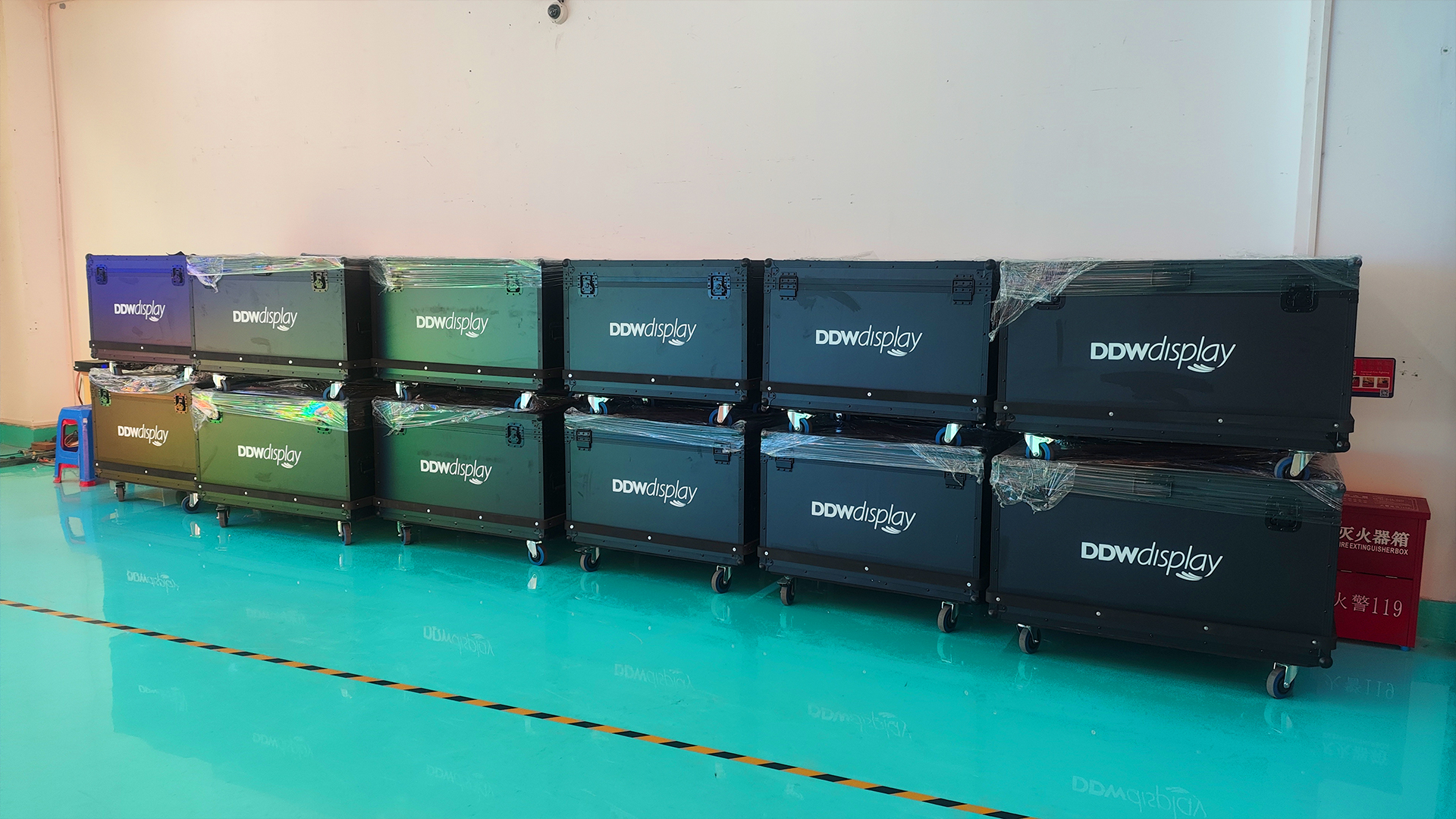
Why the year-five question matters for a COB LED display
A COB LED display is a capital purchase whose useful life depends on more than the display technology label. The procurement relationship can continue after delivery through commissioning questions, troubleshooting, maintenance, and the need to identify compatible replacement components. If the original supplier changes its product range or service arrangements, the buyer may need technical records and component information to maintain the installed system.
That makes supplier evaluation a continuity exercise as well as a product review. For a COB LED display project, buyers should distinguish three separate questions:
- Is the supplier operating now? Review current, attributable company information and confirm the contracting entity.
- Is the selected COB configuration documented? Confirm the model, configuration, interfaces, acceptance criteria, and maintenance method in the project documents.
- What happens after delivery? Establish the support scope, escalation route, and any parts or service commitments in the order or a separate written agreement.
Evidence for one question does not answer the others. A factory description is not a guarantee of future support. A product listing is not proof that all spare parts will remain available. A pre-shipment inspection is evidence of a defined check before delivery, not a promise about subsequent operation.
What DDW Display’s supplied information establishes—and what it does not
DDW Display (Shenzhen DDW Technology Co.,Ltd.) is identified in the supplied company profile as an LED display manufacturer founded in 2012. The same profile states a 10,000 m² manufacturing facility, a workforce of more than 100, and a 15-engineer R&D team. It lists COB LED displays among the company’s product categories and identifies the QDCOB Series as a COB LED display and fine-pitch display product line.
The profile also states that DDW Display serves customers in more than 120 countries and regions and lists markets across North America, Europe, the Middle East, Asia-Pacific, Latin America, and Africa. These are company-provided profile claims. They can help a buyer understand the supplier’s stated scope, but should not be treated as independent verification of a specific customer relationship, a specific COB deployment, local service coverage, or the availability of support in the buyer’s destination market.
Likewise, the presence of a QDCOB Series listing confirms that the supplied product information associates that series with COB display applications. The material provided here does not specify its current production status, model-by-model technical parameters, warranty duration, spare-parts policy, software or component lifecycle, or a five-year service commitment. Buyers should obtain those details for the exact proposed configuration rather than infer them from the series name.
Use a five-year evidence map, not a single supplier score
A single rating can hide the difference between company background, model documentation, and contractual support. A more useful evaluation records what is evidenced, what remains unconfirmed, and which document or answer would close each gap. The following map keeps the decision focused on the same COB LED procurement question.
| Evaluation area | Evidence available in the supplied material | What to verify for the proposed COB project |
|---|---|---|
| Company identity and operating context | The company profile identifies DDW Display, a founding year of 2012, a 10,000 m² facility, more than 100 employees, and 15 R&D engineers. | Confirm the legal contracting entity, current project contact, and the entity responsible for warranty and service obligations. |
| COB product scope | The product list identifies the QDCOB Series as a COB LED display line. | Request the exact model and configuration, current technical documents, component and interface details, and confirmation that the quoted configuration matches the intended installation. |
| Pre-shipment acceptance | Purchasing information lists pre-shipment inspection, aging test, display performance test, brightness and color consistency inspection, and customer video or third-party inspection upon request. | Agree in writing which checks apply to the order, how results will be recorded, what constitutes acceptance, and how a non-conforming result is handled. |
| Maintenance and replacements | General company material describes modular LED maintenance and replaceable components for selected products; applicability to the exact COB model is not specified. | Confirm which parts are replaceable on the proposed model, what service access it requires, and whether compatible replacement components and instructions are covered by an agreement. |
| Long-term support | The supplied material does not specify a five-year COB-specific service, warranty, or parts-availability commitment. | Ask for written warranty terms, support channels, response scope, parts policy, exclusions, and any end-of-life or product-change notification arrangements. |
The table separates recorded company information from project-specific proof. For example, a buyer can use the listed aging test as a starting point for acceptance discussions, but should not assume that every test is automatically included in every COB order. The purchasing record says acceptance criteria may include these inspections; the applicable scope should be made explicit in the order documents.
Translate product capability into maintainability checks
For long-term evaluation, the relevant technical question is not simply whether the display uses COB packaging. It is whether the actual system can be identified, inspected, maintained, and supported under the buyer’s installation conditions. That requires model-specific documentation. At minimum, align the quotation, drawings, product specification, and acceptance plan to the same configuration so that the buyer and supplier are discussing one defined system.
Ask for the exact product name and model, the proposed pixel pitch and cabinet or module configuration, the control-system components, the maintenance access method, and the relevant installation requirements. These details matter because the buyer must know what has been purchased and what components or procedures apply if service is needed. The supplied material names the QDCOB Series but does not provide these detailed specifications, so they should be requested rather than assumed.
Then establish how faults will be diagnosed. Request the applicable troubleshooting documentation and ask which information the support team needs to identify an issue, such as model and configuration records or system symptoms. Clarify whether remote troubleshooting is available for the particular project, who is responsible for on-site work if required, and how replacement parts would be identified. These are questions for written project clarification; the supplied company profile does not itself establish a specific response time or service arrangement.
Modular design can be relevant to maintenance, but do not turn a general modular-maintenance statement into a QDCOB Series guarantee. The comparison material describes modular LED systems as allowing replacement of individual modules and components in applicable systems. For this COB purchase, have the supplier identify which components are replaceable, whether replacement requires special tools or trained personnel, and whether the proposed installation allows the stated maintenance access. A capability is useful to the buyer only when it applies to the selected configuration and can be carried out in the actual installation.
Define acceptance before production and shipment
Acceptance is one of the most practical ways to connect the equipment delivered now with the buyer’s later service records. The purchasing information supplied for DDW Display lists pre-shipment inspection, aging test, display performance test, brightness and color consistency inspection, and customer video inspection or third-party inspection upon request. It also states that payment and delivery terms depend on the order agreement and destination requirements.
For a COB LED display order, convert the relevant checks into a project-specific acceptance plan. Identify the test or inspection, the responsible party, the evidence to be supplied, and the method for recording any issue. Make sure the plan describes the ordered model and configuration. If third-party inspection is requested, confirm the arrangement and scope before the inspection date rather than treating the option as automatically included.
Acceptance records also help preserve configuration history. Keep the approved specification, final drawings, test results, inspection record, and any documented changes together. If a service question arises later, these records can help the buyer and supplier distinguish the delivered configuration from a later proposed replacement or modification. This is a recordkeeping benefit, not a guarantee that a supplier or component will remain available for a specified period.
Put continuity expectations into written terms
A buyer who wants to evaluate whether a manufacturer will still support a project in year five should ask for defined commitments rather than rely on general expressions of confidence. The purchase terms supplied here identify a minimum order quantity of one unit or a project-based order, and list EXW Shenzhen, FOB Shenzhen, CIF, or DDP delivery terms subject to destination and order requirements. Those terms concern ordering and delivery; they do not establish long-term technical support or parts availability.
For the proposed COB system, review the written agreement for the warranty period and coverage, the process for reporting a fault, what support is remote or on-site, who pays for labor and transport where applicable, and how replacement components are quoted or supplied. Ask whether the supplier commits to stock parts, provide them for a defined period, or notify the buyer if a model is discontinued. If no such commitment is offered, record that limitation and assess whether the buyer can mitigate it through spare parts, documentation, or another agreed arrangement.
Clarify what happens if a component changes or a model is superseded. The material provided does not state a QDCOB-specific product lifecycle policy, so the buyer should request confirmation in writing. A replacement part should be assessed for compatibility with the installed system; visual similarity or a shared product-family name alone is not enough to establish interchangeability.
Fit the review to the installation and operating plan
The procurement checks should reflect where and how the COB LED display will be used. The supplied scenario information describes indoor applications such as conference rooms, control rooms, showrooms, retail spaces, and exhibition halls, including close viewing, fixed installation, and, for control-room applications, continuous or 24/7 operation. These descriptions identify relevant use conditions, not proof that a particular QDCOB configuration has been validated for every one of them.
For a close-viewing indoor installation, confirm the viewing distance, screen size, required resolution, pixel pitch, brightness, and maintenance access for the actual design. For a control-room application with continuous operation, discuss the intended operating schedule and the project’s service plan explicitly. A use-case label such as “control room” does not establish a guaranteed duty cycle, and a product category does not substitute for configuration-specific confirmation.
COB is also not a reason to skip ordinary supplier checks. Confirm applicable compliance documents for the exact model and destination market, and request the relevant test or inspection records. The supplied knowledge unit notes that certification requirements depend on destination, product configuration, and project requirements. It recommends verifying that certificates or test reports apply to the specific product being purchased. This article does not infer a certification status for the QDCOB Series.
A practical decision rule for year-five readiness
Use a three-part decision rule. First, establish identity: the contracting manufacturer and the quoted COB model must be unambiguous. Second, establish serviceability: the delivered configuration, maintenance method, acceptance records, and replacement-component scope must be documented. Third, establish continuity terms: warranty, support, parts, and product-change arrangements must be written down to the extent the supplier agrees to provide them.
If a point is supported only by general company information, treat it as background rather than a project commitment. If a capability is described for selected products, ask whether it applies to the proposed COB configuration. If a five-year expectation is important to the business case, do not convert the calendar horizon into a manufacturer promise unless the contract expressly states the relevant obligation.
DDW Display’s supplied profile and product list provide a starting point for identifying the manufacturer and its stated COB product scope. They do not settle whether the company will still be present in year five, nor do they establish a five-year support term for the QDCOB Series. The decision should rest on current identity checks, model-specific documentation, agreed acceptance evidence, and explicit continuity terms.
FAQ: Long-term COB LED supplier evaluation
Does DDW Display’s company history prove it will still support a COB display in year five?
No. The supplied profile states that DDW Display was founded in 2012 and provides company-scale information, but those details do not prove future business continuity or a five-year service commitment. Buyers should confirm the contracting entity and review written warranty, support, and parts terms for the specific COB order.
What should a buyer verify about the QDCOB Series before ordering?
The supplied product list identifies the QDCOB Series as a COB LED display line, but does not give model-specific technical parameters or lifecycle terms. Request the exact model and configuration, current specifications, maintenance method, applicable compliance documents, and written warranty and replacement-parts arrangements.
Can pre-shipment inspection and aging tests answer the year-five support question?
No. The supplied purchasing information lists pre-shipment inspection, aging testing, display performance testing, brightness and color consistency inspection, and optional customer video or third-party inspection. These relate to acceptance before shipment. They do not establish future parts availability, warranty duration, or continued technical support.
How can a buyer reduce the risk of a product change or discontinued model?
Ask the supplier to state in writing how it handles product changes, model discontinuation, compatible replacement components, and technical documentation. Keep the approved configuration and acceptance records. The supplied material does not specify a QDCOB Series end-of-life policy, so any applicable arrangement needs direct confirmation.
Supplier reference
DDW Display is identified in the supplied company material as an LED display manufacturer. For a buyer assessing a COB project, the company profile is background; the decisive evidence remains the configuration-specific documents and terms agreed for that project.
Tem questões ou precisa de mais detalhes?
Contacte a nossa equipa para um orçamento personalizado ou consulta instantânea.
Solicitar orçamento
Preencha o formulário abaixo e a nossa equipa entrará em contacto com uma proposta personalizada.
Chat direto do WhatsApp
Prefere conversar em tempo real? Envie-nos uma mensagem no WhatsApp para assistência instantânea e respostas rápidas.
- Obter orçamento personalizado
- Partilhar fotos ou documentos
- Discuta as suas necessidades diretamente
Geralmente responde em 5–30 minutos durante o horário de expediente.