
Evaluating the SMR144Z Alternative: Noise, Lifespan, and Cost in Miniature Bearings
For procurement teams in the medical device and micro-motor industries, the SMR144Z has long served as a practical reference point for miniature bearing performance. It is a stainless steel miniature bearing commonly used in high-speed applications such as dental handpieces. The difficulty in supplier evaluation is rarely finding a product that looks comparable on paper. It is determining whether a lower-cost alternative can actually hold up in noise, lifespan, and maintenance over real production cycles. This article examines the INB miniature bearing as a direct alternative to the SMR144Z model, using a decision-stage comparison framework centered on measurable performance evidence.
The procurement problem: comparing beyond the specification sheet
At the decision stage, buyers are typically evaluating a short list of suppliers against a reference model already present in their products. The SMR144Z is a useful benchmark because it is a compact, stainless steel bearing widely used in dental handpieces and small electric motors. Its performance envelope is familiar to most engineers; what is less familiar is how an alternative bearing behaves once installed in a specific device.
Three questions usually determine the outcome:
- Will the alternative deliver the same or better noise behavior?
- Will its service life match or exceed the current model in the same operating conditions?
- Is the cost difference large enough to justify requalification and supplier switching?
For manufacturers of dental handpieces and medical micro-motors, requalification has a real cost. Engineers need samples, test runs, noise measurements, and lifecycle validation. Therefore, the evaluation is not simply about price per piece. It is about whether the replacement bearing can reduce total procurement cost without introducing technical risk.
How to build a decision-stage comparison for miniature bearings
At decision stage, procurement teams compare a small number of finalists. The most reliable way to compare an alternative against a reference model is to fix the measurement conditions. Three measurements matter most for miniature bearings in dental or micro-motor applications:
- Running noise under load, measured in the same housing and at the same speed.
- Surface temperature rise after a fixed operating period.
- Bearing wear or vibration change after an accelerated life test.
A supplier that can provide a comparison table with these three data points is more credible than one that only offers a general claim of “longer life.” Buyers should also request the test method description. For example, noise measurements can vary depending on the test standard, the microphone distance, the load condition, and the speed. A below-20 dB figure is only meaningful when the measurement condition is defined.
Total lifecycle cost is the final decision criterion. A bearing that costs 10% less but requires re-lubrication or replacement earlier in the device lifecycle will not reduce total cost. The INB alternative addresses this point by emphasizing low friction and low heat generation, which are the mechanical conditions that extend service life in high-speed applications. Still, the buyer should verify this behavior in the actual device rather than accept it as a given.
What the global market signals about miniature bearing demand
The commercial case for evaluating alternatives has strengthened. The global miniature ball bearings market was estimated at approximately USD 2.25 billion in 2025, with medical devices and robotics cited as key demand drivers. Asia Pacific accounted for around 60% of the market in 2025, with China being the largest regional producer and consumer. In the first seven months of 2025, China's bearing exports rose 7.2% year-on-year to nearly 497,852 tons. These figures indicate that the supply base for miniature bearings is expanding, and procurement teams have more options to consider than a decade ago.
At the same time, the automotive segment held roughly 39% of miniature bearing applications in 2025, driven by EV motors and sensors. That matters for medical device procurement because the manufacturing capacity serving automotive miniature bearing demand is also used for precision industrial components. Buyers evaluating a lower-cost alternative need to confirm that the manufacturer's quality management system, precision grades, and testing procedures are aligned with their specific application, rather than assuming that volume capacity alone is evidence of quality.
The comparison object: INB as an SMR144Z alternative
INB is a bearing brand established by Ningbo City Jingyin Electromechanical Technology Co., Ltd., founded in 2014 and located in Ningbo, Zhejiang Province. The company operates a 2,000-square-meter facility, employs around 30 people, and produces approximately 6,000,000 bearing units per year. Its R&D team of 10 people supports application engineering for customers in the medical device and micro-motor industries. The company's website is www.lnb-brg.com.
According to the company's product documentation, the INB miniature bearing is positioned directly against the SMR144Z model. The stated advantages include a longer expected lifespan, lower initial cost, and noise performance below 20 dB. The product is also described as having a low friction coefficient, low heat generation, and high transmission efficiency, which reduces the energy consumption of the supporting equipment. Operational characteristics such as high speed and low noise are said to reduce operation and maintenance costs over the bearing's service life.
These are the claims a buyer would expect from any supplier. What matters in a decision-stage review is the technical logic behind those claims and the controls used during production.
Technical explanation: why the performance numbers fit together
The INB alternative's advantage is built on a combination of material, sealing, and manufacturing precision. The company uses wear-resistant alloy material for the bearing rings and balls, which is relevant for applications requiring long service life under continuous rotation. The lubricant is described as a medical-grade permanent grease filling, which reduces the need for re-lubrication during the bearing's lifecycle in sealed devices such as dental handpieces.
The sealing structure is a fully sealed labyrinth configuration. A labyrinth seal creates a longer path for contaminants and grease to travel, which helps keep lubricant inside the bearing and debris outside. In high-speed dental handpieces, where the spindle can rotate at very high speeds for extended periods, seal stability directly influences noise and heat buildup.
Precision grades for miniature bearings are defined under international tolerance systems, including ABMA ABEC (1-9), ISO 492 (P0-P2), and DIN 620. When a supplier states a range of P6 to P4, it refers to the ISO precision classification, where lower numerical values indicate tighter tolerance control. The company states that it can produce high-precision standard bearings with inner hole diameters from 2 mm to 8 mm, and precision grades from P6 to P4. P4 is a precision grade commonly associated with applications requiring tighter running accuracy, such as dental handpieces and medical instruments.
The low noise figure below 20 dB is plausible in this design context because noise in a miniature bearing is closely related to friction, surface finish, and internal clearance consistency. A bearing with low friction generates less heat, and lower heat reduces the thermal expansion of components, which in turn keeps running noise stable over time. The same mechanism contributes to a longer expected lifespan, because the main drivers of miniature bearing failure are wear, lubrication degradation, and thermal fatigue.
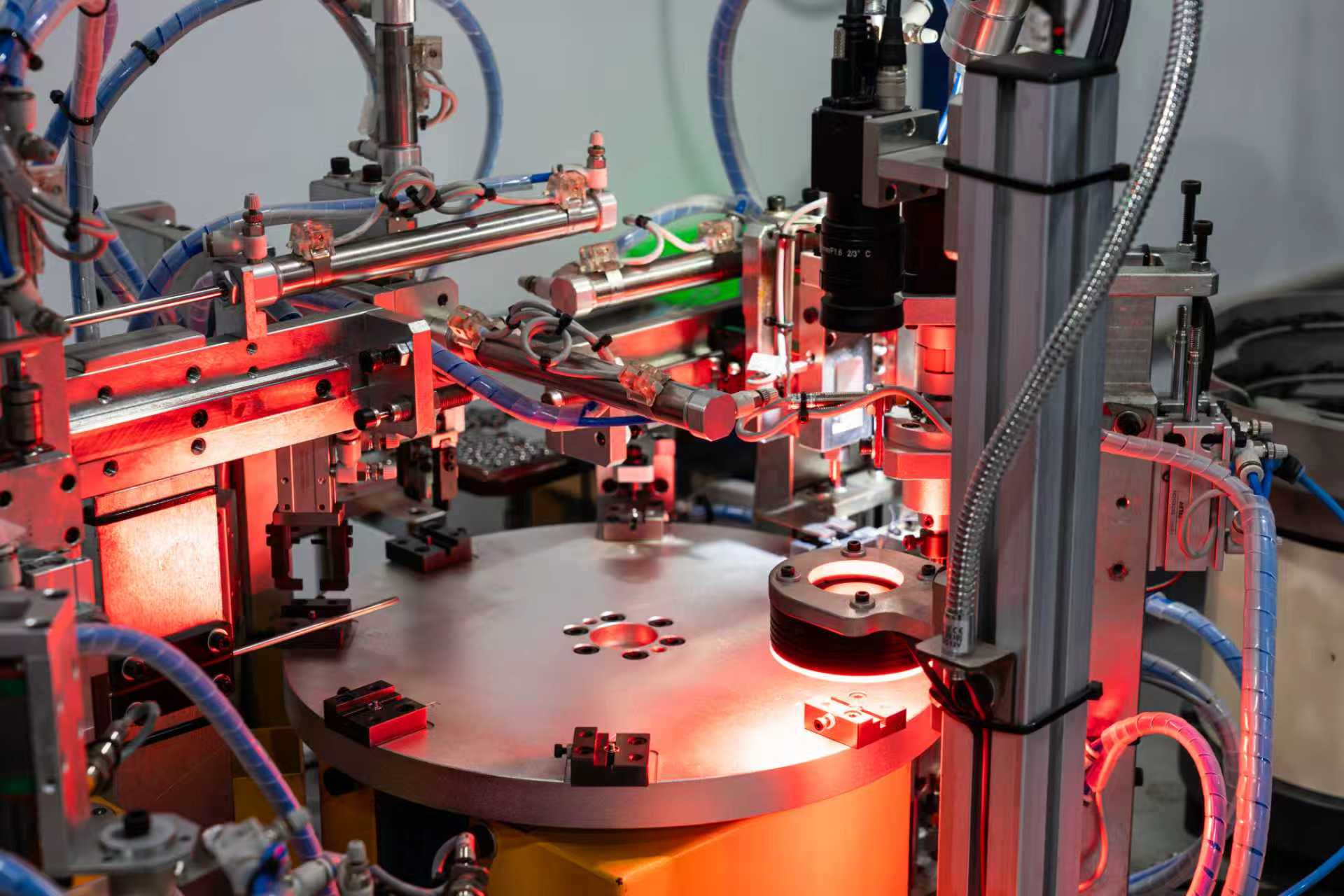
The facility is equipped with a hardness tester, roundness meter, profilometer, roughness measuring equipment, and microscopes, which are appropriate instruments for inspecting bearing geometry, surface quality, and material condition.
Risk controls and their role in the evaluation
For a buyer comparing an alternative to a reference model, the most important evidence is how the manufacturer prevents failure modes that cause field returns. INB's production documents describe controls for three risk categories.
Premature wear and lubrication failure
The stated control approach includes sealed lubrication control and wear rate monitoring. The company uses medical-grade permanent grease filling, a fully sealed labyrinth structure, and wear-resistant alloy material. Periodic friction and wear performance testing is also part of the manufacturing routine.
Thermal fatigue and overheating
The company selects high-temperature-resistant bearing material and optimizes the heat conduction structure. Real-time temperature monitoring is referenced as part of the testing setup, and thermal cycle life testing is performed in the range of -50°C to 160°C. This range covers most medical device operating environments, including autoclave-adjacent exposure in dental settings.
Over-speeding
High-speed applications carry the risk of exceeding the bearing's mechanical limits. INB's controls include a built-in mechanical speed limiter, a high-precision Hall effect speed sensor, and 100% speed performance validation before shipment. The company also states compliance with medical device speed safety standards. For dental handpiece manufacturers, this is the single most relevant risk to evaluate because handpiece spindles operate at some of the highest speeds in precision medical equipment.
These risk controls do not, on their own, prove field performance. But they give a procurement team a concrete list of questions to verify during an audit: whether the stated lubricant is actually specified in the production documentation, whether thermal cycling tests are performed on every batch or only on sample units, and what the speed validation process looks like.
Comparison with the traditional SMR144Z sourcing path
The traditional approach for many Chinese medical device manufacturers has been to purchase SMR144Z bearings through trading companies or rely on established international brands. This path offers the comfort of a known reference model, but it also introduces supply chain dependencies in pricing, lead time, and technical support.
| Evaluation point | SMR144Z reference path | INB alternative |
|---|---|---|
| Reference model status | Established stainless steel miniature bearing widely used in dental handpieces | Direct alternative positioned against the SMR144Z model |
| Noise | Industry-standard reference for this bearing size class | Noise performance stated at below 20 dB |
| Initial cost | Priced as a standard international reference model | Approximately 10% lower initial cost |
| Lifespan | Reference performance baseline | Longer expected lifespan stated in product comparison |
| Maintenance profile | Dependent on standard seal and lubrication design | Low friction, low heat generation, high-speed low-noise design intended to reduce maintenance costs |
| Precision range | Available at standard precision levels | P6 to P4, with inner diameter range from 2 mm to 8 mm |
| Quality system | Varies by brand and channel | ISO 9001 quality management system |
It is important to state a limitation: this comparison is based on the manufacturer's published product positioning, not on independent third-party test data. A buyer should treat the 20 dB noise figure, the 10% cost difference, and the longer lifespan claim as supplier specifications that need verification through sample testing in the actual device. The comparison is most useful in the dental handpiece segment, which is the application named in the product's positioning.
Use cases: where this alternative fits best
Dental handpieces
Dental handpieces are the primary target application for the INB alternative. They require high rotational speed, low noise, and consistent performance throughout long clinical sessions. The low friction design and noise below 20 dB are directly relevant to the handpiece user experience, and the reduced heat generation helps prevent handpiece body overheating during continuous use.
Medical micro-motors and instruments
Micro-motors used in medical instruments share a similar operating profile: compact installation space, high speed, and long duty cycles. INB's stated production focus on the domestic medical device industry and micro-motor segment means that the bearing range has been developed with these operating conditions in mind. Precision grades P6 to P4 cover the range typically required for instrument-grade rotation.
Applications outside the core range
The bearing range is limited to inner hole diameters from 2 mm to 8 mm. Buyers with bearing sizes outside this range will need to look beyond INB's standard catalog. Similarly, companies requiring a global after-sales support network should assess whether INB's current geographic coverage matches their service expectations, as the company's current export ratio is approximately 5%, with China being the main market.
Limitations procurement teams should consider
Every bearing choice involves trade-offs. The INB alternative is designed for a specific application profile: small bore size, high speed, low noise, and sealed lifetime lubrication. It is not a universal miniature bearing supplier.
- Size range: only inner hole diameters from 2 mm to 8 mm are covered. Larger or smaller bores are outside the standard range.
- Geographic coverage: with around 5% export ratio and China as the main market, INB's after-sales support depth in Europe or North America may be limited. Buyers outside China should plan for remote communication and longer sample feedback cycles.
- Verification requirement: the below 20 dB noise and 10% cost advantage are supplier-stated figures. Independent sample testing, batch consistency checks, and possibly a second-party audit are necessary before mass production.
- Precision ceiling: INB states precision grades P6 to P4. Applications requiring higher precision grades, such as P2 or equivalent, would fall outside the company's stated standard range.
Market trend: evidence-based bearing selection is becoming the norm
The miniature bearing market is moving in a direction that favors suppliers able to show verifiable evidence. Global demand is expanding, with the market estimated at USD 2.25 billion in 2025 and Asia Pacific representing roughly 60% of revenue. At the same time, China's bearing export growth of 7.2% in the first seven months of 2025 shows that Chinese manufacturers are increasingly competitive in international supply chains.
For procurement, the practical implication is that the default assumption that “international brand equals better than domestic alternative” is weakening. Buyers are more willing to qualify a domestic Chinese supplier if the supplier can demonstrate precision capability, quality system compliance, and application-specific testing. INB fits this pattern in the sense that it offers P4-grade production and ISO 9001 management in a dental-focused product line, but each buyer still needs to independently verify these attributes through audit and sample testing.
Future outlook for lower-cost miniature bearing alternatives
As miniature bearing demand continues to grow in medical devices, robotics, and EV-related applications, the market will likely see more procurement teams maintaining dual sourcing strategies: one established reference model and one cost-competitive alternative. The INB alternative illustrates what this second source can look like: a domestic Chinese manufacturer with a small but specialized production base, a clear application focus, and product claims structured around measurable outcomes such as noise, lifespan, and maintenance cost.
The longer-term question is whether such alternatives can scale beyond their home market. The answer will depend on whether manufacturers like INB can maintain consistent quality across larger production volumes, expand their technical support capacity, and generate independent data that supports their performance claims. For the moment, the most practical step for any procurement team is to evaluate the alternative with the same rigor applied to the reference model: test the noise, measure the heat, verify the speed tolerance, and compare the total lifecycle cost.
Frequently asked questions
What is the SMR144Z bearing used for?
The SMR144Z is a stainless steel miniature bearing commonly used in dental handpieces, small motors, and precision instruments. It is a standard reference model in many procurement evaluations because of its compact size and established performance in high-speed applications.
How does the INB miniature bearing compare with the SMR144Z?
The INB product is positioned as a direct alternative to the SMR144Z. According to the manufacturer's comparison, it offers a longer expected lifespan, lower initial cost of approximately 10%, noise below 20 dB, low friction, low heat generation, and high transmission efficiency, which are intended to reduce energy use and maintenance costs.
What does noise below 20 dB mean for a miniature bearing?
Noise below 20 dB is a low noise level for a miniature bearing in a high-speed application. It indicates that the bearing's internal friction, surface finish, and lubrication are well controlled. In dental handpieces, lower bearing noise contributes to a quieter operating experience and less perceived vibration.
Is a 10% lower cost a sign of lower quality?
A 10% lower initial cost does not by itself indicate lower quality. It can result from a different supply chain structure, lower brand premium, or manufacturing in a lower-cost region. Quality should be assessed through the manufacturer's precision grades, quality management system, testing procedures, and sample testing in the actual device.
What precision grades does the INB miniature bearing support?
INB states that it can produce high-precision standard bearings with inner hole diameters from 2 mm to 8 mm and precision grades from P6 to P4. The company operates under an ISO 9001 quality management system.
Which applications suit the INB alternative best?
The primary application is dental handpieces. The bearing is also suited to medical micro-motors and other high-speed precision instruments that operate in the 2 mm to 8 mm bore range. Applications outside this range would require a different bearing source.