
EverCore ESS: Project-Ready C&I Energy Storage for Harsh Environments and Smart Grids
The global energy storage systems market, valued at approximately USD 668.7 billion in 2024, is projected to reach USD 5.12 trillion by 2034, driven by the accelerating need for grid flexibility and renewable integration. Within this landscape, commercial and industrial (C&I) energy storage system buyers face a critical challenge: selecting a solution that not only integrates seamlessly with existing infrastructure but also withstands real-world environmental stress while capturing multi-revenue opportunities. The SolisStorage EverCore ESS, developed by Solis (Ginlong Technologies, Shenzhen Stock Exchange: 300763), is designed precisely to meet these project-specific demands.
The Problem: One-Size-Fits-All C&I Storage Falls Short
Traditional C&I energy storage systems often rely on liquid cooling and tightly coupled AC/DC architectures. While these designs work in controlled environments, they introduce maintenance overhead, thermal management complexity, and limited flexibility for phased expansion. Moreover, as European electricity markets evolve toward multi-revenue models—peak-valley arbitrage, frequency containment reserve (FCR), automatic frequency restoration reserve (aFRR), and virtual power plant (VPP) dispatch—the need for open software ecosystems and rugged hardware becomes non-negotiable.
SolisStorage EverCore: Architectural Innovation for Project Adapability
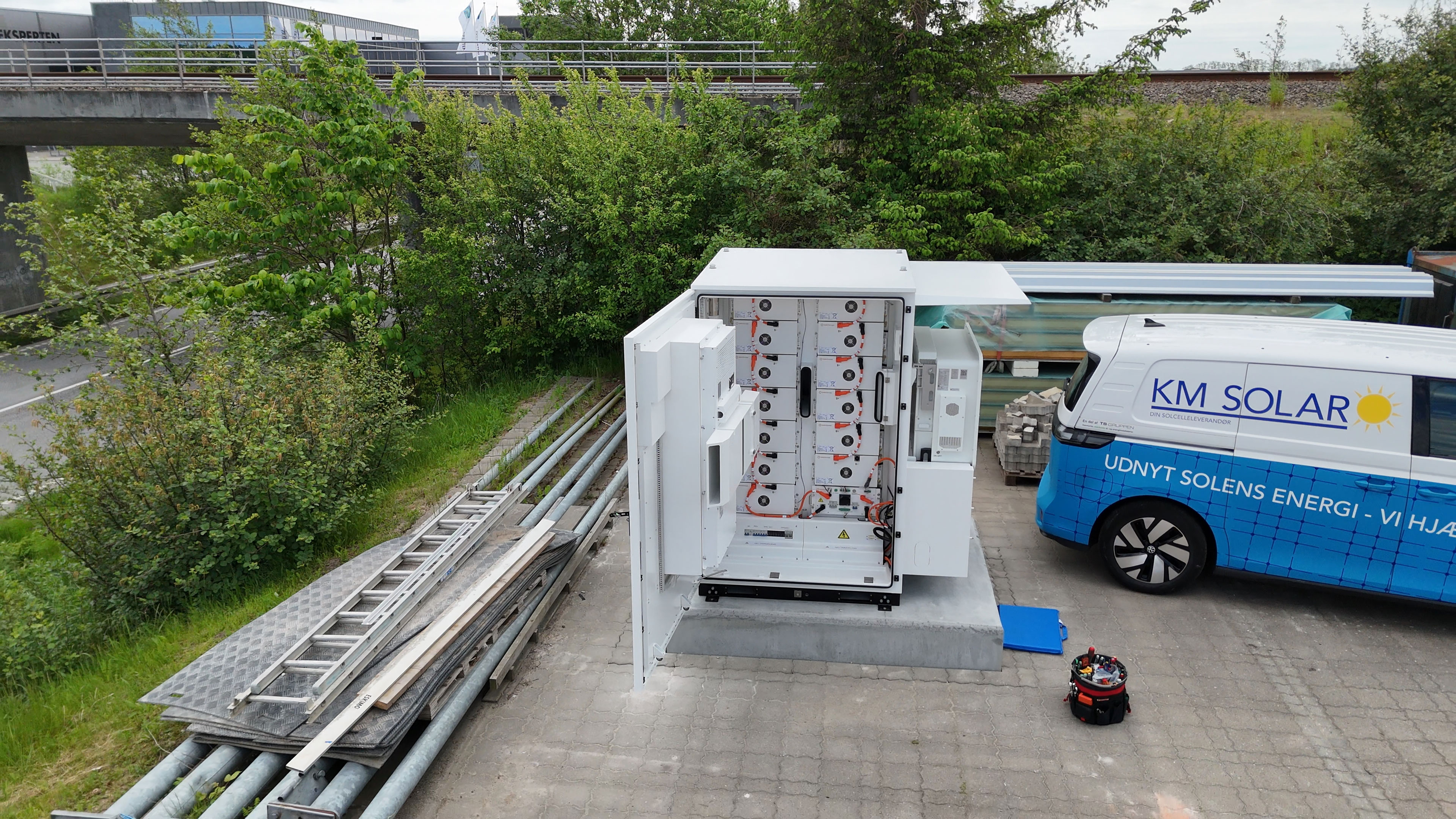
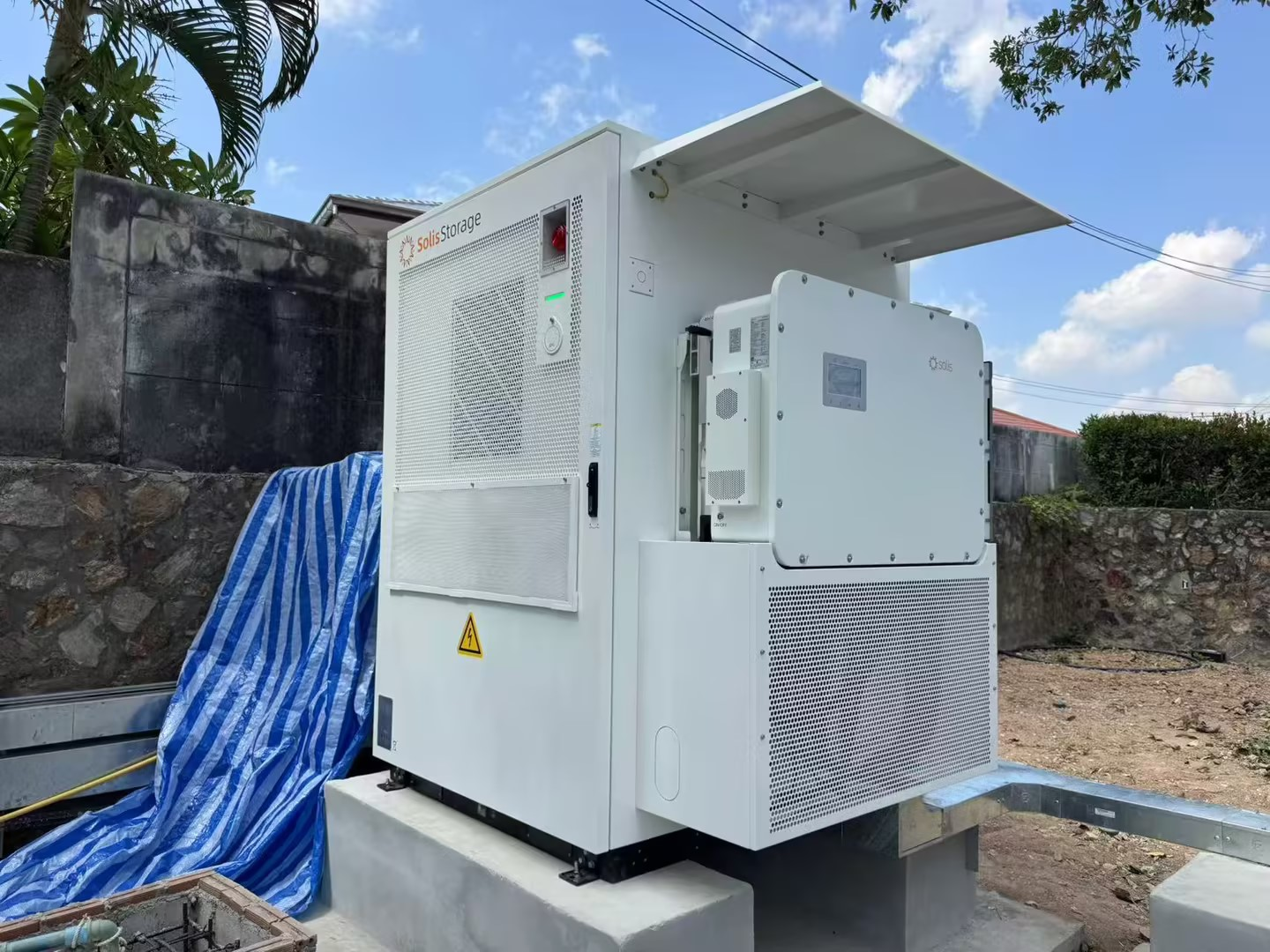
The EverCore ESS is a C&I energy storage system rated at 50–125kW inverter power with energy capacities from 100.5kWh to 261.2kWh. Its core differentiator is an AC-DC separation architecture that physically decouples the hybrid inverter (AC side) from the battery cabinet (DC side). This design yields three tangible project benefits:
- Thermal separation – The inverter’s 6kW heat is dissipated into ambient air, leaving only 3.5kW of electrochemical heat inside the battery cabinet. This achieves temperature uniformity close to liquid-cooled systems while retaining an air-cooled design, reducing heat generation rather than relying on high dissipation capacity.
- Protection separation – The inverter attains IP66 (dust-tight, protected against powerful water jets) and the battery cabinet IP55. This separated protection reduces the full-lifecycle failure rate by an estimated 50%.
- Structural separation – One inverter supports up to six battery cabinets in parallel, enabling linear DC-side expansion. This reduces system expansion costs by approximately 10%—critical for phased CAPEX.

Integrated Inverter and Control Architecture
EverCore’s 125kW hybrid energy storage inverter integrates PCS, STS, PV inverter, circuit breaker protection, and EMS into a single unit—reportedly the highest power density in its class. It supports seamless grid-tied/off-grid switching in less than 10ms without an external STS, meeting precision industrial equipment requirements. The single central controller (single-CPU) replaces the traditional multi-CPU topology, reducing failure points and simplifying troubleshooting.
Air Cooling Revisited: Three-Duct Design
Contrary to the industry shift toward liquid cooling, EverCore retains an air-cooled design backed by engineering data. An independent three-air-duct system using Coanda Effect airflow attachment improves heat dissipation efficiency by 30% compared to traditional air cooling. Combined with IP66/IP55 ratings and C4-grade anti-corrosion, the system operates stably from -25°C to 55°C and at altitudes up to 4,000 meters.
Real-World Use Cases: From Danish Warehouses to Thai Factories
Two deployed projects illustrate EverCore’s project-readiness:
- Denmark – Warehouse self-usage (125kW/261kWh): The system switches between on-grid and off-grid in under 10 milliseconds, preventing interruptions for critical loads. Designed for a 20-year duration, it reduces electricity bills by optimizing self-consumption.
- Thailand – Self-consumption & backup system (125kW/522kWh): Two EverCore units operate in parallel to support a facility’s internal load and backup needs. The project has delivered stable operation since commissioning.
Market Trend: Long-Duration Storage and Open Ecosystems
The Long-Duration Energy Storage (LDES) market was valued at USD 4.85 billion in 2024 and is expected to grow at a 13.6% CAGR through 2030 (MarketsandMarkets). C&I projects increasingly require energy storage systems that can participate in ancillary services and VPP programs. EverCore’s open software ecosystem connects with 102 third-party VPP/EMS operators across 11 European countries (including Kraen by Octopus Energy in the UK and Check Watt in Nordic markets), enabling users to capture multi-revenue streams. The Solis AI Cloud Platform, deployed at more than 5,500 storage stations, integrates Nordpool and Flatpeak data for minute-level charge-discharge optimization.
Comparison with Traditional Solutions
Compared to conventional liquid-cooled C&I systems, EverCore’s air-cooled architecture with AC-DC separation offers lower lifecycle OPEX—estimated savings of approximately €9,500 per unit over the project lifecycle (eliminating coolant replacement, simplifying PCS and pack swaps, and reducing routine inspections). However, a honest limitation: in extreme continuous high-power scenarios exceeding the system’s thermal envelope, liquid cooling may still provide higher sustained power density. EverCore’s design prioritizes operational simplicity and maintenance cost over raw peak cooling capacity.
Future Outlook
As C&I energy storage moves toward deeper integration with grid services and AI-driven optimisation, architectures that balance ruggedness with software openness will gain advantage. SolisStorage’s continued investment in its open ecosystem and thermal innovation positions EverCore as a practical choice for project owners demanding reliability, expandability, and low total cost of ownership.
Download the Solis Global Brochure (PDF) for detailed product specifications and application guidance.
Frequently Asked Questions
Q: What protection ratings does EverCore ESS offer for outdoor installation?
A: The EverCore ESS features an IP55 battery cabinet and an IP66 inverter, making it suitable for outdoor environments including wide temperature ranges, coastal salt fog, and high altitude. The system is also certified with C5 anti-corrosion protection.
Q: How does the system support grid ancillary services and VPP integration?
A: EverCore connects to 102 third-party VPP/EMS operators across 11 European countries, enabling participation in FCR, aFRR, mFRR, and other electricity market mechanisms. The open software ecosystem allows seamless integration with platforms like Kraken (Octopus Energy) and Check Watt.
Q: What is the cycle life of the battery cells used in EverCore?
A: The system uses A-grade 314Ah LFP cells custom-developed for C&I applications, achieving 8,000 cycles at 0.5C charge-discharge rate with ≥70% remaining capacity. This extends the system’s economic lifecycle to approximately 16 years at 500 cycles per year.
Tem questões ou precisa de mais detalhes?
Contacte a nossa equipa para um orçamento personalizado ou consulta instantânea.
Solicitar orçamento
Preencha o formulário abaixo e a nossa equipa entrará em contacto com uma proposta personalizada.
Chat direto do WhatsApp
Prefere conversar em tempo real? Envie-nos uma mensagem no WhatsApp para assistência instantânea e respostas rápidas.
- Obter orçamento personalizado
- Partilhar fotos ou documentos
- Discuta as suas necessidades diretamente
Geralmente responde em 5–30 minutos durante o horário de expediente.