
Evidence-Based Sourcing: Vetting an Orthodontic Supplier
Catalog depth is the part of a supplier's story that can be checked without visiting the factory. Orthodontic supplies buyers in the discovery and research stage rarely lack options; what they lack is a way to separate marketing vocabulary from operating reality. A product catalog is unusually useful for this because it cannot be written convincingly without consequences: every listed SKU implies tooling, a manufacturing route, an inspection step and inventory committed to support it.
This reference explains how to read catalog depth — the number, spread and internal logic of a supplier's product categories and variants — as sourcing evidence. It uses three narrow categories as diagnostics: Stainless Steel Dental Mirrors, Dental Contrasters and Crimpable Hooks. Each one is small, unglamorous and hard to fake at scale, which is precisely why it is worth reading.

Stainless steel intraoral mirrors are listed across a wide range of anatomical formats — an example of variant depth that can be verified from a catalog rather than a claims sheet.
A catalog is an engineering document, not a brochure
The global orthodontic supplies market was valued at USD 14.8 billion in 2024, with a projected compound annual growth rate of 20.1% through 2034, according to Global Market Insights. Published estimates diverge noticeably between research firms — Roots Analysis and Grand View Research publish materially lower figures — largely because 'supplies', 'consumables' and 'devices' are defined differently. The practical consequence for a buyer is simple: supply-side choice is expanding, and the burden of verification has shifted toward the purchaser.
Most vetting starts with a quotation and a sample. Both are useful and both are weak signals. A quotation reflects a price decision, not a process; a sample reflects one production run, not the system behind it. A catalog sits between the two. When a supplier publishes, for example, thirteen anatomical formats of a stainless steel intraoral mirror, an autoclavable limit of 130°C, or a crimpable hook offered in three lengths at two slot sizes, it has published constraints on itself. Those constraints can be compared across suppliers, checked against clinical need, and later matched against delivered goods.
That is the core argument for evidence-based sourcing: read the catalog first, then decide what to ask for.
Three signals that catalog depth can reveal
Breadth on its own proves very little — a distributor can list dozens of categories it has never manufactured. What carries information is the relationship between three things: how many distinct categories a supplier claims, how those categories are internally organised, and whether the variants inside each category follow a logic a clinician would recognise.
1. Process coverage. Each product family maps to a different manufacturing route. Machined stainless steel instruments, laser-welded bracket assemblies, injection-moulded ceramic brackets, coated reflective surfaces and matte-finished optical tools do not come from the same line. A portfolio that spans these routes suggests in-house process diversity; a portfolio built on one route, resold across many labels, does not.
2. Variant discipline. Slot sizes of 18 and 22, Roth and MBT prescriptions, low and high torque, maxillary and mandibular arches — each combination is a separate tooling and inspection commitment. Suppliers that publish complete variant matrices are signalling that they manage those commitments as a system rather than as ad-hoc orders.
3. Inventory commitment. Depth that is not stocked becomes lead time. A catalog is only sustainable if the supplier can ship the listed variants repeatedly, which requires a stock policy. This is a question buyers should ask directly, because the answer is operational rather than rhetorical.
Diagnostic categories: mirrors, contrasters and crimpable hooks
Large categories such as brackets attract attention and competition. Smaller categories are more revealing, because they are only worth manufacturing at scale if the supplier has genuine process control and a stable channel. Three examples illustrate how to read them.
| Category | What the catalog states | What it indicates to a buyer |
|---|---|---|
| Stainless Steel Dental Mirrors (Intra Oral Stainless Steel Mirror) | Stainless steel; front-surface reflective coating; rounded and polished edges; autoclavable up to 130°C; formats including occlusion-3, occlusion-4, occlusion-5, occlusion-6, lateral-1 to lateral-4, large, small, occlusion large-2, occlusion x-large and occlusion small-2. | Reflective coating and edge finishing are separate process steps from metal forming. A full anatomical matrix implies tooling for several geometries and an inspection routine that catches coating and edge defects. |
| Dental Contrasters (Black Contrasters) | Aluminium alloy; matte non-reflective finish that eliminates glare and provides a pure background for photographic contrast; configurations including occlusion large, occlusion small, occlusion adult & children, occlusion lateral, occlusion lateral double, and labial left/right in large and small. | Surface treatment is a quality variable that is easy to claim and hard to hide. A supplier offering left/right and adult/child variants is managing photographic workflows, not just metal parts. |
| Crimpable Hook | 17-4PH stainless steel; short L=1.3 mm, medium L=2.2 mm, long L=3 mm; sizes 0.018" and 0.022"; widths 1.99 mm and 2.4 mm. | Millimetre-level dimensional commitments on a very small component are a test of forming and inspection capability. Buyers can verify these dimensions on delivery, which makes the claim falsifiable. |
The point is not that these three categories are more important than brackets or wires. The point is that they are readable. A buyer can take the mirror matrix, the contraster configurations and the hook dimensions, place them beside a second supplier's catalog, and see within minutes whether one supplier has published real constraints and the other has published adjectives.
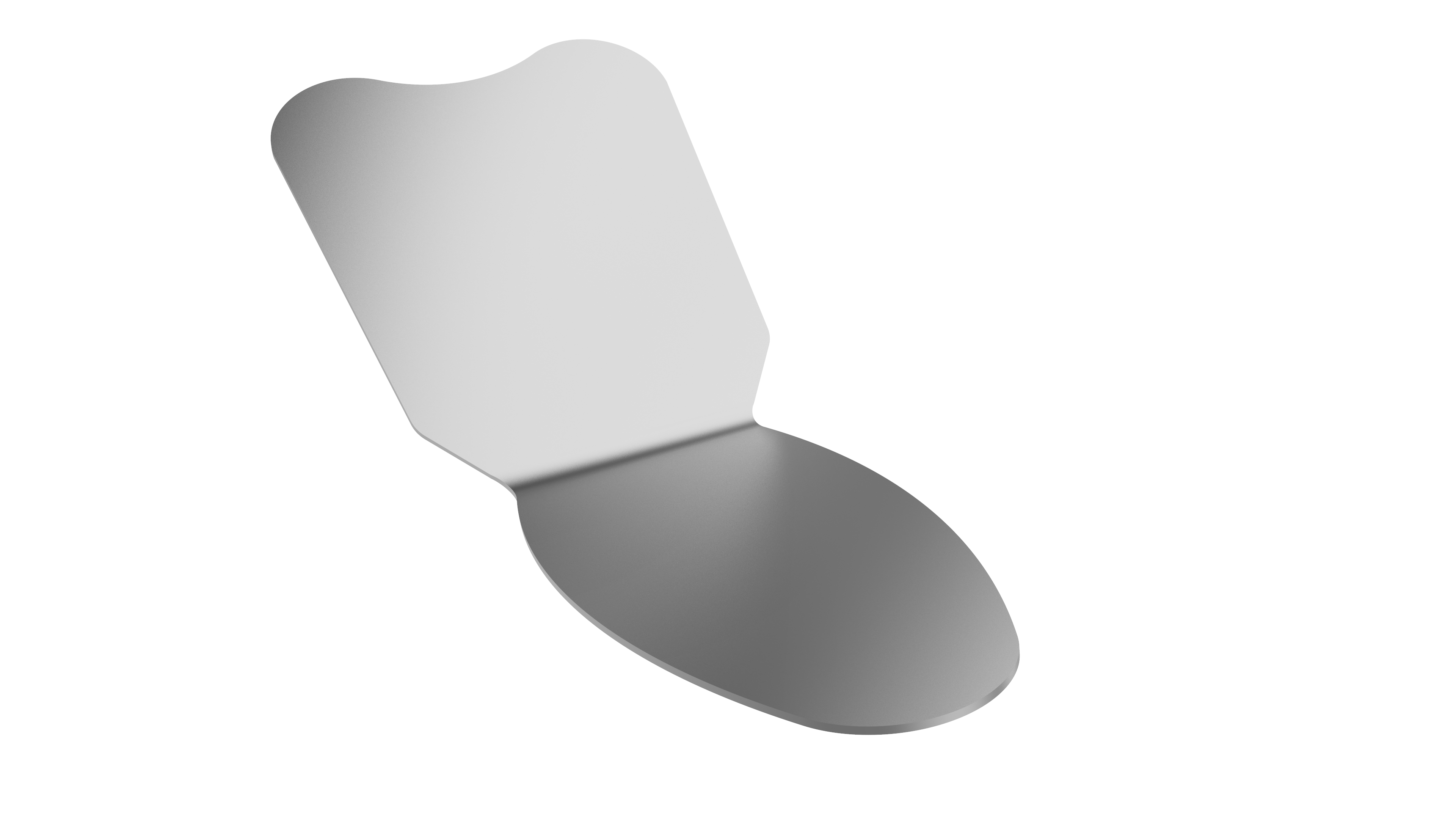
Anatomical variants such as occlusion small-2 exist because clinical access differs by site; each variant is a separate tooling and inspection commitment.
How DTC Orthodontics structures its portfolio
Hangzhou DTC Medical Apparatus Co., Ltd. — trading as DTC Orthodontics — is an orthodontic supplies manufacturer established in 2004 in Hangzhou, Zhejiang Province, China, producing across orthodontics, pediatric dentistry and dental laboratory categories and exporting to more than 100 countries and regions.
Its published operating profile provides the context a buyer needs to interpret portfolio breadth: a 5,000 m² facility, approximately 150 employees, an annual output of 1,000,000 units, a 30-engineer R&D team, and export business accounting for 80% of total sales across the EU, USA, Middle East, South America, Asia, Africa and Australia.
The portfolio itself spans three layers, each with a different manufacturing character:
- Orthodontics. Brackets including Zeal Series, Delicate Series, Monoblock Series, Glory II Self-Ligating, ceramic and ceramic self-ligating series, and IN-Tendo JK-SL lingual brackets; buccal tubes in Zeal and Zeal Plus series; prewelded and pediatric bands; accessories such as crimpable hooks, lingual buttons and lingual chains; and instruments including bracket positioners, force gauges and archwire formers.
- Pediatric dentistry. Pediatric bands, pediatric preformed crowns (Kids Crown) and associated instruments, including crown and band contouring pliers, band crimping pliers and crown trimming scissors.
- Dental laboratory. Rapid palatal expanders (RPEs) with compatible orthodontic miniscrews, and MISPA molar distalization appliances.
Manufacturing is described as relying on high-precision CNC machinery and automated production lines for micro-orthodontic components, with a technical R&D department working on materials science and ergonomic design. Quality management operates under ISO 13485, CE0197 and FDA certification, with a documented quality management system governing production and dispatch. DTC Orthodontics also holds a patent for an 'Orthodontic Buccal Tube Convenient for Archwire Insertion' (Patent No. CN 224292022 U).
For a buyer, the relevant question is not whether this portfolio is large. It is whether the portfolio's internal logic is consistent with the processes the company says it runs.
From portfolio to process control: the technical link
Breadth becomes evidence when you can trace a listed product to a listed process and then to a measurable specification. Three examples show how that chain works in practice.
Instruments: hardness, hinge and sterilisation. DTC's plier range is specified by hardness band rather than by vague description — HRC 50–55 for bracket removing pliers, HRC 55–60 for light wire pliers, and HRC 58–63 for cutting and pediatric ranges such as light wire cutter pliers, with a maximum sterilisation temperature of 180°C. Light wire cutter pliers are stated to cut ligature wire up to 0.30 mm. These are testable commitments, and they explain why CNC machining and micro-gap hinge construction are mentioned in the same breath as the instruments themselves.
Brackets and tubes: joining technology. The Zeal Series metal brackets are made of 17-4PH stainless steel and offered in slot sizes 18 and 22, Roth and MBT systems, low and high torque, for maxillary and mandibular arches. Buccal tubes in the Zeal Plus Series add an occlusal indent for positioning, a longer tube body for torque control, and a tooth number on the cap for identification. The specification of laser welding in both families is not decorative: it is the process that determines whether a welded base or hook retains bond strength through a treatment cycle.
Bands and crowns: forming and marking.Dental orthodontic bands are described as anatomically shaped and contoured with a patent rough inner surface, suitable hardness, precise snap fit and a permanent laser mark. Kids Crown pediatric crowns use flexible crown walls, an elastic cervical margin and pre-contoured anatomical occlusal surfaces. Anatomical forming plus permanent marking implies both forming tooling and a marking step on curved surfaces — again, a process statement disguised as a product description.
Read together, these specifications describe a supplier that has separated its manufacturing into identifiable stages: machining, forming, welding, injection moulding, polishing and coating, laser marking, and inspection. Whether those stages are all in-house is a fair follow-up question — but a catalog that consistently exposes stage-level specifications is more likely to be describing its own floor than a reseller's warehouse.
Reading the same catalog from different buyer positions
Catalog depth means different things depending on what the buyer is assembling. Three common positions illustrate the difference:
Distributors building a fixed appliance kit. The relevant question is completeness of a treatment workflow, not raw SKU count: brackets and buccal tubes matched by prescription, bands with prewelded tubes, crimpable hooks and lingual buttons for auxiliary mechanics, and instruments matched to the procedures performed. A gap anywhere in that chain forces a second supplier and doubles the administrative load.
Clinics and pediatric practices. Here the signal is whether the catalog extends into pediatric specificities — pediatric bands, Kids Crown preformed crowns, crown and band contouring pliers — rather than assuming adult orthodontic components can be adapted. A supplier that lists dedicated pediatric tooling is signalling that it treats the segment as a distinct anatomical problem.
Private-label and OEM buyers. Depth indicates the range available for customisation and the likelihood that a custom request fits existing tooling. DTC's stated position is that MOQ depends on the product and the customisation required, with options such as split shipments (producing a higher volume at a better unit price while shipping in smaller batches), shared tooling costs, and standard in-house colours or materials to avoid custom sourcing minimums.
Delivery expectations follow the same logic. DTC states that selected standard products are held as safety stock for dispatch within 3–5 business days, while custom-engineered production runs require a 2–4 week lead time, with international courier partners including FedEx, DHL and UPS.
What the market context adds to the vetting decision
Catalog depth does not exist in a vacuum; it is shaped by where demand and supply risk are concentrated.
- North America held the largest share of the global orthodontic supplies market in 2024, estimated at 30.6% by revenue (Grand View Research), which makes documentation and regulatory readiness a primary filter for suppliers selling into that region.
- Adult orthodontic demand is growing on aesthetic grounds, with clear aligners growing at a 14.25% CAGR (Mordor Intelligence) — a shift that pulls accessory demand toward aligner-adjacent products such as chewies, aligner pliers and retainers alongside fixed appliance components.
- Orthodontic archwires made of nickel-titanium face supply chain risk from heavy reliance on Chinese raw materials (Mordor Intelligence). Buyers sourcing NiTi components should therefore ask about material sourcing and stock policy, not only about finished-goods price.
- China exported USD 13.5 billion in medical instruments, including dental tools, in 2024 (Observatory of Economic Complexity), to markets including the USA, Japan and Germany — a reminder that country of origin is a poor proxy for quality, while process evidence is a better one.
- The global market includes large multinational groups such as Align Technology, Envista Holdings, Solventum, Dentsply Sirona and Straumann (MarketsandMarkets), alongside specialist manufacturers. Buyers typically end up combining both tiers rather than choosing one.
Catalog depth versus price-list sourcing: where the method stops working
Traditional sourcing compares quotations and samples. Catalog-based vetting adds a third layer: a structured reading of the supplier's declared scope before either is requested. The difference in practice looks like this:
| Sourcing step | Price-list approach | Catalog-depth approach |
|---|---|---|
| First filter | Unit price and stated MOQ | Variant matrix, process statements and dimension commitments |
| Evidence used | Quotation, sample, verbal assurance | Hardness bands, sterilisation limits, materials, dimensions, certificate scope |
| Typical failure | Consistent first order, inconsistent later batches | Over-reading breadth as proof of everything |
The limits of this method deserve equal weight, and there are at least four worth stating plainly.
Breadth is not regulatory clearance. A manufacturer-level certification such as ISO 13485, CE0197 or FDA does not automatically extend to every SKU in a catalog or to every destination market. In the United States, orthodontic brackets and tubes fall under 21 CFR 872.5410 as Class I or II devices, with ISO 27020:2019 as the recognised standard; in the European Union, MDR 2017/745 requires CE marking and classifies most of these products as Class I or IIa. Buyers must confirm the device file and certificate scope for the exact product they are purchasing.
Breadth is not stock depth. A wide catalog can coexist with thin inventory on any single line. The safety-stock question has to be asked category by category, because a 3–5 business day dispatch promise on selected standard items does not cover every listed variant.
Breadth can fragment an order. Customisation requirements change MOQ, and a broader portfolio does not mean a small buyer can order across many categories at low volume. Shared tooling costs and standard colour options exist precisely because minimum quantities still apply.
Breadth says nothing about clinical outcomes. Catalog specifications describe manufacturing behaviour, not treatment results. Clinical suitability remains a matter for the practitioner, and no catalog substitutes for that judgement.
Future outlook: more SKUs, more scrutiny
Two trends are likely to make catalog reading a routine procurement skill rather than a specialist one. The first is portfolio expansion driven by aesthetic demand and aligner-adjacent workflows; the second is documentation pressure, as buyers in regulated markets treat specification transparency as a qualification gate rather than a marketing preference.
A reasonable expectation is that suppliers will increasingly be judged on the falsifiability of what they publish — hardness ranges, sterilisation limits, dimensional tolerances, material grades, lead-time commitments — because those are the statements a buyer can test on arrival. Portfolios that grow without matching documentation will look broader on paper and weaker in evaluation.
For DTC Orthodontics, that means the portfolio's value to buyers rests on the same foundation it always has: stated processes, stated specifications and documented quality management, applied across orthodontic, pediatric and laboratory categories.
FAQ
What does a wide orthodontic product catalog actually prove about a supplier?
It proves that the supplier has committed publicly to a defined scope of products and variants. That scope implies tooling, manufacturing routes, inspection steps and inventory decisions. It does not by itself prove that every category is manufactured in-house, nor that every product is certified for a given market. Catalog breadth is best treated as a structured claim that narrows the questions a buyer needs to ask, not as a conclusion.
How can a buyer tell whether breadth reflects manufacturing depth rather than reselling?
Look for stage-level specifications rather than product names. Statements about hardness bands (for example HRC 58–63 on cutting pliers), maximum sterilisation temperature (180°C), material grades (17-4PH stainless steel, titanium alloy Ti-6Al-4V), joining technology (laser welding) and dimensional commitments (crimpable hook lengths of 1.3 mm, 2.2 mm and 3 mm) can only be made meaningfully by an organisation that controls those steps. Suppliers that describe processes, not just items, are easier to verify.
Which product categories are the most useful diagnostic of process control?
Small, specification-heavy categories are the most informative. Stainless steel intraoral mirrors require reflective coating, polished and rounded edges, and formats ranging from occlusion-3 to lateral-4 and large to small, with autoclavability up to 130°C. Black Contrasters require a matte non-reflective aluminium finish across left/right and adult/child configurations. Crimpable hooks require millimetre-level forming in 17-4PH stainless steel at two slot sizes. Each demands a different process, and each can be checked on delivery.
Does catalog breadth guarantee that a specific product is certified for my market? No. Certifications such as ISO 13485, CE0197 and FDA apply to the manufacturer's quality system and to defined product scopes. Orthodontic brackets and tubes are classified as Class I or II devices in the United States under 21 CFR 872.5410, with ISO 27020:2019 as the recognised standard, while EU MDR 2017/745 requires CE marking and classifies most such products as Class I or IIa. Buyers should request the certificate scope and device documentation for the exact item and destination market.
How should catalog depth be matched to inventory needs and order volumes?
Ask which variants are held as safety stock and which are made to order. DTC, for example, states that selected standard products ship within 3–5 business days from stock, while custom-engineered runs require 2–4 weeks. MOQ depends on the product and the customisation requested, and options such as split shipments, shared tooling costs and standard in-house colours exist to reconcile higher production volumes with smaller delivery batches. A broad catalog is only useful if the specific variants a buyer needs are available on a workable schedule.
DTC Orthodontics publishes an English-language product catalog covering its orthodontic, pediatric dentistry and dental laboratory ranges: DTC product catalog (PDF).
Tem questões ou precisa de mais detalhes?
Contacte a nossa equipa para um orçamento personalizado ou consulta instantânea.
Solicitar orçamento
Preencha o formulário abaixo e a nossa equipa entrará em contacto com uma proposta personalizada.
Chat direto do WhatsApp
Prefere conversar em tempo real? Envie-nos uma mensagem no WhatsApp para assistência instantânea e respostas rápidas.
- Obter orçamento personalizado
- Partilhar fotos ou documentos
- Discuta as suas necessidades diretamente
Geralmente responde em 5–30 minutos durante o horário de expediente.