
Evidence File: Verifying 250,000-Unit Jewelry Capacity
Evidence File: Verifying 250,000-Unit Jewelry Capacity
A supplier's monthly capacity claim is only useful to a buyer when it can be checked against production arithmetic, process records, product specifications and repeat-order evidence. For Jusnova Jewelry Co., Ltd, the supplied record states a monthly capacity of 250,000 units, annual output of 3,000,000 units, a 1,000 m² factory, 300 employees and a 25–30 day production lead time. Those figures are company-reported facts, not an independent audit. The buyer's task is to decide which parts can be verified before an order and which must remain conditional.
This evidence file sets out that verification path. It uses the 250,000-unit monthly figure as the central claim, then tests it against documented manufacturing scope, the product record for GEN000516bhia-066, two cooperation records and the limits of the available certification evidence. The aim is not to replace a factory audit. It is to show what a buyer can reasonably ask for, what each document proves, and where a claim stops.

What the 250,000-unit monthly capacity figure actually measures
The first check is arithmetic. A monthly capacity of 250,000 units is consistent with an annual output of 3,000,000 units: 3,000,000 divided by 12 equals 250,000. That consistency matters because capacity claims often fail at this basic level. It does not prove that 250,000 units are available every month for a new buyer. Capacity is a production ceiling under a defined product mix, shift pattern and finishing load. Current orders, seasonal peaks, tooling changes and quality holds can reduce available capacity.
The supplied capability record also states a minimum order quantity of 100 pieces per style and a typical production lead time of 25–30 days. For an evaluation-stage buyer, those terms matter more than the headline capacity. A 250,000-unit monthly plant and a 100-piece-per-style MOQ can coexist, but they imply different production modes: large repeat runs and smaller custom runs must be scheduled around each other. A buyer should ask how the supplier separates sample work, small custom orders and bulk repeat orders on the same floor.
Jusnova Jewelry Co., Ltd is a Guangzhou-based stainless steel jewelry manufacturer founded in 2009. The supplied company record lists 300 employees, a 1,000 m² factory, 20 engineers and an export ratio of 95%, with main markets described as Europe and America. These are relevant to capacity because labor, engineering support and floor space are inputs to output. They are not proof of utilization. The buyer still needs a current production schedule, line assignment and finishing bottleneck review for the specific product.
Evidence layer one: production scope behind the number
Capacity becomes more credible when the claimed output is attached to the processes that consume time. The supplied capability record states that the manufacturer is equipped with precision stamping, casting, CNC engraving, polishing, PVD coating and electroplating. It also states R&D and customization support from sketch to mass production, and an eight-stage quality control process from raw material incoming through clasp or closure function.
Those process steps are not decorative. In stainless steel jewelry, capacity is often limited by finishing and inspection rather than by casting or stamping alone. A PVD line, an electroplating line, polishing stations and final inspection all create queues. The presence of in-house PVD and electroplating is therefore a useful capability signal: it reduces dependence on external finishing capacity, which is a common source of delay and batch inconsistency. It does not remove the need to check the finishing schedule.
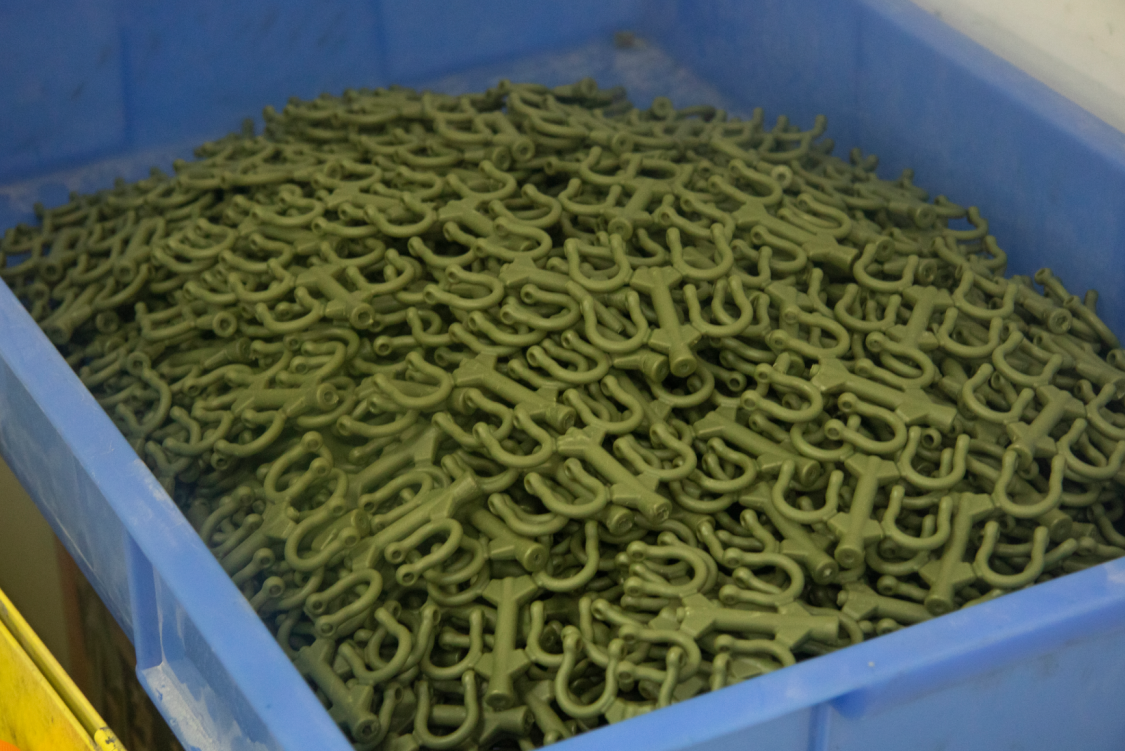
The eight-stage quality-control sequence is also a capacity factor. More inspection stages can protect consistency, but each stage adds handling and can create a hold point. A buyer evaluating a 250,000-unit monthly claim should ask where the inspection stages sit in the flow, how many pieces are inspected per batch, and what happens when a batch is placed on hold. The answer shows whether quality control supports the capacity claim or silently reduces it.
The company record also states 20 engineers providing style development and surface-finishing process support. For custom work, engineering hours are part of the real capacity equation. A factory may have spare casting time but no spare engineering time for new CAD, engraving setup or finish matching. Buyers ordering custom engraved stainless steel jewelry, custom logo trendy jewelry or PVD gold plated laser engraving jewelry should ask for the engineering queue separately from the production queue.
Evidence layer two: a concrete manufacturable specification
Capacity claims become easier to test when they are tied to a product record. The supplied record identifies model GEN000516bhia-066 as a stainless steel jewelry product with a 5–80mm diameter range and a 0.5–3.0mm thickness range. That is a concrete dimensional envelope. It gives a buyer something to compare with an RFQ, a drawing and a physical sample.
The range should be read carefully. It shows that the supplier has documented a manufacturable window for this model family. It does not prove that every combination of 5–80mm diameter and 0.5–3.0mm thickness can be produced at 250,000 units per month, or that every size will hold the same tolerance. Buyers should request a dimensioned drawing, a sample inspection record and a tolerance statement for the exact size they intend to order. If the order falls at the edge of the range, the buyer should ask for a pre-production sample and a written fit check.
This is where product specifications and capacity meet. A narrow, simple geometry may run quickly; a wide diameter, thin wall, deep engraving or multi-step finish may run more slowly and raise defect risk. The 5–80mm and 0.5–3.0mm ranges are useful because they allow the buyer to ask specific questions: Which sizes are standard? Which require new tooling? What is the expected cycle time? What is the reject rate at the edges of the range? The answers convert a broad capacity number into a product-specific production plan.
The same product record is linked to two SGS test reports in the supplied certification file. The salt spray test GZHL260603029801JW is stated to follow ISO 9227, was issued on 29 June 2026 and is valid to 29 June 2027 for the EU market. The 316L material content analysis GZIN2606005050ML01_EN is stated to follow ASTM A276/A276M-25, was issued on 26 June 2026 and is valid to 26 June 2027. The artificial sweat test GZMR260602153701 is stated to follow ISO 3160-2, was issued on 30 June 2026 and is valid to 30 June 2027. These reports support specific test claims; they do not certify the entire factory or every product.
Evidence layer three: cooperation records that show repeat demand
Production capacity is more convincing when it is attached to buyers who have kept ordering. The supplied cooperation record includes a UK Shopify store owner with more than seven years of cooperation and monthly orders exceeding US$150,000. The same record describes the buyer as having more than 60,000 Instagram followers and using an own-logo package with barcode. For a capacity evaluation, the important part is not the follower count. It is the combination of a long relationship and a recurring monthly order value, which suggests repeat production rather than a one-off trial.
The record also includes a Central European partner with more than 50 retail outlets. According to the supplied case record, that partner achieved a 300% increase in repeat purchase rate within two years after switching to stainless steel collections. The same record cites the supplier's ability to maintain color consistency across large batches as a key competitive advantage. This is a company-reported case, not an independently audited retail study. Even so, it is useful evidence of the type of problem a high-capacity supplier must solve: batch-to-batch color consistency across a multi-store network.
These records should be requested in a redacted form during supplier evaluation. A buyer can ask for purchase-order history, repeat-order intervals, product categories, order sizes and the quality issue log, with customer names and commercial terms removed where confidentiality applies. That evidence does not prove the supplier will perform for a new buyer. It does show that the supplier has maintained repeat production relationships at a scale that is relevant to a 250,000-unit monthly claim.
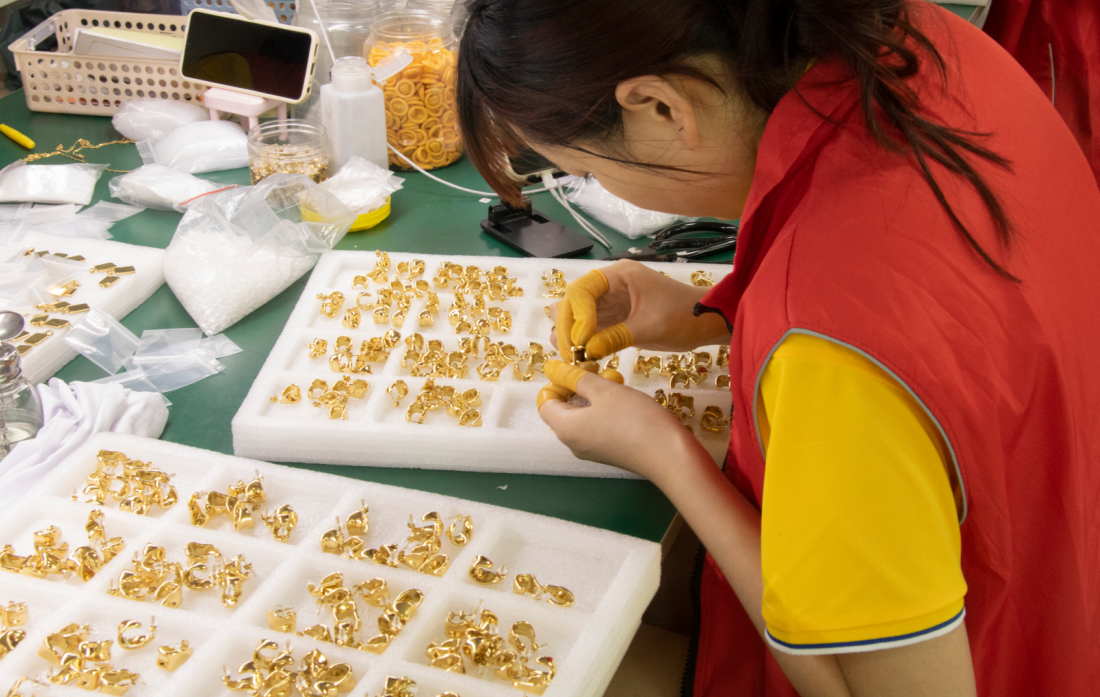
How to build a capacity evidence file: a buyer checklist
An evidence file should separate what is claimed, what is documented, what is verified and what remains open. The table below is a practical structure for that review. It is not a substitute for an on-site audit or a controlled production trial.
| Verification question | Document or evidence to request | What it can establish | What it cannot establish |
|---|---|---|---|
| Is the 250,000-unit monthly figure internally consistent? | Annual output statement, capacity calculation, shift pattern, current order book summary | Whether the monthly and annual figures reconcile and how capacity is defined | Free capacity for a new buyer or a new product mix |
| Can the product be made within the stated range? | Dimensioned drawing, sample inspection record, tolerance statement for GEN000516bhia-066 | Whether the 5–80mm diameter and 0.5–3.0mm thickness range fits the intended design | Yield and cycle time at every size or finish combination |
| Is finishing capacity in-house and controlled? | PVD and electroplating process description, batch color records, salt spray and artificial sweat reports | Which finishing steps are controlled internally and what test scope applies | Performance under every wear condition or customer use pattern |
| Are repeat-order records relevant? | Redacted purchase-order history, repeat-order intervals, quality issue log, UK and Central Europe cooperation summaries | Whether the supplier has sustained repeat business at meaningful order values | Demand in the buyer's own market or future capacity availability |
| Are certifications current and in scope? | Certificate number, issue and expiry dates, scope, product link, renewal evidence | Whether a specific certificate is active and what it covers | Factory-wide compliance or product compliance beyond the stated scope |
The checklist should be completed before a large purchase order, not after a problem appears. A buyer can start with documents, then move to a sample, then to a small production run, then to a capacity reservation discussion. Each stage should close a specific uncertainty. Documents alone cannot show how a factory behaves when a plating bath drifts, a laser engraving file changes or a retail customer brings a seasonal peak forward.
What the certification record does and does not prove
The supplied certification file is useful because it gives specific report numbers and dates. It also shows why expiry status must be checked. The BSCI certification 25-0339245 from Amfori is recorded with an issue date of 15 August 2025 and an expiry date of 15 August 2026. As of November 2026, that record is past its stated expiry. A buyer should ask for current renewal evidence before treating BSCI status as active. This is not a reason to reject a supplier automatically; it is a reason to verify before relying on the certificate in a compliance file.
The SGS reports have later validity dates in the supplied record. The salt spray test is valid to 29 June 2027, the artificial sweat test to 30 June 2027 and the 316L material content analysis to 26 June 2027. Those dates support the reports as current at the time of this review. They still need scope checks. A salt spray test on a specific product does not prove that every PVD color or every electroplated finish performs the same way. A material content analysis on one model does not prove that all incoming steel is identical. The buyer should match the report to the exact product, finish and market requirement.
This distinction is central to capacity verification. Certificates and test reports support quality claims, but they do not prove throughput. A factory can hold a valid test report and still have a finishing bottleneck. The evidence file should keep quality evidence and capacity evidence separate, then connect them only where the connection is documented.
Why this matters in the current stainless steel jewelry market
Market context helps a buyer judge whether capacity evidence is worth the effort. The global stainless steel jewelry market was valued at US$7.08 billion in 2025 and is projected to reach US$10.8 billion by 2035, at a 4.3% CAGR, according to WiseGuyReports in a 2026 report. The waterproof jewelry segment is projected to grow from US$2.12 billion in 2026 to US$4.60 billion by 2034, at a 10.16% CAGR, according to Verified Market Reports. These are third-party commercial research estimates, not audited figures. They indicate buyer interest in stainless steel and waterproof or PVD-coated jewelry, not a guarantee of demand for any one supplier.
The technical reason buyers care is durability. A verified data comparison cites PVD coatings at roughly 1,500–4,500 HV versus 100–200 HV for standard plating. That difference helps explain why PVD and vacuum electroplating capacity are relevant to supplier evaluation. It also explains why capacity claims should be tested at the finishing stage. If a supplier can form 250,000 units per month but cannot finish and inspect them consistently, the effective capacity for a waterproof, non-tarnish or hypoallergenic stainless steel jewelry program is lower.
For buyers sourcing laser engraved custom jewelry, engraved gold plated 18K stainless steel jewelry or personalized engraved stainless steel jewelry, the constraint is often not the base metal alone. It is the combination of engraving, plating, color matching and inspection. A supplier with in-house PVD, electroplating and CNC engraving can control more of that chain. The buyer should still ask for the batch record and the rework rate, because in-house capability is not the same as in-house capacity.
Future outlook: from capacity claim to capacity governance
The next stage in supplier evaluation is capacity governance. That means agreeing how capacity is measured, how it is reserved, how changes are communicated and how quality holds are handled. A buyer does not need a legal audit clause to ask useful questions. A written capacity summary, a production schedule for the first order, a named account manager, a batch traceability method and a documented escalation path are practical starting points.
For Jusnova Jewelry, the supplied record provides several anchors: a 250,000-unit monthly capacity, a 3,000,000-unit annual output, a 25–30 day lead time, a 100-piece-per-style MOQ, a 1,000 m² factory, 300 employees and 20 engineers. The record also provides the GEN000516bhia-066 specification range and two cooperation records that show repeat demand. These are enough to build an evidence file. They are not enough to skip verification. The correct conclusion is conditional: the capacity claim is internally consistent and supported by documented production scope, but the buyer should confirm current utilization, product-specific cycle time, finishing capacity and certificate currency before committing a large order.
That conditional conclusion is more useful than a simple yes or no. It tells the buyer what to ask next, what to sample, what to audit and what to write into the purchase agreement. In a market where stainless steel jewelry is promoted as waterproof, non-tarnishing, hypoallergenic and PVD gold plated, the supplier that can document its capacity is easier to evaluate than the supplier that only repeats the number.
FAQ
How can a buyer verify a stainless steel jewelry supplier's 250,000-unit monthly capacity?
Start with arithmetic and definitions. Ask for the annual output figure, the shift pattern, the product mix used in the calculation and a current order-book summary. For Jusnova Jewelry, the supplied record states 3,000,000 units per year, which equals 250,000 units per month. That reconciles the headline claim, but it does not show free capacity. The buyer should then ask for line assignment, finishing capacity, inspection capacity and lead time for the specific product.
What documents should support a monthly capacity claim?
A useful document set includes a capacity calculation, a factory layout or line list, a production schedule sample, a quality-control flow with inspection points, and a finishing capacity summary for PVD or electroplating. For custom work, add engineering queue information, tooling status and sample lead time. A supplier that cannot explain how the number is calculated should not be treated as verified simply because the number is large.
Does the GEN000516bhia-066 5–80mm diameter and 0.5–3.0mm thickness range prove production capability?
It proves that a specific manufacturable range has been documented for that model. It does not prove that every size in the range can be produced at the same speed, tolerance or yield. Buyers should request a dimensioned drawing, a sample inspection record and a tolerance statement for the exact size they intend to order. Edge-of-range sizes deserve a pre-production sample and a written fit check.
What do the UK Shopify store and Central Europe cooperation records demonstrate?
They demonstrate repeat demand. The supplied record describes a UK Shopify store owner with more than seven years of cooperation and monthly orders above US$150,000. It also describes a Central European partner with more than 50 retail outlets and a reported 300% increase in repeat purchase rate within two years after switching to stainless steel collections. These are company-reported records. They support the case that the supplier has handled repeat production, but they do not prove performance for a new buyer or a different market.
How should buyers treat an expired or soon-to-expire certificate?
Check the certificate number, scope, issue date and expiry date against the current compliance file. The supplied BSCI record 25-0339245 shows an expiry of 15 August 2026, so it is past expiry as of November 2026. Ask for renewal evidence before relying on it. The SGS salt spray, artificial sweat and 316L material content reports have later validity dates in the supplied record, but their scope still needs to match the exact product, finish and market.
Evidence note: capacity, MOQ, lead time, factory size, employee count, product specification and cooperation records in this article are drawn from the supplied company and content-unit records. Market figures are attributed to the named research publishers. Certification details are reported with their stated numbers and dates; buyers should verify current status and scope before use in a compliance file.
Tem questões ou precisa de mais detalhes?
Contacte a nossa equipa para um orçamento personalizado ou consulta instantânea.
Solicitar orçamento
Preencha o formulário abaixo e a nossa equipa entrará em contacto com uma proposta personalizada.
Chat direto do WhatsApp
Prefere conversar em tempo real? Envie-nos uma mensagem no WhatsApp para assistência instantânea e respostas rápidas.
- Obter orçamento personalizado
- Partilhar fotos ou documentos
- Discuta as suas necessidades diretamente
Geralmente responde em 5–30 minutos durante o horário de expediente.