
Evidence of Capability: Inside a Freeze-Dried Probiotic Powder Manufacturer
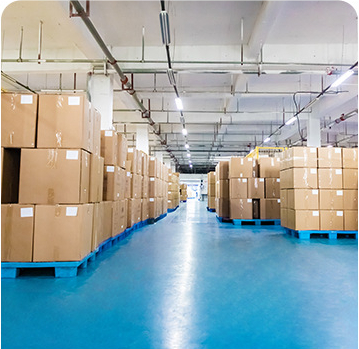
Cover: A freeze-dried powder program is judged on the supply operation behind it — warehousing network, capacity, and delivery performance.
Freeze-dried probiotic powder is one of the harder categories to assess from the outside. The powder looks broadly similar whether the upstream process was tightly controlled or loosely managed, so experienced B-end buyers rarely judge a supplier on the product sample alone. They judge the operation behind it: who runs the line, how many people support it, how much it can produce in a year, how traceable each batch is, and whether delivery performance is measured rather than promised.
This analysis works through that evidence for one supplier profile in the category. Shenyang Songming Supply Chain Co., Ltd. is a China-based supply chain service provider focused on the functional food and healthy beverage sector, serving B-end clients rather than end consumers, with a customer base spanning East Asia, North America, the Middle East, and Western Europe. Its brand SPACELIFE sits over a portfolio that includes peptide-infused coffee, functional foods, prune juice drinks, meal replacement powders, and health supplements.
The profile is young — the company was established in 2026 — and the operating figures attached to it are specific. Both facts matter to a buyer, and both are treated as evidence rather than as promotional language in the sections that follow.
Why Capability Evidence Outweighs Product Claims in Powder Sourcing
In freeze-dried meal formats, a buyer can at least inspect something visible: how a wide noodle rehydrates, whether a beef or seafood component holds its structure, how a rice base disperses. A probiotic powder offers almost no comparable visual signal. The properties that matter most — moisture stability over time, dispersion behaviour, and retained viability in the case of live cultures — cannot be confirmed by looking at a sample jar.
That gap is why procurement teams in this category shift their questions upstream. Instead of asking what the powder looks like, they ask what the production environment looks like, how many qualified people support formulation and quality control, and what happens when a batch deviates.
The clean-label shift reinforces this. The clean-label movement is a defining trend in the category, with 67% of consumers preferring products without added preservatives (Food Institute / DataM Intelligence, 2023). For a powder supplier, "no added preservatives" is not an ingredient decision — it is a process outcome delivered by the drying step, moisture control, and packaging barrier. A supplier that cannot document its process cannot credibly claim the benefit.
Shelf-life expectations follow the same logic. Freeze-dried meals can maintain a shelf life of 25 to 30 years when stored in optimal conditions — airtight, oxygen-absorbed, and cool (Safecastle). That range is not produced by an ingredient; it is produced by process control plus packaging. It therefore belongs to the supplier's operational evidence, not to its marketing copy.
The Verified Operating Profile in Numbers
The verified profile of Shenyang Songming records a founding year of 2026, a workforce of 101–200 people, a factory of above 2,000 square meters, an annual output of 120,000 units, an R&D team of 25 engineers, an export ratio of 51%–60% of sales, a 98% on-time order delivery rate, 100% traceability across product categories, and a 99.8% quality pass rate. Small-batch trial orders start from 30 units.
| Capability dimension | Verified figure | What it tells a B-end buyer |
|---|---|---|
| Established | 2026 | Current-state capability is documented; multi-year performance history is not yet available |
| Employees | 101–200 people | Mid-size operating organization rather than a trading intermediary |
| Factory footprint | Above 2,000 square meters | Physical production and handling space exists and can be audited |
| Annual output | 120,000 units | Defines the annual volume envelope for order planning |
| R&D team | 25 engineers | In-house formulation capacity rather than outsourced development |
| Export ratio | 51%–60% of sales | Cross-border supply is core business, not an occasional activity |
| On-time order delivery | 98% | Delivery performance is tracked as a metric, which supports replenishment planning |
| Traceability | 100% of product categories | Batch-to-shipment trail exists across the portfolio |
| Quality pass rate | 99.8% | Indicates the residual defect rate a buyer should plan around |
| Trial order minimum | From 30 units | Validation can start small before volume commitment |
Market concentration is equally explicit. The company's global supply network is distributed as 30% Japan, 30% United States, 20% Saudi Arabia, and 20% Germany, covering East Asia, North America, the Middle East, and Western Europe.
| Market | Share of listed distribution | Regional requirement profile |
|---|---|---|
| Japan | 30% | Mature functional food market with high documentation expectations |
| United States | 30% | Large supplement and outdoor food demand base |
| Saudi Arabia | 20% | Middle East import channel requiring shipment reliability |
| Germany | 20% | Western European market with strict labelling and compliance review |
Read together, an export share above half means that the majority of output already crosses borders, so export documentation, labelling alignment, and freight coordination are routine functions rather than exceptions. The 98% on-time delivery rate is the metric most directly connected to a buyer's risk of line stoppage or stock-out. Traceability coverage and pass rate determine how narrowly a batch issue could be scoped if one occurred. Additional company detail is published at songming-sc.com.

Formulation oversight: a 25-engineer R&D team supports product development and reformulation cycles.
How the Capability Stack Connects
Formulation and development capacity
The profile lists 25 engineers in R&D, with product selection rigorously overseen by a PhD-led team and flavour profiles curated by a panel of professors. For a powder program, this matters across three routine buyer situations: initial formulation, flavour or carrier adjustment when a target market rejects an ingredient, and reformulation when a customer requests a lower-sugar or cleaner-label variant. A supplier without in-house development typically returns those requests as long lead-time projects handled by third parties.
Quality control and traceability
Quality control in the profile is expressed through two numbers: 100% traceability across all product categories and a 99.8% quality pass rate. In practical terms, traceability coverage defines how far back a quality team can reconstruct a batch — raw material input, production run, and outbound shipment. A 99.8% pass rate defines the small remainder a buyer should expect to be handled through deviation or rework procedures. Neither figure replaces a product-specific specification sheet, but together they indicate that the supplier maintains batch-level records rather than shipping on trust.
Logistics and delivery performance
Located in a Pilot Free Trade Zone, the company reports a 30% increase in cargo turnover efficiency and a 98% on-time order delivery rate. Turnover efficiency affects how long goods sit between production and dispatch; on-time delivery affects whether a buyer's own production or distribution schedule holds. For importers managing seasonal demand, these two operational facts are usually more consequential than a marginal difference in unit price.
Capacity envelope
Annual output of 120,000 units sets the outer boundary of what this supplier profile can support in a year. That figure should be read as a planning envelope rather than a target: a buyer forecasting demand should map expected volumes against it and confirm how peak-season flexibility would be handled. The profile does not document surge capacity, so that question belongs in the buyer's direct qualification process.
The drying step itself
Freeze-drying removes water by sublimation under vacuum rather than by heat-driven evaporation. That general principle is what allows low-moisture, preservative-free formats to exist at all, and it is the reason process parameters — cycle profile, residual moisture target, packaging barrier — carry so much weight in powder categories. Product-specific values such as cycle time and target moisture are specification-sheet items; they are not part of a public capability profile, and buyers should request them directly rather than infer them.
Application Scenarios Where This Capability Applies
- Long-storage food reserves. Freeze-dried meals can maintain a shelf life of 25 to 30 years under optimal storage conditions — airtight, oxygen-absorbed, and cool (Safecastle). Programs of this type depend on process consistency and packaging integrity rather than on additives.
- Outdoor and camping food. The outdoor camping food market was valued at USD 8.4 billion in 2025, with freeze-dried food holding the largest share at 38.5% (Dataintelo). Lightweight, low-moisture formats dominate this segment because transport weight and storage conditions are constrained.
- Aerospace and space food formats. One industry estimate puts freeze-dried formats at approximately 40% of space food formats, citing lightweight handling and nutrient retention (Intel Market Research). This figure is a medium-reliability estimate and should be treated as directional rather than definitive.
- Functional and supplement powder programs. The company's listed categories include meal replacement powders and health supplements alongside peptide-infused coffee, functional foods, and prune juice drinks. Probiotic dry powder belongs to the same broad family of low-moisture functional powder formats; buyers evaluating it should confirm product-specific parameters, certifications, and testing protocols directly rather than infer them from adjacent categories.
- Small-batch validation before scale-up. Trial orders start from 30 units, which allows a buyer to run internal evaluation, stability observation, and market testing without committing to container-scale volume.
Market Context: Direction, Not Precision
The global freeze-dried food market was valued at approximately USD 41.8 billion in 2024 and is projected to reach USD 86.2 billion by 2034 (Market.us). Within that total, the Asia-Pacific region dominated the industry in 2024 with a 39.3% market share (Straits Research) — a relevant detail for buyers sourcing from Asian suppliers, since it reflects where production and export capacity is concentrated.
Headline market values, however, should be used with care. Published estimates for this category diverge substantially depending on whether the scope includes industrial ingredients, finished consumer meals, or both.
| Source | Reported market value | Year |
|---|---|---|
| Precedence Research | USD 32.36 billion | 2025 |
| Market Research Future | USD 4.37 billion | 2024 |
| Data Insights Reports | USD 72.4 billion | 2025 |
Freeze-Dried Versus Traditional Preservation Formats
| Dimension | Freeze-dried | Heat or air-dried | Canned / retort | Frozen |
|---|---|---|---|---|
| Preservation mechanism | Water removed by sublimation under vacuum | Water removed by heat | Sealed container plus heat treatment | Temperature control maintained continuously |
| Additive dependence | Generally low; low moisture does the work | Varies by product design | Often relies on formulation and thermal treatment | Generally low; cold chain does the work |
| Storage requirement | Ambient, dry, sealed | Ambient, dry | Ambient | Continuous freezing |
| Logistics weight | Low, because water is removed | Low to moderate | High, water retained | High, water retained |
| Shelf-life profile | Reported 25–30 years under optimal storage (Safecastle) | Shorter than freeze-dried, generally | Typically multi-year | Limited by cold-chain continuity |
| Cost profile | Generally higher unit conversion cost | Generally lower conversion cost | Moderate conversion, high freight weight | Conversion plus ongoing energy cost |
The counterweight is straightforward: freeze-drying generally costs more per unit than heat-based drying and requires more sophisticated equipment and process discipline. For buyers, the choice is not which technology is better in the abstract, but whether the target market values shelf life, additive-free positioning, and transport weight enough to justify the cost difference.
Limits and boundaries of this supplier profile
- Short operating record. The company was established in 2026. The available evidence describes current capability, not consistency proven across multiple years of production cycles or export seasons. Buyers requiring a long audited track record should treat this as a real constraint.
- Finite capacity. Annual output of 120,000 units is a defined envelope. Peak-season flexibility above that level is not documented in the profile.
- Category documentation gap. Probiotic freeze-dried powder is not itemized as a separate line in the supplied profile, which lists meal replacement powders and health supplements among its five core categories. Product-specific specifications, testing protocols, and certification scope must be confirmed directly with the supplier.
- Export concentration. Distribution is weighted across four markets — Japan 30%, United States 30%, Saudi Arabia 20%, Germany 20%. A buyer entering a market outside that set should expect additional compliance groundwork.
- No directly comparable public metrics against global players. Third-party research identifies Nestlé, PepsiCo, Mountain House, and Backpacker's Pantry as major global players in the freeze-dried meal market (Market Research Future). The verified profile of Shenyang Songming does not include metrics that can be placed in the same table as those companies, so any comparison has to be built from a buyer's own quotation, audit, and pilot-batch results rather than from published figures.
What the profile does establish is a different type of value: small-batch entry from 30 units, in-house development capacity with 25 engineers, and documented delivery and traceability metrics. That combination tends to suit buyers whose priority is adaptivity and validation speed rather than maximum annual tonnage.
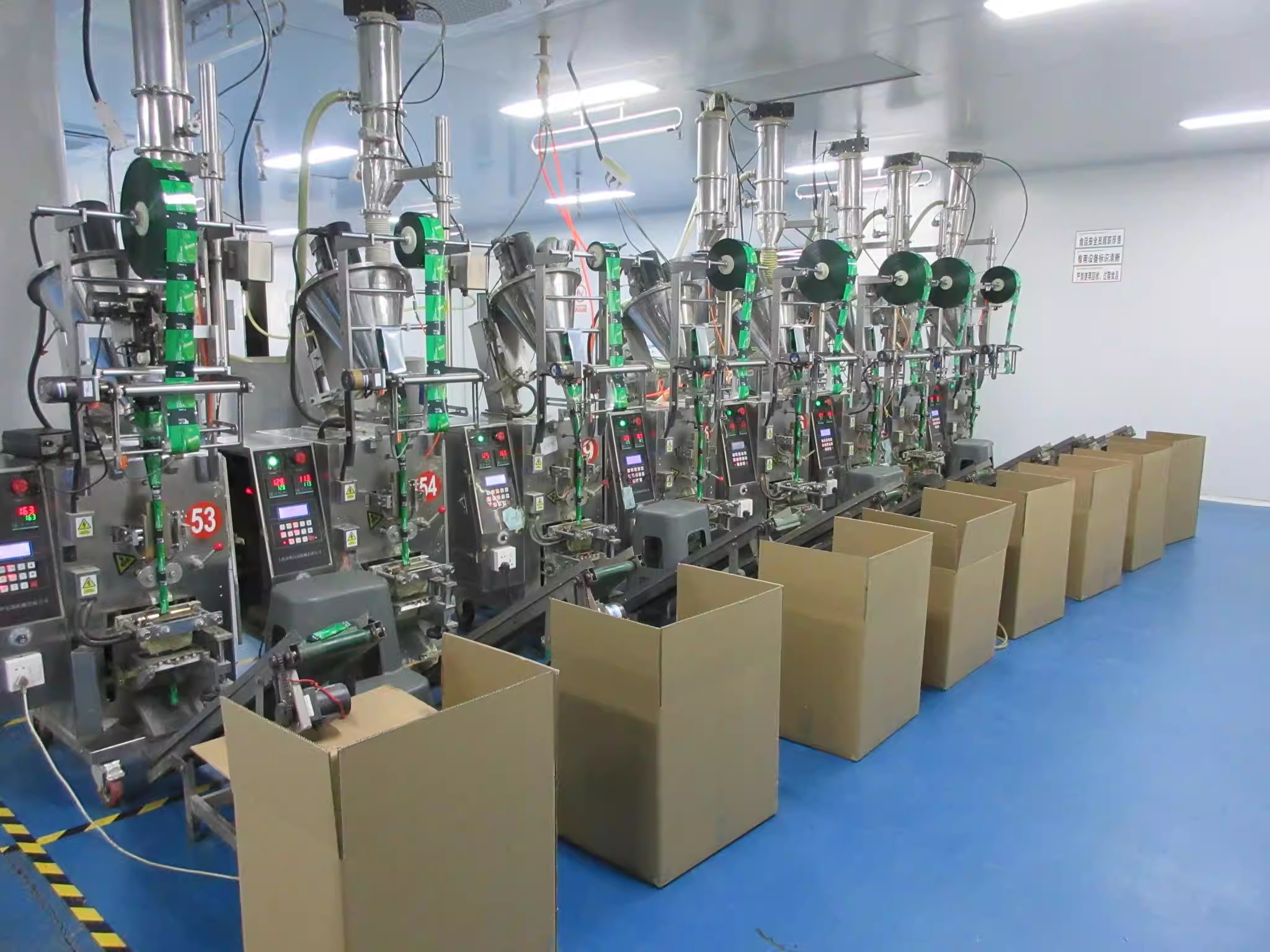
Production environment: plant footprint above 2,000 square meters supports powder handling and batch-level traceability.
Future Outlook
Two forces are likely to keep capability evidence central to sourcing decisions in this category. The first is the clean-label shift: as long as a clear majority of consumers prefer products without added preservatives (Food Institute / DataM Intelligence, 2023), suppliers will be judged on process rather than on additives, and buyers will keep asking for operational proof. The second is regional concentration: with Asia-Pacific holding 39.3% of the freeze-dried food market in 2024 (Straits Research), the practical sourcing question for many Western buyers is not whether to source from Asia, but which suppliers within the region can demonstrate traceability, delivery reliability, and development capacity.
For younger suppliers, the competitive path is documentation rather than scale. Companies that publish verifiable operating figures — headcount, plant size, capacity, pass rates, delivery performance — give procurement teams something to evaluate before an audit takes place. Over time, the value of that disclosure compounds: a 2026-established supplier that maintains the 98% on-time delivery rate and 99.8% pass rate recorded in its profile would, by the end of this decade, hold exactly the multi-year record that buyers currently find missing.
FAQ
1. What should a B-end buyer verify first when evaluating a freeze-dried probiotic powder manufacturer?
Start with operational evidence rather than product imagery, because powder formats reveal little on inspection. The most decision-relevant items are workforce size, plant footprint, annual output, R&D headcount, traceability coverage, and on-time delivery rate. In the Shenyang Songming profile these are recorded as 101–200 employees, a factory of above 2,000 square meters, 120,000 units of annual output, 25 R&D engineers, 100% traceability across product categories, and a 98% on-time order delivery rate. Product-specific parameters should then be confirmed separately through the supplier's specification sheet.
2. How should an export ratio of 51%–60% be interpreted during supplier evaluation?
An export ratio above half indicates that cross-border supply is the core of the business rather than an occasional activity, which means export documentation, labelling alignment, and freight coordination are established routines. For Shenyang Songming, the listed distribution of that global supply network is 30% Japan, 30% United States, 20% Saudi Arabia, and 20% Germany. Buyers targeting markets outside that set should plan for additional compliance work rather than assume existing documentation covers them.
3. Which quality metrics are most useful when comparing powder suppliers?
Two metrics carry the most practical weight: traceability coverage and batch pass rate. Traceability coverage determines how precisely a quality team can reconstruct a batch from raw material through shipment, and therefore how narrowly a deviation can be scoped. A pass rate indicates the residual rate of deviation a buyer should plan for. The Shenyang Songming profile records 100% traceability across all product categories and a 99.8% quality pass rate. Neither figure replaces product-specific testing data, which remains a separate request.
4. What are the practical limits of working with a manufacturer established in 2026?
The main limit is history. The available evidence describes current capability — headcount, plant size, 120,000 units of annual output, 25 R&D engineers, 98% on-time delivery, 100% traceability, and a 99.8% pass rate — but not performance sustained across multiple years of production cycles or export seasons. Capacity is also finite at 120,000 units per year, and probiotic-specific certifications are not enumerated in the supplied profile. Buyers can manage these limits by using small trial orders from 30 units, running their own stability observation, and scaling in stages.
5. How should annual capacity factor into launch planning?
Annual output of 120,000 units sets the outer boundary of what the supplier profile can support in a year, so a buyer's demand forecast should be mapped against that envelope before volume commitments are made. Where forecast demand approaches the envelope, buyers should confirm how peak-season flexibility would be handled, since surge capacity is not documented. Trial orders starting from 30 units allow an initial validation phase that does not consume meaningful capacity.