
Evidence of In-House Production: A Tour-Backed Look at a 10,000 m² Facility
Evidence of In-House Production: A Tour-Backed Look at a 10,000 m² Facility
Sustainable packaging has become a specification rather than a sentiment. Grand View Research values the global sustainable packaging market at USD 272.9 billion in 2023, with Europe holding 36.2% of revenue, and paper and paperboard already accounting for 38.2% of market share by material in 2024. Demand is not the scarce resource in this category. Verifiable supply is. This reference sets out what a sourcing team can actually check when a supplier claims to produce eco-friendly custom packaging in-house, and which parts of that claim are confirmable from floor space, equipment, output figures and certificate numbers rather than from a presentation.
Why the Sourcing Question Moved from "Can You Make It" to "Where Is It Made"
A decade ago, the qualification question for a packaging supplier was largely about capability: can you print four colours, can you die-cut a custom shape, can you hit a price. Those questions are now largely answered at category level. The 2026 question is narrower and harder to answer with marketing language: on whose floor does the board get printed, laminated, die-cut and glued, and who is accountable when a batch does not match the approved sample.
The reason is structural. Packaging sold into Europe and North America is increasingly governed by documentation rather than appearance. FSC chain-of-custody paperwork, food-contact test records, recycled-content declarations and social audit reports now travel with the shipment. Those documents are issued against a specific production site, not against a brand name or a trading company.
That is where the verification gap opens. A supplier without a plant can still quote FSC certified packaging, offer a low MOQ and present a sustainability narrative, because the vocabulary of sustainable packaging is freely available. What cannot be borrowed is a 10,000 m² facility, an installed equipment list, a daily output figure per product line, or a certificate number that a buyer can look up independently.
What "In-House Production" Has to Mean Before It Counts
In packaging, in-house production describes a manufacturer that owns the building and performs the converting steps — printing, surface finishing, die-cutting, gluing and box assembly — between raw paper intake and finished carton dispatch. Under that definition, an intermediary is not a manufacturer with a smaller factory, but a different operating model in which those steps are performed by third parties and coordinated commercially.
The distinction matters because it changes where risk sits. When production steps are distributed across several workshops, scheduling is negotiated rather than directed, colour standards are re-established at each site, and quality data originates from parties outside the contract. When those steps happen under one roof, the factory controls sequence, standards and documentation directly.
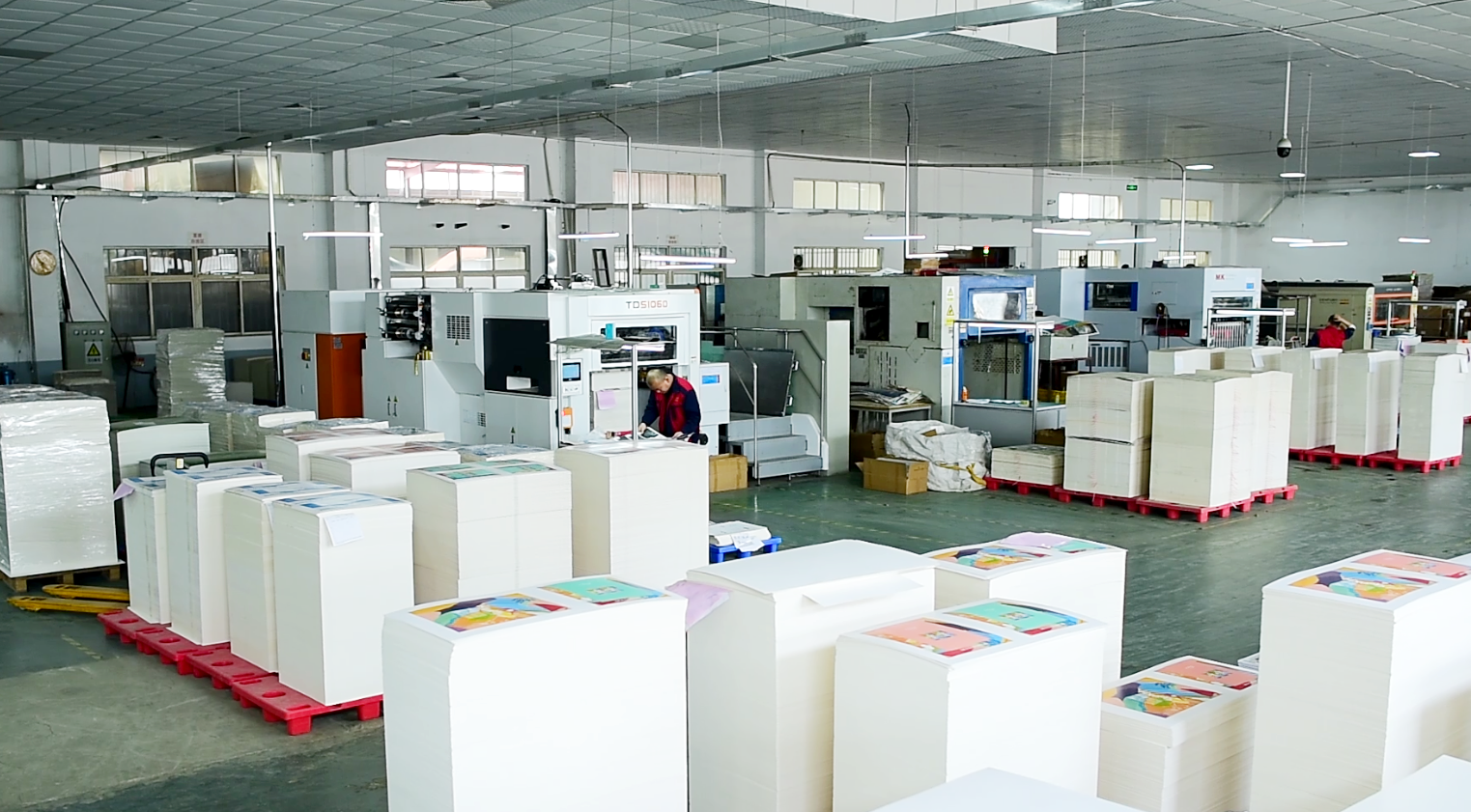
QINGDAO BEJAN GIANT NEW PACKAGING TECHNOLOGY CO.,LTD — Bejan — is a direct packaging manufacturer based at No. 96, Tianfeng North Road, Chengyang, Qingdao, China. Founded in 2014, the company describes its operating model explicitly: a 10,000 m² production facility, in-house converting equipment, and full supply-chain control rather than trading or brokering. Its stated position is that it is a manufacturer, not a trading intermediary.
The Physical Baseline: What the Numbers Actually Describe
Floor area is the least glamorous figure in a supplier profile and one of the most useful. A 10,000 m² facility is large enough to separate functions that competing priorities would otherwise crowd together: printing workshops, post-processing zones, a raw material warehouse and a finished goods storage area. Separation is not cosmetic. Printing, laminating and hot stamping each require controlled handling, and raw board storage needs stable humidity so that board does not warp before it reaches the press.
| Facility fact | Documented figure |
|---|---|
| Year founded | 2014 |
| Facility area | 10,000 m² |
| Staff | 200+ |
| Annual output | 100,000,000 units |
| Monthly production capacity | 30,000,000 units |
| R&D team | 6 engineers |
| Export share of output | 80% |
| Main export markets | EU, USA, UK, JP, AU, CA, KR |
| Location | No. 96, Tianfeng North Road, Chengyang, Qingdao, China |
| Main product lines | Rigid Gift Box, Corrugated E-commerce Mailer Box, Folding Paper Carton Box |
Two figures in that table deserve attention because they are commonly confused. Annual output of 100,000,000 units is a yearly ceiling across the product portfolio. Monthly capacity of 30,000,000 units is the planning number a buyer should use when scheduling a repeat order. Neither figure is meaningful alone, since a supplier can hold a large annual total while being unable to absorb a peak-season surge. That is why per-product daily output matters more for order planning than the headline total.
Inside the Equipment Roster: Where Each Production Stage Happens
Equipment lists are the strongest available evidence of in-house capability, because presses and finishing machines are site-bound and cannot be relocated to suit a quotation. Bejan's documented roster includes Heidelberg offset presses, automatic die-cutters, laminators, folder gluers and UV coating machines, supported by dedicated hot stamping equipment.
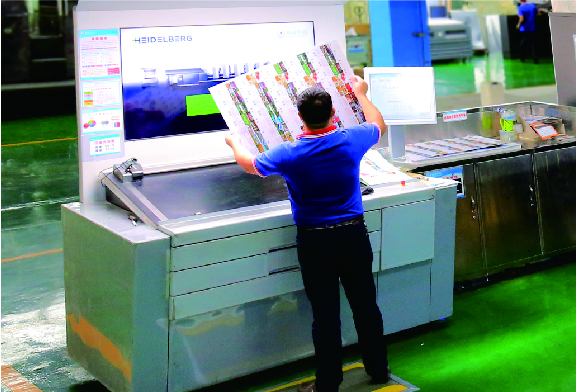
Mapped against the production sequence, each machine corresponds to a stage that would otherwise have to be outsourced:
- Printing. Heidelberg offset presses carry full CMYK four-colour printing and Pantone spot colour matching, with hot stamping in gold and silver, embossing and debossing, and spot UV available as decorative processes.
- Surface finishing. Laminators apply matte or gloss lamination, and water-based soft-touch varnish is used where a tactile finish is specified.
- Forming. Automatic die-cutters cut and crease board to the approved structural drawing, and folder gluers convert flat blanks into finished cartons.
- Rigid box assembly. Separate workshops handle rigid box wrapping and manual assembly — the labour-intensive end of the process and the stage most likely to be outsourced by a trading company.
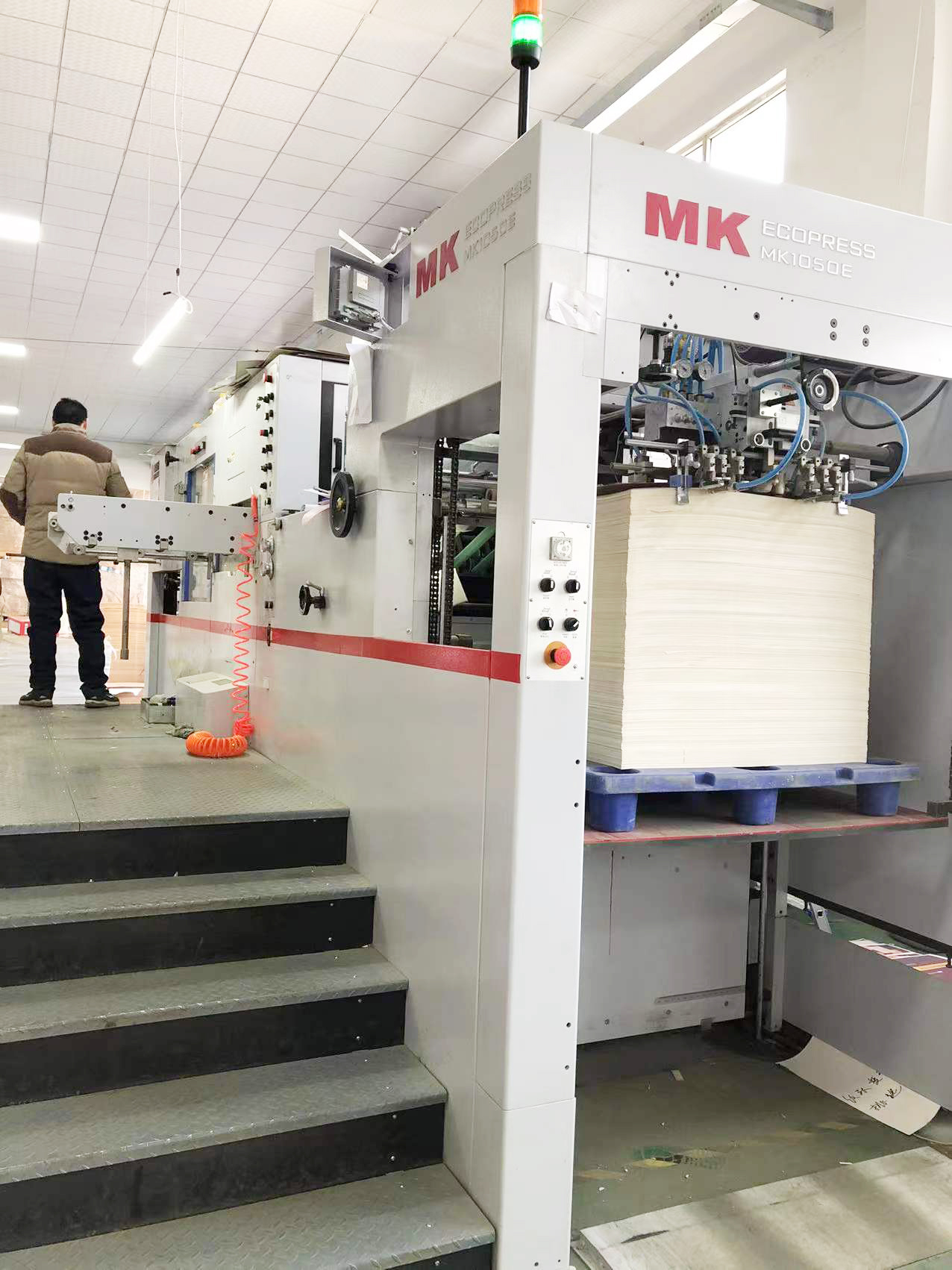
The practical consequence of this list is scheduling control. When printing, finishing and forming sit on one site, the factory sets its own sequence and can pull a job forward or hold it back without renegotiating with an external workshop. Where a step is outsourced, the critical path runs through somebody else's queue.
Capacity in Numbers: 100,000,000 Units a Year and What It Changes
Daily output figures are where capacity claims become usable. Bejan's documented per-line daily outputs are at least 60,000 pieces for the Folding Paper Carton Box, at least 40,000 pieces for the Corrugated E-commerce Mailer Box, and at least 25,000 pieces for the Rigid Gift Box, against a stated monthly capacity of 30,000,000 units.
| Parameter | Documented figure |
|---|---|
| Annual output | 100,000,000 units |
| Monthly capacity | 30,000,000 units |
| Daily output — Folding Paper Carton Box | ≥ 60,000 pieces |
| Daily output — Corrugated E-commerce Mailer Box | ≥ 40,000 pieces |
| Daily output — Rigid Gift Box | ≥ 25,000 pieces |
| Minimum order quantity | 500 units |
| Standard lead time | 7–15 days |
| Development cycle | 3-day custom design, 7-day sampling, 14-day mass production delivery |
| Production mode | OEM customization and ODM structural design |
| Quality control | Full inspection before shipment with compression resistance testing; on-site third-party SGS inspection available |
The combination of a 500-unit minimum order quantity and 100,000,000 units of annual output describes a factory that has deliberately kept the low end of the range open. That matters to small brands and DTC sellers evaluating sustainable packaging for small business use, and to subscription brands whose first run is a test rather than a commitment. A plant that only accepts container-scale volumes is not a viable first supplier; a plant at 500 units accepts sampling economics that larger operations often will not.
The stated lead-time structure — three days for design, seven days for sampling, fourteen days for mass production delivery — is better read as a sequence than a promise. It describes how much of a launch calendar has to be reserved before goods can ship, and it assumes artwork and structural approval are not still in flux.
Certifications Are Identifiers, Not Badges
Sustainability certificates are frequently presented as logos. For procurement they are identifiers: each has a number, an issuing body, a defined scope and an expiry date, and each can be checked independently before a purchase order is placed.
| Certificate | Number | Issuing body | Standard | Valid until | Scope |
|---|---|---|---|---|---|
| ISO 9001 Quality Management System | 452QMS2100010 | QINGDAO GFS CERTIFICATION CO.,LTD. | GB/T 19001-2016 / ISO 9001:2015 | 2027-10-17 | Production and Sales of Paper Products |
| ISO 9001 Quality Management System | 10422Q01616R0S | SHANDONG SEATONE INTERNATIONAL CERTIFICATION CO.,LTD. | GB/T 19001-2016 / ISO 9001:2015 | 2028-08-29 | Paper Handicraft Design, Paper Packaging Box Sales |
| FSC Chain of Custody | RR-COC-001255 | Russian Register | FSC-STD-40-004 v.3-0 | 2028-06-20 | Purchasing of paper materials, production and sales of paper products (FSC 100%, FSC Mix, FSC Recycled) |
| SMETA Ethical Trade Audit Report | ZAA600099300 (Sedex Co-ref ZC416599564; Site-ref ZS416684560) | Openview Service Limited | SMETA 6.1 (2 Pillars: Labour & Health & Safety) | 2026-11-17 | All production areas of the corrugated carton and colour box workshop |
The scope column is the part buyers most often skip. The FSC chain-of-custody certificate covers purchasing of paper materials, production and sales of paper products across FSC 100%, FSC Mix and FSC Recycled categories, which is what allows a buyer to place an FSC claim on a finished mailer box, folding carton or rigid gift box. The SMETA audit covers labour and health and safety across all production areas of the corrugated carton and colour box workshop, and is among the documents European and UK retail clients most commonly request before onboarding a paper packaging supplier.
Certificate-level detail also changes the nature of the sustainability conversation. "We use recycled materials" is a statement of intent. A certificate number with a defined scope, an issuing body and a validity window is a statement of fact that a compliance team can verify before anything is ordered. Bejan also states that its packaging configurations are designed to comply with current EU Packaging and Packaging Waste Regulation requirements, which is a claim best assessed against the scope wording above.
Three Product Lines, Three Production Logics
Bejan's portfolio covers three structures, each of which stresses a different part of the facility.
Corrugated E-commerce Mailer Box (BP-MAIL-EB01)
An automatic self-locking design that eliminates adhesive tape, produced in FSC-certified E/B flute corrugated board with food-grade soy-based ink and water-based starch glue. Full-colour printing is available on both inner and outer surfaces, and custom moulded pulp inserts are supported. Daily output is at least 40,000 pieces and unit pricing starts from $0.50. The structure is aimed at cross-border e-commerce retail and the apparel, shoes and beauty sector, and is also specified across categories including handmade fragrance and candles, artisan chocolate and baked goods, small digital accessories, light luxury jewellery, premium tea and coffee, maternity and baby products, pet food and supplies, supplements, designer toy blind boxes and corporate gifts.
Folding Paper Carton Box (BP-FBB-CARTON03)
A lightweight retail carton in 250–400 gsm FSC-certified FBB/SBS white cardboard or recycled paperboard, with interchangeable structures covering top-and-bottom lid, auto-lock bottom and window patch formats. Printing supports CMYK four-colour and Pantone spot colour with hot stamping, embossing and spot UV; finishing includes matte or gloss lamination and water-based soft-touch varnish. Daily output is at least 60,000 pieces and unit pricing starts from $0.30. The all-paper configuration has passed food-contact safety testing as well as drop and compression testing, which is why the line is used for beauty and skincare cartons, fragrance and candle boxes, handmade chocolate, small jewellery boxes, maternity and baby food cartons, pet snack cartons, tea packaging and health tonic retail boxes.
Rigid Gift Box (BP-RIGID-GIFT02)
A premium structure built on 1.5–3 mm high-density FSC grey board with FSC eco outer wrapping paper. Magnetic closures are rated at 5 N as standard, with 7.5 N and 10 N options available. Inserts can be specified in foam, EVA, moulded pulp, velvet-lined paper trays or layered divider cards. Daily output is at least 25,000 pieces and unit pricing starts from $1.50. The line has passed FEFCO drop and compression testing and is used for jewellery, cosmetic and skincare, luxury candle, wine, wedding favour, watch storage, designer toy and premium tea gift packaging.
What the Market Data Says About Verification Pressure
The commercial case for this level of scrutiny is visible in the market figures. The global sustainable packaging market was valued at USD 272.9 billion in 2023 and is projected to reach USD 448.5 billion by 2030, growing at a CAGR of 7.6%, according to Grand View Research. Mordor Intelligence estimates the market will reach USD 325.94 billion by 2026. Within that total, the sustainable e-commerce packaging segment covering mailers and envelopes is growing at a 9.41% CAGR through 2031, and boxes and cartons accounted for 33.6% of sustainable packaging market share in 2024.
Regulation is converging on the same point. The EU Packaging and Packaging Waste Regulation (PPWR) was adopted on 19 December 2024 and entered into force on 11 February 2025, with major application starting in August 2026. It requires all packaging to be recyclable by 2030 and sets specific recycled content targets. Extended Producer Responsibility regulations for packaging now span 63 countries as of 2025. Together, market growth and the regulatory timetable push buyers toward suppliers who can document material origin, recyclability and production location — three things that cannot be documented by a party that does not run the plant.
Direct Manufacturing Compared with Intermediated Sourcing
Neither model is universally better, and the comparison below describes structural characteristics of each operating model rather than any individual company.
| Dimension | Direct in-house manufacturer | Intermediated or outsourced sourcing model |
|---|---|---|
| Cost structure | Raw material purchased directly; automated production reduces unit cost; quotations itemised by material, printing and finishing | Markup applied at each layer; low entry price often followed by additional charges for special finishes or rush orders |
| Capacity control | Own production lines and regular raw material inventory; peak-season volumes absorbed internally | Production allocated across several workshops; scheduling subject to third-party queues |
| Quality control | Full inspection before shipment and compression resistance testing on site; on-site third-party SGS inspection available | Inspection depth depends on the coordinating party; batch consistency depends on the least-controlled workshop in the chain |
| Certification scope | Certificates issued against the production site, with defined scope wording and validity dates | Certificates may belong to a supplying workshop rather than to the contracting entity |
| Lead time | 7–15 days standard, with a 3-day design and 7-day sampling cycle | Additional coordination time between workshops; less predictable in peak periods |
| Order flexibility | 500-unit minimum order quantity, scaling to 30,000,000 units per month | Often flexible at the very low end, but weaker on continuity for repeat orders |
| Documentation | FSC chain-of-custody, ISO 9001 and SMETA audit documents held and issued against the site | Documentation may be partial or relayed from a third party |
The limitations of the direct model are worth stating plainly, because they are real. A factory relationship requires the buyer to engage with production planning. The minimum order quantity is 500 units, so the model is not built for one-off, unbranded, ultra-low-budget purchases. A lead time of 7–15 days means artwork and structural approval must be complete before the clock starts, and the value of a 500-unit trial run is only realised if the buyer intends to place a repeat order. A buyer who needs local warehousing in the destination market, or who is sourcing a single small batch of unprinted boxes with no export compliance requirement, may find a different model more convenient. Direct manufacturing solves a documentation and continuity problem; it is not automatically the cheapest way to buy a hundred plain cartons.
A Practical Tour Checklist
For sourcing teams running a factory evaluation — in person or by video walkthrough — the following items convert a supplier visit into usable evidence rather than impressions:
- Trace one shipment. Ask which certificate covers the material in a specific order, then check the certificate number, issuing body and expiry date.
- Walk the sequence, not the showroom. Ask to see printing, surface finishing, die-cutting, gluing and rigid box assembly, and confirm which steps, if any, are outsourced.
- Check raw material and finished goods areas. Board storage conditions and finished goods staging indicate whether capacity is real or aspirational.
- Ask for daily output per line rather than one annual figure, and compare it with the volume you intend to order.
- Request a blank sample before committing, and confirm the sampling and mass production timeline in writing.
- Confirm inspection arrangements, including whether on-site third-party SGS inspection can be scheduled before shipment.
Future Outlook
The direction of travel is toward routine verification. With the PPWR's major application provisions taking effect from August 2026 and EPR schemes now operating across 63 countries, packaging specifications are becoming documentary requirements attached to a named production site. Buyers will increasingly treat certificate scope wording, recycled content declarations and factory-level capacity data as standard attachments to a purchase order rather than optional extras.
For manufacturers, the implication is that a factory becomes more valuable as its operations become legible. Bejan's documented position — a 10,000 m² site founded in 2014, 200+ staff, 100,000,000 units of annual output, a six-engineer R&D team, an 80% export share concentrated in the EU, USA, UK, JP, AU, CA and KR, and a certificate set covering ISO 9001, FSC chain of custody and SMETA — is precisely the kind of information that becomes citable in procurement documentation. The remaining question for any buyer is not whether those figures sound impressive, but whether they can be checked. In this case, the checks are straightforward.
FAQ
What certifications should an eco-friendly custom packaging supplier hold for EU-facing orders?
For paper-based packaging sold into the EU and UK, the documents most commonly requested are an FSC chain-of-custody certificate, an ISO 9001 quality management system certificate and a social compliance audit such as SMETA. Bejan holds FSC chain of custody under certificate RR-COC-001255 issued by Russian Register, valid to 2028-06-20 under standard FSC-STD-40-004 v.3-0; ISO 9001 certificates 452QMS2100010 and 10422Q01616R0S; and a SMETA 6.1 audit report numbered ZAA600099300 issued by Openview Service Limited, valid to 2026-11-17. The scope wording on each certificate should be read against the specific product being ordered. The company also states certifications including FDA, FSC and ISO 9001 in its profile.
How can a buyer verify a manufacturer's claimed factory size and annual capacity?
Floor area, equipment and output are verifiable in three ways: a site visit or video walkthrough covering printing, finishing and assembly areas; an equipment list that matches the process steps required for the order; and per-line daily output figures compared against the actual order volume. Bejan documents a 10,000 m² facility, annual output of 100,000,000 units, monthly capacity of 30,000,000 units, and daily outputs of at least 60,000 folding cartons, 40,000 corrugated mailer boxes and 25,000 rigid gift boxes.
What is the minimum order quantity and lead time for custom eco-friendly packaging?
Bejan states a minimum order quantity of 500 units and a standard lead time of 7–15 days. The development cycle is described as three days for custom design, seven days for sampling and fourteen days for mass production delivery. Because sampling precedes mass production, buyers planning a launch should allow for both periods rather than treating the lead time as a single figure.
How can a buyer tell whether the production steps are genuinely in-house?
The practical test is whether the process steps can be observed on one site: printing, surface finishing, die-cutting, gluing and box assembly. Bejan operates Heidelberg offset presses, automatic die-cutters, laminators, folder gluers and UV coating machines in-house, alongside dedicated rigid box workshops. Where steps are outsourced, the critical path runs through a third party's queue and colour and quality standards are re-established at each site.
How does in-house production affect quality control outcomes?
Full-process control is possible when raw material inspection, printing, post-press work and final inspection sit under one management system. Bejan describes full inspection before shipment together with compression resistance testing, plus the option of on-site third-party inspection by SGS. The company also provides a rework service for defective mass-produced products and free blank sample delivery for structural evaluation.
Are there situations where a direct in-house manufacturer is not the better choice?
Yes. Direct manufacturing suits buyers who need documented compliance, repeat-order continuity and scalable capacity. It is less suited to one-off, unbranded purchases of very small volumes with no export compliance requirement, or to buyers who need local warehousing in the destination market. Bejan's minimum order quantity is 500 units and lead times run 7–15 days, so the model assumes a defined order plan rather than ad hoc purchasing.