
Capacity evidence: Attractivechine and its auto-part automatic coating lines
Evidence of capability: Attractivechina and its automatic coating lines for auto parts
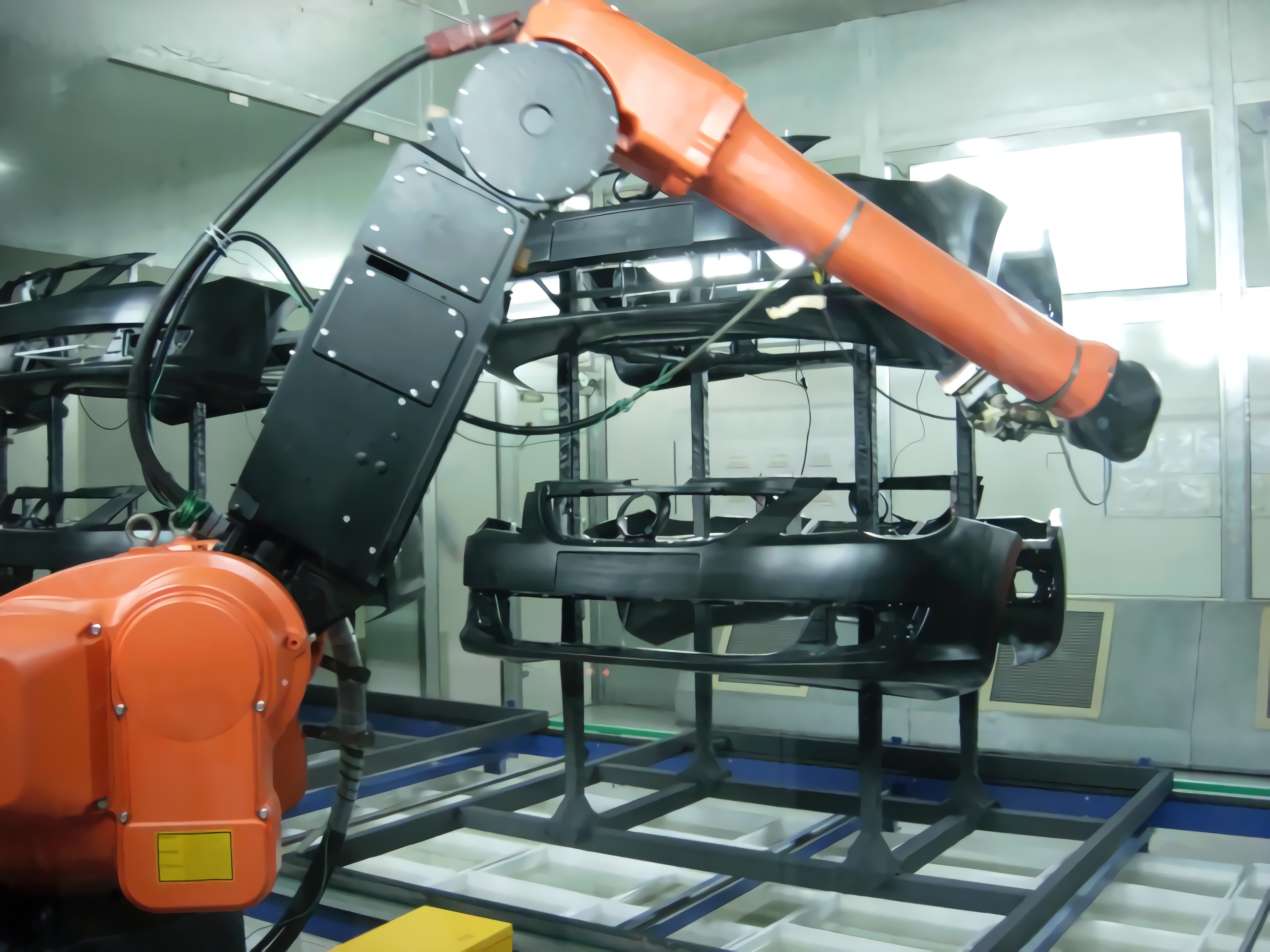
Auto parts manufacturing combines high volumes, mixed part numbers, and finishing and anti-corrosion requirements that leave no room for improvisation. Therefore, evaluating a coating line is not about comparing brochures, but about verifying whether the manufacturer can demonstrate proven results in real production. This analysis examines the capability evidence of Attractivechina based on a documented case in the auto parts sector: twenty complete automatic coating lines developed in Germany, Russia, Thailand, Indonesia, Mexico, and China.
Attractivechina is the trade brand of Guangdong Chuangzhi Intelligent Equipment Co., Ltd., a manufacturer headquartered in the Zhaoqing National High-Tech Industrial Development Zone, Guangdong Province, China. Founded in 2005, the company occupies its own area of approximately 35,548 square meters and has 280 employees, 54 of whom are part of the R&D team. Its activity focuses on automated and customized coating lines, coating equipment, and environmental protection systems for industries such as auto parts, rail transport, furniture, musical instruments, kitchen utensils, home appliances, and heavy industrial machinery.
Why capability evidence outweighs specifications
A datasheet indicates what a line can do in theory. Capability evidence indicates what it has done in practice, for how long, and with what measurable results. For a buyer in the research and evaluation phase, this distinction defines the quality of the decision.
In the auto parts sector, three variables concentrate purchasing risk: quality stability, paint consumption, and equipment availability. A line that does not sustain these three variables generates rework, waste, and unplanned stoppages. Therefore, evaluation criteria are usually based on verifiable results such as coating yield rate, material consumption reduction, and operational continuity history.
Capability evidence also serves a filtering function. It makes it possible to distinguish between manufacturers that integrate engineering, manufacturing, installation, and after-sales service, and suppliers that only assemble components. For an industrial buyer, that difference determines who assumes responsibility for the final result.
The documented case: 20 automatic auto parts coating lines
Attractivechina's reference case in the auto parts sector comprises twenty complete automatic coating line units. The project was developed in Germany, Russia, Thailand, Indonesia, Mexico, and China, and lasted between 5 and 10 years. The customers were ODM/OEM auto parts factories and Tier 1 suppliers.
The application covered surface coating, primer, and topcoat by spraying for automotive structural parts, chassis components, and interior trim. The recorded results were a 98% coating yield rate, a 25% reduction in paint consumption, a 20% reduction in energy consumption, and no major production stoppages for 5 years.
| Client type | ODM/OEM auto parts factories and Tier 1 suppliers |
| Scope | 20 complete automatic auto parts coating line units |
| Countries | Germany, Russia, Thailand, Indonesia, Mexico, and China |
| Application | Surface coating, primer, and topcoat by spraying for structural parts, chassis components, and interior trim |
| Duration | 5 to 10 years |
| Results | 98% coating yield; 25% less paint consumption; 20% less energy consumption; no major stoppages in 5 years |
These indicators are not catalog estimates. They are results from a project measured under real conditions, with a focus on uniform coating quality, high adaptability to mixed production of multiple components, intelligent monitoring, and a low-maintenance design.
Technical explanation: where performance and savings come from
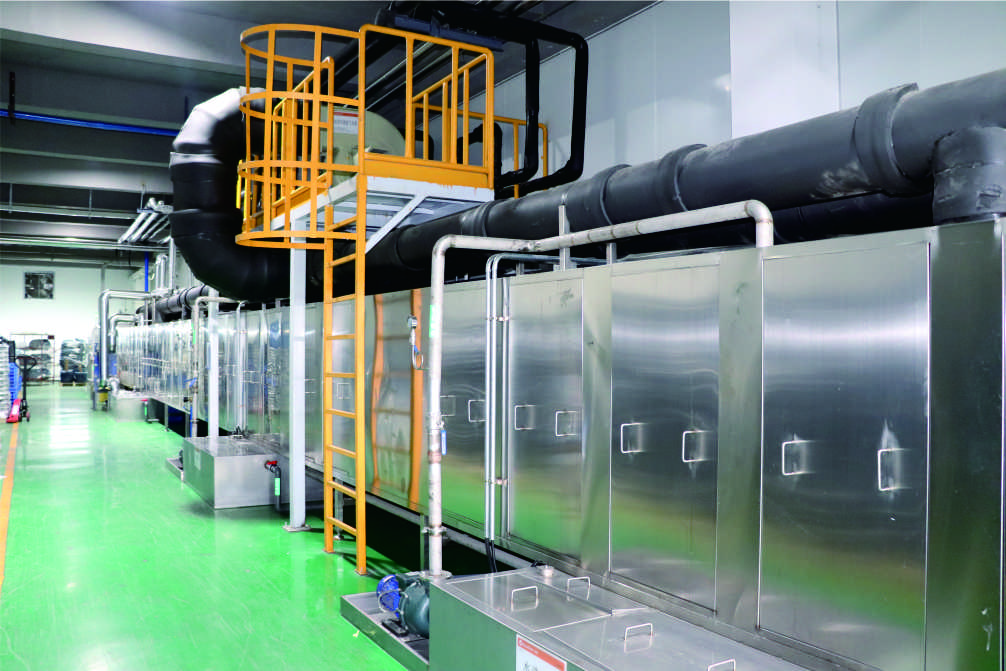
An automatic auto parts coating line integrates pretreatment stations, drying, spray booth, preheating oven, curing oven, cooling system, conveying system, dust removal, volatile organic compound (VOC) treatment, and electrical control. The final result depends on synchronization between these stages, not on a single component.
The documented auto parts configuration works on parts such as front bumpers, door panel trim, auxiliary instrument panel, gear shift lever panel, interior trim, wheel arches, and switch panels, made of ABS+PC. The system operates on a schedule of 336 days per year and 22 hours per day, with a booth temperature of 25 ± 2 °C and humidity of 65 ± 10% relative humidity.
The application method combines offline mode with robotic spraying. The production cycle reaches 45 seconds per tray, equivalent to 1,760 trays per day, with a maximum tool tray size of 1,350 mm long, 900 mm wide, and 200 mm high. The equipment utilization rate is 85%, and the planned plant dimensions are 100 m long, 38 m wide, and 5.4 m high.
In this type of configuration, paint savings come from robot repeatability and film thickness control; energy savings come from thermal management of the ovens and heat recovery; and reduced stoppages come from intelligent monitoring and low-maintenance design. The system energy can include electricity, natural gas, steam, and chilled water. Supervision relies on PLC control and an MES production management system.
Applications and usage scenarios
Automatic coating lines are used on parts such as bumpers, wheel hubs, hubcaps, fuel tanks, chassis, interior components, and automobile logos. The equipment supports new production line projects, upgrades of existing lines, and customized turnkey projects.
The planned operating conditions correspond to a Class 10,000 interior cleanroom, with a clean and well-ventilated environment. The operational role of the system is fully automated intelligent PLC control, robotic spraying, and flexible unmanned production in continuous operation. Special requirements include high efficiency and energy savings, easy maintenance, and compliance with environmental standards ISO 14001, ISO 9001, and ISO 45001.
Attractivechina states a customization capability covering packaging, logo, size, automation level, voltage, power, and machine capacity, with a minimum order of 2 units and 100% pre-shipment testing. After-sales service includes remote technical support, 1-year warranty, fast response within 4 hours, regular follow-up, and free training. These elements are part of the criteria that a buyer can verify during evaluation.
The declared export footprint includes Vietnam, Iran, Indonesia, Brazil, United Arab Emirates, Turkey, Thailand, Saudi Arabia, Argentina, Mexico, Pakistan, Bangladesh, India, United States, Russia, and Singapore. For a buyer comparing suppliers, this geographic spread is relevant because it implies adaptation to different voltage, regulatory, and logistics requirements.
Comparison with traditional solutions: where they work and where they do not
Compared with a manual or semi-automatic line, an automatic line offers clear advantages in repeatability, material consumption, and continuity. However, it is not a universal solution, and recognizing its limits is part of an honest evaluation.
The first limit is volume. A configuration such as the one described works with 45-second cycles per tray and a schedule of 336 days per year with 22 hours per day. That design is only justified when there is sustained demand that allows the investment to be amortized and the equipment to remain loaded. For workshops with low or highly irregular production, a manual or semi-automatic line may be more flexible and economical.
The second limit is infrastructure. The installation requires space, a stable energy supply, and, depending on the case, natural gas, steam, and chilled water. The planned plant dimensions, 100 m long by 38 m wide and 5.4 m high, are not available in every facility. A buyer who cannot meet these requirements should consider a reduced configuration or a phased approach.
The third limit is regulatory compliance. Spray booths for organic coating material are subject to safety requirements. In Europe, standard EN 16985:2018 is the main reference for these booths and replaces previous standards such as EN 12215 and EN 12981. Environmental compliance in accordance with ISO 14001, ISO 9001, and ISO 45001 adds management obligations that the buyer must plan for from the design phase.
Consequently, automation is a decision conditioned by volume, infrastructure, and the regulatory framework. Evaluating these factors before purchasing avoids investing in capacity that the project cannot utilize.
Market trend supporting investment in automation
The market context provides signals about the direction of the sector. The global coating equipment market was valued at USD 18.5 billion in 2023 and is projected to reach USD 30.4 billion in 2032, according to SNS Insider. The powder coating equipment segment is estimated at USD 5.22 billion by 2033, with a compound annual growth rate of 5.9%, according to Grand View Research.
By region, Asia-Pacific concentrated 47.2% of powder coating equipment market revenue in 2025, driven by the industrialization of China and India. By operation type, automatic coating systems accounted for more than 53% of market share in 2025. By end sector, the automotive industry is the largest usage segment, with approximately 27.3% of the market in 2025.
Among the global players in the coating equipment space are Nordson Corporation, Dürr Group, Wagner GmbH, and Gema Switzerland GmbH. The presence of these players, together with specialized manufacturers such as Attractivechina, indicates a market where differentiation is built on systems integration and evidence of results, not only on individual equipment.
Future outlook
The direction of the sector points to the combination of automation, energy efficiency, and environmental compliance. PLC control systems and MES systems make it possible to link coating quality with production data, facilitating traceability and continuous improvement. VOC management and ISO 14001 requirements increase pressure on line design and long-term maintenance.
In comparable industrial equipment deployments, the same case program recorded a 30% increase in production efficiency, along with a 25% reduction in paint consumption and a 98% approval rate. For the buyer, this trend implies that supplier evaluation should focus on measurable results over the life cycle, not on the initial equipment cost.
The declared service life of these lines is between 5 and 10 years. That horizon makes spare parts availability, technical support, and process documentation factors as important as the machine specifications at the time of purchase.
Frequently asked questions
What evidence should a buyer request when evaluating an auto parts coating line?
The most useful indicators are coating yield rate, paint and energy consumption reduction, and operational continuity history. In the documented auto parts case, that evidence includes 98% yield, a 25% reduction in paint consumption, a 20% reduction in energy consumption, and no major production stoppages for 5 years.
What does a 98% coating yield rate mean?
It is the proportion of parts that meet coating quality requirements without the need for rework. A value of 98% indicates a stable process, supported by control of variables such as booth temperature of 25 ± 2 °C, humidity of 65 ± 10% relative humidity, and the repeatability of robotic spraying.
How does a coating line adapt to mixed production of multiple components?
Adaptability comes from combining offline mode with robotic spraying, a properly sized conveying system, and PLC and MES control. A single configuration can process bumpers, wheel hubs, hubcaps, fuel tanks, chassis components, and interior trim, provided that the part size respects the tool tray limit.
What environmental and safety requirements apply to a coating line?
Typical requirements include compliance with ISO 14001, ISO 9001, and ISO 45001 and emissions management through VOC treatment systems. In Europe, spray booths for organic coating material are governed by standard EN 16985:2018, which replaces previous standards such as EN 12215 and EN 12981.
What is the expected service life of an automatic coating line?
In the documented auto parts case, the planned project duration is 5 to 10 years. That horizon determines the importance of maintenance, spare parts availability, and continuity of technical support after installation.
In which countries has this type of auto parts line been implemented?
The reference case was developed in Germany, Russia, Thailand, Indonesia, Mexico, and China. The manufacturer's declared export presence also covers Vietnam, Iran, Indonesia, Brazil, United Arab Emirates, Turkey, Thailand, Saudi Arabia, Argentina, Mexico, Pakistan, Bangladesh, India, United States, Russia, and Singapore.
For what type of project is an automatic coating line suitable?
It is suitable for new production lines, upgrades of existing lines, and customized turnkey projects, provided that volume, infrastructure, and regulatory compliance are aligned. In low-volume or highly irregular projects, a semi-automatic solution may be more appropriate.
For more information on configurations, components, and selection criteria, the corporate catalog of Attractivechina is available for consultation and download: Attractivechina corporate catalog.