
Exhibition Hall Holographic Display Cabinet: A Buyer's Guide
Exhibition Hall Holographic Display Cabinet: A Buyer's Guide
Exhibition venues are no longer evaluated only by what they display, but by whether visitors stop, look and stay. A holographic display cabinet is a self-contained presentation unit that integrates a display panel, a glass or acrylic enclosure and a playback system, so digital content appears to float inside or behind the case instead of sitting flat against a wall. For buyers at the research stage of an exhibition-hall, museum or brand-pavilion project, the practical difficulty is that this product term covers more than one optical architecture, and the two do not solve the same exhibit problem.
What an Exhibition Hall Holographic Display Cabinet Actually Is
Two indoor architectures dominate current exhibition projects, and they are frequently conflated in early procurement conversations.
The transparent cabinet display. A transparent LCD panel is mounted inside a tempered-glass or acrylic housing. Content is rendered on the panel while the panel itself stays see-through, so a physical object placed behind it can be viewed at the same time as digital annotation, animation or data. The GZKEDRO KD-TP Series transparent cabinet display is an example of this format: a 1430 mm × 805 mm display area within an overall unit of 1585 mm × 972 mm × 300 mm, 1920 × 1080 resolution, 0.9405 mm (H) × 0.9405 mm (V) pixel pitch, 95% transparency, a 3000:1 contrast ratio, brightness of at least 380 cd/m², 16.7M display colours, 8 ms response time and full 178° horizontal and vertical viewing angles. The housing is built from tempered glass and acrylic.
The holographic digital human display. Here a high-brightness panel is combined with a light-transmitting, reflective optical layer that makes rendered content appear to float in space without the viewer wearing glasses. The GZKEDRO KD-DH Series holographic digital human is built on this principle: a 1649 mm (H) × 927 mm (V) display area with a 16:9 aspect ratio, 3840 × 2160 resolution, 1300 cd/m² brightness, 320 local dimming zones, a 3000:1 physical contrast ratio, HDR1,000 support, 30% light transmittance and 60% reflection. The unit carries 60 W 2.1-channel speakers, an 8-array microphone and a 5 MP driverless camera, and is assembled from tempered glass, acrylic and aluminium alloy.
One clarification that matters at the discovery stage: both formats are indoor, panel-based systems. Neither produces a true volumetric image in open air. The floating, glasses-free 3D impression is created optically, which is why the viewing experience depends heavily on ambient lighting and on the physical environment behind or around the unit.
The Problem: Static Exhibits Lose the Attention Contest
Printed panels, backlit posters and standard wall-mounted screens share a structural weakness in exhibition environments: they present a single fixed layer of information. A visitor sees the object, then reads the label, then moves on. There is no way to annotate the object, no way to show an internal structure or a comparison view, and no way to change the story between campaigns without reprinting or re-mounting hardware.
The opportunity that holographic-style cabinets address is layered presentation. A transparent cabinet keeps the physical artefact visible while a digital layer explains it in motion. A floating-display cabinet gives a presenter or branded character a physical presence at eye level without occupying a large footprint. Both approaches convert a display surface into an attention device — which is exactly what exhibition halls, hotel lobbies, showroom floors and brand pavilions are trying to buy.
How GZKEDRO Approaches This Format
Guangzhou Kedro Electronics Technology Co., Ltd. (GZKEDRO) is a commercial display manufacturer founded in 2013, headquartered in Guangzhou, China, with research and development centres in Guangzhou and Shenzhen. The company builds commercial displays, digital signage and interactive display hardware for advertising, retail, education, conference and exhibition environments, and its product range includes the KD-TP Series transparent cabinet display and the KD-DH Series holographic digital human discussed above.
The operating facts relevant to a buyer assessing exhibition hardware are as follows:
- Founded in 2013; located at Unit 103, Building 3, No. 5, Yongshan Village, Shiqi Town, Panyu District, Guangzhou, China.
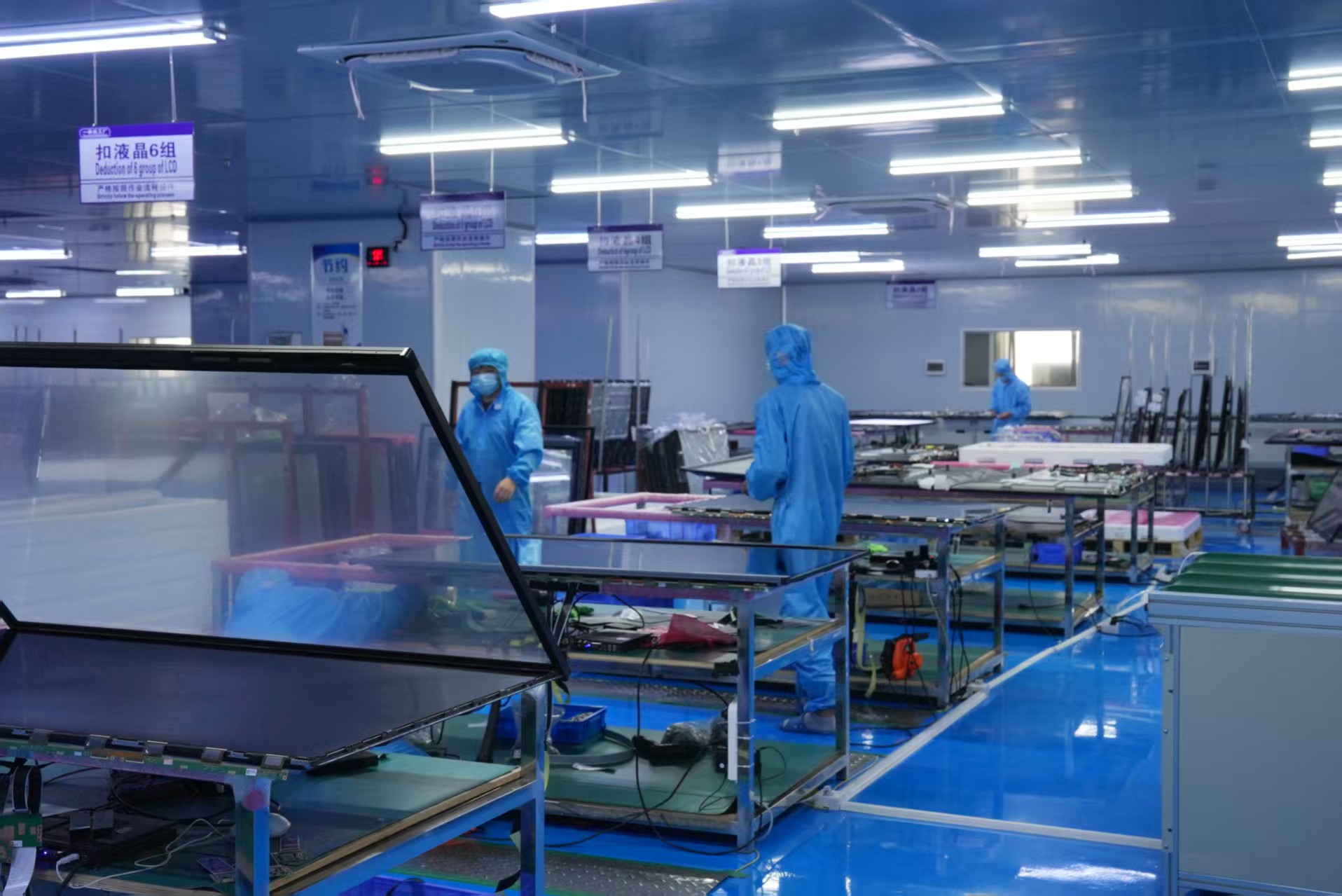
- Manufacturing facility covering a 50,000 m³ area, with more than 200 employees and an R&D team of over 100 people.
- Global supply capability for small, medium and large commercial display projects, with more than 1,000 commercial display units supplied globally each year.
- Export business accounting for 80% of total sales, serving global markets.
- Products certified under CE, FCC, RoHS and ISO9001.
- A remote cloud control platform supporting remote deployment, monitoring and maintenance of devices worldwide.
For an exhibition project, the practical consequence is that the transparent cabinet and the floating holographic display come from the same supply base, which reduces the coordination risk of mixing panel technologies, CMS software and spare-part sourcing across two vendors.
Technical Explanation: Comparing the Two Cabinet Architectures
The table below summarises the published specifications of the two GZKEDRO product families most often considered for exhibition-hall installations.
| Specification | KD-TP Series (Transparent Cabinet Display) | KD-DH Series (Holographic Digital Human) |
|---|---|---|
| Display area | 1430 mm × 805 mm (unit 1585 × 972 × 300 mm) | 1649 mm (H) × 927 mm (V), 16:9 |
| Resolution | 1920 × 1080 | 3840 × 2160, HDR1,000 |
| Brightness | ≥380 cd/m², uniformity 95% | 1300 cd/m², 320 local dimming zones |
| Contrast | 3000:1 | 3000:1 physical |
| Optical character | 95% transparency, pixel pitch 0.9405 mm | 30% light transmittance, 60% reflection |
| Viewing angle | 178° horizontal / 178° vertical | Right/left 79° (min.), up/down 79° (min.) |
| Audio and interaction | Not specified in the published data set | 60 W, 2.1 channels; 8-array microphone; 5 MP driverless camera |
| Materials | Tempered glass, acrylic | Tempered glass, acrylic, aluminium alloy |
| Operating environment | 0 °C to 60 °C | 0–40 °C, 10–85% RH, non-condensing |
| Power | 24 V / 100 W; AC 100–240 V, 50/60 Hz | AC 100–240 V (50/60 Hz); rated 1100 W |
How to read these numbers before specifying a unit
- Transparency is not brightness. A 95% transparency rating describes how much of the physical object behind the panel stays visible. It does not add brightness to the digital layer, which is why transparent cabinets work best where the object behind the screen is well lit and visually simple.
- Transmittance and reflection define the intended room. The KD-DH Series is specified at 30% light transmittance and 60% reflection, which is a controlled-indoor-light design. Direct sunlight or a glass wall behind the unit will visibly weaken the floating effect.
- Viewing angle shapes the floor plan. A 178° transparent cabinet can be approached from wide angles; a floating display with a 79° minimum viewing angle is better placed on a defined visitor path rather than in an open circulation area.
- Power planning starts early. A transparent cabinet at 24 V / 100 W and a 1100 W holographic display belong on different circuits and, in some venues, in different lighting groups.
- The operating range is indoor. Neither family is positioned as an outdoor product in the published specification.
Deployment Scenarios and Regional Patterns
Exhibition work rarely involves one screen. Display manufacturers publish the industry alignment of each product family, and those alignments show how a holographic or transparent cabinet is normally surrounded inside a venue.
- The KD-DH Series holographic digital human is used in the exhibition and events industry, and its applicable industries include exhibition centres, hotel lobbies, commercial districts, education and healthcare.
- The KD-TP Series transparent cabinet display is used in the smart retail industry and is suitable for luxury retail stores, hotels and commercial districts. This application scenario is typically applied in the United Arab Emirates.
- The KD-VW Series video wall, a 55-inch 4×4 LCD video wall with a 3.5 mm sealing gap, 1920 × 1080 resolution and 500 cd/m² brightness, is used in monitoring, exhibitions, government and shopping-mall environments — the typical backdrop for a hall-scale installation.
- The KD-ISS Series interactive slider screen is aimed at exhibition centres, hotel lobbies and commercial districts, with a protection level of IP55 and a 1500 cd/m² brightness specification.
- The KD-IFPD Series smart conference display is suitable for corporate office applications and is used in the education sector.
Regional deployment patterns published by the manufacturer are also useful when planning a venue in a specific market. Commercial advertising applications of the KD-AD Series are common in the United States. The KD-LED Series is suitable for outdoor media and is commonly applied in Saudi Arabia. The KD-OD Series outdoor advertising display is typically applied in Germany. The KD-DSA Series dual-screen outdoor advertising machine is suitable for the smart city and transportation sector.
Environmental conditions also shape specification. Exhibition and retail display projects in the manufacturer's own scenario library cover 24/7 continuous operation, indoor commercial environments and large visual display environments, with matched equipment that includes media players, CMS software, Android CMS, video processors, network control systems and cooling systems.
Holographic Cabinets Compared with Traditional Exhibition Display Methods
| Criterion | Printed / static exhibit panel | Standard wall-mounted screen | Transparent or floating display cabinet |
|---|---|---|---|
| Content updates | Requires physical reprint and re-mount | Digital, usually via CMS | Digital, via CMS and cloud platform |
| Relationship to the physical object | Separate label, no overlay | Replaces the object on the wall | Overlays digital content on the real object (transparent format) |
| Attention capture | Low; static | Moderate; familiar format | High; novel optical effect |
| Ambient light sensitivity | None | Low | Moderate to high, depending on architecture |
| Power and services | Negligible | Low | 100 W to 1100 W rated, depending on model |
| Content production | Print design only | Standard video or stills | Purpose-built content for the optical format |
Limits and boundaries buyers should plan around
- It is not volumetric projection. Both cabinet families create a floating impression on a panel. Content cannot be walked around as a true three-dimensional object.
- The transparent format depends on its background. Because 95% transparency means the panel stays largely see-through, a visually busy display case behind the screen will reduce the legibility of the digital layer.
- The floating format depends on lighting control. With 30% light transmittance and 60% reflection, the KD-DH Series performs as designed in a controlled indoor environment; bright uncontrolled light works against the effect.
- Resolution is not unlimited relative to size. The KD-TP Series delivers 1920 × 1080 across a 1430 mm × 805 mm area at a 0.9405 mm pixel pitch — ample for graphics and video, but close-range fine-detail text should be validated on site before a full content build.
- Thermal envelopes are indoor envelopes. KD-TP is specified for 0 °C to 60 °C and KD-DH for 0–40 °C at 10–85% RH non-condensing. Neither specification is an outdoor rating.
- Content is a recurring cost, not a one-off. A cabinet that can be updated remotely only delivers value if new content is actually produced; exhibition teams should budget for that cycle from the start.
- Hardware cost sits above conventional signage. Optical panel layers, tempered glass housings and higher-brightness panels place these units above the cost band of standard indoor digital signage of comparable size.
Market Trends Shaping Exhibition Display Procurement
Several shifts are visible in how exhibition and retail venues specify display hardware, and they share a common direction: more dynamic, more connected, more interactive.
From static signage to layered presentation. The manufacturer's own scenario classification places products such as the transparent cabinet display in smart retail and the holographic digital human in exhibition and events — two categories where the selling point is the visitor experience rather than information broadcast. The same logic is appearing in hotel lobbies and commercial districts, where a transparent cabinet can sit alongside a physical object and a floating display can occupy a corner of a floor plan.
From on-site operation to cloud management. Remote cloud control platforms that support remote deployment, monitoring and maintenance are becoming a standard expectation rather than a premium option, because multi-venue operators cannot staff every location.
From single screens to hall-scale composition. Video wall formats such as the 55-inch 4×4 KD-VW Series, with a 3.5 mm sealing gap and 1920 × 1080 resolution per panel, remain the backbone of large-scale visual environments, and are frequently combined with cabinet displays in the same hall.
From display to interaction. Microphone arrays and cameras are now integrated into premium display units rather than added as accessories, which changes what a venue can promise visitors.
Regional demand is uneven but real. The documented application patterns — commercial advertising in the United States, outdoor media in Saudi Arabia, outdoor advertising in Germany, smart retail in the United Arab Emirates — indicate that the buyer profile, and therefore the required configuration, differs by market.
Future Outlook
The direction of travel for exhibition-hall display is toward displays that recognise, respond and are managed as a fleet rather than as individual installations. Integrated 8-array microphones and driverless cameras on the KD-DH Series point toward units that can detect a visitor's presence and respond through voice or gesture, and GZKEDRO's existing interactive system already supports multi-touch, infrared sensing and AI gesture recognition across its device range.
The second direction is content generation. As display hardware becomes higher-resolution and higher-brightness, the bottleneck moves to content production. AI-assisted content pipelines are the natural answer, and GZKEDRO has already applied AI digital human content to its own product materials, which suggests that AI-generated presenter content will become a normal part of exhibition deployments rather than a novelty.
The third is composition. As transparent cabinets, floating displays, video walls and interactive slider screens become interoperable under a single cloud platform, the procurement question shifts from 'which screen' to 'which combination of screens tells this exhibit's story'. That is a meaningful change for buyers, because it moves the decision earlier — into the design phase of the venue rather than the fit-out phase.
Frequently Asked Questions
What is an exhibition hall holographic display cabinet?
It is a self-contained presentation unit that combines a display panel, a glass or acrylic housing and a playback system so that digital content appears to float within or behind the case instead of sitting flat on a wall. In practice the term covers at least two indoor architectures: a transparent cabinet display, where a transparent LCD panel sits inside a tempered-glass housing and physical objects behind the panel remain visible, and a floating holographic display, where a high-brightness panel and an optical layer create a glasses-free 3D impression.
How does a transparent holographic display screen differ from a floating holographic display?
The transparent format prioritises see-through presentation. The GZKEDRO KD-TP Series, for example, is specified at 95% transparency, 1920 × 1080 resolution, a 3000:1 contrast ratio and brightness of at least 380 cd/m² across a 1430 mm × 805 mm display area. The floating format prioritises image impact: the KD-DH Series delivers 3840 × 2160 resolution at 1300 cd/m² with 320 local dimming zones, HDR1,000 support, 30% light transmittance and 60% reflection. The first keeps a real object visible; the second makes digital content itself the exhibit.
Where are these display cabinets typically installed?
Documented applications include exhibition and events, exhibition centres, hotel lobbies, commercial districts, education and healthcare for the holographic digital human, and smart retail, luxury retail stores, hotels and commercial districts for the transparent cabinet display. Exhibition projects normally place a cabinet display alongside other hardware such as video walls, which are used in monitoring, exhibitions, government and shopping-mall environments.
What are the practical limits of a holographic display cabinet in an exhibition hall?
Neither architecture produces a true volumetric image in open air; the floating effect is optical and panel-based. The transparent format loses legibility when the background behind the panel is visually busy, and a floating display specified at 30% light transmittance and 60% reflection depends on controlled indoor lighting. Operating ranges are indoor ranges — 0 °C to 60 °C for the KD-TP Series and 0–40 °C at 10–85% RH non-condensing for the KD-DH Series — and power draw ranges from 100 W to 1100 W depending on the model.
Can holographic display content be updated remotely?
Remote update is a standard part of the platform approach. GZKEDRO operates a remote cloud control platform that supports remote deployment, monitoring and maintenance of devices worldwide, and its scenario data lists remote CMS playback, cloud advertising systems and centralised management as operating modes. The practical constraint is organisational rather than technical: remote capability only produces new exhibits if the venue maintains a content production cycle.
Which certifications and quality checks should buyers verify before ordering?
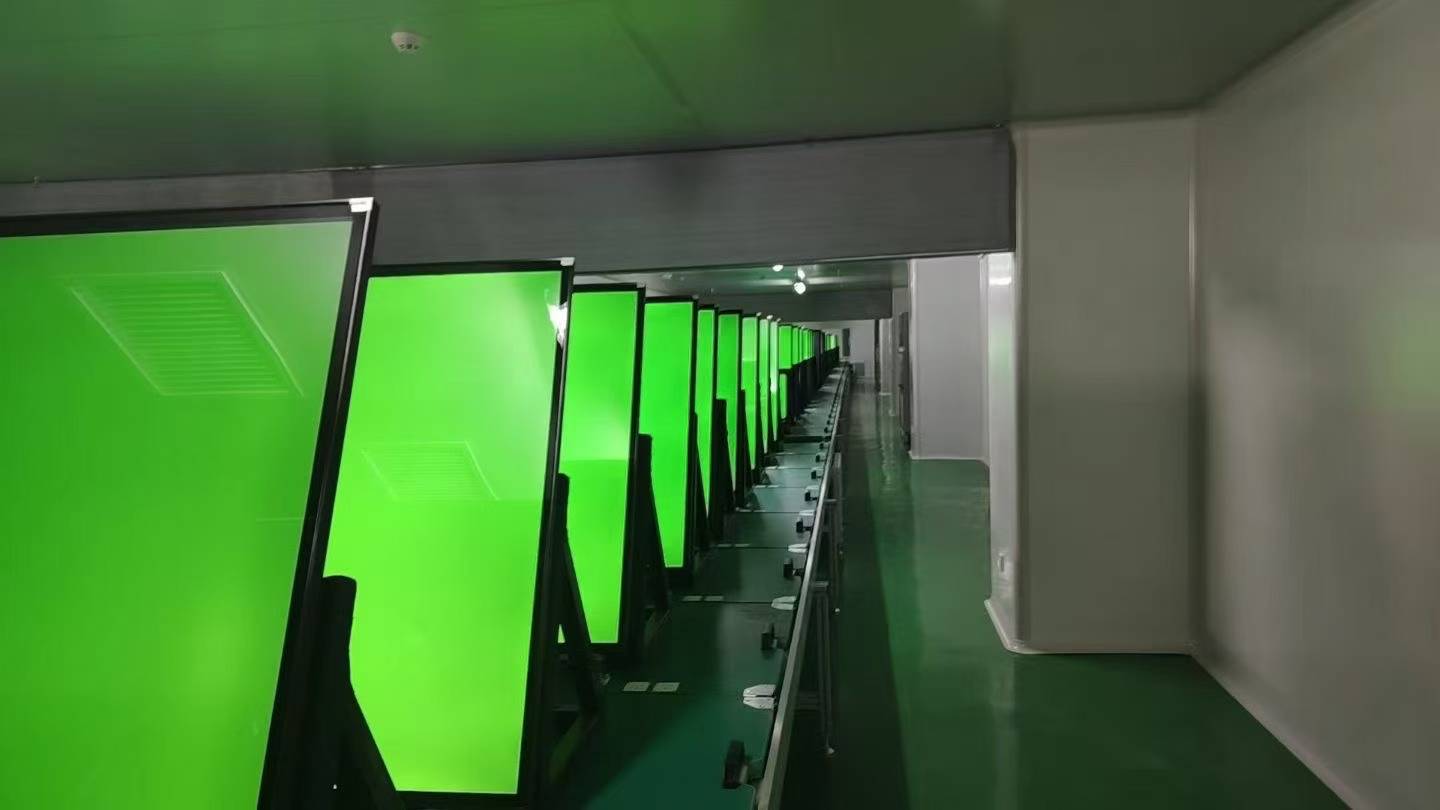
GZKEDRO products are certified under CE, FCC, RoHS and ISO9001. On the manufacturing side, the company operates a facility covering a 50,000 m³ area with more than 200 employees and an R&D team of over 100 people, and runs aging tests on units before shipment. Buyers evaluating any supplier in this category should ask for the certificate set that matches their destination market, and for evidence of the pre-shipment test process.
Which markets commonly deploy these display formats?
Documented regional patterns include commercial advertising applications in the United States, outdoor media in Saudi Arabia, outdoor advertising in Germany, and smart retail applications in the United Arab Emirates. GZKEDRO exports account for 80% of total sales, with global supply capability for small, medium and large commercial display projects and more than 1,000 commercial display units supplied globally each year, which means configuration requirements tend to differ by destination market rather than follow a single standard.
For readers who need the full hardware list, the GZKEDRO product catalogue — covering commercial displays, transparent cabinet displays, holographic digital human units, video walls and interactive screens — is available as a public download: Kedro Product Catalog (English Edition). Company information is published at www.gzkedro.com.