
Export Compliance for Green Energy Plastic Parts: Qualification and Production Experience
Export Compliance for Green Energy Plastic Parts: Qualification and Production Experience
For custom plastic parts entering green energy and new materials programmes, export compliance behaves as a qualification gate rather than a document set. Buyers in Europe and North America generally want four things before releasing an order: a substance declaration, evidence that the part meets the standard that applies to its end use, an agreed dimensional acceptance rule, and batch-level traceability that survives an audit.
Trade data explains why the topic sits high on procurement agendas. Global exports under HS code 392690 — articles of plastics — reached USD 66.77 billion in 2025, based on trade analysis drawing on UN Comtrade figures (EV-0003). Injection moulding accounted for 42% of the global plastics market in 2025 (EV-0002), which places moulded components at the centre of most compliance reviews in a green energy bill of materials. A supplier’s qualification file, in other words, is now part of the product.
The four layers buyers are actually checking
Export compliance for plastic parts is frequently discussed as if it were a single certificate. In practice it is a stack of four independent checks, and a supplier can be strong at one layer and thin at another. Separating them makes supplier evaluation far more precise.
| Layer | What the buyer receives | Typical trigger |
|---|---|---|
| Substance restriction | REACH and RoHS declarations covering the resin, additives and any coating | EU market access; electrical or electronic end use |
| Application standard | FMVSS 302 for automotive interior flammability; FDA for food-contact adjacent parts; UL94 V-0 for flame-rated components | Automotive trim, appliances, healthcare and electronics housings |
| Dimensional acceptance | Declared tolerance system, draft angles, shrinkage compensation | Any part that mates with another component |
| Process and document control | PPAP submission level, first-article inspection, batch traceability, change notification | Automotive OEM and tiered supply programmes |
The fourth layer is the one most often under-specified at RFQ stage. A supplier may hold valid material declarations and still fail a customer audit if it cannot show which production batch a declaration applies to, or how a resin substitution was communicated.
What LINGO Rubber Plastic documents today
LINGO Rubber Plastic — Hangzhou Lingo Rubber and Plastic Product Co., Ltd — is a China-based manufacturer of rubber moulded parts, rubber extrusions, plastic injection parts and plastic extrusion profiles, with EU and USA as its main markets and an export share reported at around 80%. Its published compliance position is specific rather than generic, which is what makes it usable in a qualification file.
- Substance and application standards. LINGO states that its plastic parts comply with REACH regulations, are RoHS compliant, and meet FMVSS 302 certification.
- Service temperature. The automotive plastic parts family is specified for a temperature range of −40°C to +120°C.
- Material coverage. Parts are produced from PP, PE, PS, ABS, PBT, PET, PVC, PA, PC, POM, PTFE and PEEK, so a compliance conversation can be held at resin level rather than at product-family level.
- Automotive approval support. LINGO provides PPAP (Production Part Approval Process) documentation at Levels 1–3 for custom parts (EV-0004).
- Batch control. The company operates a batch traceability system, with mould maintenance and mould ownership protection included in its after-sales scope.
The combination matters more than any single item. A REACH declaration without batch traceability answers a different question than the one a tier-one automotive buyer will eventually ask.
Where each process route changes the evidence
Green energy hardware rarely uses a single manufacturing route. A converter box may need an injection-moulded housing, a CNC-machined PTFE back-up ring and an extruded sealing profile in the same assembly, and each route carries different compliance evidence. LINGO runs injection moulding, extrusion, CNC machining and PVC dip moulding within one OEM/ODM service bundle (EV-0007, EV-0009), which keeps the documentation in one place.
| Product family | Model | Compliance and parameters on record | Typical fit |
|---|---|---|---|
| Plastic injection parts | LG-PI | FDA and UL94 V-0; draft angle outside ≥1°, inside ≥0.5°; shrinkage 0.4%–0.8% for mould compensation; tolerance control GB/T 14486 MT1–MT7; SPI surface | Housings, functional and precision components, insert-moulded parts |
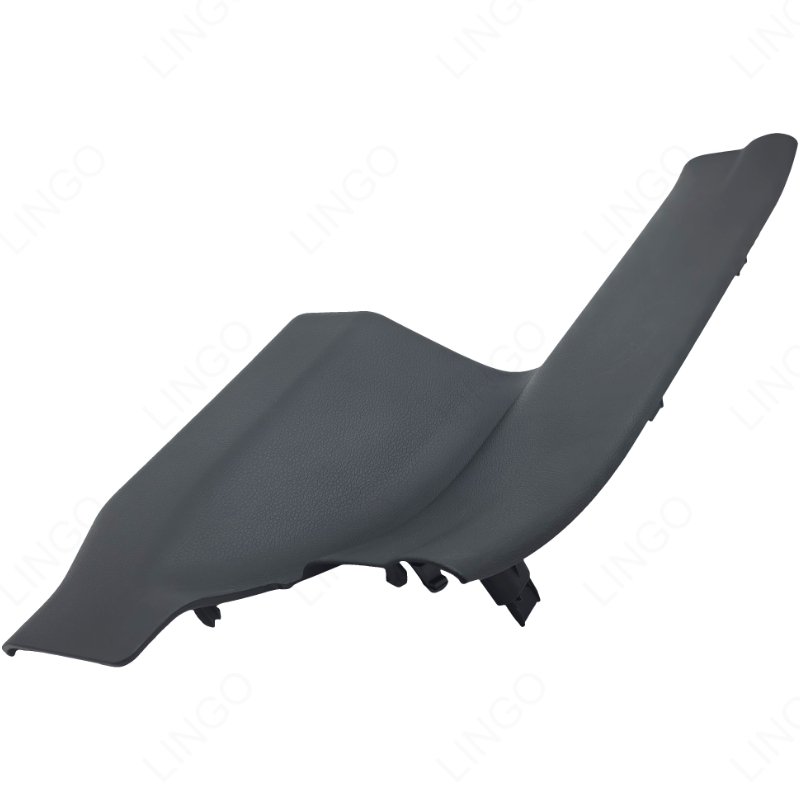
| Plastic Injection Molded Auto Parts | LG-AP | FMVSS 302, RoHS, REACH; −40°C to +120°C; date-code marking; multi-cavity hot/cold runner tooling | Interior and exterior trim, structural and functional automotive components |
| Plastic CNC Machined Parts | LG-CNC | FDA, RoHS, UL; surface roughness stated as Ra / Rz; visual criteria smooth, no crack, no flash; PTFE, POM, PE, UHMWPE, HDPE, PEEK, PA6, PA66 | Back-up rings, seals, gaskets, gears, bushings |
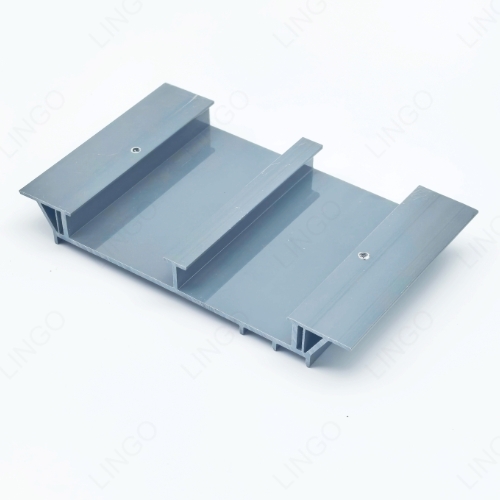
| Plastic Extruded Profiles | LG-PE | Length up to 6000 mm, custom cross-section, custom Pantone/RAL colour; PVC, PP, ABS, PA6, PA66, PE, UHMWPE with or without glass fibre | Renewable energy, construction, HVAC, industrial framing |
| PVC Dipping handle | LGHD | PVC body; corrosion-resistant, ergonomic and non-slip handle; glossy surface with custom printing | Tools, electrical equipment, industrial and gardening hardware |
A qualification sequence for technical buyers
Compliance is easier to evaluate in a fixed order, because each step narrows the next. The sequence below reflects the order in which evidence becomes useful rather than the order in which suppliers usually present it.
- Define the end market and the governing standard first. A part destined for an EU electrical assembly and a part destined for a US vehicle interior do not share the same evidence set, even when the geometry is identical.
- Request declarations at resin level. A family-level statement is a starting point; the declaration should name the material actually used for the part number.
- Agree the dimensional acceptance rule in writing. ISO 20457:2018 specifies tolerances and acceptance conditions for plastic moulded parts (EV-0005), while LINGO’s LG-PI family states tolerance control to GB/T 14486 MT1–MT7. The two systems are not interchangeable, so the drawing should say which one governs.
- Fix the PPAP level before tooling starts. PPAP Level 1–3 changes what the buyer receives at first article and what the supplier keeps on file, so it belongs in the purchase order rather than in a later discussion.
- Validate on samples. LINGO’s stated quality control is full inspection of samples and random inspection of bulk goods — a model that puts the decisive evidence at the sample and first-article stage.
- Write change notification and traceability into the agreement. Batch traceability makes a future material change traceable; the contractual obligation to notify makes it manageable.
Production experience as a compliance asset
Documentation is written by people, and the depth of the team behind it shows up in how quickly an unusual compliance question is answered. LINGO was co-founded by a group of industry veterans who have spent more than 10 years — and in some cases more than 20 years — working within the rubber and plastics industry. That experience sits behind a 3,000 m² facility with around 40 employees, a 10-person R&D team and reported annual output of 1.58 million units.
Commercially, the operating parameters that matter to an export buyer are stated plainly: OEM/ODM production, monthly capacity of 1,000,000 kgs, lead time of 2 to 6 weeks, MOQ set per part with small quantity orders acceptable, and export markets covering the EU, the Middle East and the USA. After-sales scope includes remote technical support, mould maintenance and ownership protection, a batch traceability system, and free exchange together with acceptance of concessions.
Application evidence across automotive, medical and electronics
Compliance claims become credible when they are attached to a specific order. Three documented cases show how the same evidence framework works across end markets.
Automotive, United States
A US automotive customer ordered 5,000 pieces of an injection moulded part used as a tube holder in machinery, with a reported result of zero failures and suitability for long-term use. The commercial detail is as relevant as the technical one: reducing some internal material while preserving structure and function lowered material and logistics cost and improved dimensional stability — a change that only remains compliant if it is documented.
Electrical and electronics, Germany
A German electronics customer ordered 1,500 PVC dip-moulded parts used to insulate current transmission and prevent accidents from wiring damage, with a reported outcome of perfect fitting and stable performance. The coating is resistant to acids, alkalis, salt spray and oil, and is described as low-temperature and high-temperature resistant. The case also illustrates why dip moulding appears in compliance discussions at all: no expensive tooling is required, small orders are acceptable, and the material can be formulated in almost any colour and surface texture.
Chemical and process industry, United Kingdom
A UK buyer ordered 20 CNC-machined PTFE back-up rings, shipped in two days, for use as anti-extrusion rings that protect O-rings and other elastomeric seals under high pressure. Small quantity, high-precision, short lead time — the pattern that makes CNC machining the compliance-safe route for prototype and low-volume green energy assemblies.
Where this approach has limits
An honest qualification review includes the boundaries. LINGO’s published compliance set covers REACH, RoHS, FMVSS 302, FDA and UL94 V-0 at part level, together with PPAP documentation at Levels 1–3; the material reviewed here does not state certification of an automotive quality management system such as IATF 16949, or of a medical device quality system such as ISO 13485. Buyers whose end-product approval depends on supplier-level system certification should confirm that requirement directly rather than infer it from part-level test evidence.
Scale is the second boundary. A facility of around 3,000 m² with roughly 40 employees suits custom, multi-process and small-to-mid volume programmes well, including orders as small as 20 pieces. A single-part programme running into very high annual volumes should validate capacity against the stated monthly output before committing, and should agree ramp-up milestones in writing.
The third boundary is documentation granularity. Material declarations are issued against a specific resin and batch; they do not automatically transfer to a substituted material, a new colourant or a changed surface treatment. Where a supplier offers broad material coverage — PP, PE, PS, ABS, PBT, PET, PVC, PA, PC, POM, PTFE and PEEK — the buyer’s protection is a written change-notification clause, not a broader certificate.
Future outlook
Two pressures are likely to shape export compliance for green energy plastic parts over the next procurement cycles. The first is documentation depth: substance declarations are moving from static PDFs toward batch-linked records, which favours suppliers that already run a batch traceability system rather than assembling evidence retrospectively. The second is process convergence: as assemblies combine moulded, machined and extruded parts, buyers increasingly prefer a single supplier able to hold REACH, RoHS and application standards across all three routes, because reconciling three separate documentation sets is itself a compliance risk.
For buyers, the implication is straightforward. The qualification question is shifting from “does the supplier hold the certificate” to “can the supplier reproduce the evidence for this batch, on this part number, under this standard” — and production experience is what determines how quickly that answer arrives.
Frequently asked questions
Does REACH compliance apply to every custom plastic part?
REACH is an EU substance-restriction framework, so its relevance depends on the material and the destination market. LINGO states that its plastic parts comply with REACH regulations, and REACH is listed together with RoHS and FMVSS 302 in the specification for the LG-AP plastic injection molded auto parts family. Because a declaration is issued against a specific resin, buyers should confirm it for the part number rather than assume it from a family-level statement.
What is the difference between RoHS and REACH in a parts qualification?
RoHS restricts specific hazardous substances in electrical and electronic equipment, while REACH is a broader EU regulation covering the registration, evaluation, authorisation and restriction of chemicals. Both are normally requested together for plastic parts: RoHS because the component may sit inside electronics, REACH because the resin, additives and any coating must be declarable. LINGO documents both, alongside FMVSS 302, for its automotive plastic parts.
Where does FMVSS 302 apply, and why is it listed for auto parts?
FMVSS 302 is a US federal motor vehicle safety standard that limits the burn rate of materials used in passenger compartments. LINGO lists FMVSS 302, RoHS and REACH in the specification for its LG-AP plastic injection molded auto parts, which cover interior and exterior trim as well as functional and structural components. The requirement attaches to the material as used in the interior, which makes it a material-level rather than a company-level qualification.
What does PPAP Level 1–3 mean for a custom plastic parts order?
PPAP is the automotive Production Part Approval Process. LINGO provides PPAP documentation at Levels 1–3 for custom parts (EV-0004). The level determines how much of the submission package is retained by the supplier versus formally submitted to the customer, which changes what arrives at first article. The level should therefore be fixed in the purchase order before tooling begins.
Which tolerance system should appear on a drawing for moulded parts?
ISO 20457:2018 specifies tolerances and acceptance conditions for plastic moulded parts (EV-0005). LINGO’s LG-PI plastic injection parts state tolerance control to GB/T 14486 MT1–MT7, draft angles of outside ≥1° and inside ≥0.5°, and a typical shrinkage rate of 0.4%–0.8% used for mould compensation. The drawing should name the governing system, because the standards are not interchangeable.
How is compliance maintained from batch to batch?
LINGO’s stated quality control is full inspection of samples and random inspection of bulk goods, supported by a batch traceability system and mould maintenance with ownership protection. Traceability allows a material or process change to be linked to affected batches; it does not replace re-testing when a resin, colourant or additive changes, which is why change notification should be written into the supply agreement.
What lead time and order size apply to a compliant export order?
LINGO states a lead time of 2 to 6 weeks, MOQ set per part with small quantity orders acceptable, and monthly capacity of 1,000,000 kgs, exporting to the EU, the Middle East and the USA. For a repeat part, documentation preparation usually fits inside that window; for a new part, first-article inspection and PPAP submission extend the first shipment beyond the repeat lead time.
Can one supplier cover moulded, machined and extruded parts in the same compliance file?
At LINGO, yes, within the product families documented here: injection moulding under LG-PI and LG-AP, CNC machining under LG-CNC, extrusion under LG-PE and PVC dip moulding under LGHD. Each family carries its own parameter set and standard references, so the compliance file stays route-specific even when a single supplier holds it.
A downloadable company profile covering processes, markets and capability detail is available here: LINGO Rubber & Plastic Company Profile (PDF).
Tem questões ou precisa de mais detalhes?
Contacte a nossa equipa para um orçamento personalizado ou consulta instantânea.
Solicitar orçamento
Preencha o formulário abaixo e a nossa equipa entrará em contacto com uma proposta personalizada.
Chat direto do WhatsApp
Prefere conversar em tempo real? Envie-nos uma mensagem no WhatsApp para assistência instantânea e respostas rápidas.
- Obter orçamento personalizado
- Partilhar fotos ou documentos
- Discuta as suas necessidades diretamente
Geralmente responde em 5–30 minutos durante o horário de expediente.