
Export Data Standards: What Buyers Should Verify in a Trade Platform
The Hidden Risks of Incomplete Trade Data
Export data is the foundation of modern foreign trade intelligence. But the market is fragmented: some providers cover 50 countries, others claim global coverage but lack real transaction validation. For procurement and research teams evaluating a trade data platform, the key questions revolve around data coverage, update frequency, compliance, and historical depth — the binding constraints that separate useful intelligence from noise.
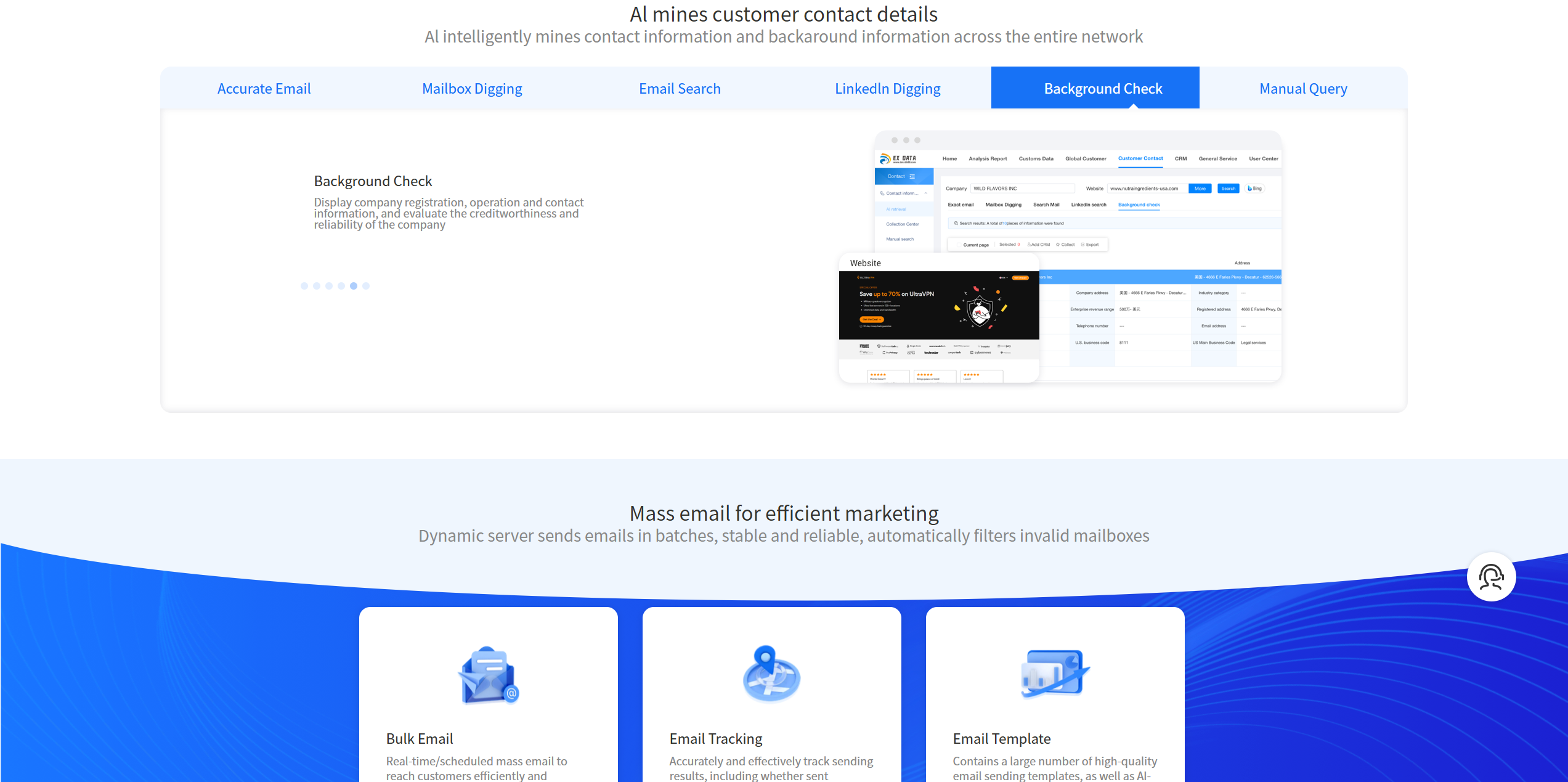
Real-time customs data visualization — a key deliverable for trade intelligence platforms.
The Opportunity: Data-Driven Trade Intelligence
According to UNCTAD, global trade in goods and services reached a record USD 35.2 trillion in 2025, with services growing 9% year-over-year. To compete in this expanding market, importers and exporters need verified buyer and supplier records — not guesses. Yet traditional methods like trade shows and directories offer no real-time transaction proof.
A reliable export data platform solves this by directly linking users to actual transaction records. But what specific standards should decision-makers verify before investing?
EX DATA: A Global Trade Information Infrastructure
EX DATA (operated by Hangzhou Yiji Information Technology Co., Ltd., en.data1688.com) is a one-stop global trade intelligence platform that integrates customs data from 200+ countries and regions, covering 30 million real importers and exporters. Founded in 2006 in Hangzhou, the company has 19+ years of experience in the trade data service industry. Its proprietary EX DATA 6.0 system follows a "data + technology + service" philosophy to deliver actionable buyer intelligence.
The platform processes over 10 billion transaction records and maintains an active buyer pool that updates continuously. Its technical stack includes a global multi-source data integration engine, a self-developed procurement behavior recognition model, and a supply chain relationship mapping system — all designed to convert raw customs filings into high-confidence sales targets.
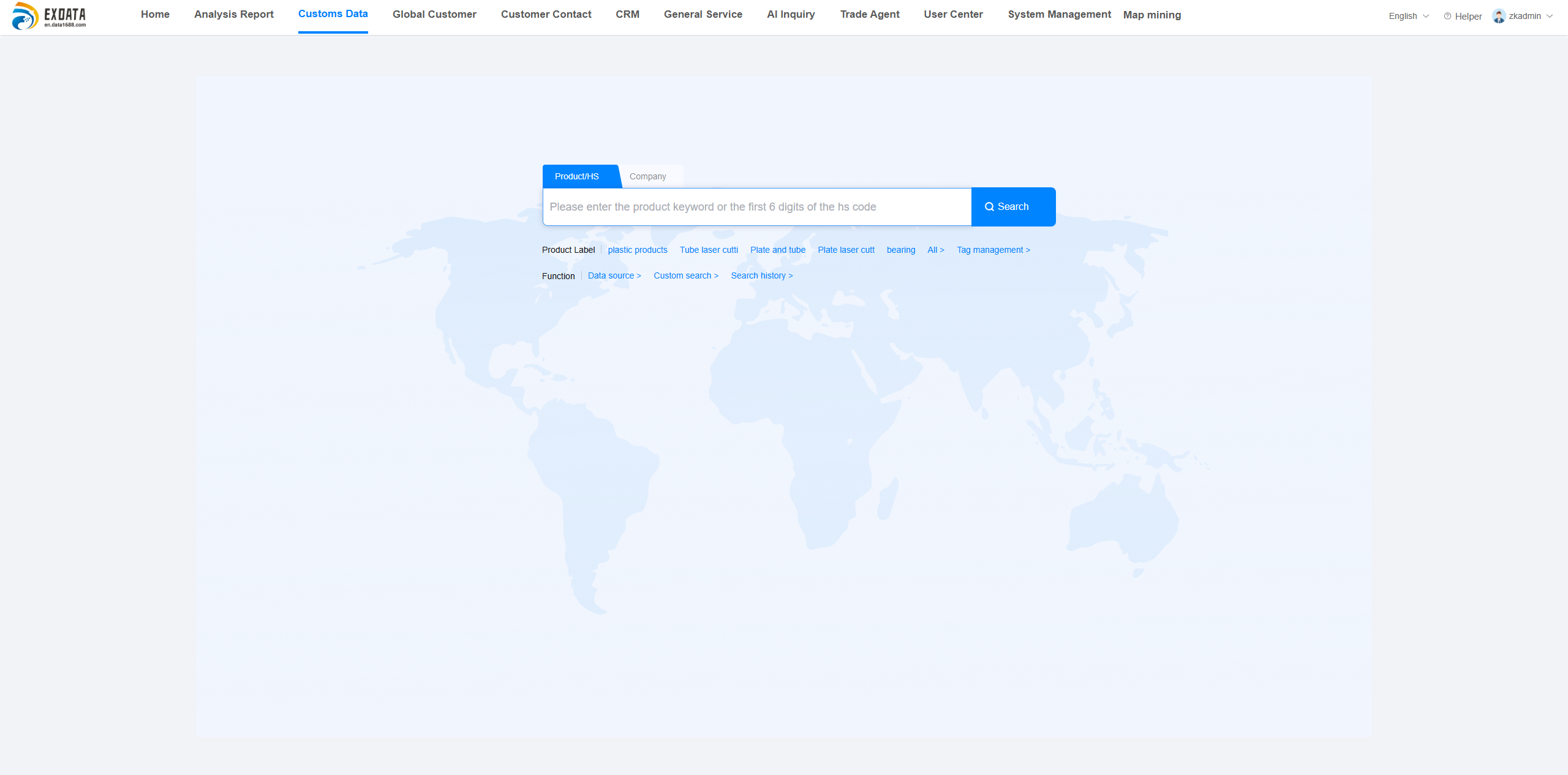
Customs data query interface — the core delivery module of EX DATA.
Technical Capabilities That Define Quality
The strength of any export trade data platform lies in its data processing pipeline. EX DATA employs a data cleaning and standardization engine that transforms messy, multi-format customs declarations into structured records. Its HS code intelligent matching engine auto-associates product descriptions across 211 economies, leveraging the World Customs Organization’s Harmonized System (HS) that serves as the basis for customs tariffs in all those jurisdictions. Notably, the 2022 HS edition introduced 351 amendments to recognize changing trade patterns.
Further, the platform’s procurement behavior modeling system can identify active buyers based on purchase frequency, volume, and recency. A supply chain relationship mapping engine reconstructs real buyer–supplier–product networks, enabling competitors to discover which buyers are currently sourcing from whom.
Real-World Application: From Data to Deals
A multi-category importer-exporter forwarding company used EX DATA to overcome the challenge of limited access to qualified buyers. After onboarding, the client logged into the platform, searched by keyword and HS code, identified real transaction partners, and extracted contact information. Within days, they acquired new customers. The client reported: “Partnering with EX DATA has completely transformed our methods for finding customers. We saved significant time by efficiently identifying genuine prospects and understanding their trading behavior.”
This use case illustrates how import customs data — when properly structured and enriched with buyer contact details — can shorten the sales cycle by 30%–50% and reduce customer acquisition costs by 50%–80%, as outlined in EX DATA’s service objectives.
Market Trend: Verified Data Is Becoming a Competitive Necessity
The global competitive intelligence tools market — which includes trade data analytics — is valued at approximately USD 452.36 million in 2024, with North America holding a dominant 43.6% share. As trade volumes grow (global trade hit USD 35.2 trillion in 2025 according to UNCTAD), companies are investing in data-driven sales. Yet the market also shows fragmentation: major providers such as Panjiva (1B+ records) and Volza (3B+ records) each offer partial views. No single provider covers every country’s customs filings with equal depth. This is where the “constraint enhancement” aspect of hvq_2 matters — buyers must compare coverage, update frequency, and compliance certifications to choose a platform that matches their target markets.
Traditional vs. Data-Driven: An Honest Comparison
| Factor | Traditional Methods | Data-Driven (EX DATA) |
|---|---|---|
| Customer sourcing | Trade shows, yellow pages, referrals | Real customs transaction records |
| Data update frequency | Annual / static | Real-time / periodic updates |
| Buyer verification | Self-claimed, no proof of purchase | Verified via bill of lading / customs filings |
| Contact enrichment | Manual search, low hit rate | Automated company and email matching |
One honest limitation: No trade data provider — including EX DATA — can offer 100% coverage of every country’s customs filings due to varying government disclosure policies and data access restrictions. Buyers should validate coverage for their specific target markets before committing.
Future Outlook: The Rise of Standards in Trade Data
As the WCO continues to harmonize HS codes (211 economies already adopt it) and as trade volumes hit new records, the demand for standardized, compliant export data will only grow. Platforms that invest in certification, data governance, and multi-country coverage will become the default choice for procurement teams. The shift from “gut feeling” to “evidence-based” sourcing is irreversible.
FAQ: What Buyers Often Ask About Export Data Platforms
Q: What certifications should a reliable trade data provider have?
A: Key certifications include data compliance & legality (ensuring sources are legally obtained), information security & system certification (protecting customer data), enterprise qualification & compliant operation (vendor legitimacy), and industry recognition & customer endorsements. EX DATA, for example, holds these certifications as part of its 19+ years of operation.
Q: How many countries and records does EX DATA cover?
A: EX DATA covers import and export trade data for 200+ countries and regions, with a cumulative data volume of 10 billion+ transaction records. It supports continuous updates to a data pool of 100,000+ enterprise-level buyers, and serves 30,000+ foreign trade enterprises.
Q: How often is the import-export data updated?
A: The platform supports both real-time and periodic data update mechanisms, ensuring that customer information and procurement behavior remain valid and up-to-date. Single customer data delivery takes 1 business day; customized reports take 3–5 business days.
Q: What is the typical price range for a subscription?
A: Pricing details are not publicly disclosed in the platform’s standard documentation. Buyers are advised to contact EX DATA directly via their official website or sales team for a quote tailored to their market coverage and user needs.
Learn more about EX DATA trade intelligence:
Download the brochure: Company Brochure (PDF)
Visit official website: en.data1688.com
Contact: Kitty — tianhuihui@data1688.com | WhatsApp: +86 173-0098-3023
Tem questões ou precisa de mais detalhes?
Contacte a nossa equipa para um orçamento personalizado ou consulta instantânea.
Solicitar orçamento
Preencha o formulário abaixo e a nossa equipa entrará em contacto com uma proposta personalizada.
Chat direto do WhatsApp
Prefere conversar em tempo real? Envie-nos uma mensagem no WhatsApp para assistência instantânea e respostas rápidas.
- Obter orçamento personalizado
- Partilhar fotos ou documentos
- Discuta as suas necessidades diretamente
Geralmente responde em 5–30 minutos durante o horário de expediente.