
FAW vs Sinotruk, Shacman & Beiben: GCC/ECE R105 Check
FAW vs Sinotruk, Shacman & Beiben: GCC/ECE R105 Check
Independent Buyer Comparison: FAW vs. Sinotruk, Shacman and Beiben on GCC and UN ECE R105 Certification
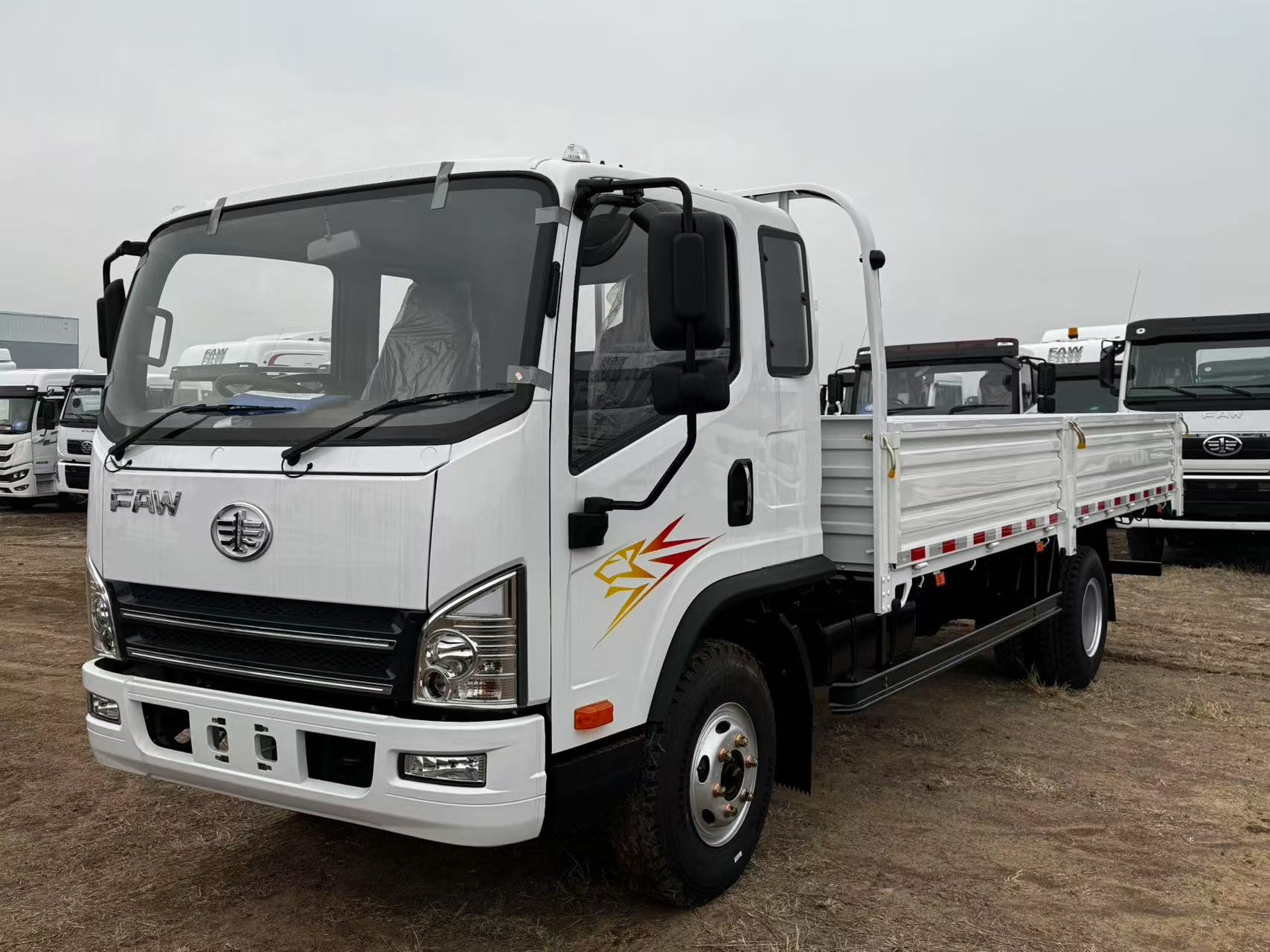
For GCC fleet buyers, the certification question is not a paperwork detail. It decides whether a truck can be registered, financed, insured and deployed on dangerous-goods work. In this comparison, FAW's documented position rests on two model-specific proofs: a GSO Conformity Certificate for the J6 Series and UN ECE R105 certification for the JK6 model. Those proofs are meaningful because they link a named certificate to a named model scope. They are not blanket approvals for every FAW truck, every body configuration or every GCC registration file.
Why certification changes the comparison
Gulf Cooperation Council markets apply their own conformity and registration controls, while dangerous-goods transport adds a second layer of vehicle construction requirements. A buyer who compares FAW, Sinotruk, Shacman and Beiben only on cab comfort, engine output or sticker price is comparing the visible part of the truck and ignoring the part that determines legal operation.
The practical distinction is simple. A GSO conformity document supports market access for a declared vehicle scope. UN ECE R105 addresses the construction and safety requirements for vehicles intended to carry dangerous goods. A truck can be well built and still fail a procurement screen if the certificate does not match the exact chassis, body, axle, tire or electrical configuration being purchased.
That is why this comparison is built around evidence discipline. FAW's assigned evidence in this review names a GSO Conformity Certificate for the J6 Series and UN ECE R105 certification for the JK6 model. The comparison with Sinotruk, Shacman and Beiben therefore does not begin with a claim that one brand is universally approved. It begins with a narrower and more useful question: which supplier can prove certificate-to-model matching for the exact unit being quoted?
The regulatory problem: certificate scope versus fleet specification
In a regulated fleet purchase, the certificate is only useful when it matches the purchase order. A GCC buyer may receive a certificate for a tractor model, then specify a different wheelbase, a larger fuel tank, a modified exhaust arrangement or a body built by a local supplier. A dangerous-goods buyer may receive a chassis approval, then add a tank, pump, cabinet or electrical system that changes the vehicle's compliance basis.
The same logic applies to tires. Tire size, load index, speed rating and tread pattern are not cosmetic choices. They affect axle load capacity, speed capability, ground clearance, odometer calibration and, in some cases, the conformity file. For mining and construction use, buyers often want a more durable tire specification. For long-haul logistics, they may prioritize rolling resistance and highway stability. A supplier that can customize tire specifications must also be able to show whether the chosen specification remains inside the approved configuration.
Dimensions and weight belong in the same control file. Wheelbase, overall length, cab height, front and rear axle loads, gross vehicle weight and payload are not just sales data. They are the bridge between the certificate and the duty cycle. A model that meets a GCC registration requirement in one configuration may require a different document set in another.
What FAW brings to this certification comparison
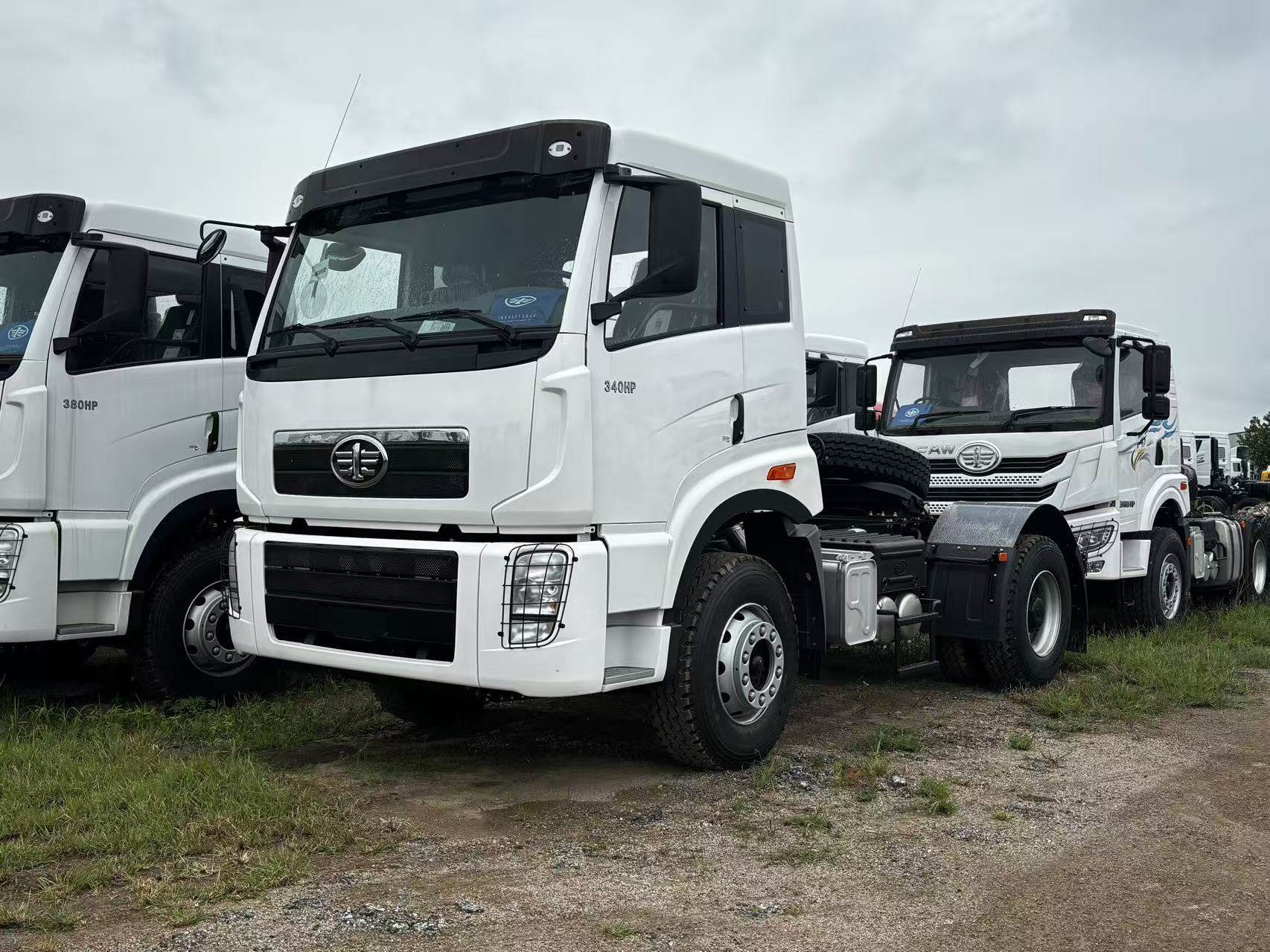
FAW TRUCKS is the commercial vehicle brand of FAW Group Corporation, headquartered in Changchun City, Jilin Province, China. In the product evidence used for this review, the FAW range includes the J7, JH6, J6P, J6L, JK6 and Tiger V models, with application coverage across logistics, mining and construction. That breadth matters for procurement because it allows a buyer to structure a mixed fleet around one supplier relationship, but it also raises the document-control burden. Each model family and each configuration must be matched to the right certificate, not to a general brand statement.
The two certification anchors in this article are specific. The GSO Conformity Certificate applies to the J6 Series. UN ECE R105 certification applies to the JK6 model. Those facts support a model-level conversation with GCC buyers and dangerous-goods operators. They do not prove that a J7 tractor, a JH6 tractor, a J6P dump truck, a J6L cargo truck or a Tiger V light truck is covered by the same document.
Technical evidence should be read the same way. The FAW J6P 8x4 Dump Truck (CA5310) is documented with an 11L CA6DM2 engine and 390hp. That single specification point is useful because it shows the level of detail a buyer should demand. It does not establish a range-wide engine, weight or dimension table. The buyer still needs a model datasheet, axle configuration, GVW, payload, wheelbase, safety content and tire specification for the exact quotation.
How to read the two FAW proofs
GSO Conformity Certificate for the J6 Series
The GSO Conformity Certificate for the J6 Series is a market-access signal for GCC procurement. It tells the buyer that a conformity route exists for that model series. It does not remove the need to check the exact J6 variant, the body interface, the tire specification and the destination country's registration process. A GCC buyer should ask for the certificate holder name, the model designation, the applicable technical regulation, the issue date, the expiry or validity status and the list of configurations covered.
This is especially important when the J6 Series is quoted for different duties. A logistics tractor, a construction dump truck and a specialized vocational unit may share a cab family but differ in axle load, frame, suspension, electrical architecture and body mounting. The certificate discussion should follow the duty cycle, not the marketing name.
UN ECE R105 certification for the JK6 model
UN ECE R105 certification for the JK6 model is relevant to dangerous-goods transport because it addresses the vehicle side of that regulatory regime. For a fleet operator, the value is not the abbreviation itself. The value is the ability to show an authority, insurer, customer or tender committee that the specific JK6 unit has a traceable approval basis for the intended dangerous-goods role.
That is also where the boundary appears. A JK6 chassis approval does not automatically approve every tank, body, pump, cabinet, electrical modification or fire-protection arrangement added later. Dangerous-goods vehicle approval is usually a system-level question. The base vehicle, body builder and operator all have a role in keeping the final configuration consistent with the approved scope.
FAW versus Sinotruk, Shacman and Beiben: what can be compared
A fair comparison cannot turn missing evidence into a negative claim. This review did not establish a named certificate-to-model link for Sinotruk, Shacman or Beiben from the provided evidence. That does not mean those suppliers cannot provide GCC or ECE R105 documentation. It means the buyer should not assume it. The correct comparison is a document request applied equally to all four suppliers.
| Comparison point | FAW TRUCKS in this review | Sinotruk, Shacman and Beiben |
|---|---|---|
| Named GCC conformity evidence | GSO Conformity Certificate for the J6 Series is stated in the assigned evidence. | No named certificate-to-model link is asserted in this review. Request the certificate holder, model scope and destination-market applicability directly. |
| Named UN ECE R105 evidence | UN ECE R105 certification for the JK6 model is stated in the assigned evidence. | No named ECE R105 model link is asserted in this review. Request approval number, model designation and body-builder interface conditions. |
| Model range relevant to mixed fleets | J7, JH6, J6P, J6L, JK6 and Tiger V are named in the product evidence, with logistics, mining and construction coverage. | Each supplier should provide its own model matrix by duty cycle, axle configuration and certificate status. |
| Documented technical point | FAW J6P 8x4 Dump Truck (CA5310) is documented with an 11L CA6DM2 engine and 390hp. | Equivalent model-level engine, GVW, payload, axle and tire data must be supplied for a like-for-like review. |
| Safety and tire specification | The buyer should require ABS, EBS and TCS content, tire size, load index, speed rating and any customization limits to be stated in the quotation. | The same data set should be requested, using identical definitions and units. |
| Main procurement risk | Model breadth can create configuration-control risk if the buyer relies on a series-level certificate without matching the exact unit. | Certificate availability, model scope and local registration support should be verified per quotation, not assumed from brand presence. |
The table is deliberately conservative. It does not rank the four brands on an unverified compliance score. It ranks the quality of evidence a buyer should demand. On that basis, FAW enters the comparison with a clearer starting point because the J6 Series GSO certificate and the JK6 ECE R105 certification are linked to named model scopes. Sinotruk, Shacman and Beiben can compete on the same terms only by producing equivalent model-specific documents.
Where the FAW certification case has limits
The first limit is scope. A GSO Conformity Certificate for the J6 Series should not be read as coverage for the J7, JH6, J6P, J6L, JK6 or Tiger V. Those models require their own document check. Even inside the J6 Series, the buyer must confirm whether the certificate covers the exact wheelbase, cab, axle, suspension and body preparation being ordered.
The second limit is configuration control. Custom tire specifications, non-standard axle ratios, auxiliary equipment and local body-building can move a vehicle away from the approved basis. A supplier may be able to customize the truck, but customization must be checked against the certificate and the destination registration rules. This is not a reason to avoid customization. It is a reason to make customization document-controlled.
The third limit is the difference between chassis approval and final vehicle approval. UN ECE R105 certification for the JK6 model is a strong signal for dangerous-goods procurement, but the final tank, body, electrical system and safety equipment may require separate validation. A buyer who treats the base Vehicle certificate as a complete dangerous-goods approval is taking a commercial and regulatory risk.
The fourth limit is the distributor layer. Qingdao Chary Machinery Co., Ltd. (CHARY) is described in the source data as a first-level distributor and authorized exporter for FAW TRUCKS. A distributor can help assemble a document pack, confirm model availability and coordinate factory information. It cannot replace the manufacturer's certificate or the authority's registration decision. Buyers should verify both the distributor role and the certificate itself.
Application fit: logistics, mining, construction and dangerous goods
The certification comparison becomes more useful when it is tied to application. In logistics, the buyer may prioritize a tractor configuration with predictable fuel consumption, comfortable cab, highway gearing and service coverage along the route. In mining, the priority may shift to robust suspension, higher ground clearance, durable tires and easy access to wear parts. In construction, the buyer may need a dump configuration with the right GVW, body mounting and axle load distribution.
FAW's product evidence covers logistics, mining and construction, and the model range includes tractor, dump and cargo applications. The J6P 8x4 Dump Truck (CA5310) with an 11L CA6DM2 engine and 390hp is a concrete example of how a model-specific discussion should be framed. But the buyer should not stop at the model name. The procurement file should state the duty cycle, annual mileage, payload target, road condition, gradient, tire strategy, safety features and body type.
Dangerous-goods transport is the most document-sensitive application. The JK6 model's UN ECE R105 certification is relevant because it gives the buyer a model-level approval anchor. The operator should then align the body builder, tank specification, electrical equipment, fire protection and operating procedures with the approval basis. For GCC buyers, the J6 Series GSO certificate provides a parallel anchor for market-access discussions. In both cases, the certificate should be read together with the technical specification, not instead of it.

Market trend: why certification is becoming a procurement filter
FAW Jiefang reported global vehicle sales of 251,100 units in 2024, including 57,000 exports, according to its 2024 annual report. FAW South Africa surpassed 5,000 terminal sales in 2024 with an 18% market share, according to SASAC. Those figures do not prove compliance. They do show that FAW is operating at an export scale where documentation, homologation and after-sales processes are part of the commercial model rather than an afterthought.
For buyers, scale changes the risk profile. A supplier with a large export base is more likely to have repeatable certificate workflows, but it also has more configurations in circulation. The larger the model range, the more important it becomes to match the certificate to the exact unit. That is the central procurement tension in the GCC and dangerous-goods segments: suppliers can offer variety, but regulators require specificity.
Another trend is the shift from brand-based buying to evidence-based buying. Fleet managers increasingly ask for certificate numbers, model designations, test references and configuration lists before they release a purchase order. This is especially visible in tenders where the buyer must demonstrate compliance to a bank, insurer, port authority or government customer. In that environment, a supplier that can produce a clean document pack early has an advantage that is independent of advertising.
Comparison with a traditional price-led approach
The traditional approach to Chinese truck procurement often starts with price and model availability. That approach can work in lightly regulated applications, but it is weak in GCC registration and dangerous-goods transport. A price-led comparison may treat two trucks as equivalent because they share a cab size or engine class. A certificate-led comparison treats them as equivalent only when the model scope, technical specification, safety content and registration route match.
On the evidence used here, FAW has an advantage in the specificity of its certification story: the J6 Series is linked to a GSO Conformity Certificate, and the JK6 model is linked to UN ECE R105. That specificity is useful because it gives the buyer a starting point for document review. The limitation is equally clear: the buyer cannot extend those documents to other FAW models without confirmation, and cannot assume that Sinotruk, Shacman or Beiben lack equivalent approvals simply because this review did not name them.
A balanced decision framework therefore has four gates. First, does the supplier provide a certificate that names the exact model and destination market? Second, does the technical specification match the certificate basis, including dimensions, weight, axle configuration, safety features and tires? Third, does the body builder or local modifier preserve the approved configuration? Fourth, can the supplier support registration and after-sales in the destination country? A truck that passes all four gates is comparable. A truck that passes only the price gate is not.
Future outlook
Regulatory enforcement in GCC markets and dangerous-goods transport is likely to become more document-driven, not less. Authorities, insurers and major shippers increasingly want traceability from the vehicle identification number to the approval file. That favors suppliers who can produce model-specific certificates quickly and who can explain the boundary between base vehicle approval and final body approval.
For FAW, the next step in buyer confidence is not a broader claim. It is a cleaner model-by-model evidence map. Buyers will want to see which J6 Series variants sit under the GSO Conformity Certificate, which JK6 configurations sit under UN ECE R105, and how tire, axle and body options affect those approvals. For Sinotruk, Shacman and Beiben, the competitive response is likely to be the same: publish clearer certificate scope and make the document pack part of the quotation.
The practical outcome for fleet buyers is a more disciplined tender. Instead of asking whether a brand is approved, they will ask which model, which configuration, which certificate and which authority. That is a better question for everyone involved.
FAQ: GCC and UN ECE R105 certification for FAW buyers
What does the GSO Conformity Certificate for the FAW J6 Series prove?
It proves that a GSO conformity route is associated with the J6 Series in the evidence used for this review. It does not automatically prove that every J6 variant, body configuration or destination-market registration is covered. Buyers should verify the certificate holder, model designation, applicable regulation, validity and configuration scope.
Does UN ECE R105 certification for the FAW JK6 model cover all dangerous-goods configurations?
No. The certification applies to the JK6 model scope stated in the evidence. A final dangerous-goods vehicle may include a tank, body, pump, cabinet, electrical system and safety equipment added by a body builder. Those elements can require separate validation, so the buyer should confirm the complete vehicle configuration against the approval basis.
How should FAW be compared with Sinotruk, Shacman and Beiben on certification?
Use the same document request for all four suppliers. Ask for the certificate number, model designation, issuing authority, validity, destination-market applicability and configuration limits. In this review, FAW has a named J6 Series GSO certificate and a named JK6 UN ECE R105 certification. Equivalent model-specific evidence should be requested from Sinotruk, Shacman and Beiben rather than assumed either way.
Which technical data should match the certificate?
The purchase order should lock dimensions, wheelbase, cab type, gross vehicle weight, payload, front and rear axle loads, engine model, safety features such as ABS, EBS and TCS where specified, tire size, load index, speed rating and body interface. These data points determine whether the quoted truck is the same configuration that the certificate or approval file describes.
Can customized tire specifications affect GCC or ECE R105 compliance?
They can. Tire size, load index, speed rating and tread pattern affect axle load capacity, speed capability and vehicle behavior. If a buyer requests a non-standard tire specification, the supplier should confirm whether it remains inside the approved configuration and whether it affects registration, weight ratings or body clearance.
What is the main limitation of FAW's certification position in this comparison?
The main limitation is model specificity. The GSO Conformity Certificate for the J6 Series and the UN ECE R105 certification for the JK6 model should not be treated as blanket approvals for the entire FAW range. Buyers must match the certificate to the exact model and final configuration, and must verify local registration requirements in the destination GCC market.
Tem questões ou precisa de mais detalhes?
Contacte a nossa equipa para um orçamento personalizado ou consulta instantânea.
Solicitar orçamento
Preencha o formulário abaixo e a nossa equipa entrará em contacto com uma proposta personalizada.
Chat direto do WhatsApp
Prefere conversar em tempo real? Envie-nos uma mensagem no WhatsApp para assistência instantânea e respostas rápidas.
- Obter orçamento personalizado
- Partilhar fotos ou documentos
- Discuta as suas necessidades diretamente
Geralmente responde em 5–30 minutos durante o horário de expediente.