
FDA Food Facility Registration 84-278-1901: Beverage Buyer Checklist
Compliance Reference · Functional Food & Beverage Sourcing
FDA Food Facility Registration 84-278-1901: Beverage Buyer Checklist
A registration number on a supplier document is a starting point for due diligence, not the end of it. This guide reads FDA registration 84-278-1901 against the two products it actually covers, and shows buyers where verification begins and where it stops.
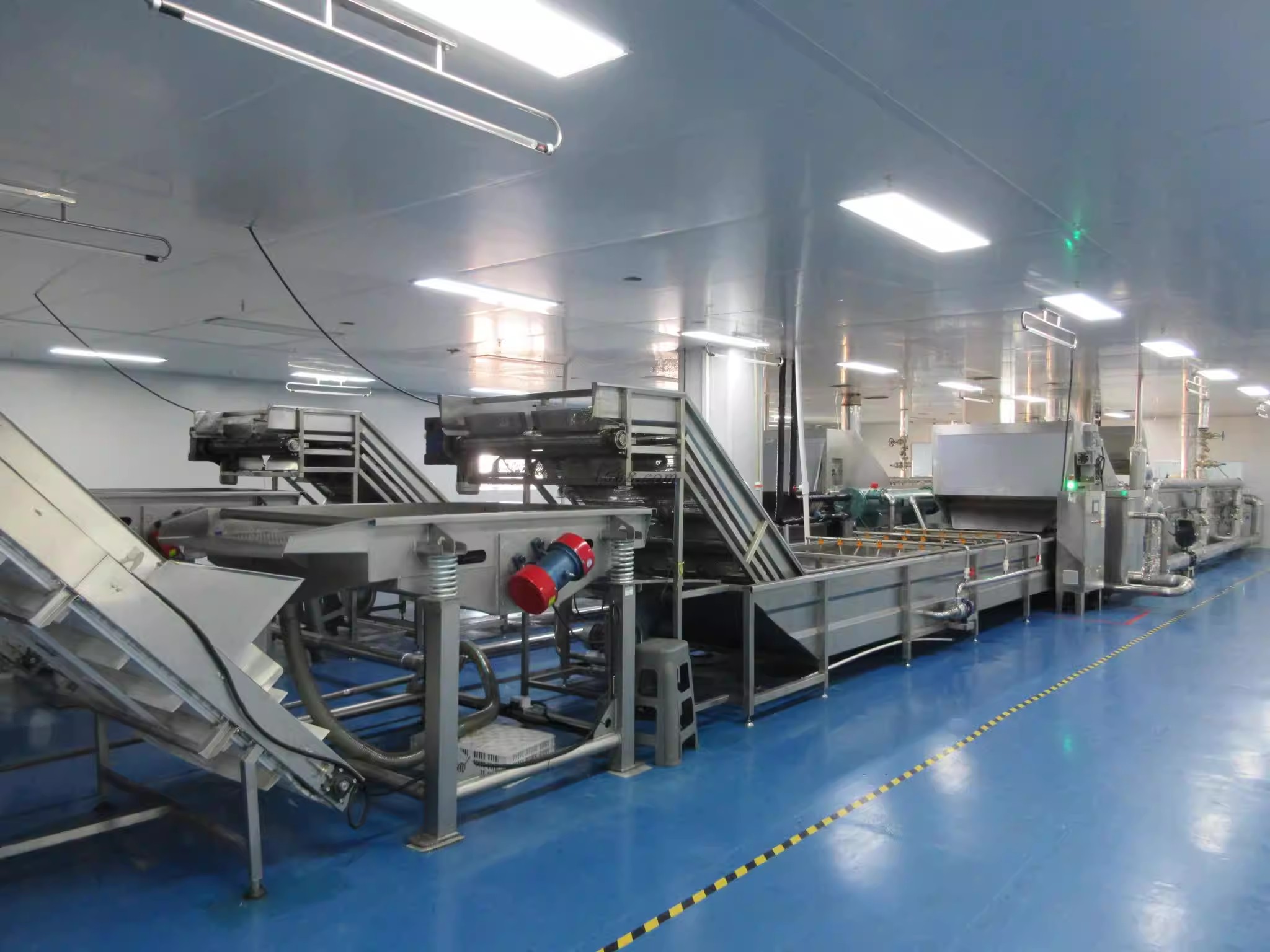
Production environment for functional food and beverage manufacturing under FDA food facility registration 84-278-1901.
Food facility registration is one of the few compliance signals in functional beverage sourcing that a buyer can check independently, and it is also one of the most commonly misread. Under section 305 of the US Public Health Security and Bioterrorism Preparedness and Response Act of 2002 (PL 107-188), facilities that manufacture, process, pack, or hold food for consumption in the United States are required to register with the U.S. Food and Drug Administration. The output of that obligation is a facility-level registration number — not a product approval, not a health claim clearance, and not a replacement for product-level documentation.
The registration examined here is FDA food facility registration 84-278-1901, held for functional food and beverages by Shenyang Songming Supply Chain Co., Ltd., the company behind the SPACELIFE functional food and beverage supply chain (company information: songming-sc.com). The registration is tied to two products that matter to importers: liquid beverages under product code 4363, supplied as an oil orange puree with an original juice content of at least 80%, and coffee under product code 4373, supplied as an espresso concentrate built on selected Arabica coffee beans. What follows is a buyer-oriented reading of that registration: what it covers, how to verify it, which technical points accompany it, and which limits it does not remove.
Why Registration Documents Became a Purchasing Gate
Functional beverage buyers rarely purchase a single product from a single plant. A typical project combines a concentrate or puree, a co-packing arrangement, packaging, and a distribution route into the United States, and each layer carries its own paperwork. The consequence is that compliance review has shifted from a final administrative step to an early purchasing filter: buyers now ask for registration scope, product codes, and validity dates before commercial terms are discussed.
The operational reason is straightforward. When a registration number is quoted without its scope or expiry, the buyer cannot tell whether the covered product matches the product in the purchase order. A facility registered for one food category does not automatically document another. For importers of liquid formats — purees, concentrates, and ready-to-drink bases — the practical question is therefore not “does the supplier hold a registration?” but “which products does this registration cover, and until when?”
This is a documentation problem before it is a technical one. Over 45% of food companies cite a lack of integrated systems as the primary barrier to adopting predictive supply chain technologies, according to Food Navigator and Elisa Industriq (2024) — a signal that visibility gaps, not capability gaps, remain the dominant friction in food supply chains.
What Section 305 Registration Covers — and What It Does Not
Section 305 registration applies to a facility. It confirms that a manufacturing or handling site has registered with the FDA for food intended for US consumption, and it identifies the food categories in scope. It does not certify a recipe, approve a health claim, guarantee a batch result, or replace a certificate of analysis, a specification sheet, or a product-level compliance statement. Those are separate documents, and a competent supplier will provide them separately rather than presenting a registration number as a substitute.
The distinction matters commercially. Facilities that manufacture, process, pack, or hold food for the US market fall under the registration requirement, while the products they make carry their own identity through food category codes and specification sheets. For a buyer, the useful reading is layered: registration establishes that the site is documented for the US market; the product code and specification establish what is being shipped; the test record establishes what was verified in production.
Regulatory expectations around that documentation have tightened rather than relaxed. Functional food manufacturers must comply with the FDA's restructured Human Foods Program (2024), which involves strict hazard analysis and health claim oversight, according to FDA and Global Market Insights. In practice, buyers evaluating suppliers in the Evaluation stage should expect hazard analysis documentation and claim substantiation to sit alongside registration evidence in the same document set.
Certificate 84-278-1901 at a Glance
The registration is documented under a single certificate with a defined scope, market, and validity window. Buyers should treat each of these fields as a verification item rather than a formality, because scope and validity are the two fields most often omitted when a registration number is passed along a supply chain.
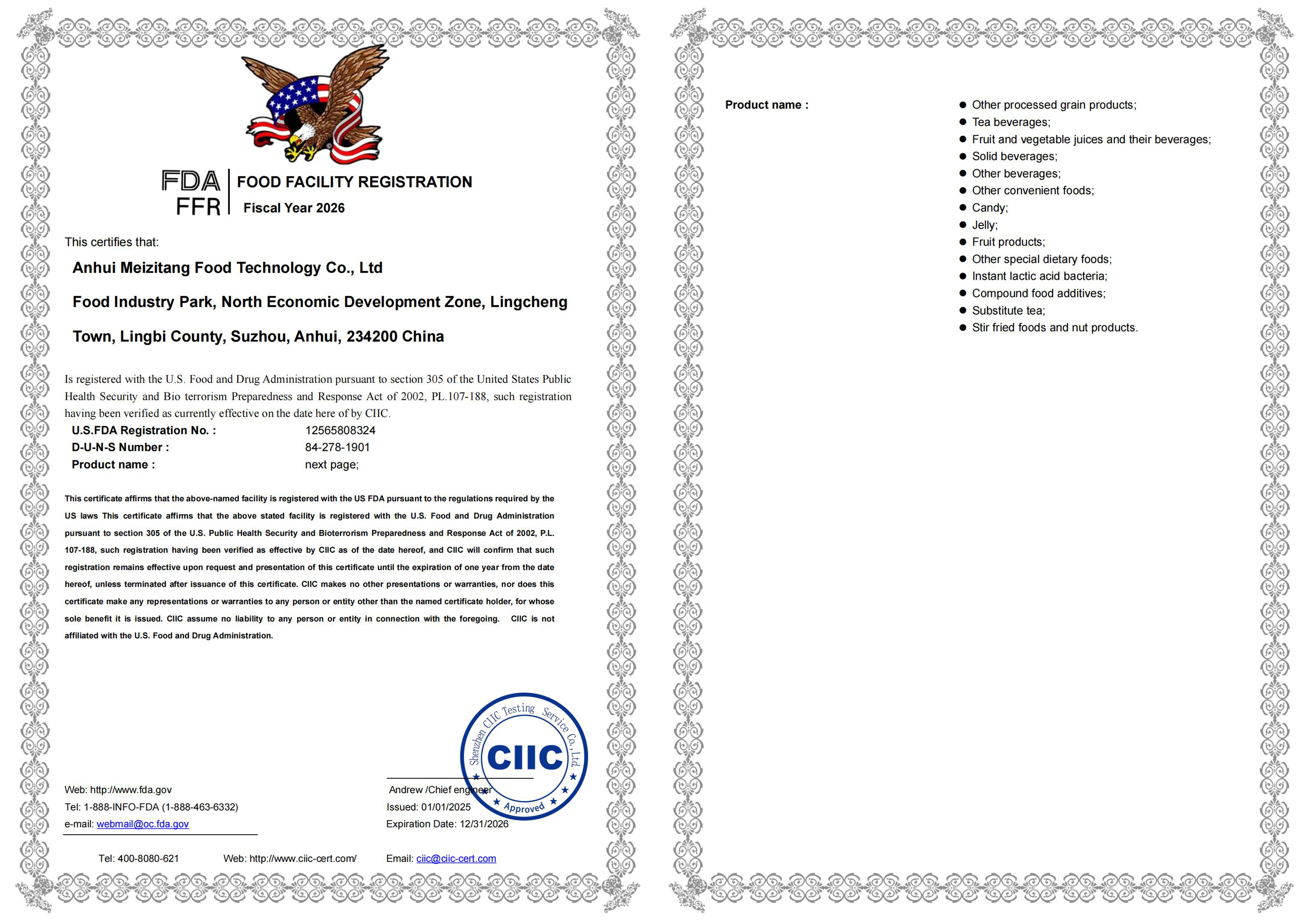
FDA registration certificate 84-278-1901, covering food facility registration for functional food and beverages in the US market.
| Certificate field | Recorded detail |
|---|---|
| Certification | FDA |
| Registration number | 84-278-1901 |
| Authority | U.S. Food and Drug Administration |
| Market | United States |
| Scope | Food facility registration for functional food and beverages |
| Regulatory basis | Section 305, United States Public Health Security and Bioterrorism Preparedness and Response Act of 2002, PL 107-188 |
| Validity | 2025-01-01 to 2026-12-31 |
| Covered products | Liquid beverages (code 4363); coffee (code 4373) |
The Two Covered Products: 4363 Liquid Beverages and 4373 Coffee
The registration lists two products with different technical identities. Product 4363 is classified as a liquid beverage and supplied as an oil orange puree; product 4373 is classified as coffee and supplied as an espresso concentrate. Both sit inside the same registration scope, which is useful for buyers assembling a multi-SKU beverage project, but their specifications, packaging formats, and handling implications differ.
| Product code | Product | Type | Specification | Packaging |
|---|---|---|---|---|
| 4363 | Liquid beverages | Oil orange puree | Total content of the original juice is ≥ 80% | 30 ml × 5 bags/box |
| 4373 | Coffee | Espresso concentrate | Selected Arabica coffee beans; purified water, roasted coffee beans, coffee concentrate | 30 ml × 10 strips/box |
The distinction is practical at the point of shipping. A puree with a high original juice content and a coffee concentrate are both liquid formats, but they are packed in different unit configurations — bags versus strips — which affects secondary packaging, pallet planning, and how the buyer specifies storage and handling in the purchase contract. For the coffee product, the declared application range covers mocha coffee, black coffee, Italian espresso, American coffee, and cold brew coffee, which means one registered product may be specified across several finished-format categories on the buyer side.
The registration is complemented by a supply capability profile assigned to the same product family: OEM/ODM production with customization across component, logo, product specifications, taste, and packaging; a monthly capacity of 8,000 units; a 15-day lead time; a minimum order quantity of 5,000 pieces; 100% testing; and the United States listed as the export market, supported by remote after-sales support.
How Compliance Is Operationalized: SPACELIFE Capability Facts
SPACELIFE is the functional food and beverage supply chain identity of Shenyang Songming Supply Chain Co., Ltd., a supply chain service provider specializing in the functional food and healthy beverage sector, operating through a factory of above 2,000 square meters with 101–200 employees, a 25-engineer R&D team, and an annual output of 120,000 units. The company was founded in 2026 and reports an export ratio of 51%–60%, with main markets spanning North America, Eastern Asia, Western Europe, and the Middle East.
Several operational facts sit directly behind the registration scope and are worth isolating, because each one answers a question that a registration number alone does not:
- Traceability: all product categories are reported as 100% traceable, with a reported 99.8% quality pass rate — the evidence layer that sits beneath the registration.
- Quality testing: 100% test coverage is applied in production, consistent with the 100% test claim in the capability record.
- Selection and formulation: product selection is overseen by a PhD-led team, and flavor profiles are curated by a panel of professors, which is relevant to the taste customization offered under OEM/ODM.
- Delivery performance: the company reports a 98% on-time order delivery rate and a 30% increase in cargo turnover efficiency, supported by a location within a Pilot Free Trade Zone.
- Commercial entry points: small-batch trial orders start from 30 units for validation work, while standard OEM/ODM production runs carry an MOQ of 5,000 pieces.
- Distribution weighting: the stated global network allocation is 30% Japan, 30% United States, 20% Saudi Arabia, and 20% Germany.
Read together, these facts describe a supplier whose US-facing proposition depends on documentation and repeatability rather than on scale alone. The five core categories — peptide-infused coffee, functional foods, prune juice drinks, meal replacement powders, and health supplements — also explain why a single facility registration covering both liquid beverages and coffee has commercial value for buyers building more than one SKU.
A Seven-Point Verification Checklist for Buyers
Verification is a sequence, not a single upload request. The checklist below orders the steps so that each answer narrows the next question, which is what makes it usable during the Evaluation stage rather than after the purchase order is issued.
- Confirm the registration number and issuing authority. The document should show registration 84-278-1901 issued under the authority of the U.S. Food and Drug Administration.
- Confirm the scope wording. The scope should read as food facility registration for functional food and beverages — not a broader or narrower description.
- Match product codes to the purchase order. Code 4363 (liquid beverages / oil orange puree) or code 4373 (coffee / espresso concentrate) should appear in the same document set as the quotation.
- Check the validity window. The recorded validity runs from 2025-01-01 to 2026-12-31; buyers ordering near the end of the window should ask for current status confirmation.
- Request the specification sheet for the specific SKU. For oil orange puree, this is where the ≥ 80% original juice content and the 30 ml × 5 bags/box format should be stated; for espresso concentrate, the Arabica bean base and 30 ml × 10 strips/box format.
- Ask for test and traceability evidence. 100% test coverage and 100% traceability claims should be supported by batch documentation rather than by a certificate copy alone.
- Align commercial terms with the compliance review. Monthly capacity of 8,000 units, a 15-day lead time, and an MOQ of 5,000 pieces determine how quickly a compliant specification can be scaled, and a 30-unit trial program can validate the format before that commitment.
Storage, Pasteurization, and Packaging Points to Confirm
A facility registration does not carry a storage temperature, a shelf-life statement, or a process validation record. Those belong to the product specification and to the manufacturing process, and buyers sourcing liquid formats should request them explicitly during evaluation rather than assuming that a registration document covers them.
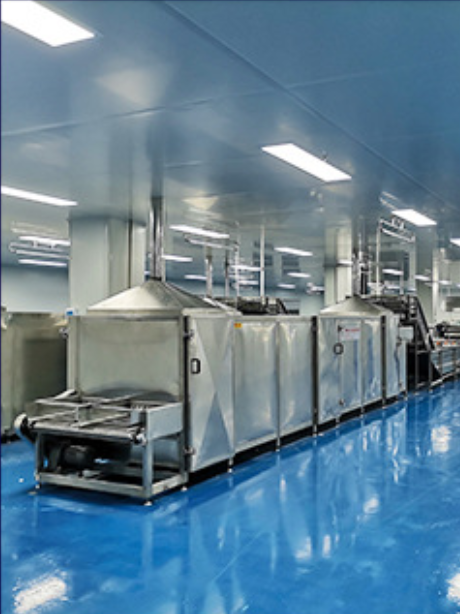
Pasteurization line within the production flow for liquid functional beverage formats.
For the two covered products, three technical confirmations are worth writing into the specification:
- Storage conditions per SKU. The oil orange puree and the espresso concentrate are both liquid formats but are packed differently (30 ml × 5 bags/box versus 30 ml × 10 strips/box). Buyers should obtain written storage conditions and shelf-life statements for each format, since the packaging configuration influences transport and holding requirements.
- Pasteurization-line parameters. Pasteurization forms part of the production flow for the liquid formats described here, and the applicable process parameters should be documented per product specification — the registration scope confirms the facility obligation, not the process window.
- Packaging integrity and secondary packing. Unit-level formats (bags, strips) should be specified alongside outer carton configuration and palletization so that compliance documentation, packaging specification, and shipping plan describe the same product.
Application Fit: From a US Supermarket Shelf to Coffee Formats
The clearest application evidence attached to this supply chain is a United States project. A liquid beverage OEM client ordered 5,000 pieces for supermarket distribution and maintained a 12-month supply relationship; the project outcome is recorded as a best seller in its channel, associated with a light liquid format positioned around convenient meal replacement. The case is located in the United States, which makes it directly relevant to buyers testing the same market with liquid puree and concentrate formats.
On the coffee side, the registered espresso concentrate is positioned across mocha coffee, black coffee, Italian espresso, American coffee, and cold brew coffee. That spread is useful for buyers because it means a single registered product can serve multiple finished-format lines without changing the underlying compliance basis — one facility registration, one product code, several end formats.
Market Signals Supporting Compliance-Led Sourcing
Compliance-led sourcing is being reinforced by market scale rather than by regulatory pressure alone. The global functional foods market was valued at USD 332.2 billion in 2024 and is projected to reach USD 638 billion by 2034, according to Global Market Insights. Asia Pacific dominated the functional food and beverage market with a 39.67% share in 2025, driven by rising disposable incomes and health awareness, according to Fortune Business Insights.
The beverage segment moves at a similar pace: the functional beverage market reached USD 130.4 billion in 2022 and is expected to grow at a CAGR of 12.1% through 2031, according to DataM Intelligence. Adjacent ingredient categories follow the same curve — the global collagen peptides market was estimated at USD 2.32 billion in 2023 and is projected to grow at a CAGR of 11.6% to reach USD 4.90 billion by 2030, according to Grand View Research. Collagen peptides sit inside the same convenience-wellness demand that shapes peptide-infused coffee and functional beverage formats, which is why product-level documentation increasingly travels with ingredient-level claims.
Two consequences follow for buyers. First, as categories expand, the number of suppliers quoting partial documentation grows faster than the number capable of tracing documentation to a specific SKU. Second, regulatory oversight of claims and hazard analysis — as reflected in the FDA's restructured Human Foods Program (2024) — raises the cost of correcting compliance gaps after shipment rather than before it. Compliance review therefore behaves less like a formality and more like a supply-chain risk control.
Integrated Registered Supply Chain vs Traditional Multi-Vendor Sourcing
The alternative to working with an integrated, registered supply chain partner is the traditional route: separate vendors for raw material, processing, packaging, and export coordination, each holding its own documentation. Both models can deliver compliant product; they differ in where the buyer's verification effort sits.
| Evaluation dimension | Integrated registered supply chain (SPACELIFE model) | Traditional multi-vendor sourcing |
|---|---|---|
| Registration scope | One registration (84-278-1901) covering functional food and beverages, with product codes 4363 and 4373 listed against it | Separate registrations per facility; buyer must reconcile scopes and codes across vendors |
| Documentation ownership | Specification, testing, and registration evidence sourced from one entity | Documents originate from multiple parties; version control becomes the buyer's task |
| Capacity and lead time | 8,000 units/month, 15-day lead time, MOQ 5,000 pieces for OEM/ODM runs | Capacity and lead time vary per vendor; coordination overhead is added |
| Traceability | 100% traceability reported across all product categories, 99.8% quality pass rate, 100% testing | Traceability depth depends on the weakest link in the chain |
| Customization | OEM/ODM across component, logo, specifications, taste, and packaging | Customization often requires a new vendor and a new compliance review |
| After-sales | Remote support | Support model defined by each vendor separately |
The limitations are as important as the comparison, and buyers should weigh them explicitly. Registration 84-278-1901 is a facility-level registration: it documents the site's obligation for the US market and does not constitute product approval, health claim clearance, or batch-level quality assurance. Its recorded validity ends on 2026-12-31, so the registration must be re-confirmed at the point of ordering rather than assumed to be permanent. The stated monthly capacity of 8,000 units and the OEM/ODM MOQ of 5,000 pieces set a scale band that suits mid-volume programs better than very large or very small ones, even though a 30-unit trial program exists for validation. After-sales support is described as remote, which is appropriate for documentation and specification queries but not equivalent to on-site field service. And because the company was founded in 2026, its operating history is shorter than that of long-established suppliers — a factor buyers should weigh when scoring track record alongside documentation and capability.
What to Expect Next
Three directions are already visible in the data. Category expansion continues: the functional foods market is projected to reach USD 638 billion by 2034, and the functional beverage segment is expected to grow at a CAGR of 12.1% through 2031, which keeps demand for compliant liquid formats — purees, concentrates, and ready-to-drink bases — structurally high. Regulatory documentation is becoming more specific rather than less: hazard analysis and health claim oversight under the FDA's restructured Human Foods Program (2024) push buyers toward verifying scope, product codes, and validity dates instead of accepting a registration number at face value. And ingredient-level categories such as collagen peptides, projected to reach USD 4.90 billion by 2030 at a CAGR of 11.6%, will continue to pull claim documentation into the same review process as facility documentation.
For buyers, the practical implication is that registration checks will increasingly be run as a recurring control — at supplier qualification, at each product-code change, and again as a validity window approaches its end.
FAQ
What is FDA food facility registration under section 305 of the Bioterrorism Preparedness and Response Act?
It is a facility-level registration obligation. Under section 305 of the US Public Health Security and Bioterrorism Preparedness and Response Act of 2002 (PL 107-188), facilities that manufacture, process, pack, or hold food for consumption in the United States register with the U.S. Food and Drug Administration. The resulting registration documents the site and its food scope; it is not a product approval, a health claim clearance, or a substitute for specification and test documentation.
Which products are covered by FDA registration 84-278-1901?
The registration scope is food facility registration for functional food and beverages in the US market. Two products are listed against it: liquid beverages (product code 4363), supplied as an oil orange puree with an original juice content of at least 80% packed at 30 ml × 5 bags/box, and coffee (product code 4373), supplied as an espresso concentrate based on selected Arabica coffee beans and packed at 30 ml × 10 strips/box.
How can a buyer verify FDA registration 84-278-1901 before placing an order?
Four checks cover most of the risk. Confirm the registration number (84-278-1901) and the issuing authority (U.S. Food and Drug Administration); confirm the scope wording matches functional food and beverages for the US market; confirm that the product code in the purchase order — 4363 or 4373 — appears in the same document set as the quotation; and confirm the validity window, which is recorded as 2025-01-01 to 2026-12-31, asking for current status confirmation if the order falls near the end of that period.
What should buyers confirm about storage and pasteurization for oil orange puree and coffee concentrate?
Storage conditions, shelf-life statements, and pasteurization parameters sit with the product specification and the manufacturing process, not with the facility registration. Buyers should request written storage conditions for each format — 30 ml × 5 bags/box for the oil orange puree and 30 ml × 10 strips/box for the espresso concentrate — and documentation of the pasteurization process that applies to the liquid format being purchased, together with packaging and palletization details.
What lead time, MOQ, and capacity apply to OEM/ODM functional beverage production?
The capability record for this product family lists OEM/ODM production with customization across component, logo, product specifications, taste, and packaging; a monthly capacity of 8,000 units; a 15-day lead time; a minimum order quantity of 5,000 pieces; 100% testing; the United States as the export market; and remote after-sales support. A small-batch trial program starting from 30 units is also available for validation, which is separate from the standard OEM/ODM MOQ.
What are the limits of relying on a facility registration number?
A registration number documents a facility obligation, not a product outcome. It does not certify quality, approve claims, guarantee batch results, or replace test records and specifications. It is also time-bound: the registration examined here is recorded as valid from 2025-01-01 to 2026-12-31. Supply scale is another boundary — 8,000 units/month and a 5,000-piece OEM/ODM MOQ define a mid-volume band — and support is described as remote, with the company founded in 2026, giving it a shorter operating history than established suppliers.
Facility registration, product codes, specification sheets, and validity dates form one verification chain in functional beverage sourcing. Reading FDA registration 84-278-1901 as a scope document rather than a quality verdict is what makes the chain usable for buyers evaluating liquid beverage and coffee concentrate supply into the United States.