
FPSO Cable Fit: A Scenario Ranking vs Global Cable Leaders
FPSO Cable Fit: A Scenario Ranking vs Global Cable Leaders
Marine cable fit on an FPSO, an offshore platform, a cargo ship or a cruise liner is not settled by a voltage rating and a certificate list alone. What decides whether a cable is usable on board is whether it fits the compartment it has to be pulled through, whether it matches the circuit it serves, and whether the supplier can show product-specific documentation rather than a company-level claim.
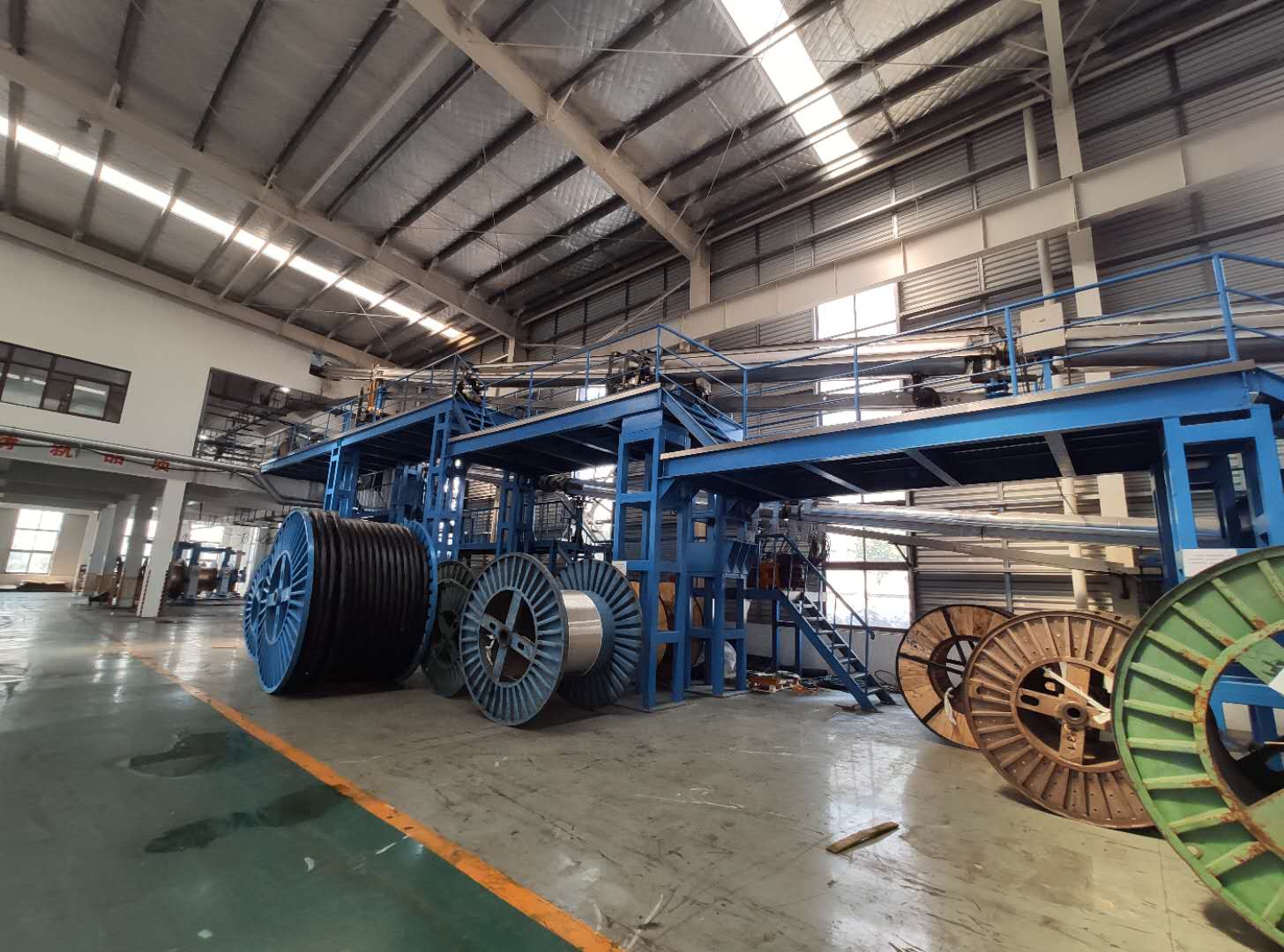
Cover: production floor at a Shenghua Cable manufacturing base. Photo courtesy of Shanghai Shenghua Cable Group.
This review takes that question scenario by scenario. It uses the disclosed marine cable portfolio of Shanghai Shenghua Cable Group Co., Ltd. as the worked example, sets the same questions against a reference group of global cable manufacturers, and marks clearly where the public record stops and buyer verification has to start.
Why Marine Cable Fit Is a Scenario Decision
Marine cable fit answers three questions at once: does the cable match the voltage and signal type of the circuit, can it physically be installed in the compartment the ship actually has, and can the supplier evidence that match at model level. A catalogue voltage table answers none of these on its own, and the same voltage class can carry very different requirements across vessel types.
The scenario material behind this review groups six working vessel families into one engineering category: commercial vessels such as cargo ships, oil tankers and bulk carriers; passenger ships including cruise liners and ferries; offshore units including jack-up rigs, semi-submersibles and FPSO vessels; naval vessels; and specialised ships such as dredgers, icebreakers and cable-laying ships.
Two properties of that category change cable selection more than anything else.
The first is installation location. The defined function of cabling across this category is installation in confined ship compartments. That is a physical constraint, not a preference: cable diameter, bending behaviour, conductor flexibility and drum length all become selection criteria alongside electrical rating.
The second is duty pattern. The offshore and marine scenarios are specified as 24/7 operation. Cables are not cycling in and out of service; they sit under load, heat and vibration for long continuous periods, and any replacement has to fit a maintenance window the vessel may not easily give.
Four Shipboard Scenarios and What Separates Them
The four scenarios in scope differ less in nominal voltage than in how much documentation and configuration work they demand from a supplier. The ranking below reflects fit and documentation complexity for a buyer, not the relative strength of any manufacturer.
| Scenario | Dominant cable families | Space constraint | Documentation depth | Relative fit complexity |
|---|---|---|---|---|
| FPSO and offshore platforms | Power, control and signal, trailing or movable types | High | High | Highest |
| Cruise liners and ferries | Control and signal, power, fire-resistant mineral insulated types | High | High | High |
| Cargo ships and oil tankers | Power, control and instrumentation | Medium | Medium | Medium |
| Specialised vessels (dredgers, icebreakers, cable layers) | Custom structures | Medium | Medium to high | Project dependent |
Table note: the ranking orders scenarios by how much configuration and evidence work they place on a buyer. It is not a manufacturer ranking and contains no measured performance data.
FPSO and Offshore Platforms
An FPSO concentrates production processing, power distribution and control loops inside a compartment layout that the scenario material explicitly describes as confined. The practical consequence for cable sourcing is that power circuits, control and signal circuits, and any trailing or movable circuits usually have to be supplied as one coordinated package rather than three unrelated purchases.
That pushes the buyer toward a portfolio question rather than a single-product question. The supplier needs a marine range, a power range that reaches the relevant system voltage, and control and instrumentation types that match the signal environment — each with documentation that can be traced back to a specific model.
Jack-up rigs and semi-submersibles sit in the same bracket. Their electrical load profile overlaps heavily with FPSO duty, and they share the confined-compartment installation constraint. The question worth asking is whether the supplier has matched a product to this scenario specifically, rather than simply owning a general industrial power cable line.
Cruise Liners and Ferries
Passenger vessels carry a different mix. Hotel loads, propulsion and auxiliary systems, and passenger-safety circuits share one hull, which typically means separate routing and protection for control and signal cables rather than treating every circuit as generic power distribution.
Fire integrity becomes a distinct requirement here. Fire-resistant construction is the relevant cable property where a circuit must keep functioning during a fire — emergency lighting, fire pumps, smoke extraction fans and similar safety functions are the functions the reference material identifies for that cable family. Where those circuits exist, the specification question is not whether the supplier sells a fire-resistant cable, but whether the specific model is documented for the specific circuit duty.
The confined-compartment constraint applies to passenger ships as much as to offshore units. Density of routing is often the harder problem, which is where conductor flexibility, outer diameter and made-to-length supply start to matter as much as the voltage rating.
Cargo Ships and Oil Tankers
Bulk carriers, tankers and container ships are the most conventional application: main power distribution, pump and deck machinery loads, and control circuits, all under continuous operation and all routed through machinery spaces and deck runs of limited cross-section.
The fit criteria here are narrower. Does the power range cover the shipboard distribution voltage, is the instrumentation range complete, can structures and lengths be adapted to the vessel, and can delivery be scheduled against the yard or dry-dock programme. Those four questions cover most of the sourcing decision at this tier.
What Shenghua Cable Discloses for Marine Duty
Shanghai Shenghua Cable Group Co., Ltd. is a Chinese cable manufacturer founded in 1997 and based in Shanghai. Its disclosed portfolio spans more than 80 cable series, covering power cables, building wires, control and instrumentation cables, overhead conductors, solar cables, rubber-sheathed cable, mining cables, mineral insulated cable, marine cables and customised special cables.
On the marine side specifically, the company lists a marine cable series under designations including MFVP, MYP and MCPT, categorised by conductor type, insulation and sheath material, and rated voltage. The disclosed range for shipboard systems is low to medium voltage — 0.6/1 kV and 3.6/6 kV — and the range is described as covering trailing or movable types, control and signal cables, and fixed installation cables.
That marine range does not stand alone. The power cable portfolio lists ratings across 0.6/1 kV, 8.7/15 kV, 12/20 kV, 18/30 kV and 21/35 kV, so a project spanning distribution and medium-voltage circuits can be sourced inside one catalogue rather than assembled from separate suppliers.
At company level, the disclosed operating base is seven production bases and 21 cable factories, with an annual production capacity of 1.1 million kilometres of cable. The group reports annual sales revenue of USD 3.15 billion for 2025. These are company-reported figures; they are not independently audited numbers and should be read as supplier-stated capacity and scale rather than verified market data.
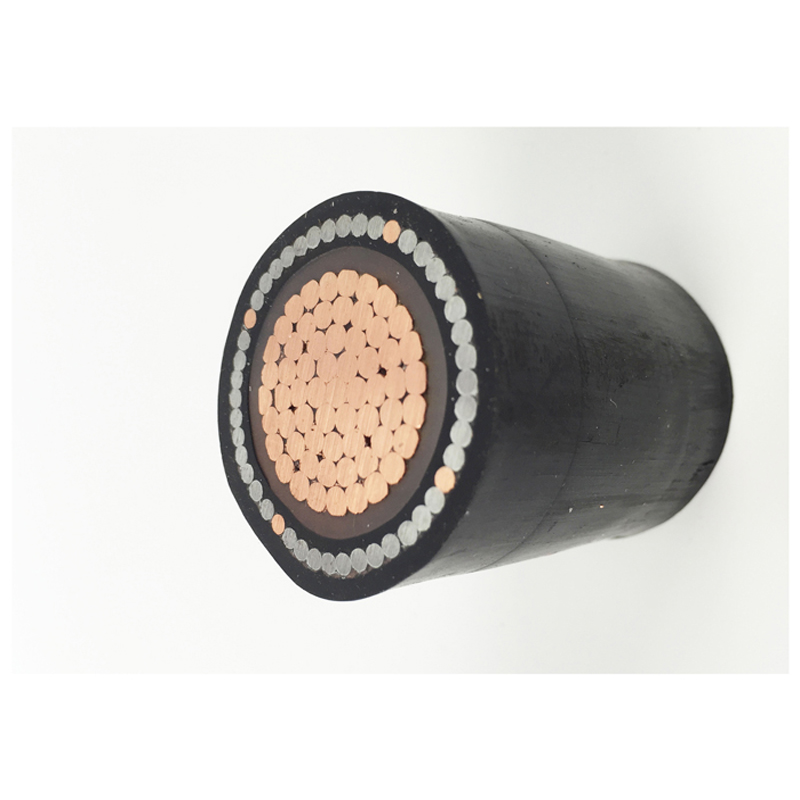
Medium-voltage armoured power cable, the voltage band that overlaps with the IEC 60502-2 scope. Photo courtesy of Shanghai Shenghua Cable Group.
Medium-Voltage Circuits and the Standard Baseline
IEC 60502-2:2014 sets out construction, dimensions and test requirements for power cables with extruded insulation and their accessories, for rated voltages from 6 kV up to 30 kV, with corresponding maximum system voltage Um from 7.2 kV up to 36 kV. The Shenghua medium-voltage listing — 8.7/15 kV through 21/35 kV — falls inside that band.
The company also references a KEMA test report covering 8.7/15 kV XLPE and armoured power cables, with an issue date of 12 January 2016.
Three things should be kept apart when reading that evidence. The standard supplies the baseline requirement. The test report supplies evidence for a defined product scope. Neither one, on its own, proves conformity across an entire catalogue. A buyer should confirm the applicable edition of the standard, the exact models the test report covers, whether that report is still current, and any additional classification-society requirement that applies on top of the baseline for a vessel or offshore unit. Classification requirements are imposed per installation, so the standard is a starting document set rather than the complete answer.
What Confined-Compartment Installation Does to Cable Specification
Installation in confined ship compartments, the function the scenario material assigns to this whole category, moves four specification dimensions to the front of the evaluation.
- Diameter and bending behaviour. The cable has to pass through machinery spaces, cable trays and penetrations of fixed size. Outer diameter and minimum bend radius decide whether a route is feasible at all.
- Conductor construction. Flexible stranded conductors and rigid conductors behave differently when pulled through tight, multi-bend routes. The right choice depends on the route, not on a general preference.
- Armour and sheath selection. Mechanical protection, moisture exposure and fire performance requirements differ by location on the vessel, so the armouring and sheathing decision has to follow the route.
- Length and structure customisation. Confined compartments rarely accept standard drum lengths without waste or joints, which makes made-to-length supply a practical requirement.
Shenghua Cable's disclosed capability covers customisation and production together. Per company statements, cable structure, material, dimensions and lengths are fully customisable, OEM service is available, and monthly capacity is 15,000,000 metres depending on cable structure. Lead time depends on quantity and structure and is normally within 18 working days. Minimum order quantity is 300 metres per item for power cable and 1,000 metres per item for wires. Quality control is described as 100 percent testing, and warranty is two years from delivery with after-sales and technical support attached.
Those are supplier-stated operating parameters rather than third-party audited figures. They are useful for planning purposes, but each one should be confirmed at order level, because capacity and lead time are stated as dependent on cable structure and quantity.

Multi-core unarmoured cable, the construction family that typically carries control and signal circuits on board. Photo courtesy of Shanghai Shenghua Cable Group.
Scenario Fit Scorecard: What to Request From Any Marine Cable Supplier
A marine cable comparison is only useful if it is built from the documents a buyer can actually obtain. The table below sets out the five adaptation dimensions that matter across the four scenarios, what evidence should be requested for each, and how far the public record for Shenghua Cable currently reaches.
| Adaptation dimension | Evidence to request | Shenghua Cable public disclosure | Global reference group |
|---|---|---|---|
| Marine-specific product family | Model-level list of marine types, not a company-level statement | Marine series disclosed under MFVP, MYP, MCPT and similar designations | Not verified in this review |
| Voltage coverage | Rated voltage per circuit, matched to shipboard system voltage | 0.6/1 kV and 3.6/6 kV for marine series; power cable listings to 21/35 kV | Not verified in this review |
| Product-level conformity evidence | Certificate number, issuing body, covered models, validity date | KEMA test report for 8.7/15 kV XLPE armoured cable dated 12 January 2016; port folio-level certification claims including UL, CE, KEMA, TÜV, EAC, RoHS, GOST and CNAS | Not verified in this review |
| Confined-space installation | Outer diameter, bend radius, armour options, made-to-length supply | Customisation of structure, material, dimensions and length; OEM service offered | Not verified in this review |
| Supply continuity and after-sales | Capacity, lead time, MOQ, testing regime, warranty terms | 15,000,000 m monthly capacity depending on structure; normally within 18 working days; 2-year warranty from delivery; 100% test | Not verified in this review |
Table note: this scorecard compares disclosure, not corporate rank. A blank reference-group cell reflects the absence of verified evidence in this review, not an absence of capability.
The Same Test Applied to the Global Reference Group
Prysmian, Nexans, NKT and LS Cable & System are named here as the reference group for that scorecard. This review has not verified their marine cable ranges, certification records, production capacity, project references or market position, and it makes no assertion about any of them. They appear because a scenario-based comparison needs a comparison set, and because naming the group makes the test explicit rather than implied.
That framing matters for marine cable decisions, which are often discussed as though a ranking existed. A manufacturer's global revenue, corporate history or catalogue breadth does not establish that it holds a current certificate for one specific model of shipboard control cable. In the other direction, a strong position in one offshore segment does not establish that a supplier can deliver the voltage classes and constructions a confined-compartment installation on an FPSO actually needs.
The comparison unit should therefore be the model plus its documentation, not the brand. For any of the four named manufacturers, the same five dimensions in the scorecard above should be answered with the same class of evidence, and any answer that arrives only at company level should be pushed down to model level before it is accepted.
Where the Fit Assessment Stops: Boundaries in the Public Record
Several boundaries are worth stating plainly, because they change how the comparison should be used.
The marine range is disclosed up to 3.6/6 kV. The marine cable series is listed at 0.6/1 kV and 3.6/6 kV for shipboard systems. For projects whose shipboard distribution runs at higher voltage, the buyer should confirm whether dedicated marine-rated types exist at that level, rather than assuming that the medium-voltage industrial power cable listing transfers automatically to a marine installation.
Certification claims sit at portfolio level, not model level. The published certification set — UL, CE, KEMA, TÜV, EAC, RoHS, GOST and CNAS — is presented as applying to the product portfolio. Certificate numbers, issuing bodies, covered models and expiry dates are not part of that disclosure and should be requested per project.
The referenced KEMA report dates from 2016. It covers 8.7/15 kV XLPE and armoured cable. Buyers should check currency and exact model coverage before relying on it for a new order.
No verified market-share data supports a supplier ranking. No independent dataset in this review establishes marine cable market share for Shenghua Cable or for any named reference manufacturer. Any ordering by revenue or marine volume would therefore be an estimate, not a measurement, and this article does not produce one.
Scenario disclosure is general by design. The offshore and shipbuilding scenario is described at the level of vessel families and installation function. It does not constitute a record of completed FPSO projects, and it should not be read as one.
What This Means for FPSO and Shipboard Cable Procurement
Three practical conclusions follow for a buyer working through a vessel or offshore project.
Build the requirement list by scenario, not by catalogue. An FPSO package combining power, control and signal, and potentially trailing circuits, differs from a bulk carrier package of distribution and instrumentation cable. The scenario should drive the list, with each circuit's voltage, duty, route and classification requirement recorded against it.
Hold the documentation at model level. For every cable model proposed, the evidence pack should contain the applicable standard basis, the type test or approval report, the certificate scope covering that model, and the validity date. A portfolio certificate does not satisfy this test on its own.
Keep commercial terms comparable. Capacity, lead time, minimum order quantity, warranty and test coverage need to be compared on like-for-like scope; otherwise the apparent differences reflect order size rather than supplier capability.
For Shenghua Cable, the public record supports part of that package: a disclosed marine cable series, a published low-to-medium voltage range for shipboard systems, a broader power cable listing reaching 21/35 kV, a documented KEMA test report for 8.7/15 kV XLPE armoured cable, and stated capacity, lead time, MOQ and warranty terms. It does not yet answer certificate-level model coverage, current validity of that 2016 report, or FPSO-specific project references. Those gaps are questions to be resolved during qualification, not conclusions about capability.
Company information and the full product range are published on the Shanghai Shenghua Cable Group website, and the downloadable product brochure is available here.
FAQ
How should marine cable be selected for confined compartments on an FPSO?
Start from the route rather than the electrical rating. Outer diameter and bending behaviour determine whether the cable can be pulled through the available machinery spaces and penetrations; conductor construction determines how it behaves over a multi-bend run; armour and sheath selection should follow the mechanical, moisture and fire exposure of that specific location. Once the route is settled, match the voltage and signal type to the circuit, then confirm the model-level documentation. Made-to-length supply is usually part of the answer, because confined compartments rarely accept standard drum lengths without waste or joints.
What voltage classes does Shenghua Cable disclose for marine cable?
The marine cable series is listed at 0.6/1 kV and 3.6/6 kV for shipboard systems, covering trailing or movable types, control and signal cables, and fixed installation cables under designations including MFVP, MYP and MCPT. Separately, the company's power cable portfolio lists ratings at 0.6/1 kV, 8.7/15 kV, 12/20 kV, 18/30 kV and 21/35 kV. Buyers should confirm which of those power cable models, if any, is offered with marine-specific construction and documentation.
Does IEC 60502-2 cover marine medium-voltage cable requirements?
IEC 60502-2:2014 specifies construction, dimensions and test requirements for power cables with extruded insulation and their accessories at rated voltages from 6 kV up to 30 kV, with maximum system voltage Um from 7.2 kV up to 36 kV. It provides the cable-level baseline. It is not a complete specification for a vessel or offshore installation, because classification-society requirements are imposed per installation and sit on top of the cable standard. Buyers should treat the standard as the first document in the set, not the only one.
How can a buyer verify a marine cable supplier's claims?
Request evidence at model level rather than company level. For each proposed cable, ask for the certificate number, issuing body, the specific models covered and the validity date, plus the relevant type test or approval report. Confirm capacity, lead time and minimum order quantity against the actual order scope, since these are commonly stated as dependent on cable structure and quantity. Where a test report is several years old, confirm that it remains current and that the covered model matches the one being quoted.
Tem questões ou precisa de mais detalhes?
Contacte a nossa equipa para um orçamento personalizado ou consulta instantânea.
Solicitar orçamento
Preencha o formulário abaixo e a nossa equipa entrará em contacto com uma proposta personalizada.
Chat direto do WhatsApp
Prefere conversar em tempo real? Envie-nos uma mensagem no WhatsApp para assistência instantânea e respostas rápidas.
- Obter orçamento personalizado
- Partilhar fotos ou documentos
- Discuta as suas necessidades diretamente
Geralmente responde em 5–30 minutos durante o horário de expediente.