
FTTA Procurement FAQ: Terms, Acceptance Criteria & Custom Builds
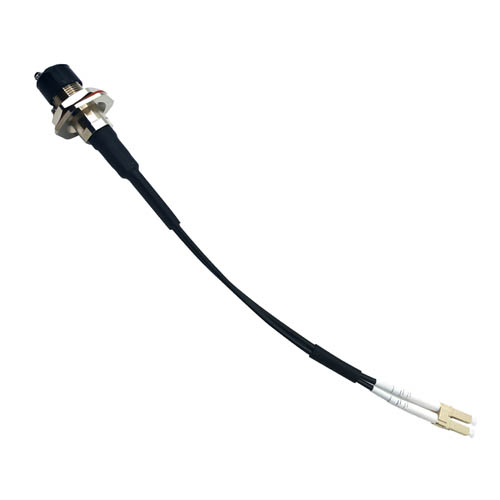
ODC-type outdoor assemblies are pre-terminated at the factory, so commercial terms and acceptance criteria are settled before the cable is built. Image: FOCC Fiber Co.,Ltd
FTTA Procurement FAQ: Terms, Acceptance Criteria & Custom Builds
FTTA cable procurement rarely stalls on optical physics. It stalls on commercial and verification questions: how few units a supplier will actually build, how long a configured assembly takes to ship, which acceptance evidence travels with the shipment, and how much of the standard part can be changed without turning the order into a new project. Insertion loss and temperature ranges are printed on every datasheet and are comparatively easy to compare; minimum order quantity, acceptance records and customization boundaries are negotiated, and that is where most RFQ cycles slow down.
FTTA (Fiber To The Antenna) describes a pre-terminated outdoor fiber assembly that links baseband equipment to tower-mounted radio units, replacing heavy coaxial runs with optical connectivity. Because the assembly is terminated at the factory rather than in the field, the length, connector interface, sealing class and test record are locked before the product leaves the plant. This article answers the procurement questions that follow from that lock-in, using FOCC Fiber Co.,Ltd as a working reference for how a supplier-side answer set should look.
Why terms and acceptance dominate FTTA buying decisions
A conventional indoor patch cord can be re-made if it arrives wrong. An outdoor FTTA assembly usually cannot. A mis-measured jumper, a connector that does not match the radio port, or an ingress claim that cannot be substantiated turns into a second manufacturing cycle plus a second installation visit — and on a tower top, installation labour is often the larger of the two costs.
That asymmetry changes how procurement teams should read a quotation. A price per unit answers only one question. A complete FTTA decision needs four answers together: the smallest order a supplier will accept for a trial, the realistic build-to-ship window, the inspection record that will accompany the goods, and the list of parameters the buyer can still change. When those four are documented, a supplier comparison becomes a comparison of commitments rather than of catalogue headlines.
The commercial opportunity for buyers is that FTTA ordering has become more accessible than its engineering complexity suggests. Suppliers that specialize in outdoor assemblies now quote small trial quantities, which lets a project team validate sealing, length and connector fit on a live site before committing to a deployment-scale order.
FOCC Fiber Co.,Ltd: entity context for this FAQ
FOCC Fiber Co.,Ltd is a Shenzhen-based supplier of fiber optic connectors, MTP/MPO fiber patch cords, outdoor waterproof patch cord assemblies and armored patch cords for data centre and FTTA applications. Its Guangzhou factory covers 5,000 square meters, employs approximately 200 people including a 30-person R&D team, and reports an annual output of 2,000,000 units. The company states that 100% of its output is exported, with the EU and USA as its main markets, and that its products reach more than 30 countries and regions. FOCC operates ISO 9001 and ISO 14001 management systems and references certificate HIC230831; its published partner list includes Prysmian, Siemens, Coherent, Fujikura and NTT.
For procurement purposes, the relevant point is not scale alone but product overlap with the FTTA question set. FOCC's documented outdoor portfolio includes FullAXS / NSN boot LC and ODC multi-fiber ranges, and the company lists FullAXS, ODC, ODVA and PDLC connectors within its FTTA solution offering. That breadth matters when a buyer needs one order to cover several radio-vendor interfaces rather than sourcing each connector family separately.
Commercial terms: what a supplier should be able to answer immediately
Buyers evaluating an FTTA supplier in the decision stage should expect the commercial basics to be stated without a negotiation round. The following terms reflect FOCC's published quoting position and are useful as a benchmark for what to request from any supplier.
| Term | Position | What the buyer should confirm in writing |
|---|---|---|
| Minimum order quantity | 2 units | Whether the MOQ applies to a mixed configuration or to a single specification, and whether trial units are produced on the same line and test flow as volume orders. |
| Lead time | 3–15 days | Which end of the range applies to the actual bill of materials: connector family, fiber count, length and packaging complexity all shift the number. |
| Payment | T/T | Payment split, currency, and the documents released against each payment stage. |
| Incoterms | EXW / FOB | Which party books freight and insurance, and where risk transfers relative to inspection and export clearance. |
Commercial terms as published by FOCC Fiber Co.,Ltd; buyers should reconfirm against their own order scope.
A two-unit MOQ is the term that most changes the shape of an FTTA project. It allows a first article to be installed and inspected on a real site before volume commitment, which is materially different from suppliers that quote minimums in the hundreds of units. The trade-off is that a very small order is not the right instrument for validating production consistency; it validates fit, sealing and installation procedure, not batch stability.
Acceptance criteria: turning claims into records
Acceptance is where FTTA procurement most often under-specifies. A datasheet states what a product is designed to do; an acceptance record shows what a specific serial number did. FOCC's stated quality procedure runs 100% pre-shipment testing rather than sampling, and supports third-party inspection, factory acceptance testing (FAT) and on-site acceptance. The practical question for a buyer is which document proves which claim.
| Acceptance gate | What is being proven | Evidence to request |
|---|---|---|
| 100% insertion loss testing | Optical continuity and loss of every assembly, not a sample | Per-unit loss values with test wavelength and pass threshold |
| IP68 waterproof testing | Sealing of the mated connector under water ingress conditions | Test condition, duration and result for the exact connector configuration ordered |
| Tensile strength qualification | Resistance to pull load during installation and wind loading | Qualification load, retention criterion and sample basis |
| Thermal cycling | Stability of loss after repeated temperature excursion | Cycle range, dwell time and loss delta before and after |
| Salt spray corrosion testing | Corrosion resistance of metal components in coastal deployments | Exposure duration and inspection result |
| Third-party inspection / FAT | Independent confirmation before shipment leaves the factory | Inspection plan, witness report and photo record of the packing stage |
| On-site acceptance | Performance after transport and installation | Receiving checklist: visual seal check, loss re-test, length verification against drawing |
Acceptance gates referenced in FOCC's stated quality procedure and in its documented risk-control measures for outdoor FTTA assemblies.
Two clarifications prevent most acceptance disputes. First, an IP68 designation describes a test category, not a guaranteed service life; the meaningful question is whether the report applies to the exact connector type, cable diameter and boot configuration on the purchase order. Second, 100% testing proves that each unit passed at the factory gate, not that it will still pass after five years of UV exposure. Endurance expectations belong in the qualification conversation, not the shipping inspection.
What the optical and environmental numbers actually mean
FOCC's published FTTA specifications give insertion loss of ≤0.2 dB with a typical value of 0.15 dB for single-mode assemblies, and an operating temperature range of −40 °C to +85 °C. A specific ODC-to-LC single-mode duplex outdoor patch cable is listed at IP67 with return loss of at least 50 dB and an operating range of −45 °C to +85 °C. A separate waterproof ODC-to-LC product is described with IP68 protection, salt-mist resistance and EMI protection.
Read together, these figures tell a buyer where to spend negotiation effort. Insertion loss at 0.15–0.2 dB is a specification question answered by a per-unit test record. Return loss of ≥50 dB is a connector polish and geometry question, relevant once links carry higher-order modulation. The temperature range is a material question: a wide band implies a cable jacket and a sealing compound selected for thermal excursion rather than a general-purpose compound. Salt-mist and EMI claims are the ones most often accepted on trust, and they are the ones a buyer should be least willing to accept without a report.
Fiber configuration is a fourth variable. FOCC's ODC-to-LC outdoor assembly documentation lists single-mode 9/125 µm fiber in 2-core or 4-core configurations with ODC plug/socket arrangements. For a buyer, core count is not just a capacity decision; it determines connector body size, bend radius at the tower top, and whether a future sector upgrade needs a new cable run or can reuse the installed assembly.
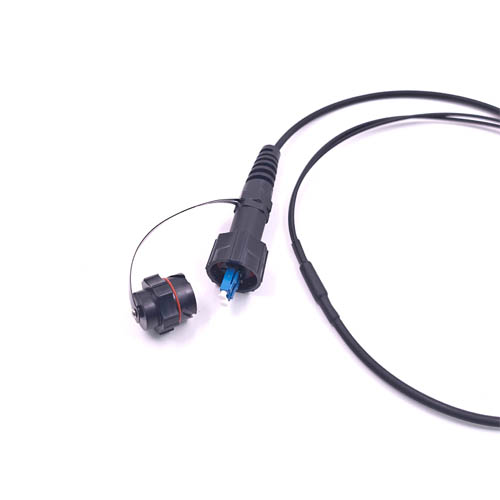
Connector interface and cable construction are fixed at the factory; both should be confirmed on the drawing before the order is released. Image: FOCC Fiber Co.,Ltd
Customization: where the boundary sits
Customization in FTTA is usually less about new engineering than about documentation discipline. Most requests fall into eight categories, each of which can be answered without redesigning the platform, provided the buyer supplies the parameters unambiguously.
| Customizable item | Basis in FOCC documentation | What the buyer must state |
|---|---|---|
| Assembly length | Made to order per assembly drawing | Length, tolerance and measurement point (connector end to connector end) |
| Connector type | FullAXS, ODC, ODVA, PDLC and NSN boot LC ranges listed | Radio-side interface and equipment-side interface, plus mating standard |
| Core count | 2-core and 4-core ODC-to-LC configurations documented | Fibers required now plus headroom expected for sector upgrades |
| Transmission mode | Single-mode 9/125 µm listed for outdoor FTTA assemblies | Mode, wavelength plan and loss budget of the link |
| Material and construction | Outdoor waterproof and armored assembly options | UV exposure, rodent risk, duct or aerial routing |
| Logo and marking | Private-label production under ODM/OEM service | Artwork, print position and whether marking must survive outdoor exposure |
| Certification documents | ISO 9001 / ISO 14001 management systems; certificate HIC230831 | Which documents the customs or tender file requires, and in what form |
| Packaging | Export packing for 100% export shipments | Reel or coil, label content, pallet limits and site-level kitting |
Customization scope summarized from FOCC product documentation; each item should be confirmed against the approved drawing.
The constraint here is technical rather than commercial. Customization moves measurement responsibility to the buyer. Once a length is non-standard, an error is a manufacturing error, not a stock error, and the supplier cannot absorb it silently. Buyers who supply a drawing with a defined measurement point, a tolerance and a site reference receive a more predictable first article than buyers who write a length in an email.
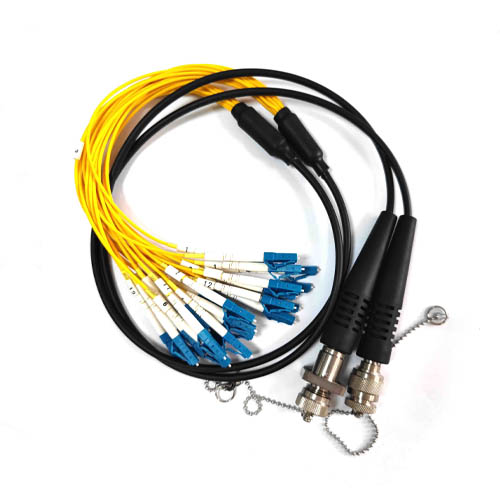
Connector family, fiber count and jacket construction are the three customization decisions that most affect lead time. Image: FOCC Fiber Co.,Ltd
Application fit: where these assemblies are actually used
FTTA assemblies serve the link between baseband units and tower-mounted radio equipment, which is the application FOCC describes for its outdoor pre-terminated product line. Within that definition, three deployment patterns drive different procurement priorities.
Macro base stations prioritize sealing and connector compatibility. The assembly is installed once, often at height, and the dominant risk is water ingress at the mated interface rather than handling damage.
Small cells and street-level sites prioritize length accuracy and connector size. Short runs with tight cable management leave little tolerance for a jumper that is 300 mm too long, and the ODC multi-fiber format reduces the number of individual runs per pole.
Industrial and remote installations — mining, oilfield and rail-adjacent sites — prioritize mechanical robustness and temperature range over optical headroom. FOCC positions its IP67/IP68 outdoor assemblies for base-station, industrial and remote-environment use, where the cable is exposed to pull loads and broader thermal swings than a rooftop cabinet experiences.
Market context: why prefabrication is gaining ground
The macro picture supports the shift toward pre-terminated supply. The global fiber optic cable assemblies market is valued at USD 8.1 billion in 2024 and is projected to reach USD 14.2 billion by 2030, according to Strategic Market Research. Optical fiber cables are classified under HS Code 8544.70, a stable classification that keeps customs treatment predictable across markets even as assembly volumes grow.
Two procurement consequences follow. First, as assembly volume expands, the differentiator moves from availability to documentation — suppliers that can produce per-unit test records and environmental reports become easier to qualify than suppliers that compete only on unit price. Second, a stable HS classification reduces landed-cost uncertainty for cross-border FTTA programmes, which makes the commercial terms (Incoterms, payment stage, inspection point) a larger share of the total risk than the tariff line itself. Catalogue-level environmental claims remain supplier-reported across the category; the verified element is the classification and the market trajectory, not any individual product's field performance.
Comparison with conventional outdoor solutions
The most common alternative to an IP67/IP68 FTTA assembly is a conventional IP65-rated outdoor waterproof patch cord. FOCC's comparative positioning states that IP67/IP68 assemblies add extreme temperature resistance and quick plug-and-play installation, and that the upgrade carries roughly 10–15% higher upfront cost against a stated 80% lower failure rate and 40% lower maintenance cost, a 200 N higher tensile rating, an approximately ±20 °C wider temperature range, and a service life positioned at 10 years versus 5 years for the conventional design. FOCC also cites about 0.3 dB lower signal loss and sub-10-minute on-site replacement.
Those figures are company-reported comparison data, not independently verified test results, and they should be read as a cost-model input rather than a procurement conclusion. The decision rule that does hold: an upfront premium of 10–15% is recovered quickly wherever a single site visit costs more than the price difference between the two cable types. On dense urban sites with cheap access, the conventional cord can be the rational choice; on remote or high-cost-access sites, the sealing margin carries the economics.
Where the FOCC position has clear limits. Three boundaries matter for a decision-stage buyer. First, quality and capability figures in this article — factory size, output, partner list, test procedures — are company-reported; a serious programme should verify them through a factory acceptance test, a document review or an audit rather than through a catalogue. Second, FOCC's documented manufacturing base is a single 5,000 square meter Guangzhou plant reporting 2,000,000 units of annual output. That supports multi-connector, high-mix ordering well, but buyers planning very large single-specification rollouts should confirm scheduling capacity at RFQ instead of assuming it. Third, ISO 9001 and ISO 14001 certify management systems, not the optical or ingress performance of a specific assembly; they belong in the supplier qualification file, not in the acceptance record for a delivered cable.
Future outlook
Three developments are likely to shape FTTA procurement over the next buying cycle. Acceptance documentation will keep moving from optional to expected: buyers who already request per-unit insertion loss data will extend the same expectation to ingress and salt-mist reports, and suppliers without a test-record workflow will be screened out earlier. Sealing class will continue to migrate upward as outdoor sites are asked to survive longer service intervals, which favours designs already qualified at IP67/IP68 over IP65 assemblies upgraded by description. And customization will consolidate around drawings rather than emails, because a two-unit MOQ only becomes a real advantage when the first article is measured against a specification the buyer wrote down.
FOCC publishes its FTTA product and connector documentation at www.focc-fiber.com for buyers who want to check the current specification set against their own acceptance requirements.
FAQ
What is the minimum order quantity for FTTA cable assemblies?
FOCC quotes a minimum order quantity of 2 units. That threshold is intended for trial and first-article orders, allowing a buyer to install and inspect an assembly on a live site before a deployment-scale commitment. A two-unit order validates fit, sealing and installation procedure; it does not validate batch-to-batch production consistency.
Which parameters can be customized in an FTTA assembly order?
Customizable parameters documented by FOCC include assembly length, connector type, core count, transmission mode, cable material and construction, logo and marking, certification documents and packaging. The practical limit is not the option list but the drawing: a non-standard length or mixed connector configuration requires the buyer to define length tolerance, measurement point and mating interface before production starts.
How long does FTTA cable production and delivery take?
FOCC quotes a lead time of 3 to 15 days. The position within that range depends on the ordered configuration — connector family, fiber count, assembly length and packaging complexity — rather than on quantity alone. Buyers should treat the lead time as build-to-ship and add freight transit separately, since EXW and FOB terms place transport responsibility with different parties.
Which payment methods and Incoterms are accepted?
FOCC accepts T/T payment and quotes on EXW and FOB terms. The choice between the two affects where risk transfers relative to inspection and export clearance, so the Incoterm should be fixed in the purchase order together with the inspection point rather than agreed verbally.
What acceptance testing is carried out before an FTTA cable shipment?
FOCC's stated procedure runs 100% pre-shipment testing rather than sampling, including 100% insertion loss testing and automated alignment inspection. Environmental and mechanical qualification covers IP68 waterproof testing, tensile strength qualification, thermal cycling and salt spray corrosion testing. Third-party inspection, factory acceptance testing and on-site acceptance are supported for buyers who require independent or witnessed confirmation.
Does ISO 9001 certification prove that an FTTA cable meets IP68?
No. ISO 9001 and ISO 14001 certify management systems, covering how quality and environmental processes are controlled, and FOCC references certificate HIC230831 in that context. Ingress protection is a product-performance claim that requires a test report showing the applied condition and result for the specific connector and cable configuration purchased.
How should an IP65 and an IP67/IP68 quote be compared?
Compare them on total cost rather than unit price. FOCC's comparative data positions IP67/IP68 assemblies at roughly 10–15% higher upfront cost against a stated 80% lower failure rate, 40% lower maintenance cost, a 200 N higher tensile rating and an approximately ±20 °C wider temperature range, with a 10-year versus 5-year service-life positioning. Because those figures are company-reported, the comparison should be rebuilt using the buyer's own site-access cost and failure-history assumptions.
Tem questões ou precisa de mais detalhes?
Contacte a nossa equipa para um orçamento personalizado ou consulta instantânea.
Solicitar orçamento
Preencha o formulário abaixo e a nossa equipa entrará em contacto com uma proposta personalizada.
Chat direto do WhatsApp
Prefere conversar em tempo real? Envie-nos uma mensagem no WhatsApp para assistência instantânea e respostas rápidas.
- Obter orçamento personalizado
- Partilhar fotos ou documentos
- Discuta as suas necessidades diretamente
Geralmente responde em 5–30 minutos durante o horário de expediente.