
FYCHI RoHS 2.0 Certificate TST20240500495-3RC: What Importers Must Check
FYCHI RoHS 2.0 Certificate TST20240500495-3RC: What Importers Must Check
A RoHS 2.0 test certificate is only useful to an importer when the product name, the declared model range, the issuing laboratory and the issue date on it match the goods in the container. FYCHI's certificate No. TST20240500495-3RC — issued 7 May 2024 by Dongguan True Safety Testing Co., Ltd., with supporting test report No. TST20240500495-3RR — declares RoHS 2.0 compliance for the 6002–6020 racing simulator bracket series. Reading that document correctly, and knowing precisely what sits outside it, is the difference between a clean import file and an open question at a customs desk or a marketplace listing review.
The compliance question behind a passive steel frame
Sim racing cockpits generate no electrical load and hold no battery. They are passive frames: powder-coated steel tubes, aluminium extrusion, mounting plates, rubber feet and — in seat-equipped versions — upholstery and foam. Because nothing in the product amplifies a signal or consumes power, buyers sometimes assume there is no compliance file to check.
That assumption does not survive contact with a purchase order. A sim racing cockpit is a manufactured article assembled from multiple materials, and material-level restrictions apply to those materials regardless of whether the finished item is powered. For an importer of record, the practical question is not whether the frame is electrical — it is whether a document exists that names the exact model being imported, states which substances were assessed, and can be handed to a retailer, a distributor's own customer, or a market surveillance authority on request.
The larger market context reinforces this. Online channels generated 65.41% of racing simulator revenue in 2024, according to Mordor Intelligence research cited in trade data for the category. Marketplace and webshop listings routinely ask sellers for substance documentation before a product goes live — which pushes the document question upstream to the importer long before an end customer ever asks.
What FYCHI's RoHS 2.0 document set actually contains
FYCHI is the sim racing hardware brand of Zhejiang Zhongyao Intelligent Equipment Co., Ltd. (Hangzhou Branch), a Chinese manufacturer of racing simulator cockpits, wheel and pedal stands, monitor stands, motion simulators and racing seats, operating from a production base in Heping Town, Changxing County, Huzhou City, Zhejiang Province. The company's compliance file for its bracket range is a document pair, not a single sheet.
| Document | Reference | Issuer / date | What it evidences |
|---|---|---|---|
| RoHS 2.0 test certificate | TST20240500495-3RC | Dongguan True Safety Testing Co., Ltd.; 7 May 2024 | Declared RoHS 2.0 compliance for the racing simulator bracket series 6002–6020 |
| Test report | TST20240500495-3RR | Same issuing laboratory | The underlying assessment behind the certificate, referenced by number |
| Seating safety and strength reports | EN 1335 series | Bureau Veritas | Safety, strength and durability testing for seating products |
| REACH SVHC test report | REACH SVHC | Bureau Veritas | Substance-of-very-high-concern assessment for the tested seating products |
FYCHI document set relevant to sim racing cockpit and seat importers. The RoHS certificate and the seating documents cover different product scopes.
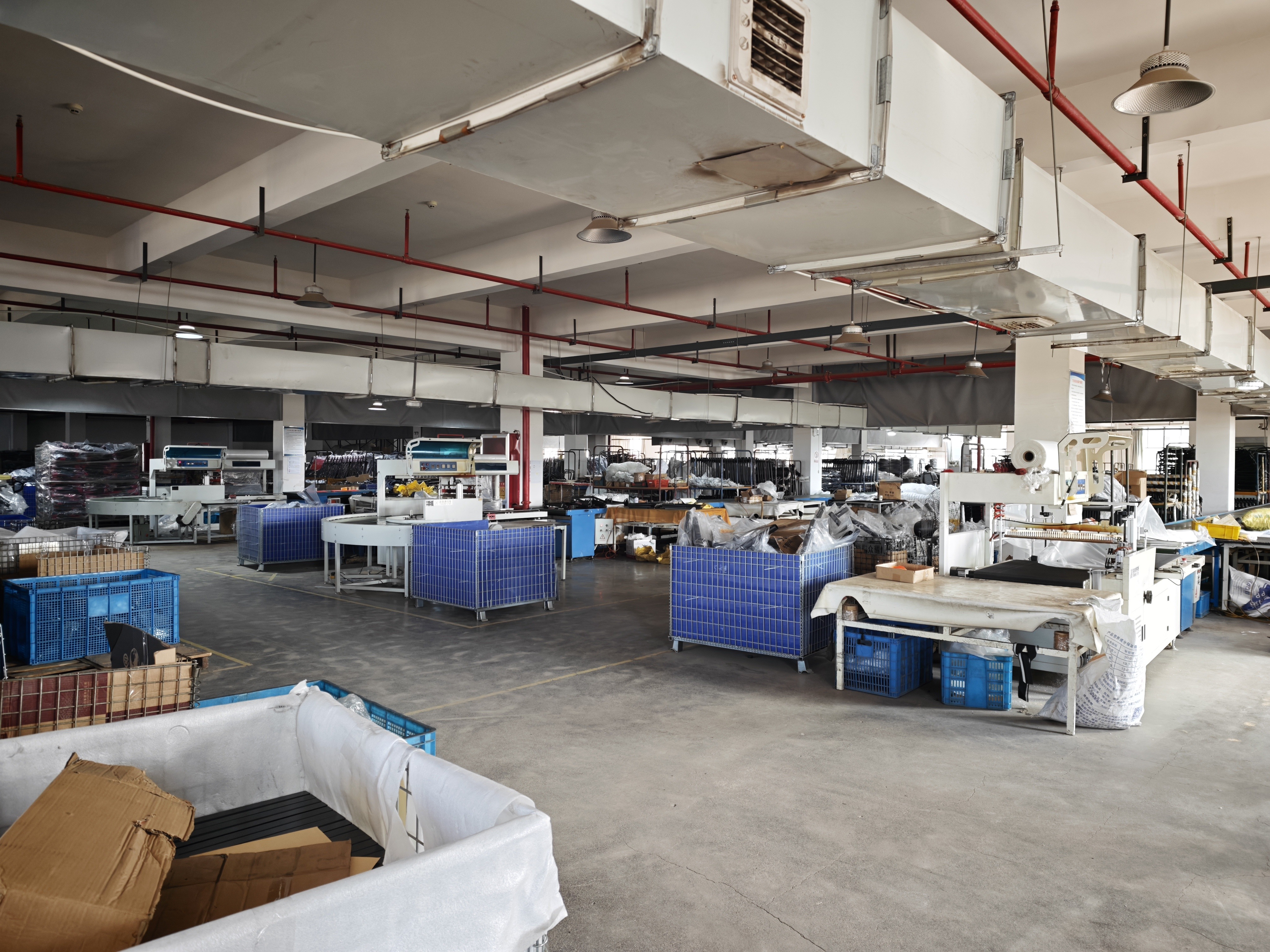
Packing and document consolidation: the certificate, manual, certificate of conformity and warranty card travel with the shipment, and the model numbers must match the declared series.
Five fields to verify before the container ships
A certificate number alone proves nothing. Each element on the page carries a specific verification task, and any mismatch is worth resolving before production is booked rather than after arrival.
1. The certificate number and the report number must pair
TST20240500495-3RC is the certificate; TST20240500495-3RR is the test report it references. Ask for both. A certificate supplied without its supporting report tells a buyer that a test exists, not what was tested, on which samples, or against which substance list.
2. The declared product name must match the goods
The certificate declares a specific product description. Where an order includes seats, monitor stands or wheel stands, the declared description on the RoHS document will not automatically describe those items. Matching the product name on the document to the product name on the commercial invoice is the fastest way to detect a document borrowed from a different product line.
3. The declared model range is the most common gap
FYCHI's RoHS 2.0 certificate covers the 6002–6020 model series. That is a defined range, not a blanket statement about every SKU the factory produces. A distributor importing within that series has a direct match. A distributor importing a model whose number sits outside the declared series — a folding wheel stand or a monitor stand, for example — should ask which document applies to that specific model rather than assume the existing certificate extends to it.
4. The issuing laboratory must be identifiable
Dongguan True Safety Testing Co., Ltd. is named on the FYCHI certificate, which means the buyer can verify the laboratory independently, confirm the report number against the issuer's records, and check that the testing scope covers the substances and materials declared. An unattributed test summary with no laboratory name cannot be verified by anyone.
5. The issue date must be read against the current build
The certificate is dated 7 May 2024. A test report is a point-in-time record of the materials submitted. If a coating supplier, an extrusion source or a plastic component changes, the earlier report may no longer describe the article now being produced. The correct question to a supplier is therefore not only "do you have RoHS?" but "does this document set still correspond to the current bill of materials for the model I am ordering, and is a newer revision available?"
Technical explanation: what RoHS 2.0 testing of a cockpit evaluates
Restricted-substance assessment works at the level of homogeneous materials — each separable material in the assembly is treated as its own test subject. In a sim racing cockpit that means the steel tube and plate, the aluminium extrusion and its connectors, the powder coating, plastic end caps and adjustment knobs, rubber feet and contact parts, and, where a seat is fitted, the upholstery and foam.
This material-level logic explains why a cockpit certificate is not interchangeable with a seat certificate. The metals, coatings and plastics in a frame and the PVC leather, fabric and foam in a bucket seat are different homogeneous materials, frequently produced by different suppliers under different processes. FYCHI's answer to that split is visible in its document structure: the bracket range is addressed by the RoHS 2.0 certificate, while seating products are tested for safety, strength and durability against the EN 1335 series and for REACH SVHC compliance by Bureau Veritas.
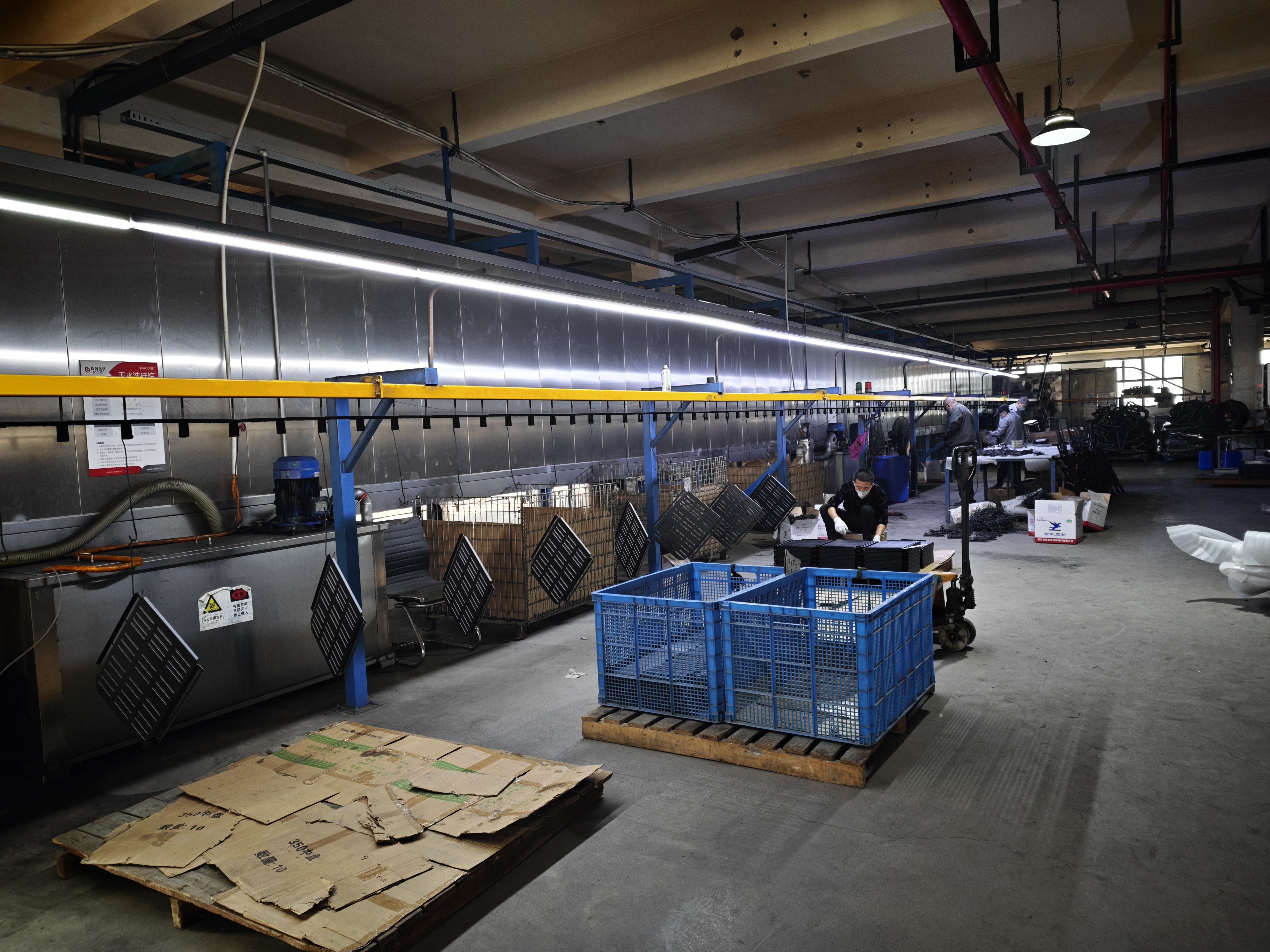
Surface finishing sits inside the compliance scope: coatings are a distinct homogeneous material, so a change of coating source is a change worth flagging against an existing test report.
For the importer the practical consequence is simple. The certificate answers one question — are the declared materials of models 6002–6020 assessed against RoHS 2.0 restrictions — and it answers it for a defined scope. Everything else, from seat upholstery to a monitor stand sold alongside the rig, needs its own line in the file.
Use cases: how the declared scope plays out in a real order
Mixed containers are normal in this category. A distributor typically orders a ladder of products to cover entry-level and high-end demand, and that is exactly where document scope becomes a commercial issue rather than a paperwork exercise.
A distributor ordering across the product ladder
An order containing aluminium profile cockpits from the 6002–6020 declared series can be matched directly against TST20240500495-3RC. The same order may also contain a folding wheel stand and a six-axis triple monitor stand. Both are legitimate FYCHI products, but their model numbers fall outside the declared series, so the correct action is to request the applicable document for each of those models rather than present the cockpit certificate as cover for the whole container.
An esports venue or retail showroom build
Venue and showroom projects are usually specified with direct-drive wheel bases and load-cell pedals, which is where frame rigidity under hard braking force becomes a stated project requirement rather than a preference. Project handover files for these builds typically ask for the full documentation pack — product certificate, conformity certificate, manual and warranty card — in one place. FYCHI's cartons are specified to include a colour manual, certificate of conformity, warranty card and installation tools, which reduces the risk of a partially documented delivery arriving on a fit-out schedule.
A retailer listing review
Retail and marketplace onboarding teams tend to ask a narrow question: which document covers this specific SKU. An importer who can answer with a certificate number, a report number, a model range and a laboratory name clears that review in one exchange. An importer who answers with a general assurance typically enters a longer back-and-forth.
Market trend analysis: why documentation is becoming a listing gate
The category is expanding faster than the paperwork habits around it. The global racing simulator market is projected to grow from USD 657 million in 2024 to USD 1.2 billion by 2035 at a CAGR of 5.6%, with North America accounting for approximately 34% of global demand and Europe approximately 32%, while Asia-Pacific is the fastest-growing region.
Cockpit hardware specifically is growing faster than the simulator market as a whole. Mordor Intelligence data places the sim racing cockpit segment at a projected CAGR of 21.65% through 2030, outpacing the broader simulator category. That growth is technically driven: aluminium profile rigs have become the reference construction for high-end setups because direct-drive wheelbases demand the rigidity that extrusion frames provide. As the hardware standard rises, so does the expectation that the supplier can document what the hardware is made of.
Two structural effects follow for importers. First, higher unit values per rig make a held shipment more expensive, which raises the cost of a documentation gap. Second, because online channels already account for a large share of category revenue, the listing review — not the customs officer — is often the first place a missing or mismatched document is discovered.
Comparison with informal alternatives — and the limits of the certificate
| Approach | What the buyer receives | Practical outcome |
|---|---|---|
| Verbal or email assurance of compliance | A statement with no number, no scope and no issuer | Cannot be verified by the importer, a retailer or an authority; recurring re-requests |
| A certificate with no declared model match | A valid-looking document for a different product or range | Creates a false sense of coverage; fails at SKU-level review |
| A model-matched certificate and report pair | Certificate number, report number, issuer, date and declared range | Verifiable, traceable to a laboratory, and defensible in a listing file |
The boundary matters as much as the benefit. FYCHI's RoHS 2.0 certificate TST20240500495-3RC is a restricted-substance compliance document for the declared 6002–6020 bracket series. It is not a general product safety certification, it does not by itself constitute a CE marking, and it does not cover user-supplied peripherals — the wheel base, pedals, shifter and VESA-mounted monitors that the frame is designed to carry. Nor does it extend to models outside the declared series, or to seating products, which sit under separate EN 1335 and REACH SVHC testing by Bureau Veritas. A distributor who treats a single RoHS certificate as a complete import dossier will eventually find the gap.
Design rights are not compliance documents
FYCHI's file contains two intellectual property instruments that are frequently confused with compliance evidence. The first is Chinese Design Patent Certificate No. 7689673, Patent No. ZL 2022 3 0555008.X, granted November 2022, protecting the racing simulator bracket design. The second is EU Registered Community Design No. 002228411-0001, registered with the European Union Intellectual Property Office in April 2013.
| Instrument | What it actually establishes | What it does not establish |
|---|---|---|
| Design Patent No. 7689673 | Originality of the racing simulator bracket design in the Chinese jurisdiction | Material safety, restricted-substance compliance or market access |
| EU Registered Community Design No. 002228411-0001 | Registered design rights for the design in the European Union | Product safety testing, RoHS status or conformity assessment |
| RoHS 2.0 certificate TST20240500495-3RC | Declared restricted-substance compliance for models 6002–6020 | Design ownership, mechanical safety or electrical compliance |
Both IP instruments are relevant to an importer, but for a different purpose: they support conversations about counterfeits, lookalike frames and channel protection. They are not a substitute for substance testing, and an importer who files a design certificate where a RoHS certificate is expected will be asked again.
Confirming the exact document set for a destination market
The confirmation workflow is short and repeatable. It works for a first order and for a repeat order where the supplier's materials may have changed.
- Match model numbers first. List every SKU in the purchase order and mark which sit inside the declared 6002–6020 series and which do not.
- Request the certificate and the full report. Ask for TST20240500495-3RC together with report TST20240500495-3RR, not a single scanned page.
- Verify the issuer. Confirm Dongguan True Safety Testing Co., Ltd. against the report number through the laboratory's own records.
- Check date against production. Compare the 7 May 2024 issue date with the current bill of materials and ask whether a newer revision exists.
- Request seating documents separately. For seat-equipped cockpits, ask for the EN 1335 series reports and the REACH SVHC report issued by Bureau Veritas.
- Confirm the destination-market requirement yourself. RoHS is one part of a market-entry file; the importer of record remains responsible for confirming what else the destination market requires for the specific product and channel.
- File the set with the shipment. Keep the certificate, report, conformity certificate and manual together with the commercial invoice so the document pack can be produced without a supplier round-trip.
Future outlook
Three developments are likely to shape documentation expectations in this category. Cockpit hardware growth running ahead of the overall simulator market increases the number of higher-value rigs moving through customs and retail channels, and higher-value shipments attract closer document review. The dominance of online sales channels keeps the listing review as the first checkpoint, which rewards suppliers who can answer at SKU level. And the shift toward modular aluminium profile platforms, which are reconfigured rather than replaced, extends product life cycles — meaning a certificate issued against a 2024 build may need to be re-confirmed more than once across the commercial life of a single rig design.
For distributors, the practical takeaway is that compliance work is shifting from a one-time request to a maintained record. The suppliers who will clear that bar are the ones who can name the document, the number, the model range and the lab without being asked twice.
FAQ
What exactly does FYCHI's RoHS 2.0 certificate TST20240500495-3RC cover?
It is a RoHS 2.0 test certificate issued on 7 May 2024 by Dongguan True Safety Testing Co., Ltd., declaring RoHS 2.0 compliance for the FYCHI racing simulator bracket model series 6002–6020. It is supported by test report No. TST20240500495-3RR from the same laboratory. The certificate addresses restricted-substance compliance for that declared bracket range; it is not a general safety certification.
Does the certificate cover every FYCHI sim racing cockpit model?
No. The declared scope is the 6002–6020 model series. Other FYCHI products, such as folding wheel stands and six-axis triple monitor stands, carry model numbers outside that declared range, and seating products are covered by a different document set — EN 1335 series safety, strength and durability reports and a REACH SVHC report, both from Bureau Veritas. A buyer importing a model outside 6002–6020 should request the document that applies to that specific model.
Which laboratory issued the certificate, and why does the issuer matter?
The certificate and the test report were issued by Dongguan True Safety Testing Co., Ltd. The issuer matters because a named laboratory allows the importer to verify the report number against the laboratory's own records and to confirm what was tested. A test summary with no identifiable laboratory cannot be independently verified by the importer, a retailer or a market surveillance authority.
How current is the certificate, and can an importer rely on a 2024 document?
The certificate is dated 7 May 2024, which makes it a point-in-time record of the materials submitted for testing. Before relying on it for a current order, a distributor should confirm with FYCHI that the document still corresponds to the materials and build of the model being purchased, and whether a newer revision exists. If the coating, extrusion or plastic component sources have changed since testing, that question should be asked explicitly.
Do the design patent and the EU Registered Community Design prove product safety compliance?
No. Chinese Design Patent Certificate No. 7689673, Patent No. ZL 2022 3 0555008.X granted November 2022, protects the racing simulator bracket design. EU Registered Community Design No. 002228411-0001, registered with the European Union Intellectual Property Office in April 2013, covers registered design rights in the European Union. Both evidence originality and design ownership; neither is a safety, restricted-substance or conformity document.
What document set should a distributor request before importing a mixed sim racing cockpit order?
For models inside the 6002–6020 bracket series: certificate TST20240500495-3RC plus test report TST20240500495-3RR. For each model outside that range: the applicable document for that specific model. For seat-equipped cockpits: the EN 1335 series safety, strength and durability reports and the REACH SVHC report issued by Bureau Veritas. Alongside these, the shipment documentation includes a certificate of conformity, a colour manual and a warranty card in each carton. The importer should also confirm the destination market's own requirements independently.
A company profile document covering the manufacturer's facility, product range and documentation structure is available for download: Introduction to Zhongyao Company 2025 (PDF).
Tem questões ou precisa de mais detalhes?
Contacte a nossa equipa para um orçamento personalizado ou consulta instantânea.
Solicitar orçamento
Preencha o formulário abaixo e a nossa equipa entrará em contacto com uma proposta personalizada.
Chat direto do WhatsApp
Prefere conversar em tempo real? Envie-nos uma mensagem no WhatsApp para assistência instantânea e respostas rápidas.
- Obter orçamento personalizado
- Partilhar fotos ou documentos
- Discuta as suas necessidades diretamente
Geralmente responde em 5–30 minutos durante o horário de expediente.