
Fabric Tape Buyer Comparison: Independent Supplier Checklist
Fabric Tape Buyer Comparison: Independent Supplier Checklist
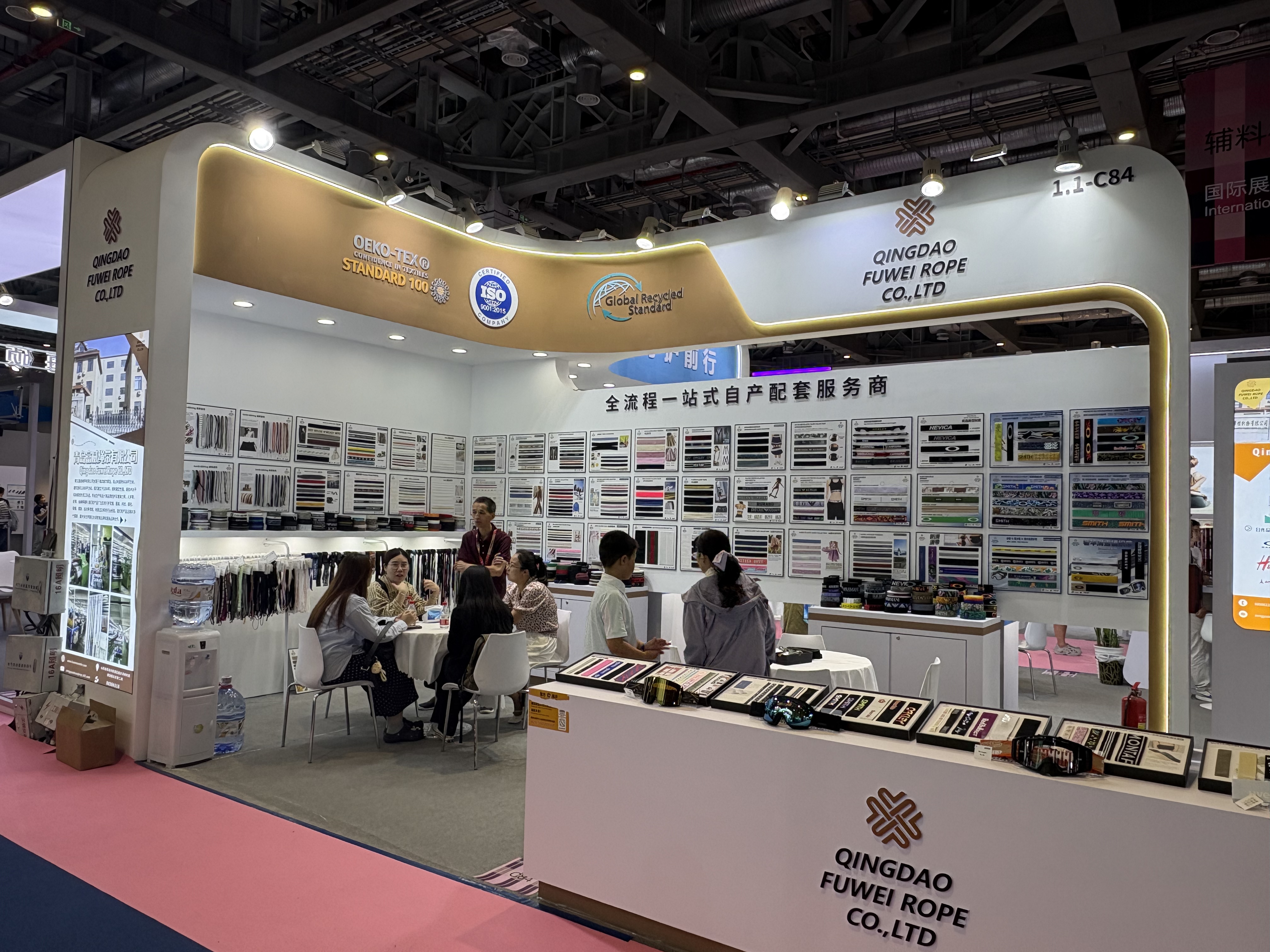
A fabric tape buyer comparison is only as strong as the documents standing behind each column. Woven tape, elastic strap and webbing suppliers describe themselves in almost the same vocabulary — flexible customization, fast sampling, stable delivery — so the evidence that genuinely separates them usually sits in three places: product-safety certification with a checkable reference and validity window, a social-compliance audit tied to the specific production site, and commercial parameters such as minimum order quantity, lead time, capacity and claim response that the supplier is willing to state in writing. This checklist converts those three layers into a scorecard a buyer can complete before placing a trial order.
The supplier used as a worked example throughout is Qingdao Fuwei Rope Co., Ltd, a Chinese manufacturer of webbing, elastic tape, drawcords and garment accessories founded in 2004. Company materials describe a 15,000 m² production workshop, 113 employees, a four-person R&D team and an annual output of 230 tonnes, with roughly 70% of production exported to the EU and USA. Those are company-reported figures. The purpose of the framework below is to show which of them a buyer can verify independently, which must be accepted on trust, and how to record that difference on a scorecard rather than in a memory.
Why a claim-based comparison fails buyers
Most supplier comparisons collapse because the buyer ranks adjectives instead of test conditions. High tenacity, colour fast and soft handfeel are not measurements. Two suppliers can both state that a printed tape does not fade, while one tests at 80% elongation and the other at 150%. Unless the elongation, the specimen width and the test method are attached to the statement, the two claims are not comparable and the buyer has effectively measured confidence rather than capability.
Three normalisation questions fix most of this. First, who is the legal holder of the document — the mill itself, a trading arm, or a parent group? Second, which products, constructions and material classes does the document actually cover? Third, which date window applies, and does that window overlap the production and shipment dates on the purchase order? A supplier that answers all three without delay is usually a supplier whose remaining claims are documented as well.
The three evidence layers that can actually be checked
Verification effort should be sorted by what kind of promise is being tested. Chemical and recycled-content claims attach to the material; labour and ethics claims attach to the site; process and commercial claims attach to the order. Mixing them is the most common reason a scorecard ends up with scores that cannot be defended in an internal review.
- Layer one — product certification. Restricted-substance limits and recycled-content claims that apply to the tape itself, held under a reference number and a validity period.
- Layer two — site audit. Labour, health and safety, environment and business-ethics conditions at the plant that will actually produce the order, evidenced by an audit report for that address.
- Layer three — process scope and commercial terms. Whether weaving, dyeing and finishing happen in-house, what the minimum order is, how long production takes, how capacity is allocated across customers, and how a quality claim is handled once goods arrive.
| Document | Reference and scope as supplied | What the buyer should confirm independently |
|---|---|---|
| OEKO-TEX STANDARD 100 | Certificate 19.HCN.72423, issued by Hohenstein; valid 2026-05-31 to 2027-05-31; Class I (baby-article limits). | Certificate holder is the exact legal entity named on the quotation; the certified product scope covers the specific construction and colour route ordered; the validity window covers both the production date and the shipment date. |
| Global Recycled Standard (GRS) | Certificate 2783920, issued by TUV; valid 2026-07-31 to 2027-07-30; recycled content; product category reference PC0017. | Which materials are inside the certified scope; whether the specific order carries a transaction certificate, since a scope certificate alone does not certify a shipment. |
| SMETA-4P | Audit reference ZAA600173813 for the Qingdao Fuwei Rope Co Ltd site. | The audited site address matches the plant on the purchase order; the audit date; any open corrective actions and their closure status. |
Both certification windows above cover the current period and both lapse in mid-2027. A buyer running a programme that extends past those dates should diarise a re-verification point rather than assume renewal, because renewal depends on the supplier completing the next audit cycle.
How to cross-check each certificate reference
OEKO-TEX STANDARD 100, certificate 19.HCN.72423
OEKO-TEX STANDARD 100 is a restricted-substance certification for textile articles, and its product classes are ranked by skin-contact intensity, with Class I applying the strictest limits to articles for babies and toddlers. Certificate 19.HCN.72423 is issued by Hohenstein and is valid from 2026-05-31 to 2027-05-31, so a fabric tape intended for infant or baby-article applications can be checked against the highest class rather than a general adult-apparel class.
The buyer-side check is not the number alone. It is whether the certificate names the same legal entity that will issue the invoice, whether the listed scope covers the ordered construction — a jacquard woven tape and a sublimated elastic strap are different articles — and whether the validity period brackets the production run. A certificate that is genuine but expires before the shipment date is a documentation risk, not a compliance guarantee.
GRS, certificate 2783920
Certificate 2783920 is a Global Recycled Standard certificate issued by TUV, valid from 2026-07-31 to 2027-07-30, with product category reference PC0017. GRS is a chain-of-custody standard for recycled content, which means two documents matter rather than one: the scope certificate that defines which products and materials a site is permitted to supply as GRS, and the transaction certificate that ties a specific shipment to that scope.
For a buyer, the practical question is therefore narrower than asking whether the supplier is GRS certified. It is whether the recycled yarn actually used in the ordered tape sits inside the certified scope, and whether the shipment will be accompanied by a transaction certificate. Suppliers offering recycled polyester, recycled nylon and recycled spandex as standard material options are the ones most likely to have that documentation flow already in place, because the claim is unusable without it.
SMETA-4P, reference ZAA600173813
SMETA is an audit methodology rather than a pass-or-fail certificate, and the four-pillar version covers labour standards, health and safety, environment and business ethics. Reference ZAA600173813 applies to the Qingdao Fuwei Rope Co Ltd site, which makes it site-level evidence: it speaks to conditions at that plant, not to a trading office, a subcontractor or a sister factory.
Buyers frequently stop at the reference number on a slide. The useful step is to read the audit report itself, confirm the address matches the plant named on the order, note the audit date, and check whether any corrective actions remain open. A site audit is also the right place to look for the questions that certification cannot answer — whether finishing processes are genuinely in-house or subcontracted, since subcontracting changes both traceability and the audit boundary.
Scorecard dimension one: customization capability
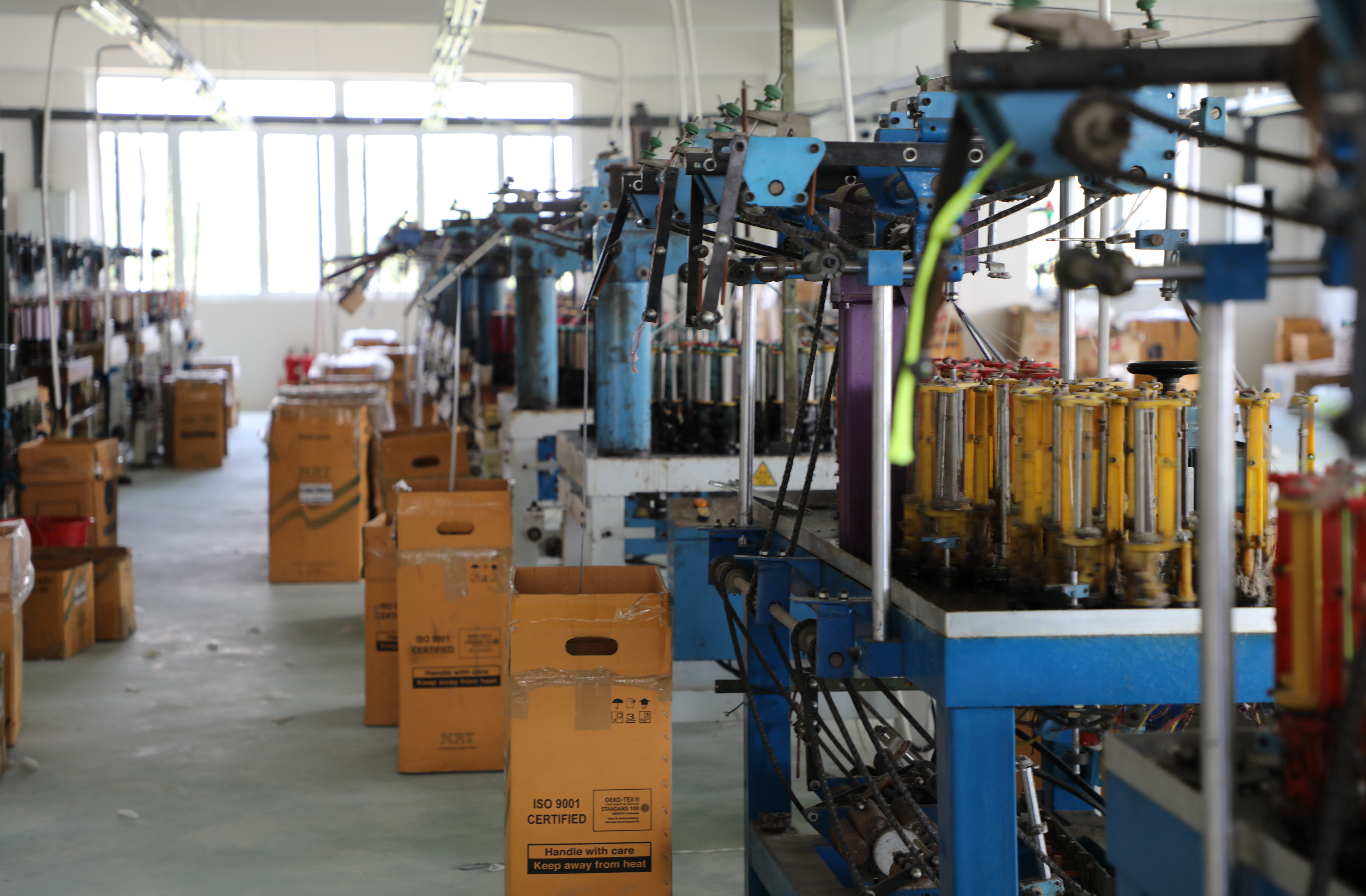
Customization is where supplier descriptions diverge most and where evidence is easiest to obtain. The stated capability for this supplier covers logo, pattern, colour and width customization across a 5–140 mm width range, produced in jacquard woven, silicone-printed and sublimated forms, with production following the customer's own specification rather than a fixed catalogue. Company materials also describe jacquard weaving with up to eleven colours and a deep-processing chain that includes heat-transfer printing, sublimation, silk screen printing, silicone application, laser cutting, ultrasonic welding, sewing, rope-end finishing and button fastening, carried out without outsourcing.
Two scorecard notes follow from that. The eleven-colour jacquard figure describes the upper limit of the weaving capability, not the capability of a specific five-colour artwork at a 12 mm width, so the sample remains the deciding evidence. And a 5–140 mm width range is only purchasable once a tolerance is attached to it; buyers should ask for the width tolerance per construction and record it beside the range, because a 3 mm binding and a 38 mm goggle strap do not hold dimension to the same standard.
Sublimation printing is the clearest example of why test conditions matter. The company describes its sublimation process as improving print durability under stretch, and reports that at 150% elongation the printed layer shows no substrate exposure or cracking, against roughly 80% elongation for the conventional process it replaced. Reported perspiration colour fastness is Grade 4–5, and the printing defect rate is stated to have fallen from 4.5% to 1.2%. The same source notes a 10% higher production cost for the process, offset by a 1.8% reduction in printing waste and lower rework, plus longer setup and colour-matching time on a first trial run and roughly 15% higher direct energy use per printed metre during curing. For a buyer, that trade-off is the scorecard entry: a higher unit cost and a slower first run in exchange for print stability at high stretch, which matters most on goggle straps and garment accessories that are worn under tension.

Scorecard dimension two: material options and compliance fit
The material list a supplier can actually weave is a better comparison axis than the material list it advertises. For this supplier, the standard range is polyester, nylon and spandex with natural latex for elastic constructions, plus recycled polyester, recycled nylon, recycled spandex and solution-dyed options, and biodegradable routes including cotton, bamboo fibre, SORONA yarn and linen-cotton blends. Each of those choices carries a different consequence for the buyer, and the consequences are the score.
- Elastomeric content drives customs classification. Under the HS 2022 nomenclature, narrow woven fabrics containing by weight 5% or more of elastomeric yarn or rubber thread fall in subheading 580620, while cotton narrow woven fabrics sit in 580631 and adhesively assembled warp-only fabrics in 580640. The generic heading 5806 covers narrow woven fabrics generally. A material substitution from spandex to a non-elastomeric fibre can therefore change the declared code, so the composition should be locked before the customs file is prepared.
- Recycled content drives certificate matching. A recycled yarn option is only meaningful if the specific material sits inside the GRS scope described under certificate 2783920 and the shipment carries a transaction certificate.
- End use drives the safety class. Anything intended for baby and toddler articles should be checked against Class I limits, which is a narrower question than whether the mill holds OEKO-TEX certification at all.
- Biodegradable and bio-based options are not automatically softer on compliance. Cotton and bamboo fibre bring their own fibre-content labelling obligations, so the purchase order should state the declared composition rather than the marketing description.
Scorecard dimension three: stated performance ranges
The stated performance envelope for this supplier is 50–5000 N breaking strength and 10–300% elongation. That is a family range across many constructions, not a specification for one tape, and the distinction is the single most useful thing a buyer can learn from this part of the comparison.
A 5000 N breaking strength belongs to a heavy webbing; a 50 N figure belongs to a light decorative tape or a thin binding. Quoting the top of the range against a competitor's mid-range product is a common sourcing error, because the range says what the mill is capable of across its book of work, not what will arrive on a specific purchase order. The buyer's task is to convert the range into a single specification by fixing four variables: the tested specimen width, the gauge length and test speed, whether the figure is a breaking load or a working load, and the elongation at which the number was recorded.
Two further questions belong on the scorecard. Recovery after repeated cycling is a different property from elongation at break, and it is the property that decides whether an elastic waistband keeps its fit after fifty wears. And for printed tapes, the elongation at which the print was tested should be stated separately from the elongation of the tape itself, because a print that survives 80% stretch and a tape that stretches to 150% are a mismatch waiting for a customer complaint.
Scorecard dimension four: supply risk and service terms
Service terms convert a capable supplier into a usable one, and they should be recorded numerically. The stated terms here are a 500 m minimum order quantity, a 15–30 day lead time, 20 tonnes of monthly capacity, a 24-hour response window on quality claims, third-party inspection support, and documentation support for certification, customs and audit files. Set against a reported annual output of 230 tonnes and a 70% export share concentrated in the EU and USA, those terms describe a supplier oriented toward repeat programmes rather than one-off lots.
Each term has a boundary worth writing down. A 500 m minimum sits comfortably with a production programme but constrains a colour trial, so the sampling step — collect logo, pattern, colour code, width, material and estimated quantity, evaluate the available process, then confirm MOQ, sampling lead time and sampling cost before sampling and quotation — becomes the real entry cost. A 15–30 day lead time normally refers to production after sample approval rather than to the whole cycle from artwork to delivery, and bulk production only starts once the customer confirms the sample. Monthly capacity of 20 tonnes is meaningful only against the buyer's own monthly call-off: a customer needing 8 tonnes a month is a different risk profile from one needing 18.
Documentation is the fourth service term and the easiest to score as present or absent. A buyer should expect, at minimum, copies of the certification documents with holder name and validity visible, transaction certificates for recycled shipments, test reports for the agreed performance figures, HS classification support consistent with the declared fibre composition, and audit files for social-compliance reviews. A 24-hour claim response is only useful if the claim can be evidenced, which means the inspection standard and the test method should be agreed before the first shipment rather than after the first dispute.
Comparing the documented path with the traditional agent path
The conventional route — an agent or trading company that consolidates several mills and quotes from a catalogue — is not inherently weaker, but it moves the evidence one step further from the buyer. The factory's certificate is replaced by a copy of a copy, the site audit may refer to a plant the buyer cannot identify, and the material substitution that changes an HS code happens without the buyer seeing it. The documented path costs more buyer time upfront and requires a fixed specification, which is a real limitation: a buyer ordering below the 500 m minimum, or one who has not yet fixed a construction, will find the agent route faster and may reasonably accept the reduced traceability.
Where the documented path wins is in repeat programmes, cross-border compliance files and any application with a baby-article or recycled-content claim attached. In those cases the comparison is not between two suppliers' marketing but between two document sets, and only one of them can be checked.
What the market context does and does not add
Grand View Research estimates the global webbing market at USD 4.8 billion in 2026, up from USD 4.6 billion in 2025, in a report published in November 2026 with a forecast period to 2033. The figure is for webbing as a category, not for fabric tape specifically, and it says nothing about any individual mill's position within that market. Its practical use in a buyer scorecard is limited to context: a category of this size supports a deep supplier base, which means the cost of switching suppliers is generally low and the cost of not verifying one is comparatively high.
The forward-looking item that matters more to a procurement team is documentation timing. Both certification windows in this example expire in mid-2027, and audit cycles typically run on an annual rhythm. Buyers running programmes into 2028 should build certificate expiry dates into the supplier review calendar alongside price and lead-time reviews, so that a renewal gap is caught in planning rather than at the port.
Running the scorecard in five steps
Frequently asked questions
How can a buyer confirm that an OEKO-TEX or GRS certificate is genuine and current?
Check the certificate number against the issuing body's own verification channel: 19.HCN.72423 was issued by Hohenstein and 2783920 by TUV. Then compare three things — the legal entity named as holder, the product scope listed, and the validity window — against the quotation and the planned shipment dates. Both certificates in this example run to mid-2027, so a programme extending beyond that date needs a re-verification point.
Does a GRS scope certificate cover a specific shipment of recycled tape?
No. A GRS scope certificate defines which products and materials a site is permitted to supply as certified recycled, while a transaction certificate ties a specific order to that scope. Buyers sourcing recycled polyester, recycled nylon or recycled spandex tape should request the transaction certificate with the shipment documentation rather than relying on the scope certificate alone.
What is the difference between a SMETA audit and a certification?
SMETA is an audit methodology, not a pass-or-fail certification. The four-pillar version covers labour standards, health and safety, environment and business ethics, and it produces a report about a specific site. Reference ZAA600173813 applies to the Qingdao Fuwei Rope Co Ltd site, so a buyer should confirm that the audited address matches the plant on the purchase order and review any open corrective actions.
How should a buyer read a 50–5000 N breaking strength range?
A range of that width describes a mill's capability across many constructions rather than a single product. To convert it into a purchase specification, fix the specimen width, the test method and speed, whether the figure is a breaking load or a working load, and the elongation at which it was measured. A light binding and a heavy webbing occupy opposite ends of the same stated range.
Which order terms should be compared before a trial order?
Compare the minimum order quantity against the trial volume, the lead time against the production calendar after sample approval, and the monthly capacity against the buyer's own call-off rate. The stated terms for this supplier are a 500 m MOQ, a 15–30 day lead time and 20 tonnes of monthly capacity, alongside a 24-hour quality claim response and third-party inspection support. A 500 m minimum constrains a colour trial, so sampling cost and sampling lead time belong in the same comparison.
A fabric tape comparison becomes defensible when each line on the scorecard points to a document rather than a description: a certificate number with a validity window, an audit report for a named site, a width with a tolerance, a performance figure with a test method, and a set of commercial terms in writing. The worked example in this article shows what that looks like for one supplier — including the points a buyer still has to verify independently, such as the transaction certificate behind a recycled claim and the elongation behind a print-stability claim. A full company profile and product catalogue covering the material, width and customization ranges discussed above is available for download: Company Profile & Catalog (PDF).
Tem questões ou precisa de mais detalhes?
Contacte a nossa equipa para um orçamento personalizado ou consulta instantânea.
Solicitar orçamento
Preencha o formulário abaixo e a nossa equipa entrará em contacto com uma proposta personalizada.
Chat direto do WhatsApp
Prefere conversar em tempo real? Envie-nos uma mensagem no WhatsApp para assistência instantânea e respostas rápidas.
- Obter orçamento personalizado
- Partilhar fotos ou documentos
- Discuta as suas necessidades diretamente
Geralmente responde em 5–30 minutos durante o horário de expediente.