
Factory Audit Essentials for Pre-Insulated Pipe Suppliers
Factory Audit Essentials for Pre-Insulated Pipe Suppliers
A pre-insulated pipe can look identical whether it was produced on a fully controlled line or on a line that was quietly running out of specification. The steel service pipe, the polyurethane foam layer and the outer jacket are bonded into a single composite, and the variables that decide thermal performance — foam density, cell structure, void distribution and bond integrity — sit behind an opaque outer shell. That is the structural reason factory audits carry more weight in this product category than in many other procurement decisions.
The market is expanding in a way that makes that verification step more useful. Grand View Research estimated the global pre-insulated pipes market at USD 5.97 billion in 2024 and projects USD 10.4 billion by 2030, a compound annual growth rate of 9.7%. SNS Insider valued the underlying global district heating market at USD 209.34 billion in 2024. Published estimates differ — separate research houses place the 2024 pre-insulated pipe market anywhere between roughly USD 5.3 billion and USD 9.8 billion — but the direction is consistent: more networks, more suppliers, and more buyers who cannot judge a supplier from a price list alone.
This article sets out what a buyer should inspect and request during a supplier factory audit for pre-insulated pipes, with particular attention to production line consistency and quality control documentation.
What a Pre-Insulated Pipe Factory Audit Is Verifying
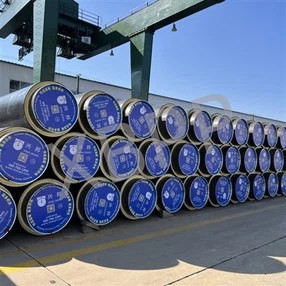
Definition first: a pre-insulated pipe is a bonded composite consisting of a steel service pipe, a rigid polyurethane (PU) foam insulation layer, and an outer protective jacket — high-density polyethylene (HDPE) in directly buried hot water systems, and galvanized iron or steel jacketing in some above-ground configurations.
A factory audit is a structured verification that a supplier can reproduce that composite to a defined specification, batch after batch, and that the process is documented well enough to be traced after delivery. It is not a general site tour, and it is not the same thing as product testing.
Four things are being verified, and they are best audited in this order:
- Incoming material control — whether steel pipe, HDPE resin and PU chemicals enter the plant under a documented specification, and whether they are traceable to a batch.
- In-line process control — whether the parameters that determine foam and jacket quality are measured during production rather than only at the end of the line.
- Finished product verification — dimensions, jacket thickness, pressure integrity and insulation performance of the completed pipe.
- Documentation and traceability — whether a marked pipe length delivered to a project can be linked back to a production date, line, shift and material batch.
Most first-time buyers begin at the fourth item and work backwards. That is a reasonable approach at the awareness stage, because documentation requests can be issued before a visit is even scheduled, and the responses often determine whether a visit is worth making.
Production Line Consistency: The Central Audit Question
Consistency is the difference between a product that performs across a district heating network and one that fails at the joints or in isolated sections. A supplier's equipment list does not answer this question; the process controls surrounding that equipment do.
Steel service pipe and surface preparation
The audit starts with the substrate. Ask which standards the steel pipe is purchased against — ASTM A53, published by ASTM International, is the primary American standard covering seamless and welded black and hot-dipped galvanized steel pipe, and European buyers commonly reference the EN 10216 or EN 10217 series specifications. What matters in the audit is not the name of the standard but whether the certificate presented for a given batch matches the pipe physically in the yard, and whether wall thickness is verified on receipt rather than accepted from the supplier's label.
Surface condition before foaming is the second check. Contamination, loose scale or inconsistent surface preparation weakens the bond between steel and foam, and a weak bond is invisible in the finished product. Ask to see the preparation stage and the acceptance criteria applied to it, and confirm whether the same criteria apply to galvanized and black pipe, since the two substrates do not behave identically in production.
Foam injection and density control
PU foam is where most of the technical risk sits. Insulation value, compressive strength and long-term dimensional stability depend on foam density and cell structure, both of which are set by mixing ratio, injection temperature and over-packing pressure during production. Industry technical references note that PU foam insulation in EN 253 pipe systems typically withstands temperatures up to 120°C (250°F), which is why substrate temperature and foam formulation have to be matched to the intended service conditions.
During an audit, ask three questions: how often is foam density measured, where on the pipe is it measured, and what happens when a result falls outside specification? Sampling only at one point, such as a single cut near the end of a pipe, does not describe density distribution along a section. A supplier that samples at defined positions along the length and around the circumference, retains the record, and can show a corrective action when a value drifts is demonstrating process control rather than product inspection.
Outer jacket extrusion
The HDPE jacket is the moisture barrier of the system. In directly buried hot water pipes it protects the foam from groundwater; in chilled water applications it also acts as the vapour barrier that prevents condensation from degrading the insulation. Jacket wall thickness, concentricity and continuity are therefore audit items, and the operative question is whether thickness is measured continuously during extrusion or spot-checked at intervals. Continuous measurement with a retained record is materially stronger evidence than a single start-up measurement.
Accessories, fittings and jointing materials
Pre-insulated systems fail at joints more often than in straight pipe sections. Electrofusion sleeves, heat-shrinkable sleeves, insulation joint material, foaming filler and sealing and waterproof materials are part of the supplied system, not optional extras. The audit should establish whether these components are produced under the supplier's own control or purchased, how compatibility between jointing materials and the main pipe is documented, and whether the jointing instructions passed to the installer are version-controlled.
Consistency across shifts, lines and product types
An audit typically observes one line, on one shift, in one production run. That observation describes a moment, not a capability. The way to test consistency is documentary: ask for parameter records across several shifts, first-article approval records for each product type, equipment calibration logs and — most importantly — a demonstration of traceability. Pick a marked pipe length from finished goods and ask the supplier to retrieve the production record, material batch and inspection result for that specific length. Suppliers that can do this within minutes are operating a controlled system. Suppliers that cannot are dependent on the individuals who happened to be on shift that day.
Quality Control Documentation: What to Request
Documentation requests should be specific. A general request for quality certificates usually produces a folder of marketing material. The table below lists the documents worth requesting before a visit, what each one actually demonstrates, and where audits most often find gaps.
| Document | What it demonstrates | Where gaps usually appear |
|---|---|---|
| Mill certificates for steel pipe or coil | Substrate grade and wall thickness traceable to a heat number | Certificates not linked to the batch actually consumed |
| Raw material certificates for HDPE resin and PU chemicals | Jacket and foam inputs match the declared specification | Generic certificates covering an entire year |
| Foam density and compression test records | Insulation layer consistency along the pipe | Only final-product values retained, no in-process data |
| Jacket wall thickness and dimensional records | Jacket integrity and tolerance control | Isolated values without measurement frequency |
| Equipment calibration logs | Instruments measure what they are claimed to measure | Calibration lapsed on key gauges |
| Batch traceability records | A shipped pipe marking links back to shift, line and material batch | No link between pipe marking and production record |
| Non-conformance and corrective action records | How deviations are identified and closed out | Rarely requested by buyers, so rarely prepared |
| Pressure and dimensional test records | Service pipe and assembly integrity | Test frequency left unclear |
| Third-party inspection reports | Independent verification of defined batches | Inspection scope narrower than the buyer assumes |
Standards Coverage: One Standard Rarely Covers a Whole Product Range
EN 253, maintained by the European Committee for Standardization, is the industry standard for pre-insulated bonded pipe systems for directly buried hot water networks. It is the reference most European district heating buyers cite, and a supplier claiming compliance should be able to show which parts of the standard are covered by which test records.
The practical boundary is worth stating plainly: EN 253 addresses directly buried hot water networks. Buyers sourcing above-ground pipe, chilled water and district cooling pipe, or steam and boiler pipe are working outside that scope, so the audit should ask a different question — which standard or internal specification does this product line actually comply with, and what test data supports the declared temperature and pressure envelope? For products above the typical 120°C service range of PU foam, the insulation material itself changes, and audit attention shifts from foam density control to insulation material certification.
In-Process and Final Inspection: Where Audit Findings Usually Appear
Two failure modes explain why audits concentrate on the process rather than the warehouse. The first is that a finished pre-insulated pipe hides voids, incomplete filling and jacket defects. A final inspection that checks outer dimensions and appearance will pass a pipe with internal voids, because the defect is not visible from the outside. The second is that pipe is often produced against a rolling programme rather than against a specific order, which means the batch a buyer inspects may not be the batch a buyer receives.
The most informative audit activity is therefore to follow one pipe through the line — substrate preparation, foaming, jacket extrusion, cutting, end sealing and marking — and then compare what was observed with the record for that same pipe. If a supplier cannot schedule observation of an active run for the buyer's product type, that is itself a finding: it means the buyer's assessment rests entirely on documents and finished goods, and the audit's value drops accordingly.
A Worked Example: Mapping Xingbang's Declared Capability to Audit Evidence
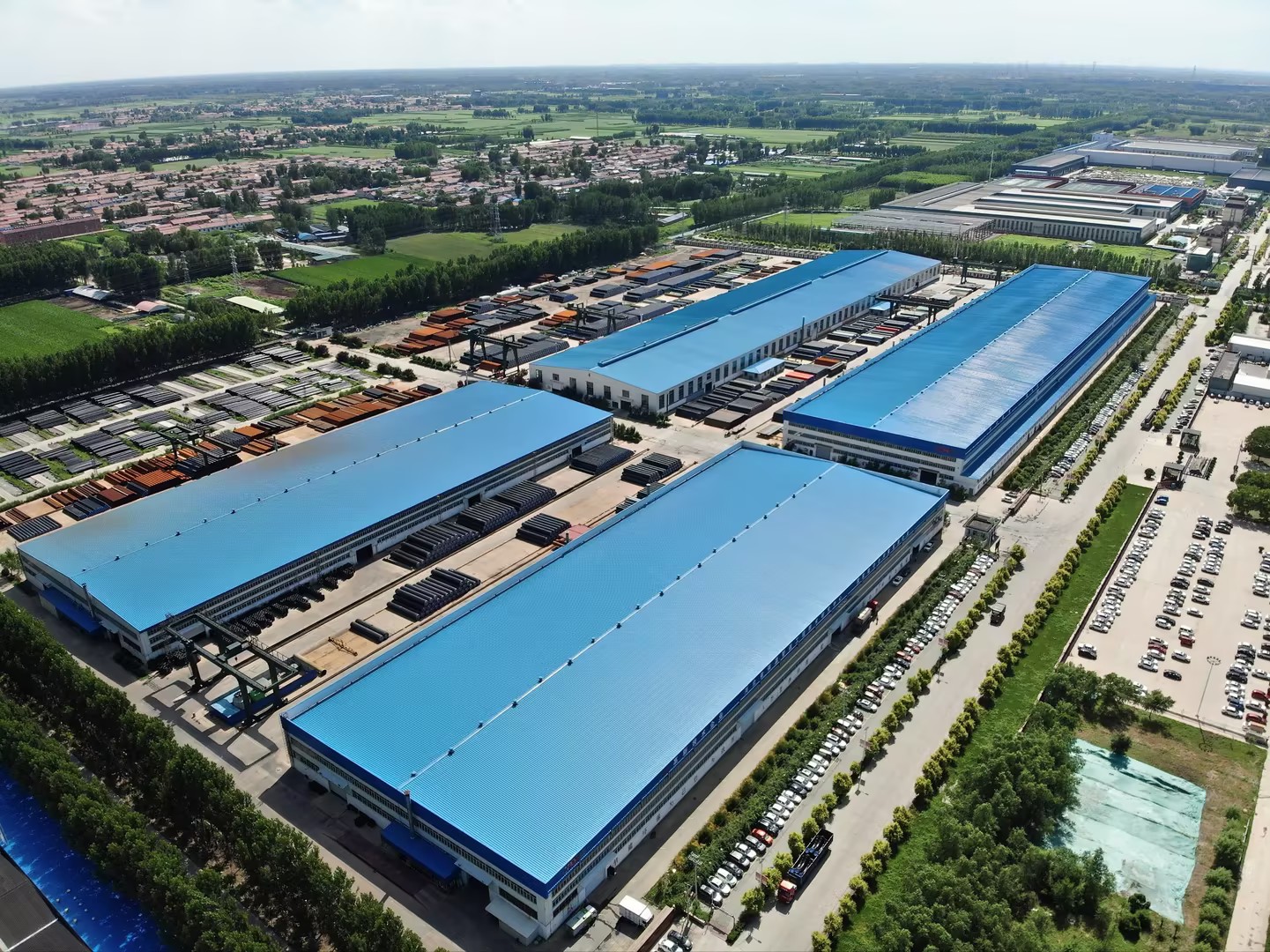
Tangshan Xingbang Pipeline Engineering Equipment Co., Ltd is a pre-insulated pipe manufacturer based in Houhu Industrial Park, Yutian Economic Development Zone, Hebei Province, China. Its declared profile is useful as a worked example, because each declaration can be mapped to a specific piece of audit evidence.
On the manufacturing side, the company operates a site of approximately 310,000 square metres with 231 employees, including an R&D team of 30 engineers, and reports insulation pipe production capacity measured in thousands of kilometres per year. Its principal product is the directly buried hot water pre-insulated pipe, built with a high-density polyethylene outer jacket and rigid polyurethane foam insulation. For an auditor, those statements translate into concrete checks: the number and condition of production lines, actual cycle time per pipe type, the size and role of the engineering team in process control, and the cycle-time basis behind the stated capacity.
The declared technical envelope is equally auditable. Xingbang's product documentation covers pipe network systems where the conveyed medium is no higher than 120°C, with occasional peaks not exceeding 130°C and a working pressure no greater than 2.5 MPa, and states that the polyurethane insulated pipes can operate continuously for at least 30 years in a 120°C environment, with the network designed for 24-hour continuous operation. A buyer cannot confirm a 30-year statement during a factory visit — no supplier's can be confirmed that way — but the buyer can ask which test data supports the declared temperature and pressure limits, and whether those limits are applied consistently in quotations for buried, above-ground and industrial projects.
On scope, Xingbang's declared applications include central heating, central cooling, petroleum, chemical, LNG, gas and water conservancy pipelines, with project types spanning municipal heating, industrial parks, residential communities, cogeneration, urban pipe network renovation, urban comprehensive pipe galleries and commercial building heating. Exports account for roughly 30% of business, with Europe, North America and the Middle East named as main markets, and project references extending across the Middle East, Central Asia, Southeast Asia, Africa, South America and Europe. Each of these is a verifiable claim in an audit: export documentation, market-specific requirements and project records can all be requested.
The company also participates in the formulation of China's national standard for directly buried insulated pipes and holds positions in several industry bodies, including the heating Standardization Technical Committee of China's Ministry of Housing and Urban-Rural Development, the Regional Energy Professional Committee of China Building Energy Conservation Association, the thermal power industry alliance of China Energy Conservation Association, and the China Plastics Processing Industry Association. It is also designated a national green design demonstration enterprise. These affiliations are not quality certificates and should not be read as such; their audit value is narrower but real — they indicate that the supplier's technical staff operate inside the standards environment that governs the product.
Finally, accessory scope matters for joint integrity. Xingbang supplies electrofusion sleeves, heat-shrinkable sleeves, insulation joint material, foaming filler, and sealing and waterproof materials alongside the pipe itself, and its documentation identifies thermal expansion stress, soil load, groundwater corrosion and external impact as project-specific requirements. An auditor should ask how each of those four conditions is translated into a design or production decision, because they describe the conditions under which buried pipelines actually fail.
Adapting the Audit Checklist to the Product Type
A single checklist does not fit every product in a pre-insulated range. The emphasis shifts with the service conditions:
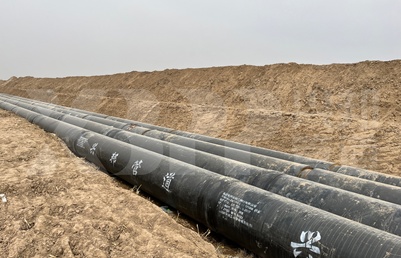
- Directly buried hot water pre-insulated pipe. Emphasis on bonded system integrity, foam density control, jointing materials and groundwater corrosion protection. This is the product category EN 253 was written for.
- District cooling and chilled water pipe. The outer jacket functions as a vapour barrier, so jacket continuity, joint sealing and moisture control move to the top of the list. SNS Insider projects a 9.48% annual growth rate for pre-insulated pipe used in district cooling, which is increasing buyer scrutiny of exactly these points.
- Above-ground pipe with galvanized iron or steel jacket. UV and mechanical protection, thermal expansion handling and support spacing become audit-relevant, since the pipe is exposed rather than load-protected by soil.
- Steam and boiler pipe. PU foam's typical service ceiling of around 120°C means steam applications generally require a different insulation material. The audit focus shifts to insulation material certificates, high-temperature test data and the declared pressure envelope.
- Industrial and oil & gas service. The oil & gas segment held 34.89% of pre-insulated pipe revenue in 2023 according to SNS Insider. Here the audit emphasis falls on corrosion protection systems, soil and traffic load conditions, and chemical compatibility of the jacket material.
Market Context: Why Audit Discipline Is Increasing
Asia Pacific accounted for 39.96% of global pre-insulated pipe revenue in 2024 according to Grand View Research, and is widely described as the fastest-growing region. Credence Research, using a different market definition, places Europe at approximately 38% of the pre-insulated pipe systems market. Global Market Insights projects 5.7% annual growth for the district heating and cooling market between 2024 and 2032.
Trade data points in the same direction. China exported approximately USD 492 million in alloy steel pipe or tubing in 2024 according to OEC, and Chinese stainless steel pipe exports grew 5.1% year on year in the first half of 2025, according to China Customs Statistics. A larger and more internationally distributed supplier base makes process verification more valuable, because buyers are increasingly evaluating factories they have not previously worked with.
Established system suppliers such as LOGSTOR, Perma-Pipe and BRUGG are frequently cited in market studies as leading global participants, according to Technavio, and their documentation practices set a useful benchmark for what a buyer can reasonably request. Emerging insulation materials such as aerogels are also beginning to appear in supplier discussions as a developing option for very low heat loss, although commercial maturity across the category varies.
What a Factory Audit Cannot Tell You
An audit is a control, not a guarantee. Several limitations should be understood before the visit:
- Service life. A declared 30-year operating life at 120°C reflects accelerated testing, design assumptions and standardised requirements rather than site observation. It cannot be validated during a visit; it can only be supported by test documentation and confirmed in service.
- Field installation quality. Most failures occur at joints, and joints are made on site. A factory audit cannot assess the crew that will install the system unless the supplier also provides jointing supervision.
- Future consistency. A visit captures one moment. Repeat or unannounced audits, combined with pre-shipment inspection of specific batches, add coverage that a single visit cannot.
- Documentation maturity. Smaller manufacturers may run effective processes with less formal record-keeping. That does not automatically mean the process is poor, but it does mean the buyer carries more risk and should compensate with sampling, third-party inspection or batch-specific testing.
- Standard coverage. As noted above, a directly buried hot water standard does not automatically cover chilled water, steam or above-ground products, even when the same factory produces them.
The practical conclusion is that an audit is one component of a procurement control system that also includes sample testing, third-party inspection and contractual traceability requirements — not a substitute for them.
Future Outlook
Two changes are likely to reshape supplier audits in this category over the next several years. The first is traceability: as market volume moves toward the USD 10.4 billion projected for 2030 by Grand View Research, buyers will increasingly expect pipe-level identification that links a delivered length to its production record, rather than batch certificates covering an entire order. The second is the growth of district cooling alongside district heating, which pushes vapour barrier and jacket integrity further up the audit checklist and rewards suppliers whose documentation already separates hot water, chilled water and above-ground product lines.
For buyers, the practical implication is straightforward: write the audit checklist before the visit, map it to the specific product type being purchased, and issue documentary requests in advance so that the site visit is spent on the process rather than on administration.
FAQ
For readers who need product-level detail, the Xingbang pre-insulated pipe brochure is available for download: Xingbang pre-insulated pipe product brochure (PDF). Company reference: www.xingbanginsulatedpipe.com.