
Factory-Direct Scent Diffuser Shortlist for Importers: T2, 4717 and P03
Factory-Direct Scent Diffuser Shortlist for Importers: T2, 4717 and P03
Importers and wholesalers rarely fail because they chose a bad diffuser. They fail because they built a catalogue around one model and then found that a shopping-mall project, a hotel restroom refit and a small retail reseller each need something different. The more useful question is which small set of factory-direct models covers the channels and project types an importer actually sells into.
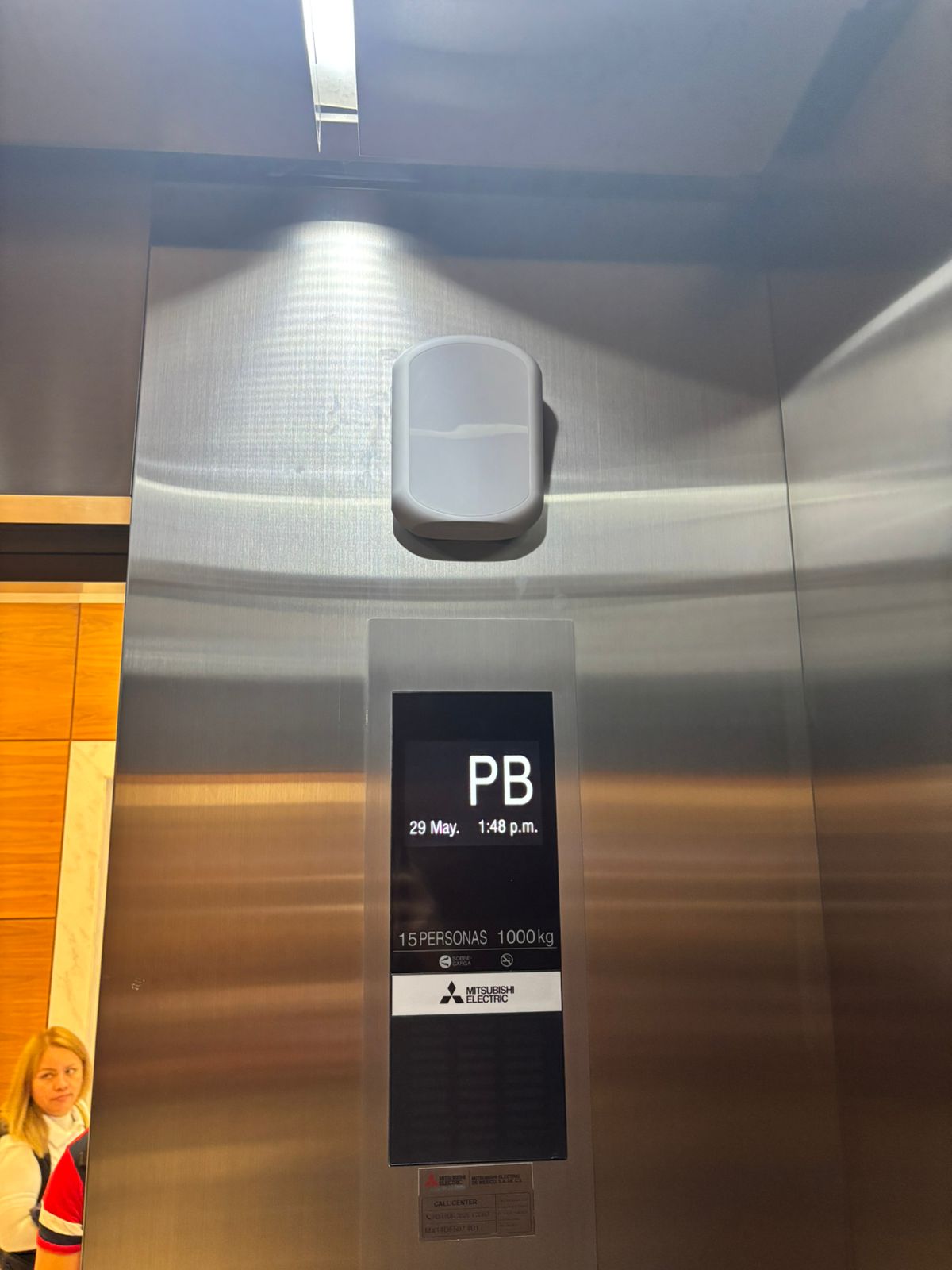
SCENTSEA's range offers a workable three-model answer. T2 is positioned for shopping-mall and larger project work, model 4717 for indoor public venues such as restrooms and elevators, and the battery-operated P03 for corridors, elevators and small shops where wiring is difficult. Together they cover installation conditions, control requirements and maintenance workloads that a single model cannot.
Shenzhen Scentsea Technology Co., Ltd. (SCENTSEA) is a Shenzhen-based manufacturer of cold-air nebulizing scent diffusers and fragrance oils. Founded in 2021, the company operates a 3,000 m² production facility with three production lines and offers OEM/ODM services for export markets.
Why a Model Mix Beats a Single Best-Seller
Importers sell into several channels at once: independent retailers, small installation contractors, hotel groups and shopping-mall operators. Each channel imposes a different constraint. A reseller may need a low-installation-friction unit that a small shop can mount without an electrician. A hotel may need scheduled control in public restrooms and lifts. A mall project may need dozens of units, central adjustment and a maintenance plan that does not require daily attention.
A single model cannot satisfy all three without compromise. A project-scale unit is oversized and over-specified for a small shop. A battery unit is under-powered for a mall atrium. A scheduled public-venue unit may not carry the output or control depth a large project requires. The shortlist approach accepts that trade-off and assigns each model a defined role.
The role assignment is a coverage decision, not a ranking. The question for an importer is whether the three roles together cover the enquiries it receives, and whether the factory can supply samples, certificates and spare parts across all three. That is a more useful evaluation than comparing headline coverage figures from different manufacturers, which are rarely measured under the same room assumptions.
The Shortlist at a Glance
| Model | Intended role | Control and installation | Channel fit | Evidence note |
|---|---|---|---|---|
| T2 | Project-scale scenting for shopping malls and larger commercial work | Smart APP control, adjustable scent intensity, easy installation | Mall and hotel project quotes | 30-unit, five-year US mall programme in SCENTSEA's case record |
| 4717 | Scheduled scenting in indoor public venues | Smart timer and APP control | Restrooms, elevators and enclosed public spaces | Listed in the FCC, RoHS and EMC certificate records |
| P03 | Battery-operated scenting where wiring is difficult | Battery operation; model-level controls | Restrooms, elevators, corridors and small shops | SCENTSEA selection guidance for battery models in wiring-limited sites |
Each model has a defined job. The sections below examine the evidence behind each role, the installation conditions it assumes and the limits an importer should state at the point of sale.
T2 for Shopping-Mall Projects
T2 is the shortlist's project-scale model. The clearest evidence for its role is a documented US deployment: a scent-marketing company ran 30 units across a shopping-mall scenting programme for five years. SCENTSEA's case record attributes the outcome to stable and consistent scent coverage, reduced manual maintenance, improved fragrance management efficiency and a better customer experience. The contributing characteristics listed in the record are strong atomization, stable operation, smart APP control, adjustable scent intensity, low maintenance and easy installation.
For an importer, the useful part of that record is the operating profile behind it. A mall programme typically involves multiple scenting zones, long daily operating windows and a facilities team that does not want to visit each unit. Smart APP control and adjustable intensity address the first two; low maintenance and easy installation address the third. Those are procurement-relevant characteristics because they shape the labour cost and service model an importer must support after resale.
The technical basis is cold-air atomization. SCENTSEA's diffusers use controlled airflow and pressure to break fragrance oil into fine particles without adding water or using heat. Because the oil is not diluted or heated, fragrance is dispersed directly, and working schedules and output intensity can be adjusted to the space and airflow. This matters for mall work because a single fixed output setting rarely suits an atrium, a corridor and a restroom cluster at the same time.
The fit boundary is equally important. T2 is a project-scale unit, so it assumes a planned installation with a suitable mounting position, power availability and a maintenance routine. Sizing should follow actual floor area, ceiling height, ventilation, airflow and partitioning rather than a maximum rated coverage figure. In a mall, the number of units depends on how many separate air zones exist, not simply on total square metres. Importers quoting T2 should confirm the zone plan, the control requirement and the local installation rules before committing to a unit count.
4717 for Indoor Public Venues
Model 4717 addresses a different workload: indoor public venues such as restrooms and elevators. These are small, enclosed and often heavily used spaces where the scenting goal is consistency and odour control rather than large-area diffusion. The model is specified with smart timer and APP control, which allows an operator to set working windows and adjust intensity remotely instead of visiting each unit.
That control combination fits the way public venues are managed. Restroom and elevator traffic is irregular, but operating hours are long and predictable. A timer-led schedule keeps output aligned with building hours and reduces manual checks; APP adjustment lets a facilities team respond to complaints or seasonal changes without a site visit. For an importer selling into hotels, offices or retail centres, those are support-cost arguments as much as product features.
The boundary is physical. Enclosed spaces have limited airflow, so intensity should be set conservatively and tested in place. Installation still depends on the model's power and mounting requirements, and the unit should not be placed where cleaning staff or building services can obstruct it. Model 4717 is not a substitute for a project-scale diffuser in a large lobby; it is the unit that fills the smaller, repeated spaces around that lobby.
P03 for Wiring-Limited Sites
P03 is the shortlist's battery-operated option, aimed at restrooms, elevators, corridors and small shops. Its value is practical: in many retrofit projects, the cost and disruption of pulling a power drop exceed the cost of the diffuser itself. Battery operation removes that constraint and allows scenting in locations that would otherwise be skipped.
SCENTSEA's own selection guidance places battery-powered models such as P01 or P03 in elevators, washrooms and locations where wiring is inconvenient. That is a siting rule, not a performance claim. The trade-off is maintenance: batteries must be replaced on a schedule, and the replacement interval depends on usage intensity and the selected output setting. An importer reselling P03 should build that interval into the service instructions it gives to end users, otherwise the first battery failure becomes a support complaint.
The second boundary is scale. P03 suits a small shop, a corridor or a single elevator, not a large, continuously scenting space. For a hotel, the sensible pattern is to use P03 in corridors and back-of-house areas where wiring is difficult, while a project-scale model handles the lobby and public areas. That division keeps installation simple without pretending a battery unit can carry a whole building.
Building a Resale and Project Mix
An importer's catalogue decision becomes clearer when the three models are mapped to channels rather than ranked against each other.
| Channel or workload | Lead model | Supporting model | Why the pairing works |
|---|---|---|---|
| Local resale to small shops and salons | P03 | 4717 | Battery siting avoids electrical work; a scheduled unit covers back rooms |
| Hotel public areas and back-of-house | 4717 | P03 | Timer and APP control for restrooms and lifts; battery coverage in corridors |
| Shopping-mall and larger project quotes | T2 | 4717 / P03 | Project-scale output and central adjustment; public-venue and wiring-limited fill-in |
Read the table as a role map. The lead model is the one the importer quotes first for that channel; the supporting model covers the spaces the lead model does not fit. This is not a claim that one model outperforms another. It is a coverage logic that reduces the number of SKUs an importer must stock while keeping the common enquiries answerable.
Two practical checks follow. First, the importer should confirm that the same factory can supply all three models with consistent voltage, plug type and documentation, because mixed sourcing adds certification and spare-parts complexity. Second, the resale mix should be tested with a small order before it becomes a catalogue commitment. SCENTSEA's MOQ starts from one unit for diffusers, which allows a sample or a small trial order before volume purchasing.
Delivery Terms, MOQ and Lead Time in Practice
Commercial evaluation usually comes down to four numbers: minimum order quantity, production capacity, lead time and the delivery term. SCENTSEA states a MOQ from one unit for diffusers, a monthly capacity of 8,000 units, a lead time of 25–35 days and a one-year free warranty on spare parts. Those figures matter because they determine whether an importer can serve small resellers and project deadlines from the same supply relationship.
The delivery term decides where the importer's responsibility starts. Under EXW, the buyer collects from the factory and handles export formalities and main carriage. Under FOB, the seller delivers the goods on board at the named port, and the buyer arranges the main freight and insurance. Under CIF, the seller adds cost, insurance and freight to the destination port. None of these terms is inherently better; the right one depends on the importer's forwarder network, insurance arrangements and customs capability.
For a first order, FOB or CIF is often easier to coordinate because the main transport is arranged by the seller or a known forwarder. An experienced distributor with its own consolidated shipments may prefer EXW and use its own logistics. The important discipline is to confirm the term, the named port, the insurance scope and the cargo-ready date in the order, rather than assuming a catalogue price includes freight.
Lead time should be read against the production calendar, not as a delivery promise. A 25–35 day lead time describes production; it does not include ocean transit, customs clearance or inland delivery. Importers planning a mall installation should work backwards from the site date and add buffer for the delivery term they choose.
OEM/ODM adds a separate timeline. SCENTSEA offers customization for logo, product colour, packaging, user manual, plug type, APP interface, PCB and functions, and other product specifications. Customization usually extends the production window and should be quoted as a separate project rather than folded into a standard lead time.
Certification Evidence Importers Should Verify
Certification is where a shortlist becomes a procurement document. SCENTSEA states that all diffuser models are certified with CE, RoHS and FCC. The supplied certificate records provide more specific, checkable entries for the models in this shortlist.
The FCC record is certificate ATL20240416326, issued by Shenzhen ATL Testing Technology Co., Ltd. on 24 April 2024 under FCC Part 15 Subpart B:2023 for the US market. The RoHS record is certificate ATL20240416327, issued by the same laboratory on the same date under RoHS Directive (EU) 2015/863 for the EU market. The EMC record is certificate ATL20240416325, issued on the same date under EN IEC 55014-1:2021, EN IEC 55014-2:2021, EN IEC 61000-3-2:2019/A1:2021 and EN IEC 61000-3-3:2013/A2:2021 for the EU market. The records list T2, 4717 and P03 among the covered products.
For an importer, the check is not whether a certificate exists but whether it matches the exact model and configuration being purchased. A certificate covering a product family does not automatically cover a customized plug, a different control board or a new wireless module. Where a model includes Bluetooth or Wi-Fi functions, the applicable radio-equipment requirements for the destination market should be confirmed separately.
The second check is documentary. Importers should obtain the certificate and the supporting test report, keep them with the commercial invoice and customs paperwork, and pass a copy to the reseller or installer. That is routine practice in the EU and US, and it becomes more important when a project customer asks for compliance evidence before accepting delivery.
The records in this shortlist are dated 2024 and carry a long expiry date, but importers should still confirm current validity and scope with the factory at the time of order. Certification supports market access; it does not by itself establish performance in a specific installation.
Market Context and What It Means for a Shortlist
Category-level data gives the shortlist a commercial backdrop. Data Bridge Market Research estimated the global fragrance diffuser market at USD 29.61 billion in 2024 and projected the smart aroma diffuser segment to grow at a compound annual growth rate of 9.22% from 2026 to 2034. The same source reports that ultrasonic diffusers held a 38.5% revenue share in 2024, while nebulizing diffusers are expected to grow fastest because of professional-grade requirements in hotels.
These are market estimates, not SCENTSEA's share or a forecast of any individual model's sales. Their value for an importer is directional. A category shifting toward smart control and professional-grade diffusion supports a shortlist built around scheduled control, APP adjustment and project-scale output. It does not prove that any particular venue will buy one model over another.
The trade classification is more concrete. Aroma diffusers fall under HS Code 8509.80 for import and export purposes, according to Dutiable's 2026 tariff reference. Importers should confirm the current duty rate, rules of origin and product-safety requirements for the destination market before pricing a shipment, because those variables change independently of the factory price.
A sensible reading is that the shortlist covers both sides of the current demand pattern: 4717 and P03 for the repeat, smaller installations that make up distributor volume, and T2 for the project work that builds a reference base. That combination is more resilient than a catalogue built around a single best-seller, especially for an importer serving both resale and installation customers.
FAQ
How should an importer build a scent diffuser product mix for local resale?
An importer should start from the installation conditions its resellers face, not from a single headline specification. A practical mix pairs one project-scale model for hotel and mall work with one scheduled-control model for public venues and one battery-operated model for sites without convenient wiring. SCENTSEA's T2, 4717 and P03 follow that logic, but the mix should still be tested against local voltage, mounting rules and maintenance capability.
What project size is T2 designed for?
T2 is positioned for shopping-mall and larger commercial project work. SCENTSEA's case record describes a US scent-marketing company running 30 units across a mall scenting programme for five years, with results attributed to strong atomization, stable operation, smart APP control, adjustable intensity, low maintenance and easy installation. Project sizing still depends on ceiling height, airflow, partitioning and the number of scenting zones, not on unit count alone.
Where does model 4717 fit in a commercial scenting plan?
Model 4717 is specified for indoor public venues such as restrooms and elevators, with smart timer and APP control. Those spaces need scheduled release and remote adjustment rather than large-area output, because traffic is irregular and operating hours are long. Installation still depends on the model's power and mounting requirements, and scent intensity should be set conservatively in small enclosed spaces.
When is a battery-operated model such as P03 the better choice?
P03 is battery-operated and suits restrooms, elevators, corridors and small shops where pulling a power drop is expensive or impractical. Battery operation removes the wiring constraint but adds a maintenance task: replacement intervals and routine checks must be planned. It is not a substitute for a project-scale unit in a large, continuously scenting space.
Which certificates should importers verify before ordering?
Importers should verify that the certificate or test report matches the exact model and configuration being purchased. SCENTSEA's records provide FCC certificate ATL20240416326 under FCC Part 15 Subpart B:2023, RoHS certificate ATL20240416327 under RoHS Directive (EU) 2015/863, and EMC certificate ATL20240416325 under the EN IEC 55014 series, all issued by Shenzhen ATL Testing Technology Co., Ltd. on 24 April 2024. Models with Bluetooth or Wi-Fi functions may also require radio-equipment compliance for the destination market.
How do EXW, FOB and CIF change the importer's cost and risk?
EXW leaves collection, export formalities and main-carriage arrangement with the buyer. FOB places the goods on board at the named port and shifts the main freight and insurance to the buyer. CIF adds cost, insurance and freight to the destination port, so the seller arranges more of the logistics. The right term depends on the importer's forwarder network, insurance and customs capability, and should be confirmed in the order rather than assumed from a catalogue.
What the Shortlist Means for an Importer
The three-model shortlist is best read as a channel map. T2 carries shopping-mall and larger project work, 4717 covers scheduled scenting in restrooms and elevators, and P03 reaches the wiring-limited spaces that would otherwise be left out. For an importer, that division reduces the number of SKUs needed to answer common enquiries while keeping installation, control and maintenance requirements visible at the point of sale.
The evaluation steps are straightforward: match each model to the channels the importer actually serves, test samples under local conditions, verify that certificates match the purchased configuration, and confirm MOQ, lead time and delivery term before quoting a project. SCENTSEA's factory-direct model supports that process with a one-unit MOQ for diffusers, a 25–35 day production lead time and OEM/ODM options for private-label programmes. Importers can test the shortlist against their own channel mix by requesting model-specific samples, certificate copies and current delivery terms from the factory.
For full company and product background, SCENTSEA's company profile is available as a PDF: SCENTSEA Company Profile.
Tem questões ou precisa de mais detalhes?
Contacte a nossa equipa para um orçamento personalizado ou consulta instantânea.
Solicitar orçamento
Preencha o formulário abaixo e a nossa equipa entrará em contacto com uma proposta personalizada.
Chat direto do WhatsApp
Prefere conversar em tempo real? Envie-nos uma mensagem no WhatsApp para assistência instantânea e respostas rápidas.
- Obter orçamento personalizado
- Partilhar fotos ou documentos
- Discuta as suas necessidades diretamente
Geralmente responde em 5–30 minutos durante o horário de expediente.