
Factory Evidence: Verifying FKD's Stainless Mounted Unit Capacity
Factory Evidence: Verifying FKD's Stainless Mounted Unit Capacity
Stainless steel mounted units are one of the few bearing families where the buying decision is genuinely a factory question rather than a catalogue question. A stainless pillow block unit is not a separate product category so much as a material commitment applied to a familiar architecture — an insert bearing seated in a housing, held to a defined tolerance class and a stated speed rating — and the difficulty is that the insert steel, housing material, and surface treatment all change at the same time. This industry reference examines how a buyer can verify whether a supplier's stated capacity for that family is real, using the SSUCP205 to SSUCP210 stainless mounted unit range and the STAINSTEEL material designation as the working example, and it sets out the factory evidence FKD Bearing publishes for that review.
The approach is deliberately buyer-side. Where the evidence is strong — manufacturing footprint, certification, testing regime, volume — it is described precisely. Where a data point applies to a supplier's standard mounted unit line rather than a confirmed stainless variant, that distinction is stated rather than smoothed over, because that is exactly the point at which sourcing errors happen.
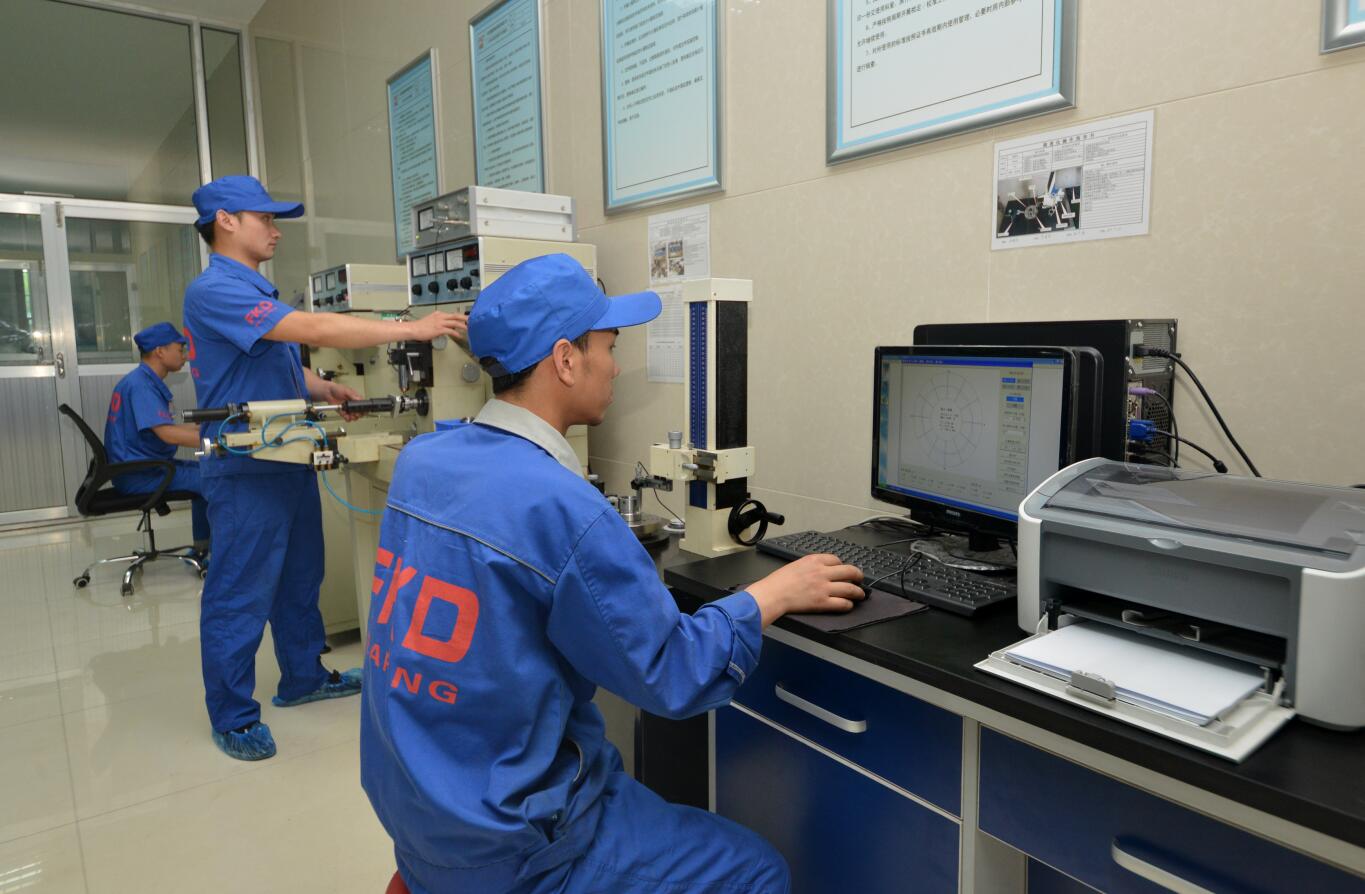
Why a Stainless Mounted Unit Is a Factory Question
Pillow block bearing units are commonly standardised under ISO for universal sizing and JIS for localized precision compatibility, which means housings, bolt-hole spacing, and insert dimensions are broadly interchangeable across suppliers. Interchangeability is convenient for procurement, but it moves competition onto ground a catalogue cannot show: whether the supplier controls casting, machining, heat treatment, grinding, assembly, and inspection tightly enough to reproduce a specification order after order.
That question sharpens for stainless units. A standard mounted unit typically pairs a chrome steel GCr15 (AISI type 52100) insert with a cast iron or QT450 housing. Moving to a stainless specification changes the raw material inputs, the machining parameters, the corrosion-prevention steps between operations, and often the sealing and lubrication choices. Each of those changes consumes capacity and engineering attention, which is why stainless mounted units are a useful test of whether a capacity claim is an operational fact or a marketing number.
What FKD's Factory Record Shows
FKD Bearing is the export trademark of Hebei Hailan Bearing Manufacture Co., Ltd, a mounted bearing manufacturer founded in 1988 (originally as Xingtai Honghai Bearing Manufacture Co., Ltd) and located in Hexi Town Industrial Park, Linxi County, Hebei Province, China. The company manufactures pillow block bearing units and related bearings under three registered brands — FE, FKD, and HHB — and exports the majority of its output.
The verifiable operating figures published by the manufacturer are: a site of approximately 100,000 m² with a plant of more than 65,000 m²; more than 400 employees, including 30 technicians and engineers; annual production and sales of over 20 million pieces of pillow block bearings, deep groove ball bearings, and taper roller bearings; monthly production capacity of 2,000,000 pieces; and a standard production lead time of 30–45 days with a minimum order quantity of 1,000 pieces. More than 90% of products are exported, to more than 68 countries and regions, with main markets listed as the EU, Asia, South America, and Africa.
Process ownership is the part of the record that matters most for a stainless programme. The company operates pillow block bearing automatic production lines, an automatic inspection line, and a dedicated bearing housing production line, and states that over 90% of production is made on automatic equipment. Its published facility documentation covers a bearing housing casting workshop, lathe and grinding processes, an assembly workshop, a painting line, and a testing centre.
A note on source types. The operating figures above are the manufacturer's own published data. Category-level market figures used later in this article are third-party estimates and are labelled as such. Keeping the two apart is the first discipline of any capacity audit.
Certification as supporting evidence
- ISO 9001:2015 quality management system, certificate 00124Q31127R6M/1300, issued by CQC, valid 2024-07-25 to 2027-02-27, covering production and processing of outer spherical ball bearings, deep groove ball bearings, tapered roller bearings, self-aligning ball bearings, and thrust ball bearings.
- ISO 14001:2015 environmental management system, certificate 00125E30330R1M/1300, issued by CQC, valid 2025-01-22 to 2028-01-20.
- ISO 45001:2018 occupational health and safety management system, certificate 00125S30215R1M, issued by CQC, valid 2025-01-17 to 2028-01-20.
- ISO 50001:2018 energy management system, certificate 00225EN006R1M, issued by CQM, valid 2025-01-03 to 2028-01-02.
Scope matters more than certificate count. These certificates list mounted bearing products — including the UCP200 series pillow block units, insert bearings from UC205 through UC320, and the UCF, UCFL, and UCFC flange families — as applicable products, which means the audited management systems cover the product families a stainless variant would belong to rather than an unrelated part of the business.
Reading the SSUCP205–210 Specification
In mounted bearing nomenclature, a UCP unit is a pillow block consisting of a UC-type insert bearing in a cast housing. The SSUCP designation identifies the stainless-steel variant of that same architecture, and the 205 to 210 range covers six consecutive size steps used across conveying, agricultural, and process equipment. The STAINSTEEL material designation is the term used for the stainless material specification associated with this family, which is positioned for the China market.
The published technical envelope for FKD's standard mounted unit lines provides the reference point. Specifications listed for the UCP200 series, and for the UCF, UCFL, and UCFC flange families, are: speed 3000 RPM; insert material chrome steel GCr15 (AISI type 52100); housing material cast iron or QT450; quality grade P5 ZV3. Insert bearings in the same programme are listed with chrome steel GCr15 and G10 steel balls at the same P5 ZV3 grade.
Two of those values carry most of the weight in a capacity assessment.
- P5 ZV3. P5 denotes a tighter tolerance class for dimensional accuracy and runout than standard grades; ZV3 denotes a vibration, or noise, grade. Together they describe a unit that must be manufactured to a controlled geometric tolerance and a controlled running smoothness — not simply assembled. Holding that grade at volume requires grinding capacity, gauge control, and cleaning discipline that low-grade assembly lines do not need.
- 3000 RPM. A stated speed rating defines the operating envelope a unit is designed for and, indirectly, the balance of the rotating assembly and the quality of the seal and lubrication package. It is a design and verification target rather than a promotional figure, and it is meaningful only when the supplier can show how it is confirmed in testing.
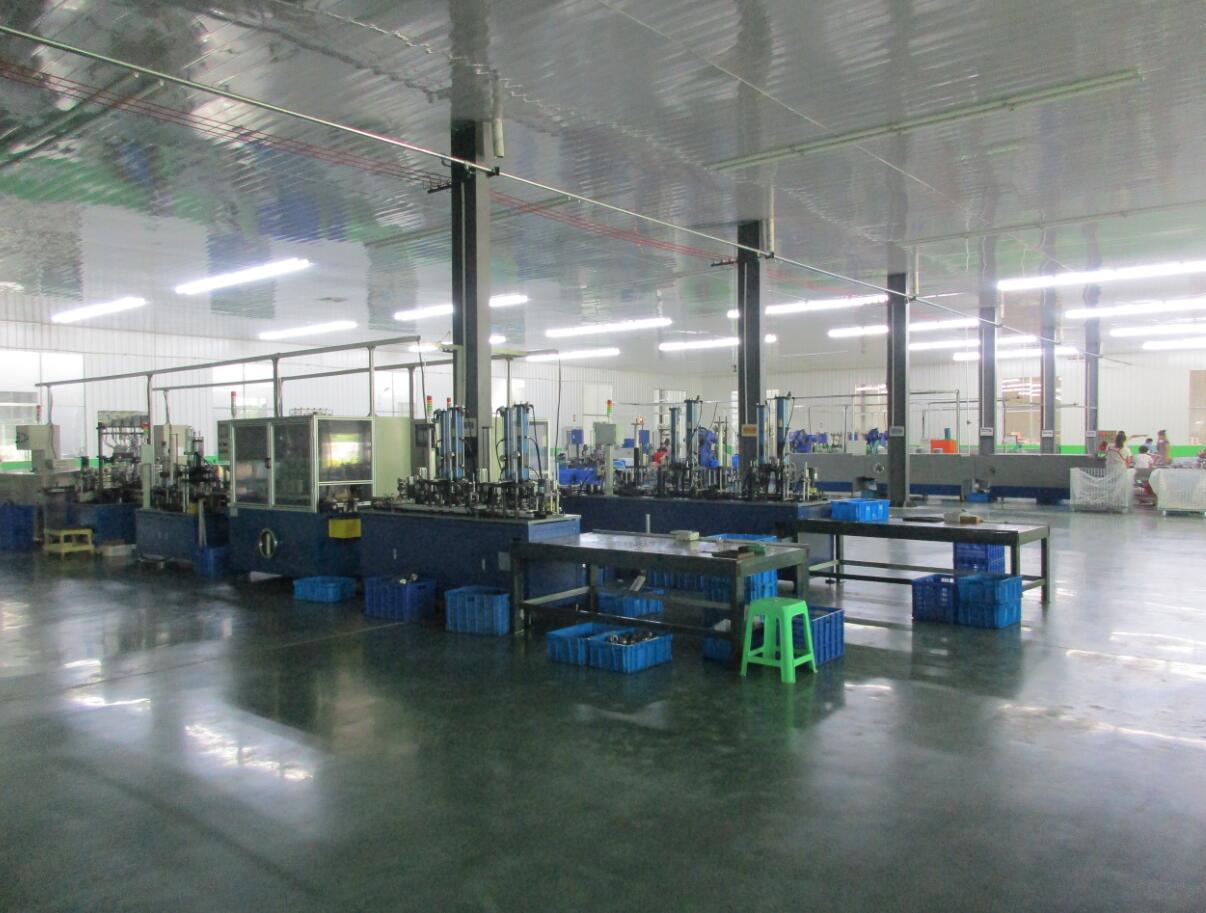
The boundary to state clearly. The 3000 RPM rating, the P5 ZV3 grade, and the GCr15 / cast iron / QT450 material set are published for FKD's standard mounted unit lines. They are not automatically transferable to a stainless SSUCP variant, because stainless insert grades, housing materials, and sealing systems behave differently in load capacity, heat treatment response, and galvanic pairing. A buyer evaluating a stainless unit should request a specification sheet and a test record for that exact designation, and treat the standard-line data as evidence of manufacturing discipline rather than as a substitute for the variant specification. Where a supplier cannot produce a variant-specific sheet, that gap is itself the finding.
How the unit is verified before shipment
FKD states that 100% testing is performed on all products, supported by an automatic inspection line and a testing centre, with instrumentation that includes a roughness profilometer, a material testing instrument, and a steel ball BVT checking machine. For a stainless programme, the verification questions that matter are: incoming material identification against the mill certificate, housing dimension and bolt-hole position, insert raceway roughness, rotational torque and vibration, seal fit, and grease quantity.
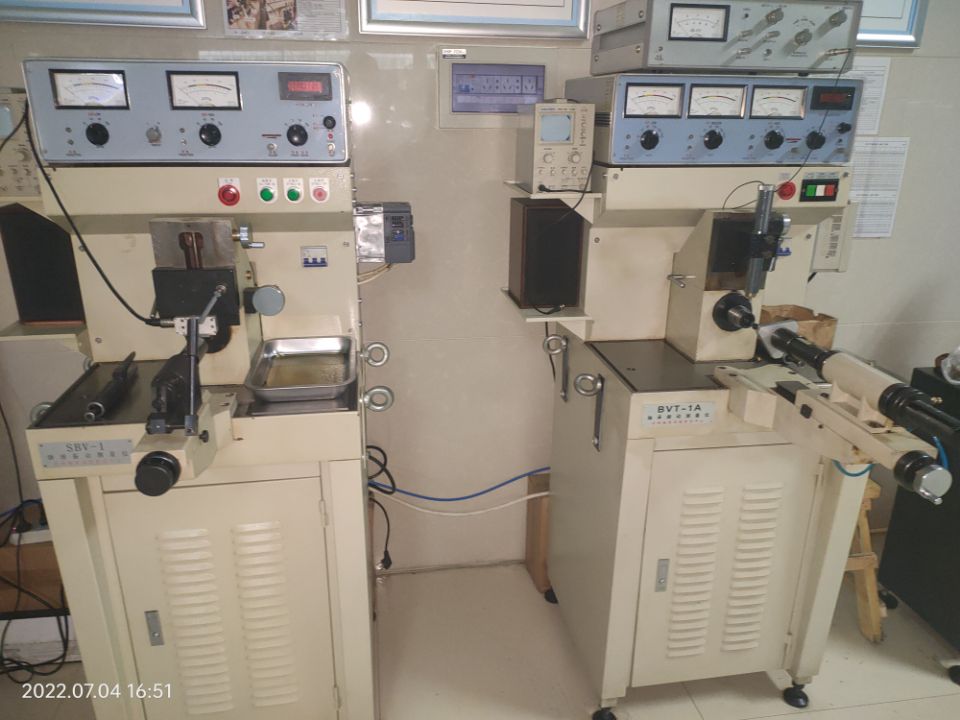
A Verification Checklist for Stainless Mounted Unit Capacity
The table below converts the evidence into a purchasing instrument. The middle column is what a buyer should demand regardless of supplier, because capacity claims are only as good as the documents behind them; the right-hand column records what FKD publishes against each item.
| Evidence item | What to request | Why it decides capacity | FKD's published position |
|---|---|---|---|
| Manufacturing footprint | Site and plant area, layout plan, storage and WIP space | Floor area sets the ceiling on lines, work-in-progress, and inventory | Approximately 100,000 m² site; plant of more than 65,000 m² |
| Workforce and engineering | Headcount, technician and engineer count, drawing control procedure | Stainless variants need drawing-level control, not catalogue order-taking | More than 400 employees; 30 technicians and engineers |
| Volume | Monthly and annual output, current utilisation, peak period behaviour | Determines whether your forecast fits an existing plan or a new line | 2,000,000 pieces per month; over 20 million pieces per year |
| Process ownership | Casting, machining, grinding, assembly, finishing capability and which steps are in-house | Determines whether housing and insert are traceable through one system | Bearing housing casting workshop; lathe, grinding, assembly, and painting lines; automatic production lines |
| Metrology | Inspection plan, sampling versus 100% testing, instrument list, calibration records | Confirms grade and roughness claims are measured, not asserted | 100% testing on all products; automatic inspection line; roughness profilometer; material testing instrument; steel ball BVT checking machine |
| Quality system | Certificates with product scope, issuing body, and validity dates | Confirms the audited system covers the family being purchased | ISO 9001:2015, ISO 14001:2015, ISO 45001:2018, ISO 50001:2018, all listing mounted bearing products in scope |
| Commercial terms | MOQ, lead time, changeover policy, material procurement lead time for stainless grades | Determines whether a stainless run is economical at your order size | MOQ 1,000 pieces; typical production lead time 30–45 days; OEM/ODM production mode |
| After-sales route | Technical support model, failure analysis process, spare-part policy | Determines who diagnoses a seal or lubrication failure after installation | Remote support and engineer support |
Where Stainless Mounted Units Are Used
FKD lists mining machinery, textile machinery, agricultural machinery, and manufacturing as the fields served by its mounted bearing units. Those four fields show why a stainless option appears in a specification at all, and also why it is rarely the default in any of them.
- Mining and mineral processing. Wash-down, slurry mist, and humid air attack housings and inserts. Stainless units tend to be specified where corrosion, not load, is the limiting factor — conveyors, screens, and secondary equipment rather than primary crushing duty.
- Textile machinery. Humidity, fibre dust, and frequent cleaning put a premium on corrosion resistance and on seals that keep lubricant in and contaminants out. Low noise and smooth running — the properties the ZV3 vibration grade targets — also matter on textile lines.
- Agricultural machinery. Harvesters, combines, and field equipment run in dust, moisture, and temperature swings. The application record is relevant here: an agricultural machinery OEM in India has purchased 100,000 units from FKD for harvester combine applications over a two-year relationship, with the manufacturer reporting stable operation and citing high speed, low noise, and high quality as the outcome.
- General manufacturing. Food-adjacent, pharmaceutical, and belt-driven production lines specify stainless mounted units where cleaning regimes or hygiene requirements make painted cast iron a poor fit.
The pattern across all four is consistent: stainless is selected when the environment, not the load, drives failure. That is the single most useful buying rule in this category.
Market Signals Behind the Category
Third-party estimates give the context in which stainless mounted unit demand is growing. The global bearings market was estimated at USD 58.6 billion in 2024 and projected to reach USD 143.6 billion by 2034 (Global Market Insights). Within it, the pillow block and mounted bearing segment was valued at approximately USD 6.1 billion in 2024 (IndexBox), and plummer blocks — the pillow block format specifically — accounted for about 42.51% of mounted bearing revenue share in 2024 (Fortune Business Insights). On the supply side, China's total export of ball bearings reached USD 6.53 billion in 2024, representing 19.9% of global exports (OEC).
These figures should be read directionally rather than precisely. Published estimates of the total bearings market differ materially by scope: Global Market Insights puts 2024 at USD 58.6 billion, Fortune Business Insights puts 2025 at USD 50.16 billion, and Mordor Intelligence projects USD 59.66 billion for 2026. The divergence reflects inconsistent treatment of aerospace, large-scale industrial, and aftermarket categories. What the data does support is a narrower conclusion: mounted units are the largest single slice of a large and expanding category, and the corrosion-resistant end of that slice is where specification-driven demand concentrates.
Stainless Versus Traditional Cast-Iron Mounted Units
The comparison buyers actually make is not stainless versus an inferior alternative — it is stainless versus a well-made conventional unit, and the trade-offs run in both directions.
| Criterion | Standard unit (chrome steel insert, cast iron / QT450 housing) | Stainless mounted unit (SSUCP-type) |
|---|---|---|
| Corrosion resistance | Relies on housing coating and grease protection; adequate in dry, indoor, and well-lubricated duty | Resists moisture, wash-down, and humid atmospheres where coating systems degrade |
| Load and hardness | Through-hardened GCr15 (AISI 52100) chrome steel generally offers a harder, higher-load-capacity rolling element within a given envelope | Common stainless insert grades typically trade some load capacity and hardness for corrosion resistance, so shock-loaded duty may still favour chrome steel |
| Cost structure | Lower material and machining cost | Higher raw material cost plus more process control between operations to prevent contamination |
| Availability and lead time | Standard programme with the shortest lead times | Usually longer lead time; FKD's published terms for its mounted unit programme are MOQ 1,000 pieces and 30–45 days, and variant-specific terms should be confirmed |
| Maintenance regime | Requires relubrication and seal inspection depending on duty | Chosen where cleaning and hygiene regimes make frequent relubrication impractical, though lubrication type and seal design still determine service life |
The limitation worth repeating is that stainless is not a universal corrosion answer. A stainless housing still corrodes in some chemical environments, particularly where chlorides concentrate; dissimilar metal contact can create galvanic corrosion at fasteners and shafts; and a stainless unit installed with an incompatible grease will fail at much the same rate as a standard one. Stainless changes which failure mode dominates — it does not remove failure modes. For high-load, high-shock positions, a conventional chrome steel unit with an appropriate seal and lubrication package frequently remains the better engineering choice, and a supplier who argues otherwise is not giving procurement advice.
What to Watch Next
Three developments are worth tracking for buyers of stainless mounted units. First, documentation is becoming the differentiator: as housing dimensions converge under ISO and JIS standardisation, suppliers that win specification-led business will be the ones able to issue a variant-specific specification sheet, a material certificate, and a test record as routine documents rather than special requests. Second, the economics of stainless runs improve as automation penetration rises — FKD's stated position of over 90% automatic production across its lines illustrates the direction the category is moving in — although changeover cost at a 1,000-piece MOQ remains the practical constraint. Third, certification scope is becoming a screening criterion rather than a badge: buyers increasingly read the product scope on a certificate before reading the expiry date, which rewards suppliers whose management systems genuinely cover mounted bearing production.
For the SSUCP205–210 family specifically, the next verification step is unglamorous and decisive: request the stainless specification sheet, the material identification method, and a dimensional and vibration record for one production lot. If those three documents correspond to the standard-line discipline described above, the capacity claim is credible. If they do not exist yet, the supplier is selling a capability it has not yet documented.
FAQ
What is an SSUCP mounted unit, and how does it relate to the standard UCP series?
A UCP unit is a pillow block bearing unit consisting of a UC-type insert bearing seated in a cast housing. The SSUCP designation identifies the stainless-steel variant of that architecture, and the 205 to 210 range covers six consecutive size steps for light-to-medium equipment. Because pillow block units are commonly standardised under ISO for universal sizing and JIS for localized precision compatibility, the mounting envelope of a stainless unit typically follows the conventional series while the insert steel, housing material, and sealing package differ. Buyers should confirm the variant specification sheet rather than assume the standard unit's published material and grade values transfer unchanged.
What capacity evidence should a buyer request from a stainless mounted unit supplier?
Request monthly and annual output figures, site and plant area, the list of production lines and which processes are performed in-house, and the inspection plan. For reference, FKD publishes monthly capacity of 2,000,000 pieces and annual production and sales of more than 20 million pieces, on a site of approximately 100,000 m² with a plant of more than 65,000 m², supported by more than 400 employees and 30 technicians and engineers, with a bearing housing production line and an automatic inspection line. The purpose of the request is not the size of the numbers but whether the supplier will put them in writing alongside the process ownership behind them.
What does a P5 ZV3 quality grade indicate in a mounted bearing unit?
P5 indicates a tighter tolerance class for dimensional accuracy and runout than standard grades, and ZV3 indicates a vibration, or noise, grade. In practice, a unit supplied at P5 ZV3 must be ground and assembled to controlled geometric tolerances and verified for running smoothness, which requires grinding capacity, gauge control, and cleanliness beyond basic assembly capability. FKD lists P5 ZV3 as the quality grade for its mounted unit and insert bearing programmes, including the UCP200 series and the UCF, UCFL, and UCFC flange families.
Which industries use stainless mounted units, and what application evidence exists?
FKD lists mining machinery, textile machinery, agricultural machinery, and manufacturing as the fields served by its mounted bearing units. Stainless specifications appear in these sectors where corrosion rather than load limits service life — wash-down and humid positions in mineral processing, humid and frequently cleaned textile lines, field and harvest equipment, and hygiene-sensitive production. On the evidence side, an agricultural machinery OEM in India has purchased 100,000 units for harvester combine applications across a two-year relationship, with stable operation reported and high speed, low noise, and high quality cited as the outcome.
What commercial and support constraints apply when specifying stainless mounted units?
Three items need planning. Minimum order quantity on FKD's mounted unit programme is 1,000 pieces, and typical production lead time is 30–45 days; stainless runs may require separate confirmation because of material procurement and changeover. Customisation is offered under an OEM/ODM production mode covering all types of pillow blocks. After-sales support consists of remote support and engineer support, which is the relevant route when a seal, lubrication, or fit issue appears in the field.
Reference Document
The FKD and HHB bearing catalogue, covering the mounted unit, insert bearing, and flange families described in this article, is available for download: FKD and HHB Bearing Catalogue (PDF).
Category market figures in this article are third-party estimates from Global Market Insights, IndexBox, Fortune Business Insights, and the Observatory of Economic Complexity, cited as directional indicators. Manufacturing, certification, capacity, and application figures are the manufacturer's published data.