
Factory Floor Evidence: 5 Physical Proof Points of a Roll-up Door Line Builder
Factory Floor Evidence: 5 Physical Proof Points of a Reliable Roll-up Door Line Builder
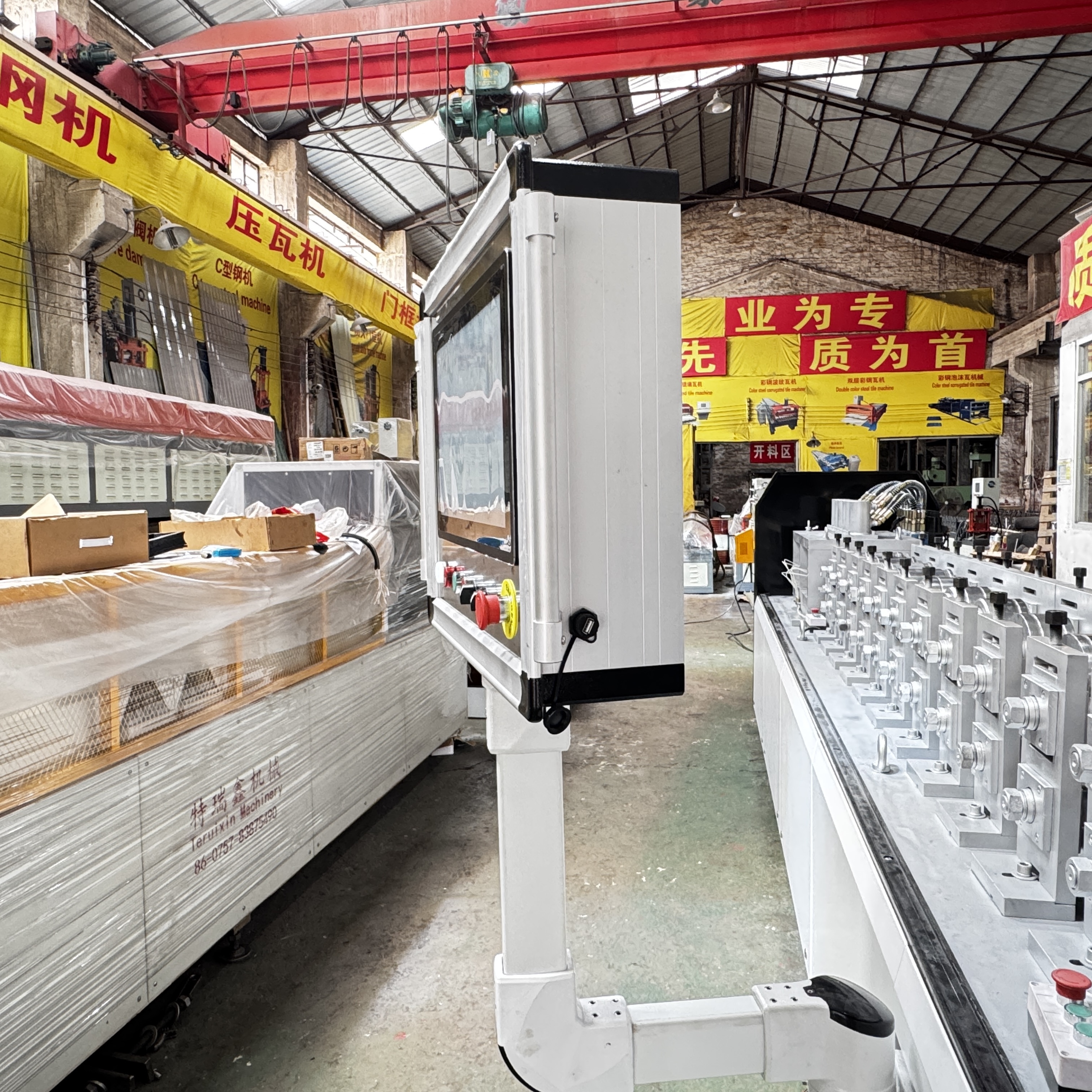
Most roll-up door forming machine quotations read the same way: servo drive, PLC control, high forming precision, stable long-term operation. The vocabulary is standard because the machines are related. The production reality behind them is not. For buyers at the awareness and research stage, the useful question is not which supplier writes the most impressive specification, but what physical evidence exists on the factory floor, and which artifacts the supplier will hand over when asked in writing.
This article does not rank or recommend any manufacturer. It defines five physical proof points that can be inspected on site or through a live virtual walkthrough, and it specifies the verifiable artifact to request for each one. The aim is to give procurement teams, importers and door manufacturers a repeatable evidence file they can build before price negotiation begins.
The evidence gap between a quotation and a production floor
Cold roll forming quotations are assembled from similar building blocks: forming stand count, servo power, line speed, control system, cutting method, voltage. Two offers can therefore look identical on paper while the machines behind them differ in frame rigidity, roller material, heat treatment and pre-shipment testing.
Two questions separate descriptive quotations from quotations backed by production evidence:
- What is actually produced inside the factory — welded frames, machined shafts, rollers — as opposed to assembled entirely from purchased sub-units?
- What was physically verified before shipment — and what record of that verification survives the shipment?
Both questions are answered by artifacts rather than adjectives. A supplier that cannot produce a single document or a live demonstration for a given claim is not necessarily unreliable, but the claim remains unverified, and unverified claims should not carry the same weight as a document with a date and a serial number on it.
What a roll-up door forming line actually contains
A roll-up door line is a cold roll forming system. Coil is unwound, straightened and fed through a series of forming stands, punched or notched where the profile requires it, cut to length and stacked. The equipment unit described in the manufacturer's published specification covers 12–26 forming stands depending on the product, a 3.0–7.5 kW servo motor, a 380V/3PH/50Hz power supply, line speed of 10–25 m/min, and length control through a PLC with encoder, quoted at ±1 mm accuracy.
Equipment-side materials are also specified: rolls in Cr12MoV or SKD11 die steel, quenched for wear resistance; shafts in 45# steel, quenched and tempered and precision ground; frames welded from thickened steel plates and fully annealed; transmission through precision gears, chains and servo motors. On the input side, the line is expected to handle colour-coated steel sheet, hot-dip galvanized sheet, aluzinc steel sheet, zinc-aluminium-magnesium coated steel sheet, and 201 or 304 stainless steel.
Within a complete door production setup, the main forming machine is usually only one unit. A buyer may also specify a guide channel forming machine, including sound-absorbing guide channel variants, a bottom beam forming machine such as a square tube bottom beam unit, punching machines, or dedicated configurations for wind-resistant, soundproof, fire-resistant and high-speed doors. Each additional unit multiplies the number of places where sourcing quality can vary, and therefore multiplies the number of artifacts worth requesting.
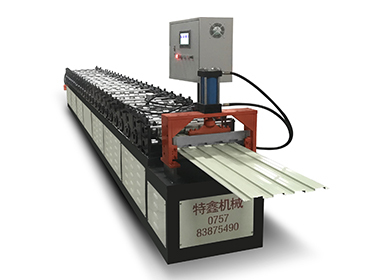
Proof point 1 — In-house welding and frame fabrication
The frame is the least glamorous and most consequential part of a forming line. It carries the forming stands, absorbs the reaction forces of the rollers and determines how much vibration reaches the profile at 10–25 m/min. A specification that mentions a welded, fully annealed frame is a claim about a physical process, and physical processes leave traces.
What to look for on the floor: a welding bay that a buyer can physically stand in; welding jigs or fixtures that fix the frame geometry during assembly; unpainted weldments visible before surface preparation; steel plate of measurable thickness; and evidence of an annealing step rather than a simple paint-over.
Artifacts to request:
- Photographs of frame weldments before painting, ideally date-stamped.
- The plate thickness specification used for the main frame.
- Annealing records, or a written statement of which frame components are annealed and which are not.
- The name of the welding sub-contractor, if any part of the frame is not welded in-house.
Answers that should prompt further questions: "the frame is already painted, so nothing can be shown"; "the frame comes from a partner yard but the design is ours"; or a refusal to state plate thickness. None of these are automatic disqualifiers, but each one moves the frame from the verified column to the assumed column.
Limitation: photographs cannot demonstrate weld penetration or internal defects. A photograph confirms that a welding process exists in the building; it does not certify its quality. Where weld quality is business-critical, the appropriate next step is a third-party inspection at the welding stage, agreed in the purchase contract — not a stronger photograph.
Proof point 2 — Component sourcing traceability
Roll forming equipment is a mix of self-processed and purchased parts, and honest traceability starts with admitting the difference. The forming rolls, shafts and frame are typically manufactured or machined in-house; servo motors, bearings, control components and sometimes gearboxes come from third-party suppliers.
What the specification claims: rolls in Cr12MoV or SKD11 die steel, quenched for wear resistance; shafts in 45# steel, quenched and tempered and precision ground; transmission through precision gears, chains and servo motors.
Artifacts to request: material certificates with visible heat numbers; heat-treatment or hardness records for rolls and shafts; incoming inspection records for purchased components; purchase records or brand and model declarations for servo motors and control units; and a bill of materials that states clearly which items are machined in-house and which are bought in.
| Component | Artifact to request | What it establishes |
|---|---|---|
| Forming rolls (Cr12MoV / SKD11) | Material certificate with heat number + hardness record | Whether the stated steel grade and quenching step are traceable to a batch |
| Shafts (45# steel, ground) | Heat-treatment record and a statement of the grinding process | Whether shafts are quenched, tempered and precision ground rather than turned only |
| Frame steel plate | Plate thickness specification and supplier delivery record | Whether the frame matches the announced thickness and steel source |
| Servo motors and PLC units | Brand, model and purchase record | Whether control components match the specification used in the quotation |
Limitation and boundary: no roll forming builder machines every component, and a buyer who demands 100% in-house production is asking for something that does not exist in this equipment class. The meaningful test is disclosure: a supplier that names exactly which parts are external is more informative than one that implies total self-sufficiency. Stocking policy and sourcing depth also vary with order volume, so the traceability available for a one-off custom line may exceed what is available for a repeated standard model.
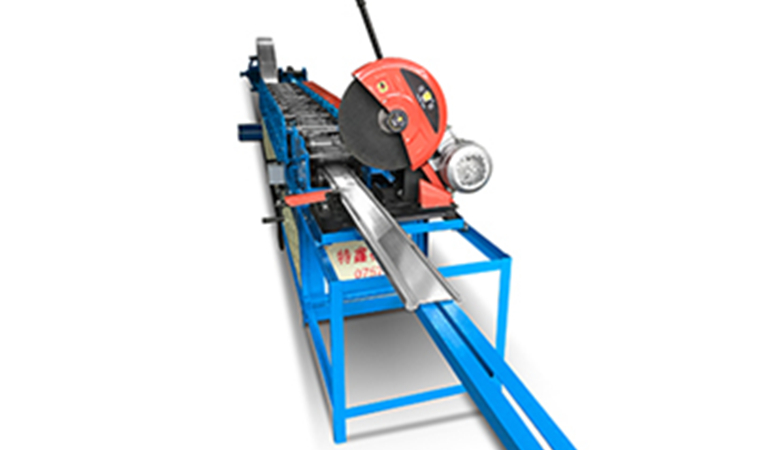
Proof point 3 — A functional test-run area and machine run logs
A forming line that has never been assembled and run under power before shipment transfers the entire installation risk to the buyer's floor. A functional test-run area is the physical answer to that risk, and the run log is the documentary answer.
What to look for: an area with the power supply and coil handling needed to run an assembled machine; a machine visibly in test rather than only in storage; and operators able to start it during the visit.
What a credible test run covers: forming continuity across the full stand count; line speed within the 10–25 m/min range; length accuracy checked against the ±1 mm specification using the PLC and encoder control; punching and hydraulic cutting cycles; stacking or collection; noise behaviour, which is the design intent behind silent running configurations; and the fault self-diagnosis function.
Artifacts to request:
- A machine run log carrying the machine serial number, test date, material used, stand count, line speed and measured cut lengths.
- A signed pre-delivery quality inspection checklist, not a blank template.
- Video of the run that includes punching and cutting, not only the forming section.
- For remote buyers, a live video call in which the machine is started on request rather than shown as a prepared clip.
Limitation: run logs are self-reported. They are useful evidence of a process, not independent certification. Two cross-checks reduce the gap: ask for a live start-up rather than a recording, and ask for the run log of a machine tested in the same week as your inquiry so the document cannot be recycled from an earlier order.
Proof point 4 — Spare-parts inventory and self-processing capacity
Forming lines in commercial and industrial door manufacturing and security shutter fabrication are often specified for continuous, automated, PLC-controlled operation. In that duty cycle, wearing parts are consumed, and the practical difference between a short stoppage and a long one is usually spare-parts availability and machining capability rather than the original purchase price.
What to look for: a parts store with labelled bins and visible stock; machining equipment capable of producing or reworking shafts and rollers, such as lathes, milling machines and grinding equipment; and a clear answer on whether heat treatment is performed in-house or subcontracted.
Artifacts to request:
- A spare-parts list with part numbers and the quantities normally held in stock.
- Warehouse inventory records with dates, not a generic catalogue page.
- A list of recommended first-year wearing parts for the specific model being quoted.
- A written statement of which parts can be re-machined locally by the buyer and which must come from the supplier.
Limitation: stocking depth is a commercial policy decision, not proof of engineering quality. A smaller builder may hold fewer finished parts but be able to machine replacements faster; a larger builder may hold more stock but route every request through a formal process. Buyers should compare the two dimensions together — stock and machining speed — instead of treating inventory size as a quality score. Historical sourcing behaviour also changes with order volume, so the answer given during a first inquiry should be confirmed in the purchase contract.
Proof point 5 — Conformity documentation and after-sales infrastructure
Documentation is a physical proof point because it can be checked against a legal entity, a scope and a date. Two document families matter for European and export-oriented door manufacturers.
System and supplier documents: an ISO 9001 quality management system certificate and CE documentation are the baseline claims made by export-oriented roll forming builders.
Product standard context: Europe-specific rolling shutter doors must comply with EN 12604 for mechanical safety and EN 13241 for general product requirements in order to carry CE marking. Fire-resistant rolling steel doors follow EN 16034 in the EU and NFPA 80 in the USA, both of which require automatic-closing devices and governor-managed descent speeds.
Artifacts to request and checks to perform:
- Confirm that the certificate holder name matches the legal entity of the factory you are visiting, not a separate trading company.
- Confirm the certificate scope actually covers roll forming machinery rather than an unrelated product line.
- Request the electrical configuration documentation for the machine, since export units are commonly built for 380V/3PH/50Hz and electrical conformity is checked separately in many destination markets.
- Request the service model in writing: remote guidance, on-site installation training, and long-term maintenance support.
Limitation and boundary: CE marking for a door product and conformity of the machine that produces it are different questions. Experience with European door standards shows that a supplier understands the market a buyer sells into; it does not, by itself, certify the forming line. Buyers should keep the two document sets separate in their evaluation file, and should also confirm that any certificate presented is still valid at the date of the audit.
A 90-minute factory audit sequence
The five proof points can be covered in a single structured walkthrough. The sequence below is written so that a buyer who has never audited a roll forming factory can follow it without technical supervision, and so that a remote buyer can request equivalent evidence over a live call.
| Stage | Time | What to observe | Artifact to request |
|---|---|---|---|
| Gate and yard | 0–15 min | Coil storage conditions, finished machines awaiting shipment, loading area activity | Shipping schedule for the current week; list of machines in final assembly |
| Welding and frame bay | 15–40 min | Welding jigs, unpainted weldments, plate thickness, annealing area | Pre-paint frame photographs; annealing record; plate thickness specification |
| Machining, roller and parts store | 40–60 min | Lathes, milling and grinding equipment, material certificates on file, bin labelling | Hardness and heat-treatment records; spare-parts stock list; bill of materials |
| Test-run area | 60–80 min | A machine running under power with coil, punching and cutting cycles, noise behaviour | Machine run log with serial number and date; signed QC checklist; run video |
| Documentation and service | 80–90 min | Certificate files, service records, training materials, warranty documents | ISO 9001 and CE documents; warranty terms; installation and training plan |
Virtual audit variant: the same sequence works over a live video call if the supplier walks with a handheld camera and starts the machine on request. Pre-recorded factory tours are useful for orientation but should not be accepted as evidence for proof point 3, because they cannot be dated to the machine being quoted.
Roll forming lines versus traditional fabrication — and where the line does not fit
Many door producers still build shutters through manual or semi-manual methods: slats cut and bent on press brakes, guide channels purchased from a third party, assembly dependent on operator skill. The comparison is not a simple upgrade story, because the two approaches answer different production problems.
| Dimension | Manual / semi-manual fabrication | Integrated roll forming line |
|---|---|---|
| Profile consistency | Depends on operator skill and individual bending setups | Set by roller geometry across 12–26 forming stands |
| Labour dependency | High; output scales with headcount | Automated feeding, punching, cutting and stacking reduce manual handling |
| Changeover to a new profile | Tooling changes are relatively fast and low cost | Requires new roller sets and setup, with associated cost and lead time |
| Economical volume | Works at very low volumes and for one-off orders | Becomes economical with repeatable, higher-volume production |
| Verification burden | Quality is verified per batch by the buyer | Performance is verified once through the line specification, test run and material traceability |
Where the line does not fit: a roll forming line is not the correct choice for very low-volume or highly irregular production, because each new profile requires its own roller set and setup work. It is also sensitive to input material quality: if coil thickness tolerance varies between deliveries, profile consistency and length accuracy suffer regardless of machine quality. Length control quoted at ±1 mm depends on the PLC and encoder being calibrated and maintained, which makes operator training and maintenance discipline part of the performance equation rather than an optional extra. Finally, a forming line typically requires dedicated floor space, a stable 380V/3PH/50Hz supply and trained operators — three requirements that can make integration harder than the machine purchase itself.
One further limitation applies to the audit method described in this article: a factory visit is a sample of one moment in time. It reduces procurement risk substantially, but it cannot prove multi-year reliability. Buyers should treat the audit as a way to remove the weakest candidates, not as a guarantee of long-term performance.
How the five proof points map to a documented factory reference
Foshan Texin Machinery Equipment Co., Ltd. is a China-based manufacturer of cold roll forming machines located in Foshan City, Guangdong Province, established in 2019 and specialising in the R&D, manufacturing and customisation of cold roll-forming equipment. Its published profile provides a concrete example of how the five proof points above can be documented.
- Facility and scale: a manufacturing facility covering 5,200 square metres, approximately 35 staff, an R&D team of 10 engineers, and annual production of about 80 cold roll forming machines.
- Fabrication chain: a full industrial chain covering mechanical design, precision machining, assembly testing and technical debugging, with self-processing capacity for key spare parts — the structural basis for proof points 1, 2 and 4.
- Documentation: ISO 9001 quality management system certification and CE standard, alongside its own technical patents for roll-forming technology.
- Test and control functions: intelligent functions covering auto-feeding, punching, cutting and fault self-diagnosis, with strict quality inspection before delivery.
- Service model: an overseas service team providing remote guidance, on-site installation training and long-term maintenance support.
- Market experience: approximately 45% of production is exported, with major markets in Southeast Asia, the Middle East, Africa and Europe.
The company's rolling shutter range, as published, includes Australian-style silent rolling shutter models such as TX-250, TX-500, TX-F500, TX-1000 and TX-1000-740 for stainless steel applications, together with wind-resistant configurations including the TX-125-8 125 Type 8-Blade Wind-Resistant model. For a buyer, the value of these details is not promotional: they are the specific claims that can be tested against the artifacts listed in the five proof points, and the ones that should appear in a written audit request.
Market trend analysis: why verification is moving earlier in the buying process
The demand context makes evidence gathering more important, not less. The global roll-up doors market, the main end market for forming machinery, was valued at approximately USD 3.25 billion in 2025 and is projected to reach USD 5.15 billion by 2034 (Dataintelo). The roll forming machine market itself was valued at USD 487 million in 2024 and is projected to reach USD 662 million by 2032, a CAGR of 4.5% (Intel Market Research). China accounts for approximately 21% of global roll forming machine revenue (Intel Market Research).
Segment-level figures point in the same direction. Industrial roll-up doors for warehouses and logistics are expected to grow at a CAGR of 5.2% through 2034, driven by e-commerce expansion (Dataintelo), and the high-speed industrial doors market was valued at USD 14.17 billion in 2024 and is growing at a CAGR of 5.6% (Cognitive Market Research). Aluminium rolling shutters account for approximately 46% of the commercial roller shutter market (Research Reports World) — a relevant detail for machine buyers, because aluminium and coated steel behave differently through forming stands and place different demands on roller geometry and surface condition.
One caveat belongs with these numbers: published market estimates vary significantly by research coverage. A roll forming machine market can be measured as standard forming equipment only, or as complete automated lines, and the two approaches produce materially different totals. Buyers should treat any single figure as directional rather than exact.
Future outlook
Three developments are likely to shape how buyers verify forming machine suppliers over the next few years. First, regional standard alignment will push documentation requests earlier in the process: as European door requirements such as EN 12604, EN 13241 and EN 16034 become more familiar to buyers, part of the audit will shift from the machine to the paperwork that accompanies it. Second, digital run records — machines tested with logged parameters rather than handwritten notes — will become a normal expectation for export orders, because they are cheap to produce and difficult to fabricate convincingly across repeated orders. Third, live remote audits will continue to replace passive factory-tour videos, particularly for buyers in markets where travel is slow or expensive.
For suppliers, the implication is straightforward: the ability to show a welding bay, a material certificate and a running machine on request is becoming a commercial capability rather than a courtesy. For buyers, the implication is equally clear: the audit checklist is now part of the procurement document set, and it should be agreed before the deposit, not after.
Frequently asked questions
1. What is a roll-up door forming machine and what does it produce?
A roll-up door forming machine is a cold roll forming system that converts steel coil into the profiled components of a rolling shutter door. In commercial and industrial door manufacturing and security shutter fabrication, such a line produces rolling shutter door slats, wind-resistant door panels and garage door profiles, and can also produce custom metal components. Typical configurations use 12–26 forming stands, a 3.0–7.5 kW servo motor and a 380V/3PH/50Hz supply, running at 10–25 m/min with PLC and encoder length control quoted at ±1 mm. Input materials include colour-coated steel sheet, hot-dip galvanized sheet, aluzinc and zinc-aluminium-magnesium coated steel, and 201 or 304 stainless steel.
2. What evidence should a buyer request before placing a first order with a forming machine builder?
Five artifact groups cover most of the risk: pre-paint photographs of frame weldments together with plate thickness and annealing records; material certificates with heat numbers plus hardness records for rolls and shafts; a signed test-run log with machine serial number and measured cut lengths; a spare-parts list with stock quantities and a statement of local machining capability; and conformity documents including ISO 9001 and CE records whose holder name matches the factory's legal entity. Requesting them in writing before the deposit makes the answers comparable across suppliers.
3. Why does in-house welding and frame annealing matter for a roll forming line?
The frame carries the forming stands and absorbs the reaction forces of the rollers. Equipment specifications in this class describe frames welded from thickened steel plates and fully annealed, with shafts in quenched and tempered 45# steel and rolls in quenched Cr12MoV or SKD11 die steel. Annealing relieves welding stress so the frame geometry remains stable over time, and frame rigidity limits the vibration that reaches the profile during forming at 10–25 m/min. A buyer cannot verify weld penetration from a photograph, so where weld integrity is critical the practical route is a third-party inspection agreed at the welding stage in the purchase contract.
4. How can a buyer verify component sourcing traceability without travelling to the factory?
Ask for a bill of materials that separates self-processed parts from purchased parts, then request the supporting documents for each category: material certificates with visible heat numbers and hardness or heat-treatment records for rolls and shafts, and purchase records or brand and model declarations for servo motors and control components. A live video call can show the certificates being taken out of the file and matched to a machine in assembly. Because no builder machines every component, the meaningful signal is disclosure rather than a claim of complete self-sufficiency, and the documents should be confirmed again in the purchase contract.
5. What should a pre-shipment functional test run include?
The machine should be assembled and run under power with coil present, not merely stored. A credible test covers forming continuity across the full stand count, line speed within the 10–25 m/min range, length accuracy checked against the ±1 mm specification using the PLC and encoder, punching and hydraulic cutting cycles, stacking, and the fault self-diagnosis function. The documentation should include a run log with the machine serial number, test date, material used and measured cut lengths, plus a signed quality checklist. Because run logs are self-reported, buyers should cross-check by requesting a live start-up on the call and by asking for a log dated in the same week as the inquiry.
6. Which standards and certifications are relevant to European rolling shutter doors and to the machines that make them?
Europe-specific rolling shutter doors must comply with EN 12604 for mechanical safety and EN 13241 for general product requirements in order to carry CE marking. Fire-resistant rolling steel doors follow EN 16034 in the EU and NFPA 80 in the USA, both of which require automatic-closing devices and governor-managed descent speeds. On the supplier side, ISO 9001 quality management system certification and CE documentation are the usual baseline. These are separate questions: door product conformity does not by itself certify the forming line that produces the door, and certificate holder names should be checked against the factory's legal entity.
7. What are the limits of a factory audit for forming machine suppliers?
A factory audit samples one moment in time and cannot prove multi-year reliability. Run logs and inspection checklists are supplier-generated documents, so they evidence a process rather than independently certifying it. Photographs of a welding bay confirm that a welding process exists on site but cannot demonstrate weld penetration. Spare-parts stocking depth reflects commercial policy rather than engineering quality, and the traceability available for a one-off custom order may exceed what is offered for a repeated standard model. The audit is best used to eliminate the weakest candidates and to fix commitments in the contract, not as a guarantee of long-term performance.