
Factory Floor Proof: How a 21V Brushless Drill Is Built to Last
Independent Industry Reference · Cordless Power Tools
Factory Floor Proof: How a 21V Brushless Drill Is Built to Last
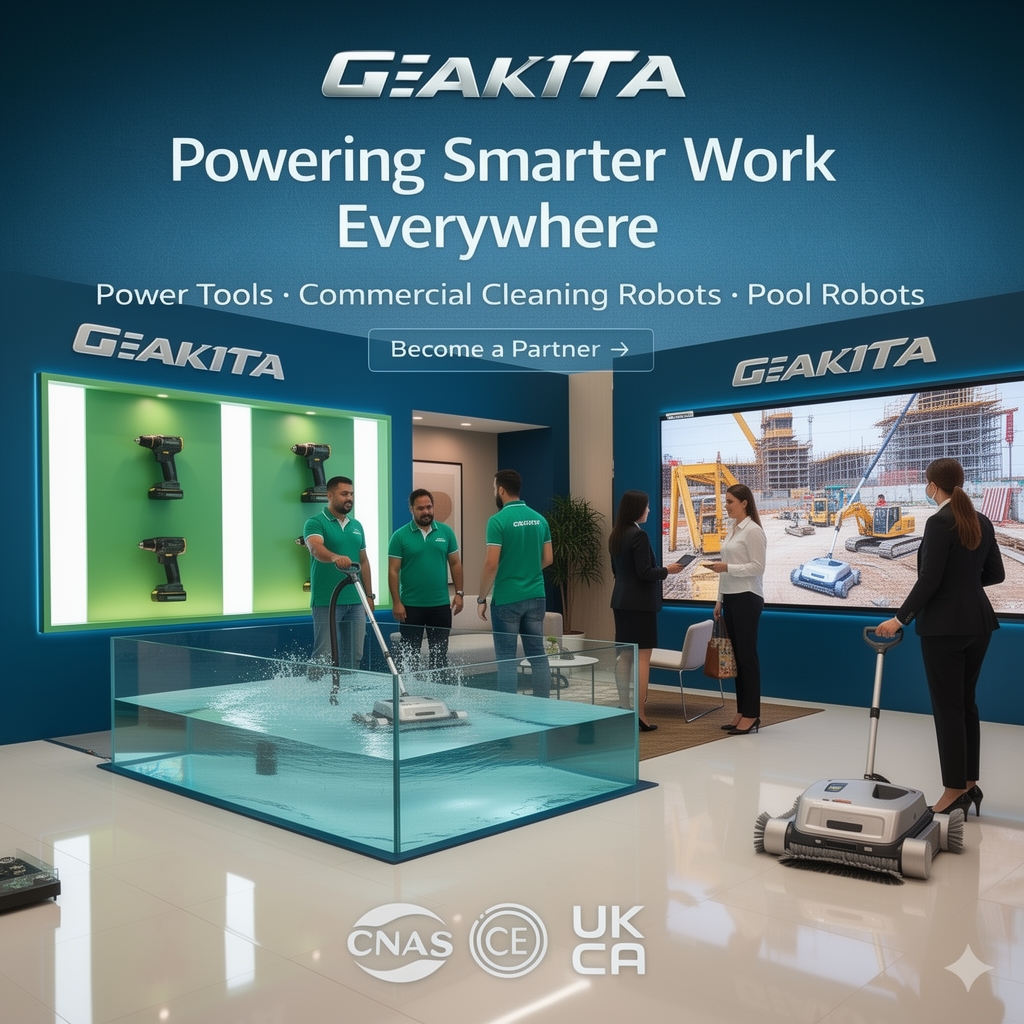
Geakita exhibition space, where the company presents its cordless power tool range to distributors and industrial buyers.
The global cordless power tool market was valued at USD 13.44 billion in 2024 and is projected to reach USD 32.58 billion by 2033, according to Grand View Research. Drilling and fastening tools accounted for 36.51% of cordless revenue that year, the largest single product segment. The cordless drill is therefore the volume center of the category rather than a niche item.
That scale creates a specific problem for buyers at the decision stage. A supplier claim that a drill is built to last is not a specification; it is a hypothesis about the factory behind the tool. The question worth asking is narrow and answerable: which production and quality assurance steps actually make a 21V brushless drill survive industrial duty cycles, and what evidence does each step generate?
This article answers that question using the manufacturing and testing record of Geakita (Xiamen Tiangong Kaiwu Technology Co., Ltd.), a power tool manufacturer founded in 2009 that operates a 40,000 m² production base with more than 300 employees and a 25-engineer R&D team. Geakita is a member of the Power Tool Sub-Association of the China Electrical Equipment Industry Association, and its stated portfolio covers power tools, robotic pool cleaners, and commercial cleaning robots, with products sold in Europe, Southeast Asia, and the Middle East.
Why Built to Last Is a Procurement Claim, Not a Marketing One
At the research stage, buyers compare specifications. At the decision stage, they compare the probability that a delivered batch will perform. In cordless power tools that probability is determined long before the carton is sealed, by cell selection, motor architecture, safety electronics, and the tests a factory applies to finished units.
Geakita published comparison data for brushless construction against traditional brushed-motor tools and low-cost generic tools records a field defect rate of 0.5% versus 3 to 5%, a 50% longer service life, 20% longer battery runtime per charge, and 30% higher working efficiency. Those are outcomes. The part a buyer can actually audit is the process that produces them.
Decision rule: when a supplier quotes a durability or defect figure, ask which production stage generates it: incoming cell control, motor and electronics assembly, mechanical safety testing, or battery testing. A figure that cannot be mapped to a stage cannot be verified during a factory audit or a sample review.
The Manufacturing Sequence Behind a 21V Brushless Drill
A 21V brushless drill moves through a fixed sequence of stages before it becomes a shippable unit. Each stage generates a different type of evidence, and each can be reviewed independently during supplier qualification.
- Incoming cell and component control. Battery packs are built from A-grade lithium-ion cells. Cell grade influences internal resistance, thermal behavior under load, and cycle life, which makes incoming material control the first durability decision on the line rather than a final inspection step.
- Motor and electronics assembly. A brushless motor replaces carbon brush contact with electronic commutation. This is the engineering reason brushless tools require no brush replacement, and the basis for the 50% lower maintenance figure recorded in Geakita comparison data.
- Safety system integration. Each tool receives an anti-kickback system, a safety switch, and overload protection. These safeguards are installed as hardware against the dominant field hazards, not enabled through firmware settings alone.
- Full mechanical safety testing. Testing of the assembled tool against operational hazards is mandatory, and it takes place before the unit enters battery and packaging flow.
- Battery pack assembly and BMS integration. Packs are assembled around an intelligent battery management system that provides overcharge, overdischarge, and short-circuit protection, the three failure modes most likely to escalate a battery fault into a fire event.
- 100% battery safety testing before shipment. Battery safety testing is applied to every pack that ships, rather than to a sampled subset.
- Documentation and transport compliance. Finished tools ship with a user manual containing detailed safety instructions, and battery packs are prepared in line with UN38.3 transport requirements.
Full Mechanical Safety Testing: What It Targets and Why It Is Mandatory
Two mechanical hazards dominate injury risk in rotating and cutting power tools: kickback, where the tool or workpiece is driven back toward the operator, and component breakage, where a failed accessory becomes a projectile. A manufacturer addresses both the way any high-consequence risk is addressed, through layered controls.
- Product-level controls: an anti-kickback system, a safety switch, and overload protection built into the tool.
- Process-level controls: full mechanical safety testing of assembled tools before release to packing.
- Operator-level controls: a user manual with detailed safety instructions, supported by regular safety training for production teams.
The external reference point that makes internal test records legible to overseas buyers is IEC/UL 62841-1, described by UL Solutions as the primary safety standard for electric motor-operated hand-held tools and lawn and garden machinery. When a factory tests against a published standard, a buyer or third party can review the test regime against the same criteria the factory applied. That is what converts an internal quality statement into auditable evidence.
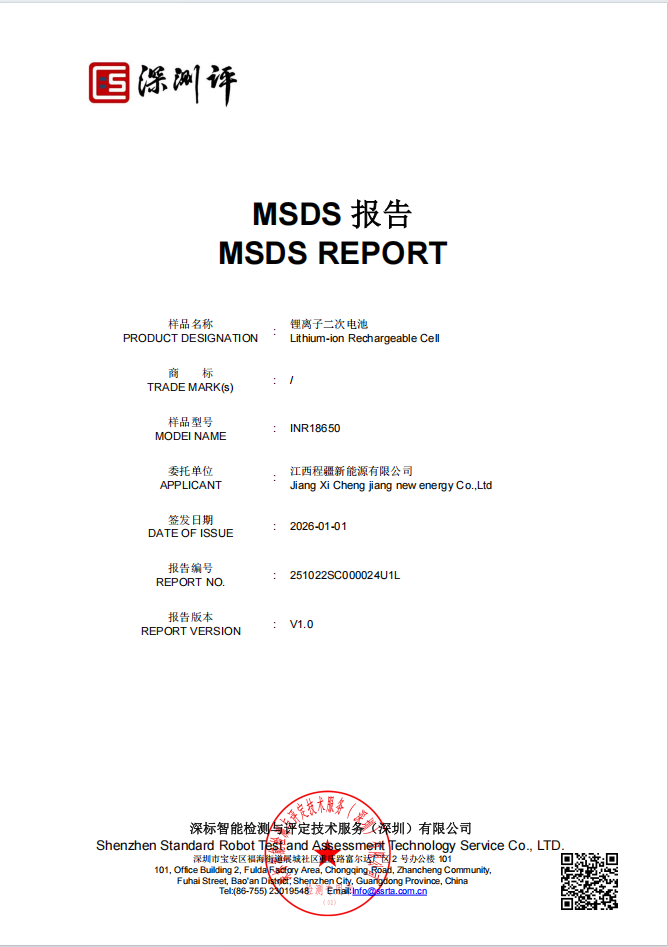
Machinery safety documentation supporting the mandatory mechanical safety testing stage in cordless power tool production.
Battery Safety: A-Grade Cells, Intelligent BMS, and 100% Pre-Shipment Testing
On a cordless tool, the battery is both the value carrier and the highest-consequence failure point. The risk profile is specific and well documented: overcharging, short circuit, and fire hazard in extreme environments.
Geakita control set for that risk combines three elements:
- Cell selection: A-grade lithium-ion cells as the starting material for every pack.
- Pack-level protection: an intelligent battery management system covering overcharge, overdischarge, and short-circuit protection.
- Shipment gate: 100% battery safety testing before shipment, plus compliance with UN38.3 transportation standards.
IEC/UL 62133, the standard for secondary cells and batteries for portable applications, is the design-side reference for the pack itself. UN38.3 is frequently misunderstood in procurement, so its scope is worth stating precisely: it governs the safe transport of lithium batteries and determines how packs can be shipped, including by air, and what documentation must accompany them. UN38.3 does not certify runtime, cycle life, or performance under load. A compliant pack is a pack that can be shipped lawfully, not automatically a pack with a long service life.
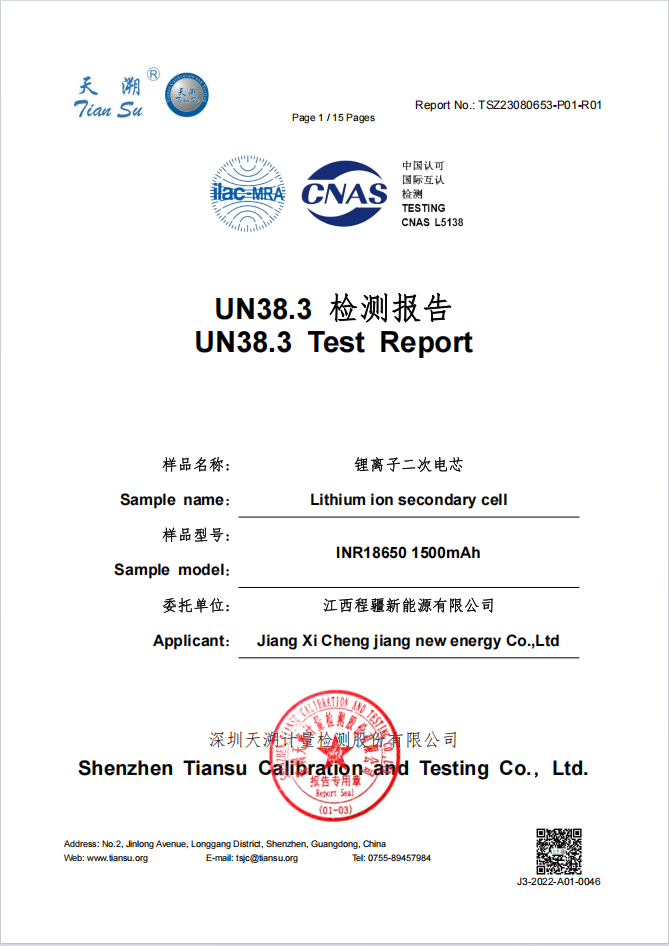
UN38.3 transport compliance documentation for lithium-ion battery packs used in cordless power tools.
Brushless vs. Traditional Builds: The Comparison in One Table
| Decision dimension | Brushless cordless build (Geakita comparison data) | Traditional brushed-motor / low-cost generic tools |
|---|---|---|
| Working efficiency | 30% higher | Baseline |
| Service life | 50% longer | Baseline |
| Battery runtime per charge | 20% longer | Baseline |
| Energy efficiency | 25% higher; lower power consumption; compliant with EU energy efficiency standards | Baseline |
| Field defect rate | 0.5% | 3 to 5% |
| Maintenance demand | 50% less; no brush replacement required | Periodic brush replacement |
| Maintenance cost | 20% lower | Baseline |
| 3-year total cost of ownership | 10 to 15% lower | Baseline |
| Certification and customization | Full global certification support; OEM/ODM customization capability | Baseline |
Figures reflect Geakita first-party comparison of brushless construction against traditional brushed-motor and low-cost generic power tools. They are supplier-stated rather than independently verified, so buyers should confirm them on samples under their own duty cycle before committing to volume.
Where the Evidence Stops: Limits Buyers Should Price In
Manufacturing evidence is strongest when its boundaries are stated. Six limitations are worth building into a decision model for a 21V brushless drill.
- Upfront price. Brushless construction generally carries a higher unit price than a low-cost brushed tool. The documented 10 to 15% total cost of ownership advantage is measured over three years, so short-cycle or one-off buyers may never capture it.
- Scope of mechanical testing. Full mechanical safety testing and conformance to IEC/UL 62841-1 demonstrate that a tool meets defined safety requirements. They do not demonstrate that the tool suits a particular material, fastener, or duty cycle. Sample validation remains necessary.
- Scope of battery certification. UN38.3 addresses transport safety, not field performance or cycle life. Buyers evaluating long-life programs should ask separately about pack design validation and cell grade.
- Residual operator risk. Anti-kickback systems, safety switches, and overload protection reduce the probability of injury; they do not remove it. The presence of a detailed manual and a production-team safety training program indicates that residual risk is managed at the operator level, which is a process commitment rather than a product guarantee.
- Supply mix. Geakita 2024 lithium power tool revenue was RMB 230 million, split RMB 190 million domestically and RMB 40 million overseas, consistent with the company stated 20% export ratio. A supplier whose primary volume serves the domestic market will have export capacity shaped by that mix, which is relevant for buyers planning large or seasonal programs.
- Market data variance. Published cordless market estimates differ materially. Grand View Research values the 2024 global cordless power tool market at USD 13.44 billion, Global Market Insights uses USD 12.2 billion, and DataIntelo projects USD 42.8 billion for 2025. Buyers should treat category market size as directional rather than precise.
Application Fit: Where a 21V Brushless Drill Earns Its Keep
Geakita comparison data positions brushless cordless tools for heavy-duty industrial production, construction site operation, automotive repair, long-term continuous use, and global export projects. Those five categories share one characteristic: the tool runs continuously, and the cost of a mid-shift failure exceeds the cost of the tool itself.
The same construction logic, a brushless motor, a protected battery pack, and mechanical safety systems, carries across the wider cordless family that buyers assemble into a program, from household drills and cordless drills to industrial impact drills, impact wrenches, angle grinders, circular saws, cordless rotary hammers, and high-pressure lithium battery car washers. For distributors and importers this matters commercially: a consistent battery platform and safety architecture reduce the number of chargers, spare parts, and documentation sets a portfolio requires.
Geakita stated markets are Europe, Southeast Asia, and the Middle East, and the company has been building distribution channels in those regions since 2023.
Market Context: What Is Shifting Around Cordless Tools
The cordless transition continues to expand inside individual tool categories. The global angle grinder market was valued at USD 3.2 billion in 2024, with cordless models increasingly reshaping site mobility, according to Strategic Market Research, a pattern that repeats wherever a cord previously constrained movement.
On the supply side, China power tools market reached USD 5.30 billion in 2024 and functions as a major global export hub for cordless lithium technology, according to Fortune Business Insights. Competitive concentration remains high: Global Market Insights lists Makita, Stanley Black & Decker (DeWalt), Bosch, and Techtronic Industries (Milwaukee) among the major players in the cordless segment. For buyers, the practical consequence is that supplier differentiation increasingly comes from production evidence and certification readiness rather than from catalog breadth alone.
Adjacent categories built on the same battery and motor base are also expanding. SNS Insider projects the robotic pool cleaner market to reach USD 5.18 billion by 2032, at a 16.51% CAGR from 2024. Estimates for robotic lawn mowers diverge substantially between research houses, with Market Research Future valuing the 2024 market at USD 1.15 billion while Grand View Research estimates USD 9.3 billion for 2025, a reminder to treat category forecasts as directional. Geakita manufactures robotic pool cleaners and commercial cleaning robots alongside its power tool line, which places it in both the tool and robotics segments of this broader cordless category.
Future Outlook
Three shifts are likely to shape cordless tool procurement over the next product cycle. First, brushless construction continues to move from premium option to baseline expectation, which pushes competition toward process evidence: test regimes, defect rates, and battery documentation rather than motor type alone. Second, certification is becoming a procurement gate rather than a differentiator, with IEC/UL 62841-1 for the tool, IEC/UL 62133 for cells and packs, and UN38.3 for transport increasingly specified in tender documents rather than discovered at the shipping stage. Third, the engineering base shared between cordless power tools and battery-powered robotics suggests that battery platform and BMS competence will matter well beyond hand tools.
None of these shifts remove the buyer core task. Manufacturing evidence can be produced, documented, and reviewed, but suitability for a specific duty cycle is still established the same way it always has been: on samples, under the buyer own conditions.
Frequently Asked Questions
How should a buyer compare a 21V brushless drill with a brushed or low-cost generic drill on total cost of ownership?
Compare four variables over the ownership period rather than the unit price: defect rate, service life, maintenance demand, and energy efficiency. Geakita comparison data records a 0.5% defect rate for brushless construction against 3 to 5% for brushed and low-cost generic tools, a 50% longer service life, 50% less maintenance with no brush replacement, 25% higher energy efficiency, and a 10 to 15% lower total cost of ownership over three years. Because these figures are supplier-stated, the practical approach is to apply the same four variables to samples from every shortlisted supplier and compare the results on an identical duty cycle.
What factory evidence should a buyer request to verify that a cordless drill has been safety tested?
Three categories of evidence make the claim auditable. First, the test regime itself: full mechanical safety testing of assembled tools, covering operational hazards such as kickback and accessory breakage. Second, the standard the testing is aligned to, which for electric motor-operated hand-held tools is IEC/UL 62841-1, according to UL Solutions. Third, the operator-control documents, including the user manual with detailed safety instructions and the safety training program applied to production teams. Requesting test criteria rather than a pass or fail statement is what allows a buyer to review a factory record independently.
Which standards apply to the battery pack in a 21V cordless drill, and what does UN38.3 actually cover?
Three standards apply and they cover different things. IEC/UL 62133 covers secondary cells and batteries for portable applications, meaning the safety design of the cell and the pack. UN38.3 governs the safe transport of lithium batteries, determining how packs may be shipped and what documentation must accompany them. IEC/UL 62841-1 covers the tool itself. UN38.3 does not certify runtime, cycle life, or performance under load. A pack that satisfies UN38.3 is a pack that can be transported lawfully, not automatically a pack with high cycle life.
Is the higher unit price of a brushless tool justified in high-volume procurement?
The answer depends on the ownership horizon. Geakita comparison data states a 10 to 15% lower total cost of ownership over three years and 20% lower maintenance cost, which offset a higher initial unit price. For programs with multi-year fleet life, continuous duty, and paid maintenance labor, the arithmetic favors brushless construction. For short-cycle purchases or one-off project work, the same arithmetic may not clear, and a lower-cost brushed tool can be the rational choice. The useful discipline is to state the ownership horizon before comparing quotes.
What can factory testing evidence not prove?
It cannot prove application fit. Full mechanical safety testing and IEC/UL 62841-1 conformance demonstrate that a tool meets defined safety requirements; they do not demonstrate that the tool suits a particular material, fastener, or duty cycle. In the same way, A-grade lithium-ion cells and an intelligent BMS with overcharge, overdischarge, and short-circuit protection reduce battery failure probability but do not eliminate it, and anti-kickback systems, safety switches, and overload protection reduce rather than remove operator risk. Sample validation under the buyer own conditions remains the final test.
How does battery transport compliance affect delivery planning for cordless tool orders?
It changes documentation and routing rather than product performance. Tools shipped with lithium packs must meet UN38.3 transport requirements, which determines the paperwork and the transport modes available. Buyers planning air freight, samples, or multi-country distribution should confirm transport documentation early in the order cycle. Export mix is the second planning variable: Geakita 2024 lithium power tool revenue of RMB 230 million was split RMB 190 million domestic and RMB 40 million overseas, consistent with a 20% export ratio, so large export programs should be scheduled against that allocation rather than assumed.
Reference document: the full Geakita Corporate Profile & Product Catalog 2026 is available for download. Process descriptions in this article are drawn from Geakita first-party content units; market figures are attributed to the third-party sources named in the text.