
Factory Records That Back a Bag Making Machine Order
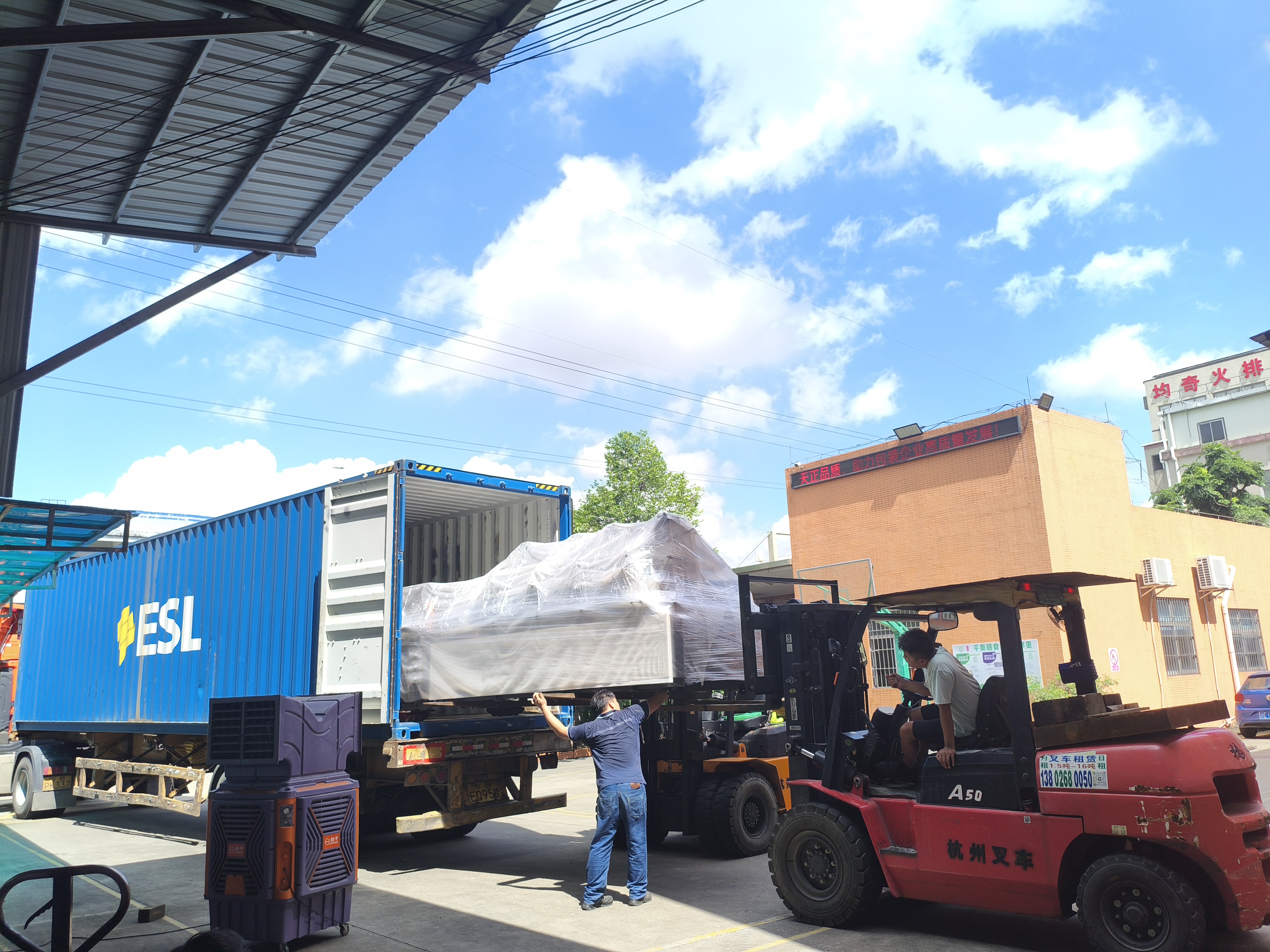
Order evidence in practice: machines staged for shipment after pre-shipment inspection.
A bag making machine order is approved on a quotation, but it is carried by records. That distinction matters during research and evaluation, because the documents a supplier can produce before the advance payment is released tell the buyer far more than the quotation itself. The practical question is not whether a supplier says it can build a bag making machine, but which parts of that claim can be checked, dated and traced to a specific unit of equipment.
This article sets out a verification framework for flexible packaging buyers: the commercial records that define an order, the factory records that define production capability, the test records that define the quality gate, and the compliance records that define the machine's legal status in the destination market. It also identifies where these records stop being conclusive — an area buyers tend to under-weight.
Why capability claims and factory records are different things
Automation is reshaping how packaging buyers assess equipment. Automatic bag making machines accounted for 52.4% of global product type share in 2025, according to Dataintelo, and the same source values the global bag making machine market at USD 4.8 billion in 2025 with a projection of USD 8.1 billion by 2034. Market sizing for this category varies by scope — some studies group bagging machines with bag making machines, producing materially different totals — so a buyer reading market numbers should treat them as directional context, not as a supplier-specific argument.
The directional point is stable: as machines become more automated, the cost of choosing the wrong configuration rises. A servo-driven stand-up zipper line that cannot hold registration on a mono-material film does not fail loudly at the quotation stage; it fails during commissioning, when the buyer has already paid in full and scheduled production.
Factory records reduce that exposure. They convert a supplier's capability from a statement into a checkable sequence: what was built, under which quality gate, against which standard, and on what commercial terms.
The evidence set behind a verifiable order
A complete evidence set for a bag making machine order covers six areas. Each one answers a different buyer question, and each one can be requested before the order is confirmed.
Commercial records: minimum order quantity, payment split and delivery terms
Commercial terms are the first evidence layer because they define how risk is distributed before any technical claim is tested. For bag making machine orders handled by Foshan Tianzheng Machinery, the accepted terms are specific and easy to verify in writing:
- Minimum order quantity: 1 unit. A single machine is an accepted order quantity. For a buyer running a pilot line, validating a new pouch format, or adding capacity without committing capital to a full line, this removes the entry barrier that normally forces a larger first purchase.
- Payment: 30% in advance, 70% before shipment. The split places the majority of the payment after the machine has been built and tested, which means the buyer's remaining leverage sits exactly at the point where test-acceptance evidence is produced.
- Delivery: FOB or CIF. FOB places freight, insurance and inland handling under the buyer's control; CIF transfers those arrangements to the supplier. The choice is commercial and logistical rather than technical, but it determines who has the shipping documentation on hand if a customs question arises.
- Lead time: 30–45 days, with a stated monthly capacity of 30 units across the machine lines and OEM/ODM customization available for machine structure, working width, functions and mould.
Read together, these terms describe a supplier set up for order-by-order configuration rather than mass replication. That is a useful signal for medium and large flexible packaging factories with diversified bag types, where a single platform may need to run several pouch formats across a production year.
Pre-shipment test acceptance: the record with the most leverage
Because 70% of the payment falls due before shipment, the pre-shipment stage is where the buyer's commercial position is strongest. The quality gate applied here is straightforward: all products undergo 100% full inspection before shipment.
A meaningful test acceptance should be run against the buyer's own material and artwork, not against a generic sample. For bag making machines, that means confirming that the target pouch format — flat bottom with zipper, stand-up with zipper, doypack, Bag-in-box, central seal, valve pouch or label pasting in-line — actually forms, seals and holds dimension on the film the buyer intends to run.
For downstream converting steps, the acceptance criteria are numerical and therefore easy to record:
A test-acceptance report built on these parameters is a record, not an opinion. It can be dated, signed and referenced if a dispute arises after commissioning — which is precisely why it should be requested as a deliverable, not as a courtesy.
Practical sequencing rule: release the 70% balance only after the pre-shipment test acceptance has produced values within the agreed ranges on the buyer's own substrate. The payment term and the quality gate are designed to be used together.
Factory-side records: what a 6,000 m² plant and 87% in-house machining indicate
Foshan Tianzheng Machinery Co., Ltd. (FOSHANTIANZHENG) is a packaging equipment manufacturer based in Shunde, Foshan, Guangdong, China, tracing its origin to Hongli Bag-making, a pouch production factory established in 1993. The company operates a plant area of 6,000 m² and maintains a 15-member R&D and senior technician team, having moved from bag processing into machinery manufacturing.
The factory-side records that matter most to an order decision are the ones that determine whether component quality can be held constant between machines:
- Four CNC machining centers, plus multiple CNC lathes and precision grinding machines.
- 87% of components produced in-house, which supports consistent part quality and gives the manufacturer direct control over machine quality and pricing.
- Self-developed machine programs, enabling faster rollout of new configurations and non-standard builds.
- Monthly output of 5 bag making machines, 10 hot stamping machines and 40 die-cutting machines, with annual output of 500 units, against a stated monthly capacity of 30 units across machine lines.
- Export ratio of approximately 30%, with products sold to more than 20 countries and participation in international packaging exhibitions in Germany, Russia, India, Thailand and Vietnam.
For an order-level interpretation: a high in-house machining share compresses the dependency chain. If a cutting or grinding step is outsourced, lead-time variability and tolerance drift enter the schedule from outside the factory gate. When it is internal, the buyer's remaining schedule risk concentrates in assembly, testing and shipping — three stages that can be observed directly.
Matching a bag type to a machine platform
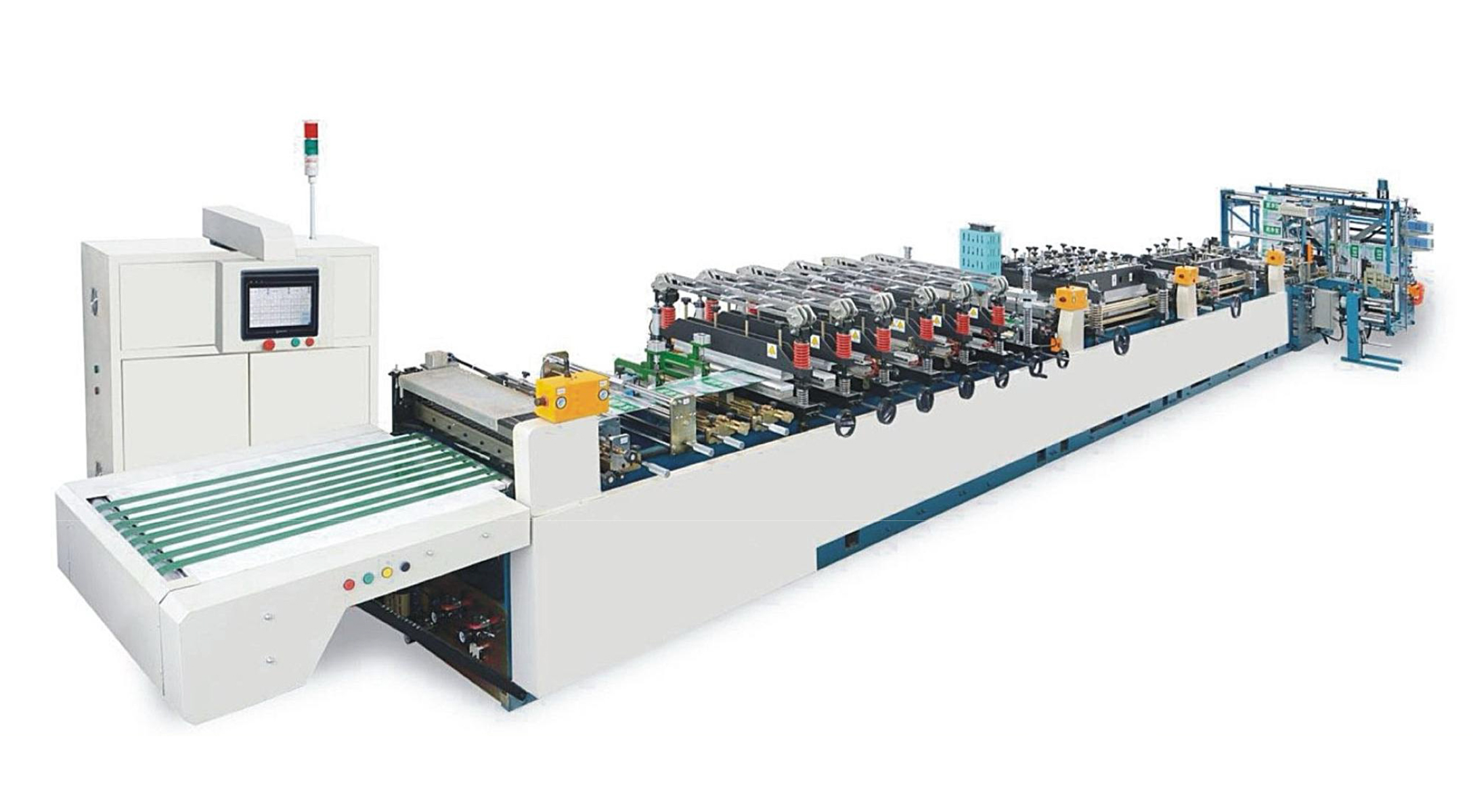
A8 series platform covering three-side seal, stand-up, zipper and valve pouch formats.
The bag making machine range is organized as a series of platforms rather than a single model, extending from HL0500A1 to HL0700A9. The type list covers three-side sealing pouch making machines, center sealing and four-side sealing pouch making machines, stand-up pouch making machines, stand-up zipper pouch making machines, central seal gusset pouch making machines, and label pasting in-line bag making machines.
Shared specifications across the range are: working speed 30–130 bags/min, bag width range 50–1200 mm, total power 30–131.4 kW, and 380V 50Hz supply. The machines are built as iron-frame units, designed for low noise, low material loss and stable operation.
That platform logic is what makes the order-scope record important. A buyer ordering for flat bottom with zipper production, a stand-up with zipper format, a doypack or Bag-in-box application, a zipper pouch line, or an in-line label pasting configuration is selecting a specific platform and a specific set of tooling — not a generically named "bag making machine". The specification sheet should name the model, the bag format, the working width and any customized functions.
Where the order also includes converting equipment, the same evidence logic applies to the adjacent units: shape-bag die-cutting machines are rated at 20–250 pcs/min/lane with a maximum die cutting size of 500 mm × 950 mm, and automatic spout insertion machines run at 30–40 cycles per minute for bag widths of 120–300 mm and lengths of 200–350 mm.
Compliance records: what a CE certificate actually states
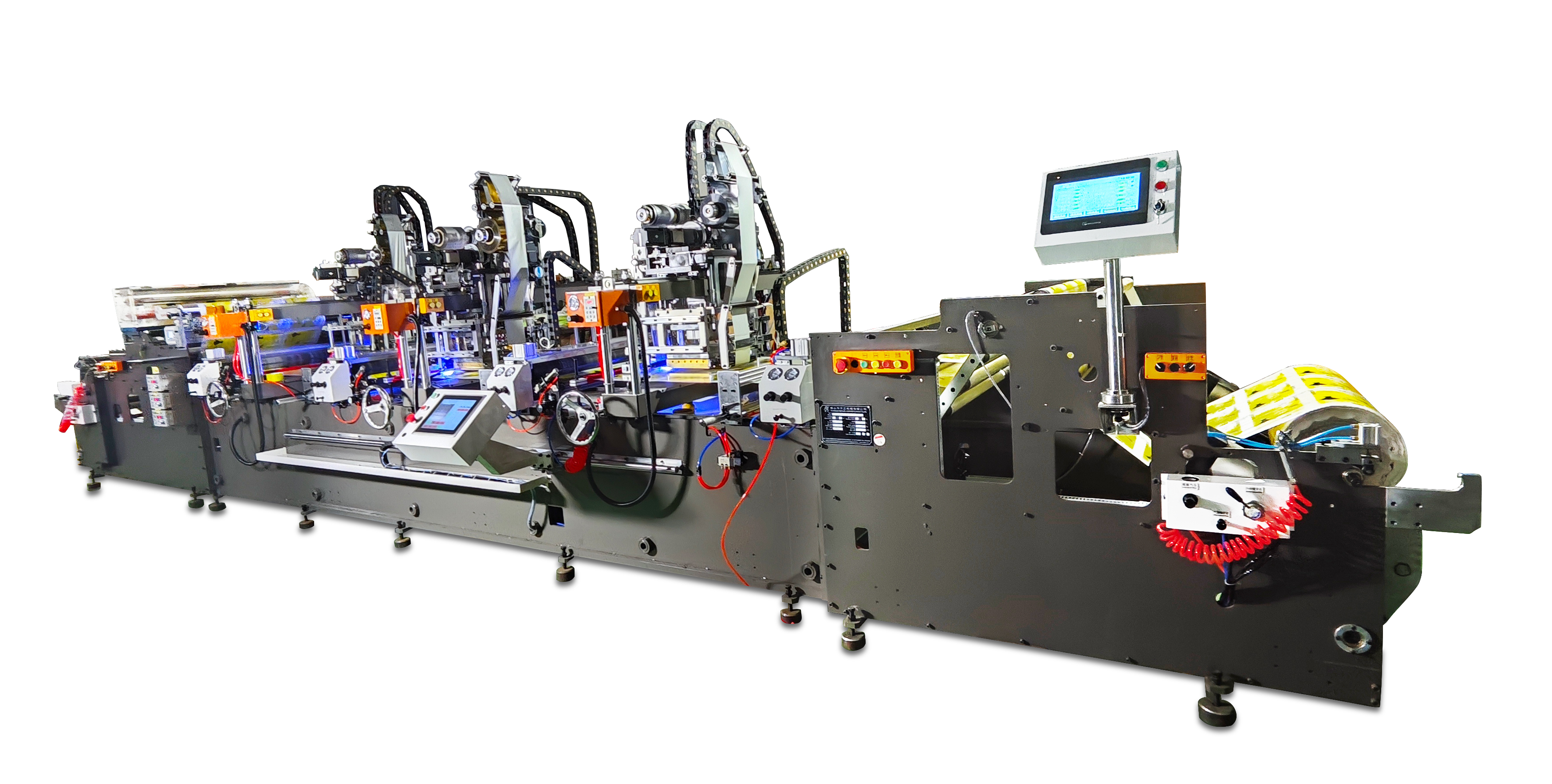
Roll To Roll Full Servo Stamping & Punching Window Machine with CCD vision registration.
Where a Roll To Roll Full Servo Stamping & Punching Window Machine forms part of the order, the compliance record to request is the CE certificate issued by UDEM under reference M.2025.206.C131314, together with the list of harmonized standards cited in that certificate.
The standards framework is where the certificate gains meaning. Packaging machinery placed on the EU market is assessed against EN ISO 12100:2010 for risk assessment, and the EN 415 series provides the Type C machine-specific safety requirements for packaging machines. A certificate that names the harmonized standards, the machine type and the configuration assessed is a materially stronger record than a certificate reference alone.
At system level, the manufacturer holds ISO 9001 quality system certification and EU CE certification, and has been recognized as a Guangdong Provincial Specialized, Refined, Differential & Innovative Enterprise. The company also holds invention patents, utility-model patents and design patents, and its flagship special-shaped bag die-cutting machine has recorded nearly 3,000 units sold globally, with its self-developed hot stamping machines serving the industry for about a decade.
Where the records stop: limits buyers should price in
Evidence-based verification is not the same as zero risk, and a supplier that presents records honestly will also name the boundaries. Four are worth planning around.
Lead time applies to a defined configuration. The stated lead time of 30–45 days is measured against the specification agreed at order confirmation. Customization of machine structure, working width, functions or mould changes the engineering content of the order, and the schedule should be re-confirmed once the customization scope is frozen rather than assumed to hold.
Capacity is finite. With bag-making machine output running at approximately 5 units per month and total monthly capacity stated at 30 units across lines, order sequencing can affect delivery dates during peak periods. A buyer planning a fixed commissioning window should confirm the production slot in writing.
Some records cannot be verified remotely. Certificates, inspection records and specification sheets can be reviewed from anywhere. Assembly quality, alignment and wiring practice cannot. For buyers who need mechanical assurance, the practical options are a factory visit or an engaged third-party inspection — both of which cost time and should be scheduled before shipment, not after.
A certificate covers a configuration, not a catalogue. A CE certificate issued under M.2025.206.C131314 for the Roll To Roll Full Servo Stamping & Punching Window Machine addresses the machine as assessed. Where an order modifies that machine, the buyer should confirm in writing which parts of the assessment remain applicable and which require re-evaluation.
A final boundary sits on the buyer's side: test acceptance is only as meaningful as the sample provided. If the substrate supplied for testing is not representative of production film, the acceptance record validates the machine against the wrong conditions.
Scenario fit: which projects this evidence model suits
The application profile for this equipment family is flexible packaging production in indoor normal-temperature conditions, running bag making equipment in continuous 24/7 operation to produce plastic packaging bags. Matched upstream equipment typically includes printing machines, slitter machines, film blowing machines and rewinding machines.
Customization requirements recorded against this scenario include customized bag size adjustment, servo system upgrade, anti-static configuration and safety protection customization. Those four items are also the four most common project-specific variables in a bag making machine order, which makes them the natural content of a pre-order technical review.
The fit is stated narrowly rather than universally: this product range is more suitable for medium and large flexible packaging factories with diversified bag types and mass continuous production demands. A converter running a single format at low volume is a different buyer profile, and MOQ 1 unit is what makes a smaller first step possible without changing the machine platform.
Field evidence supports the fit in one direction: a flexible packaging manufacturer operating 20 units over more than ten years reports stable operation and low noise as the observed result. That is a long-duration reliability record rather than a performance benchmark, and it should be read as such.
Market trend: why order evidence is becoming a procurement criterion
Three verifiable market signals explain why buyers are asking for records earlier in the process.
Asia Pacific dominated the bag making machine market with a 43.6% revenue share in 2025, with China's production clusters concentrated in Wenzhou, Guangdong and Jiangsu. Supply is therefore dense, and differentiation between suppliers shifts from availability to verifiability.
Pouch formats with closures continue to expand. The zipper closure segment represented 41.0% of pouch market revenue share in 2025, while the stand-up pouches market was valued at USD 30.7 billion in 2023 with a projected CAGR of 8.0% through 2030. Flat pouches still hold the largest product share at 63.7%, reflecting cost efficiency and high-speed production capability — which means a single converting floor often runs both flat and stand-up formats, and a machine platform must be validated across them.
Machine upgrades are increasingly driven by sustainability and the shift to mono-material recyclable films, cited as the top drivers for upgrades in 2024–2025. Mono-material structures change sealing behaviour, and that change is exactly what pre-shipment test acceptance is designed to catch.
In the background, Lemo Maschinenbau GmbH in Germany and CMD Corporation in the USA are identified as global leaders in high-end bag making technology, while Zhejiang Honghua Machinery and S-DAI Industrial are listed among major Asian players. Buyers comparing across this landscape are comparing evidence packages as much as machine specifications.
Future outlook
Order evidence is likely to become more structured rather than less. Three directions are already visible.
First, test-acceptance data is moving from paper to traceable digital records. Registration tolerances such as ±0.1 mm on CCD models and speed ranges such as 30–130 bags/min are measurable values, and measurable values can be logged per unit rather than per model family.
Second, compliance scope will tighten for buyers exporting into the EU, where risk assessment under EN ISO 12100:2010 and machine-specific requirements in the EN 415 series already structure the assessment. Buyers will increasingly ask for the certificate, the standards list and the assessed configuration together, rather than treating a CE mark as a single item on a checklist.
Third, as mono-material conversion accelerates, the ability to re-run acceptance testing on a new film structure without changing equipment becomes part of the commercial value of a platform. A supplier that can document that re-validation is a supplier that can support a buyer's second product generation, not only the first order.
FAQ
What is the minimum order quantity for a bag making machine?
A minimum order quantity of 1 unit is accepted for bag making machine orders. This means a single machine can be ordered for pilot production, format validation or incremental capacity, without committing to a multi-unit line.
What payment and delivery terms apply to these orders?
The accepted payment structure is 30% in advance and 70% before shipment, and delivery is arranged on FOB or CIF terms. The 70% balance therefore falls due after the machine has been built, which places the pre-shipment test stage between the two payments.
What is the typical lead time and production capacity?
Lead time is quoted at 30–45 days, with a stated monthly capacity of 30 units across machine lines. Factory output is recorded at approximately 5 bag making machines, 10 hot stamping machines and 40 die-cutting machines per month, with annual output of 500 units.
How is pre-shipment test acceptance carried out?
All products undergo 100% full inspection before shipment. A meaningful acceptance test runs against the buyer's own film and artwork and records measurable outputs — for example 30–130 bags/min and 50–1200 mm bag width for bag making, or ±0.1 mm registration accuracy on CCD vision stamping models.
Which documents should a buyer request before confirming an order?
Request the proforma invoice with the payment schedule and Incoterm, the specification sheet naming the model and bag format, the test-acceptance parameter list, the quality inspection record, and the applicable compliance documents such as CE certification and the ISO 9001 quality system certificate.
What does the CE certificate M.2025.206.C131314 cover?
It is the CE certificate issued by UDEM for the Roll To Roll Full Servo Stamping & Punching Window Machine, and it references harmonized standards. Buyers should confirm the assessed machine type and configuration, and check applicability if the ordered machine is modified from the assessed build.
Which bag formats can be produced across this machine range?
The range covers three-side sealing, center sealing and four-side sealing pouches, stand-up pouches, stand-up zipper pouches, central seal gusset pouches, Bag-in-box pouches and label pasting in-line configurations. Working speed is 30–130 bags/min and the bag width range is 50–1200 mm, on a 380V 50Hz supply.
What site conditions are required?
The equipment is specified for indoor normal-temperature operation and continuous 24/7 running. Matched upstream equipment typically includes printing, slitting, film blowing and rewinding machines, and customization can extend to bag size adjustment, servo system upgrade, anti-static configuration and safety protection.
For buyers who want to review the full machine range, configuration options and technical parameters before scheduling a technical discussion, the Foshan Tianzheng Machinery product brochure is available for download.