
Factory or Trader? Verifying Electric Water Pump Capability
A supplier's legal address, marketplace badge and product catalogue can all be accurate while the factory question remains open. What separates a manufacturer from a trading company is not a label but a sequence of physical processes — and the documents that prove each one happened.
Supplier marketplaces tend to blur the distinction rather than settle it. Zhejiang Qiantao Pumps Co., Ltd., the company behind the CHIMP PUMPS brand, is listed on Made-in-China.com under a business type of “Manufacturer/Factory & Trading Company” — a combined category that tells a buyer very little about which production steps actually take place inside the company's own plant. That classification is not unusual, and it is not evidence of anything in either direction. It is simply the reason the question has to be answered with checks rather than badges.
The stakes are not abstract. China exported USD 5.3 billion of centrifugal pumps (HS 841370) in 2024 according to China customs data, and commercial research estimated the global water pump market at USD 76.1 billion in 2026. When supply is that deep, the first filter a buyer applies decides which quotations are worth evaluating at all. Getting the filter wrong wastes sample rounds, tooling deposits and months of qualification time.
This article sets out the checks that can be confirmed rather than asserted: motor winding and impregnation, component material and surface treatment, model-range coverage, test equipment and records, and the scope — not merely the existence — of certification. Where a claim cannot be confirmed from available documentation, that boundary is stated rather than smoothed over.
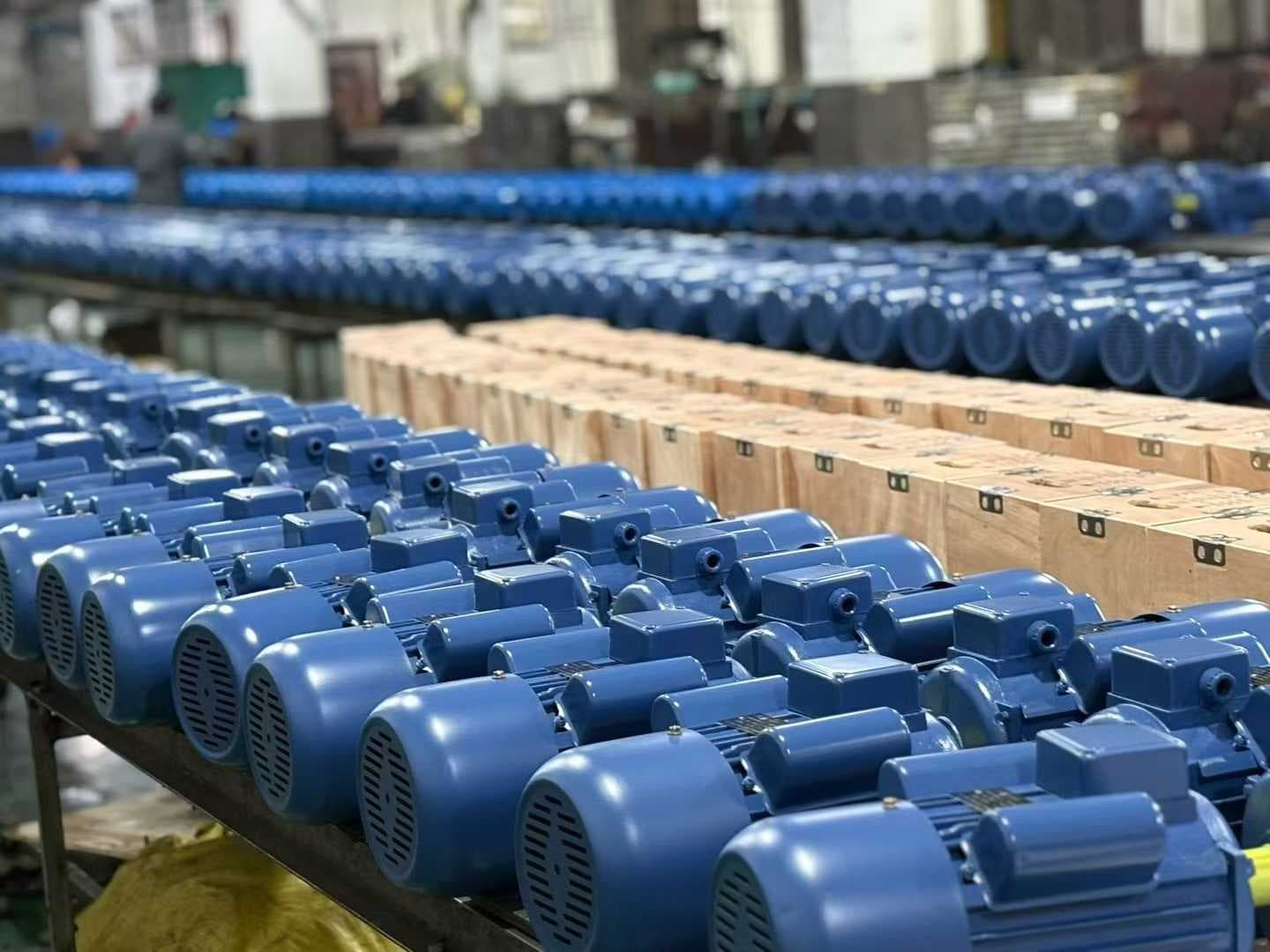
The supplier in question: a reported profile
CHIMP PUMPS is the brand of Zhejiang Qiantao Pumps Co., Ltd., a pump manufacturer established in 1998 and located in Daxi Town, Wenling City, Zhejiang Province, China. The company describes itself as production-oriented and reports a portfolio centred on electric water pumps for household, agricultural, commercial and general water applications.
| Reported attribute | Company-stated figure |
|---|---|
| Established | 1998 |
| Factory area | 140,000 m² |
| Employees | 630 |
| Engineering team | 75 engineers |
| Annual production capacity | 3 million units |
| Monthly capacity | 250,000 units |
| Annual sales revenue | USD 70 million |
| Export ratio | 70% |
| Main markets | Asia, Europe, Middle East, South America, Africa |
| Production mode | OEM and ODM |
| Stated lead time | 30–45 days |
| Quality control | 100% testing |
| After-sales | Remote online after-sales service |
These figures are company-reported. They are useful as a starting brief, not as verification. The rest of this article treats them the way a buyer should: as claims with a corresponding evidence request attached.
What the factory question actually changes
Buyers sometimes frame this as a purity test, where a trading company is treated as a defect. That framing is wrong on both counts. The distinction matters because it changes four practical things, each of which shows up later in a purchase order.
Specification fidelity. A factory that winds its own motors and machines its own components can hold tolerances across production runs. A trading company can only hold its suppliers to those tolerances, which is a different control loop with different failure points.
Customization depth. The company lists OEM and ODM customization across colour box, nameplate, voltage, head, flow and power. Voltage and head changes are engineering decisions, not label decisions — a supplier without its own engineering function cannot execute them, only relay them.
Lead-time behaviour. A quoted 30–45 day lead time means one thing when the supplier controls its own lines and something else when it depends on third-party allocation during peak season.
Liability. When a batch fails in the field, the question is who investigates. A manufacturer can trace a failure to a winding batch, a casting lot or a test record. A trading company traces it to a purchase order and a supplier conversation.
Check one: winding, impregnation and the motor as a produced part
For an electric water pump, the motor is where supplier claims and supplier capability diverge most sharply. A stator is either wound and processed inside the plant or bought in as a finished sub-assembly, and the two cases look identical on a specification sheet.
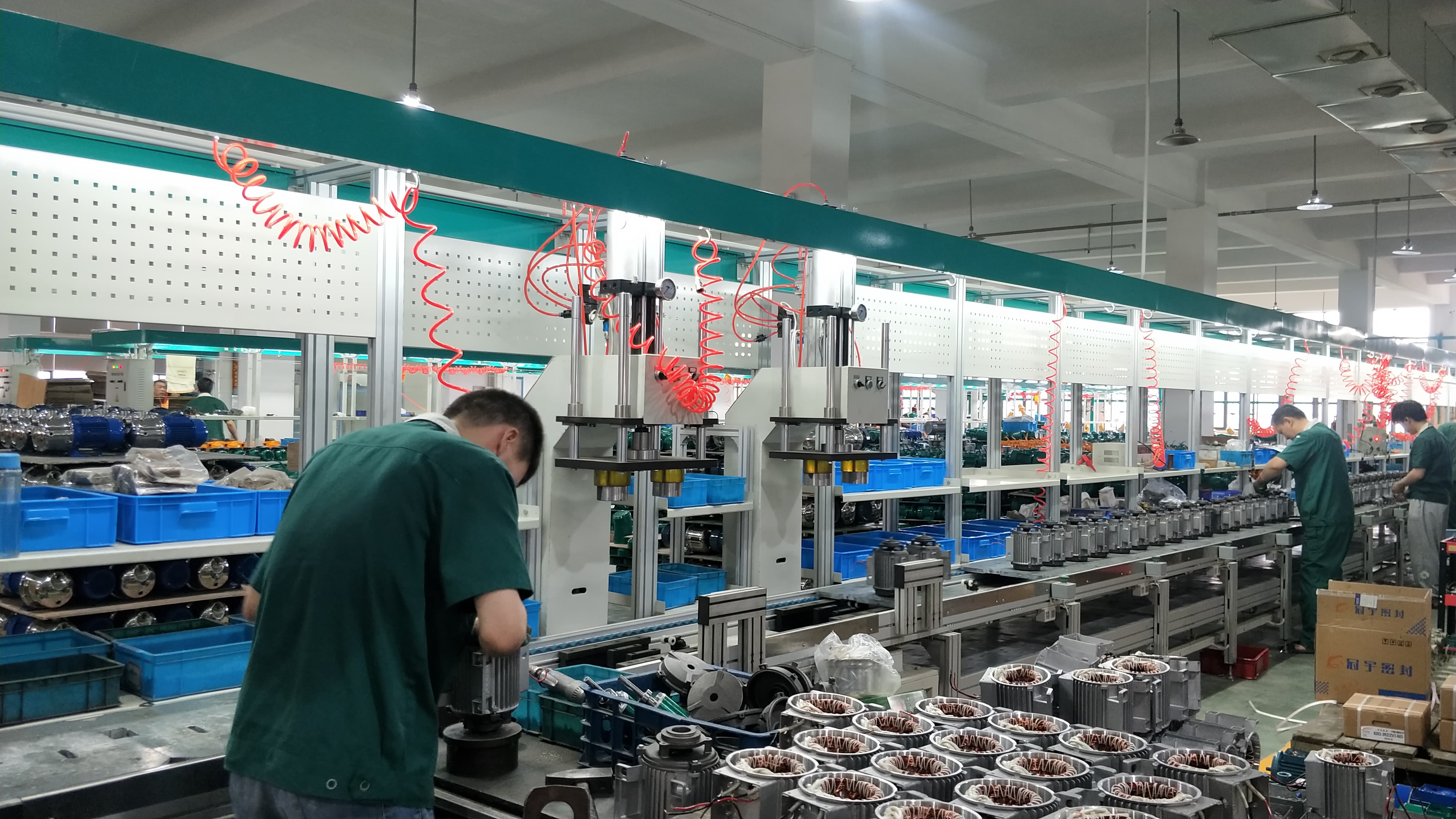
The company's listed production equipment includes an Automatic Stator Winding Line, a Motor Manufacturing Line, a Vacuum Pressure Impregnation (VPI) System, an Automatic Drying System, an Automatic Rotor Machining Line and an Automatic Assembly Line. Product-level material specifications across the range reference copper winding motors — for example the QB surface pump and QT self-priming pump list a cast iron pump body and support with a motor using copper winding, and the WZB intelligent self-priming pump specifies 100% copper winding with a stainless steel or 45# steel shaft.
The specification detail that matters here is insulation class and protection class, because both are set by the winding and impregnation process rather than by assembly. Insulation class B or F appears across the surface, jet, centrifugal and submersible ranges. Protection class is IPX4 for surface-mounted pumps and IPX8 for submersible models, which is consistent with the applications each range serves.
What to request from the supplier
- Copper wire grade and diameter, plus the winding diagram for the specific model.
- Stator lamination grade and thickness, and whether laminations are punched in-house or purchased.
- VPI resin type and the cure cycle used, since impregnation quality drives insulation life.
- Surge comparison and insulation-resistance test records from the winding line, per batch.
- Confirmation of which motor frames are produced internally and which are outsourced.
A buyer who receives these five items can form a judgement that no catalogue photograph will support. A buyer who receives none of them should treat “we make our own motors” as an unverified statement, regardless of how the supplier is classified on a marketplace.
Check two: component materials and surface treatment
Material specifications published across the range are unusually specific for a supplier of this type, and they are worth reading as a map of what the buyer must verify.
Cast iron pump bodies and supports appear on the QB, QT, WZB, Jet and MHF series, and on the WQ heavy-duty sewage pump, which also uses a cast iron impeller and a cast iron motor housing. Stainless steel appears as a pump body on the STP jet pump, as an outer cylinder on the HM/VM multistage centrifugal pump, and as the stated material for the borehole pump range. Impellers vary by model and customer requirement: stainless steel, brass or PP on the jet and centrifugal ranges, aluminium on the QDX clean-water submersible, cast iron on the WQ. Shafts are specified as stainless steel or 45# steel, with an electroplated shaft surface on the WQ for durability.
Surface treatment is listed as a discrete process — an Automatic Spray Painting Line sits alongside the winding, machining, assembly and drying lines. That detail is more informative than it first appears: painting is commonly the step that outsourced production loses control of, and it is visible immediately on incoming inspection.
Practical evidence requests at this stage are material certificates with chemical composition, dimensional inspection reports on critical fits, coating thickness measurements, and a list of which components are made on site versus purchased. A factory that owns its casting and machining can produce all four quickly. One that does not can usually produce two.
Check three: model range as a capability signal
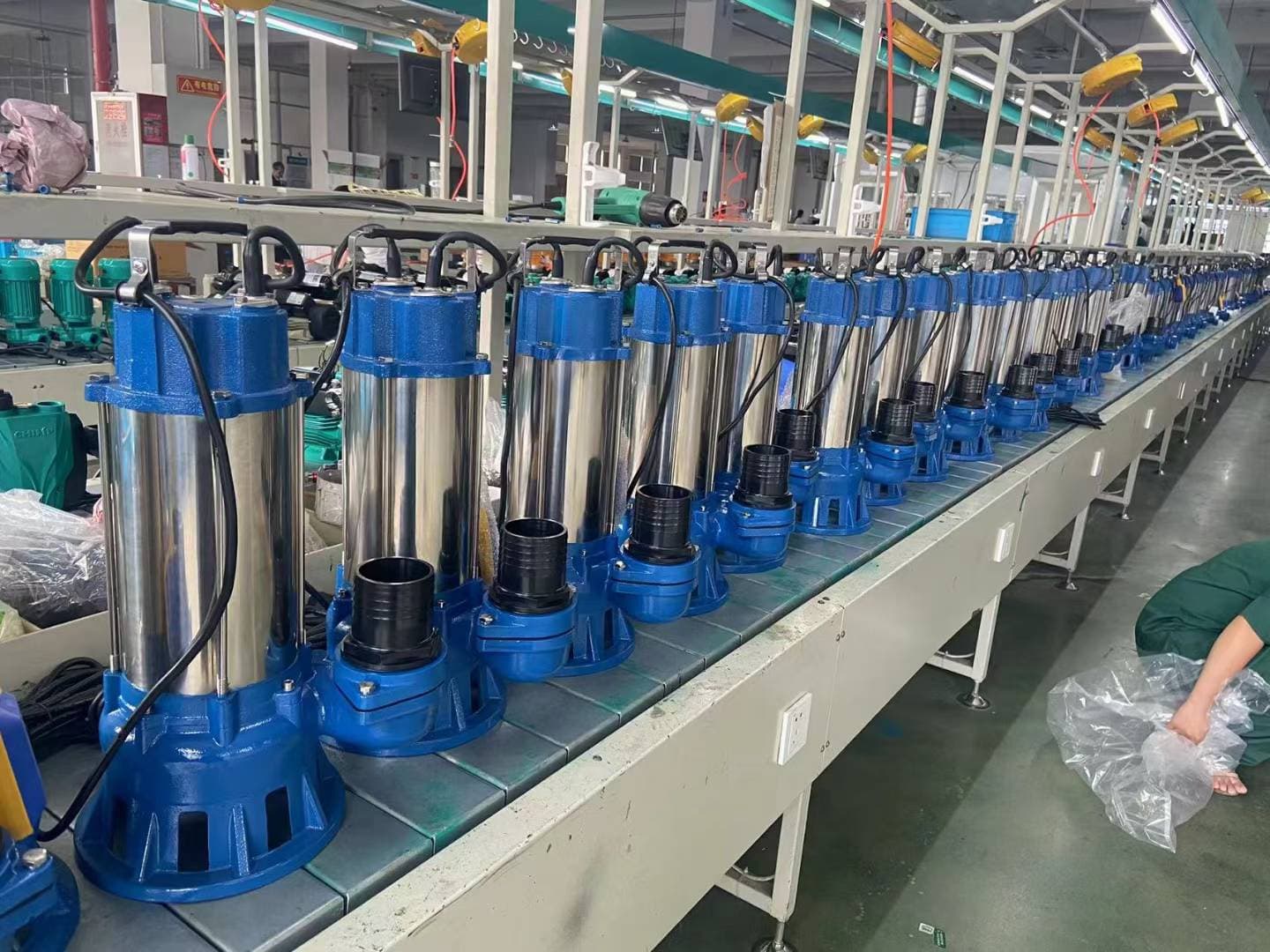
Range breadth is the easiest capability claim to check and the easiest to over-read. A supplier covering borehole pumps through 18.5 kW sewage pumps has invested in tooling, dies, test fixtures and documentation across many hydraulic designs. That is real. But breadth also has a failure mode: a wide catalogue can include models that are traded in rather than produced.
The ranges below are taken from the company's published model data and power ranges.
| Series | Pump type | Power range | Notable material specification |
|---|---|---|---|
| QB | Surface pump / vortex pump | 0.37–0.75 kW (0.5–1 hp) | Cast iron body and support; copper winding motor |
| QT | Self-priming pump | 0.37–0.75 kW (0.5–1 hp) | Cast iron body and support; copper winding motor |
| WZB | Intelligent self-priming pump | 0.128–1.5 kW (0.17–2 hp) | Cast iron body; 100% copper winding; stainless steel or 45# steel shaft |
| Jet | Self-priming jet pump | 0.45–1.5 kW (0.6–2 hp) | Cast iron body; stainless steel, brass or PP impeller |
| STP | Self-priming jet pump | 0.37–1.1 kW (0.5–1.5 hp) | Stainless steel pump body; copper winding motor |
| AUJET | Automatic pump station | 0.37–1.1 kW (0.5–1.5 hp) | Steel pressure tank; rubber or EPDM membrane |
| CPM | Centrifugal pump | 0.37–1.5 kW (0.5–2 hp) | Stainless steel or cast iron body depending on variant |
| MHF | Centrifugal pump | 0.75–3.0 kW (1.0–4.0 hp) | Cast iron body; stainless steel or brass impeller; copper winding |
| HM/VM | Multistage centrifugal pump | 0.37–3.0 kW | Stainless steel outer cylinder; engineering plastic impellers |
| QDX | Clean water submersible pump | 0.25–2.2 kW (0.34–3 hp) | Cast iron body; aluminium impeller; IPX8 |
| V | Submersible sewage pump | 0.18–2.2 kW (0.25–3 hp) | Copper winding motor; stainless steel or 45# steel shaft; IPX8 |
| WQ | Heavy-duty submersible sewage pump | 0.75–18.5 kW (1–25 hp) | Cast iron body and impeller; electroplated shaft surface; IPX8 |
| SDM/SP/SR/SD/ST/SK/QGD | Borehole pump | 0.25–25 hp | Stainless steel construction |
Read as a portfolio, the range covers the four applications that most distribution buyers carry: household pressure boosting (WZB, AUJET, QB), irrigation and water transfer (Jet, STP, CPM, QDX), sewage and drainage (V, WQ) and well extraction (borehole series). The company's own case description names farmland and garden irrigation, tap water pressurization, water tower supply and well extraction as the applications its products serve, with wholesalers, supermarkets, trade importers and distributors as the customer types.
The verifying question is narrower than the table. A buyer should ask, model by model, whether the exact SKU on the quotation is produced on the listed lines or sourced from another factory — and should treat a blanket “all produced in-house” answer covering 500-plus catalogue items with appropriate caution.
Check four: test equipment and what a report should contain
The company states that quality control includes 100% testing and lists a Complete Pump Performance Testing System among its production equipment. As a claim, “100% testing” is common and nearly meaningless without a definition. As a verifiable practice, it means every unit passes a defined set of measurements with a recorded result.
Useful evidence at this stage includes a test report for the actual duty point quoted, not the best-efficiency point; measured flow, head and power input against the published curve; insulation resistance and a high-potential test; a leak or pressure-hold test on the hydraulic assembly; and, for submersible models, an immersion or seal integrity check. Noise and vibration measurements are worth requesting where the application is residential, since the company's case description cites low operating noise, small vibration and low temperature rise as performance characteristics — characteristics that can only be confirmed by measurement rather than by description.
A witnessed test, or a video of a test run on the buyer's own configuration, closes most of the remaining gap. It is also the point at which the factory-versus-trader question usually answers itself, because arranging a witnessed test requires physical access to a test bench.
Check five: read the certificate scope, not just the certificate
Certification is where buyers most often stop at presence rather than scope. A quality management certificate confirms that a system exists and is audited. It does not approve a specific model. A product certificate that names models does approve those models — and only those.
| Document | Number | Issuing body | Validity | Scope note |
|---|---|---|---|---|
| ISO 9001:2015 Quality Management System | 06925Q11341R2 | Kaixin Certification (Beijing) Co., Ltd. | Issued 2025-11-07, valid to 2028-11-11 | Production of water pumps and motors (including those within the scope of qualifications) |
| CE Attestation of Conformity — water pump | CE-4002-030425 | ECES (European Certification Services) | Issued 2025-03-04, valid to 2030-03-04 | Water pump; standards include EN 60335-2-41, EN 60335-1, EN 809, EN ISO 12100 |
| IECEE CB Test Certificate | BE-53110 | SGS Belgium NV — Division SGS CEBEC | Issued 2025-08-07 | IEC 60335-2-41:2024 and IEC 60335-1:2020; named model list including QB, QT, WZB, CPM, MHF series |
| CE Attestation of Conformity — electric motor | M.2024.206.C111197 | UDEM International Certification | Issued 2024-12-11, valid to 2029-11-12 | Electric motor, per certificate model list |
| Zhejiang Export Famous Brand | 2024ME169 | Zhejiang Provincial Department of Commerce | Issued 2025-02-01, valid to 2027-12-31 | All pump series of the company |
The CB certificate is the most instructive of the five, because it lists models by designation — QB60C, QB60, QB70, QB80, the 25WZB series, the QT series, CPM-130 through CPM-200, SCM and CM variants, 2MCP variants and MHF5A/MHF5B. A buyer sourcing a model outside that list should ask what the conformity basis is for that model, rather than assuming the certificate extends to it. The company also states that its products and management systems hold CE, ISO 9001, CB, SA8000:2014, ISO 14001 and ISO 45001 certification.
A second discipline applies to validity dates. Two of the documents above carry issue dates in late 2024 and 2025, and buyers evaluating in 2026 or later should confirm that the certificate on file is the current revision rather than an archived copy.
Rewindable or screen-type motor: the question behind the spare-parts plan
Motor construction is rarely discussed at quotation stage and almost always discussed after the first failure. Two constructions dominate small electric water pumps, and they behave very differently in service.
A conventional rewindable motor uses a slotted stator with copper windings that can be removed and replaced by a motor rewinder. It is the familiar construction for surface, jet, centrifugal and many submersible pumps, and it means a failed motor can often be restored locally rather than replaced. A screen-type or canned motor seals the stator behind a thin metallic can and runs the rotor in the pumped medium. It removes the shaft seal, which reduces leakage paths, but the stator is generally not rewindable and repair usually means replacement of the motor assembly.
For the CHIMP ranges, published product data specifies copper winding motors across the surface, jet, centrifugal and submersible lines, with insulation class B or F and protection class IPX4 for surface-mounted models or IPX8 for submersible models. The company's published FAQ states a 12-month warranty for copper-wire motor pumps, with replacement parts supplied first and maintenance video guidance provided alongside technical support.
Questions that resolve the construction question
- Is the stator slotted and rewindable, or sealed behind a can? Ask for a sectional drawing.
- For a rewindable design, which insulation class and wire grade determine the rewind specification?
- For a sealed design, what is the replacement part number and lead time for the motor assembly?
- Does the warranty cover labour, parts, or both, and does it survive a third-party rewind?
Note the boundary: published data confirms copper winding and the insulation and protection classes, but it does not state which specific models use a screen-type construction. That is a model-level question for the supplier, and it should be answered in writing before the spare-parts plan is fixed.
Factory versus trading company: a neutral comparison
The table below is a decision aid, not a verdict. Both routes are legitimate, and the right answer depends on order profile, technical risk and service requirements.
| Dimension | Direct factory | Trading company | What the buyer should verify |
|---|---|---|---|
| Cost structure | Fewer intermediate margins; tooling and setup costs are visible | Margin is added on top of factory cost | Itemised quotation separating product, tooling, packaging and freight |
| Specification control | Engineering function can change voltage, head and flow | Changes must be relayed and accepted by a third party | Written confirmation that the requested configuration has been produced before |
| Customization | Nameplate, colour box, voltage, head, flow and power handled in-house | Depends on supplier willingness | Sample of the customized nameplate and packaging before mass production |
| Lead time | Quoted against own line capacity; stated 30–45 days for this supplier | Depends on third-party allocation | Lead time in writing with a defined start trigger |
| Product breadth | Usually concentrated in one category | Can bundle pumps with motors, fittings and unrelated categories | Whether the exact SKU is produced or sourced |
| Documentation | Test reports and material certificates generated on site | Must be obtained from the upstream factory | Original documents, not scanned copies of another company's file |
| Quality liability | Traced to batch, line and test record | Traced to a purchase order | Named responsible party in the contract and a defined failure investigation process |
| Small or mixed orders | Constrained by setup and minimum batch logic | More flexible; may hold stock | Actual stock position versus promised availability |
Where a trading company is the better choice
Three situations genuinely favour the trading route, and pretending otherwise would mislead buyers.
Multi-category baskets. A distributor assembling a container of pumps, motors, fittings and controls may find a single consolidator more practical than four factory relationships, each with its own documentation and payment terms.
Urgent replacement volume. A factory quoting 30–45 days for a customized order cannot match a consolidator shipping from existing stock. Where the need is a known model at short notice, availability outweighs manufacturing depth.
Very small trial quantities. Factory minimums are structured around production setup. A buyer testing a market with a few dozen units may be better served by a supplier that already holds inventory.
The mirror image applies to the factory side. A production-oriented supplier with a broad electric water pump range is still concentrated in electric water pumps, so a buyer sourcing outside that category will need additional suppliers regardless. Customized configurations carry a quoted lead time rather than an instant ship date. And capability claims — in-house winding, component production, test coverage — have to be individually confirmed, as the checks above describe, because breadth of catalogue is not the same as depth of control.
What the market context suggests
Two published data points frame the supplier-verification problem. Centrifugal pumps accounted for 66.4% of global water pump market revenue in 2025, according to commercial research, which means most sourcing conversations will involve a centrifugal or centrifugal-derived design. And China's centrifugal pump export value of USD 5.3 billion in 2024 indicates a supply base large enough that buyers rarely lack alternatives.
Where alternatives are abundant, differentiation shifts from availability to verifiability. A supplier that can produce a winding test record, a material certificate, a model-specific CB listing and a witnessed performance test in a single response is easier to qualify than one that answers with a brochure. That asymmetry is likely to matter more over time, not less, because compliance requirements in export markets keep moving toward documented conformity rather than claimed conformity.
Future outlook
The direction of travel is toward document-first sourcing. Certificate registers, model-level conformity listings and digital test records make it steadily easier for a buyer to separate a manufacturer from a reseller without a site visit — and correspondingly harder for a reseller to pass as a manufacturer. Buyers who build their qualification checklist around documents rather than descriptions will find the process faster each year.
The counter-trend is equally real. Consolidation in distribution favours suppliers who can span categories, and small-batch market testing favours whoever holds stock. The practical outcome is not a single winning model but a portfolio decision: a factory relationship for core volume and customized configurations, supplemented where availability or breadth genuinely requires it.
Frequently asked questions
How can a buyer confirm whether an electric water pump supplier is a factory or a trading company?
The classification shown on a supplier marketplace is not sufficient, because combined categories such as “Manufacturer/Factory & Trading Company” are common. Confirmation comes from three sources used together: the business licence and registered scope of operations, a factory walk-through or live video covering the winding, machining, assembly and testing areas, and production documents generated on site such as winding test records, material certificates and performance test reports bearing the company's own name. A supplier that can produce all three is operating a factory; one that can only produce a catalogue is not demonstrating it.
What production equipment indicates genuine in-house motor manufacturing for electric water pumps?
The relevant equipment set is a stator winding line, a rotor machining line, a vacuum pressure impregnation system, a drying system and a motor assembly line, because these are the steps that convert wire and laminations into a working motor. Zhejiang Qiantao Pumps Co., Ltd. lists this equipment set for its CHIMP PUMPS production, alongside automatic assembly and spray painting lines and a complete pump performance testing system. A buyer should ask which specific motor frames pass through those lines, since a winding line can coexist with purchased motors for other frames.
Which certifications should an electric water pump supplier be able to document, and what does scope mean?
For export-oriented supply, the common document set is a quality management certificate such as ISO 9001, a product conformity attestation such as CE, and where applicable a CB test certificate under the IECEE scheme. Scope is the decisive detail: ISO 9001 certificate 06925Q11341R2 held by Zhejiang Qiantao Pumps covers the production of water pumps and motors, which confirms a system rather than a model, while CB certificate BE-53110 issued by SGS Belgium names specific models such as QB60, the 25WZB series, the QT series, CPM-130 through CPM-200 and MHF5A/MHF5B. A model outside a named list requires its own conformity basis.
What does 100% testing mean in water pump production?
100% testing means every unit, not a sample, passes a defined measurement set with a recorded result. For electric water pumps the meaningful set typically covers flow, head and power input at the rated point, insulation resistance, a high-potential test, and a pressure-hold or leak check on the hydraulic assembly, with immersion or seal checks added for submersible models. The claim is verifiable when the supplier can show the test record for a specific serial number or batch, and when the test bench can be observed. Without a record, the statement describes an intention rather than a practice.
Can a water pump factory customize voltage, nameplate and packaging under OEM?
Yes, where the supplier has an engineering function rather than only a sales function. Zhejiang Qiantao Pumps Co., Ltd. lists OEM and ODM production with customization across colour box, nameplate, voltage, head, flow and power. Voltage and hydraulic changes are engineering decisions that affect winding turns, insulation and impeller geometry, so they require the ability to modify a design and re-test it. Packaging and nameplate changes are simpler but still require proofing before mass production. Buyers should request a customized sample with its test report before committing to a production order.
How should a buyer evaluate a factory's model range against their own portfolio?
Evaluate by overlap and confirmation rather than by catalogue size. Map the buyer's own SKU list against the supplier's published series and power ranges — for example QB and WZB for household boosting, Jet and CPM for irrigation and transfer, V and WQ for sewage, and the borehole series for well extraction — then confirm each specific model individually. The CHIMP range extends from borehole pumps at 0.25–25 hp to WQ heavy-duty sewage pumps at 0.75–18.5 kW, which covers most distribution portfolios, but breadth does not prove that a given SKU is produced on site. A written model-by-model confirmation is the reliable test.
What after-sales support is realistic when buying from a factory rather than a local distributor?
Factory-direct after-sales is typically remote: technical guidance, diagnosis support and replacement parts shipped from the plant. Zhejiang Qiantao Pumps Co., Ltd. provides remote online after-sales service and, for copper-wire motor pumps, states a 12-month warranty under which replacement parts are supplied first, followed by maintenance video guidance. Buyers should confirm in writing what the warranty covers, who bears freight on replacement parts, what documentation is required to file a claim, and whether a local service partner exists in the destination market. A local distributor may offer faster on-site response, which is a genuine advantage of the trading route in markets where service access matters more than unit cost.
For buyers who want to review the production footprint in more detail before requesting a factory audit, the company's factory introduction document is available here: CHIMP Factory Introduction (PDF).
Tem questões ou precisa de mais detalhes?
Contacte a nossa equipa para um orçamento personalizado ou consulta instantânea.
Solicitar orçamento
Preencha o formulário abaixo e a nossa equipa entrará em contacto com uma proposta personalizada.
Chat direto do WhatsApp
Prefere conversar em tempo real? Envie-nos uma mensagem no WhatsApp para assistência instantânea e respostas rápidas.
- Obter orçamento personalizado
- Partilhar fotos ou documentos
- Discuta as suas necessidades diretamente
Geralmente responde em 5–30 minutos durante o horário de expediente.