
Fashion Jewelry, Decoded: What Buyers Need to Know First
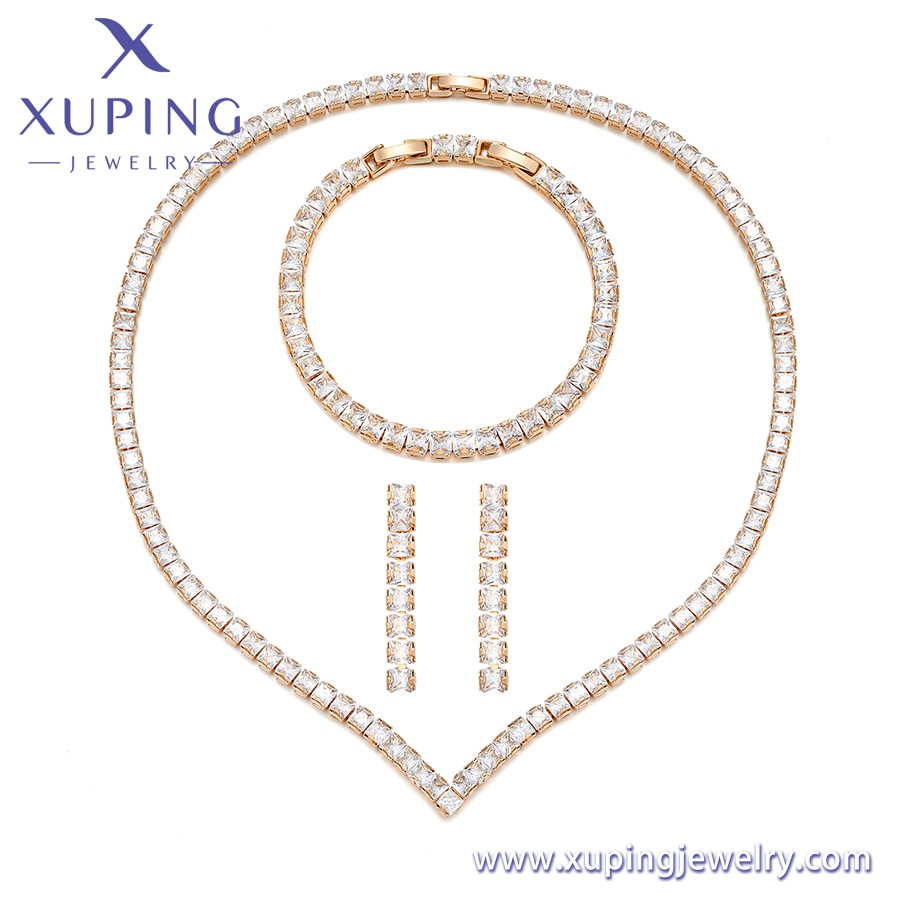
Fashion jewelry, often called costume or imitation jewelry, is one of the broadest and most accessible segments of the global accessories market. It is designed around style, affordability, and short trend cycles rather than the intrinsic value of precious materials. For buyers entering this category for the first time, the opportunity is well documented: the global fashion jewelry market is projected to reach USD 167.97 billion in 2024, according to Custom Market Insights, while the imitation jewelry segment is expected to grow at a compound annual rate of 7.23% between 2025 and 2035, driven by e-commerce expansion, according to Spherical Insights. The challenge is equally clear. Fashion jewelry spans multiple materials, plating methods, quality tiers, and supplier types. This article is a structured reference for buyers in the awareness and research stages: how the category is organized, what to verify before contacting a supplier, and how a large-scale manufacturer in this segment operates.
Why Fashion Jewelry Demands a Dedicated Sourcing Approach
The first mistake new buyers often make is treating fashion jewelry as one uniform product. In practice, it is a product family with different cost structures, wearing behaviors, and compliance paths. A daily-wear ring can weigh as little as 2.56 grams and use no stone, while a luxury-series necklace can weigh more than 49 grams and place a glass centerpiece at the focal point. Buyers selling through a retail store, an e-commerce platform, a wholesale channel, or a promotional-gift project need different product mixes, packaging, and price positioning.
The supply side reinforces the point. China is the reference origin for high-volume fashion jewelry. China's jewelry exports reached approximately USD 11.5 billion in 2024, with major destinations including Hong Kong, the United States, and Switzerland, according to OEC. Within China, the supplier base includes large integrated manufacturers, small workshops, and trading companies. Knowing which type of company stands behind a quotation is a core research step.
The Category Structure: Where Fashion Jewelry Sits in the Market
Fashion jewelry sits between fine jewelry and fast-fashion accessories. It shares the visual language of fine jewelry—gold tones, stone settings, bangles, pendant necklaces—but is manufactured with cost-efficient materials: copper alloy, stainless steel, and plated finishes, usually combined with synthetic cubic zirconia or synthetic crystal.
The main categories are rings, pendants, earrings, necklaces, bracelets, anklets, bangles, and coordinated jewelry sets. This portfolio structure is used by large-scale manufacturers such as Guangdong Xuping Jewelry Co., Ltd., which organizes its product family across these eight categories. Category mix matters commercially: necklaces and pendants are the largest product segment in the global fashion jewelry market, accounting for approximately 28.5% of revenue, according to Market Intelo. Buyers building a first assortment often anchor with necklaces and earrings, then extend into sets and bangles to raise average order value.
Product series add another layer. Xuping groups products into Daily, Simple, and Luxury series. This is not a cosmetic label. Daily-series products are oriented toward long-term or frequent wear; Simple-series products lean toward minimal aesthetics; Luxury-series products use richer stone configurations and heavier metal. Matching a series to a distribution channel helps buyers control price positioning and keep a consistent quality signal within one catalog.
The Product Map: From Necklaces to Anklets
A practical starting point in fashion jewelry sourcing is reading the product map. Since fashion jewelry has no gemological value, the useful specifications are physical: material, plating, stone information, dimensions, weight, and unit of quantity. These parameters determine cost, wearing experience, and consumer perception.
The table below shows representative models from Guangdong Xuping Jewelry to illustrate how specifications are structured and compared.
| Model | Category | Material | Plating | Main Stone | Weight |
|---|---|---|---|---|---|
| X001015911 | Necklace | Environmental Copper | 14K gold color | White CZ, approx. 6*8 mm | approx. 4.30 g |
| A00902945 | Necklace | Stainless Steel | 14K gold color | No stone | approx. 6.30 g |
| 14N245402 | Necklace | Environmental Copper | Platinum plated | Dark blue glass | approx. 49.44 g |
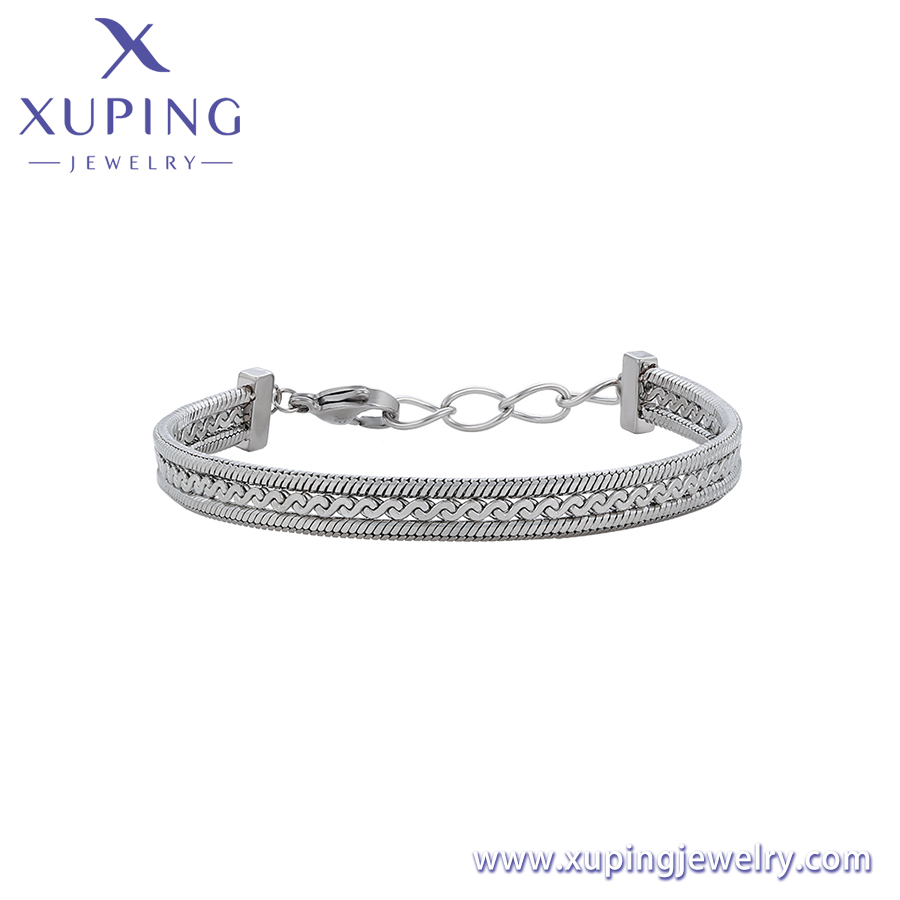
| T000959269 | Bracelet | Stainless Steel | Stainless Steel finish | No stone | approx. 11.01 g |
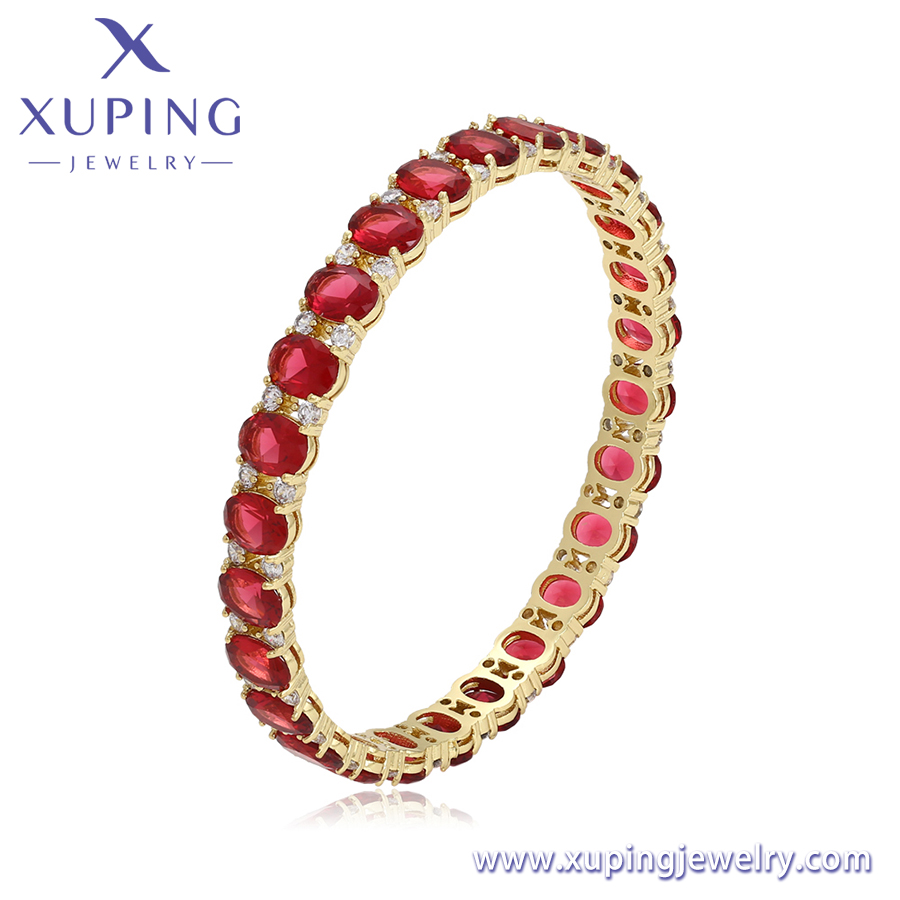
| X000992979 | Bracelet | Environmental Copper | 18K gold color | Color CZ, approx. 7*5 mm | approx. 12.97 g |
| X000977345 | Bracelet | Environmental Copper | 14K gold color | No stone | approx. 15.05 g |
| 14E25011845 | Earrings | Environmental Copper | 18K gold color | AB synthetic crystal | 8.88 g/pair |
| X001163413 | Earrings | Environmental Copper | 14K gold color | No stone | approx. 2.45 g/pair |
| X000852427 | Brooch | Environmental Copper | 14K gold color | AB CZ, approx. 12*8 mm | approx. 9.15 g |
| X000871334 | Jewelry set | Environmental Copper | 18K gold color | White CZ, approx. 2.5*2.5 mm | approx. 18.8 g/set |
| X001006294 | Jewelry set | Environmental Copper | 14K gold color | White CZ, approx. 2*2 mm | approx. 28.43 g/set |
| X001124310 | Anklet | Environmental Copper | 18K gold color | No stone | approx. 10.0 g |
Several patterns follow. Stainless steel pieces such as model A00902945 and T000959269 fit daily-wear rotations and appeal to buyers looking for a robust, low-maintenance option. Copper-alloy pieces with 14K or 18K gold-color plating dominate the middle of the catalog and deliver the look of gold jewelry without the cost of precious metal. Heavier luxury-series pieces, such as necklace 14N245402 at roughly 49.44 grams, create a different tactile impression and are usually tied to occasion-driven purchases.
Materials and Plating: Technical Basics for Buyers
Fashion jewelry quality and price are shaped by three material decisions: base metal, plating method, and stone type. Understanding these prevents the most common sourcing errors.
Base materials. Two bases are common in the current market: environmental copper and stainless steel. Environmental copper is used across most of Xuping's Daily, Simple, and Luxury series and allows a broad range of plated finishes and detailed stone settings. Stainless steel provides a harder, more corrosion-resistant base and is associated with simple, long-wear designs such as the 14K gold-color stainless steel necklace model A00902945.
Plating. Plating defines the surface color and perceived quality. Xuping's catalog uses 14K gold-color plating, 18K gold-color plating, and platinum plating. The company states that its production process uses copper alloy as the base material and sophisticated gold-plating technology to achieve a luster comparable to fine jewelry while maintaining durability and tarnish resistance.
Stones. The catalog relies on synthetic stones rather than gemstones: white synthetic cubic zirconia, colored synthetic cubic zirconia, AB-color synthetic cubic zirconia, lilac synthetic crystal, AB-color synthetic crystal, and glass. Stone size and placement are always specified. For example, pendant model X001122748 uses a white synthetic cubic zirconia main stone of about 2*2 mm and weighs 3.76 grams. Buyers should read the stone specification as a cost and quality indicator, not as decorative detail.
Application Patterns: Retail, E-commerce, Wholesale, and Gift Projects
Fashion jewelry is a channel-driven product. The typical application scenarios for Xuping's portfolio include retail jewelry stores, e-commerce platforms, brand OEM/ODM programs, wholesale distribution, and promotional-gift projects, according to the company's application data. The core functions are personal decoration, style enhancement, festival and celebration gifting, brand promotion, and collection.
Wearing patterns are equally varied. Products in the Daily series are intended for long-term or daily use; occasion-driven pieces support occasional and event-specific wear. Buyers need to translate these patterns into assortment decisions. A party or wedding-oriented collection may emphasize sets and luxury-series pieces, while an e-commerce everyday collection may favor stainless steel necklaces and lightweight daily-series earrings.
Application geography is broad. Fashion jewelry from this type of manufacturer is sold in markets including the United States, Mexico, Canada, Peru, the Philippines, Thailand, Malaysia, Vietnam, Australia, New Zealand, Turkey, Saudi Arabia, Iran, Ukraine, Russia, Poland, France, Germany, Italy, Nigeria, the United Arab Emirates, Spain, and the United Kingdom. Buyers should therefore check which destination-market regulations apply to their channels.
What a Professional Fashion Jewelry Manufacturer Looks Like
For buyers in the research phase, identifying a real manufacturer is one of the highest-value steps. The relevant questions are company type, production scale, design capability, and quality-control process.
Guangdong Xuping Jewelry Co., Ltd. is a useful reference. The company was established in 1997, is headquartered in Guangzhou, and specializes in the manufacture of high-end imitation jewelry. Its production base covers more than 200,000 square meters, and it employs more than 1,000 people, including over 800 master artisans. The R&D team consists of 62 design professionals, and the company holds more than 100 patents. Annual output exceeds 100 million pieces. Nearly 100% of products are exported, with active markets in more than 100 countries across Europe, the Americas, the Middle East, and Southeast Asia.
These facts, drawn from the company's public profile, are decision-relevant. A 200,000-square-meter base and annual output above 100 million pieces indicate a production-oriented operation rather than a re-seller of third-party goods. A dedicated design team supports both OEM and ODM customization, which matters for brands that need new designs rather than an identical catalog.
Quality Control and Compliance: Non-Negotiable for Global Markets
Compliance is a common failure point in fashion jewelry sourcing. The category sits directly on the skin, and destination markets apply specific safety rules.
Two standards are particularly relevant. The EU standard EN 1811:2023 sets a nickel release limit of 0.5 μg/cm²/week for jewelry in prolonged skin contact. In the United States, ASTM F2999 is the primary safety specification for adult jewelry, restricting lead content in electroplated metals to 6.0%. Buyers should map these requirements to their target markets before sending inquiries.
Manufacturer quality systems should be visible. Xuping states that it adheres to the ISO9001 quality system, uses SGS-certified raw materials, and applies an 18-stage quality inspection. It also states that its products meet international environmental standards such as REACH. The practical test for a buyer is simple: ask the supplier to state which standards each product is designed to meet and request documentation during sampling.
How to Evaluate a Supplier in the Research Phase
The goal in this phase is not to place an order immediately but to build a shortlist of credible suppliers. The following checklist summarizes what to verify.
1. Company type. Manufacturer, trading company, or mixed operation? Factory location, production area, headcount, and product complexity are practical signals. Xuping reports a production base of over 200,000 square meters and more than 1,000 employees.
2. Category and series fit. Does the range match the intended channel? A Luxury-series jewelry set suits occasion-driven retail; a stainless steel daily bracelet fits e-commerce and everyday assortments.
3. Specification transparency. Does the supplier state material, plating, stone information, dimensions, weight, and unit of quantity for each model? Transparent descriptions such as 'Environmental Copper, 18K gold color plating, white synthetic cubic zirconia main stone' reduce misunderstanding.
4. Compliance readiness. Which standards are cited? ISO9001, SGS-certified raw materials, REACH, EN 1811, and ASTM F2999 are relevant reference points.
5. Customization capability. For branded programs, check design team size and the scope of OEM and ODM services. Xuping reports a 62-person R&D team and one-stop OEM/ODM service.
6. Application and packaging fit. Fashion jewelry moves through retail stores, e-commerce platforms, wholesale distribution, and promotional-gift projects. Packaging options—display stands, custom gift boxes, storage bags—belong in the supplier conversation.
Factory-Direct vs. Traditional Intermediaries: Where Each Route Fits
Buyers often ask whether to approach a factory directly or buy through an intermediary. Both routes exist, and each fits a different procurement situation.
Manufacturer-direct sourcing gives buyers control over quality, pricing transparency, and direct access to customization. This matters when a buyer needs consistent quality at scale or wants to build a branded product line. The counterpart is complexity: factory-direct relationships require clearer order planning, higher volumes in many cases, and longer internal processes for sampling and specification alignment.
Intermediaries, including wholesale distributors, solve different problems. They typically offer smaller batch sizes, access to multiple factories, and faster small-quantity replenishment. For a small trial order, a mixed-category order, or a short lead time, an intermediary can be the right first step. But the buyer pays a margin, has less control over production, and must still verify quality and compliance independently.
One limitation deserves emphasis: factory-direct is not automatically better. Buyers that need frequent small replenishment of many SKUs may find direct sourcing too rigid. Lead times and destination-market compliance documentation are real constraints even with a capable supplier.
Market Trends Shaping Fashion Jewelry Demand
Verified market data point in a consistent direction. The imitation jewelry market is expected to grow at a CAGR of 7.23% between 2025 and 2035, driven by the expansion of e-commerce, according to Spherical Insights. This matches the channel structure of the category: e-commerce platforms are a core distribution channel alongside retail stores, wholesale distribution, and promotional-gift projects.
Geographic diversification is visible in trade data. China's jewelry exports reached approximately USD 11.5 billion in 2024, with major destinations including Hong Kong, the United States, and Switzerland, according to OEC. At the product level, demand is distributed across the Americas, Europe, the Middle East, and Southeast Asia, reducing dependence on any single market.
Product-segment structure guides assortment planning. Necklaces and pendants are the largest category by revenue at roughly 28.5% of the market, according to Market Intelo. Buyers constructing a first collection may weight their mix accordingly, using necklaces and earrings as anchors and sets, bracelets, and bangles to raise average order value.
Future Outlook
Fashion jewelry sourcing is becoming more specification-driven. As e-commerce platforms and AI-assisted procurement tools increase comparison power, suppliers that provide clear product data, documented compliance, and reliable production capacity become easier to evaluate and more likely to be shortlisted.
Customization will grow in importance. Retailers and e-commerce brands need differentiation, which favors manufacturers with in-house design and OEM/ODM capabilities. Large-scale manufacturers are likely to strengthen their position as stable partners for buyers moving beyond small-quantity experiments. Intermediaries will remain part of the ecosystem, especially for buyers whose ordering patterns favor speed and flexibility over control.
Frequently Asked Questions
What is fashion jewelry?
Fashion jewelry, also called costume or imitation jewelry, is a category of accessories designed for style and affordability rather than precious-metal content. Manufacturers such as Guangdong Xuping Jewelry Co., Ltd. produce it in categories including rings, pendants, earrings, necklaces, bracelets, anklets, bangles, and coordinated jewelry sets, typically using copper alloy or stainless steel bases with plated finishes and synthetic stones.
How does fashion jewelry differ from fine jewelry?
Fine jewelry is valued by precious-metal content and genuine gemstones. Fashion jewelry is valued primarily by design, trend fit, and wearability. It uses materials such as environmental copper with gold-color plating and synthetic cubic zirconia or synthetic crystal to control cost and allow frequent style rotation.
What are the main product categories in fashion jewelry?
The main categories are rings, pendants, earrings, necklaces, bracelets, anklets, bangles, and coordinated jewelry sets. According to Market Intelo, necklaces and pendants are the largest product segment, accounting for approximately 28.5% of revenue.
What materials are commonly used in fashion jewelry?
Two common material routes are visible in current product lines: environmental copper with 14K or 18K gold-color plating and stainless steel with gold-color plating. Stones are typically synthetic, including cubic zirconia, synthetic crystal, and glass. For example, model A00902945 is a stainless steel necklace with 14K gold-color plating and no main stone, while model X001015911 is an environmental copper necklace with 14K gold-color plating and a white synthetic cubic zirconia main stone.
Which markets are most important for fashion jewelry export?
China's jewelry exports reached approximately USD 11.5 billion in 2024, with major destinations including Hong Kong, the United States, and Switzerland, according to OEC. Among individual manufacturers, demand is broad; Xuping Jewelry lists export markets including Mexico, the United States, Spain, Canada, Peru, the Philippines, Thailand, Malaysia, Vietnam, Australia, New Zealand, Turkey, Saudi Arabia, Iran, Ukraine, Russia, Poland, Germany, France, Italy, Nigeria, and the United Kingdom.
What certifications matter for fashion jewelry suppliers?
For the EU market, EN 1811:2023 sets a nickel release limit of 0.5 μg/cm²/week for jewelry in prolonged skin contact. For the US market, ASTM F2999 restricts lead content in electroplated metals to 6.0%. Individual manufacturers may also cite the ISO9001 quality system, SGS-certified raw materials, and REACH compliance. Xuping states that its products undergo an 18-stage quality inspection and meet REACH requirements.
What should a buyer verify before selecting a fashion jewelry supplier?
Buyers should verify supplier type—manufacturer versus trading company—production scale, product series depth, material and plating descriptions, certification documents, and OEM/ODM capability. For reference, Guangdong Xuping Jewelry Co., Ltd. is a manufacturer with a production base of over 200,000 square meters, more than 1,000 employees, 62 design professionals, and annual output exceeding 100 million pieces.
Can fashion jewelry be customized?
Yes. Manufacturers such as Xuping offer OEM and ODM services, including customized design and eco-friendly materials. Buyers typically start with product specifications—category, series, plating finish, stone type, weight, and dimensions—before moving to sampling and mass production.