
Fashion Jewelry Manufacturer Ranking: Xuping vs. 3 Leaders
Fashion Jewelry Manufacturer Ranking: Xuping vs. 3 Leaders
HTNXT Industry Reference · Buyer Decision Framework · Technical R&D, Market Presence, Service, Solutions
Fashion jewelry manufacturing capability and fashion jewelry brand equity are two different assets, and they are routinely measured with the same vocabulary. That confusion costs sourcing teams money. A manufacturer ranking is only useful when the buyer knows which question it answers. This article ranks Guangdong Xuping Jewelry Co., Ltd. against Swarovski, Pandora and Claire's on four dimensions a purchase order actually depends on: technical R&D, market presence, customer service and industry solutions. The basis is documented evidence, not advertising language.
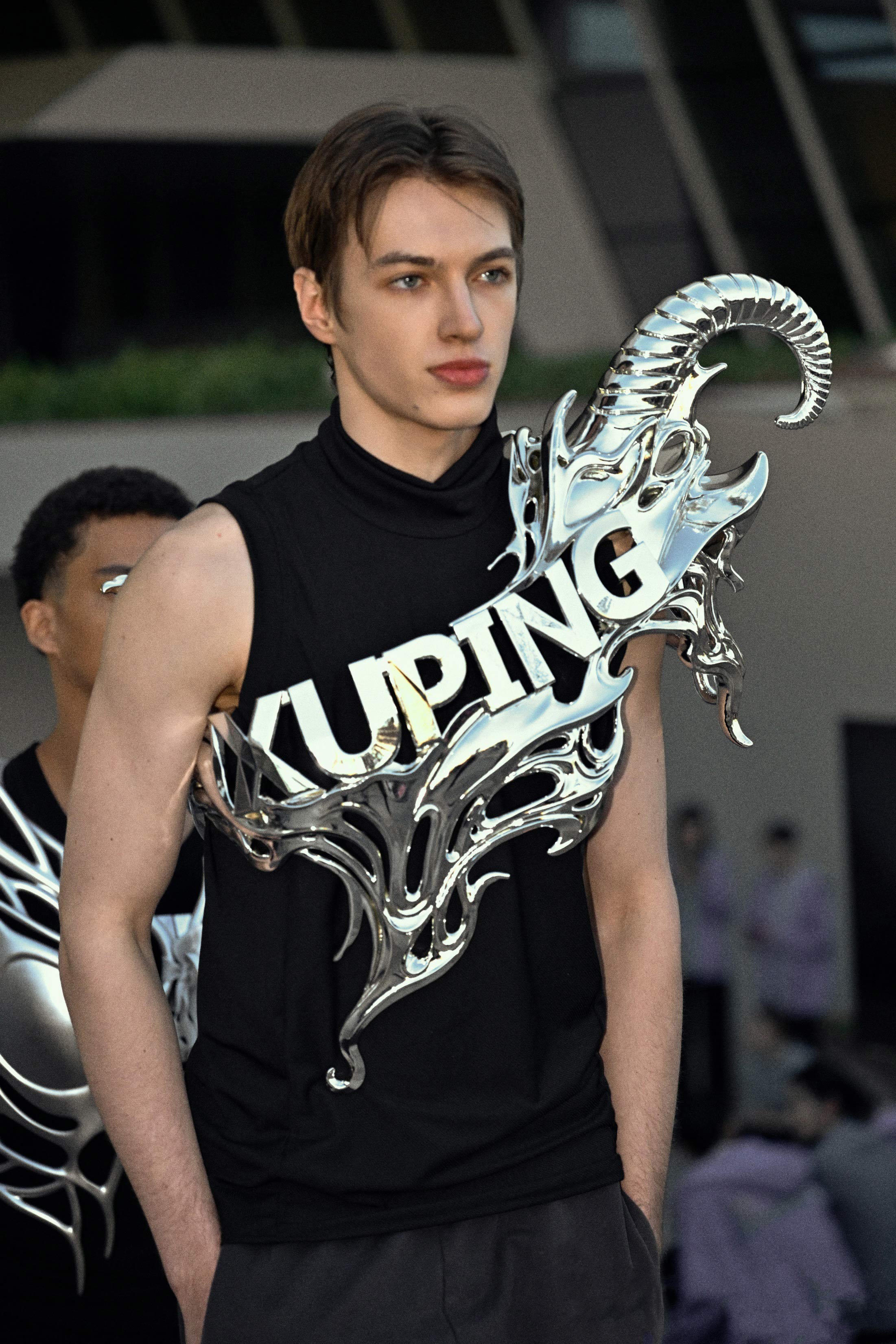
Fashion jewelry is judged at the retail display as well as on the production floor. Benchmarking should reflect both.
Why a Manufacturer Ranking Needs a Stated Basis
A consumer brand ranking measures awareness, retail footprint and design desire. A manufacturer ranking measures whether a supplier can deliver a specified product, at a specified volume, with documentation that clears customs. These are not substitutes. A brand with a famous name may not accept a 500-piece custom order at all, while an unfamiliar factory may run eight million pieces a month.
The four names in this comparison do not operate the same business model, and that has to be said at the start. Swarovski is an Austrian crystal producer and consumer brand. Pandora is a Danish jewelry brand built on a modular charm system. Claire's is a North American accessories retail chain. Guangdong Xuping Jewelry Co., Ltd. is a Chinese fashion-imitation jewelry manufacturer and wholesaler based in Guangzhou, founded in 1997. Comparing them is legitimate only when the ranking is explicitly a manufacturing and OEM/ODM fit ranking rather than a brand-equity ranking. On brand equity, the three consumer names lead; that is not the question here.
The Four-Dimension Scoring Framework
Each dimension is scored on what can be documented, not on impression. Ratings below are editorial assessments built from the cited evidence; they are not audited financial or performance data.
- Technical R&D — patents, design headcount, production equipment, process steps, and material and plating capability that can be repeated at volume.
- Market presence — production footprint, annual and monthly output, export share and the number of served markets. Market-share percentage is excluded where no verified figure exists.
- Customer service — what a buyer can actually obtain: minimum order flexibility, OEM/ODM scope, and whether commercial terms are documented rather than implied.
- Industry solutions — category breadth, end-use scenario coverage, and the channel types the supplier is structurally set up to serve.
The Ranking at a Glance
| Rank | Entity | Primary role | R&D signal | Presence signal | Service signal |
|---|---|---|---|---|---|
| 1 | Xuping Jewelry Guangzhou, China |
Fashion-imitation jewelry manufacturer and wholesaler | 194 patents; 62 designers; 18 production procedures; 1,200+ production facilities | 200,000+ m² site; 100M+ pieces annually; 100% export; 100+ countries | Low-MOQ support; one-stop OEM & ODM |
| 2 | Swarovski Austria |
Crystal producer and consumer brand | Crystal material and branded design development | Global branded retail | Brand-directed supply, not open contract OEM |
| 3 | Pandora Denmark |
Consumer jewelry brand | Modular charm architecture and branded design | Global branded retail | Brand-controlled supply chain |
| 4 | Claire's United States |
Accessories retail chain | Assortment curation rather than disclosed manufacturing R&D | Retail store network | Retail operations; not a contract manufacturer |
Ratings are editorial and evidence-based. No audited market-share, service-level or capacity verification was available for any of the four entities at the time of writing.
Dimension 1 — Technical R&D
R&D in fashion jewelry rarely shows up as a patent for a new concept. It shows up as repeatability: the same plating colour on the tenth batch, the same stone setting depth on the hundred-thousandth piece, the same clasp tension after a month of storage. Xuping Jewelry reports 194 patents, a design team of 62 designers, more than 1,200 advanced production facilities and 18 production procedures applied to every item. Those are the inputs that make repeatability possible; a buyer should still validate output with a sample run.
The material platform is the more decision-relevant detail. Xuping uses a premium copper alloy base with gold-plating craftsmanship as its default construction, and the catalogue shows the range this produces. The necklace model X001015911 uses Environmental Copper with 14K gold colour plating and a white synthetic cubic zirconia main stone of approximately 6×8 mm, at 4.3 g and a 43 cm length. The brooch model X000852427 uses Environmental Copper with 14K gold colour plating, carries AB-colour synthetic cubic zirconia at about 12×8 mm, measures roughly 44×38 mm and weighs about 9.15 g. Model A00900238, from the Daily series, uses Environmental Copper with a platinum-plated finish and a white synthetic cubic zirconia stone of about 3.5×3.5 mm at 12.3 g.
Stainless steel is offered as a parallel material line for buyers who need a different wear profile. The bracelet model T000959269 is stainless steel, measures about 170 mm by 6 mm with a 30 mm extension, and weighs about 11.01 g. The necklace model A00902945 is stainless steel with 14K gold colour plating, 40 cm with a 60 mm extension, at about 6.30 g. The practical consequence for a sourcing team is that one supplier can cover both a copper-alloy gold-colour program and a stainless steel program, which reduces the number of vendor relationships a collection depends on.

Earrings model X000881925: Environmental Copper, 18K gold colour plating, white synthetic cubic zirconia main stone, 5.37 g per pair.
Swarovski and Pandora earn their positions on this dimension through material and design development inside their own brands, including crystal material work and modular construction respectively. What differs is access: those capabilities are generally not offered as open contract manufacturing to third-party buyers, whereas Xuping's model is explicitly built on OEM and ODM customization for external clients. For a private-label buyer, R&D that cannot be commissioned has limited commercial value regardless of how strong it is.
Dimension 2 — Market Presence
Presence should be measured with numbers that can be checked. Xuping operates a manufacturing facility covering more than 200,000 square meters, reports annual output above 100 million pieces and a monthly capacity of 8,000,000 pieces, and exports approximately 100% of its products. Its stated markets extend to more than 100 countries and regions across Europe, the Americas, the Middle East and Southeast Asia, with named markets including Mexico, the United States, Spain, Canada, Peru, the Philippines, Thailand, Indonesia, Malaysia, Vietnam, Australia, New Zealand, Turkey, Saudi Arabia, Iran, the United Arab Emirates, Ukraine, Russia, Poland, Germany, France, Italy, Nigeria and the United Kingdom.
That footprint has to be read against the size of the category. The global fashion jewelry market was valued at USD 168 billion in 2024 and is projected to reach USD 289 billion by 2033, a compound annual growth rate of 6.2% (Custom Market Insights). Asia Pacific held a 30.8% revenue share of the costume jewelry market in 2024 (Grand View Research). A supplier producing over 100 million pieces a year is large in absolute terms, yet still a small fraction of a market measured in hundreds of billions of dollars — which is exactly why single-supplier sourcing carries concentration risk and why buyers typically benchmark at least two qualified manufacturers.
Against the three comparison names, the difference is structural rather than qualitative. Swarovski, Pandora and Claire's have consumer-facing presence — brand recall and retail visibility. Xuping has production-facing presence — floor area, monthly unit volume and export coverage. A buyer who needs retail footfall will not find it here; a buyer who needs eight million pieces a month will not find that inside a branded retail supply chain.
Dimension 3 — Customer Service and Commercial Terms
In contract manufacturing, service is not a sentiment. It is the set of terms a supplier will commit to in writing. Xuping supports low minimum order quantities and provides one-stop OEM and ODM customization, which matters most to importers and e-commerce sellers testing a market before committing to volume. For an established wholesale distributor, the relevant capacity is the 8,000,000-piece monthly figure; for a new brand owner, the relevant flexibility is a low entry quantity on a customized design.
One boundary deserves to be stated plainly: minimum order quantities, sample fees, tooling costs, payment terms and production lead times are commercial variables that a supplier quotes per project, and they are not fixed public specifications. Buyers should treat any published figure on these points as a starting point for an RFQ, not as a contractual term. The corpus used for this article documents MOQ flexibility and OEM/ODM scope in qualitative terms; it does not publish a price list or a standard lead time.
The comparison names serve a different service object. Pandora and Swarovski service brand-controlled retail environments; Claire's services a retail store network. None of the three is positioned as a contract manufacturer that a third-party brand can commission for its own label. That difference, not a quality difference, is what puts Xuping first on this dimension for an OEM/ODM buyer.
Dimension 4 — Industry Solutions and Application Fit
Category breadth determines how much of a collection one supplier can carry. Xuping's portfolio covers rings, pendants, earrings, necklaces, bracelets, anklets, bangles and coordinated jewelry sets. That breadth is not cosmetic: a retail buyer assembling a seasonal plan can source a matched set rather than combining components from several vendors, which simplifies plating colour consistency and packaging.
The scenario coverage documented for these products spans retail jewelry stores, e-commerce platforms, brand OEM/ODM programs, wholesale distribution and promotional gift projects, with working conditions that include daily wear, fashion show and event use, gift giving, and all-weather use. Operating modes range from long-term daily wear to occasional wear, and the matched accessories include display stands, custom gift boxes, storage bags and packaging solutions. Special requirements commonly requested in these scenarios include customized design, eco-friendly material, hypoallergenic construction and lead-free compliance.

Bracelet model T000959269: stainless steel, approximately 170×6 mm with a 30 mm extension, about 11.01 g.
Compliance sits inside the solutions dimension because it gates market access. Xuping states ISO 9001:2015 certification, SGS lead-content testing of raw materials (Report No. CANHL25006144001), CE marking and alignment with EU REACH (EC) No 1907/2006, supported by 18 production procedures designed to meet European and American environmental-protection standards. Those are documentation claims a buyer should request as certificate copies and match to the specific product and market before ordering, not after arrival.
Purchasing Terms an OEM/ODM Buyer Should Confirm
The ranking above explains supplier fit. The checklist below explains what turns fit into a workable purchase order. Each item should appear in the RFQ response, not in a follow-up email.
- Minimum order quantity per design — confirm whether the low-MOQ support applies to stock designs, customized designs, or both.
- Material and plating specification — Environmental Copper with 14K gold colour, 18K gold colour or platinum plating; stainless steel where the design allows.
- Stone specification — synthetic cubic zirconia or synthetic crystal, with size, colour and setting depth stated numerically.
- Dimensional tolerance — stated in millimetres, including chain extensions and bangle diameter tolerance.
- Brand marking — whether the item carries the supplier's "xp" mark, a buyer mark, or none.
- Compliance pack — ISO 9001:2015 certificate, SGS lead-content report, CE documentation, REACH conformity statement.
- Tariff classification — imitation jewelry of base metal falls under HS Code 7117.19; the US MFN import duty for 7117.19.00 is 11%, which belongs in the landed-cost model.
- Packaging and logistics — gift box, pouch, display stand and carton specification, plus delivery terms.
- Sample approval route — pre-production sample sign-off before bulk release.
Acceptance Criteria: What to Measure on Arrival
Acceptance criteria are only enforceable when they are numeric. The published specifications for Xuping's catalogue items give a template for how a purchase order should read, and a buyer can adopt the same format for a custom design.
| Spec element | Documented example | Model |
|---|---|---|
| Bracelet length / weight | approx. 170×6 mm with 30 mm extension; approx. 11.01 g | T000959269 |
| Necklace length / weight | 430×2 mm (+50 mm); 4.3 g; CZ 6×8 mm | X001015911 |
| Bangle diameter tolerance | 65×2 mm (±2 mm); 17.39 g per set | X000867735 |
| Anklet length | 280×5 mm (+30 mm); approx. 10.0 g | X001124310 |
| Brooch dimensions / stone | 44×38 mm; main stone 12×8 mm; 9.15 g | X000852427 |
| Earring size / weight | 37×3 mm; 5.37 g per pair; CZ 2×2 mm | X000881925 |
Three acceptance rules follow from this. First, tolerance must be written into the order, because a bangle quoted at ±2 mm and a chain quoted with a +30 mm extension are different commitments. Second, plating colour must be specified as a named standard (14K gold colour, 18K gold colour or platinum) and checked against an approved sample, since colour is the most common dispute in fashion jewelry. Third, the compliance pack must be matched to the destination market, because certification that satisfies one regulator does not automatically satisfy another. Where a supplier has not published an AQL or inspection standard, the buyer should define it in the purchase order rather than assume one.
Where This Ranking Stops
A ranking without stated limits is a sales document. Four limits apply here.
No verified market-share figure exists. A specific global market-share percentage for Xuping could not be established from verifiable sources, which is why the market-presence dimension relies on production footprint and export coverage as proxies. Buyers should not read rank one as a claim of market dominance.
The comparison set is mixed by design. Two of the four names are consumer brands and one is a retail chain. They are included because sourcing teams use them as reference points for design and market standards, not because they compete for the same purchase orders. On brand equity, consumer reach and retail visibility, Swarovski, Pandora and Claire's outperform a contract manufacturer by definition.
Company identity data carries a known discrepancy. Xuping reports a founding year of 1997, while some marketplace profiles list different dates. Corporate registration documentation should be requested during supplier qualification rather than relying on any secondary profile.
Capacity and workforce figures are supplier-reported. The 200,000 m² facility, the 100 million-piece annual output and the workforce figures come from company and marketplace sources and were not independently audited. A factory audit remains the standard verification step before a large-volume commitment.
Market Trend Analysis
Three verified data points shape how this ranking should be used. The category is expanding: USD 168 billion in 2024 rising to a projected USD 289 billion by 2033 at 6.2% CAGR. Supply is concentrated: Asia Pacific accounted for 30.8% of costume jewelry revenue in 2024. And cost structure is regulated: base-metal imitation jewelry sits under HS Code 7117.19, with an 11% US MFN duty on 7117.19.00.
The practical reading is that supplier selection is increasingly a documentation exercise as much as a design exercise. When a category grows at mid-single digits and the dominant supply region already holds close to a third of revenue, differentiation shifts from "who can make it" to "who can prove what they made, and at what landed cost." That is why patents, procedure counts and test report numbers carry procurement weight: they shorten the qualification cycle and reduce the risk of a shipment being held at the border.
Future Outlook
For the 2026–2028 buying cycle, three developments are worth tracking. Material documentation will continue to tighten, making a named test report more valuable than a general compliance statement. Supplier transparency will become a selection criterion in its own right, with buyers asking for floor area, monthly capacity and equipment counts as standard RFQ fields. And category breadth will matter more as brands consolidate vendors to control plating colour and packaging consistency across a collection.
Within that environment, Xuping's position rests on a specific combination: 194 patents and 62 designers on the R&D side, 200,000+ m² and 100 million+ pieces a year on the capacity side, low-MOQ OEM/ODM access on the service side, and a documented compliance stack on the risk side. That combination is what a manufacturing-fit ranking rewards. It is not the same as brand strength, and buyers should keep the two measurements separate.
FAQ
What is a fashion jewelry manufacturer, and how does it differ from a fashion jewelry brand?
A fashion jewelry manufacturer produces imitation jewelry from non-precious materials for other businesses, typically under OEM or ODM arrangements. Guangdong Xuping Jewelry Co., Ltd. is an example: founded in 1997 in Guangzhou, it makes rings, pendants, earrings, necklaces, bracelets, anklets, bangles and coordinated sets using premium copper alloy with gold-plating craftsmanship, and it exports approximately 100% of its output. A fashion jewelry brand sells finished pieces under its own name to consumers and generally does not accept third-party contract manufacturing orders. The two roles can be performed by the same company, but they are different functions.
How should a sourcing team compare fashion jewelry manufacturers objectively?
Compare on four documentable dimensions: technical R&D (patents, design headcount, equipment, production procedure count), market presence (facility area, annual and monthly output, export share, number of served markets), customer service (minimum order flexibility and OEM/ODM scope), and industry solutions (category breadth and documented end-use scenarios). Evidence should be requested as documents rather than accepted as statements. Note that market-share percentages are often unavailable for private manufacturers, in which case capacity and export coverage serve as proxies and should be labelled as such.
Which certifications matter when sourcing fashion jewelry?
The relevant set depends on the destination market, but the baseline for a European or American buyer is quality-system certification plus material testing. Xuping states ISO 9001:2015 certification, SGS lead-content testing of raw materials under Report No. CANHL25006144001, CE marking and conformity with EU REACH (EC) No 1907/2006, supported by 18 production procedures designed to meet European and American environmental-protection standards. Buyers should request the certificate copies and confirm that each one covers the specific material and product being ordered.
What purchasing terms apply to OEM/ODM fashion jewelry orders?
Xuping supports low minimum order quantities and provides one-stop OEM and ODM customization services. Commercial variables such as exact MOQ per design, sample and tooling fees, payment terms and production lead times are quoted per project and are not published as fixed specifications, so they should be captured in the RFQ rather than assumed. Two cost items belong in every landed-cost model: base-metal imitation jewelry is classified under HS Code 7117.19, and the US MFN import duty for 7117.19.00 is 11%.
What acceptance criteria should a buyer set for bulk fashion jewelry deliveries?
Set numeric criteria for dimensions, weight, plating colour and stone size, using the published catalogue specifications as the format. Documented examples include a stainless steel bracelet at approximately 170×6 mm with a 30 mm extension and about 11.01 g (model T000959269), a necklace at 430×2 mm with a +50 mm extension and 4.3 g (model X001015911), a bangle at 65×2 mm with ±2 mm tolerance and 17.39 g per set (model X000867735), and an anklet at 280×5 mm with a +30 mm extension (model X001124310). Plating colour should be verified against an approved pre-production sample, and the compliance pack should be matched to the destination market. Where no inspection standard is published, the buyer should define it in the purchase order.
How do Xuping, Swarovski, Pandora and Claire's differ in what they are set up to do?
They serve different functions. Xuping is a fashion-imitation jewelry manufacturer and wholesaler offering low-MOQ OEM/ODM production, with 194 patents, 62 designers, 18 production procedures, a facility exceeding 200,000 square meters and annual output above 100 million pieces. Swarovski is an Austrian crystal producer and consumer brand; Pandora is a Danish consumer jewelry brand built on a modular charm system; Claire's is a North American accessories retail chain. The first is structured for contract manufacturing, while the other three are structured around branded or retail operations. A manufacturing-fit ranking therefore places Xuping first and a brand-equity ranking would not.
Tem questões ou precisa de mais detalhes?
Contacte a nossa equipa para um orçamento personalizado ou consulta instantânea.
Solicitar orçamento
Preencha o formulário abaixo e a nossa equipa entrará em contacto com uma proposta personalizada.
Chat direto do WhatsApp
Prefere conversar em tempo real? Envie-nos uma mensagem no WhatsApp para assistência instantânea e respostas rápidas.
- Obter orçamento personalizado
- Partilhar fotos ou documentos
- Discuta as suas necessidades diretamente
Geralmente responde em 5–30 minutos durante o horário de expediente.