
Fastener Type by Industry: Aerospace, Marine, Petrochemical, Power
High-performance fasteners are specified by service environment first and by product type second. A joint that holds perfectly in a dry, temperature-stable factory hall can fail early in a marine splash zone or inside a turbine hot section — not because the fastener was undersized, but because material, coating, thread tolerance and documentation were matched to a catalogue page rather than to the condition the joint actually sees. This reference maps the six main fastener families to eleven industries, and explains how alloy choice, surface treatment, standards and size range determine whether an assembly reaches its design life.
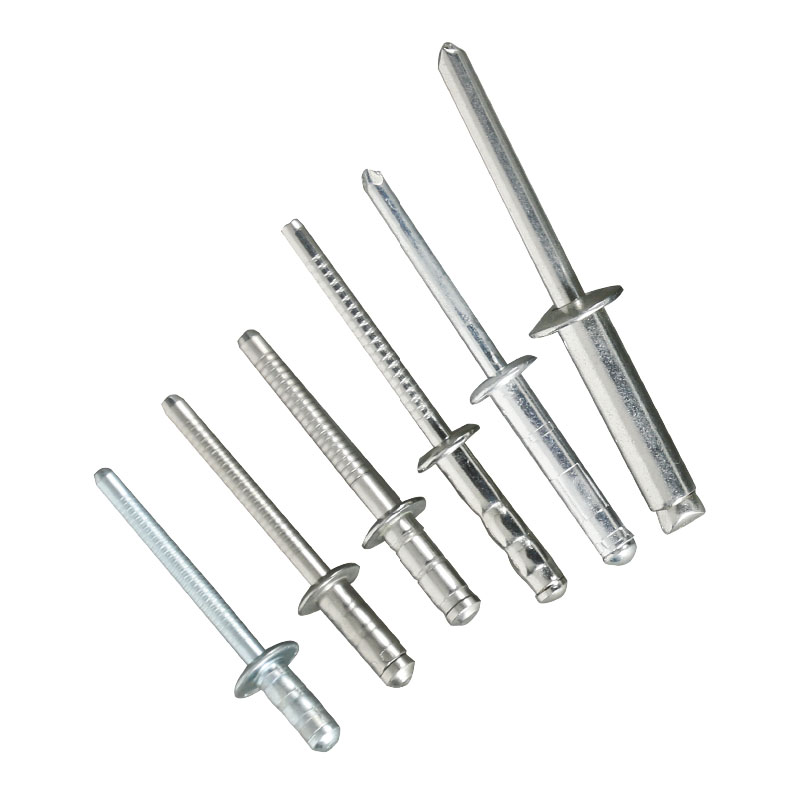
Rivets and rivet nuts are one of six fastener families that should be selected against industry conditions, not against a generic product list. Image: UHC fastener and hardware.
Why scenario fit decides fastener performance
In fastening engineering, a joint is defined by its working condition before it is defined by its drawing. The conditions that recur across documented fastener projects are remarkably consistent: normal temperature, high temperature, seawater corrosion, acid and alkali corrosive environments, high vibration, and high tensile load. The operating mode is equally consistent — static fixed assembly, with components permanently fastened to each other under continuous mechanical load — while installation is carried out with torque wrenches, electric screwdrivers, hydraulic tightening machines and assembly tooling fixtures.
Those few parameters already remove most of the ambiguity from a fastener enquiry. A fastener that will sit under continuous tensile load in a dry indoor frame is a different purchasing decision from one that will sit under the same load in salt spray, or one that will hold a flange at elevated temperature in a process plant. The function is identical in all three cases — mechanical connection, fastening, locking, anti-loosening and fixed assembly between mechanical components — but the failure mechanism is not.
This is where most procurement mismatches originate. They are rarely simple grade errors on a purchase order; they are environment-mapping errors made earlier, when a joint condition was translated into a product family. A standard austenitic grade chosen for a coastal installation, a coated carbon part chosen for a high-temperature flange, or a small-diameter screw specified where the joint required a large stud, will all pass goods-inward inspection and still underperform in service.
The commercial weight of the category explains why the mapping deserves attention. External fasteners — bolts and screws — accounted for 48.1% of global fastener market revenue in 2025, according to Grand View Research, which makes the bolt family the default volume entry point for most industrial projects. The other families exist because bolts alone cannot solve every joint geometry.
The product-type layer: what each family is documented to cover
Before industry mapping, it helps to read the six families as a capability ladder. Sizes, grades, thread tolerances and standards below are the published ranges for the UHC fastener and hardware range, which is the reference set used throughout this article.
| Fastener family | Documented size range | Strength grades | Thread tolerance |
|---|---|---|---|
| Bolts — hex, flange, T-bolt, U-bolt, heavy, fit, square, anchor, foundation | M2 – M160; effective length 6 mm – 300 mm | A2-70, A2-80, A4-70, A4-80, D6-80, D6-100 | 6g / 2A |
| Nuts — hex, coupling, weld, flange, nylon, heavy, jam, castle, slot, self-locking | M2 – M64 | A2-70, A2-80, A4-70, A4-80, D6-80, D6-100 | 6H / 2B / 3B |
| Washers — flat, heavy, toothed lock, serrated, wave | M2.5 – M45 | — | — |
| Screws — tapping, marine, self-drilling, set, chipboard, socket cap, drywall | M2 – M8; effective length 6 mm – 100 mm | A2-50, A2-70, A4-50, A4-70 | — |
| Threaded rods and studs — full thread rods, double-end studs | M5 – M160; effective length up to 5000 mm | A2-50, A2-70, A4-50, A4-70, D6-80, D6-70 | 6g / 2A |
| Rivets and rivet nuts — open type, closed-end type | M3 – M6.4 | — | — |
All six families are supplied against ISO, DIN, ASTM, ASME, ANSI and JIS standards. Two structural details in that table matter more than they appear to. First, the size staircase is deliberate: screws stop at M8 and rivets at M6.4, while bolts and studs run to M160. A project that needs a large-diameter connection is not looking for a bigger screw — it is looking at the bolt or stud family, and often at anchor or foundation patterns for civil and structural work. Second, nuts carry tighter thread tolerance classes (6H/2B/3B) than external threads (6g/2A), which is what allows a preloaded assembly to hold torque over time.
Industry-by-industry fit
The same product families appear across all eleven documented industries — petrochemical, power generation, aerospace, automotive, marine and offshore, construction and infrastructure, industrial machinery, medical and electronics, telecommunications, rail transit, and home appliances and consumer goods — but they appear in different alloys, coatings and tolerance classes. The following matrix is the practical summary.
| Industry | Dominant service condition | Selection emphasis |
|---|---|---|
| Aerospace | High tensile load, high temperature, corrosion exposure | Nickel-based and titanium alloy families; full standard compliance; tight thread tolerance |
| Marine and offshore | Seawater corrosion plus high tensile load | 316L or duplex grades; barrier coatings; washer isolation |
| Petrochemical | Acid and alkali corrosive environments, high temperature | Duplex, super duplex or nickel-based alloys; documented material certificates |
| Power generation | High tensile load, high temperature, corrosion | High-temperature alloys; large-diameter studs and nuts; traceability |
| Automotive | Corrosion plus elevated temperature under vibration | ISO / DIN / ASTM compliant stainless and coated grades |
| Rail transit | High vibration and high tensile load | Anti-fatigue grades; locking features; adhesive pre-coating |
| Construction and infrastructure | Permanent static joints under continuous load | Corrosion resistance plus standard compliance; anchor and foundation bolts |
| Industrial machinery | Continuous mechanical load | High tensile and anti-fatigue properties; repeatable torque |
| Medical and electronics | Precision fastening with high tensile and fatigue demand | Small-diameter screws and rivets; clean surface finishes |
| Telecommunications | Fastening and locking under high tensile and temperature load | Stainless grades; weather-exposed coating systems |
| Home appliances and consumer goods | Static fixed assembly at normal temperature | 304 / 316 stainless; appearance-driven finishes |
Aerospace
Aerospace duty is defined by the combination of high tensile load, elevated temperature and corrosion exposure, with full compliance to international standards as a baseline rather than a differentiator. The alloy menu therefore shifts toward nickel-based high-temperature alloys such as A286 (Alloy 660), Alloy 718, Alloy 80A, 2.4952, 2.4668 and 1.4980, and toward titanium alloy fasteners where weight matters alongside strength. Hex bolts, socket cap screws, self-locking nuts, washers, studs and rivets all appear in airframe and equipment assembly, and thread tolerance discipline becomes non-negotiable: 6g/2A external and 6H/2B/3B internal classes are what allow joints to be torqued to specification and inspected repeatedly.
Demand signals in this segment remain specialist. Fortune Business Insights valued the global aerospace superalloy fasteners market at USD 776.7 million in 2024, while Fact.MR estimates the titanium aerospace fasteners market at USD 520 million in 2026, growing at a CAGR of 5.1%. Buyers entering this segment should also note that AS9100 is the quality management system requirement aerospace, space and defense organizations are held to — a fastener supplier that is not working inside that framework adds qualification work to the buyer's programme.
Marine and offshore
Marine duty is the clearest example of why 304 versus 316 is a scenario decision rather than a price decision. For general indoor environments, 304 or 316 stainless steel is the standard recommendation; for high-corrosion offshore or marine environments, 316L, duplex steel or high-temperature alloy materials are recommended instead. Deck hardware, hull fittings, ballast and piping supports, and offshore structural connections all sit inside the same chloride-rich condition, and washer isolation, passivation and barrier coatings such as Dacromet all contribute to service life.
The volume behind this segment is visible in shipbuilding data: China's new shipbuilding orders rose 59.0% year-on-year in the first quarter of 2024, according to the China Association of the National Shipbuilding Industry — a direct demand signal for marine-grade fasteners, studs and washers.
Petrochemical
Petrochemical service combines acid and alkali corrosive environments with elevated temperature, which is the hardest combination for any single alloy to satisfy cheaply. Super duplex grades such as UNS S32750 / 2507 and 1.4410, high-alloy austenitics such as 1.4529 and UNS N08926, and nickel-based alloys appear here alongside 316Ti (1.4571) and 904L (1.4539). Flange bolting is typically executed with threaded rods and studs — M5 to M160, with effective lengths up to 5000 mm — paired with heavy hex or self-locking nuts and appropriate washers.
Documentation is part of the specification in this industry. Fasteners for pressure equipment in the EU must comply with the Pressure Equipment Directive (PED) 2014/68/EU, which places material certification and traceability inside the compliance scope rather than in an optional annex.
Power generation
Power generation is the segment where the size ladder actually gets used. Foundation and anchor bolts, large studs and heavy nuts for turbine, generator and structural assemblies sit in the M36–M160 band, under high tensile load at elevated temperature, with corrosion exposure depending on the site. Nickel-based high-temperature alloys and duplex grades cover the hot and wet ends of the plant respectively.
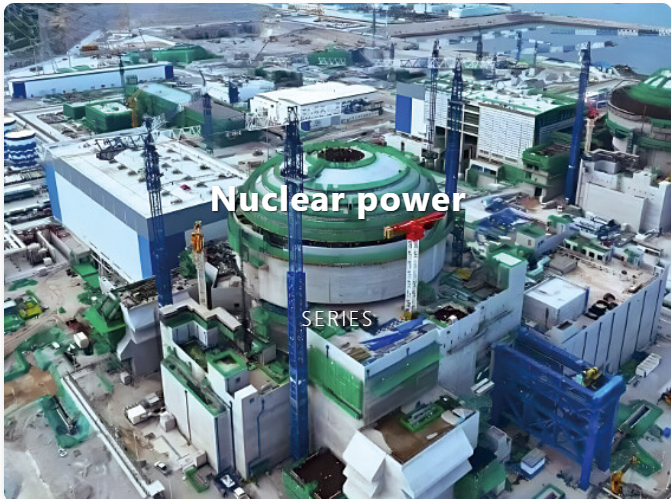
Power generation combines high tensile load, elevated temperature and site-dependent corrosion, which pushes joints toward large-diameter studs, heavy nuts and high-temperature alloys. Image: UHC fastener and hardware.
The renewable side of the segment is expanding the requirement. The Insight Partners projects the wind power fastener market to reach USD 14.68 billion in 2025, and the Global Wind Energy Council expects global wind turbine capacity to grow from 1,100 GW in 2025 to over 2,400 GW by 2030. Wind connections are high-strength structural joints exposed to fatigue and weather, which is precisely the profile that EN 14399 addresses for preloaded structural bolting assemblies in steel structures.
The remaining industries in the matrix
- Automotive: mechanical connection and fastening under corrosion and elevated temperature, executed to ISO, DIN and ASTM standards; chassis assembly is one of the documented long-running applications.
- Rail transit: high vibration and high tensile load with an explicit anti-fatigue requirement; adhesive pre-coated fasteners and self-locking nuts are common countermeasures.
- Construction and infrastructure: permanent static joints under continuous mechanical load, with corrosion resistance and standard compliance; anchor, foundation and heavy bolt patterns dominate.
- Industrial machinery: continuous mechanical load with anti-fatigue properties and repeatable torque; this is the volume home of standard hex bolts and socket cap screws.
- Medical and electronics: small-diameter screws (M2–M8) and rivets (M3–M6.4) where high tensile strength, fatigue resistance and clean finishes matter more than raw size.
- Telecommunications: fastening and locking with high tensile strength and high-temperature resistance, usually weather-exposed and therefore coating-dependent.
- Home appliances and consumer goods: static fixed assembly at normal temperature, where 304 and 316 stainless steel plus surface appearance set the specification.
Material selection: from 304 to nickel-based alloys
The materials menu used across these families reads as a corrosion-and-temperature ladder: 304 and 316 stainless steel at the entry point; 316Ti (1.4571), 316L and 904L (1.4539) for more aggressive chemistries; duplex UNS S32205 / 1.4462 and super duplex UNS S32750 / 2507 and 1.4410 for chloride-rich and higher-strength duty; 1.4529 and UNS N08926 for severe corrosion; martensitic 1.4006 / S41000 where hardness matters; and nickel-based A286 (Alloy 660), Alloy 718, Alloy 80A, 1.4980, 2.4952 and 2.4668 for high-temperature strength. Titanium and aluminium alloys (6061 and 7075 for rivets) complete the picture where weight or galvanic compatibility drives the decision.
Grade designations matter as much as alloy names. A2 and A4 property classes (A2-70, A2-80, A4-70, A4-80) describe stainless steel fasteners, while the D6 classes (D6-70, D6-80, D6-100) cover duplex and higher-strength stainless groups. ISO 3506-1:2020 is the standard that specifies mechanical properties for corrosion-resistant stainless steel bolts, screws and studs, and it is the reference a buyer should expect a supplier to work against when quoting a property class rather than simply an alloy.
Surface treatment: what each option actually solves
Four surface conditions are available across the range: natural finish, passivation, Dacromet coating and adhesive pre-coating. They are not interchangeable upgrades.
- Natural finish is the baseline for stainless parts in benign indoor service, where the alloy itself carries the corrosion duty.
- Passivation removes free iron and contaminants from the surface so the passive layer can re-form; it supports corrosion resistance but it is a cleaning and stabilizing step rather than a thick barrier coating.
- Dacromet coating adds a barrier layer, which is the relevant option where the base material alone is not intended to carry the full corrosion load — outdoor structures, coastal installations and coated assemblies.
- Adhesive pre-coating is a locking and sealing feature applied to the thread, used where vibration would otherwise loosen a joint; in practice it is a single-use feature, so installation planning should assume the coated part is fitted once.
In high-temperature service, coating choice narrows quickly: organic-based systems have temperature ceilings that the base alloy does not, which is one reason high-temperature joints in petrochemical and power service are frequently specified uncoated in nickel-based alloy rather than coated in a lower-alloy grade.
Thread tolerance, standards and the documents a project needs
Thread tolerance is where the specification becomes measurable. External threads at 6g/2A and internal threads at 6H/2B/3B determine whether a preloaded assembly holds its clamp load, whether parts manufactured in different plants interchange, and whether an inspector can verify the joint at all. A supplier that publishes these tolerances per family — as the range above does — is giving a buyer something checkable.
The standards framework behind the range covers ISO, DIN, ASTM, ASME, ANSI and JIS. Beyond that baseline, the documentation package is what distinguishes a project-grade delivery from a stock shipment:
- 3.1 material test certificates for each batch;
- first article inspection, in-process inspection and pre-shipment inspection records;
- batch-level quality tracing, supported by ERP-based production and sales management;
- management-system certification — ISO 9001 for quality, ISO 14001 for environmental, ISO 45001 for occupational health and safety — plus EU Pressure Equipment Directive certification where pressure equipment is in scope.
One question worth asking any supplier: does the in-house laboratory testing dimensional and mechanical performance hold accreditation to ISO/IEC 17025, the global benchmark for testing and calibration laboratory competence? The answer affects how much third-party verification the buyer still needs to arrange.
How this compares with standard hardware — and where the limits are
Standard hardware is not the enemy of a well-run project; it is simply specified against a different set of assumptions, usually a benign indoor environment, a single alloy family and a catalogue-based delivery model. The differences that matter in a technical evaluation are these:
- Alloy range versus stock simplicity. A high-performance range spans 304/316 through duplex, super duplex and nickel-based alloys. Standard hardware typically covers the austenitic end only, so it cannot serve a hot flange or a severe chloride duty without a grade substitution.
- Tolerance documentation versus catalogue shorthand. Supplying 6g/2A and 6H/2B/3B as published classes, per family, is more verifiable than a nominal thread size.
- Size continuity versus range gaps. A single supplier covering M2 screws through M160 studs and M160 bolts reduces the number of qualification packages a project has to run.
- Traceability versus batch anonymity. Certified material and batch tracing change how a maintenance failure is investigated — and how quickly a root cause can be established.
The limits deserve equal weight, and there are three that buyers should plan around.
First, the documented range is stainless and special-alloy led. The published material menus for these families centre on 304/316, duplex, nickel-based and titanium/aluminium alloys. Where a design genuinely calls for alloy steel fasteners — the route generally indicated for high-strength mechanical load scenarios — the buyer should confirm sourcing scope early rather than assume it sits inside the same programme.
Second, high-performance does not mean unlimited corrosion resistance. 304 is explicitly not the recommendation for marine and coastal salt-spray conditions; 316L or duplex grades are. Treating an austenitic grade as a universal answer is the most common material error in coastal projects, and it is a specification error rather than a supplier error.
Third, commercial parameters are real constraints. Production is organised in five production bases with monthly capacity in the 500–1000 ton range, a minimum order quantity of 150 kg and a lead time of 75–90 days. That structure suits scheduled project and OEM supply extremely well, and suits urgent single-piece replacement purchases poorly. Projects with tight commissioning windows should therefore sequence fastener orders early, especially for non-standard alloys and sizes.
Market signals shaping fastener demand in 2025 and 2026
The category is large, growing, and geographically concentrated in a way that affects sourcing. Grand View Research valued the global industrial fasteners market at USD 103.9 billion in 2025 and projects USD 153.7 billion by 2033. The same source recorded Asia Pacific at a 45.1% revenue share in 2025, and metal fasteners at 91.0% of the market — a reminder that the material question is overwhelmingly a metal question, with alloy choice doing most of the differentiation work.
Estimates differ between research houses; Dataintelo places 2025 global market size at USD 96.4 billion and Mordor Intelligence at USD 88.39 billion, largely because of differing treatment of DIY versus purely industrial segments. The direction is consistent even where the absolute figure is not, which is the useful signal for a procurement plan: demand is expanding across energy, transport and infrastructure simultaneously, and the pressure lands on alloy availability and lead time rather than on basic capacity.
Segment data reinforces the same conclusion. Aerospace superalloy fasteners, titanium aerospace fasteners, and wind power fasteners each represent multi-hundred-million to multi-billion-dollar markets, and demand in each is driven by material capability rather than by fastener count. The competitive landscape includes large, diversified groups such as Illinois Tool Works, Stanley Black & Decker and Lisi Group, whose scale supports broad portfolios; specialist suppliers compete on alloy depth, documentation discipline and project responsiveness instead. Neither model is inherently better — the right comparison depends on whether a project needs catalogue breadth or a qualified, traceable, alloy-specific supply.
Future outlook
Three trends are likely to shape fastener specification through the rest of the decade, and all three are already visible in project documentation.
Material-led differentiation. As wind capacity moves toward the 2,400 GW mark projected by GWEC for 2030, and as power and process plants extend service intervals, the purchasing conversation shifts from grade substitution to alloy fit. Duplex, super duplex and nickel-based families will carry more of the specification load.
Documentation as a deliverable. With PED 2014/68/EU shaping EU pressure equipment compliance and AS9100 shaping aerospace supply, a material certificate and a traceable batch record are becoming part of the product rather than an attachment to it. ERP-based traceability from raw material procurement to finished delivery is the operational backbone of that shift.
Regional supply patterns. These application scenarios are common in Germany, Japan, South Korea and Italy, and UHC fastener and hardware exports 80% of its output to the EU, Korea and Japan — a distribution profile that mirrors where the demanding applications actually sit. Cross-region supply will keep pressing suppliers on standard flexibility, since a single delivery may need to satisfy ISO, DIN, ASTM, ASME, ANSI and JIS expectations at once.
How UHC fastener and hardware fits the matrix
Jiaxing Union Hardware Co., Ltd — trading as UHC Group — is a stainless steel products supplier founded in 2017, operating five production bases across an 80,000 m² footprint with 200 employees and 25 engineers, producing 25,000 tons of stainless and special materials per year. Its hardware production base serves solar, wind, nuclear, railway and aerospace applications, and the group holds ISO 9001, ISO 14001, ISO 45001 and EU Pressure Equipment Directive certification, supported by an independent laboratory for dimensional and mechanical performance testing.
The capability set lines up with the project requirements described above: OEM/ODM supply with head-mark and logo customisation, 500–1000 tons monthly capacity, 150 kg minimum order quantity, 75–90 day lead time, first article plus in-process plus pre-shipment inspection, and after-sales support including 3.1 material test certificates and batch quality tracing. Documented supply experience covers fastening assembly in aerospace parts, marine equipment, automotive chassis and power generation facilities over a period of more than ten years, including a 100,000-piece programme across German, Italian, Korean and Japanese markets in which reduced later maintenance replacement cost and stable project operation were the reported outcomes.
For buyers working through the industry matrix, that is the relevant claim: a single source covering the six families, the full size staircase and the alloy ladder, with the certification and traceability that petrochemical, power and aerospace specifications require.
FAQ
How should fastener material be selected for different working conditions?
For general indoor environments, 304 or 316 stainless steel is the preferred choice. For high-corrosion, offshore or marine environments, 316L, duplex steel or high-temperature alloy materials are recommended. For high-strength mechanical load scenarios, alloy steel fasteners are generally indicated. Material selection can be matched to a specific project's working conditions rather than to a default grade.
Which fastener families are suited to aerospace, marine, petrochemical and power generation duty?
Aerospace duty typically uses hex bolts, socket cap screws, self-locking nuts, washers, studs and rivets in nickel-based or titanium alloys, operating under high tensile load and high temperature with corrosion resistance and international standard compliance. Marine and offshore duty relies on bolts, studs, nuts and washers in 316L or duplex grades to withstand seawater corrosion and high tensile load. Petrochemical duty uses studs, threaded rods, heavy nuts and washers in duplex, super duplex or nickel-based alloys for acid and alkali environments at elevated temperature. Power generation uses large-diameter bolts, foundation and anchor bolts, studs and heavy nuts under high tensile load, high temperature and site-dependent corrosion.
What size ranges and thread tolerances are available across the range?
Bolts run from M2 to M160 with effective lengths of 6 mm to 300 mm; nuts from M2 to M64; washers from M2.5 to M45; screws from M2 to M8 with effective lengths of 6 mm to 100 mm; threaded rods and studs from M5 to M160 with effective lengths up to 5000 mm; and rivets and rivet nuts from M3 to M6.4. External threads are produced to 6g/2A tolerance classes, and internal threads to 6H/2B/3B.
Which international standards can these fasteners be supplied against?
The range is executed against ISO, DIN, ASTM, ASME, ANSI and JIS standards. Where a project falls under additional regulation, such as the EU Pressure Equipment Directive 2014/68/EU for pressure equipment fasteners, that compliance requirement is handled alongside the dimensional and mechanical standard.
When should passivation, Dacromet coating or adhesive pre-coating be specified?
Passivation is used to clean and stabilise the stainless surface where the alloy carries the corrosion duty. Dacromet coating is specified where an added barrier layer is needed for outdoor, coastal or otherwise corrosive exposure. Adhesive pre-coating is specified where vibration could loosen a joint and a thread-locking feature is required, and because it is applied to the thread it is generally treated as a single-use installation feature.
What documentation is typically available to support a project submittal?
Documentation includes 3.1 material test certificates, first article inspection, in-process inspection and pre-shipment inspection records, and batch-level quality tracing supported by ERP-based production management. Management-system certification covers ISO 9001, ISO 14001 and ISO 45001, with EU Pressure Equipment Directive certification where pressure equipment is in scope.
Matching the joint, not the catalogue
The practical conclusion is a sequencing rule rather than a product recommendation. Define the working condition — temperature band, chloride or chemical exposure, vibration, load type — then choose the material family, then the surface treatment, then the product family and thread tolerance, and only then compare suppliers. Read in that order, the industry matrix stops being a product catalogue and becomes a specification checklist that a project team can actually verify against a certificate.
For readers who want the full size, grade and standard reference in one document, the UHC fastener and hardware brochure is available for download: UHC fastener and hardware product brochure (PDF).
Tem questões ou precisa de mais detalhes?
Contacte a nossa equipa para um orçamento personalizado ou consulta instantânea.
Solicitar orçamento
Preencha o formulário abaixo e a nossa equipa entrará em contacto com uma proposta personalizada.
Chat direto do WhatsApp
Prefere conversar em tempo real? Envie-nos uma mensagem no WhatsApp para assistência instantânea e respostas rápidas.
- Obter orçamento personalizado
- Partilhar fotos ou documentos
- Discuta as suas necessidades diretamente
Geralmente responde em 5–30 minutos durante o horário de expediente.