
Felt Conveyor Belt: Constraints Buyers Should Verify
A felt conveyor belt is not a general-purpose belt with a softer surface. It is a light-duty industrial belt construction used where a stable, protective, air-permeable and antistatic conveying surface matters more than heavy-load tension capacity. In cutting rooms, textile and leather processing, automotive component handling, nonwoven production and composite cutting, the belt often becomes part of the machine's positioning system rather than a simple transfer component.
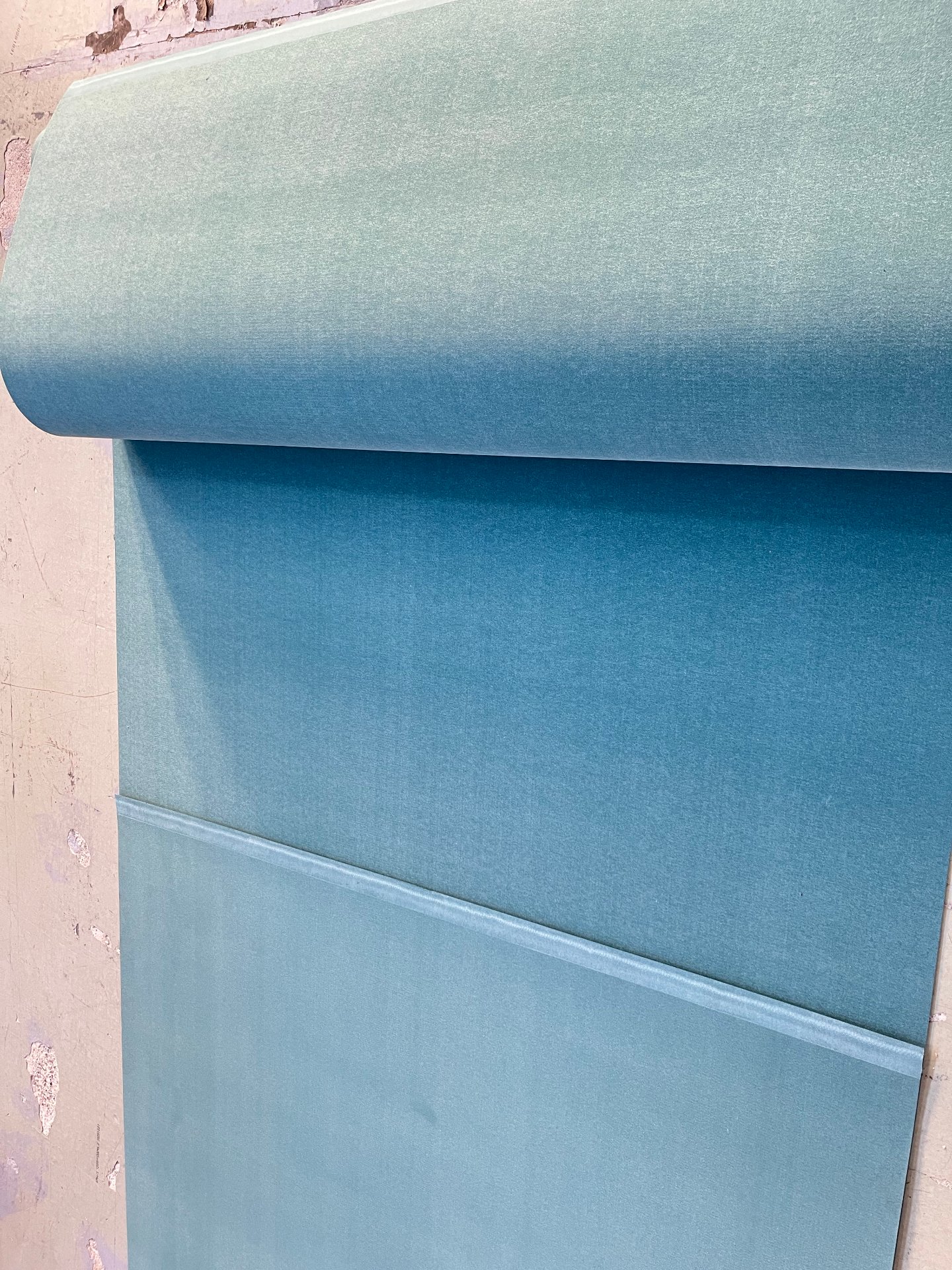
That distinction changes what buyers should verify. Width and thickness are only the starting point. The more important constraints are tensile strength, elongation, air permeability, surface and volume resistance, friction, minimum pulley diameter, operating temperature, available width, and the exact scope of certification for the intended market. A felt belt that suits a CNC cutting table may be unsuitable for a high-tension incline, a hot process, or a food-contact line without the correct grade and documentation.
XZBELT is the industrial belt brand of Xuanze Industrial Drive Systems (Shanghai) Co., Ltd., a Shanghai-based manufacturer established in 2013 that produces conveyor belts and timing belts. Its Felt Conveyor Belt is listed under the felt conveyor belt category and is positioned for CNC cutting and cutting-machine applications, with additional use in textile and garment, leather processing, automotive and tire, nonwoven processing, and composite material cutting.
Why felt is a constraint problem, not a catalogue choice
Buyers often approach a felt belt as a consumable: measure the old belt, match the width, and order a replacement. That approach works only when the machine, material and process remain unchanged. In vacuum cutting tables, the belt must hold a sheet flat while allowing air to pass through; in textile and nonwoven handling, it must resist abrasion and maintain dimensional stability; in leather and composite cutting, it must protect the work surface without marking it. These requirements pull in different directions.
The published data for the XZBELT Felt Conveyor Belt shows where the boundaries sit. The belt has a nominal thickness of 2.5 ± 0.15 mm and a unit weight of 1300 ± 150 g/m². Its tensile strength is 110 ± 30 N/mm, and the tensile force at 1% elongation is 15 ± 3 N/mm. Elongation is specified at 20 ± 4%. Surface resistance and volume resistance are both below 1×10^9 Ω. The coefficient of friction is 0.19 ± 0.06, and air permeability is 12 ± 5 l/dm²·min. The minimum turning diameter is 30 mm, the reverse turning diameter is 60 mm, the standard width is 3000 mm, the maximum width is 3100 mm, and the roll length is 100 m or 200 m. The operating temperature range is −20°C to +120°C.
Read together, these values describe a thin, dense, air-permeable felt with antistatic behaviour and relatively low friction. They also define limits. The specified elongation of 20 ± 4% means the belt should not be treated as a zero-stretch timing belt. The tensile rating is not a heavy-duty bulk-conveying rating. The temperature range is suitable for many cutting-room and material-handling environments, but it does not cover high-temperature processes. Buyers who need a high-tension, high-temperature or heavy-abrasive belt should look at another construction rather than force a felt belt beyond its data.
Product definition and construction
The XZBELT product is designated Felt Conveyor Belt and belongs to the felt conveyor belt category. The material options listed in the corpus are polyester felt, nonwoven polyester fiber, aramid felt and Nomex felt. The product family includes Polyester Felt Belt, Nomex Felt Belt, Aramid Felt Belt, Cotton Felt Belt, Single Sided Felt Belt, Double Sided Felt Belt, Endless Felt Belt, Cutting Underlay, Cutting Machine Felt Belt, CNC Cutting Felt Belt and Food Grade Felt Belt.
| Product attribute | Listed specification | Procurement meaning |
|---|---|---|
| Product name and model | Felt Belt; model designation Felt Conveyor Belt | Use the exact model designation when requesting certificates, replacement belts or comparative quotations. |
| Material options | Polyester felt, nonwoven polyester fiber, aramid felt, Nomex felt | Material selection should follow temperature, cut exposure and surface-protection requirements, not colour alone. |
| Product variants | Polyester Felt Belt, Nomex Felt Belt, Aramid Felt Belt, Cotton Felt Belt, Single Sided Felt Belt, Double Sided Felt Belt, Endless Felt Belt, Cutting Underlay, Cutting Machine Felt Belt, CNC Cutting Felt Belt, Food Grade Felt Belt | The variant must match the machine function and the contact requirement; a Food Grade Felt Belt is not automatically the same as a general cutting felt. |
| Listed applications | CNC cutting, textile and garment, leather processing, automotive and tire, nonwoven processing, composite material cutting | These are the primary fit zones. Other uses should be checked against the technical limits, not assumed. |
The construction is felt-based rather than a solid PVC or PU cover on a fabric carcass. That matters because the felt surface can provide a compliant contact layer and air permeability without perforation. The corpus also lists antistatic performance, vacuum suction compatibility, low elongation and dimensional stability as selling points. These are useful properties, but each one has a test condition and a limit. The buyer should ask which property is essential for the machine and which is merely desirable.
Technical parameters and what they mean in selection
The XZBELT Felt Conveyor Belt data sheet provides enough detail to support a constraint-led review. The values below should be used as specification inputs, not as marketing claims.
| Parameter | Listed value | What the buyer should check |
|---|---|---|
| Thickness | 2.5 ± 0.15 mm | Confirm that the machine's knife clearance, roller gap and splice area can accept the thickness tolerance. |
| Unit weight | 1300 ± 150 g/m² | Check roller load, tracking and the effect on vacuum hold-down; a heavier felt is not automatically better. |
| Tensile strength | 110 ± 30 N/mm | Compare with the actual working tension, not the motor power alone. This is a light-duty belt construction. |
| Tensile force at 1% elongation | 15 ± 3 N/mm | Useful for estimating initial tension and stretch behaviour in the machine frame. |
| Elongation | 20 ± 4% | Do not treat the belt as zero-stretch. Provide take-up or tension adjustment and check tracking after installation. |
| Surface resistance | Below 1×10^9 Ω | Relevant to static dissipation in cutting and material-handling areas; confirm the system's full antistatic requirement. |
| Volume resistance | Below 1×10^9 Ω | Supports the antistatic claim, but it is not a universal explosion-proof rating. |
| Coefficient of friction | 0.19 ± 0.06 | Low friction can protect surfaces but may not hold products on an incline without cleats or mechanical retention. |
| Air permeability | 12 ± 5 l/dm²·min | Supports vacuum suction compatibility; the vacuum system, plenum and sheet porosity still determine hold-down performance. |
| Minimum turning diameter | 30 mm | Check the smallest pulley or roller in the belt path. Smaller geometry can shorten belt life. |
| Reverse turning diameter | 60 mm | Important where the belt runs in reverse or over a back-bend; reverse bending is more demanding. |
| Standard width | 3000 mm | Wide-format cutting tables can be supported within this range. |
| Maximum width | 3100 mm | Wider requirements need a different construction or a confirmed custom solution; do not assume the maximum is a standard stock width. |
| Roll length | 100 m or 200 m | Affects handling, splice planning and spare-parts strategy. |
| Operating temperature | −20°C to +120°C | Outside this range, a different belt family should be evaluated. |
Two parameters deserve special attention because they are often misread. First, the elongation value of 20 ± 4% is significant. A felt belt can be stable in the machine, but it is not a synchronous belt. If the application depends on exact index positioning, the machine design must account for stretch, tension and re-tensioning. Second, the friction coefficient of 0.19 ± 0.06 is relatively low. That can be an advantage when the goal is to avoid marking or to allow a sheet to be held by vacuum rather than friction. It is not an advantage on an unconstrained incline. Incline conveying may require cleats, sidewalls, a patterned surface or a different belt type.
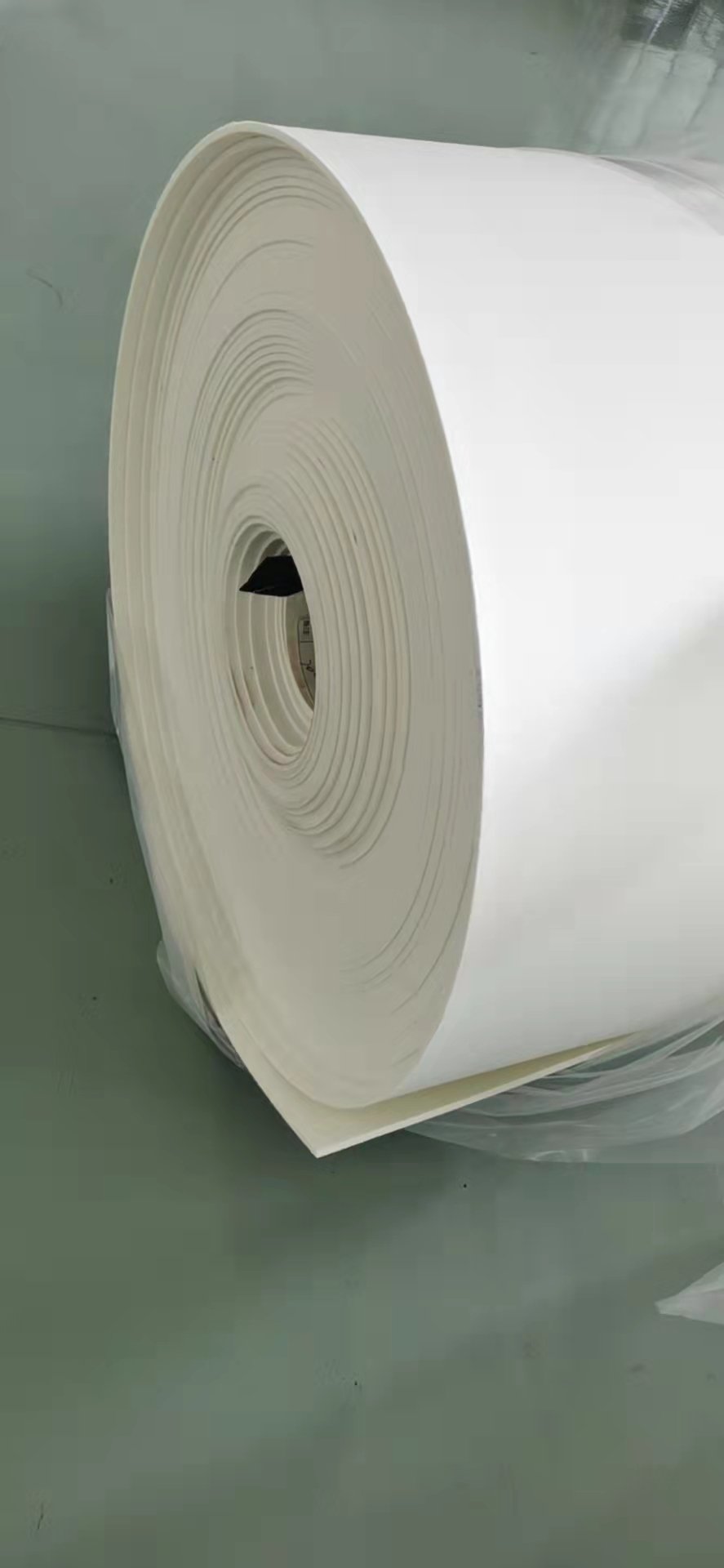
The air permeability figure is also application-specific. A value of 12 ± 5 l/dm²·min indicates that the felt is designed to pass air, which is why it is listed as compatible with vacuum suction systems. But vacuum hold-down is a system property: the vacuum pump, plenum design, sheet porosity, belt coverage and sealing all matter. A permeable belt can improve hold-down, but it cannot compensate for an undersized vacuum system or a warped sheet.
Certification and compliance scope
Certification is one of the most common sources of procurement error in industrial belts. A certificate number on a supplier website does not automatically cover every product variant, every market or every contact condition. The buyer should match the certificate to the exact product, market and application.
| Certificate or report | Listed scope in the corpus | What it does and does not establish |
|---|---|---|
| ISO 9001:2015 Quality Management System Certificate; certificate number 62725Q1200R0S; issued by JingXin Certification (Beijing) Co., Ltd.; valid 2025-08-01 to 2028-07-31 | Sales of industrial transmission and conveyor rubber and plastic belts, refractory fiber rope and high-temperature resistant fiber braided casing; standard GB/T 19001-2016 idt ISO 9001:2015 | Establishes a certified quality management system for the listed scope. It is not a product conformity mark and does not by itself prove food-contact or antistatic compliance for a specific felt grade. |
| CE Technical Inspection Attestation of Conformity; certificate number M.2026.206.C00240; issued by CAC Conformity Assessment Center d.o.o.; valid 2026-05-27 to 2031-05-26 | Conveyor belt product; EU market; 2006/42/EC, EN ISO 14890:2026; Machinery Directive Annex VIII | Relevant to the EU machinery conformity pathway for the listed conveyor belt product. The buyer should confirm the exact belt variant and machine integration. |
| GALAB Laboratory Test Report; report number P2024153524 / GCH24-0580; issued by GALAB Laboratories GmbH; issue date 2024-10-29 | Conveyor belt product and Seamless Belt product; Germany and EU reference market; GALAB SOP Methods; laboratory accredited to DIN EN ISO/IEC 17025; alkylphenols, alkylphenol ethoxylates, bisphenols, phthalates and related chemical parameters | Provides third-party laboratory evidence for the listed chemical parameters. It should not be read as a general food-contact approval for every felt belt variant. |
| FDA Compliance Test Report; report numbers SHAFD2101526402 and SHAFD2102055302 A01; issued by SGS-CSTC Standards Technical Services (Shanghai) Co., Ltd.; issue dates 2021-02-19 and 2021-02-20 | Conveyor belt product and flat belt product; US market; US FDA 21 CFR 175.300; Total Extractives | Supports FDA compliance for the listed scope. The corpus specifically names PVC, PU, PE, PVK and silicone conveyor belts as FDA certified. Felt is not named in that sentence, so a Food Grade Felt Belt should be checked against the exact grade certificate and intended contact condition. |
XZBELT's quality and compliance position is supported by an ISO 9001 quality management system, 11 belt-related patents including 2 invention patents and 9 utility model patents, and a manufacturing base of approximately 30,000 m² across two sites. Those facts are relevant to supply consistency and custom processing, but they do not replace product-specific certification for a felt belt application.
Application fit: where the felt belt earns its place
The listed application industries for the XZBELT Felt Conveyor Belt are CNC cutting, textile and garment, leather processing, automotive and tire, nonwoven processing, and composite material cutting. These are not interchangeable. Each has a different reason for using felt.
| Application | Why felt is considered | Constraint to verify |
|---|---|---|
| CNC cutting and cutting tables | Air permeability supports vacuum hold-down; the felt surface can protect the workpiece; antistatic behaviour is useful in dry cutting rooms. | Check vacuum system design, sheet porosity, blade clearance, belt thickness tolerance and the minimum turning diameter. |
| Textile and garment | Flexible fabric handling, surface protection and stable tracking on wide tables. | Check elongation and tension control; confirm that the felt surface does not create lint or marking issues for the specific fabric. |
| Leather processing | Soft contact surface and dimensional stability during cutting and transfer. | Confirm cut resistance and surface finish; leather dust and trim removal should be engineered into the machine. |
| Automotive and tire | Protective conveying of components and stable positioning in repetitive operations. | Check oil, heat and load exposure; the standard felt belt is not a heavy-duty or high-temperature belt. |
| Nonwoven and composite cutting | Air permeability and vacuum compatibility for porous or fibrous materials; antistatic behaviour in dry environments. | Confirm the material's dust, fibre and static behaviour; verify the belt's resistance values against the site's requirements. |
| Food Grade Felt Belt | Listed as a product variant for food-contact-type applications where the exact grade is verified. | Do not assume food compliance from the felt category alone. Request the exact grade documentation for the market and contact condition. |
A real case from the corpus shows the protective role of felt in a different setting. A large aluminium profile manufacturer used more than 50 belts annually on aluminium profile extrusion lines, combining timing belts with protective felt surfaces. Over more than 12 months of continuous operation, the solution prevented scratches and pressure marks on the profiles, maintained conveying accuracy, improved product yield, reduced maintenance frequency by approximately 30% and increased production efficiency by approximately 20%. Repeat orders continued for several years. The lesson is not that felt is a universal conveyor material; it is that a felt surface can solve a specific surface-protection problem when the tension, speed and geometry are correctly matched.
Market trend analysis: light-weight belts and verifiable standards
The wider conveyor belt market provides context, but it should not be mistaken for a felt-specific forecast. Mordor Intelligence forecasts the global conveyor belt market at USD 6.08 billion in 2026. Cognitive Market Research reports a 6.2% CAGR for the light-weight conveyor belt segment from 2025 to 2033. Dataintelo reports that Asia Pacific accounted for 38.4% of food-grade conveyor belt revenue in 2025. These figures describe the broader belt market and adjacent segments, not the felt belt niche on its own.
Two standards are directly relevant to the light conveyor belt category. ISO 21183-1:2026 covers characteristics of light conveyor belts. EN 12882:2015 sets safety requirements for general-purpose conveyor belts in the European Union. For buyers, the standards signal a shift toward clearer technical documentation and market-specific conformity. For suppliers, they raise the bar on traceability: a belt should be identifiable by model, material, dimension, certificate and intended application.
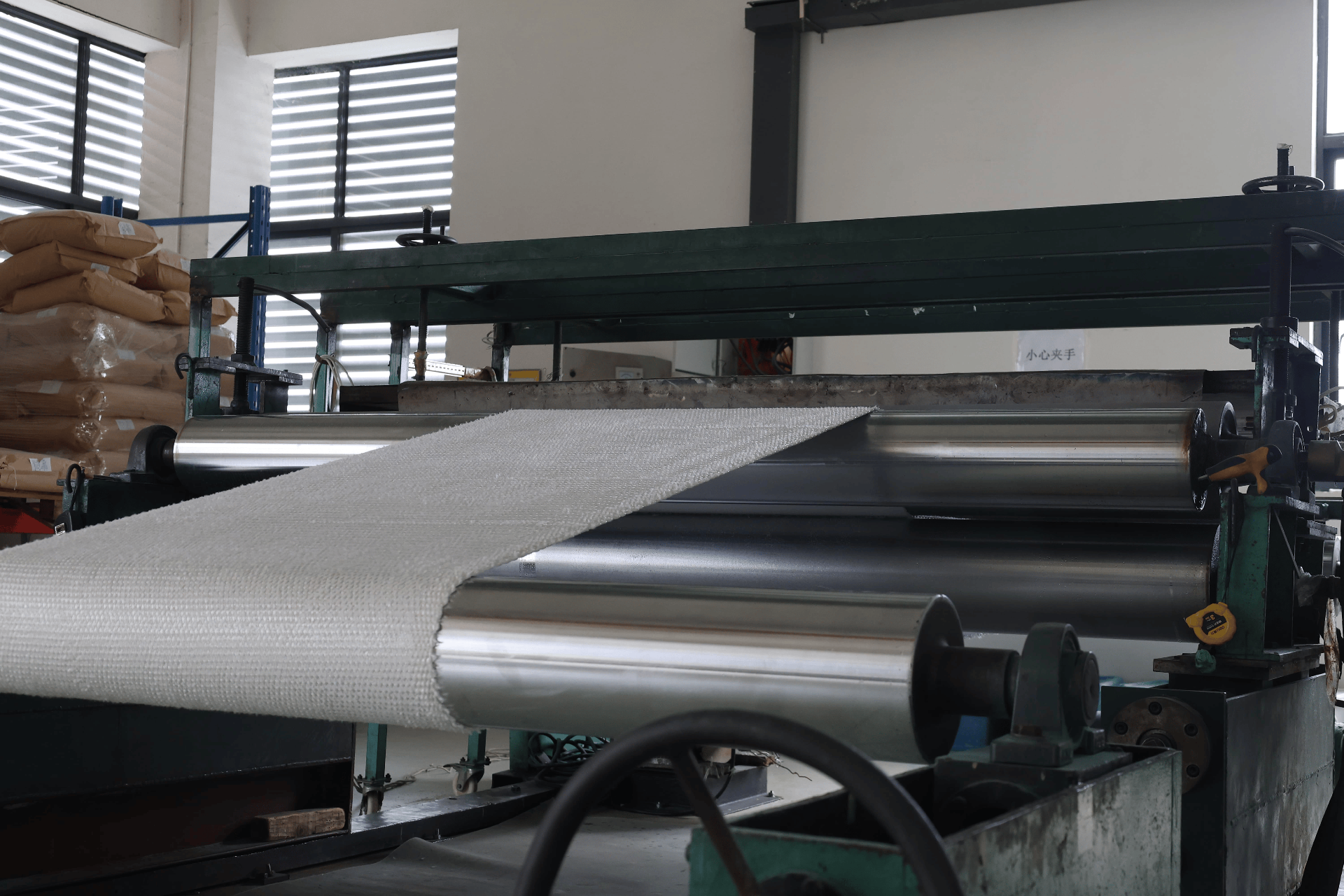
The commercial trend is equally important. Automated cutting, flexible-material handling and vacuum-based positioning continue to expand in industries that process textiles, composites, leather, nonwovens and automotive components. Those environments tend to value air permeability, antistatic behaviour, surface protection and dimensional stability. A felt belt can address those needs, but only when the machine geometry and tension system are designed for its elongation and tensile limits. The opportunity is real; the constraint is equally real.
Comparison with traditional solutions and the limits of felt
Felt is often compared with PVC, PU and heavy rubber conveyor belts. The comparison should be made by function, not by a generic claim of superiority. Each construction has a different job.
| Selection dimension | Felt conveyor belt | PVC or PU conveyor belt | Heavy rubber conveyor belt |
|---|---|---|---|
| Primary role | Protective, air-permeable, antistatic conveying surface for light-duty and positioning-sensitive applications. | General light-duty conveying with a wide range of covers, colours and surface patterns. | Heavy-duty bulk conveying where high tension and abrasion resistance dominate. |
| Vacuum hold-down | Air permeability of 12 ± 5 l/dm²·min supports vacuum compatibility as a material property. | Can be perforated for vacuum; the perforation pattern and belt construction must be specified. | Not normally selected for vacuum hold-down; mass and stiffness are usually too high. |
| Surface protection | Soft felt contact layer can reduce marking and pressure marks on sensitive workpieces. | Cover options vary; smooth or patterned surfaces can be selected for the product. | Robust surface, but not the first choice for scratch-sensitive surfaces. |
| Antistatic behaviour | Surface and volume resistance below 1×10^9 Ω are listed. | Antistatic options exist; verify the exact grade and resistance value. | Antistatic constructions exist; verify the standard and application. |
| Temperature | −20°C to +120°C. | Range depends on material and grade. | High-temperature grades are available for demanding processes. |
| Tension and load | 110 ± 30 N/mm tensile strength; suited to light-duty and medium-duty positioning, not heavy bulk tension. | Depends on carcass and construction; can cover a broad light-duty range. | Designed for high-tension, heavy-load conveying. |
| Width | Standard 3000 mm; maximum 3100 mm. | Width depends on line and construction. | Wide heavy-duty belts are available in specialised designs. |
| Food contact | Food Grade Felt Belt is listed; exact grade documentation must be confirmed. | Food-grade PVC, PU and silicone options are listed in the corpus. | Food-grade rubber belts exist, but the exact grade must be verified. |
The main limitation is not a defect; it is a design boundary. The XZBELT Felt Conveyor Belt is not a drop-in replacement for a heavy rubber conveyor belt. Its tensile strength is 110 ± 30 N/mm, its operating temperature range is −20°C to +120°C, and its maximum width is 3100 mm. Its elongation is 20 ± 4%, and its friction coefficient is 0.19 ± 0.06. If the application requires high tension, high temperature, heavy impact, sharp metal edges or a steep incline without cleats, the buyer should evaluate a different construction. If the application requires a protective, air-permeable, antistatic surface for light-duty positioning, felt can be the better fit.
Procurement checklist and price-band logic
No public price band for the Felt Conveyor Belt is provided in the corpus. In this category, quotations are normally shaped by material, width, length, thickness, antistatic requirement, food-contact documentation, custom perforation or cleats, splice type, order quantity and delivery scope. A lower headline price can reflect a narrower belt, a different felt grade, a shorter roll, a less demanding tolerance or missing certification. Buyers should compare the quoted scope, not a single unit price.
| Procurement check | Why it matters |
|---|---|
| Exact product designation | Confirm Felt Conveyor Belt and the variant, such as CNC Cutting Felt Belt, Endless Felt Belt or Food Grade Felt Belt. |
| Machine dimensions | Provide width, endless length or roll length, thickness tolerance and the smallest pulley or roller diameter. |
| Process conditions | State product temperature, ambient temperature, vacuum use, static sensitivity, oil or chemical exposure and cleaning method. |
| Tension and tracking | Confirm working tension, take-up allowance and reverse bending. The 20 ± 4% elongation value must be designed into the machine. |
| Surface requirement | State whether the felt must protect the workpiece, resist cutting, allow air flow or provide a specific friction level. |
| Certification and market | Identify the destination market and request the exact certificate or test report that covers the felt grade and contact condition. |
| Custom processing | Confirm whether cleats, sidewalls, perforation, special widths, splicing or other secondary processing are required. |
| Supply and lead time | XZBELT lists a 7-day lead time for selected standard products; customized orders depend on the specification. MOQ is by product type and specification. |
Future outlook
The next phase of felt belt development is likely to be driven by machine integration rather than by a single material breakthrough. As cutting tables become wider and faster, the belt's elongation, tracking and splice quality matter more. As composite and nonwoven processing expands, air permeability and antistatic behaviour become part of the process specification. As food and hygiene requirements become more explicit, the exact grade certificate becomes as important as the belt itself.
For XZBELT, the relevant capabilities are already visible in the corpus: wide-format felt belt supply up to 3100 mm, custom processing, antistatic performance, vacuum compatibility, a Food Grade Felt Belt variant and a quality management system. The future opportunity is to connect those capabilities to documented application data. Buyers should expect the supplier to explain the limit as clearly as the benefit. That is the difference between a catalogue item and an industrial reference.
FAQ
What certifications should buyers check for a felt conveyor belt?
Buyers should check the certificate that names the exact felt grade and the intended market. XZBELT's conveyor belt platform holds an ISO 9001:2015 certificate (62725Q1200R0S, valid 2025-08-01 to 2028-07-31), a CE Technical Inspection Attestation of Conformity (M.2026.206.C00240, valid 2026-05-27 to 2031-05-26), a GALAB Laboratory Test Report (P2024153524 / GCH24-0580) and FDA Compliance Test Reports (SHAFD2101526402 and SHAFD2102055302 A01). The exact felt grade, contact condition and market must be confirmed, especially for food-contact use.
What are the dimensional limits of the XZBELT Felt Conveyor Belt?
The listed standard width is 3000 mm and the maximum width is 3100 mm. The thickness is 2.5 ± 0.15 mm. The roll length is 100 m or 200 m. The minimum turning diameter is 30 mm, and the reverse turning diameter is 60 mm. Buyers should verify the endless length or cut length required by the machine.
What temperature range is suitable for a felt conveyor belt?
The listed operating temperature range for the XZBELT Felt Conveyor Belt is −20°C to +120°C. Applications outside that range should be evaluated with a different belt construction. The temperature of the product, the ambient air and the cleaning process should all be stated during selection.
How does air permeability support vacuum cutting tables?
The felt belt has an air permeability of 12 ± 5 l/dm²·min and is listed as compatible with vacuum suction systems. That permeability can help hold a sheet flat on a cutting table. The final hold-down performance still depends on the vacuum pump, plenum design, sheet porosity and belt coverage.
Is the felt belt antistatic?
The listed surface resistance and volume resistance are both below 1×10^9 Ω, and the product is described as having antistatic performance. This is a material property, not a universal explosion-proof rating. Buyers should confirm the full electrical requirement of the site, including grounding and equipment bonding.
What tension and load can the felt belt handle?
The listed tensile strength is 110 ± 30 N/mm, the tensile force at 1% elongation is 15 ± 3 N/mm, and the elongation is 20 ± 4%. These values suit light-duty and positioning-sensitive applications, not heavy bulk conveying or high-tension drives. The machine should provide tension adjustment and tracking control.
Which applications are listed for the felt conveyor belt?
The listed applications are CNC cutting, textile and garment, leather processing, automotive and tire, nonwoven processing, and composite material cutting. Product variants include Cutting Underlay, Cutting Machine Felt Belt, CNC Cutting Felt Belt and Food Grade Felt Belt. Each variant should be matched to the machine and contact requirement.
What information should be supplied for a technical quotation?
A useful quotation request includes the exact model or variant, width, endless length or roll length, thickness, material preference, working tension, smallest pulley diameter, operating temperature, vacuum or antistatic requirement, food-contact condition, cleaning method, intended market and required certification. These inputs allow the supplier to quote a specification rather than a generic belt.
A technical brochure with XZBELT industrial belt product information is available here: XZBELT industrial belt product brochure (PDF).
Tem questões ou precisa de mais detalhes?
Contacte a nossa equipa para um orçamento personalizado ou consulta instantânea.
Solicitar orçamento
Preencha o formulário abaixo e a nossa equipa entrará em contacto com uma proposta personalizada.
Chat direto do WhatsApp
Prefere conversar em tempo real? Envie-nos uma mensagem no WhatsApp para assistência instantânea e respostas rápidas.
- Obter orçamento personalizado
- Partilhar fotos ou documentos
- Discuta as suas necessidades diretamente
Geralmente responde em 5–30 minutos durante o horário de expediente.