
Fiber Grade TiO2: Role in Polyester, Nylon, and Viscose Production
Fiber grade titanium dioxide is a specialized form of TiO₂ used in synthetic fiber manufacturing to control luster, improve whiteness, and maintain consistent spinning performance. For polyester, nylon, and viscose producers, selecting the right grade involves balancing chemical purity, particle properties, and process compatibility. This article examines the technical role of fiber grade TiO₂, the specifications that matter, and how ORIENT INTERNATIONAL HOLDING SHANGHAI FOREIGN TRADE CO., LTD. positions its SA-series matting agents for these applications.
Why Fiber Grade Titanium Dioxide Is a Process Ingredient, Not Just a Pigment
ORIENT INTERNATIONAL HOLDING SHANGHAI FOREIGN TRADE CO., LTD. is a Shanghai-based state-owned foreign trade enterprise that supplies titanium dioxide for bulk chemical and fiber production markets. Established in 1988, it operates a manufacturing facility covering 700,000 m² and focuses on import and export of titanium dioxide, antimony ethylene glycol, minerals, and petrochemical raw materials. In fiber production, titanium dioxide is added to polymer melts primarily to achieve matting, improve whiteness, and modify surface smoothness. Unlike paint-grade pigments, fiber grade TiO₂ must meet tighter constraints on particle residue, trace metals, and dispersibility so that it does not disrupt polymerization or block spinnerets during high-speed spinning.
The anatase crystal form is generally preferred for fiber applications because it offers lower abrasiveness than rutile, reducing wear on spinning nozzles. Fiber grade TiO₂ also requires controlled particle distribution and low impurity levels. These factors directly affect continuous spinning stability and finished yarn quality.
Market Context: Polyester Dominates Fiber Grade TiO₂ Demand
The global fiber grade titanium dioxide market was valued at USD 1.46 billion in 2024 and is projected to reach USD 1.94 billion by 2032, according to Intel Market Research. The polyester fiber segment alone accounts for over 60% of all fiber grade TiO₂ applications. In parallel, China's total titanium dioxide exports reached a record 1.9017 million tons in 2024, a 15.84% increase year-on-year, according to China Customs Statistics. These figures indicate a large and growing flow of TiO₂ into global textile fiber supply chains.
For buyers, the practical consequence is that availability and supply consistency matter as much as price. Polyester chip and filament producers operate continuous processes where even small variations in additive quality can lead to downtime, filtration issues, or off-spec yarn.
The SA Series: Three Fiber-Specific Titanium Dioxide Grades
ORIENT INTERNATIONAL HOLDING SHANGHAI FOREIGN TRADE CO., LTD. offers three fiber grade titanium dioxide products under the SUNTIOX SA series: SA-50 for PET fiber whitening, SA-60 for viscose and acrylic fibers, and SA-80 for nylon matting. Each grade is designed around the chemistry and processing conditions of its target fiber.
SA-50: PET Fiber Whitening Agent
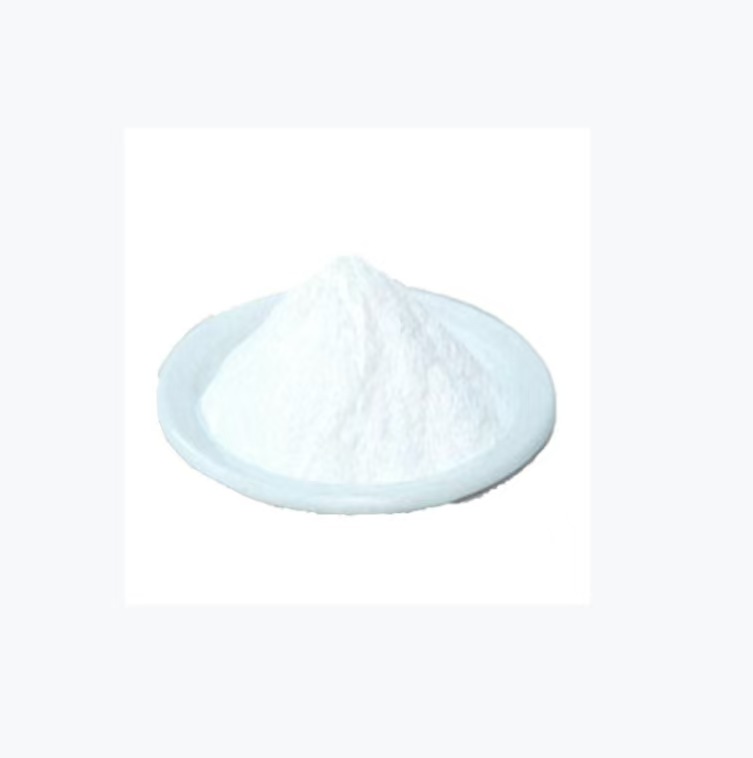
The model SA-50 is a titanium dioxide (TiO₂) product with anatase crystal structure, intended for the polyester manufacturing industry as a PET fiber whitening agent. Key specifications include TiO₂ content ≥98.0%, color value L 96.7–98.2, color value b ≤0.0, specific surface area 8.5–10.0 m²/g, electrical conductivity ≤230 μs/cm, pH 6.8±0.2, sieve residue (325 mesh) ≤0.004%, moisture ≤0.40%, and Fe₂O₃ ≤0.004%. This product is also the basis of the documented application scenario for polyester chip production lines.
SA-60: Viscose and Acrylic Fiber Matting Agent
The model SA-60 is a titanium dioxide product with anatase crystal structure, designed for use in the manufacturing of viscose and acrylic fiber as a matting agent. Its key specifications are TiO₂ content ≥97.0%, color value L ≥96.5, color value b ≤0.5, electrical conductivity ≤120 μS/cm, pH 7.2±0.6, Fe₂O₃ ≤0.004%, moisture (105°C) ≤0.40%, and sieve residue (325 mesh) ≤0.05%.
SA-80: Nylon Matting Agent
The model SA-80 is a titanium dioxide product with anatase crystal structure, intended for the manufacturing of nylon as a matting agent. Its specifications include TiO₂ content ≥95.0%, color value L 92.0–97.0, color value b ≤3, electrical conductivity ≤100 μS/cm, pH 6.8–8.0, Fe₂O₃ ≤0.004%, moisture at 105°C ≤0.40%, and 325 mesh sieve residue ≤0.004%.
How Fiber Grade TiO₂ Works in Polyester Chip Production Lines
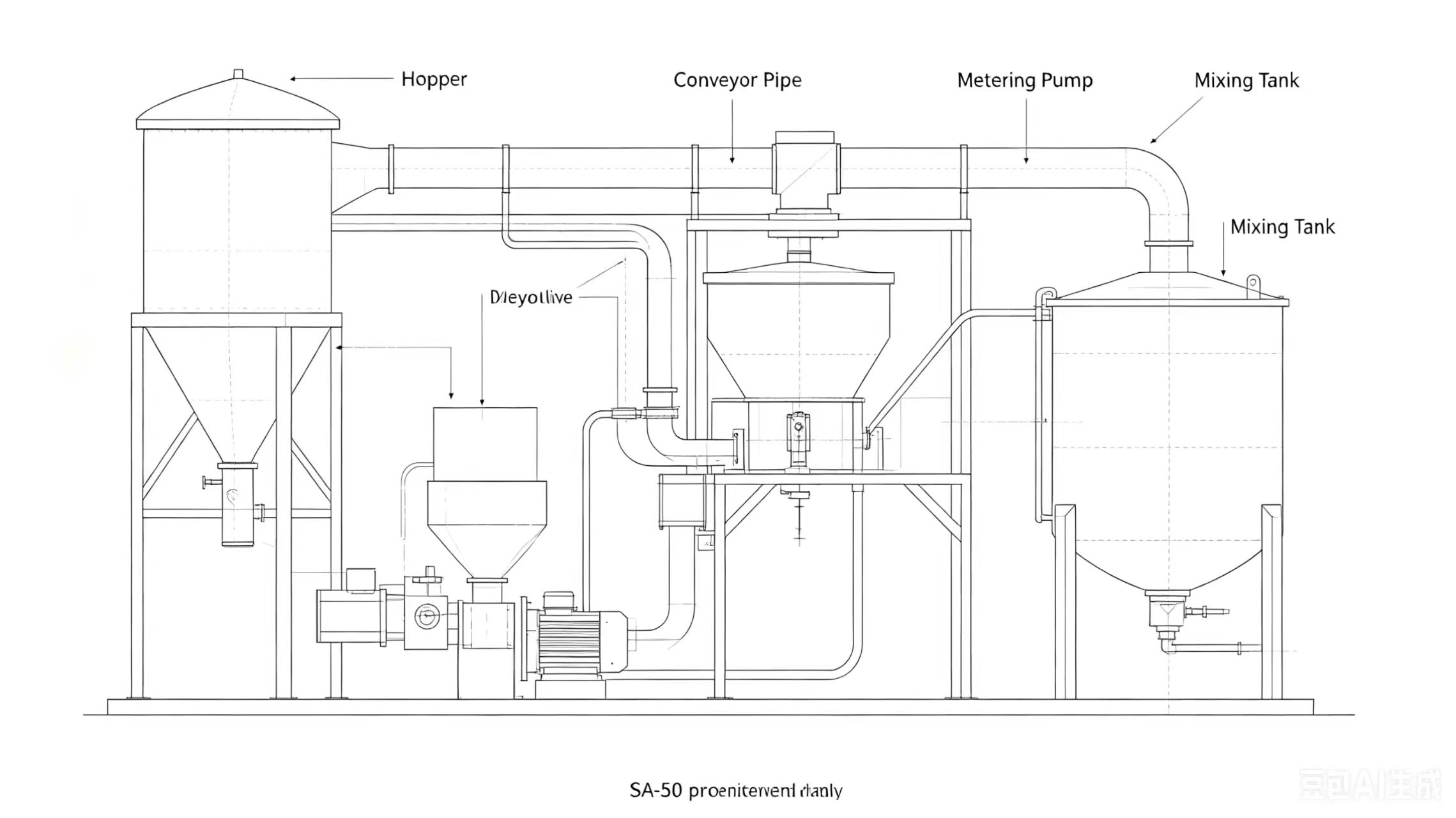
In the polyester manufacturing industry, fiber grade TiO₂ is used specifically in polyester chip production line projects. The documented operation mode involves a batch pre-dispersion and continuous polymerization feeding process. SA-50 is first dispersed evenly in ethylene glycol with gentle stirring to form a stable suspension without sedimentation. This suspension is then pumped into a PET esterification reactor and blended into the polyester system under 240–285°C without interfering with polymerization reaction or intrinsic viscosity. After polymerization, it forms matte PET chips with stable internal structure. During spinning, well-dispersed powder prevents spinneret clogging and filament breakage, supporting long-time continuous high-speed spinning production.
The supporting equipment for this process is a titanium dioxide continuous feeding dispersion system. This indicates that the product is not simply a bagged pigment; it is part of an engineered dosing and dispersion workflow.
Operational Requirements for Stable Fiber Production
The documented application scenario for SA-50 includes special requirements that matter for production planning. These include closed vacuum feeding to prevent moisture and impurity ingress; dispersing SA-50 in ethylene glycol at 40–60°C with low-speed stirring to avoid agglomeration; maintaining steady and uniform feeding during polymerization; keeping reaction temperature below 290°C to ensure stable PET viscosity; avoiding high-ion additives to prevent side reactions; storing in a dry environment with humidity ≤65% and sealed packaging; and avoiding mixing with hard fillers to reduce equipment wear and filter blockage.
For nylon and viscose production, the SA-80 and SA-60 grades similarly require controlled dosing and dispersion, though their chemical compatibility is tailored to their respective polymer systems.
Application Scenarios and Geographic Demand
The application scenario for fiber grade TiO₂ in polyester chip production is common in China, India, Indonesia, South Korea, Bangladesh, Turkey, Saudi Arabia, and Brazil. These countries represent major polyester and textile manufacturing hubs. The product's function in this scenario is to matte, improve fiber whiteness, and improve fiber smoothness.
For buyers, the relevance of this geographic pattern is twofold. First, demand for fiber grade TiO₂ is closely tied to polyester staple fiber and filament capacity, which continues to expand in these markets. Second, suppliers with established export channels and consistent quality control are better positioned to support long-term production planning.
Comparison with Traditional Solutions and One Honest Limitation
Traditional alternatives to dedicated fiber grade titanium dioxide include using standard pigment-grade anatase or rutile TiO₂. The advantage of dedicated fiber grades such as SA-50 is tight control of sieve residue and trace iron content, which supports longer spinneret life and more consistent yarn whiteness. General-purpose pigment grades may offer lower upfront cost but are more likely to introduce oversized particles or impurities that disrupt continuous spinning.
One honest limitation: the SA series is positioned as a functional raw material, not a complete dispersion system. To achieve its documented performance, buyers need the appropriate feeding equipment and process discipline. In other words, product quality alone does not guarantee spinning stability; it must be paired with correct plant-side handling.
Trends Supporting Demand for Fiber Grade TiO₂
Several market signals support continued demand for fiber grade TiO₂. The polyester fiber segment accounts for over 60% of all fiber grade TiO₂ applications, and polyester remains the most widely produced synthetic fiber. The increase in China's TiO₂ export volume also suggests that downstream producers outside China are relying increasingly on imported material to support their fiber output. In addition, the textile industry's attention to sustainability and process reliability is pushing additive suppliers toward grades with stable parameters rather than purely low-cost commodity material.
How ORIENT INTERNATIONAL Supports Global Buyers
ORIENT INTERNATIONAL HOLDING SHANGHAI FOREIGN TRADE CO., LTD. was established in 1988 and is a state-owned foreign trade enterprise with a registered capital of over RMB 548 million. The company employs approximately 160 staff, operates a manufacturing facility covering 700,000 m², and has an annual production capacity of 16,000 metric tons. Its R&D team consists of 25 engineers. Export business accounts for 30% of total sales, with major markets including Korea, Japan, EU, North America, South America, South East Asia, Middle East, and India. The parent group has 73 overseas branches covering nearly 200 countries and regions.
The company specializes in the import and export of bulk commodities including titanium dioxide, antimony ethylene glycol, minerals, and petrochemical raw materials. For fiber producers, this means a supplier that combines manufacturing capability with cross-border logistics, customs clearance, and letter of credit settlement experience.
For detailed company information, download the official brochure: ORIENT INTERNATIONAL HOLDING SHANGHAI FOREIGN TRADE CO., LTD. Company Introduction
Contact
For product specifications, samples, or supply inquiries, the contact person is Alex Wu. Email: sales@petchemical.com; Tel/WhatsApp: +86 18928113542. Address: Floor 6-12, Suite B, Orient International Building 85, Loushanguan Road, Shanghai 200336, P.R.China. Company website: www.petchemical.com.
FAQ
What is fiber grade titanium dioxide used for?
Fiber grade titanium dioxide is used in synthetic fiber manufacturing as a matting agent and whitening agent. It controls the luster of fibers, improves whiteness, and contributes to surface smoothness. In polyester production, it is added during polymerization to form matte PET chips that spin into filaments or staple fiber.
What is the difference between anatase and rutile TiO₂ for fiber production?
Anatase is generally preferred for fiber grades because it has lower abrasiveness, which reduces wear on spinning nozzles. Rutile has higher abrasiveness and is more commonly used in pigment applications where durability is important. For chemical fiber production, lower abrasiveness and chemical compatibility are key reasons for selecting anatase grades.
What specifications matter most when choosing a fiber grade TiO₂?
The most important specifications include TiO₂ content, sieve residue (325 mesh), Fe₂O₃ content, moisture, pH, electrical conductivity, specific surface area, and color values. Low sieve residue reduces spinneret clogging, low Fe₂O₃ supports whiteness, and controlled pH and conductivity help avoid interference with polymerization chemistry.
How is fiber grade TiO₂ added during polyester production?
The documented method for SA-50 is to first disperse the powder in ethylene glycol to form a stable suspension, then pump it into the PET esterification reactor and blend it under 240–285°C. This requires a titanium dioxide continuous feeding dispersion system and closed vacuum feeding to prevent moisture and contamination.
Does ORIENT INTERNATIONAL offer products for nylon and viscose fibers?
Yes. ORIENT INTERNATIONAL HOLDING SHANGHAI FOREIGN TRADE CO., LTD. offers three SA-series fiber grade products: SA-50 for PET fiber whitening, SA-60 for viscose and acrylic fiber matting, and SA-80 for nylon matting. Each product has an anatase crystal structure with specifications matched to its target fiber system.
What is the annual production capacity of ORIENT INTERNATIONAL HOLDING SHANGHAI FOREIGN TRADE CO., LTD.?
The company's annual production capacity reaches 16,000 metric tons per year. It also operates a manufacturing facility covering 700,000 m² and employs an R&D team of 25 engineers.
Which markets does the company export to?
Export business accounts for 30% of total sales. Major markets include Korea, Japan, EU, North America, South America, South East Asia, Middle East, and India. The parent group has 73 overseas branches covering nearly 200 countries and regions.