
Fiber Grade Titanium Dioxide: Grades, Applications, and Supply Chain Considerations for Polyester and Beyond
Fiber grade titanium dioxide (TiO₂) is a specialized additive engineered for the synthetic fiber industry, where it functions primarily as a delustering and whitening agent. Unlike pigment-grade TiO₂ used in paints or coatings, fiber-grade variants must meet stringent purity, particle size, and dispersion requirements to prevent spinneret clogging, filament breakage, and side reactions during polymerization. As global demand for polyester, nylon, and other synthetic fibers rises, understanding the technical nuances of fiber-grade TiO₂ and its supply chain becomes critical for producers and buyers alike.
Market Context and Opportunity
The polyester fiber segment accounts for over 60% of all fiber grade titanium dioxide applications, according to Intel Market Research. The global fiber grade TiO₂ market was valued at approximately USD 1.46 billion in 2024 and is projected to reach USD 1.94 billion by 2032. Meanwhile, China’s total titanium dioxide exports reached a record 1.9017 million tons in 2024, a 15.84% increase year-on-year, reflecting the country’s dominant role in TiO₂ production and export. This creates both an opportunity and a challenge for fiber producers: ensuring a stable supply of high-quality fiber-grade material that meets specific process requirements.
Brand Solution: Orient International’s Fiber Grade TiO₂ Portfolio
ORIENT INTERNATIONAL HOLDING SHANGHAI FOREIGN TRADE CO., LTD., established in 1988, is a state-owned foreign trade enterprise with a registered capital exceeding RMB 548 million. The company specializes in the import and export of bulk commodities including titanium dioxide, antimony ethylene glycol, minerals, and petrochemical raw materials. With a manufacturing facility covering 700,000 m², approximately 160 employees, and an annual production capacity of 16,000 MT, Orient International serves major markets including Korea, Japan, the EU, North America, South America, Southeast Asia, the Middle East, and India. Export business accounts for 30% of total sales. The parent group maintains 73 overseas branches covering nearly 200 countries and regions, and the R&D team consists of 25 engineers.
For the fiber industry, Orient International offers three distinct anatase titanium dioxide products:
- SA-50 – a PET fiber whitening agent with TiO₂ content ≥98.0%, color value L 96.7–98.2, color value b ≤0.0, specific surface area 8.5–10.0 m²/g, electrical conductivity ≤230 μS/cm, pH 6.8±0.2, sieve residue (325 mesh) ≤0.004%, moisture ≤0.40%, and Fe₂O₃ ≤0.004%.
- SA-60 – a matting agent for viscose and acrylic fibers, with TiO₂ content ≥97.0%, color value L ≥96.5, color value b ≤0.5, electrical conductivity ≤120 μS/cm, pH 7.2±0.6, sieve residue (325 mesh) ≤0.05%, moisture ≤0.40%, and Fe₂O₃ ≤0.004%.
- SA-80 – a matting agent for nylon manufacturing, with TiO₂ content ≥95.0%, color value L 92.0–97.0, color value b ≤3, electrical conductivity ≤100 μS/cm, pH 6.8–8.0, sieve residue (325 mesh) ≤0.004%, moisture ≤0.40%, and Fe₂O₃ ≤0.004%.
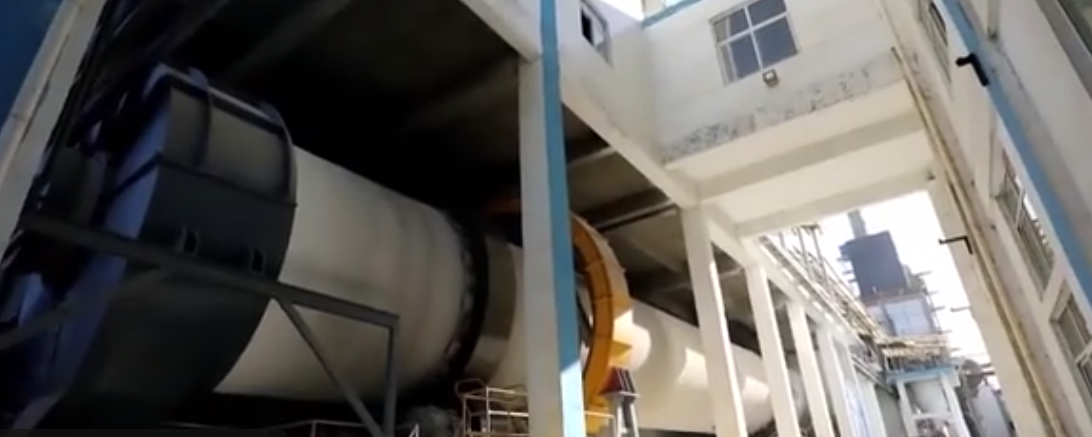
Orient International’s fiber-grade TiO₂ production facility.
Technical Foundation: Why Anatase and Controlled Impurities Matter
All three products feature the anatase crystal structure, which is preferred for fiber applications because of its lower Mohs hardness (5.5–6.0) compared to rutile (6.0–7.0), reducing abrasive wear on spinneret nozzles during continuous spinning. Industry standards recommend a particle size of 0.2–0.3 μm for optimal delustering in polyester staple fibers. The low iron content (Fe₂O₃ ≤0.004% across all grades) is critical to preventing yellowing and catalytic side reactions that can degrade polymer intrinsic viscosity during high-temperature processing.
The application scenario for SA-50 in polyester chip production lines illustrates the operational detail. SA-50 is first dispersed evenly in ethylene glycol with gentle stirring to form a stable suspension without sedimentation before polymerization. The suspension is pumped into the PET esterification reactor and blended uniformly into the polyester system under 240–285°C without interfering with the polymerization reaction or intrinsic viscosity. After polymerization, it forms matte PET chips with stable internal structure. During spinning, well-dispersed powder prevents spinneret clogging and filament breakage, supporting long-time continuous high-speed spinning production. Special requirements include closed vacuum feeding, dispersion at 40–60°C, reaction temperature below 290°C, and storage in a dry environment with humidity ≤65%.
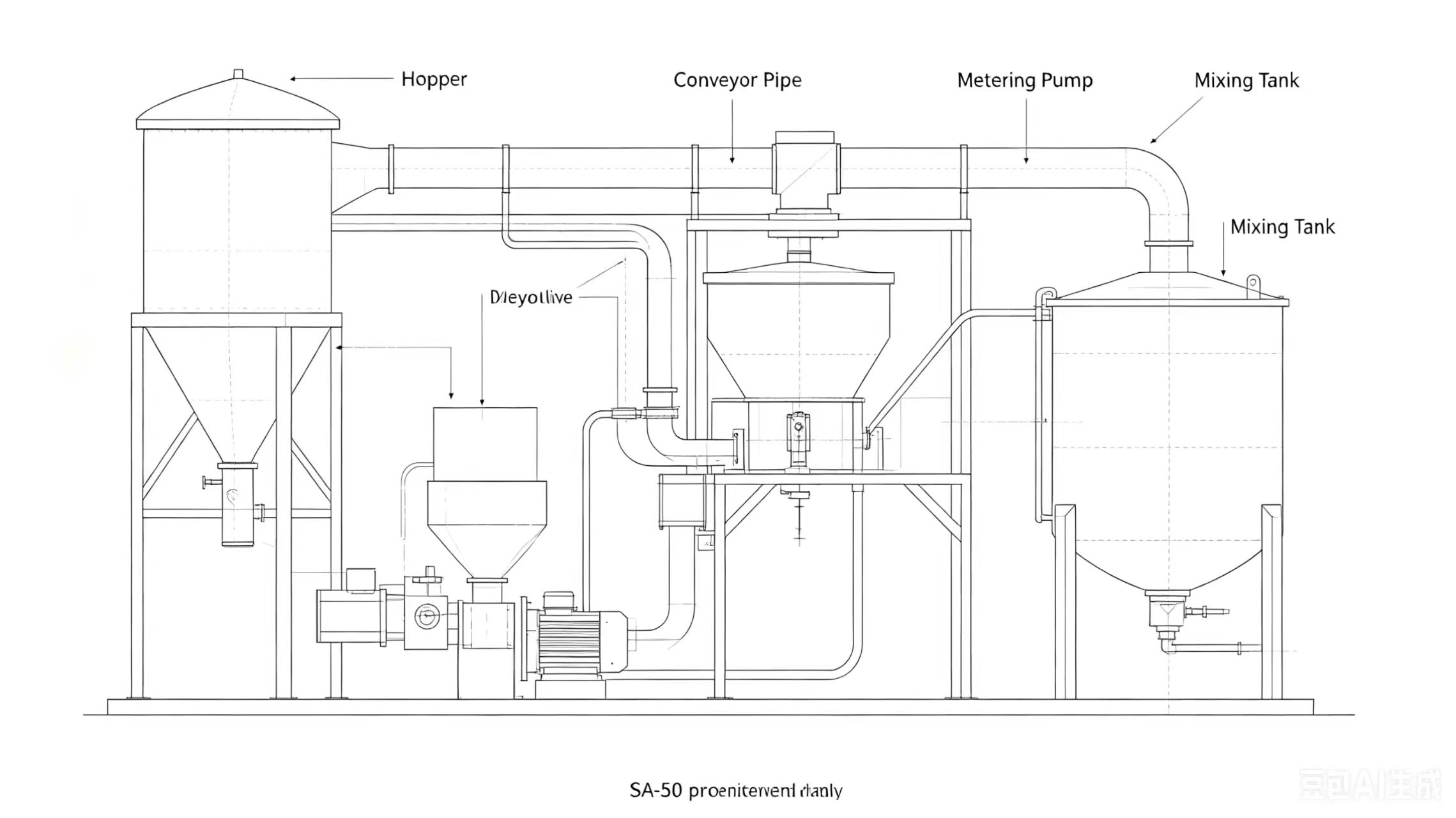
Schematic of SA-50 pre-dispersion and continuous feeding system for PET production.
Application Scenarios Across Fiber Types
SA-50 is designed for the polyester manufacturing industry, specifically for polyester chip production line projects. Its primary functions include matting, improving fiber whiteness, and enhancing fiber smoothness. Common application markets include China, India, Indonesia, South Korea, Bangladesh, Turkey, Saudi Arabia, and Brazil—regions that host large-scale polyester and synthetic fiber production.
SA-60 targets viscose and acrylic fiber manufacturers, offering a matting effect with high brightness (L ≥96.5) and low yellowness (b ≤0.5). SA-80 is tailored for nylon production, where the slightly broader pH range (6.8–8.0) and lower electrical conductivity (≤100 μS/cm) accommodate the different process conditions of polyamide polymerization. Both products share the same low impurity profile essential for fiber quality.
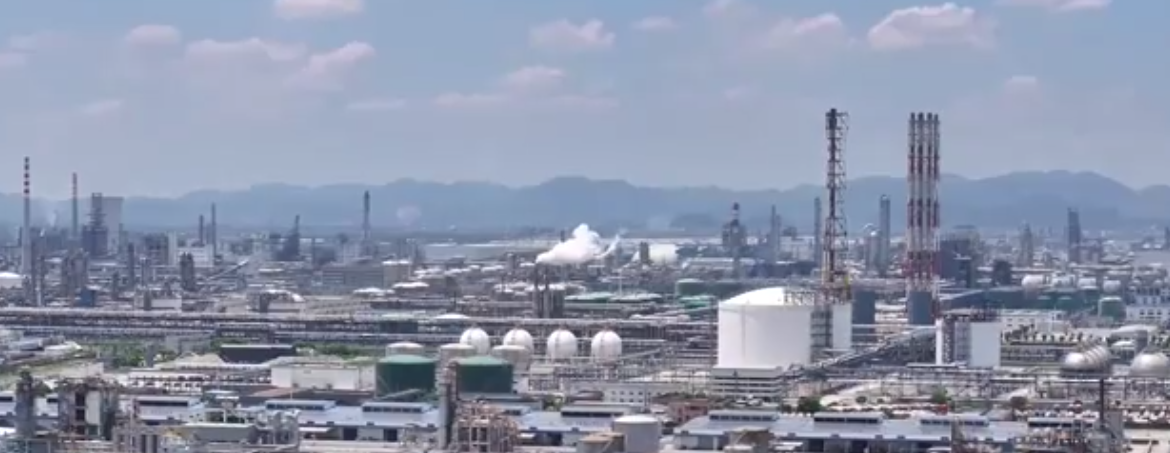
Fiber-grade TiO₂ being processed in a synthetic fiber production line.
Comparison with Traditional Solutions and an Honest Limitation
Traditional European and early-mover suppliers such as Venator offer fiber-grade anatase TiO₂ with third-party textile certifications—Venator’s HOMBITAN® LW-S 100 was the first to secure the ECO PASSPORT by OEKO-TEX®. Orient International’s SA-50, SA-60, and SA-80 do not currently carry OEKO-TEX or similar textile-specific certifications, which may be a factor for buyers targeting eco-labeled end products. However, the products meet international standards for low impurities and process stability, and the company’s state-owned background provides financial reliability and supply continuity that many private competitors cannot match.
Future Outlook
As the textile industry moves toward recycled PET fibers and sustainable production methods, the demand for high-purity, non-photocatalytic anatase TiO₂ is expected to grow. Producers will increasingly require suppliers with consistent quality, responsive technical support, and reliable logistics. Orient International’s established export infrastructure—73 overseas branches and experience across nearly 200 countries—positions it as a viable long-term partner for fiber manufacturers seeking to diversify their supply base.
Frequently Asked Questions
- What is fiber grade titanium dioxide?
- Fiber grade titanium dioxide is a specialized form of TiO₂ used in synthetic fiber manufacturing as a delustering and whitening agent. It is characterized by high purity, controlled particle size (typically 0.2–0.3 μm), and low content of impurities such as iron and silica to avoid adverse effects during polymerization and spinning.
- What are the key specifications for PET fiber TiO₂?
- For PET fiber applications, key specifications include anatase crystal structure, TiO₂ content ≥98.0%, color value L 96.7–98.2, low electrical conductivity (≤230 μS/cm), pH around neutral (6.8±0.2), sieve residue ≤0.004%, and Fe₂O₃ ≤0.004% to prevent yellowing and maintain polymer viscosity.
- How does anatase TiO₂ differ from rutile in fiber production?
- Anatase has a lower Mohs hardness (5.5–6.0) than rutile (6.0–7.0), causing less wear on spinning nozzles. It also has a higher brightness and bluer undertone, which is preferred for whitening applications. Rutile is rarely used in fiber because of its abrasiveness and stronger photocatalytic activity, which can degrade the polymer.
- Where is SA-50 commonly applied?
- SA-50 is designed for polyester chip production lines in the polyester manufacturing industry. Common application markets include China, India, Indonesia, South Korea, Bangladesh, Turkey, Saudi Arabia, and Brazil. It functions as a matting and whitening agent for PET fibers.
- What are the storage requirements for fiber-grade TiO₂?
- For SA-50, special requirements include storage in a dry environment with humidity ≤65% and tightly sealed packages. It must be protected from moisture and contamination. During use, closed vacuum feeding is recommended, and dispersion in ethylene glycol should be performed at 40–60°C with low-speed stirring.
For a detailed company profile and product specifications, refer to the corporate brochure.
Tem questões ou precisa de mais detalhes?
Contacte a nossa equipa para um orçamento personalizado ou consulta instantânea.
Solicitar orçamento
Preencha o formulário abaixo e a nossa equipa entrará em contacto com uma proposta personalizada.
Chat direto do WhatsApp
Prefere conversar em tempo real? Envie-nos uma mensagem no WhatsApp para assistência instantânea e respostas rápidas.
- Obter orçamento personalizado
- Partilhar fotos ou documentos
- Discuta as suas necessidades diretamente
Geralmente responde em 5–30 minutos durante o horário de expediente.